






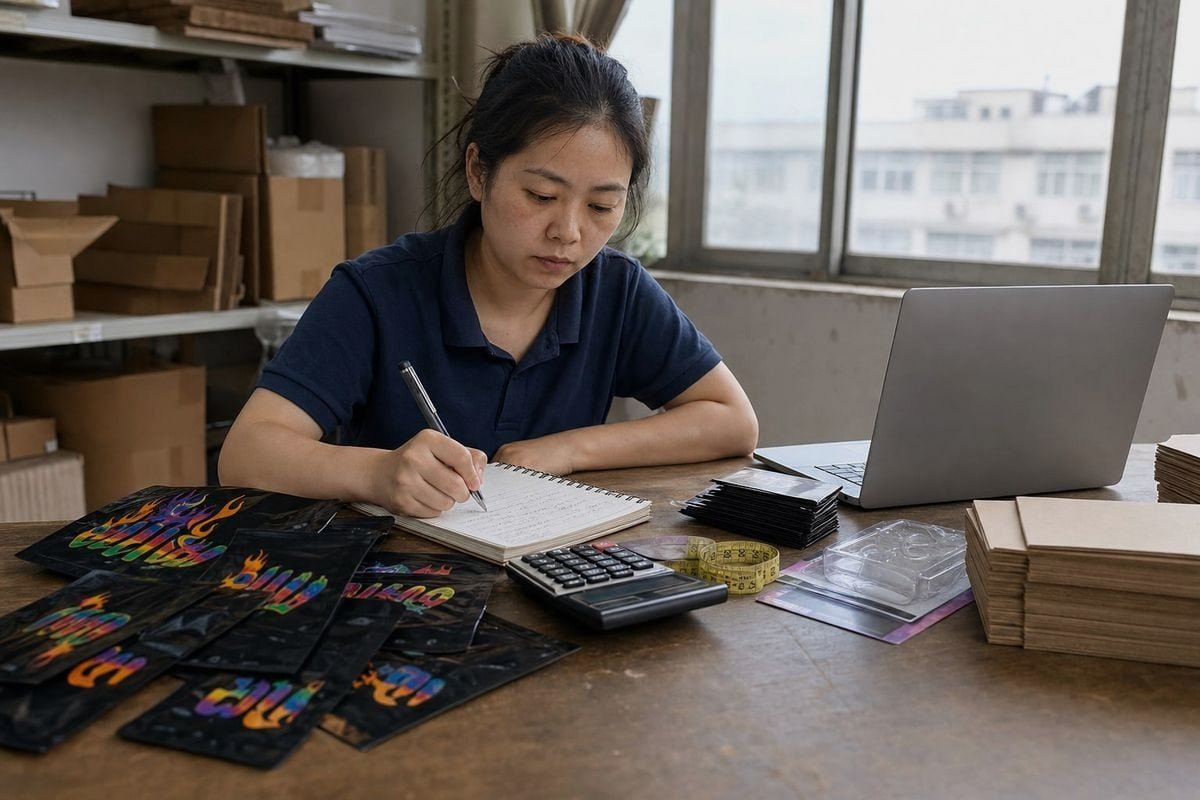
Solicitar embalagens em blister para o Pó Mágico de Fogo parece simples até que um fornecedor peça especificações que você não tem. Em nossa linha de embalagens, inquéritos vagos causam os maiores atrasos. Um pedido estruturado resolve isso rapidamente.
Para solicitar aos fornecedores embalagens em blister card para Magic Fire Powder, forneça as dimensões exatas do pacote, peso de enchimento, quantidade por card, arquivos de arte e requisitos de conformidade. Solicite certificações, confirme o método e os materiais de selagem, peça uma amostra de pré-produção e obtenha MOQ, prazo de entrega e preços por escrito.
Essa é a resposta curta. Abaixo, detalho cada etapa na ordem em que uma conversa real de sourcing acontece. Abordarei certificações, dimensionamento, detalhes de cotação e amostragem. Ao final, você saberá exatamente o que escrever em seu primeiro e-mail.
Que certificações devo solicitar para confirmar a segurança e conformidade da embalagem em blister?
Um distribuidor alemão me disse uma vez que seu fornecedor anterior enviou belos blisters com zero relatórios de teste. A alfândega reteve o contêiner por seis semanas. Essa história moldou como nossa fábrica lida com a documentação hoje.
Solicitar relatórios de testes de terceiros da ISO 9001 para gestão de qualidade, BSCI para conformidade social e de laboratórios como SGS ou Intertek. Para produtos relacionados a incêndio, solicitar também documentação de conformidade da Ficha de Dados de Segurança, marcação CE quando aplicável e confirmação de que as etiquetas de aviso atendem aos regulamentos do seu mercado de destino.
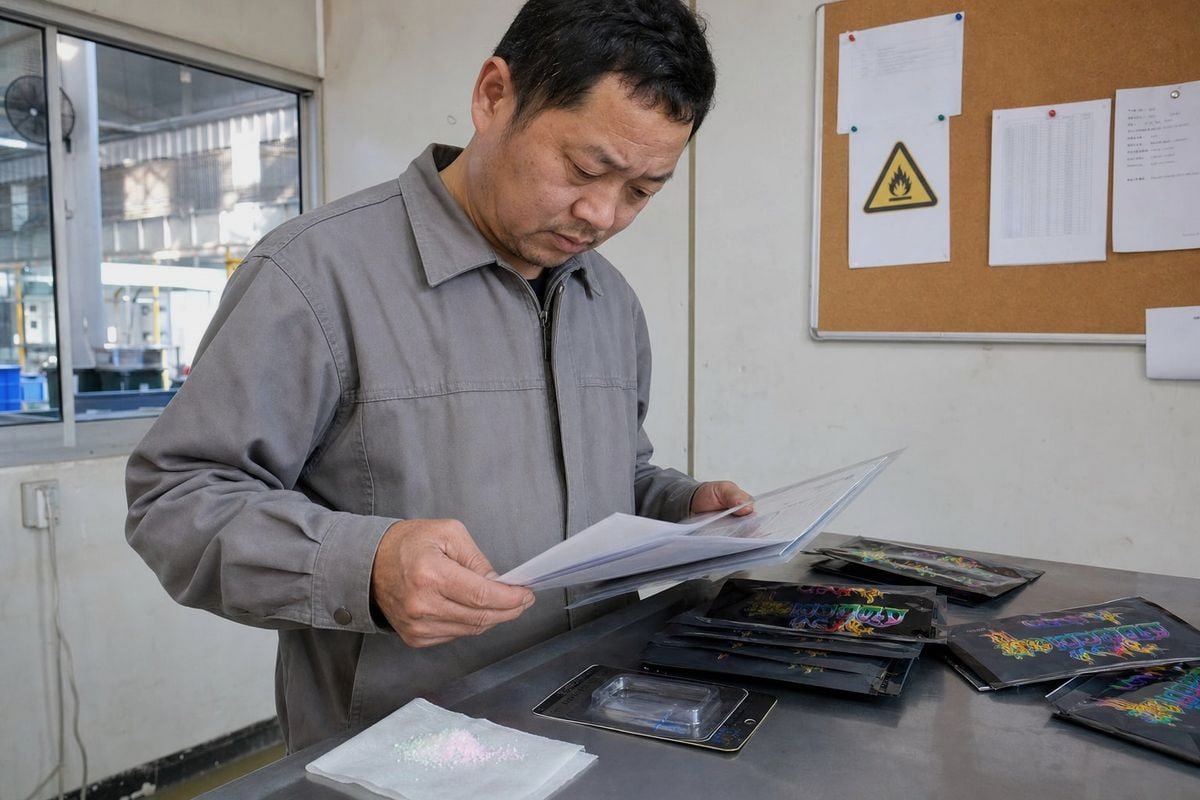
Certificações não são burocracia por si só. Elas são a diferença entre uma importação tranquila e um carregamento apreendido. Em nossos mais de 17 anos exportando produtos de chama colorida para os EUA, Alemanha, Reino Unido e mais de 30 outros mercados, nunca vimos um comprador de varejo sério pular esta etapa. Você também não deveria.
Os documentos principais a serem solicitados
Peça ao seu fornecedor estas informações antes de discutir o preço:
| Documento | O que Comprova | Por que é importante para o pó Magic Fire |
|---|---|---|
| ISO 9001 1 certificado | Gestão consistente da qualidade | Consistência lote a lote em cartões e selos |
| relatório de auditoria BSCI 2 | Condições éticas de fábrica | Exigido por muitas redes de varejo dos EUA e da UE |
| SGS ou Intertek 3 relatórios de teste | Testes independentes de produtos | Confirma que os materiais e os produtos químicos corantes de fogo atendem às alegações de segurança |
| Documentação CE 4 | Conformidade da UE, quando aplicável | Necessário para colocação no varejo europeu |
| Ficha de Dados de Segurança | Composição química e manuseio | Suporta o desembaraço aduaneiro e a revisão das regulamentações de transporte de materiais perigosos |
Conformidade da rotulagem no próprio cartão
O blister também é sua superfície legal de rotulagem. Confirme que o fornecedor pode imprimir Pictogramas de perigo estilo GHS 5 onde exigido, avisos multilíngues, códigos de lote e data, e códigos de barras. Nossa equipe adiciona rotineiramente rótulos de aviso personalizados para os mercados dos EUA, UE e Oriente Médio, pois cada região formula suas advertências de maneira diferente. Pergunte também se o cartão impresso usa tintas resistentes ao calor perto da zona de selagem. A selagem a quente pode queimar tintas baratas e borrar seu texto de aviso — uma falha de conformidade escondida à vista de todos.
Finalmente, pergunte diretamente ao fornecedor: você já enviou produtos de consumo relacionados a fogo antes? Um fornecedor de embalagens que nunca lidou com esta categoria não antecipará a documentação que seu despachante e corretor aduaneiro exigirão.
Como especifico o tamanho e o design do cartão blister para que ele se ajuste corretamente aos meus pacotes de Pó Mágico de Fogo?
O dimensionamento é onde vejo os erros mais caros. No início de nosso trabalho de OEM, as bolsas de alumínio de um cliente se soltaram dentro de cavidades superdimensionadas, e toda a tiragem precisou de novas ferramentas. Meça duas vezes, fabrique uma vez.
Meça o comprimento, a largura e a espessura preenchida do seu pacote de folha, em seguida, adicione 2–3 mm de folga na cavidade em cada lado. Especifique a quantidade por cartão, o estilo do orifício de suspensão, a orientação do cartão e a escolha do material, como PVC vs PET. Envie amostras físicas do pacote para que o fornecedor possa construir ferramentas de termoformagem precisas.
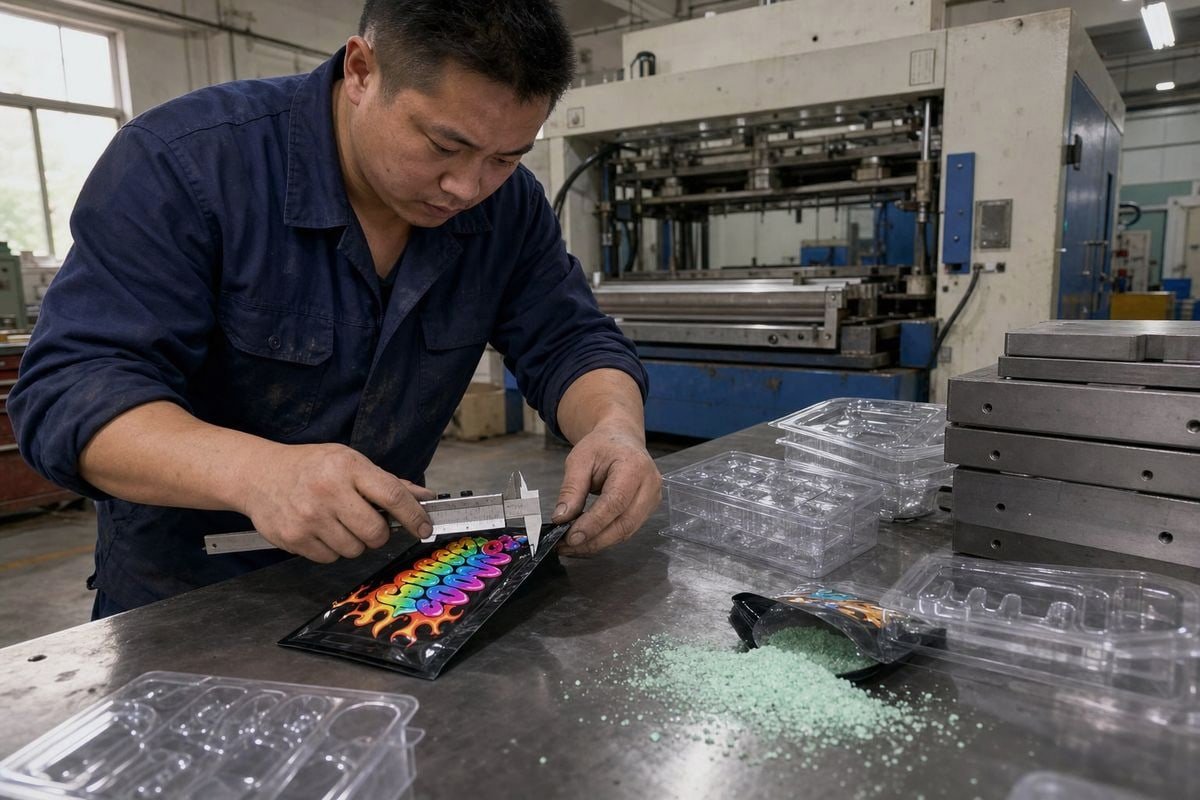
A embalagem em blister 6 tem quatro partes: o cartão de suporte impresso, a cavidade transparente formada, a camada de selagem e seu produto. Cada uma dessas partes depende de dimensões precisas. Nossos pacotes Magic Fire são bolsas de alumínio seladas a quente, e pacotes cheios nunca ficam perfeitamente planos. As bordas de selagem enrugadas adicionam espessura real. Se você fornecer apenas as dimensões da bolsa plana ao fornecedor, a bandeja de plástico termoformada será muito rasa, e os pacotes incharão ou quebrarão o selo.
Dimensões que o fornecedor realmente precisa
Forneça todas as seguintes, não apenas comprimento e largura:
- Dimensões da bolsa plana (comprimento × largura).
- Espessura cheia no ponto mais espesso.
- Peso de enchimento por pacote e espaço livre dentro da bolsa.
- Número de pacotes por cartão (um pacote de uso único ou um multipack de três ou cinco).
- Tamanho desejado do cartão em relação ao espaço na prateleira e exposição em gancho.
- Furos para pendurar no varejo — redondo padrão, euro slot ou formato delta para paredes de ganchos.
Escolhas de material e estrutura
Você também precisará escolher o material da cavidade. Veja como apresentamos a decisão de materiais PVC vs PET para compradores:
| Fator | PVC | PET (RPET) |
|---|---|---|
| Clareza | Bom | Excelente |
| Custo | Menor | Ligeiramente mais alto |
| Percepção ecológica | Mais fraco no varejo da UE | Preferido por cadeias focadas em sustentabilidade |
| Selagem | Opções maduras de revestimento para selagem a quente | Necessita de revestimentos de selagem compatíveis |
Para produtos de pó cristalino fino, também considere a opção de blister de contenção, onde a aba de plástico fica encaixada entre dois cartões. Isso evita que qualquer pó escapado contamine a área de selagem a quente. Pergunte também sobre aditivos antiestáticos no plástico, para que o pó não grude nas paredes da cavidade e esconda seu produto dos compradores. A visibilidade é o objetivo principal deste formato.
Que detalhes preciso fornecer ao solicitar um orçamento de cartão blister personalizado do meu fornecedor?
O compromisso que avalio em cada solicitação de cotação é velocidade versus precisão. Uma consulta de uma linha obtém um preço rápido e inútil. Uma folha de especificações completa leva uma hora para preparar, mas obtém uma cotação precisa e comparável.
Forneça as dimensões do produto e peso de enchimento, quantidade por cartão, volume total do pedido, arte final pronta para impressão em formato AI, EPS ou PDF, avisos e códigos de barras necessários, método de selagem, especificações de embalagem e seu prazo. Peça ao fornecedor para confirmar MOQ, prazo de entrega, custo de ferramental e preço unitário por escrito.
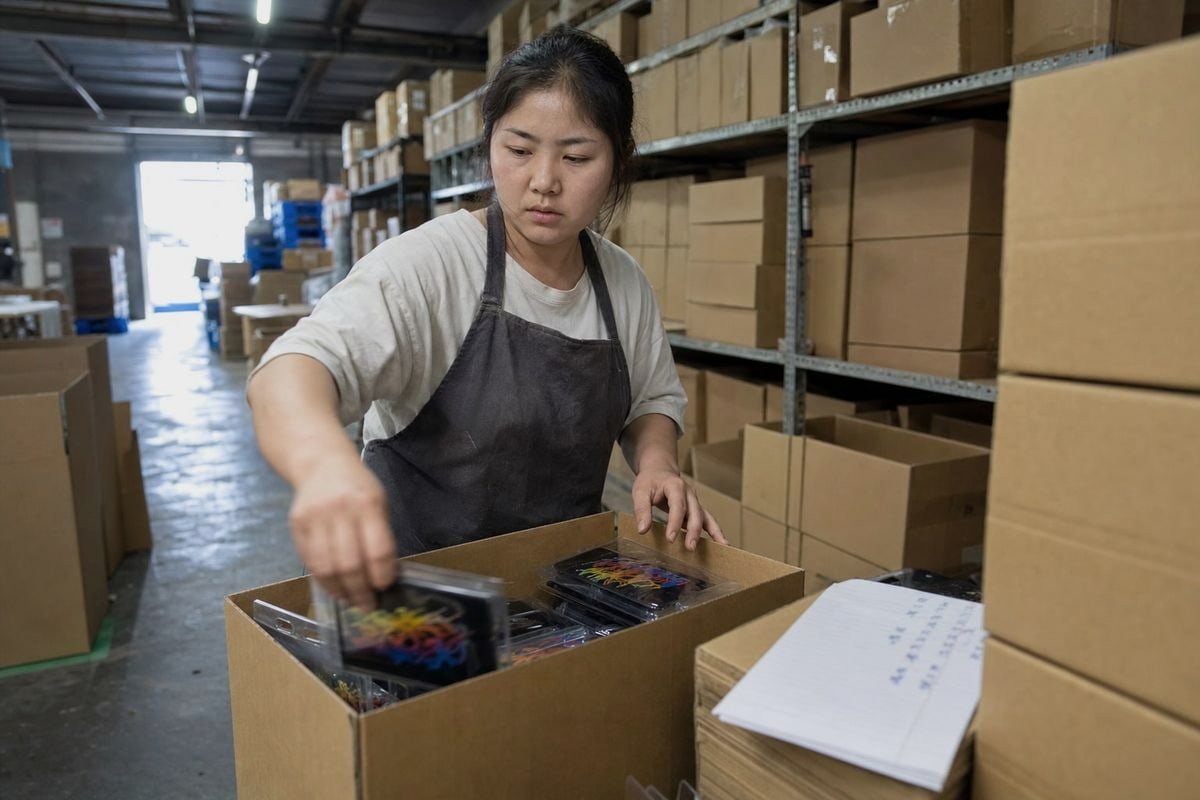
Quando os compradores enviam à nossa equipe de vendas um briefing completo, a cotação leva de dois a três dias. Quando enviam fragmentos, leva semanas de idas e vindas. Os fornecedores esperam cada vez mais especificações precisas antecipadamente, e os compradores que as fornecem recebem tratamento prioritário.
A lista de verificação completa para cotação
| Categoria | O que Incluir |
|---|---|
| Produto | Dimensões do pacote, espessura cheia, peso de enchimento, descrição do tipo de pó |
| Configuração | Pacotes por cartão, tamanho do cartão, blister de contenção ou padrão, tipo de furo para pendurar |
| Arte | Arquivos vetoriais em AI, EPS ou PDF; modo de cores CMYK; sangria de 1/8 de polegada; imagens de 300 DPI |
| Conformidade | Texto de aviso, pictogramas GHS, colocação de código de lote/data, arquivos de código de barras |
| Comercial | Quantidade total, faixa de preço unitário alvo, flexibilidade de quantidade mínima de pedido, prazo |
| Logística | Embalagem por caixa mestra, requisitos de palete, porto de destino |
Perguntas que separam bons fornecedores de impressoras de cartões
Pergunte se o fornecedor pode lidar com o cartão impresso, o blister formado, o revestimento de selagem a quente e a montagem final sob o mesmo teto. A produção turnkey remove a troca de culpas que ocorre quando a impressora de cartões culpa o formador de blister por uma má selagem. Nosso fluxo de trabalho OEM de parada única existe precisamente porque cadeias de suprimentos divididas falham na linha de selagem. Verifique também a compatibilidade química entre o adesivo de selagem e seu produto — alguns sais metálicos em produtos químicos corantes de fogo podem degradar adesivos ao longo do tempo, causando delaminação na prateleira.
Mais dois itens que valem a pena levantar. Primeiro, pergunte sobre tiragem combinada ou tiragem em gang se você lançar várias variantes de cor de chama; o compartilhamento de folhas de impressão corta os custos de ferramental e chapas para pequenos lotes. Segundo, confirme como a cotação lida com os regulamentos de envio de materiais perigosos para sua categoria de pó, pois a classificação de frete afeta o custo de chegada mais do que a maioria dos compradores espera.
Um cartão minimalista parece mais barato no papel. Mas um produto de consumo relacionado ao fogo precisa de instruções e avisos visíveis, e espremê-los em um cartão minúsculo cria risco de conformidade. Geralmente direcionamos os compradores para um cartão ligeiramente maior com texto de segurança limpo e legível. Os poucos centavos economizados em papelão não valem um listagem de varejo rejeitada.
Posso solicitar uma amostra de blister card antes de me comprometer com um pedido em massa?
Um comprador do Reino Unido uma vez me perguntou, quase sem desculpas, se a amostragem era permitida antes de um pedido de teste. Minha resposta o surpreendeu: nós insistimos nisso. Nenhuma fábrica séria quer um pedido em massa aprovado às cegas.
Sim, fornecedores respeitáveis esperam pedidos de amostras antes de pedidos em massa. Solicite uma amostra de pré-produção com seus pacotes reais selados dentro, usando os materiais e a impressão finais. Espere pagar uma taxa de amostra, muitas vezes creditada em seu primeiro pedido, e permita de uma a três semanas para a entrega.
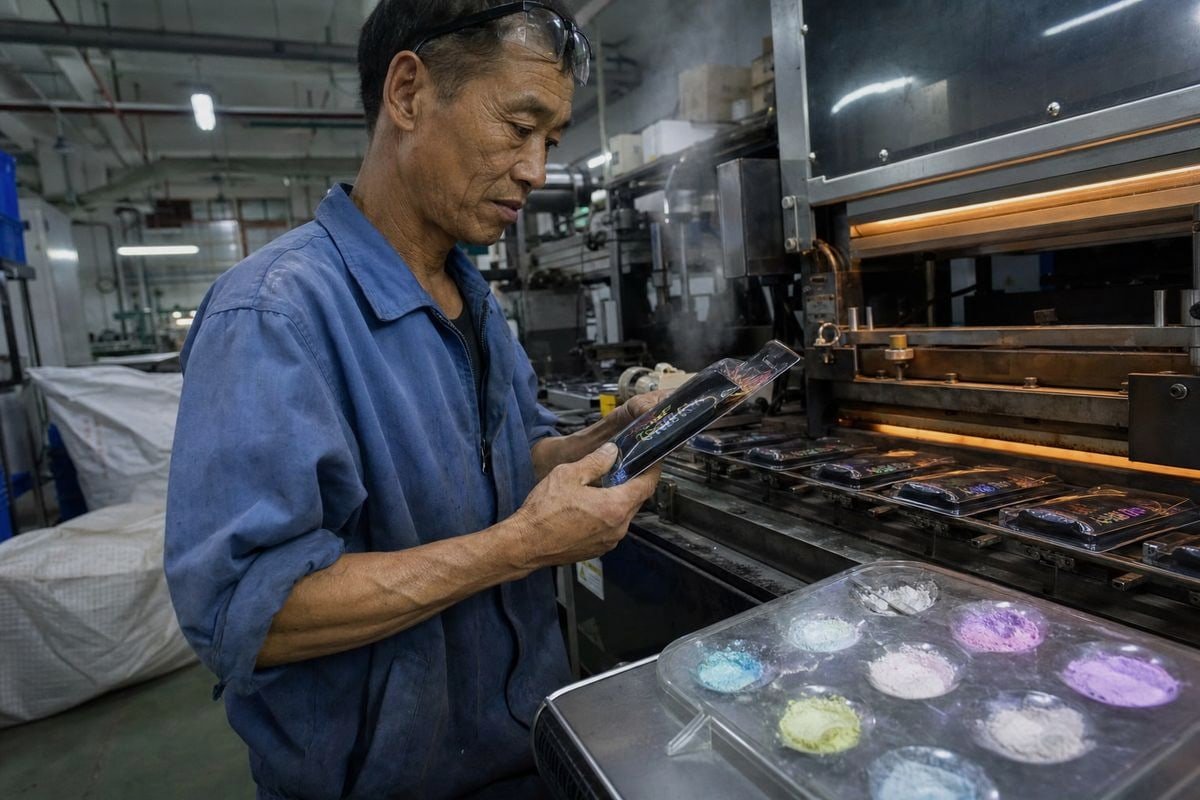
A amostragem é sua apólice de seguro mais barata. Em nossas linhas de produção, a primeira amostra é construída para refletir exatamente a qualidade da produção em massa — mesmo papelão, mesma abordagem de ferramental de cavidade, mesmos parâmetros de selagem. Se um fornecedor lhe enviar uma amostra que não se parece em nada com o que chega no contêiner, vá embora. A consistência da amostra para a produção é o melhor preditor de um parceiro confiável de longo prazo.
Como é um processo de amostragem adequado
- Prova digital primeiro. Revise o design do cartão de apoio personalizado na tela — layout, avisos, colocação do código de barras e posição do orifício de suspensão.
- Amostra branca ou protótipo. Um blister formado não impresso selado a um cartão em branco, para que você possa verificar o ajuste com seus pacotes de folha reais.
- Amostra completa de pré-produção. Impressão final, materiais finais, seus pacotes selados por dentro com o selo de segurança contra violação 7 intacto.
- Seus próprios testes. Deixe cair, pendure em um gancho, tente abrir, e deixe em um carro quente para verificar a selagem.
O que testar antes de aprovar
Verifique se o pacote se encaixa bem sem estressar as costuras da bolsa. Confirme se a selagem descasca ou rasga da maneira que você deseja — um selo de segurança contra violação deve mostrar danos óbvios ao ser aberto. Verifique as cores de impressão em relação aos seus padrões de marca sob iluminação de varejo, não iluminação de escritório. Se você enviar por via aérea ou por rotas de montanha, pergunte se o fornecedor realiza testes de explosão simulados por altitude em unidades seladas, pois as mudanças de pressão podem estourar uma selagem marginal.
Taxas de amostra são normais e saudáveis. Elas filtram compradores casuais e sinalizam que o fornecedor investe tempo real em ferramental. Creditamos os custos de amostra no primeiro pedido em massa, e muitas fábricas de embalagens estabelecidas fazem o mesmo. Confirme esta política por escrito juntamente com a Quantidade Mínima de Pedido, para que seu caminho de pedido de teste esteja claro antes de gastar qualquer coisa.
Conclusão
Consultas vagas sobre embalagens desperdiçam meses e convidam a erros caros. Envie aos fornecedores dimensões precisas, arte, requisitos de conformidade e uma solicitação de amostra, e seus cartões de blister Magic Fire Powder chegarão prontos para a prateleira.
Notas de rodapé
Recurso autoritativo do NIST explicando os sistemas de gestão de qualidade ISO 9001 e seu papel na qualificação de fornecedores. ↩︎
Amfori administ

 English
  Spanish
  German
  French
  Arabic
  Portuguese
Participe da conversa