






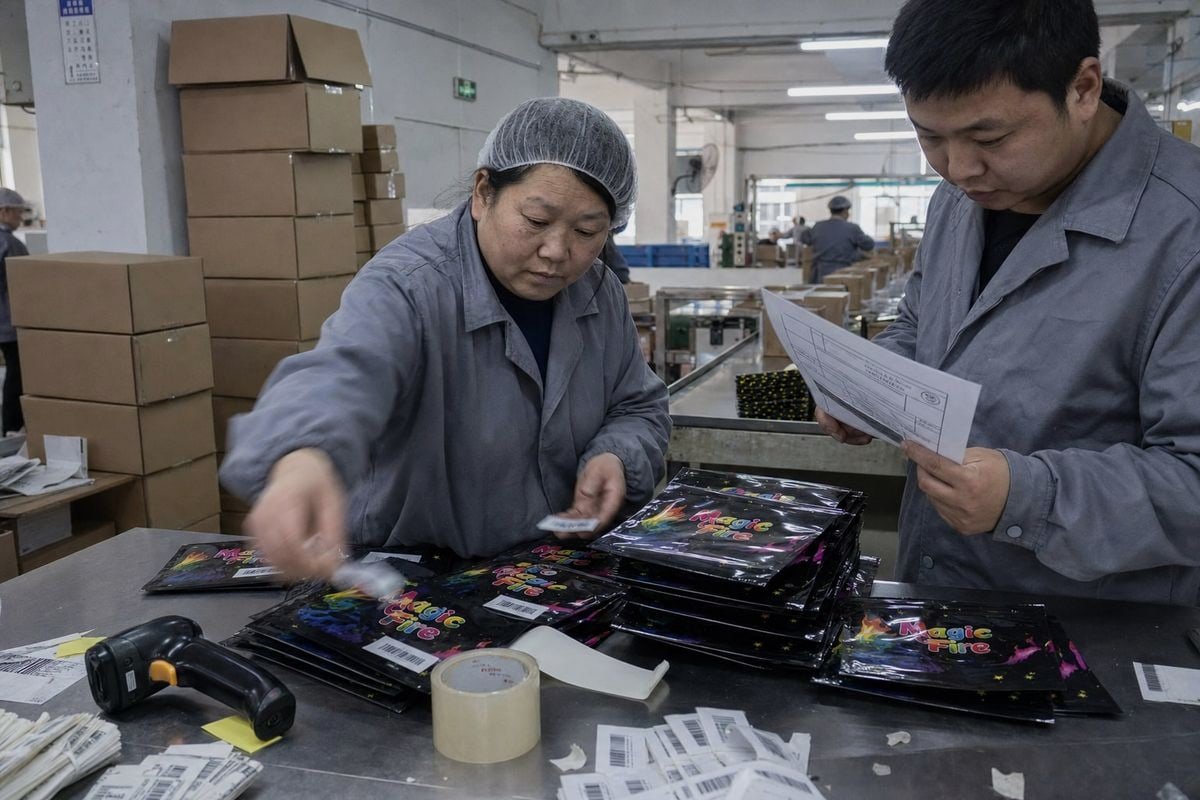
Pedir a um fornecedor de Magic Fire Powder para afixar etiquetas FNSKU parece simples — até que um pedido vago deixe todo o seu envio FBA retido Logística da Amazon 1. Na nossa linha de embalagem, vemos isto acontecer mais do que imagina.
Para solicitar a um fornecedor de Magic Fire Powder que afixe etiquetas FNSKU, envie o PDF exato da etiqueta da Amazon Seller Central, especifique a escala de impressão, o tipo de etiqueta e as instruções de posicionamento do código de barras, exija que a FNSKU cubra qualquer UPC e solicite verificação por foto e escaneamento antes do envio.
Essa única frase cobre todo o fluxo de trabalho. Mas cada passo tem detalhes que decidem se a Amazon recebe o seu inventário de forma limpa ou se o sinaliza. Deixe-me guiá-lo por cada parte, desde a informação que o seu fornecedor precisa até à verificação final pré-envio.
Que Informações Preciso Fornecer ao Meu Fornecedor para Rotulagem Precisa de FNSKU?
Um comprador do Texas enviou-nos uma vez uma única linha: "Por favor, rotule para a Amazon." A nossa equipa teve de parar a encomenda e fazer cinco perguntas de seguimento antes de podermos imprimir algo em segurança.
Dê ao seu fornecedor o PDF do rótulo FNSKU baixado do Seller Central, a quantidade exata por SKU, instruções de escala de impressão (100%, sem ajuste de tamanho), especificações de tamanho e material do rótulo, regras de posicionamento e um mapeamento de qual arquivo de rótulo corresponde a qual variante de produto ou tipo de embalagem.

O problema central é que o seu fornecedor não pode gerar etiquetas FNSKU por si só. A FNSKU está ligada à sua conta de vendedor, não ao produto. Só você pode obtê-la no painel do Seller Central. Portanto, a precisão de todo o trabalho depende do que você envia e de quão claramente você explica.
Comece Com o Ficheiro Certo
Vá a Gerir Inventário no Seller Central, selecione a sua listagem e escolha Imprimir Etiquetas de Item. Descarregue o PDF no tamanho de etiqueta que a impressora do seu fornecedor suporta. Não faça captura de ecrã do código de barras 2. Não reescreva o código FNSKU e peça ao fornecedor para "fazer um código de barras a partir dele". Compressão, re-renderização ou regeneração manual podem quebrar a legibilidade. Envie o PDF original de alta resolução, idealmente durante a criação do plano de envio para que as quantidades correspondam exatamente ao seu plano.
O Pacote Completo de Informações
Na nossa experiência a gerir fabrico de marca própria para vendedores FBA em todos os EUA e Europa, este é o conjunto mínimo de informações que previne erros:
| Item a Enviar | Por que é importante |
|---|---|
| PDF da etiqueta FNSKU (original do Seller Central) | Garante a integridade do código de barras e o formato correto |
| Quantidade por SKU | Previne faltas ou unidades não rotuladas em excesso |
| Mapeamento SKU-para-produto com fotos | Evita etiquetas misturadas em variantes semelhantes |
| Instrução de escala de impressão (100%, sem escalonamento) | Reduzir para ajustar distorce as barras e mata os scans |
| Especificação do material da etiqueta | Produtos em pó precisam de material resistente à humidade |
| Diagrama de colocação ou foto marcada | Remove suposições na linha de embalagem |
Mais um ponto que importa para um produto de novidade adjacente a produtos químicos como pó de chama colorida: envie o seu Ficha de Dados de Segurança 3 referência (SDS) e qualquer arte de etiqueta de aviso ao mesmo tempo. Quando preparamos pacotes Magic Fire para canais de retalho dos EUA, coordenamos a FNSKU, a etiqueta de aviso e o código de lote num único layout de embalagem. Fazer isso em conjunto evita que as etiquetas lutem por espaço numa pequena bolsa de folha.
Como Posso Garantir que os Rótulos FNSKU Cumpram os Requisitos de Código de Barras e Segurança da Amazon?
A conformidade é a primeira pergunta que os nossos compradores europeus e americanos fazem — geralmente antes do preço. Nós detemos ISO 9001 4 e BSCI, e os nossos produtos carregam relatórios de teste SGS e Intertek, pelo que entendemos porquê: uma etiqueta não conforme pode desfazer meses de trabalho de sourcing.
Garanta a conformidade exigindo impressão preta por transferência térmica em etiquetas brancas resistentes à umidade, um código de barras escaneável com clareza na escala 100%, cobertura total de qualquer UPC ou EAN do fabricante, posicionamento plano longe de costuras e aberturas, e aplicação na camada de embalagem externa vendável.
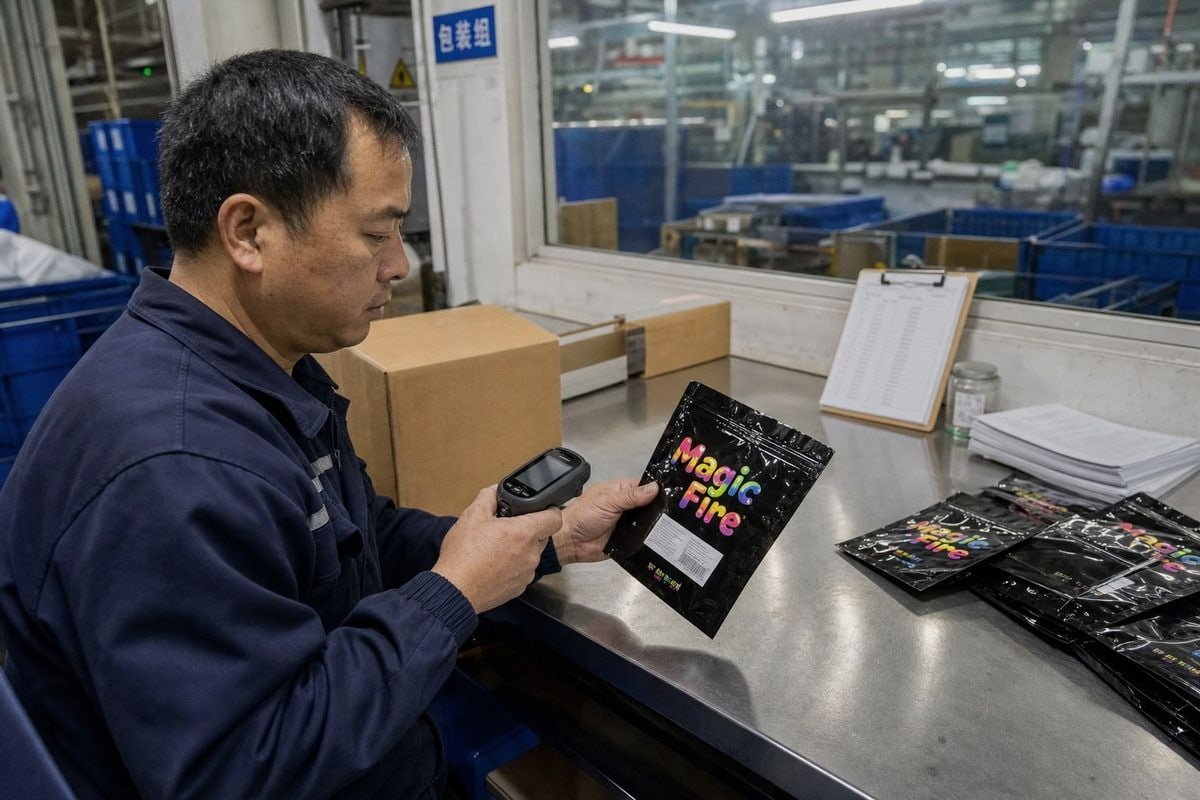
Os requisitos da Amazon dividem-se em duas camadas: regras de código de barras e regras de segurança do produto. Ambas se aplicam a um produto em pó relacionado com fogo, e a sua instrução ao fornecedor deve abordá-las em conjunto.
Regras de Código de Barras que o Fornecedor Deve Seguir
A FNSKU deve ser o único código de barras legível visível na unidade — a menos que a sua listagem utilize o fluxo de trabalho de código de barras do fabricante em itens elegíveis, caso em que nenhuma FNSKU é necessária. Assumindo que utiliza o fluxo de trabalho padrão FNSKU, a etiqueta deve cobrir totalmente o impresso UPC ou EAN 5 na bolsa ou caixa. Um scanner de centro de distribuição que lê dois códigos de barras cria um erro de multi-scan, e isso significa atrasos no recebimento ou inventário mal encaminhado.
A qualidade de impressão também é importante. Recomendamos impressão por transferência térmica 6 em vez de térmica direta para trânsito internacional. Etiquetas térmicas diretas podem escurecer ou desvanecer durante uma travessia marítima quente. Alto contraste — barras pretas em material branco — é um requisito rigoroso, não uma preferência.
Regras de Colocação para Pequenas Bolsas de Folha
Os pacotes Magic Fire são compactos, brilhantes e selados a quente nas bordas. Essa borda de selagem enrugada é exatamente onde uma etiqueta não deve ir. As suas instruções de colocação de código de barras devem especificar:
| Regra | Aplicação numa Bolsa de Folha |
|---|---|
| Superfície plana apenas | Centro da face da bolsa, evitando as bordas de selagem a quente enrugadas |
| Sem enrolar nos cantos | Nunca dobre a etiqueta sobre a borda da bolsa |
| Não bloqueie aberturas | Keep clear of tear notches and resealable zips on kraft pouches |
| Cover the UPC completely | Position directly over the printed manufacturer barcode |
| Outermost layer | If poly-bagging or shrink-wrapping is required, label the outer layer |
That last row deserves emphasis. If Amazon or your compliance review requires double-bagging or shrink-wrap for a powder product, the FNSKU must sit on the outermost layer the associate will scan. A perfect label sealed inside a poly bag is a failed label. On our line in Ningbo, the label station comes after the final bagging station for exactly this reason — sequencing on the production floor is part of compliance, not an afterthought.
Also confirm product packaging specifications with your supplier in writing: label stock for fire powder should be synthetic or moisture-resistant so fine crystalline dust and humidity in transit cannot blur or peel the barcode.
A adição de etiquetas FNSKU afetará meu tempo de produção ou custo unitário?
Here is the trade-off I discuss most often with purchasing managers: is supplier-side labeling worth the small fee, or should they route goods through a US prep center? After 17 years of exporting fire products to 30+ countries, my answer is almost always the same.
Etiquetas FNSKU aplicadas pelo fornecedor geralmente adicionam R$0,02–R$0,05 por unidade e zero a dois dias de prazo de entrega quando organizadas na fase de pedido de compra. Isso é muito mais barato e rápido do que os centros de preparação dos EUA, que cobram muitas vezes mais por unidade, além de manuseio de trânsito extra.

Let me break down where the time and money actually go, because buyers often overestimate both.
The Real Cost Picture
Labeling is a light task on a production line that already applies warning stickers and lot codes. The cost drivers are label stock, printer time, and one extra station of labor. For a compact pouch product, that lands in the low single cents per unit. Compare the three realistic options:
| Opção | Custo Típico por Unidade | Added Time | Handling Risk |
|---|---|---|---|
| Supplier applies labels at origin | $0.02–$0.05 | 0–2 days if planned early | Lowest — one touch |
| Third-party prep center in destination country | $0.30–$1.00+ | 3–7 days plus rerouting | Extra unboxing and repacking |
| Self-labeling by the seller | Your own labor | Depends on your capacity | Fine for small trial orders only |
How to Keep Lead Time Impact at Zero
Timing is everything. Negotiate labeling as a value-add when you issue the PO, not after production starts. When a buyer confirms labeling requirements alongside artwork approval, we fold the label station into the normal packing flow and the lead time impact is zero. When the label PDF arrives after the goods are already cartoned, we have to open master cartons, relabel, and reseal — that is where the "two extra days" comes from.
One nuance worth raising: some sellers assume self-labeling keeps them in control. For a 200-unit trial order, that logic holds. But once you scale past a pallet, hand-labeling thousands of foil pouches at home becomes the bottleneck, and any labeling error is now yours to fix with no supplier recourse. Supplier-side labeling also keeps your freight forwarder logistics simple: goods move factory-to-Amazon with no intermediate stop. Just remember that master carton labels — the FBA box ID labels from your shipping plan — are a separate requirement from unit FNSKUs, and your supplier needs both files.
Como Verifico a Precisão da Rotulagem do Meu Fornecedor Antes do Envio da Produção em Massa?
A hard lesson shaped our own QC process years ago: a batch left the factory with labels printed at 95% scale because a PDF viewer defaulted to "fit to page." The barcodes looked fine to the eye. They failed at scan. Since then, verification is non-negotiable on our line.
Verifique a precisão da rotulagem exigindo prova fotográfica do primeiro artigo de uma unidade rotulada, um vídeo de teste de digitalização bem-sucedido ou confirmação do aplicativo de digitalização, uma verificação de que o código de barras está totalmente coberto, contagens de unidades por caixa e — para pedidos grandes — uma inspeção de terceiros com teste de escaneabilidade em uma amostra aleatória.
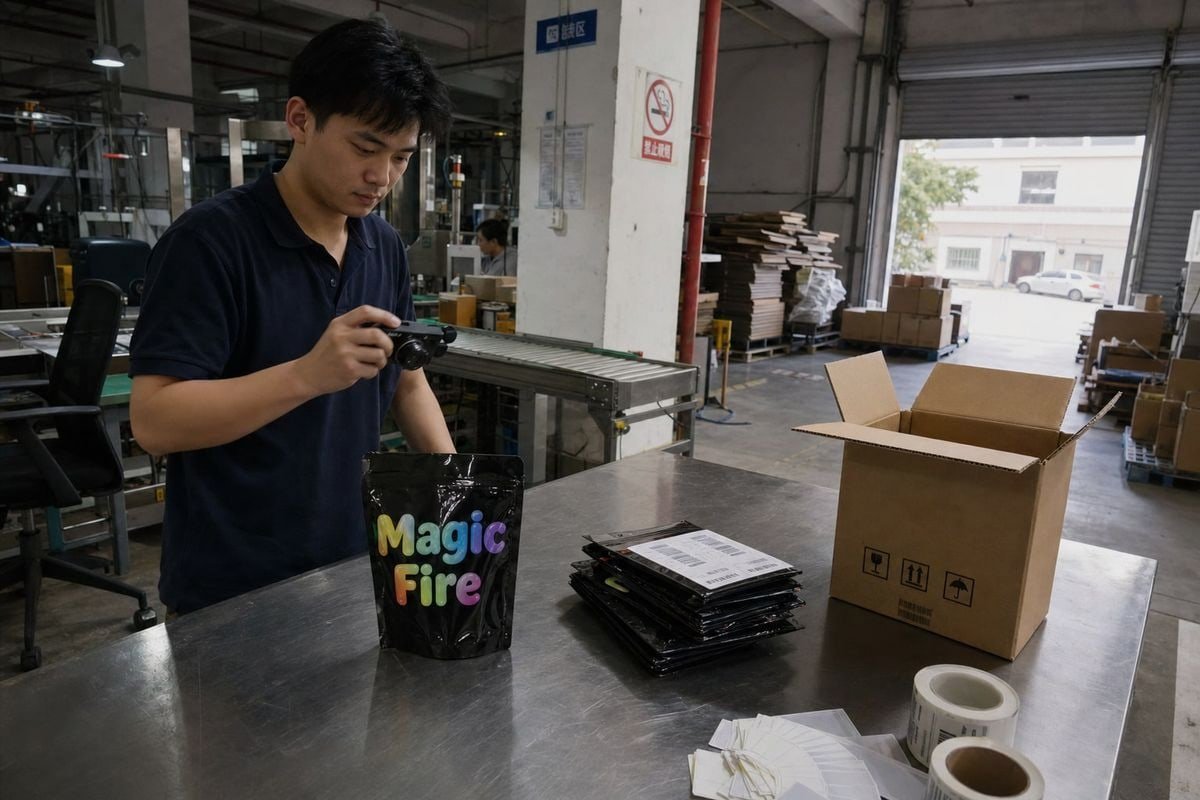
Trust your supplier, but structure the verification so trust is never the only safeguard. Here is the process we recommend, and the one we run internally as part of batch-to-batch inspeção de controle de qualidade 7.
The Four-Stage Verification Process
-
First-article approval before batch labeling. Ask the supplier to label one unit, photograph it in sharp focus from the front, and scan it with a smartphone barcode app such as Scandit or the Amazon Seller app. The scan must return your exact FNSKU string. Only after you approve in writing should the full batch be labeled.
-
Mid-production spot check. Request photos of three to five randomly picked labeled units partway through. This catches printer ribbon fade, label drift, or a roll change to the wrong stock — problems a single first article cannot reveal.
-
Pre-sealing confirmation. Before master cartons are sealed, get a photo showing units packed inside, plus confirmation of unit count per carton matching your shipping plan. Confirm the FBA carton labels are applied to the outside — flat, not over the carton seam.
-
Final inspection with scannability grading. For a first order or a large re-order, book a inspeção por terceiros 8 and make "Grade A scannability on a random sample" an explicit checkpoint. Many buyers condition the balance payment on this report, and we consider that a fair, professional arrangement — it aligns everyone's incentives.
What Your Checklist Should Confirm
Each verification stage should answer five yes/no questions: Does the scan return the correct FNSKU? Is the old barcode fully covered? Is the label flat, on the outermost layer, away from seams? Is the print crisp with no smudging? Do the counts match the PO and the shipping plan?
For a chemical batch product like color-flame powder, add one more: is the production lot number printed adjacent to the FNSKU? That small addition gives you precise traceability if you ever need to isolate a batch — something we build into every private-label run because our retail buyers require recall readiness.
Conclusão
A vague labeling request risks rejected shipments and costly rework. Send the exact Seller Central PDF, specify print and placement rules, and verify with scans before your Magic Fire Powder ships.
Get these steps right once, document them in your PO template, and every future FBA shipment becomes routine. If your current supplier cannot handle Amazon



 English
  Spanish
  German
  French
  Arabic
  Portuguese
Participe da conversa