






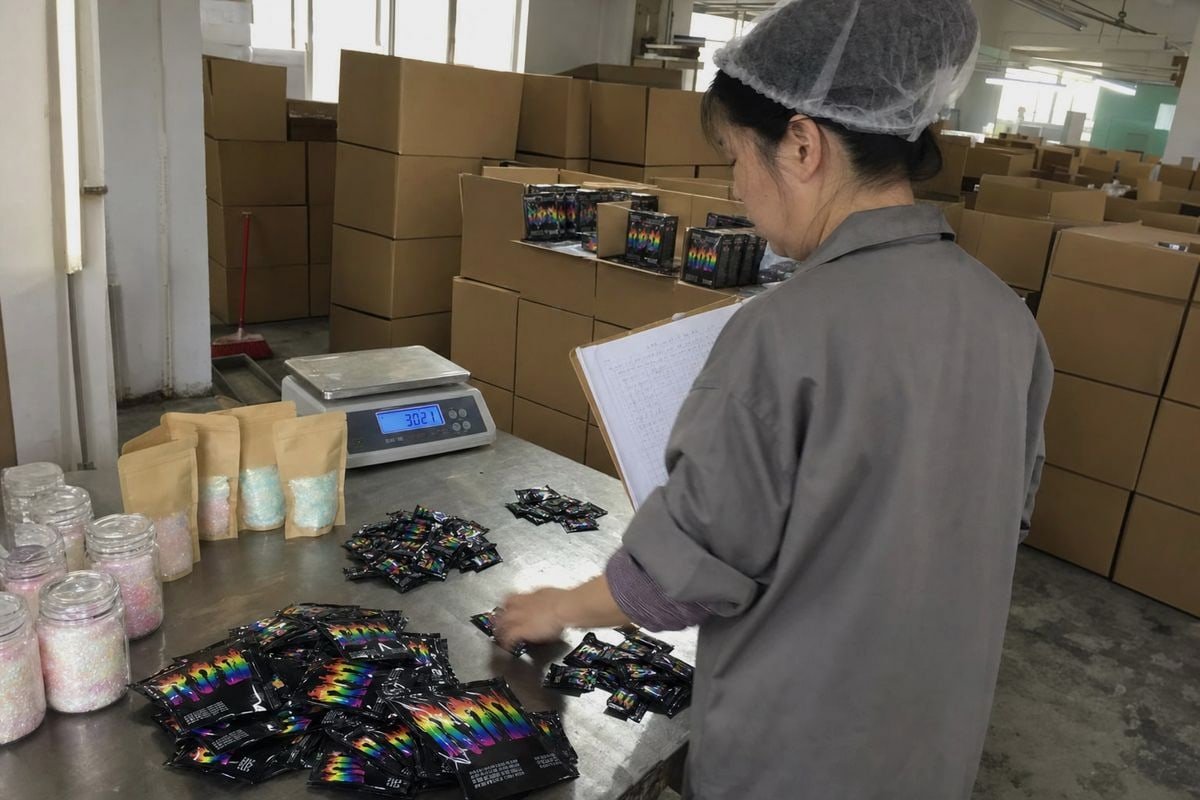
Allocating magic fire powder purchase quantities is where most importers stumble. I have watched buyers over-order one sachet size, then watch it sit dead on shelves while our production line runs a better-matched format for their competitor. Guess wrong, and your capital is frozen in slow stock. Get it right, and turnover accelerates. The fix is a simple package-size-times-sales-volume framework, which I will walk through below.
Allocate magic fire powder purchase quantities by converting expected sales into packets: multiply estimated fires per season by 1–3 packets per fire, assign 60–70% of volume to your hero 25g sachet, split the rest across trial and bulk formats, then round to carton counts.
That formula sounds simple. But each variable hides real decisions. Let me break down how we help distributors work through each one, step by step.
How Do I Calculate Order Quantities for Different Magic Fire Powder Package Sizes?
At our Ningbo facility, we pack the same color-changing crystals into 10g, 15g, 25g, and 30g sachets, plus jars. A German distributor once asked me which single size to buy. My answer: none — buy a weighted mix.
Calculate order quantities per package size by estimating total fires your customers will light, multiplying by 1–3 packets per fire, then splitting that packet total across sizes using historical size curves — typically 60–70% to 25g sachets, with the remainder in smaller trial and larger bulk formats.
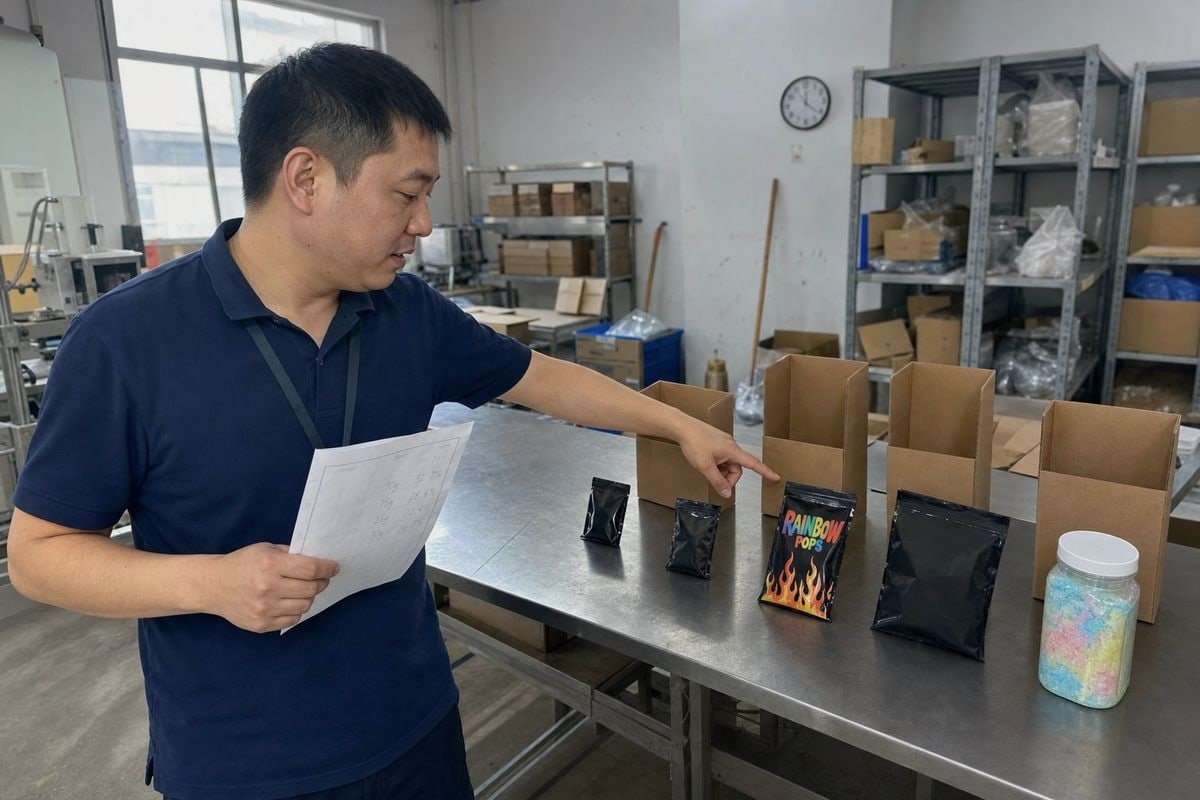
The core mistake buyers make is thinking in grams. Your end customer does not buy grams. They buy fires. Every campfire, fireplace evening, or backyard fire pit session consumes one to three packets. So your demand forecasting models should start with fire events, not weight.
The Three-Step Calculation
First, estimate fire events. A retailer selling to campers might see each customer light four to six fires per season. Second, convert to packets. Multiply events by an average of two packets per fire. Third, split by size curve. In our export data across 30+ countries, the 25g sachet consistently behaves as the hero SKU. Smaller 10g–15g formats sell fastest in convenience channels, while 30g packs and jars suit destination outdoor retailers.
Here is a worked example for a retailer expecting 1,000 customer fires per season:
| Package Size | Size Curve Share | Packets to Order | Best Channel Fit |
|---|---|---|---|
| Sachê de 10g–15g | 15% | 300 | Convenience stores, impulse racks |
| 25g sachet (hero SKU) | 65% | 1,300 | All locations, baseline stock |
| 30g sachet | 15% | 300 | Outdoor specialty retailers |
| Jar / bulk format | 5% | 100 | Repeat users, campgrounds |
Total base demand: 2,000 packets. Then add níveis de estoque de segurança 1 of 15–20% to cover forecast error, and round up to full display boxes and caixa master 2s. This protects your taxa de giro de estoque 3 while keeping shelves full. racionalização de SKU matters too: if a size sells under 10% of volume for two seasons, cut it rather than dilute your reorders.
What MOQ Should I Request When Testing New Package Sizes Before a Full Order?
A UK fireplace distributor once told me he lost a full season because another supplier demanded 8,000 pieces just to trial a kraft-bag format. We structure trial MOQs very differently, and for good reason.
Request a trial MOQ of one to three master cartons per new package size — roughly 480–840 sachets — enough to stock 5–10 retail locations for 4–8 weeks of real sell-through data, while keeping capital risk low before committing to full-container volumes.
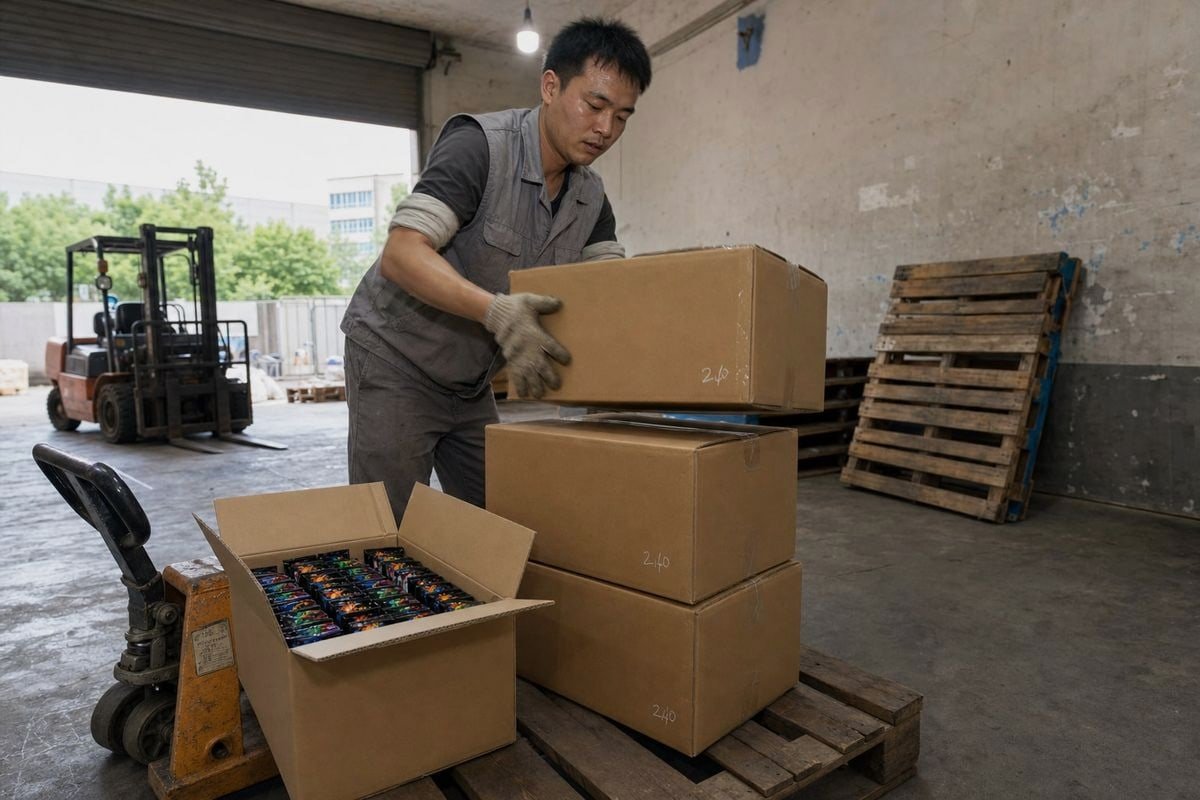
The purpose of a trial order is data, not margin. You need enough units on enough shelves to see a real sales signal. Too few, and one enthusiastic store skews your numbers. Too many, and a failed test becomes a write-off. In our experience exporting to the US and Germany, one to three master cartons per size hits that balance.
Why Carton Structure Sets the Floor
Our packing structure is typically 20–35 sachets per display box and 20–24 boxes per master carton. Ordering below one carton breaks the shipping unit, raises your per-unit freight cost, and wrecks unit price optimization. Ordering in clean carton counts also mirrors your eventual full order, so trial economics translate directly to scale.
What to Measure During the Trial
Track weeks of supply, sell-through rate per location, and reorder signals. If a new 15g kraft-paper sachet sells through in under six weeks across most test stores, it earns a slot in your full allocation. One more point matters for compliance-driven buyers: insist that trial samples come off the actual production line. Because we run strict batch-to-batch quality control under ISO 9001 4, our first sample reliably reflects mass-production quality — so your trial genuinely predicts what a full container will look like. A trading company sourcing from rotating factories cannot promise that, and a trial built on unrepresentative samples is worse than no trial at all.
How Can I Match My Purchase Volume to My Store's Actual Sales Data?
There is a trade-off we discuss with nearly every repeat buyer: order large and rarely to cut freight cost, or order smaller and often to stay close to demand. Your own sales data should settle that debate, not habit.
Match purchase volume to sales data by calculating average weekly packet sell-through per location, multiplying by your reorder lead time plus review period, adding 15–20% safety stock, and rounding to display-box increments — then adjust each cycle as fresh sales numbers arrive.
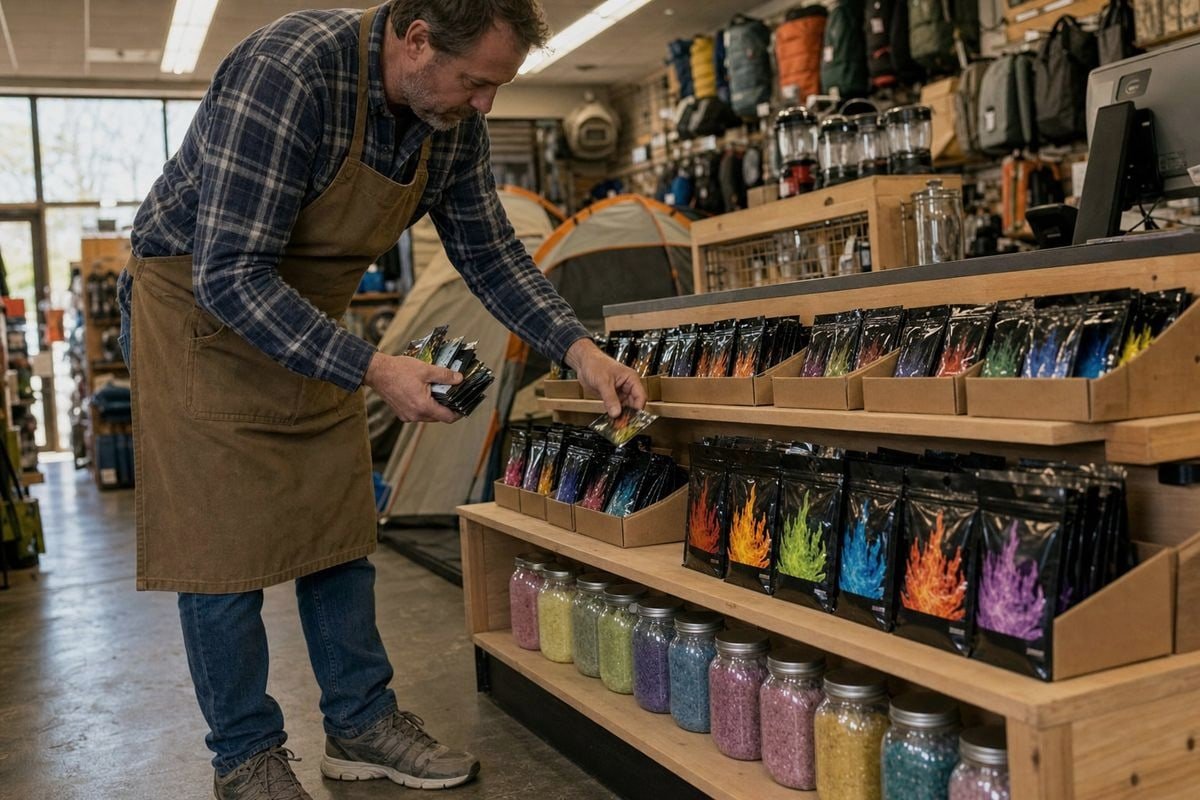
Most distributors already have the data they need sitting in their POS system 5. The problem is that nobody converts it into packet-level math before placing a purchase order. Let me show the sequence we recommend.
A Five-Step Replenishment Process
- Pull the last 12 weeks of sales per SKU per location. Ignore promotional spikes for baseline math.
- Calculate weekly sell-through. Say a location averages 40 sachets of the 25g size per week.
- Cover your lead time. Ocean shipment 6 from our factory to a US warehouse typically means planning 8–10 weeks ahead. That is 320–400 sachets of pipeline demand per location.
- Add safety stock levels. A 15–20% buffer absorbs forecast error and port delays without bloating inventory.
- Round to display boxes. Shelf-ready retail display packaging restocks faster and looks better than loose sachets, so display boxes should be your minimum allocation increment.
Watch Your Turnover, Not Just Your Cost
A healthy inventory turnover ratio for a novelty fire product is a better health metric than landed cost alone. Cheap stock that turns twice a year costs you more than fairly priced stock that turns six times. There is one useful proxy signal, too: attachment rate. Stores that sell firewood bundles or fire pits often see roughly one fire powder purchase for every five primary fire-goods sales. If your firewood sales are climbing, your color-changing campfire chemicals order should climb with them — usually a few weeks in advance.
Which Package Size Allocation Works Best for Seasonal Demand Changes?
Seventeen years of order books have taught our team one hard lesson: buyers who order flat quantities year-round almost always run out in October and sit on stock in April. Seasonality is not a nuance in this category. It is the category.
For seasonal demand, push 70% of annual magic fire powder volume into pre-season orders — weighted toward 25g hero sachets and multi-pack bundles before autumn and camping peaks — and hold the remaining 30% for in-season replenishment of proven fast movers.
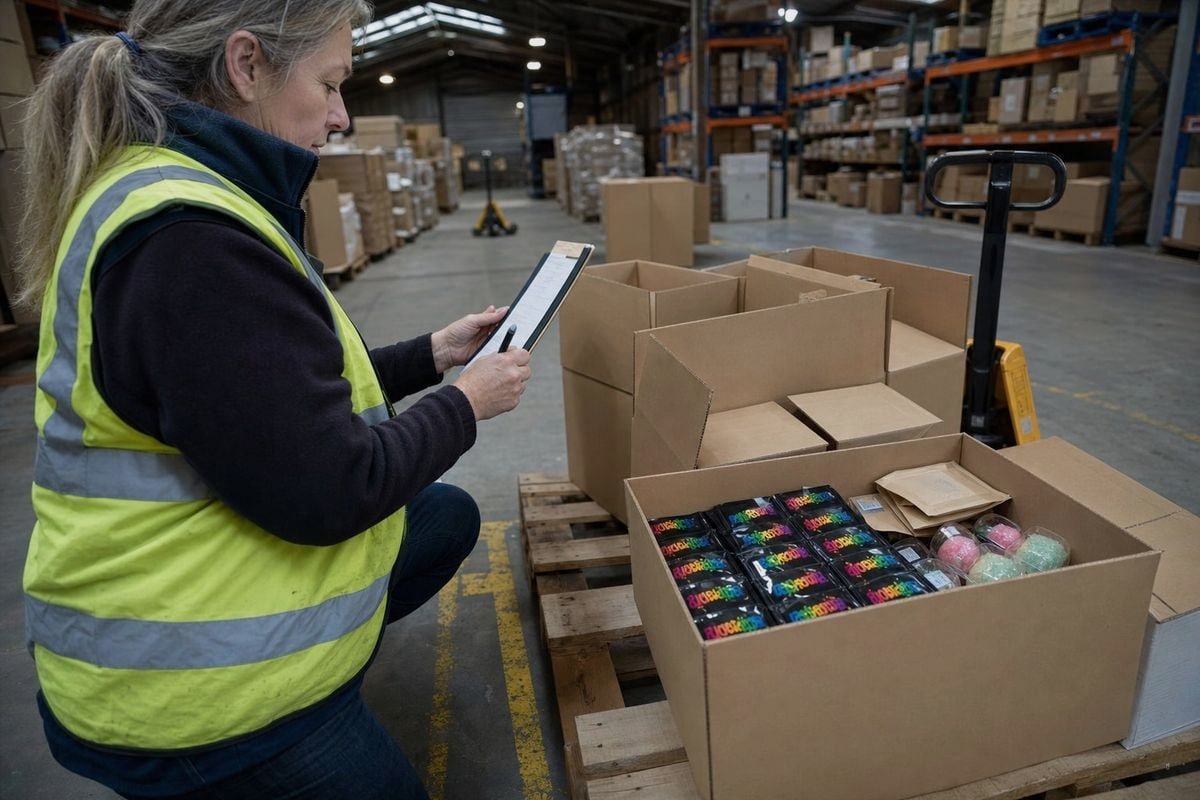
Seasonal sales trends for fire products follow two peaks: the camping and bonfire season, and the cold-weather fireplace season. In our main export markets — the US, Germany, the UK, and Canada — these peaks can absorb the majority of annual volume in just a few months. Wholesale distribution logistics make this worse: ocean lead times mean your peak-season stock decision happens months before the peak.
A Push-Then-Pull Allocation Model
The model that works for our long-term distribution partners is push-then-pull. Push roughly 70% of forecast volume into warehouses before the season starts, securing shelf space before demand spikes. Then pull the remaining 30% through faster replenishment cycles based on live sell-through. Some retail partners even time local promotions to weather — stocking up ahead of cold fronts and big camping weekends, when fire activity jumps.
| Season Phase | Compartilhamento de Volume | Priority Formats | Racional |
|---|---|---|---|
| Pre-season build (push) | 70% | 25g hero sachets, 10-pack bundles, display boxes | Secure shelf space; cover long lead times |
| In-season replenishment (pull) | 20% | Fastest-selling sizes only | React to real demand signals |
| Off-season baseline | 10% | Small sachets, jar formats | Serve year-round fireplace and event users |
Adjust the Size Mix by Season Too
The size mix should shift with the season, not just the total. Multi-packs and bundle formats over-index in peak season, when group gatherings and gift buying drive larger baskets — including the growing adult-novelty gifting trend around nostalgic group campfires. Off-season demand skews toward single sachets and jars for committed repeat users. A bulk procurement strategy that front-loads bundles and trickles singles keeps both curves covered. And because our linha OEM/ODM 7 can produce plastic bags, kraft bags, or jars with your private label, one pre-season production run can cover your full seasonal format mix in a single container. Eco-conscious urban markets increasingly favor the kraft-paper option, which is worth weighting up in those channels.
Conclusão
Allocate magic fire powder purchases by fires, not grams: anchor 25g hero sachets, trial new sizes in carton MOQs, replenish from sell-through data, and push volume pre-season. Partner with a certified factory, and the math holds container after container.
Notas de rodapé
1. Defines the buffer inventory concept the article uses to cover forecast error and delays. ↩︎
2. Reliable encyclopedia definition of bulk shipping containers used in product distribution and logistics. ↩︎
3. Background concept explaining the stock efficiency metric the article recommends tracking. ↩︎
Entrada autoritativa da Wikipedia fornecendo uma visão geral estável e acessível do padrão de gestão de qualidade. ↩︎
5. Explains the point-of-sale data source distributors use for sales-based replenishment. ↩︎
6. WTO tracks global shipping and trade logistics factors affecting international lead times. ↩︎
7. Alibaba is a major B2B platform for sourcing OEM/ODM private-label manufacturing partners. ↩︎



 English
  Spanish
  German
  French
  Arabic
  Portuguese
Participe da conversa