






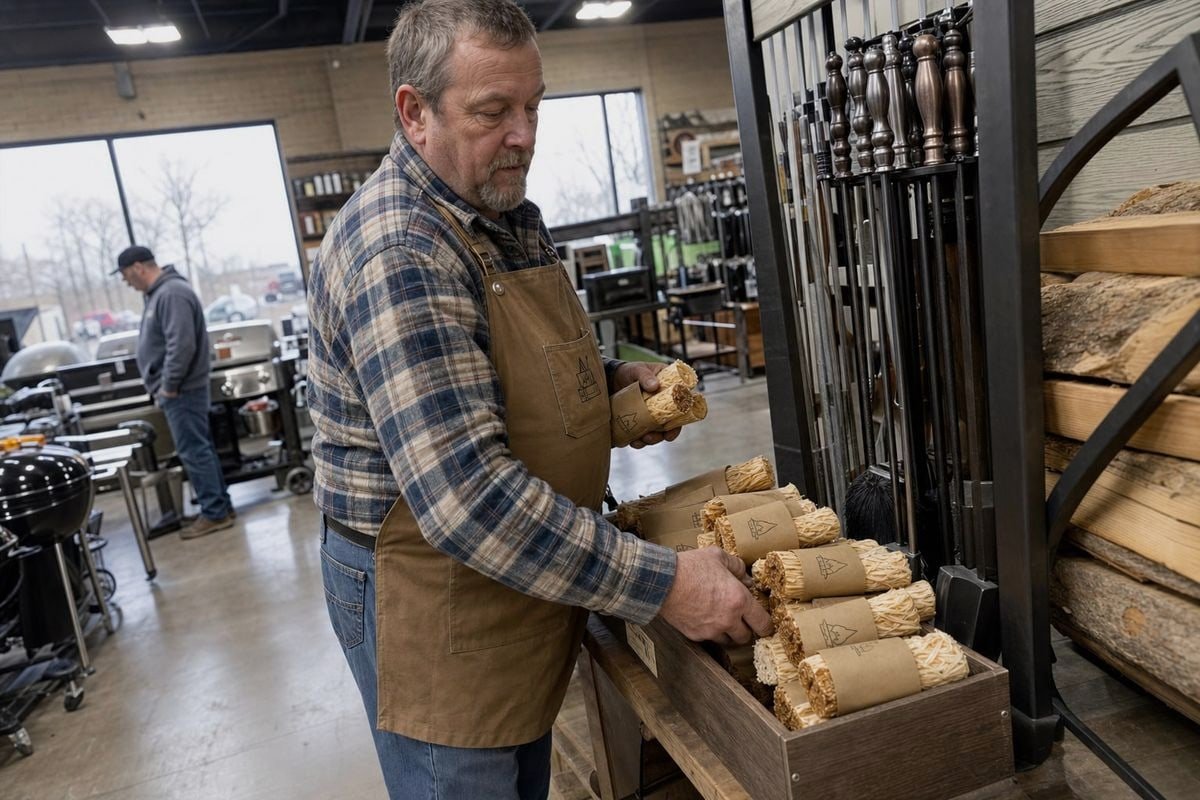
Wood fire starter kits are the small add-on our factory ships most often to hearth and outdoor retailers SGS and Intertek 1. Why? Because single-item sales quietly leak margin every day.
Wood fire starter kits boost bundled conversion rates by turning a single-item purchase into a complete solution. Placed beside fireplaces, grills, or firewood, a low-cost starter kit raises average order value, reduces buyer hesitation, and can lift attachment rates significantly without discounting the anchor product.
Let me walk you through the numbers, the packaging formats, the product specs, and how to run a low-risk trial order. Each section answers one buyer question directly.
How much can wood fire starter kits increase my average order value when bundled with fireplace accessories?
A German fireplace distributor once told me his stores sold beautiful hearth tool sets but almost nothing else in the basket. After we supplied wax-dipped wood roll starters for his counters, that changed fast.
Bundling wood fire starter kits with fireplace accessories typically lifts average order value by 8–20%, depending on placement and price framing. A kit retailing at $8–$15 attached to even one in four accessory sales adds meaningful basket growth while protecting full margin on the anchor product.
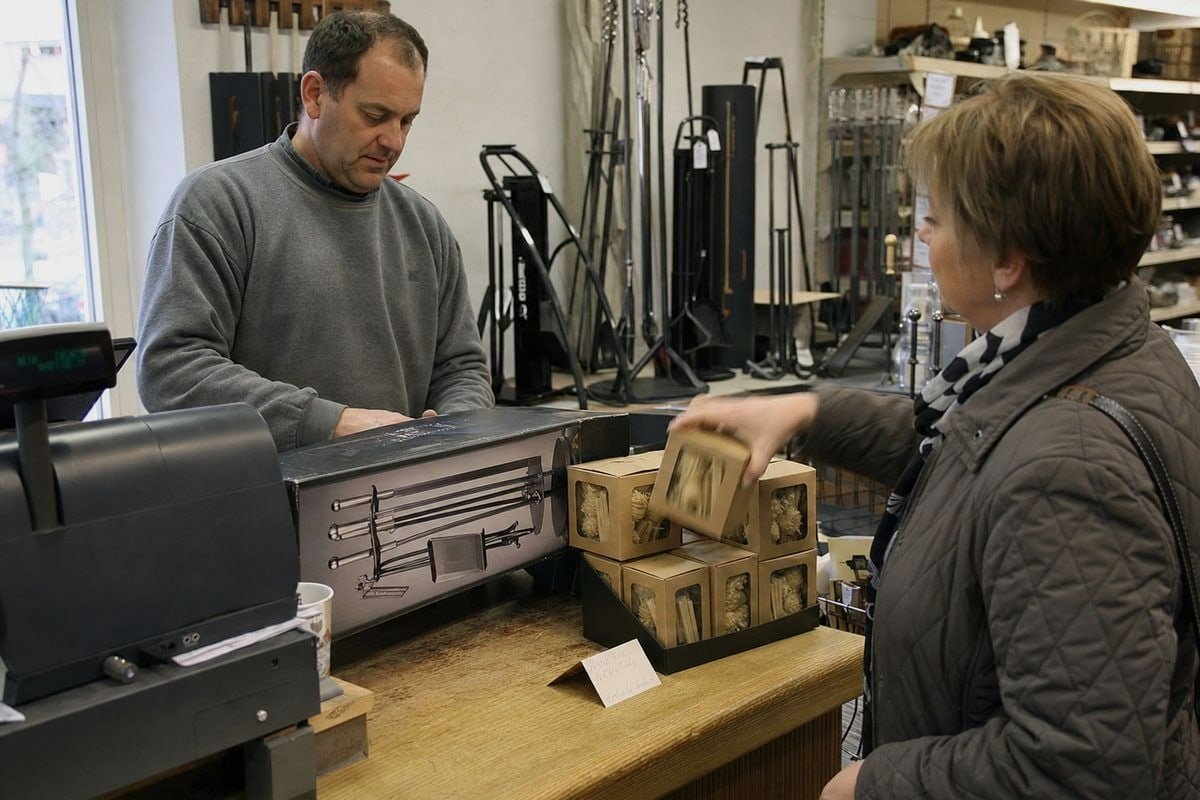
The math behind this is simple, and it is worth breaking down before you commit shelf space. A fire starter kit is what retail merchandisers call a completion item. The shopper buying a fireplace tool set, a log rack, or a cord of firewood still has one unsolved problem: getting the fire lit reliably. The kit closes that gap. Because it solves a real usage need, acceptance rates are much higher than for decorative add-ons.
The attachment rate math
Attachment rate 2 is the percentage of anchor-product transactions that include the add-on. Even modest attachment rates move the needle. Here is a simple model based on what our distributor partners in the US and Europe report back to us:
| Scenario | Anchor Sale | Kit Retail Price | Attachment Rate | AOV Lift |
|---|---|---|---|---|
| Conservative | $120 fireplace tool set | $9.99 | 15% | +1.2% per transaction average, +$1.50 blended |
| Typical | $120 fireplace tool set | $12.99 | 25% | +$3.25 blended per transaction |
| Strong seasonal | $120 fireplace tool set | $14.99 | 40% | +$6.00 blended per transaction |
Now consider margin. Starter kits sourced directly from a factory like ours often carry 50–65% retail margin. So the AOV lift is also a margin lift, not just top-line noise. Compare that to discounting the anchor product to close a sale, which destroys margin instead of building it.
Two more points matter. First, the market context supports the play: the firestarter category was valued at roughly USD 771 million in 2025 with projected growth above 5% annually, so you are attaching a growing category, not a dying one. Second, starter kits create repeat visits. Firewood burns out. Kits get used up. Fireplace tongs do not. The bundle plants a replenishment habit that the anchor product alone never could.
What packaging and display format works best to bundle wood fire starters with complementary products on my shelves?
Packaging is where we spend the most development time with private-label clients. In our Ningbo production lines, the same wax-dipped wood roll can ship in five different retail-ready formats, and each one converts differently on shelf.
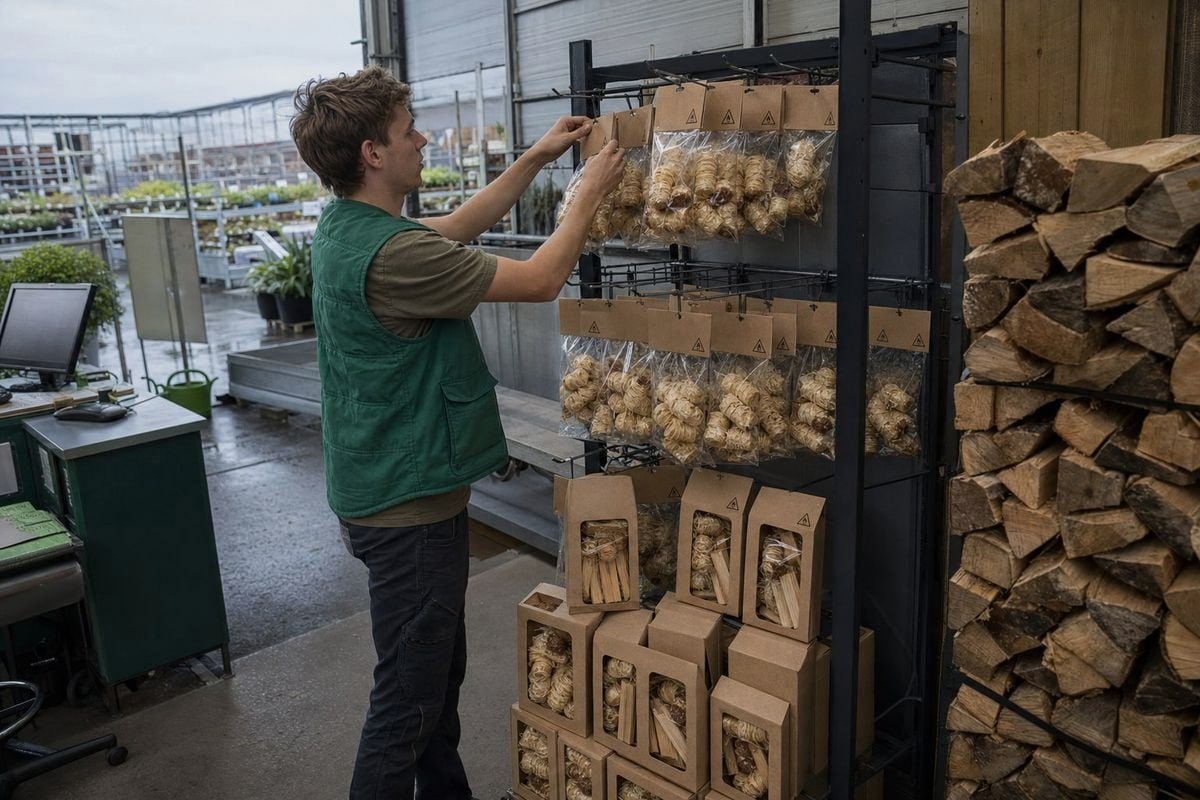
The best-converting formats are counter display boxes near checkout, clip-strips hung beside firewood and grills, and gift-ready window boxes for seasonal end-caps. Retail-ready packaging with clear usage instructions, burn time, and safety icons consistently outperforms loose bulk bins in specialty stores.
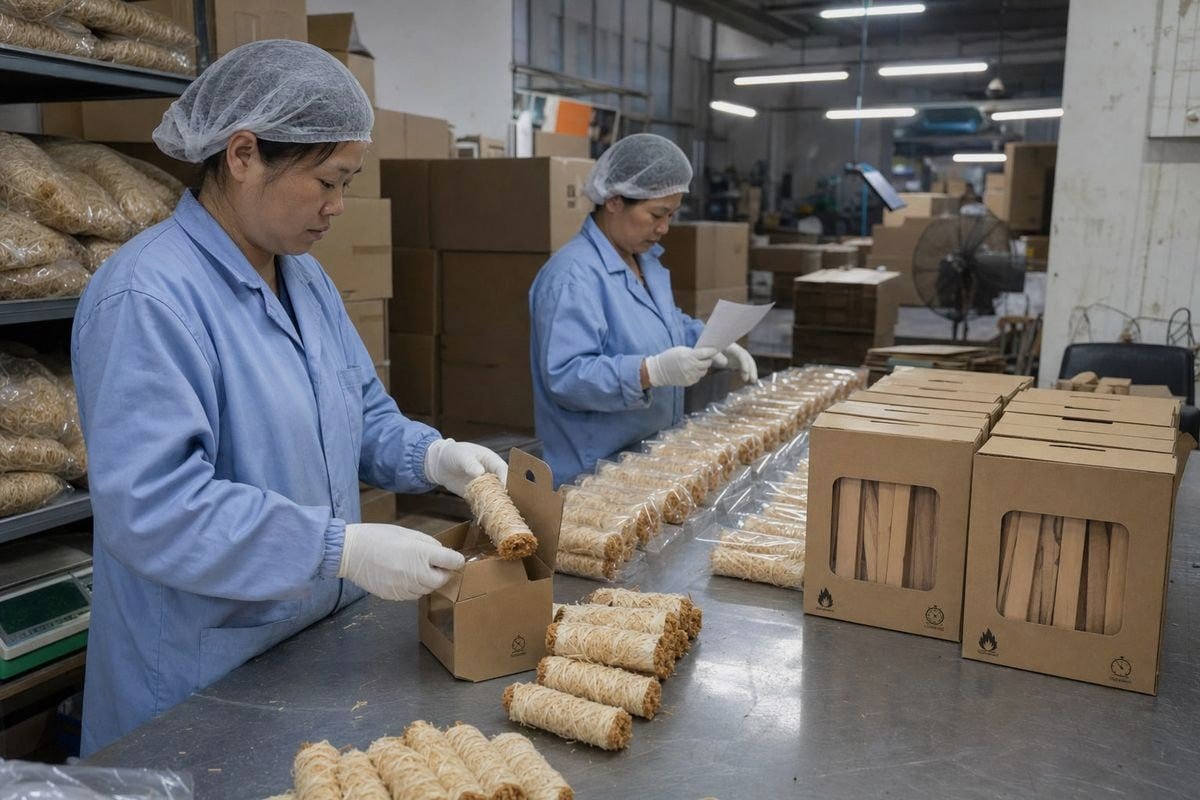
The format decision should start with one question: where will the shopper physically encounter the product? Different placements demand different packaging economics and different visual cues. We learned this the slow way over 17 years of OEM work — a box that wins at a garden center end-cap can die quietly at a BBQ store register.
Matching format to placement
| Packaging Format | Best Placement | Shopper Trigger | Typical Retail Price Band |
|---|---|---|---|
| Counter display box (50–100 pcs, tear-open) | Checkout counter | Impulse, low commitment | $0.50–$1.00 per piece |
| Clip-strip bags (6–12 starters) | Beside firewood, grills, fire pits | Problem-solution ("you'll need this") | $6–$10 |
| Kraft window box (starters + kindling sticks) | End-cap, hearth accessory wall | Complete-solution bundle | $12–$18 |
| Gift-ready printed box | Seasonal/holiday display | Gifting, housewarming | $15–$25 |
| Jar or tub (bulk household) | Shelf, replenishment aisle | Repeat purchase, value | $18–$30 |
Three packaging details that lift conversion
- Instructional clarity. Print how-to steps, burn time, and safety icons directly on the pack. Clear instructions reduce hesitation and returns, especially for first-time fire builders.
- Visible natural material. A window or open-top box showing the wood-wool texture 3 signals eco-friendly, chemical-free composition. That framing justifies premium pricing with sustainability-minded shoppers.
- Compliance marks. For our EU and US buyers, CE marks 4, warning labels, and barcode placement are non-negotiable. We build these into artwork at the ODM stage so the box is shelf-ready on arrival, not something the importer has to re-sticker.
One caution from experience: avoid generic copy like "great for fires." Tie the pack to the adjacent anchor product. A clip-strip beside grills should say "lights charcoal without lighter fluid." Relevance, not cheapness, is what converts.
Which wood fire starter specifications make cross-selling with grills, campfire kits, or fireplace tools easiest for my customers?
Spec sheets are where buyer conversations with our engineering team get detailed. A UK camping brand and a US fireplace distributor recently asked us for the same product — and left with two different burn-time specs, for good reason.
The easiest cross-selling specs are natural wood-wool or wax-dipped rolls with 8–12 minute burn times, waterproof wax coating, single-match ignition, and odorless, food-safe composition for grill use. Compact, individually usable pieces let one SKU serve fireplaces, grills, and campfires alike.
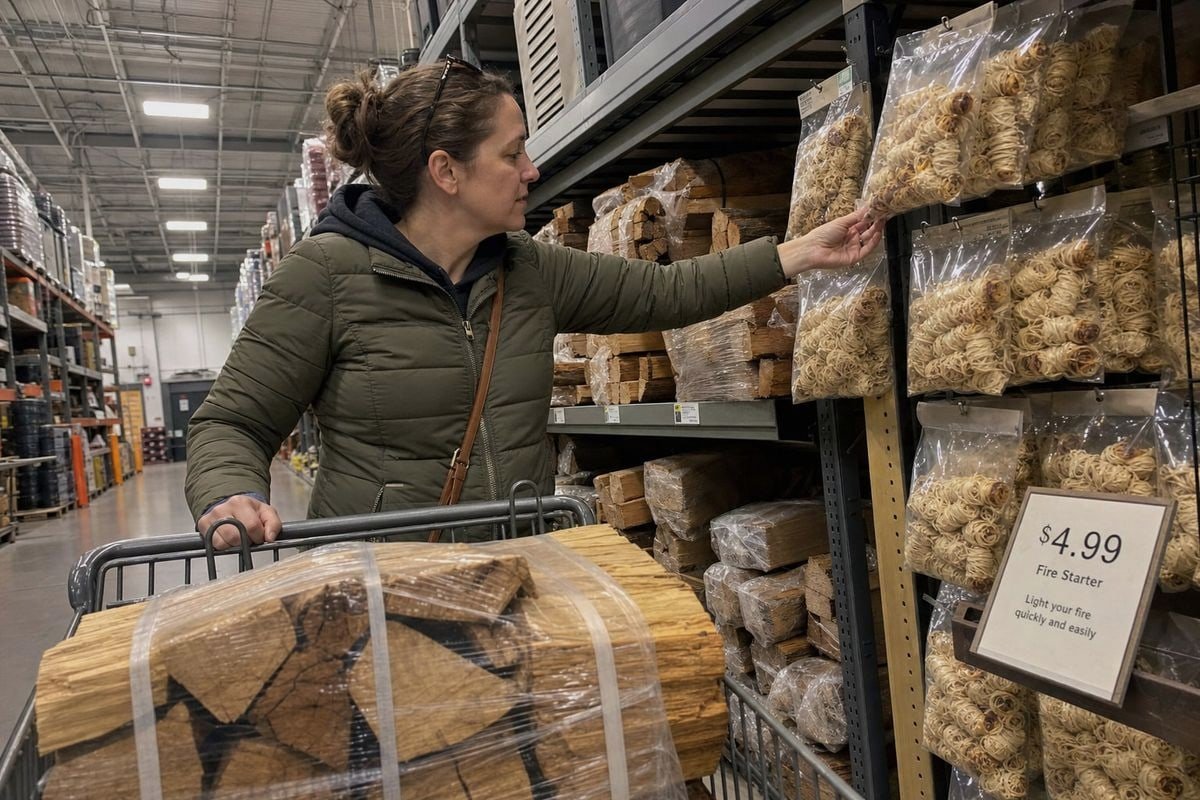
Cross-selling works when one product credibly serves the anchor category next to it. So the specification question is really a compatibility question. Let me break down what matters for each pairing.
Spec priorities by anchor category
| Anchor Category | Critical Spec | Why It Matters |
|---|---|---|
| Grills and smokers | Odorless, no chemical accelerants, food-safe wax | Shoppers reject anything that could taint food flavor |
| Campfire and camping kits | Waterproof coating, lightweight, compact size | Wet conditions and pack weight decide outdoor purchases |
| Fireplace tools and hearth | 8–12 min burn time, low smoke, clean ash | Indoor use demands clean burning and reliable ignition |
| Fire pits and outdoor living | Wind-resistant flame, larger piece size | Open-air ignition needs a stronger, longer flame |
The specs we recommend standardizing
From our production experience, four specifications remove the most cross-sell friction:
- Composition transparency. A simple declared mix — for example, natural wood fiber with food-grade paraffin 5 or plant wax — answers the grill shopper's first objection instantly. All our formulations avoid harmful chemicals, and our SGS and Intertek 6 test reports back that claim for retail buyers who need documentation.
- Single-match ignition. If the starter needs coaxing, the shopper blames the retailer. We QC-test ignition batch by batch so the piece a buyer samples matches the piece a consumer lights a container-load later.
- Consistent burn time. An 8–12 minute window lights kindling, charcoal, and split logs alike. Shorter burns limit the SKU to paper-thin kindling; longer burns waste material.
- Piece-level usability. Individually separable rolls or pucks let the consumer scale usage — one for a grill chimney, two for a damp fire pit. That flexibility is what lets a single SKU sit credibly in three departments.
Regional tuning helps too. Damp-climate markets like the UK and the Netherlands benefit from heavier wax coatings; drier markets can use lighter dips at lower cost. We adjust dip weight at the ODM stage for exactly this reason.
How do I test a bundled wood fire starter promotion with a small trial order before committing to a full retail rollout?
Trial orders are where most of our new B2B relationships start. A Canadian outdoor distributor once began with a single pallet split across three packaging formats — and that small test told him more than any catalog could.
Start with a low-MOQ trial of 500–1,000 units split across two or three bundle placements, run it for 6–8 weeks in select stores, and track attachment rate, AOV lift, and sell-through weekly. Reorder the winning format; drop or reprice the rest.
A disciplined trial protects you from two opposite mistakes: over-committing to an unproven bundle, and abandoning a good idea because it was tested badly. Here is the process we walk buyers through.
A six-step trial framework
- Define the hypothesis. Be specific. "Clip-strips of starter kits beside firewood will hit a 20% attachment rate" is testable. "Fire starters will sell well" is not.
- Order small, but order variants. Flexible MOQs exist for this reason. Request two or three formats — say, a checkout counter box and a kraft window bundle — so the trial compares placements, not just the product. Confirm your supplier's first sample genuinely reflects mass production; batch-to-batch consistency is what makes trial results trustworthy.
- Verify compliance before shelving. Check certifications, warning labels, and barcodes on the trial units themselves. ISO 9001 7, BSCI, and CE documentation should arrive with the trial shipment, not after the rollout order.
- Pick representative test stores. Choose two or three locations that mirror your chain's typical traffic, not your flagship. Run the test in season — fall or early winter for hearth channels, spring for grilling.
- Measure four numbers weekly. Attachment rate, AOV on anchor transactions, standalone kit sales, and units per store per week. Standalone sales matter: a kit that sells alone as well as in bundles deserves its own facing.
- Decide with thresholds set in advance. For example: attachment above 20% triggers a rollout order; 10–20% triggers a placement or price change and a second trial; below 10% ends the test.
One practical tip from our export side: align the trial timeline with realistic lead times. If your test ends in late October and rollout stock takes weeks on the water, you have missed the season. We help buyers back-plan production and shipping so a successful trial converts into shelf stock while demand is still peaking.
Conclusion
Specialty retailers lose basket size every day to single-item sales. Wood fire starter kits fix that leak — with the right specs, retail-ready packaging, smart placement, and a disciplined trial.
Footnotes
1. Links to SGS, the testing body cited for chemical-free composition verification. ↩︎
2. Defines the retail metric central to the article's bundling conversion analysis. ↩︎
3. Background on wood-wool material used in eco-friendly fire starter packaging. ↩︎
4. Official EU source explaining CE marking requirements referenced for retail compliance. ↩︎
5. Explains paraffin wax composition relevant to fire starter wax coating claims. ↩︎
6. Links to testing authority verifying product safety claims cited in article. ↩︎
7. Official ISO page defining the quality management standard mentioned for trial compliance. ↩︎


 English
  Spanish
  German
  French
  Arabic
  Portuguese
Join the Conversation