






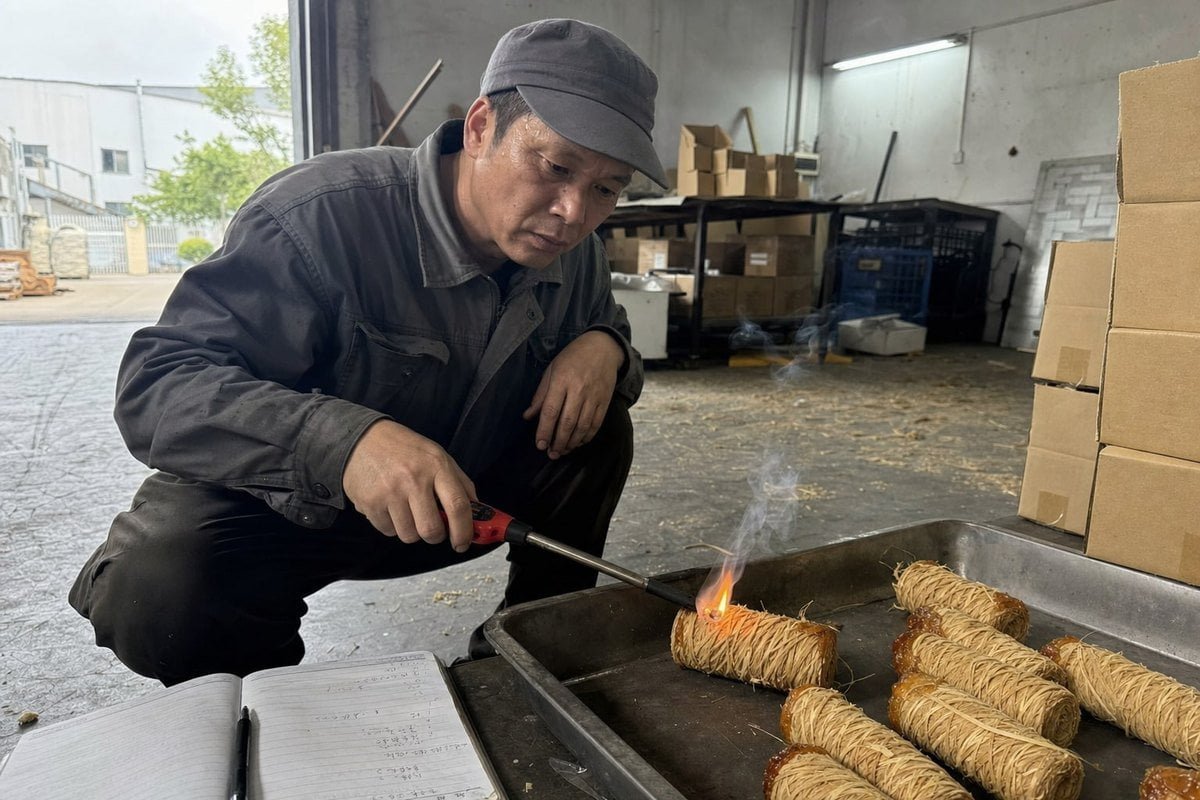
Judging smoke and odor levels of wood fire starters before buying is harder than it looks REACH regulation 1. I learned this the hard way on our own production line in Ningbo. A buyer once returned a competitor's container because the starters smelled like diesel indoors — and his retail customers noticed immediately CPSIA compliance 2. That kind of mistake destroys shelf trust. The good news is that smoke and odor are predictable. They come down to raw materials, wax type, moisture content percentage, and combustion quality creosote buildup 3. Once you know what to check, you can screen suppliers before a single pallet ships.
To judge smoke and odor levels of wood fire starters before buying, request SGS or Intertek emissions test reports, verify raw materials are kiln-dried wood fiber with food-grade paraffin or natural wax, burn a factory sample in a controlled test, and confirm certifications like CE, ISO 9001, and REACH compliance.
Let me walk you through each step in order. We will cover the lab reports to request, the materials that burn cleanest, how to run a sample test, and which certifications actually matter for your market.
What lab test reports should I request to verify smoke and odor safety before placing a bulk order?
In our 17-plus years exporting fire-starting goods to the US and Europe, one pattern never changes: serious buyers ask for test reports before they ask for prices. The buyers who skip this step are usually the ones calling us later with a problem shipment from someone else.
Request an SGS or Intertek burn-emissions report covering volatile organic compounds, particulate matter, and heavy metals, plus a material composition analysis, a moisture content percentage report, and REACH or CPSIA chemical compliance documents. Reports should be dated within the last 12–24 months and match your exact SKU.

A test report is only useful if you know what to look for inside it. Vague "passed" summaries are not enough. You need to see the actual parameters, the tested batch number, and the lab's accreditation. At our factory, we keep current SGS and Intertek reports on file for every product family, because our German and Dutch distributors treat them as a hard gate, not a nice-to-have.
The core reports and what they tell you
| Report type | What it verifies | Why it matters for smoke and odor |
|---|---|---|
| VOC emissions analysis | Levels of volatile organic compounds 4 released during burn | High VOCs mean sharp chemical odor and lingering fumes indoors |
| Material composition test | Actual wax type and wood fiber ratio | Confirms no kerosene, solvents, or unnamed accelerants |
| Moisture content report | Moisture content percentage of wood fiber | Damp fiber causes sputtering and heavy white smoke |
| Heavy metal screening | Lead, cadmium, mercury, chromium | Required for REACH and safe for cooking-adjacent use |
| Particulate matter 5 (PM) data | Smoke density during ignition and burn | Directly predicts visible smoke performance |
Questions to ask alongside the reports
First, ask whether the report matches the exact formulation you will receive. Some suppliers test one clean recipe, then produce with cheaper wax. Second, ask for the lab's accreditation number so you can verify it. Third, ask how often they re-test. We re-test at regular intervals and whenever a raw material source changes, because batch-to-batch consistency is the whole point of buying from a real factory instead of a trading company.
Finally, ask for the Safety Data Sheet (SDS). It should list every component. If a supplier hesitates to name their wax source, treat that as your answer.
Which raw materials and wax coatings tend to produce less smoke and odor in wood fire starters?
There is a trade-off we weigh every time we source wax for our wood rolls: cost versus cleanliness. Industrial-grade paraffin is cheaper, but it carries residual oils that smell harsh when burned. That is why our wax-dipped wood firestarters use cleaner grades — the odor difference indoors is impossible to ignore.
Kiln-dried wood wool, compressed sawdust without chemical binders, and aged fatwood produce the least smoke, while food-grade paraffin wax, beeswax, and soy-based wax coating produce the mildest odor. Avoid kerosene-treated compounds, industrial paraffin with residual oils, and high-bark-content fiber.
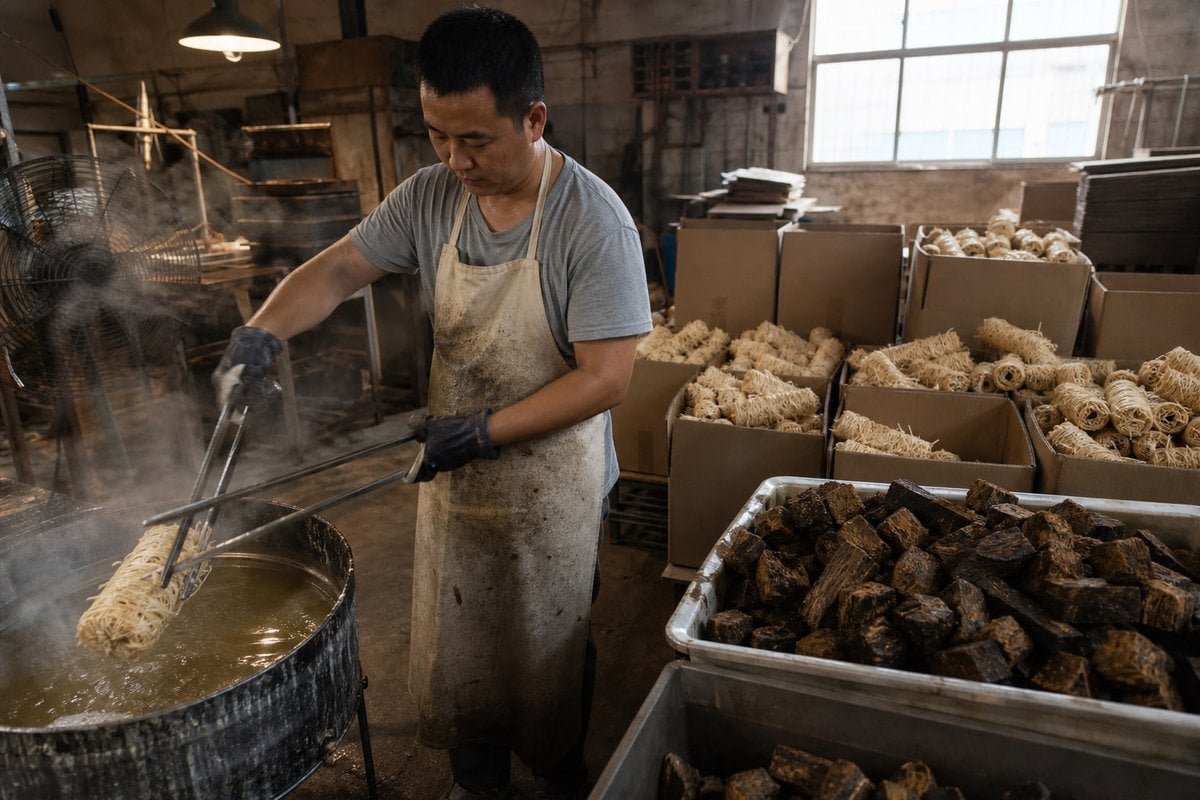
Materials decide most of the smoke and odor story before the flame ever starts. Let me break down both halves — the fiber core and the wax coating — because they behave differently.
The fiber core
Kiln-dried wood wool is the gold standard. Drying brings the moisture content percentage down to a stable, low level, which prevents the steam-like white smoke you see from damp fiber. The thin, curled strands also allow airflow through the starter, so combustion stays in the clean flaming phase instead of smoldering. Smoldering is where most smoke and odor are generated.
Fatwood is a different animal. Fatwood resin content is what makes it ignite so easily, but resin also carries a strong pine-terpene scent. Aged fatwood from dead stumps smells mellow, almost like incense. Fresh fatwood can smell like sharp turpentine. For indoor fireplace safety, aged and moderate-resin fatwood is the better pick.
Bark content matters too. High-bark fiber produces bitter, darker smoke than pure heartwood fiber. We screen our wood wool supply for exactly this reason.
The wax coating
| Wax type | Odor profile | Smoke level | Best use case |
|---|---|---|---|
| Food-grade paraffin wax | Nearly neutral | Very low | BBQ, grilling, cooking fires |
| Beeswax | Faint honey-sweet | Very low | Indoor fireplaces, premium lines |
| Soy-based wax coating | Mild, clean | Low | Eco-positioned retail brands |
| Industrial paraffin | Oily, slightly acrid | Moderate | Outdoor only, budget lines |
| Kerosene-treated compounds | Sharp chemical fumes | High | Avoid entirely |
For BBQ and grilling brands, this matters commercially. A starter that is flavor-neutral for BBQ protects the food it helps cook. That is why we specify food-grade paraffin wax for buyers serving the grilling market, and why chemical-free ignition is a claim we can put on packaging with test data behind it.
How can I evaluate smoke and odor levels from a factory sample before committing to mass production?
A purchasing manager from Poland once visited our Ningbo facility with a lighter in his pocket. He burned three of our samples on the spot before discussing terms. I respected that. A structured sample burn tells you more in ten minutes than a week of emails.
Burn the sample in still air and observe three phases: ignition should show no black smoke, the steady burn should be nearly smoke-free with only a faint wax or wood scent, and burnout should leave minimal soot or tar residue. Also smell the unlit sample — a fuel-like odor signals high VOC content.
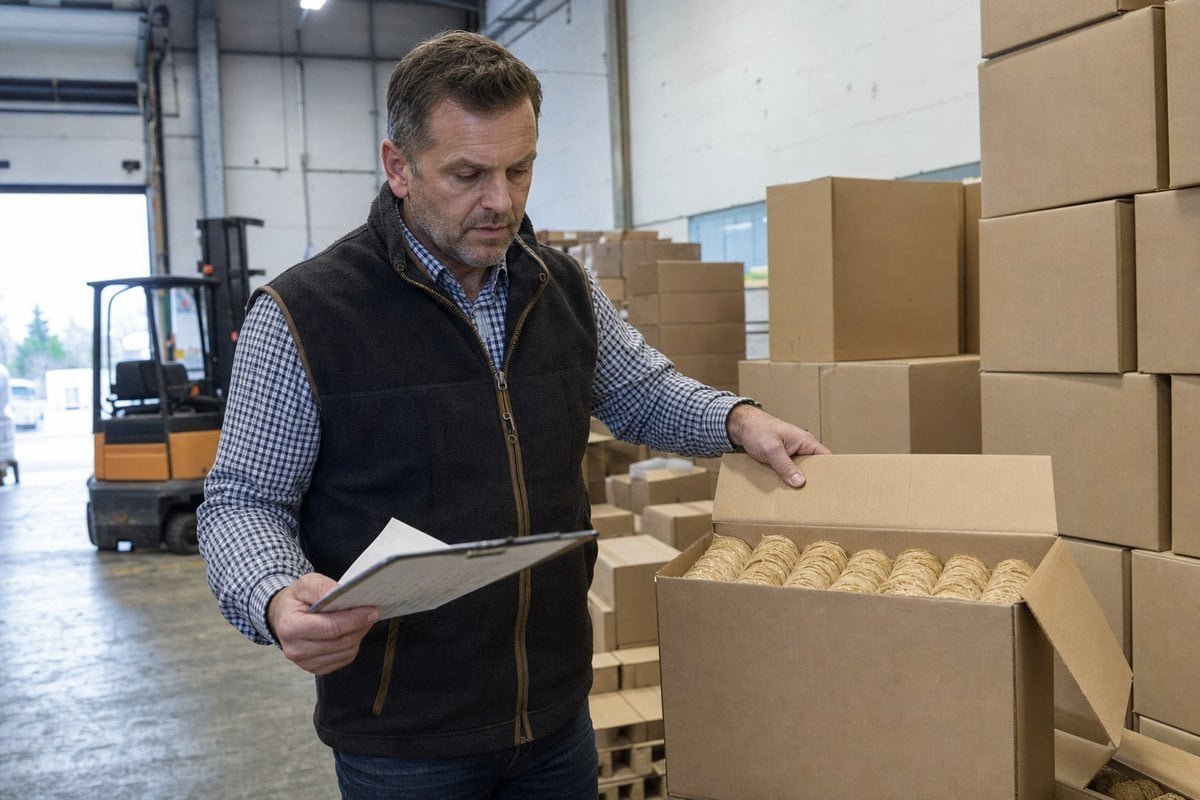
Here is the exact protocol I recommend to our B2B buyers. It mirrors what our own QC team runs on every production batch, so you and your supplier are measuring the same things.
The five-step sample evaluation
- Cold scent test. Smell the unlit sample and the inside of the packaging. A mild wax, pine, or wood scent is normal. A solvent or fuel-like smell means high volatile organic compounds that will linger after lighting.
- Inspect before burning. Check for wax bloom, seepage, or greasy pooling. Uneven wax suggests unstable formulation. Confirm the fiber looks dry and springy — a sign of proper kiln-dried wood wool.
- Ignition phase. Light one edge in still air. It should catch within seconds. Watch the first 30 seconds closely: black or thick gray smoke here means poor wax quality or accelerants. A brief thin wisp is acceptable.
- Steady burn phase. A clean starter burns with a bright, stable flame and near-invisible smoke. Sputtering, hissing, or steamy haze points to excess moisture. Note the burn time against the supplier's claim.
- Residue check. After burnout, examine what remains. Fine gray ash is good. Tar-like drips, blackened wax pools, or heavy soot indicate incomplete combustion 6 — the same conditions that cause creosote buildup prevention problems in your customers' flues.
Compare samples against future production
One warning from experience: a beautiful sample means nothing if mass production drifts. Ask the supplier how they control wax temperature, dip time, and fiber moisture batch to batch. Our position has always been that the first sample must reliably predict container quality — that consistency is what our ISO 9001 7 process controls exist to guarantee. Request a pre-shipment sample from the actual production run and repeat the same five steps before the goods leave the port.
What certifications confirm a wood fire starter meets low-smoke and low-odor standards for my target market?
Compliance requirements taught us an early lesson when we expanded from the US into Germany: paperwork that satisfies one market can be worthless in another. Our certification stack — ISO 9001, BSCI, CE, plus SGS and Intertek testing — was built market by market, audit by audit, because our importers cannot clear customs or pass retailer onboarding without it.
For the EU, look for CE marking, REACH chemical compliance, and EN-standard testing; for the US, CPSIA and ASTM-referenced lab reports; globally, ISO 9001 for consistent quality and BSCI for factory ethics. SGS or Intertek emissions data supports any low-smoke, low-odor claim.
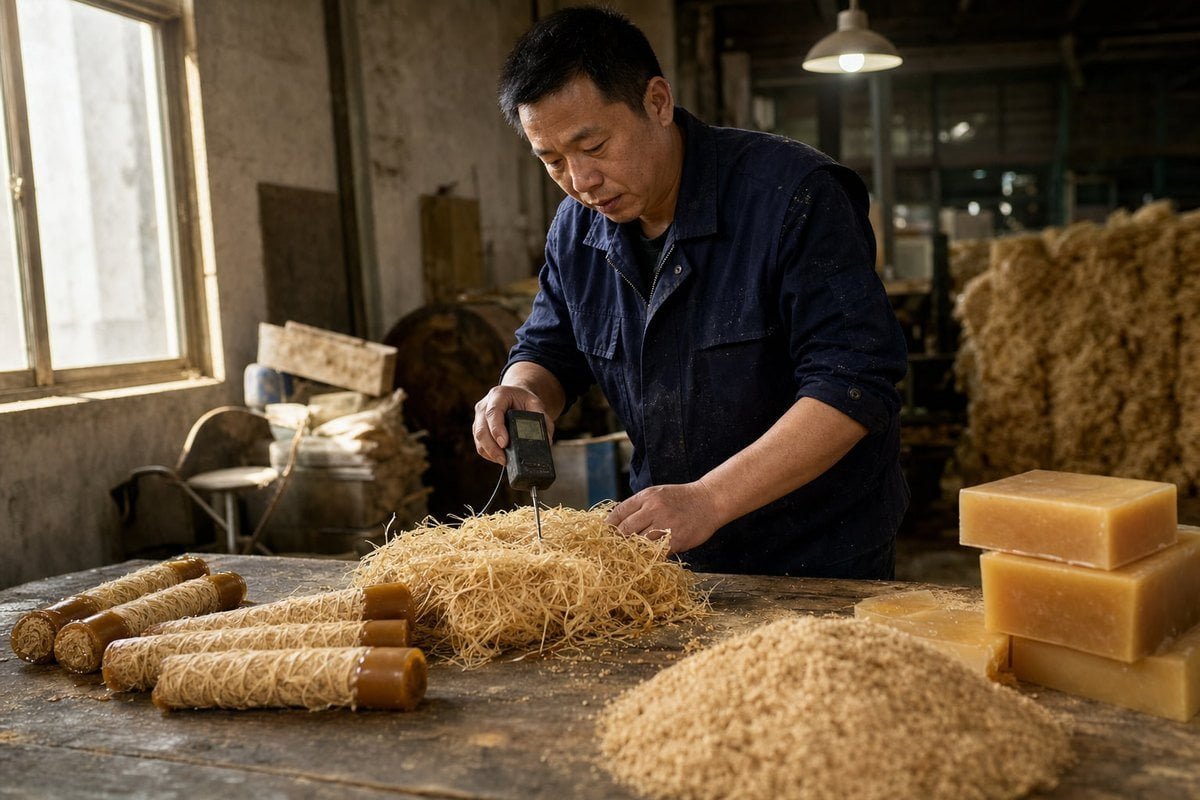
No single certificate says "low smoke" on its face. Instead, a set of certifications together proves the product is chemically clean, consistently made, and legally sellable. Here is how the pieces map to your target markets.
Certification map by market
| Market | Key requirements | What it confirms about smoke and odor |
|---|---|---|
| EU (Germany, France, NL, Poland) | CE marking 8, REACH, EN test standards | No restricted chemicals; verified combustion safety |
| UK | UKCA (post-Brexit CE equivalent), REACH-aligned rules | Same chemical and safety assurance as EU |
| US & Canada | CPSIA, ASTM-referenced testing, proper warning labels | No hazardous substances; labeling meets retail rules |
| Australia | ACCC product safety compliance | Chemical and flammability safety |
| Large retail chains | ISO 9001 plus retailer-specific audits, BSCI | Batch consistency and ethical production |
Reading beyond the logo
A certificate logo on a website proves nothing by itself. Ask for the certificate number and verify it with the issuing body. Check the scope — an ISO 9001 certificate covers a factory's quality system, so confirm it names the actual production site, not a trading office. Our buyers verify our Ningbo production scope routinely, and we encourage it, because it separates real factories from resellers.
Also connect certification to claims. If a supplier prints "low smoke" or "chemical-free ignition" on retail packaging, that claim should trace back to a specific SGS or Intertek test. In the EU especially, unsupported environmental claims are becoming a legal risk for the importer — meaning you, not the factory, carry the exposure. For private-label programs, we build the warning labels, barcodes, and compliance text into the packaging design from day one, so the box that reaches a shelf in Hamburg or Houston is already audit-ready.
Conclusion
Smoke and odor problems are invisible in a catalog but obvious the moment your customer lights a fire — and by then, the container is already paid for. The fix is a disciplined screening process: demand current SGS or Intertek emissions reports, insist on kiln-dried wood wool with food-grade paraffin wax or a soy-based wax coating, run the five-step sample burn yourself, and verify certifications against your specific market. In our 17 years shipping wood fire starters to 30-plus countries, the buyers who follow these steps almost never face returns for smell or smoke. Choose material transparency and tested evidence over marketing language, and your fire starters will earn repeat orders instead of complaints.
Footnotes
1. Comprehensive Wikipedia entry explaining the REACH chemical safety regulation. ↩︎
2. Reliable Wikipedia summary of the Consumer Product Safety Improvement Act. ↩︎
3. Official EPA guidance on wood burning safety and creosote prevention. ↩︎
4. Defines VOCs, the core chemical driver of smoke and odor discussed throughout the article. ↩︎
5. EPA page defining particulate matter, a key pollutant tested in emissions reports. ↩︎
6. Background concept explaining why smoke and soot form during poor burning. ↩︎
7. Authoritative Wikipedia overview of the ISO 9001 quality management standard. ↩︎
8. EU official source explaining CE marking requirements for product safety compliance. ↩︎



 English
  Spanish
  German
  French
  Arabic
  Portuguese
Join the Conversation