






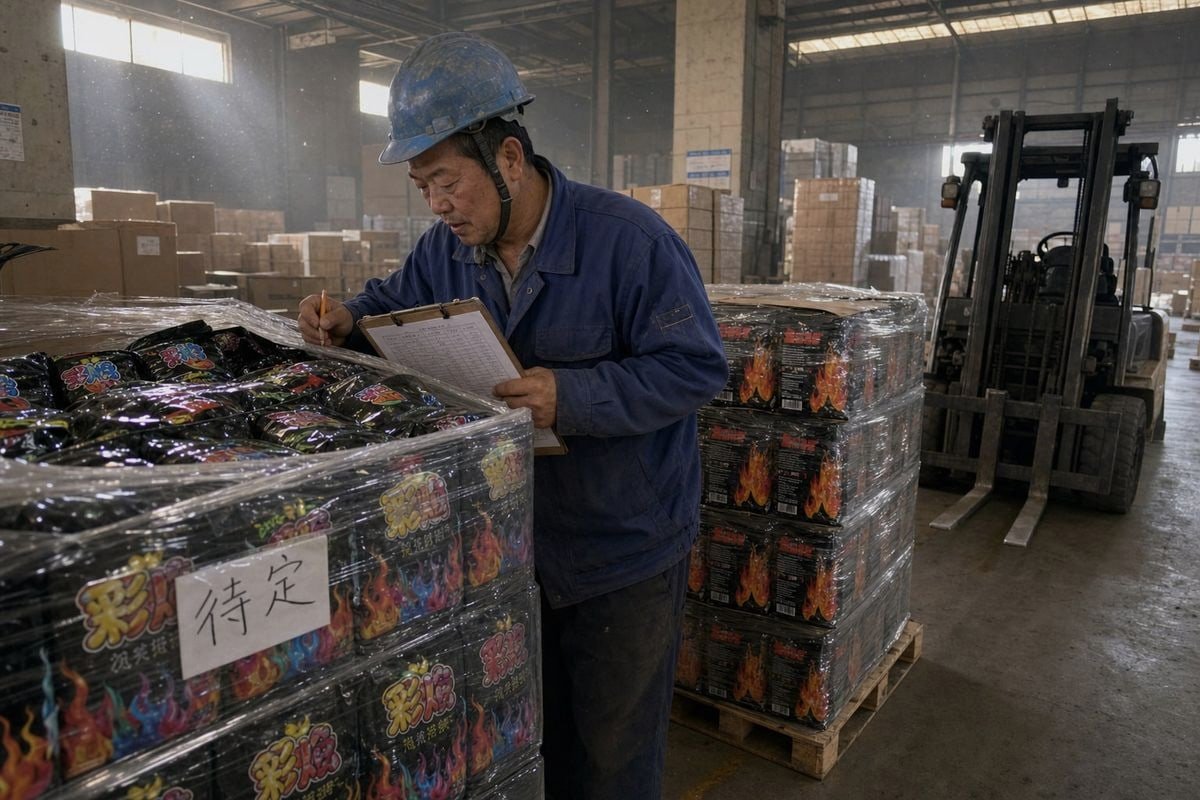
Packaging design revisions can quietly wreck a warehouse. On our Ningbo production line, we have watched buyers scrap thousands of Magic Fire pouches after a rushed redesign made old stock obsolete.
To control packaging design revisions for Magic Fire Powder, centralize artwork in one version-controlled repository, require cross-functional sign-off before printing, count old packaging stock before approving changes, set clear last-print and cutoff dates, and lock obsolete files so they cannot re-enter production.
That short answer works. But the details decide whether you save money or write off pallets. Let me walk you through the exact system we use with our OEM buyers.
What steps can I take to keep packaging revisions from creating obsolete Magic Fire Powder inventory?
A German distributor once asked us to reprint 20,000 foil pouches mid-season because a warning symbol changed. His old pouches sat in the warehouse for a year. That pain shaped how we manage version control today.
Prevent obsolete inventory by treating artwork as controlled master data: assign each version a unique ID and status, store files in one repository, require formal approval gates, record every change reason, and never release new artwork until you know how much old packaging remains.

Most overstock is not a forecasting error. It is a process gap. Files scattered across email, local drives, and shared folders mean designers, marketing, and supply chain each work from a different version. Then someone prints the wrong one. The warehouse does not just store product — it stores the physical consequences of every artwork decision.
Build a single source of truth
Every packaging component — pouch, sachet, display box, kraft bag — needs one master file location. In our factory, each Magic Fire artwork carries a unique ID, a version number, and a status: draft, approved, or obsolete. Only approved files go to the print supplier. Obsolete files are locked, not just archived in a forgotten folder where someone can grab them by mistake.
Define ownership and approval gates
One person owns each artwork ID. Regulatory, QA, brand, and supply chain each sign off before release to print. This sounds slow, but it is faster than a recall or a write-off. For a flame-coloring product, the caution label 1 and usage instructions are not decoration — they are compliance content that must be traceable.
| Control Step | What It Prevents | Who Owns It |
|---|---|---|
| Unique artwork ID + version number | Mixed versions at the printer | Design lead |
| Draft/approved/obsolete status | Old files re-entering production | Artwork owner |
| Cross-functional approval gate | Compliance and machinery mismatches | QA + supply chain |
| Change-reason log | Untraceable revisions during audits | Artwork owner |
| Obsolete-file lockout | Accidental reprints of dead artwork | System admin |
Also watch SKU proliferation. Every new size, language, or seasonal design multiplies your packaging components. Standardizing pouch dimensions across weights — say, your 10g and 25g sachets — cuts unique components and simplifies dead stock management before it starts.
How do I coordinate design changes with my supplier's production schedule to avoid overstock?
Timing is the trade-off we weigh with buyers every season. Approve a redesign too late and you miss the camping season; approve it too early and your old Magic Fire pouches become dead stock overnight.
Coordinate by sharing your revision calendar with your supplier early, agreeing on last-buy, last-print, and last-use dates for the old version, aligning the effective date with packaging lead times, and scheduling the new version's first run only after old stock depletion is planned.

Your supplier's production schedule and your artwork calendar must move together. When they drift apart, one of two things happens: the factory prints more old packaging while your new design sits approved, or the new design launches while pallets of old pouches still fill your warehouse. Both outcomes tie up cash and drag down your inventory turnover ratio 2.
Use the last-buy / last-print / last-use rule
This is the single most useful rule we give buyers. For every packaging version, set three dates:
- Last buy — the final date procurement may order old materials.
- Last print — the final production run using old artwork.
- Last use — the date after which only the new version may ship.
Once these dates are fixed, our planning team schedules the changeover on the line. There is no guessing, and no "one more batch" of the old design slipping through.
Match the calendar to real lead times
Packaging lead times for printed foil pouches, display boxes, and kraft bags differ. A foil pouch with a new gravure cylinder 3 takes longer than a label swap. Build the revision calendar backward from your launch date, and include your supplier's minimum order quantity in the math — an MOQ that exceeds one season's demand of a transitional design is a built-in overstock risk.
Communicate changes in writing, early
In our experience exporting to the US and Europe, the buyers who avoid overstock share redesign plans with us one to two production cycles ahead. That lets us hold off on reordering old pouch film, use up existing stock in a final run, and slot the new version cleanly into the schedule. Supply chain optimization here is mostly communication discipline, not software.
Can I use phased rollouts or trial orders to test new packaging before committing to full-batch inventory?
Lesson learned the hard way: years ago we produced a full container of a redesigned color-flame pouch for a client who had skipped market testing. Retail feedback forced a second revision within months. Since then, we push every buyer toward trial orders 4 first.
Yes. Run a small trial order or pilot batch of the new packaging, sell it through selected channels, gather retail and compliance feedback, then commit to full volume. Meanwhile, use a roll-through strategy so existing stock depletes naturally instead of being scrapped.

Phased rollouts 5 turn a risky all-or-nothing switch into a controlled experiment. They also fit naturally into product lifecycle management: you introduce, validate, scale, and retire each packaging version deliberately rather than by accident.
Roll-through vs. hard cutover
For minor updates — a refreshed flame graphic, a tweaked color gradient — a roll-through works best. You keep shipping old stock until it runs out, then switch. For regulatory changes, such as an updated caution label, a hard cutover with a fixed effective date is usually mandatory. Know which type of change you are making before choosing the transition method.
| Transition Method | Best For | Overstock Risk | Speed to Shelf |
|---|---|---|---|
| Roll-through (deplete old stock first) | Minor cosmetic updates | Very low | Slower |
| Phased rollout by channel/region | Major redesigns | Low | Moderate |
| Hard cutover with fixed date | Regulatory or safety changes | Medium (plan depletion) | Fast |
| Overlay/relabel existing stock | Small text or language fixes | Very low | Fast |
Keep trial batches genuinely small
We offer flexible MOQs on trial orders precisely for this reason. A pilot of a few thousand units tells you whether the new pouch reads well on shelf, survives transit, and satisfies your market's compliance reviewers — before you commit a full container. Print-on-demand solutions and digital printing also help here: variable elements like safety warnings or seasonal branding can run in small batches, so you never hold six months of a design you might revise. Some buyers even shift dynamic content — usage videos, compliance updates — to a QR code on the pouch QR code standard 6, which cuts the frequency of physical print revisions altogether.
What documentation process helps me track packaging revisions and prevent warehouse confusion?
During a BSCI audit at our factory, the auditor pulled a random Magic Fire sachet from the line amfori BSCI 7 and asked us to trace its artwork version, approval record, and change reason. We could, in minutes. That traceability is exactly what your warehouse needs too.
Maintain a revision log linking each artwork ID to its version number, change reason, approver names, effective date, and affected SKUs. Pair it with monthly packaging inventory audits and clear physical labeling of old versus new stock to prevent warehouse mix-ups.

Documentation sounds boring until the wrong pouch ships to a regulated market. For a fire-related consumer product, packaging changes must be traceable and tied to approval records, regulatory text, and production batches. A simple, disciplined paper trail beats an expensive system used inconsistently.
The core revision record
Every change entry should answer five questions: what changed, why, who approved it, when it takes effect, and which SKUs and barcodes it touches. Record the reason even for small tweaks — "updated EU warning text" versus "seasonal graphic refresh" determines whether old stock can still be sold or must be reworked.
| Field | Example Entry |
|---|---|
| Artwork ID / Version | MF-POUCH-25G / v4.2 |
| Change reason | Updated caution label per EU requirement |
| Approvers | QA, regulatory, brand, supply chain |
| Effective date | Start of next production run |
| Affected SKUs / GTINs | 25g pouch, 25g display box |
| Old stock disposition | Sell through by cutoff; then relabel or scrap |
Connect documents to the physical warehouse
A log alone does not stop confusion on the floor. Run monthly inventory aging audits specifically for packaging materials, so slow-moving components surface before a revision makes them worthless. Physically separate and label old-version stock. Track leftover components in their own location codes for disposal, rework, or controlled use. Then measure the system: revision cycles per SKU, time from change request to approval, warehouse value tied up in outdated packaging, and wrong-version incidents. Feeding these numbers back into demand forecasting closes the loop — you order what the transition actually needs, not what habit dictates.
Conclusion
Packaging overstock is a process problem, not bad luck. Control versions, set cutoff dates, run trial orders, document everything — and partner with a factory that plans changeovers with you.
Footnotes
1. Authoritative U.S. source on consumer product safety warning labeling requirements. ↩︎
2. Background definition of the inventory metric affected by packaging revision delays. ↩︎
3. Explains the printing technology process mentioned for foil pouch packaging changes. ↩︎
4. Leading B2B trade platform relevant to sourcing trial and pilot manufacturing batches. ↩︎
5. Relates the phased rollout strategy to broader product lifecycle management concepts. ↩︎
6. Authoritative Wikipedia page covering the ISO/IEC 18004 standard and technical specifications. ↩︎
7. Official amfori solution page for the Business Social Compliance Initiative (BSCI). ↩︎



 English
  Spanish
  German
  French
  Arabic
  Portuguese
Join the Conversation