







Assessing whether a wood fire starter supplier supports advance production scheduling saved several of our buyers from disaster production bottleneck identification 1. I have watched importers lose entire winter seasons because a factory promised dates it could never hit. On our own wax-dipped wood roll lines, we learned early that a promise without capacity behind it is just a wish — and that realistic scheduling, not optimistic quoting, is what keeps shelves stocked.
To assess if a wood fire starter supplier supports advance production scheduling, verify finite capacity planning, request a production calendar, review on-time delivery history, confirm ERP system integration, and audit documentation like capacity statements and lead-time definitions. A capable supplier commits to firm, capacity-aware dates — not rough estimates.
That is the short answer. The rest of this article breaks it down step by step BSCI certification 2. I will show you what to ask, what evidence to demand, and which red flags to walk away from.
What Lead Times Can I Expect for Bulk Wood Fire Starter Orders?
A buyer from Germany once asked me why two suppliers quoted him 20 days and 60 days for the same order. In our 17+ years of exporting fire-starting goods, that gap almost always comes down to scheduling maturity, not speed.
Bulk wood fire starter orders typically require 25–45 days from deposit to ex-factory, depending on order size, customization level, and season. Peak-season orders placed between August and November often need 15–20 extra days, so reliable suppliers quote capacity-based lead times, not fixed promises.
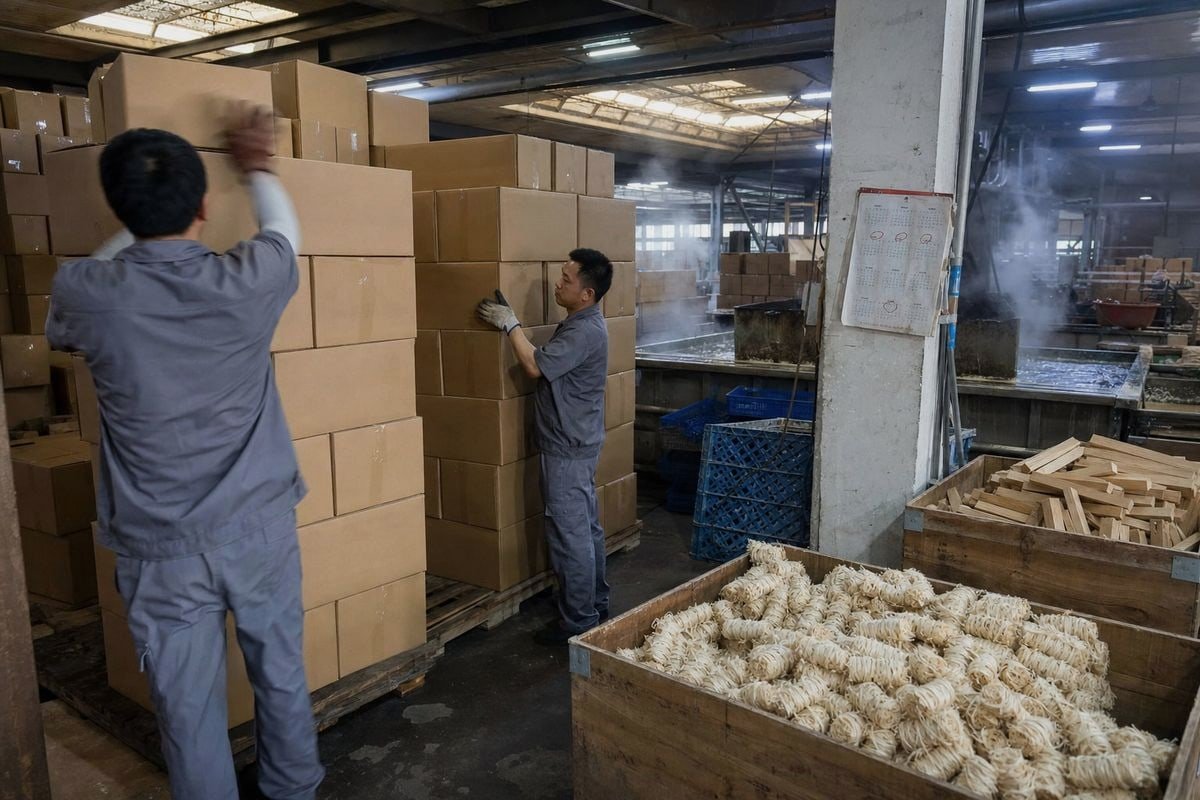
Lead time is not one number. It is a chain of steps, and each step can slip. When we run wax-dipped wood roll production in our Ningbo facility, the timeline covers raw material procurement 3, wood-wool preparation, wax dipping, curing, packing, and export handling. Any supplier who quotes a single flat number for every order and every month is guessing.
The Real Components of a Lead Time
A credible quote should break down like this:
| Stage | Typical Duration | What Affects It |
|---|---|---|
| Raw material procurement (wood fiber, paraffin) | 5–10 days | Sawdust and wax market supply, existing stock buffers |
| Production and wax dipping | 10–15 days | Line capacity, order queue, labor availability |
| Curing and quality control | 3–5 days | Moisture content, batch testing requirements |
| Custom packaging and labeling | 5–10 days | Private-label artwork, box printing lead time |
| Export handling and booking | 3–7 days | Port congestion, container availability |
Notice that packaging often adds as much time as production itself. If you order private-label boxes with warning labels and barcodes — which most of our EU and US buyers do — confirm whether the quoted lead time includes printing or excludes it. That single question exposes a lot about a supplier's honesty.
Why Season Changes Everything
Fire starters follow brutal seasonal demand fluctuations. Orders for the heating season stack up from late summer, and retailers all want delivery before October. A supplier practicing genuine lead time optimization will tell you plainly: book Q4 stock by June, or accept a longer queue. A supplier who says "no problem, anytime" is either underutilized or overpromising. Ask which one it is.
How Do I Confirm a Supplier's Production Capacity Before Signing a Contract?
There is a trade-off we discuss openly with every new distributor: accepting a large order feels good, but only if our lines can actually absorb it without pushing existing commitments late. Buyers should force that conversation before any contract is signed.
Confirm production capacity by requesting monthly output figures per product line, current utilization rates, staffing levels, and equipment counts — then verify them through a factory audit, video walkthrough, or third-party inspection. Cross-check claims against the supplier's existing order book and historical shipment records.

Manufacturing capacity planning is where marketing claims and reality separate. Many trading companies quote enormous capacity because they simply pass orders to whichever factory has space. A real factory can show you the machines, the shifts, and the math. When buyers visit our production lines, we walk them through daily output per line, not vague annual totals, because daily numbers are much harder to fake.
A Practical Verification Sequence
- Ask for capacity in units per day, per line. Annual figures hide seasonal shutdowns and holidays like Chinese New Year.
- Ask what percentage of that capacity is already committed for your target delivery window. This reveals whether your order fits or forces a queue.
- Request a production bottleneck identification walkthrough. For wood fire starters, the constraint is usually wax dipping and curing space, not raw material. A supplier who cannot name their bottleneck has never seriously planned around it.
- Verify raw material buffers. Sawdust, wood wool, and paraffin stocks should support long production windows. Thin raw material procurement pipelines mean your schedule depends on their upstream luck.
- Audit or inspect. Use SGS, Intertek, or your own team. We hold ISO 9001 4 and BSCI certification precisely because serious buyers demand third-party evidence, not factory self-declarations.
Questions That Expose Weak Capacity Claims
Ask how they handle a machine breakdown mid-order. Ask how many shifts they run in peak season versus off-season. Ask whether their schedules are finite-capacity or simply due-date based. Vague answers to any of these are yellow flags. Confident, specific answers — with numbers — signal a partner who plans against real constraints.
Can I Request a Production Calendar for Seasonal Demand Planning?
One of our long-term US customers plans his entire fireplace-season purchasing around a shared calendar we update quarterly. He told me it changed his business more than any price negotiation ever did — and yes, you can and should ask for the same.
Yes — reputable suppliers will share a rolling production calendar showing available capacity slots, blackout periods, and booking deadlines by month. Use it to reserve peak-season slots early, align purchase orders with retailer replenishment cycles, and buffer against seasonal demand fluctuations.

A production calendar turns scheduling from a black box into a shared plan. It is the single strongest piece of supply chain visibility you can get from a factory. If a supplier refuses to share one — or clearly improvises one on the spot — they are scheduling reactively, order by order, and your delivery date depends on whoever shouted loudest that week.
What a Useful Calendar Looks Like
A workable calendar does not need to be fancy. It needs to show three things: when capacity opens, when it closes, and when you must commit. Here is the shape of a typical year for wood fire starter production, based on how our own order flow runs:
| Period | Capacity Status | Buyer Action Needed |
|---|---|---|
| January–February | Reduced (Chinese New Year shutdown) | Place post-holiday orders by early December |
| March–May | Open, low utilization | Best window for trial orders and new packaging development |
| June–July | Filling for Q4 retail programs | Lock peak-season volumes and confirm artwork |
| August–October | Peak, near full utilization | Only reserved slots ship on time |
| November–December | Peak tail, then winding down | Late orders risk missing the heating season entirely |
Linking the Calendar to Your Forecast
The calendar only works if you feed it. Share your rough volumes early, even if they are estimates. Demand forecasting accuracy matters less than communication frequency — a forecast that is 70% right in June beats a perfect order placed in September. We hold provisional slots for repeat buyers based on prior-year volumes, then firm them up as their retail commitments land. That two-way rhythm is what advance production scheduling actually looks like in practice. It also supports something close to just-in-time delivery 5 for buyers who cannot warehouse a full season of stock at once.
What Documentation Should I Ask for to Verify Scheduling Reliability?
A lesson we learned the hard way years ago: verbal promises evaporate under pressure, but documents create accountability on both sides. Now we encourage buyers to ask us for paperwork — it protects the relationship.
Request historical on-time delivery records, a written lead-time definition, a capacity statement, order-change and rescheduling policies, quality certifications like ISO 9001 and BSCI, and a description of their planning system. Together, these documents prove scheduling discipline rather than marketing claims.

Documentation is where you separate real capability from a polished sales pitch. Any supplier can say "we always ship on time." Very few can show you twelve months of vendor performance metrics 6 proving it. The documents below are all reasonable requests, and a supplier's reaction to them is itself a test.
The Core Document Checklist
| Document | What It Proves | Red Flag If Missing |
|---|---|---|
| On-time delivery history (12+ months) | Schedule adherence in practice | "We don't track that" means schedules are informal |
| Written lead-time definition | Shared understanding of when the clock starts and stops | Disputes over whether artwork approval pauses the timeline |
| Capacity statement per line | Realistic basis for promise dates | Capacity quoted only as a yearly headline number |
| Order-change and rescheduling policy | Discipline under changing demand | Every change becomes an ad-hoc negotiation |
| ISO 9001 / BSCI / SGS or Intertek reports | Process maturity and audit-readiness | Compliance treated as optional signals loose systems everywhere |
| Planning system description (ERP/APS or equivalent) | How schedules stay executable as conditions change | Purely spreadsheet-and-memory scheduling at scale |
Reading Between the Lines
Do not just collect these papers — interrogate them. Ask how their ERP system integration 7 connects sales orders to shop-floor sequencing, or if they run a simpler system, ask who owns the schedule and how often it is updated. A small operation without APS software can still be reliable if the discipline is real: clear capacity math, stable commitments, honest change management. Conversely, expensive software wrapped around chaotic processes produces beautiful reports and late shipments. Ask for one concrete story: how did they handle their last major disruption — a line failure, a wax supply delay — and which customers were affected? A specific, honest answer is worth more than any certificate on the wall.
Conclusion
Late fire starter shipments kill winter sales, and optimistic quotes hide the risk. The fix is verification: audit capacity, demand calendars and documents, and choose realism over promises.
Advance production scheduling is not a promise of speed — it is a promise of realism. In our years supplying wood fire starters and color-flame products to buyers across 30+ countries, the partnerships that last are built on capacity-aware commitments, shared calendars, and documented performance. Use the checklists above during vetting. Treat specific numbers, transparent bottlenecks, and honest peak-season warnings as green flags. Treat vague lead times, material-only talk, and reactive scheduling as red flags. Do that, and your next heating season will run on a schedule you can actually trust.
Footnotes
1. Explains how identifying constraints in production lines improves overall manufacturing efficiency. ↩︎
2. Provides details on the social compliance audit used to verify ethical supply chain practices. ↩︎
3. Authoritative Wikipedia entry covering the full procurement cycle and material acquisition. ↩︎
4. Stable, highly authoritative overview of the ISO 9001 quality management standard. ↩︎
5. Comprehensive Wikipedia article explaining JIT delivery and inventory management principles. ↩︎
6. Describes how organizations use quantitative measures to track and evaluate supplier performance. ↩︎
7. Defines how integrated software manages core business processes like sales and production. ↩︎



 English
  Spanish
  German
  French
  Arabic
  Portuguese
Join the Conversation