






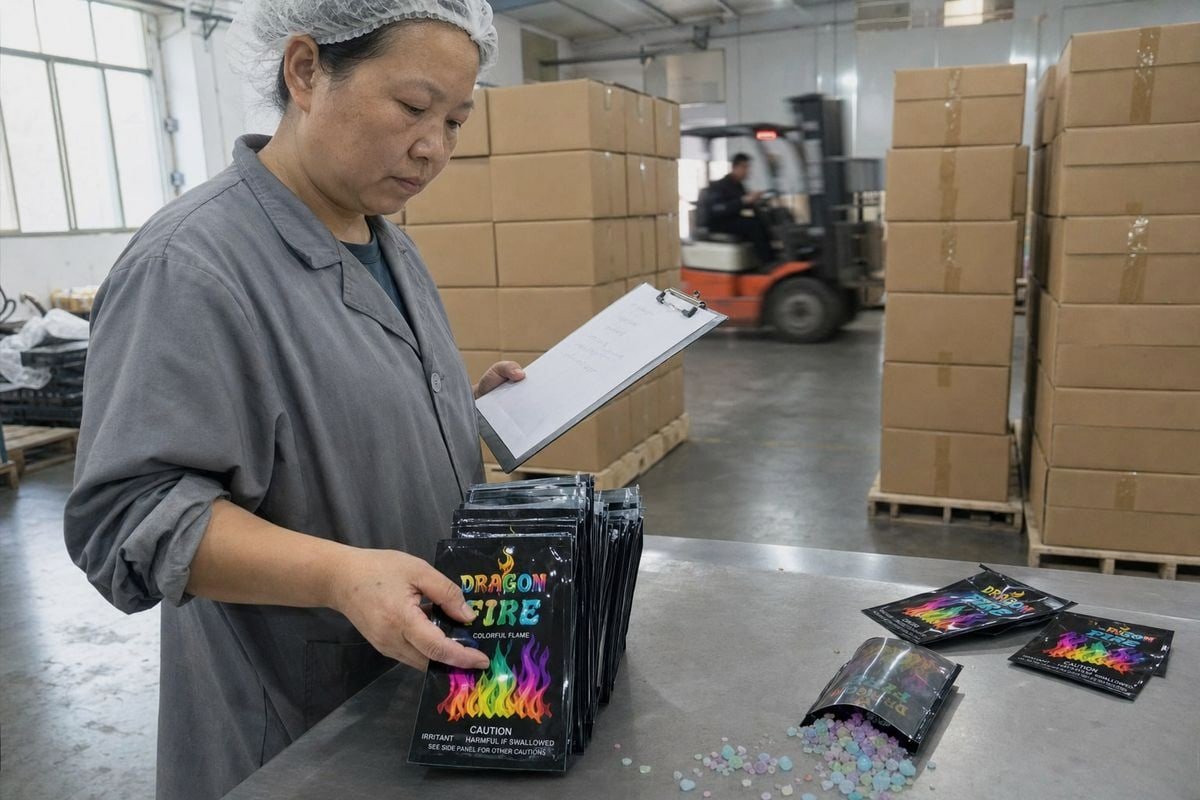
Sourcing magic fire powder looks simple until a shipment gets flagged at customs, and I have watched buyers lose entire seasons because they never asked our team the right safety questions upfront.
To ask suppliers for safety recommendations when sourcing magic fire powder, request a current Safety Data Sheet, Certificate of Analysis, CE and SGS test reports, full chemical composition disclosure, storage and transportation guidelines, PPE advice, and batch-level quality control evidence before placing any order.
That is the short answer. Below, I break it into four practical steps. Each step gives you exact questions to ask and red flags to watch for.
What certifications should I request to confirm a supplier's color-flame powder is genuinely safe?
Buyers often email us asking only for a price list. In my experience exporting to the US and Germany, the smarter ones ask for our certification folder first.
Request ISO 9001 for quality management, CE marking for the EU, SGS or Intertek third-party test reports, BSCI for factory audits, and REACH compliance documentation. A genuinely safe magic fire powder supplier can provide all of these with matching company names and current dates.
Certifications are not decoration. They are the fastest way to separate a real factory from a trading company 1 reselling unverified stock. When we prepare documentation for a new distributor, we expect them to check every certificate against the issuing body's database. You should do the same.
The core certification stack
Each document answers a different question. Do not treat them as interchangeable.
| Certification / Document | What it proves | Who needs it most |
|---|---|---|
| ISO 9001 | The factory runs a documented quality management system | All B2B buyers |
| CE marking + test reports | The product meets EU safety directives | EU importers |
| SGS / Intertek reports | An independent lab verified safety claims | US, EU, Australia buyers |
| BSCI audit | The factory meets social compliance standards | Retail chains, large distributors |
| REACH compliance | Chemical substances are registered for the EU market | Any EU-bound shipment |
Match the certificate to the seller
Here is a mistake I see every quarter. A buyer receives a CE certificate 2, but the company name on it belongs to a different factory. Trading companies sometimes borrow documents. So always verify three things: the legal entity name matches your contract, the product description matches the actual item, and the issue date is recent. Certificates for color-flame products should also reference product labeling requirements, because a compliant label with warnings and pictograms is part of the approval, not an afterthought.
One more point. Some suppliers argue a full certification package is excessive for a small novelty product. I disagree, and so do the retailers we supply. Home Depot–type sourcing channels treat compliance as a hard gate. If your supplier resists documentation for a "simple" product, that resistance is itself your answer.
How do I verify a supplier's safety claims with real test reports instead of just marketing promises?
A German fireplace distributor once forwarded me a competitor's brochure claiming "100% non-toxic flames" with zero supporting data. That brochure taught his purchasing team an expensive lesson.
Verify safety claims by requesting the full third-party lab report, not a summary page. Check the lab's accreditation, confirm the report number directly with SGS or Intertek, match the tested sample to your exact product, and demand a Certificate of Analysis for your specific batch.

Marketing language and test evidence live in different worlds. A glossy pouch that says "safe and eco-friendly" tells you nothing legally binding. A lab report with a verifiable number tells you everything. In our own export files, every claim printed on packaging maps back to a specific test line item. That is what you should demand from any supplier.
A five-step verification process
- Ask for the complete report. A one-page summary can hide failed parameters. Full reports run many pages and list test methods, limits, and results.
- Check the lab. SGS, Intertek, TÜV, and Bureau Veritas 3 reports carry verification numbers. Enter the number on the lab's official website. Fake reports fail this check in minutes.
- Match the sample description. The report should describe your product: a color-flame packet or powder sachet, not a vague "chemical mixture." If the tested item differs from what ships, the report is worthless to you.
- Confirm the date. Formulations change. A report older than two or three years deserves a retest, especially if packaging or metal salts have been updated.
- Request batch-level proof. A Certificate of Analysis ties the general test report to the actual production run you are buying. This is where marketing promises either become facts or fall apart.
Some suppliers respond that testing every claim is slow and costly. That is a fair concern for them, but not your problem. When we onboard a new private-label client, we budget testing into the timeline because a recall costs far more than a lab fee. Ask your supplier how they handle flammability ratings testing and heavy metal screening. A confident factory answers with report numbers. An evasive one answers with adjectives.
What questions should I ask about ingredient transparency and chemical composition before placing an order?
There is a trade-off we weigh constantly in our Ningbo production facility: protecting our formulation as intellectual property while giving buyers enough transparency to satisfy their regulators. Good suppliers manage both.
Ask for the Safety Data Sheet listing all hazardous ingredients, the specific metal salts used for each flame color, a heavy metal impurity profile covering lead, mercury, and arsenic, moisture sensitivity data, and confirmation the formula meets REACH and your market's chemical regulations.
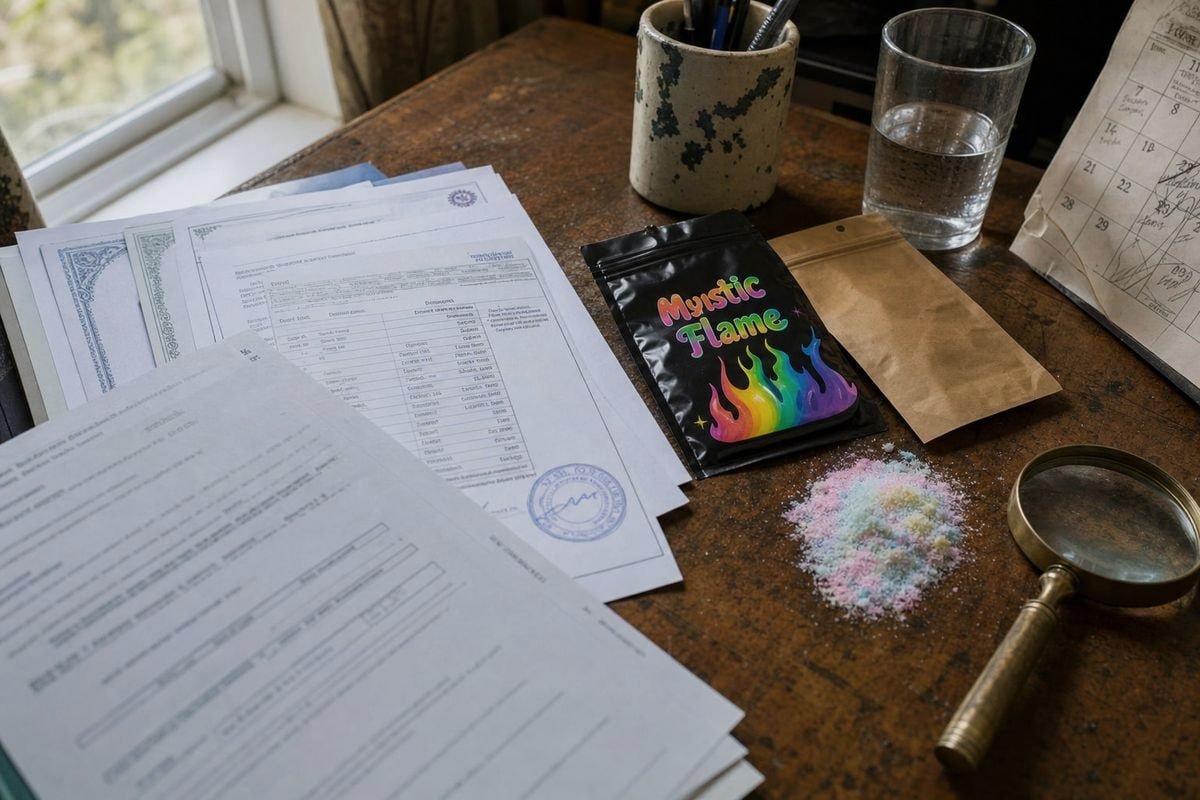
The Safety Data Sheet, formerly called the Material Safety Data Sheet, is your non-negotiable starting point. It should arrive before any purchase order, not after. University chemical procurement checklists require a compliant SDS review before buying SDS requirements 4, and I believe commercial buyers should hold themselves to the same standard. The SDS tells you hazard classifications, first-aid measures, and incompatibilities. But an SDS alone is necessary, not sufficient. It rarely explains application-specific risks, so you need targeted follow-up questions.
The questions that reveal real transparency
| Question to ask | Why it matters |
|---|---|
| Which metal salts create each flame color? | Copper and other salts have different regulatory limits by region |
| Can you provide a heavy metal impurity profile? | Trace lead, mercury, or arsenic can vaporize into toxic fumes when burned |
| What is the particle size distribution? | Fine powders raise inhalation risk and dust explosion potential in warehouses |
| Is the product moisture-sensitive or water-reactive? | Determines packaging, storage, and maritime shipping requirements |
| Are packets designed to go into the fire unopened? | Health authorities have warned consumers against opening flame-colorant sachets |
That last question deserves emphasis. Health Canada has warned caregivers not to open certain flame-colorant packets and to use them only as directed. This is why our Magic Fire packets are engineered for unopened placement into a campfire, fireplace, or fire pit, and why our warning labels state it plainly. Ask your supplier whether their chemical composition 5 and packet design account for foreseeable misuse, ingestion, and eye contact. A supplier who has thought about the child at the campsite, not just the flame effect, is a supplier who understands hazardous materials handling as a discipline.
How can I tell if a supplier's manufacturing process ensures consistent safety across every production batch?
The lesson that shaped our entire QC system came early in our 17 years: a beautiful first sample means nothing if batch fifty burns differently. Consistency is manufactured, never assumed.
Evaluate batch consistency by requesting the supplier's incoming raw material inspection records, in-process QC checkpoints, batch numbering and traceability system, per-batch Certificates of Analysis, retained sample policy, and their documented incident or complaint history from the past twelve months.
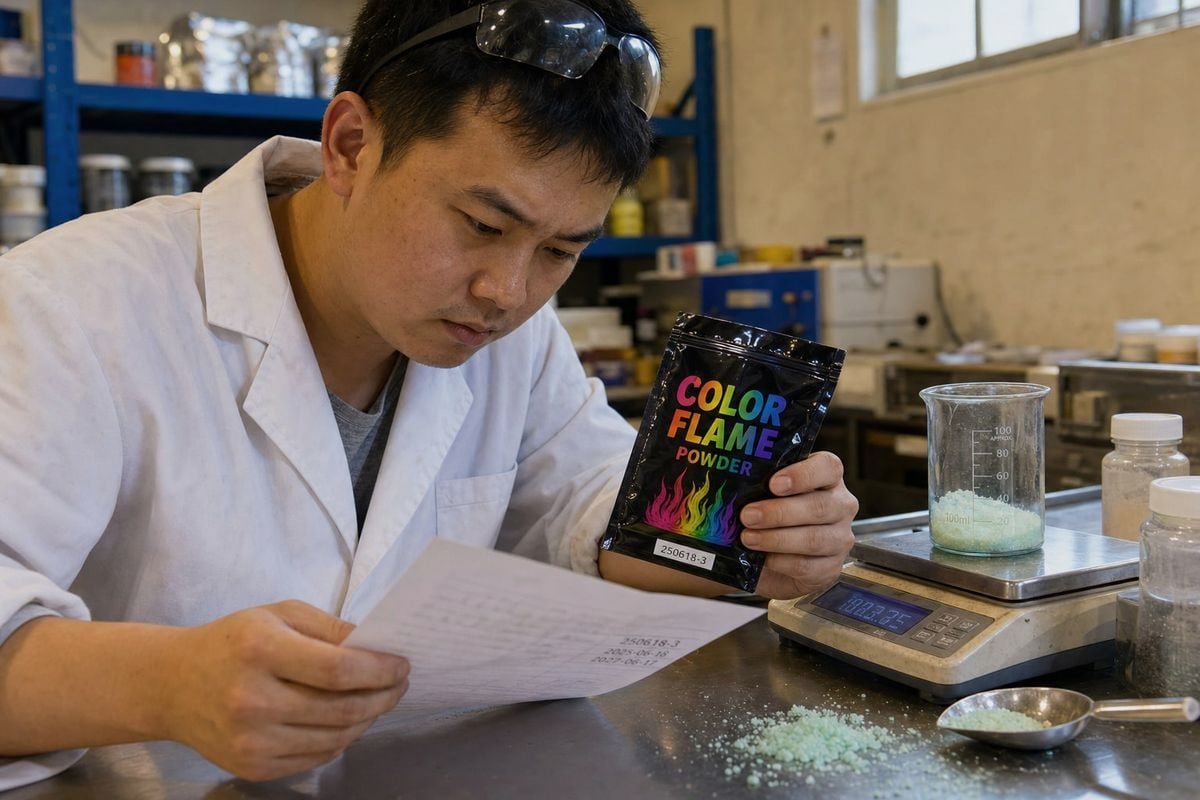
A single good sample proves a supplier can make one good unit. Your business depends on the ten-thousandth unit matching it. So your questions must probe the process, not the product photo. When buyers audit our lines in Ningbo, they see the same sequence every time: raw metal salts 6 inspected on arrival, blending verified against the master formula, moisture levels checked, sealed pouches weight-tested, and retained samples archived per batch. Ask any candidate supplier to describe their equivalent flow. Vague answers signal a trading company with no factory floor to describe.
What consistent factories can show you
- Traceability. Every pouch links back to a batch number, and every batch links to raw material lots. If a problem surfaces, the supplier can isolate it in hours, not weeks.
- Retained samples. Serious factories keep sealed samples from each run. This lets them compare a customer complaint against the original production.
- Stability data. Ask for accelerated stability testing results showing how the powder performs after high-humidity exposure, which is typical of maritime shipping. Clumping or color drift after a sea voyage is a process failure, not bad luck.
- Storage and transportation guidelines. The supplier should hand you written instructions covering temperature limits, moisture control, segregation from oxidizers or other incompatible goods, and packaging integrity checks on arrival.
Judging the answers you receive
Strong answers are practical and specific: named checkpoints, tolerance ranges, documented cleanup and spill procedures, PPE recommendations 7 for bulk handling. Weak answers are reassuring but empty: "we always check quality carefully." Also ask directly about incidents, recalls, or near misses in the past year. Honest suppliers disclose and explain corrective actions. Suppliers claiming a spotless history with zero documentation are usually not tracking incidents at all, which is worse than having a few.
Conclusion
Safe sourcing of magic fire powder means demanding SDS documents, verified certifications, real test reports, ingredient transparency, and batch-level proof — before you pay, not after problems appear.
Skipping these questions feels efficient until a failed customs inspection, a retailer rejection, or a consumer incident wipes out your margin and your reputation. The fix is straightforward: treat supplier safety recommendations as part of supplier qualification. After 17 years shipping color-flame products to more than 30 countries, I can tell you the buyers who ask hard questions early are the ones who build lasting programs. Ask for the documents. Verify the numbers. Then order with confidence.
Footnotes
1. Overview of the role and verification of trading companies in global manufacturing and sourcing. ↩︎
2. Official European Commission guide to CE marking requirements for products sold in the EU. ↩︎
3. Official site of a leading global certification body for verifying product safety and compliance. ↩︎
4. The original deep link 404s; this authoritative landing page covers all SDS and Hazard Communication standards. ↩︎
5. Scientific definition of chemical composition, essential for understanding product safety and regulatory compliance. ↩︎
6. Authoritative NIH database for chemical safety and composition data on substances like metal salts. ↩︎
7. NIOSH resource on personal protective equipment standards for handling hazardous industrial materials. ↩︎



 English
  Spanish
  German
  French
  Arabic
  Portuguese
Join the Conversation