






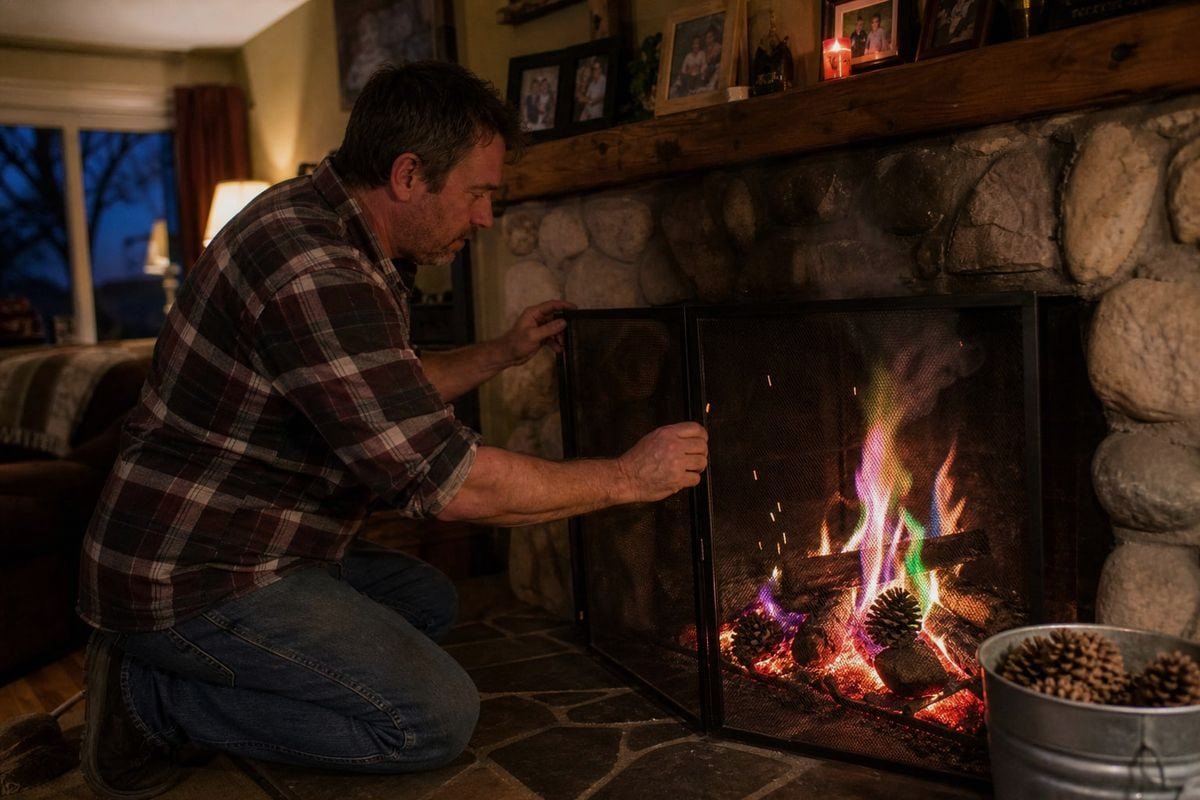
Des pommes de pin colorées qui crépitent et étincellent peuvent rapidement couler une gamme de produits certification ISO 9001 1. J'ai vu notre usine retravailler des lots entiers parce que les clients d'un importateur ont signalé des braises volantes.
Les pommes de pin colorées crépitent et étincellent car les poches de résine, l'humidité piégée et les terpènes volatils se dilatent et éclatent sous l'effet de la chaleur, projetant des fragments chauds. La prévention nécessite un séchage approfondi, une application contrôlée de colorant, un emballage étanche à l'humidité avec des dessicants, la combustion de petites quantités et l'utilisation d'un pare-feu ou d'un poêle fermé.
La solution n'est pas une seule étape. Elle va de la sélection des pommes de pin brutes à la façon dont votre client stocke le sac résultats d'audit BSCI 2. Laissez-moi vous guider à travers chaque étape, la façon dont nous la gérons sur notre propre ligne de production.
Quels produits chimiques font crépiter et étinceler mes pommes de pin colorées ?
Lors d'un test de combustion dans notre laboratoire de Ningbo il y a quelques années, un acheteur m'a demandé pourquoi ses pommes de pin à flamme bleue crépitaient plus fort que les pommes de pin ordinaires. La réponse l'a surpris : la plupart du temps, ce n'était pas les produits chimiques.
Les produits chimiques colorants comme le sulfate de cuivre, le chlorure de strontium et l'acide borique créent une couleur de flamme mais provoquent rarement des crépitements directs. Les étincelles proviennent principalement de poches de résine naturelle, de l'humidité piégée se transformant en vapeur et de gaz terpéniques. Cependant, les sels métalliques hygroscopiques peuvent absorber l'humidité et augmenter indirectement les craquements.
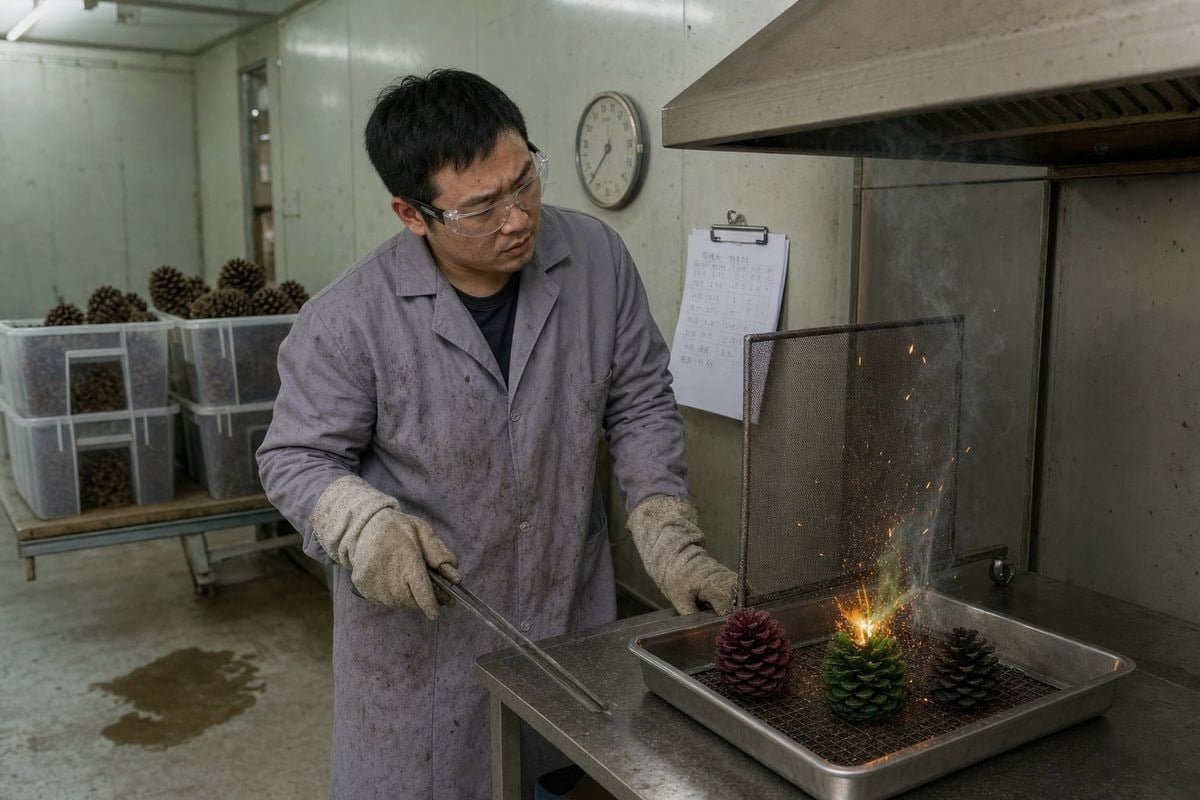
La chose la plus utile que je puisse dire à un responsable des achats est la suivante : la couleur de la flamme et le comportement des étincelles proviennent de deux mécanismes complètement différents. Si vous les mélangez, vous blâmerez le mauvais ingrédient et résoudrez le mauvais problème.
La couleur provient de l'excitation électronique, pas de la combustion
Les sels métalliques produisent de la couleur par excitation électronique. La chaleur energise les ions métalliques, et ils émettent des longueurs d'onde spécifiques en se relaxant. Sulfate de cuivre 3 donne du bleu-vert. Le chlorure de strontium donne du rouge. L'acide borique donne du vert doux. Aucun de ces sels n'ajoute de combustible significatif au feu. Ainsi, l'effet arc-en-ciel vif que vous voyez dans nos produits Magic Fire est optique, pas explosif.
D'où vient réellement le bruit
Le crépitement provient de la pomme de pin elle-même. Les pommes de pin sont des structures ligneuses riches en résine conçues par la nature pour s'ouvrir sous l'effet de la chaleur. Lorsque le feu les frappe, trois choses se produisent simultanément. L'humidité interne se vaporise et crée une pression. Les poches de résine s'enflamment et éclatent. Les écailles sèches se fracturent et éjectent des fragments carbonisés. Cette éjection est votre étincelle.
Il existe deux exceptions chimiques à connaître :
| Facteur | Mécanisme | Effet sur les étincelles |
|---|---|---|
| Les sels hygroscopiques | Absorber l'humidité ambiante pendant le stockage | Augmentation indirecte — les pommes de pin ré-humectées crépitent davantage |
| Crépitation | Les cristaux de sel se fracturent auditivement lors d'une déshydratation rapide | Ajoute un léger crépitement, risque minimal de braises |
| Revêtement épais de cire | La cire de paraffine scelle les espaces entre les écailles, piégeant le gaz | Peut provoquer des crépitements plus nets de type "mini-explosion" |
| Poches de résine naturelles | Les terpènes volatils s'enflamment soudainement | Cause principale des crépitements forts et des braises éjectées |
Remarquez que l'application de cire de paraffine épaisse figure sur cette liste. Les allume-feu en cire brûlent magnifiquement lorsque le revêtement est calibré, mais un trempage négligent et épais sur une pomme de pin peut sceller les écailles et piéger les gaz en expansion. Nous avons appris à contrôler étroitement le temps de trempage et le poids du revêtement pour cette raison exacte.
Comment puis-je vérifier que les pommes de pin de mon fournisseur respectent les normes de sécurité et de conformité ?
Un distributeur allemand nous a un jour renvoyé un échantillon d'un concurrent avec une simple question : "Pouvez-vous prouver que le vôtre est différent ?" Nous le pouvions, car la preuve est un dossier et un processus, pas des promesses.
Vérifier un fournisseur en demandant les rapports de test SGS ou Intertek actuels, les certificats ISO 9001 et BSCI, la documentation CE le cas échéant, une divulgation complète des ingrédients excluant les métaux lourds toxiques, et un audit d'usine en direct ou enregistré confirmant la production interne et les tests de combustion au niveau du lot.

D'après notre expérience d'exportation dans plus de 30 pays, la conformité est là où les sociétés de négoce échouent silencieusement et où les vraies usines gagnent silencieusement. Un commerçant transmet n'importe quel certificat que l'atelier en amont lui remet. Une usine possède la formulation, elle peut donc apposer son propre nom sur le rapport de test et s'en porter garante.
La liste de contrôle des documents qui compte vraiment
Demandez ces cinq éléments avant de vous engager dans une commande d'essai :
- Rapports de laboratoire tiers de SGS ou Intertek 4, daté de moins de 12 à 24 mois, lié au SKU exact du produit — pas à un "article similaire"."
- certification ISO 9001, qui vous indique que l'usine dispose d'un système de gestion de la qualité documenté, pas seulement d'une bonne salle d'échantillons.
- résultats d'audit BSCI, de plus en plus une exigence difficile pour les grands canaux d'approvisionnement de détail aux États-Unis et dans l'UE.
- Divulgation complète des ingrédients, confirmant que le système de coloration est exempt de produits chimiques nocifs. Les formulations réputées reposent sur des sels métalliques plus sûrs ; vous voulez une confirmation écrite qu'aucun composé dangereux comme le plomb ou l'arsenic n'est présent.
- Conformité des étiquettes d'avertissement et des emballages pour votre marché cible, y compris les codes-barres et les exigences linguistiques.
Questions qui séparent les usines des intermédiaires
Les documents peuvent être empruntés. La connaissance du processus ne peut pas. Lors d'un appel vidéo, demandez au fournisseur de vous montrer la salle de séchage, la station d'application des colorants et la zone de test de combustion. Demandez quel taux d'humidité ils ciblent avant le traitement. Demandez comment ils gèrent les préoccupations liées à la cheminée comme l'accumulation de créosote 5 — un fournisseur compétent expliquera que les formulations à combustion propre et les pommes de pin sèches minimisent les résidus, et recommandera toujours un entretien régulier de la cheminée aux utilisateurs finaux. Lorsque nous avons construit nos propres lignes à Ningbo, soutenues par plus de 17 ans dans le cluster de produits de feu de Liuyang, ces réponses sont devenues une seconde nature. Si votre fournisseur hésite sur l'un d'entre eux, cette hésitation est une donnée.
Quelles mesures de contrôle qualité réduisent les plaintes de mes clients concernant les étincelles ?
La leçon la plus difficile de nos premières années a été qu'un échantillon parfait ne signifie rien si le lot 40 crépite comme des pétards. La cohérence est un système, et le système a quatre portes.
Réduisez les plaintes concernant les étincelles en appliquant des limites de teneur en humidité à l'admission, un séchage au four à basse température pour ouvrir les écailles et évaporer l'eau résiduelle, des poids contrôlés de colorant et de revêtement de cire, des tests de combustion au niveau du lot et un emballage hermétique avec des sachets de gel de silice pour bloquer l'absorption d'humidité pendant le transport et le stockage.
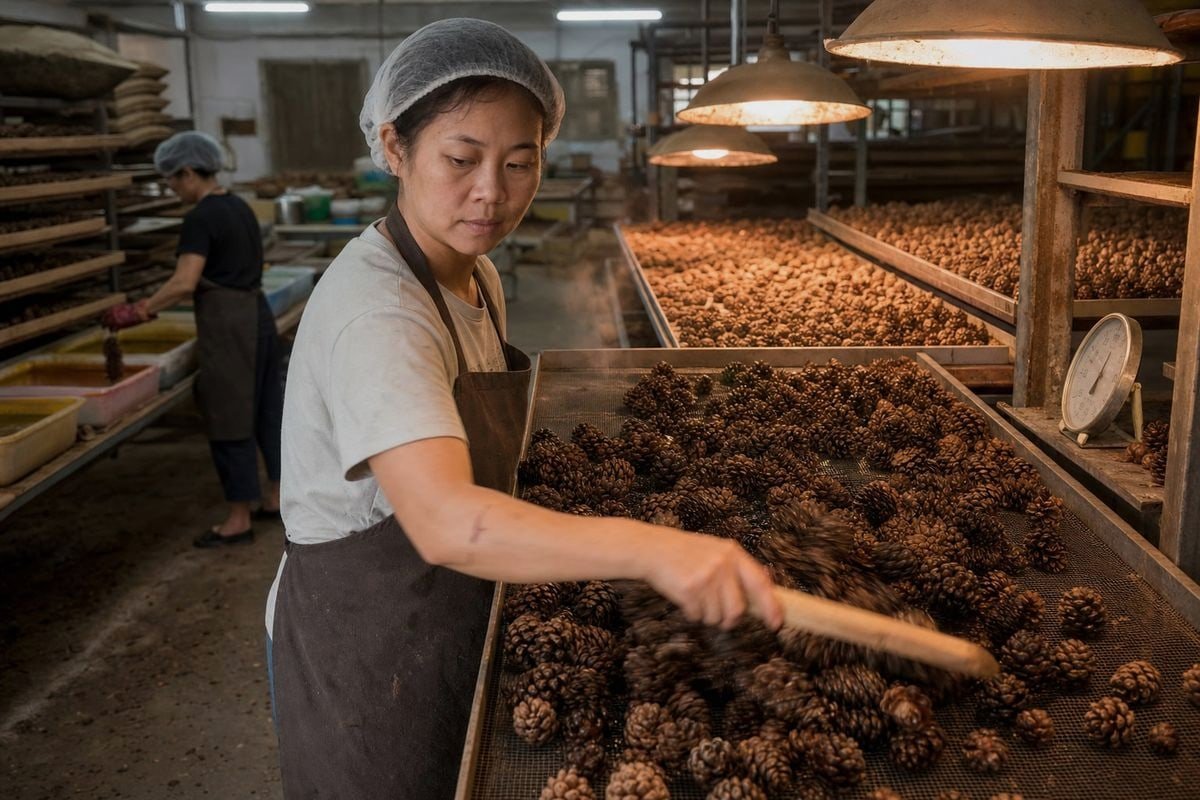
Les plaintes concernant les étincelles remontent presque toujours à l'humidité. Soit la pomme de pin n'a jamais été correctement séchée, soit elle a réabsorbé l'humidité quelque part entre l'usine et la cheminée de votre client. Notre logique de contrôle qualité suit donc l'humidité, porte par porte.
Les quatre portes de contrôle qualité que nous appliquons à chaque lot
| Porte de contrôle qualité | Ce que nous vérifions | Pourquoi cela empêche les étincelles |
|---|---|---|
| Prise d'air conique brute | Espèces, taille, charge de résine, teneur initiale en humidité | Rejette les cônes verts ou trop résineux avec de lourdes poches de résine |
| Séchage et assaisonnement | Cuisson à basse température jusqu'à ce que les écailles s'ouvrent complètement | Évapote l'eau piégée qui alimente l'éclatement sous pression de vapeur |
| Contrôle du traitement | Concentration du colorant et poids du revêtement de cire par cône | Empêche les revêtements épais qui scellent les écailles et piègent le gaz en expansion |
| Test de combustion et emballage | Échantillons de cônes brûlés de chaque lot ; dessiccant scellé | Intercepte les lots sujets aux étincelles avant leur expédition ; bloque le ré-mouillage |
Pourquoi le stockage est une étape de contrôle qualité, pas une réflexion après coup
Voici le piège que la plupart des acheteurs manquent. De nombreux sels colorants sont hygroscopiques. Ils absorbent activement l'humidité de l'air. Un cône qui a quitté l'usine parfaitement sec peut devenir sujet aux étincelles après six semaines dans un entrepôt humide. Le même principe s'applique au bois de chauffage assaisonné : séchez-le, laissez-le ensuite sous la pluie, et vous vous retrouvez avec des bûches qui sifflent et crépitent.
C'est pourquoi nous traitons l'emballage comme un outil de contrôle qualité. Les pochettes refermables à fermeture éclair, les bocaux scellés et les sachets dessiccants ne sont pas de simples choix de merchandising. Ils préservent le profil de combustion silencieuse pour lequel vous avez payé. Lorsque nous développons des emballages sous marque de distributeur avec un client, nous spécifions la barrière d'humidité en même temps que les illustrations. Et comme le premier échantillon d'une ligne de production réelle reflète la qualité de la production de masse, le comportement de combustion que votre acheteur a testé est le comportement de combustion que son client obtient.
Une autre note pratique pour vos encarts produit : conseillez aux utilisateurs finaux de brûler quelques cônes à la fois, de garder l'écran de la cheminée fermé et de suivre les consignes de base de sécurité incendie 6. Même un cône parfaitement séché reste un produit en bois dans un feu.
Puis-je personnaliser les formulations pour minimiser les crépitements tout en conservant des couleurs de flamme vives ?
Un compromis se présente dans presque toutes les présentations OEM que nous effectuons : les acheteurs veulent une couleur spectaculaire et une combustion calme et silencieuse. La bonne nouvelle est que ces deux objectifs ne sont pas en conflit, car ils résident dans différentes parties de la formulation.
Oui. Parce que la couleur de la flamme provient des sels métalliques et que le crépitement provient de l'état physique du cône, un partenaire OEM peut associer des colorants vifs à une sélection de cônes à faible teneur en résine, un séchage plus profond, des revêtements minces calibrés et un emballage déshydratant pour fournir des couleurs vives avec un minimum d'étincelles.
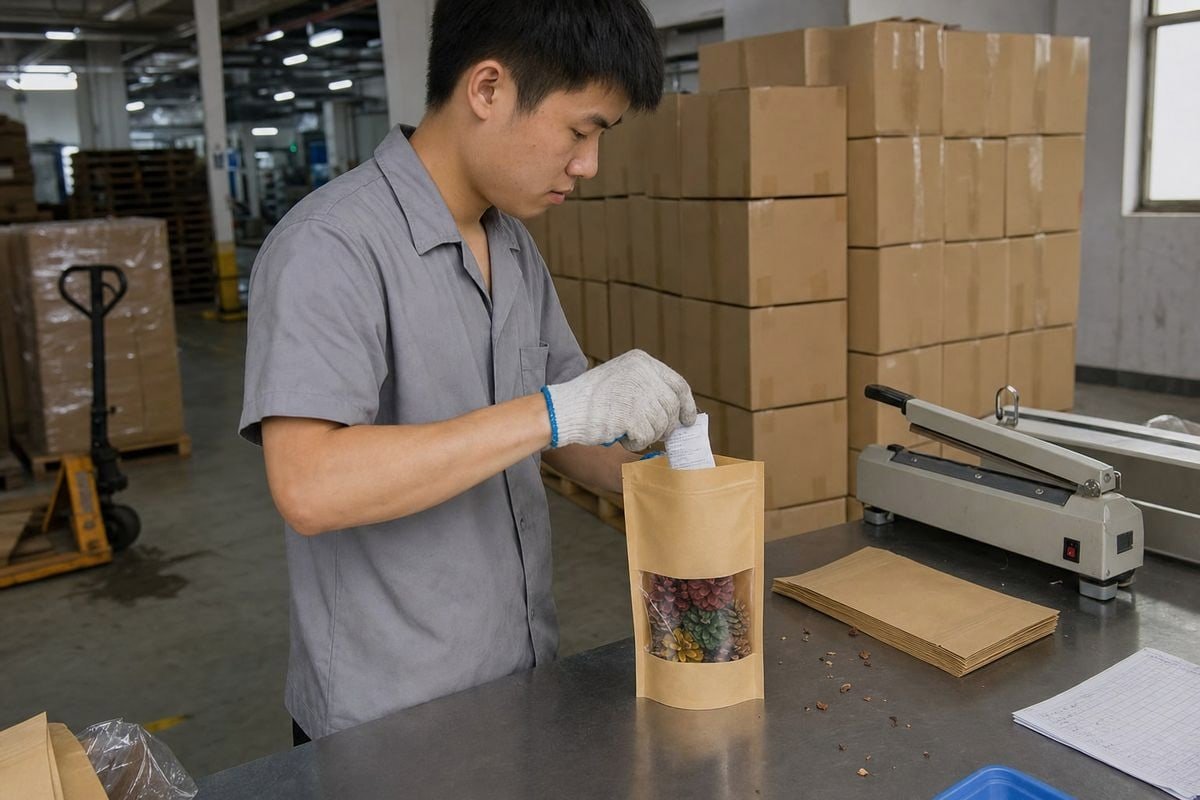
Lorsque nous réalisons des projets ODM pour des marques d'extérieur et des distributeurs de cheminées, nous traitons la couleur et le comportement de combustion comme deux curseurs distincts. Agir sur l'un n'a pas à affecter l'autre. Voici comment les leviers se répartissent.
Les leviers de personnalisation, côte à côte
| Levier | Ajuste la couleur ? | Ajuste le crépitement ? | Choix typique OEM |
|---|---|---|---|
| Sélection du sel (sulfate de cuivre, chlorure de strontium 7, mélanges d'acide borique) | Oui — teinte et intensité | Minimal | Correspond à la palette de la marque ou à l'effet "arc-en-ciel" |
| Espèce et classification du cône | Non | Oui — la charge de résine varie selon l'espèce | Cônes à faible teneur en résine pour les gammes d'intérieur |
| Profondeur et durée de séchage | Non | Oui — facteur majeur | Cuisson prolongée à basse température pour les SKU "combustion silencieuse" |
| Épaisseur du revêtement (colorant ou cire de paraffine) | Léger | Oui — les revêtements épais piègent le gaz | Application fine et uniforme |
| Barrière d'emballage et dessiccant | Non | Oui — bloque l'absorption d'humidité | Pochette ou bocal scellé avec sachets de silice |
| Durée de combustion et taille du cône | Non | Indirect | Adapté à l'utilisation dans la cheminée, le brasero ou le feu de camp |
Ce que cela donne dans un projet réel
Un cycle de développement typique avec nous commence par votre brief marché. Produit pour cheminée d'intérieur pour le Royaume-Uni ? Nous privilégions un séchage plus profond, des revêtements plus fins et un étiquetage clair pour la sécurité des cheminées. Pochettes fantaisie pour feux de camp pour les détaillants de camping américains? Nous pouvons permettre un crépitement plus vif, car les utilisateurs en extérieur l'apprécient souvent, et nous associons les cônes à des allume-feux assortis pour une offre plus complète en rayon.
À partir de là, nous prototypons, exécutons des tests de combustion comparatifs, et vous envoyons des vidéos ainsi que des échantillons physiques. L'emballage est personnalisé dans la même boucle — pochettes en kraft, sacs cadeaux style chanvre, boîtes d'exposition, étiquettes d'avertissement et codes-barres — de sorte que le produit arrive prêt à être mis en rayon. Parce que nous contrôlons toute la chaîne en interne, le réglage d'un paramètre ne déstabilise pas les autres entre l'échantillon et la production de masse.
La mise en garde honnête : aucune formulation ne rend un cône de pin brûlant complètement silencieux. Le bois crépite. Notre travail consiste à faire passer votre produit de "lance des braises" à "crépitement doux et agréable", et à le maintenir ainsi lot après lot.
Conclusion
Les cônes de pin colorés étincellent à cause de la résine, de l'humidité et de la chaleur — pas des sels colorants. Contrôlez le séchage, les revêtements, l'emballage et la conformité, et vous transformez un risque de plainte en un produit de feu best-seller.
Notes de bas de page
Norme ISO officielle expliquant la certification de gestion de la qualité référencée. ↩︎
Page officielle amfori BSCI expliquant la norme d'audit de conformité sociale. ↩︎
Explique le composé chimique responsable de la coloration bleue-verte de la flamme. ↩︎
Site officiel d'un laboratoire d'essai tiers de premier plan nommé dans la liste de contrôle. ↩︎
Définit les questions de référence du fournisseur sur les résidus de cheminée pour la sécurité. ↩︎
Guide gouvernemental de sécurité soutenant les conseils de l'article sur la sécurité des foyers et des cheminées. ↩︎
Contexte sur le sel utilisé pour produire la couleur rouge de la flamme. ↩︎


 English
  Spanish
  German
  French
  Arabic
  Portuguese
Rejoignez la conversation