






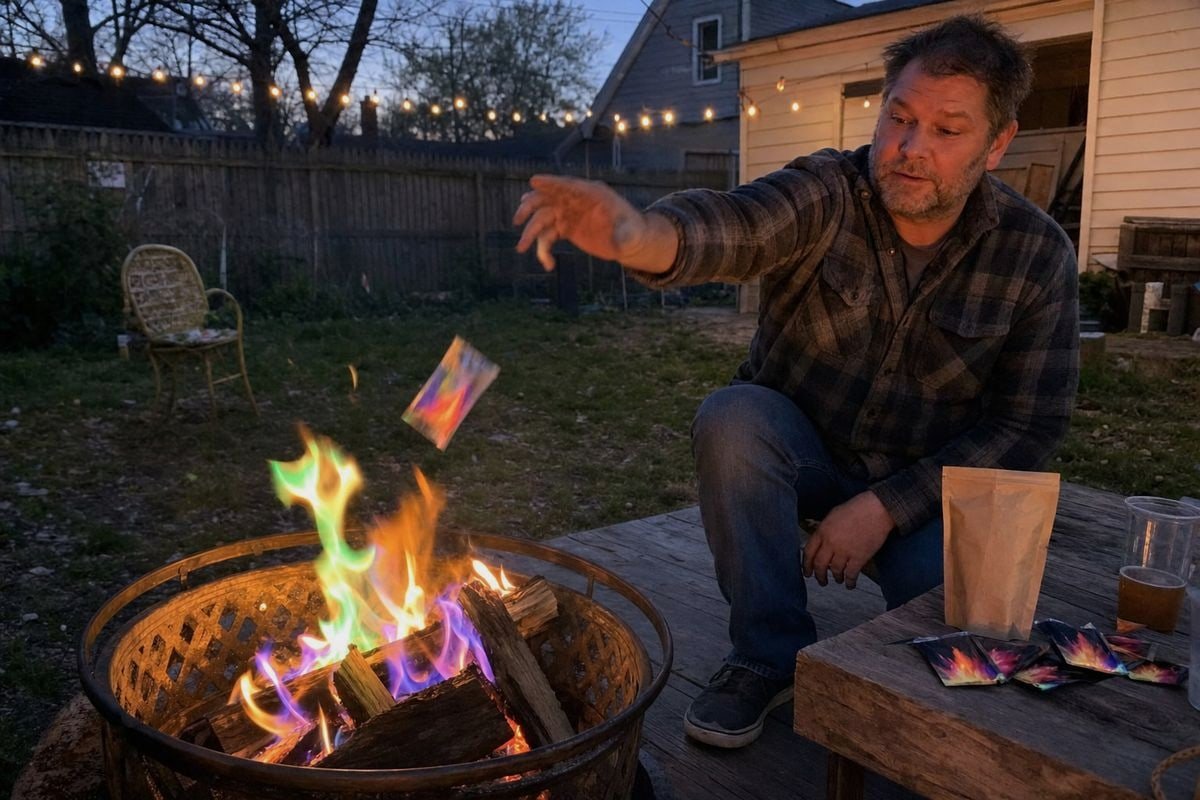
Les acheteurs me demandent souvent à quelles sources de feu la poudre magique pour le feu convient réellement chlorure de strontium 1. Après plus de 17 ans à gérer des lignes de production de paquets de flammes colorées, j'ai vu de fausses hypothèses coûter cher aux distributeurs.
La poudre Magic Fire convient uniquement aux sources de feu à combustion de bois : feux de camp, foyers à combustion de bois, braseros extérieurs, feux de joie et cheminées. Elle ne convient pas aux braseros au propane, aux ensembles de bûches à gaz, aux brûleurs au bioéthanol, ni à aucun feu utilisé pour la cuisson des aliments.
Cette réponse courte couvre la plupart des cas. Mais les détails comptent, surtout si vous achetez pour la revente. Ci-dessous, je détaille chaque source de feu, le dosage sûr et comment les performances varient selon les combustibles.
Puis-je utiliser de la poudre magique pour feu dans un foyer intérieur en toute sécurité ?
Un distributeur allemand de foyers nous a demandé de prouver que nos paquets étaient sûrs pour une utilisation dans le salon avant de passer une commande de conteneur. Cette vérification a façonné la façon dont je réponds à cette question aujourd'hui.
Oui, la poudre magique pour feu peut être utilisée en toute sécurité dans une cheminée intérieure à bois, à condition que la cheminée tire correctement, que le paquet soit jeté non ouvert, que le feu ne soit pas utilisé pour la cuisson et que vous suiviez les instructions du fabricant pour la quantité et le moment.
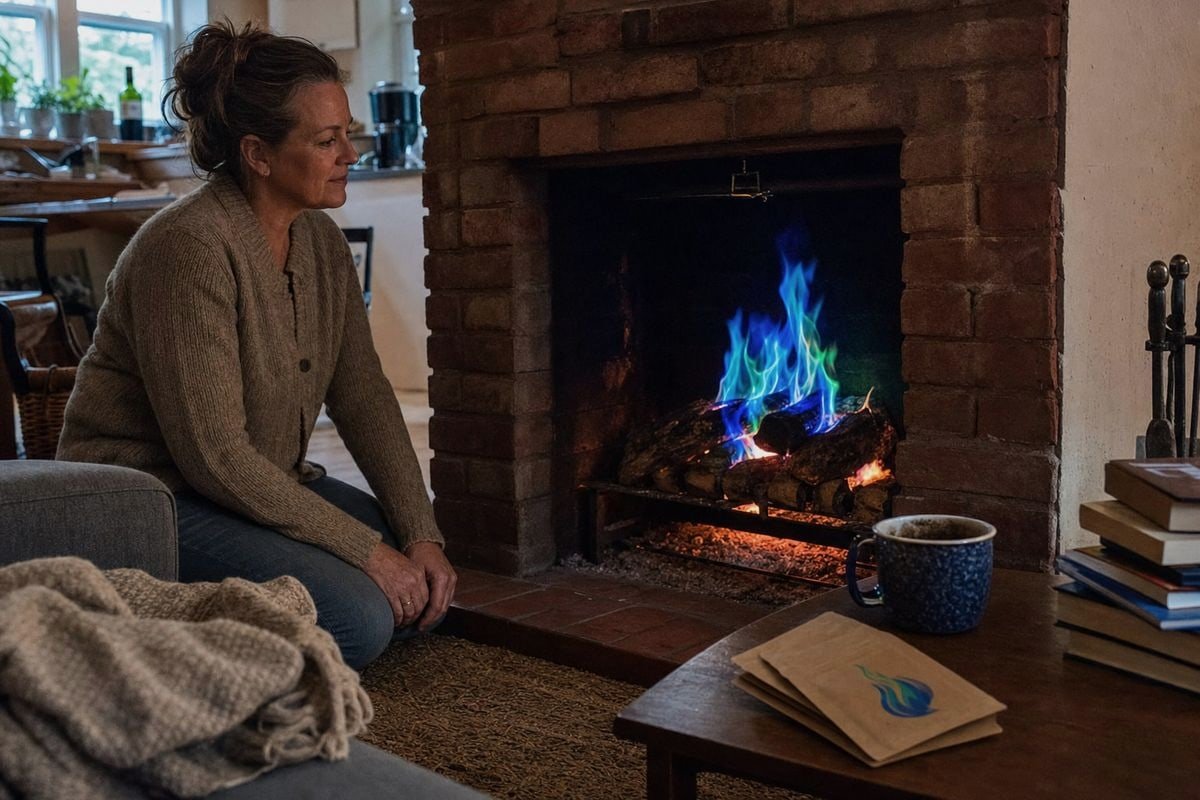
L'utilisation en intérieur est l'une des applications les plus populaires que nous voyons, en particulier sur les marchés européens où les foyers à bois 2 sont courants. Mais l'utilisation en intérieur a des conditions plus strictes qu'un feu de jardin, et je veux les examiner honnêtement.
La ventilation avant tout
Les colorants de ces paquets sont des formulations de sels métalliques. Lorsqu'ils brûlent, les vapeurs doivent monter dans la cheminée, pas dans la pièce. Les exigences de ventilation intérieure sont donc simples mais non négociables : le registre doit être complètement ouvert, la cheminée doit bien tirer, et le feu doit déjà brûler proprement avant d'ajouter un paquet. Si votre foyer refoule de la fumée dans la pièce lors d'un feu normal, n'ajoutez pas de paquet de colorant. Corrigez d'abord le problème de tirage.
Sécurité de la cheminée et résidus
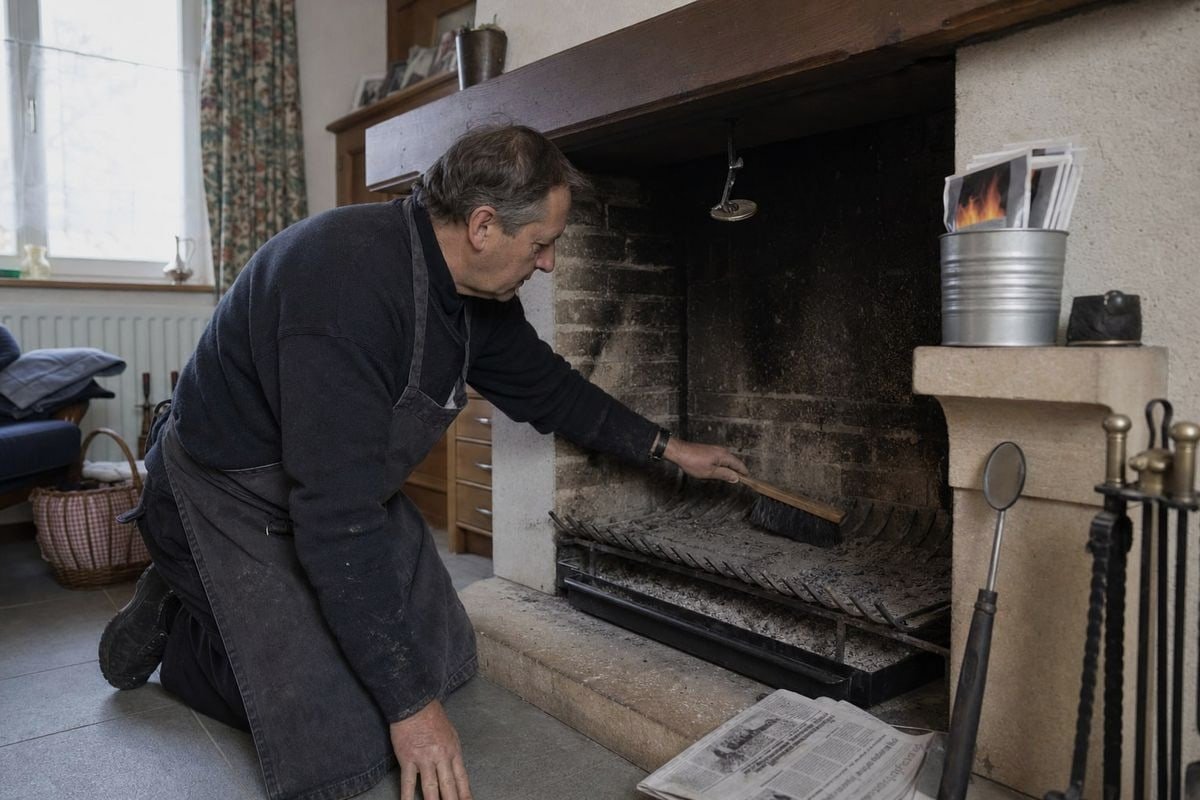
La sécurité de la cheminée est une préoccupation légitime. Lors de nos tests, un paquet à usage unique ne laisse qu'une trace de résidus. Cependant, une utilisation répétée et intensive peut laisser un fin film de sel sur les grilles et les revêtements. Ces sels sont hygroscopiques 3, hygroscopiques.
, ce qui signifie qu'ils attirent l'humidité et peuvent accélérer la rouille des pièces métalliques. Un ramonage périodique du foyer résout ce problème. Nous disons à nos partenaires B2B d'imprimer cette note de nettoyage sur les emballages de détail, et notre service OEM comprend des étiquettes d'avertissement personnalisées pour cette raison exacte.
| Condition | Exigence |
|---|---|
| Liste de contrôle pour une utilisation en intérieur | Type de foyer |
| À bois uniquement, jamais sur des ensembles de bûches de gaz | Cheminée |
| Registre ouvert, bon tirage, récemment inspecté | Manipulation du paquet |
| Jeter tel quel, ne pas déchirer | État du feu |
| Cuisine | Flammes établies, pas de braises fumantes |
| Ne jamais cuisiner au-dessus des flammes colorées | Après utilisation |
Ventiler brièvement, nettoyer les résidus périodiquement rapports SGS/Intertek 4, Nos propres paquets Magic Fire sont certifiés CE et testés par.
Quelles sources de feu ne sont pas recommandées pour la poudre magique à feu ?
Les paquets de flammes colorées sont sûrs dans tous les foyers d'intérieur, y compris les foyers à bûches de gaz.
La poudre Magic Fire ne doit pas être utilisée dans les foyers au propane, les ensembles de bûches au gaz naturel, les brûleurs au bioéthanol, les feux à combustible de cire, les feux à bûCHES DE CIRE UNIQUEMENT, ou tout feu utilisé pour cuisiner des aliments. Ces systèmes de combustible manquent soit d'un lit de braises solides, soit risquent de contaminer les aliments avec des sels métalliques.

Les ensembles de bûches de gaz et les foyers à gaz artificiels sont explicitement exclus ; la poudre peut obstruer les brûleurs et il n'y a pas de lit de combustible solide avec lequel les sels peuvent réagir.
Au début de notre histoire d'exportation, un importateur canadien a retourné des échantillons parce que ses clients les avaient essayés dans des foyers au propane. Cette leçon nous a poussés à imprimer des exclusions en gras sur chaque boîte que nous expédions.
La liste d'exclusion est courte, mais chaque article a une raison technique claire derrière lui. Comprendre le "pourquoi" aide le personnel de vente à répondre aux questions des clients en toute confiance. Systèmes à gaz et au propane 5 La compatibilité des foyers au propane est la principale idée fausse que nous traitons. Les appareils à gaz brûlent le carburant par des brûleurs et des jets de précision. Les colorants de flammes. chimiques sont des cristaux solides. Jetez-les dans un foyer à gaz et la poudre peut fondre sur les ports du brûleur, obstruer les jets et créer des motifs de flammes irréguliers. Pire encore, il n'y a pas de lit de braises de bois pour maintenir les sels à la température soutenue dont ils ont besoin pour.
se vaporiser et produire de la couleur
. Vous obtenez un désordre, des dommages possibles et presque aucun gain visuel. La même logique s'applique aux ensembles de bûches de gaz naturel et aux brûleurs de table au bioéthanol. sulfate de cuivre 6 Feux de cuisson.
Cuisiner au-dessus des flammes colorées est la deuxième exclusion stricte. Les colorants contiennent souvent des composés tels que le
- chlorure de strontium
- et le chlorure de baryum. Ceux-ci conviennent comme colorants de flammes dans un feu décoratif, mais ils sont toxiques s'ils sont ingérés. Les guimauves, les hot-dogs et les grilles de barbecue peuvent capter des résidus chimiques de la flamme et de la fumée. Attendez que l'effet de couleur se termine complètement et que le paquet soit entièrement consumé avant de cuisiner, ou mieux encore, séparez les feux décoratifs et les feux de cuisson.
- Liste non recommandée
- Foyers au propane et chauffages de terrasse au gaz
- Foyers à gaz naturel ou à gaz artificiel
Brûleurs au bioéthanol et au gel.
Quelle quantité de poudre magique pour feu devrais-je utiliser pour différentes tailles de feu ?
Les questions de dosage se posent dans presque tous les briefings OEM que nous organisons. Lorsqu'une marque de camping britannique nous a demandé de personnaliser le poids des sachets pour de petits feux de camping, nous avons testé les ratios de combustion pendant une semaine entière.
Utilisez un paquet non ouvert pour un petit feu de cheminée ou de brasero, un à deux paquets pour un foyer ou un feu de camp standard, et deux à trois paquets pour un grand feu de joie. Espacez plusieurs paquets et n'ouvrez jamais les paquets avant de les jeter.
Le dosage n'est pas une science exacte, mais il existe des règles empiriques fiables. L'objectif est d'obtenir un effet de couleur visible et soutenu sans gaspiller de produit ni surcharger un petit foyer.
Dosage par taille de feu
| Source de feu | Taille typique | Sachets | Durée de couleur attendue |
|---|---|---|---|
| Cheminée intérieure | Petit foyer | 1 | 15–30 minutes |
| Chimenea | Petit fermé | 1 | 15–30 minutes |
| Foyer de jardin | Moyen ouvert | 1–2 | 20–40 minutes |
| Feu de camp | Moyen ouvert | 1–2 | 20–40 minutes |
| Feu de joie | Grand ouvert | 2–3 | 30–60 minutes |
La durée varie selon la marque, le poids du sachet et l'intensité de la flamme. Sur le marché, les indications vont d'environ 10 minutes à une heure, alors vérifiez toujours l'emballage spécifique. Lorsque nous développons des versions de marque privée pour nos clients, le temps de combustion est l'une des spécifications que nous ajustons, car un effet plus long signifie généralement un remplissage plus lourd et un prix de vente différent.
Trois règles de dosage pratiques
- Jetez le sachet non ouvert. La pochette scellée protège votre peau des cristaux irritants et libère la couleur progressivement au lieu de le faire en un seul éclair.
- Ajoutez les sachets aux flammes actives, pas aux braises mourantes. Les sels ont besoin d'un contact direct avec la flamme pour se vaporiser. Un lit de braises mourantes donne une couleur faible et inégale.
- Échelonnez plusieurs sachets. Placez-les à quelques centimètres les uns des autres dans la zone de flamme, ou ajoutez le deuxième sachet lorsque le premier s'estompe. Cela prolonge le spectacle plutôt que de doubler sa luminosité.
Une note pratique supplémentaire : foyers sans fumée 7 avec combustion secondaire, l'air est expulsé à travers le feu à haute vitesse. Ce flux d'air rend la couleur plus intense mais sensiblement plus courte. Si vos clients utilisent ces foyers, suggérez un sachet supplémentaire.
La Poudre Magique pour le Feu est-elle Performante de Manière Constante sur les Feux de Bois, de Charbon de Bois et de Gaz ?
La cohérence est quelque chose que nous perfectionnons en contrôle qualité. Chaque lot de production dans notre usine de Ningbo est testé en combustion sur du bois dur standard, car la réputation d'un distributeur dépend du sachet numéro 10 000 qui correspond au sachet numéro un.
Non. La Poudre Magique pour le Feu donne les meilleurs résultats dans les feux de bois, où les braises chaudes maintiennent la couleur. Les feux de charbon de bois donnent des effets plus faibles et plus courts et ne devraient jamais impliquer de nourriture. Les feux à gaz donnent presque aucune couleur et risquent d'endommager le brûleur, ils sont donc entièrement exclus.

Le type de combustible est la variable la plus importante dans la performance de la couleur. Voici comment les trois principaux combustibles se comparent, et pourquoi les différences existent.
Performance par type de combustible
| Type de combustible | Intensité de la couleur | Durée | Recommandé ? |
|---|---|---|---|
| Bois dur assaisonné (chêne, érable) | Excellent, stable | Le plus long | Oui, idéal |
| Bois tendre (pin, épicéa) | Bon mais erratique | Plus courte | Oui, acceptable |
| Bûches fabriquées imprégnées de cire | Faible, terne | Imprévisible | Pas idéal |
| Charbon de bois | Faible à modéré | Court | Seulement si jamais utilisé pour la nourriture |
| Propane / gaz naturel | Minimal | Aucune | Non, exclu |
Pourquoi le bois gagne
La chimie est simple. Les sels métalliques ont besoin d'une chaleur soutenue et d'une flamme directe pour se sublimer et émettre leurs couleurs caractéristiques, y compris les flammes bleues et vertes vibrantes que produisent les composés de cuivre. Les bois durs assaisonnés créent un lit de braises profond et constant qui maintient les sels à température. C'est pourquoi le chêne et l'érable offrent la sortie de couleur la plus stable. Les bois tendres brûlent chaud mais vite et de manière erratique, donc la couleur vacille davantage.
Pourquoi le charbon de bois et le gaz sont insuffisants
Le charbon de bois brûle principalement en braises incandescentes avec de petites flammes. Les colorants ont besoin d'une flamme visible pour montrer de la couleur, donc l'effet est atténué. Et comme le charbon de bois est presque toujours un combustible de cuisson, le mélange de colorants de flamme crée un risque de contamination alimentaire qu'aucune marque responsable ne devrait accepter. Les feux à gaz échouent pour une autre raison : le combustible ne forme jamais de lit de braises solide, et la poudre se dépose simplement sur le matériel du brûleur ou le bouche.
Pour nos clients B2B, nous le formulons simplement sur l'emballage : feux de bois oui, tout le reste non. Cette clarté réduit les retours, protège les utilisateurs finaux et satisfait les équipes de conformité. Nos rapports de test SGS et Intertek couvrent le cas d'utilisation prévu pour les feux de bois, ce qui est exactement ce que les grands canaux de vente au détail demandent à voir.
Conclusion
La poudre Magic Fire brille dans les feux de camp, les cheminées et les foyers à combustion de bois — et nulle part ailleurs. Adaptez le sachet au combustible, évitez les feux de cuisson et suivez les instructions du paquet.
Notes de bas de page
Les données du NIH PubChem soutiennent l'affirmation de l'article selon laquelle le chlorure de strontium est toxique en cas d'ingestion. ↩︎
Le programme EPA Burn Wise fournit des conseils faisant autorité sur les pratiques de sécurité des cheminées à bois. ↩︎
Explication de fond sur les sels hygroscopiques attirant l'humidité, soutenant l'affirmation concernant les résidus de cheminée. ↩︎
L'ISO établit des normes internationales auxquelles des organismes de test tels que SGS/Intertek certifient les produits. ↩︎
Wikipedia explique la chimie des sels métalliques produisant des flammes colorées, contexte pertinent. ↩︎
L'entrée NIH PubChem explique la toxicité du sulfate de cuivre référencé comme composé colorant de flamme. ↩︎
L'explication de fond sur la conception des foyers explique pourquoi la combustion secondaire affecte les performances du colorant. ↩︎


 English
  Spanish
  German
  French
  Arabic
  Portuguese
Rejoignez la conversation