






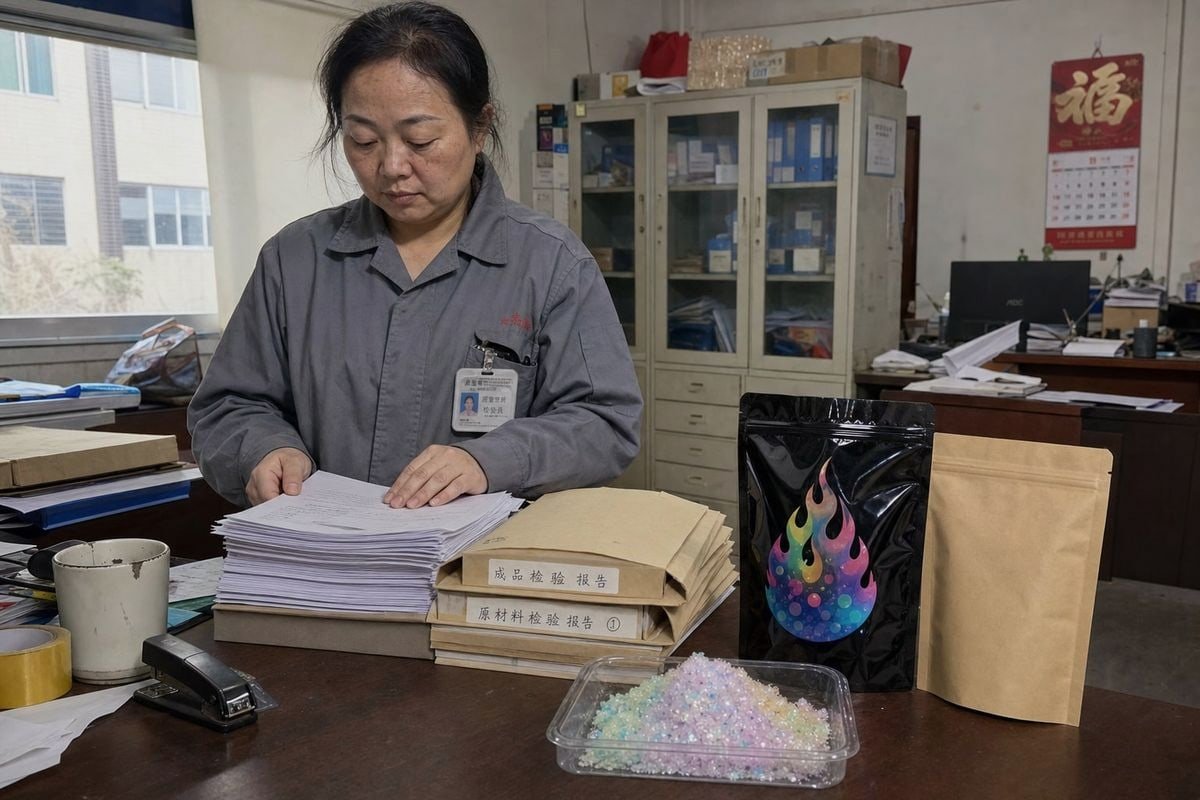
Amazon ungating approval for Magic Fire Powder stalls more sellers than the product itself. On our production line, we see rejected applications weekly — usually from missing supplier paperwork.
For Amazon ungating approval of Magic Fire Powder, suppliers must provide a commercial invoice showing 10+ units dated within 180 days, a 16-section Safety Data Sheet, SGS or Intertek test reports, a Letter of Authorization, product photos, and GHS-compliant labeling documents.
That is the short answer. But each document has quality requirements that trip sellers up. Let me walk through what to request from your supplier, how to verify it, and how to recover from a rejection.
What certificates do I need from my Magic Fire Powder supplier to pass Amazon's ungating review?
Last quarter, a US distributor came to us after two failed ungating attempts. His previous supplier had sent him a retail receipt and a one-page "certificate" with no lab name on it.
To pass Amazon's ungating review for Magic Fire Powder, request a Wholesale Purchase Invoice, a full Safety Data Sheet, third-party Product Safety Testing reports (SGS or Intertek), a Letter of Authorization for the brand, the Manufacturer Business License, and GHS-compliant label artwork.
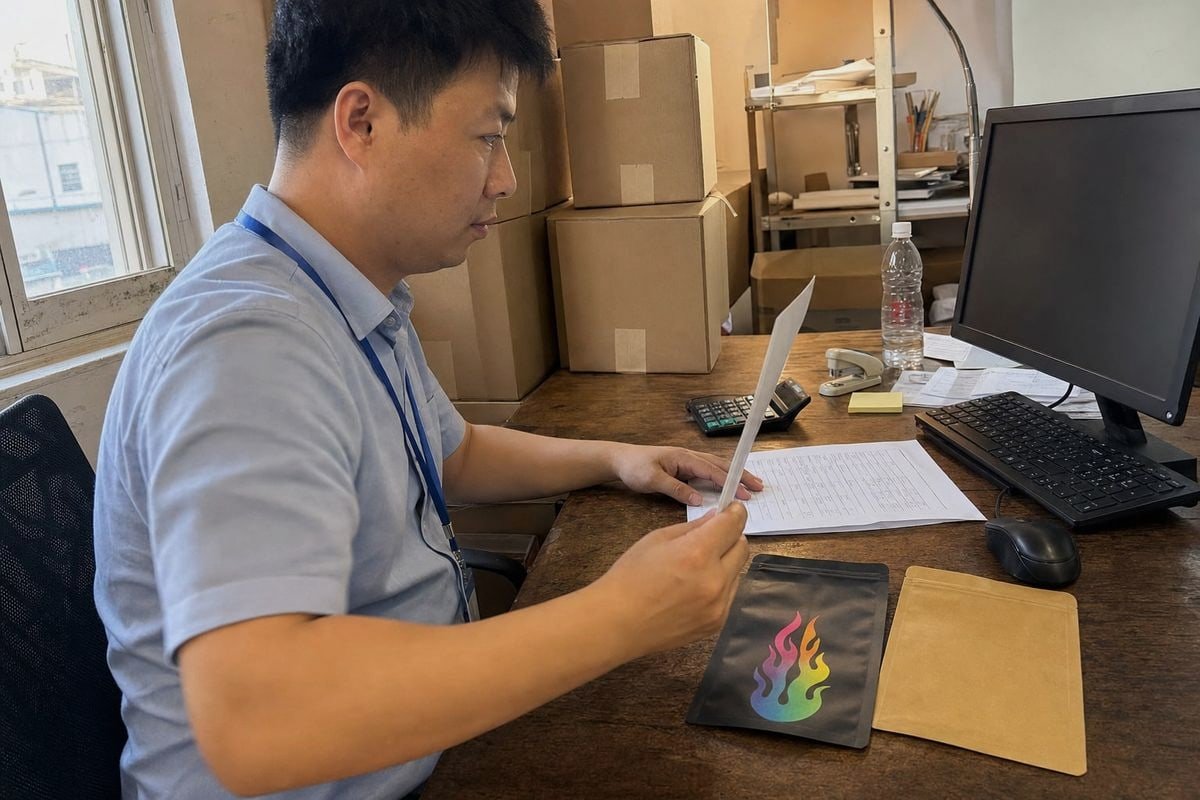
Amazon's review is really two reviews in one. First, the Restricted Category Application 1 checks that you sourced legitimately. Second, the safety review checks that the product itself is compliant. Your supplier document packet needs to satisfy both at the same time.
Must-have documents
The Wholesale Purchase Invoice is the backbone. Amazon wants an invoice from a manufacturer, wholesaler, or authorized distributor 2 — never a retail receipt. It should show at least 10 units, and it must be dated within the last 180 days. Some sellers report Amazon asking for three separate invoices or higher quantities in certain flows, so more purchase history is always safer than less.
Sometimes-required documents
Depending on how Amazon classifies your listing, you may also need extras. If the listing sits under Toys, a Children's Product Certificate confirming ASTM F963 compliance can be requested. If Amazon flags heavy metal content, a Certificate of Analysis (COA) showing the exact colorant composition helps close the case quickly.
| Document | Priorité | Exigence clé |
|---|---|---|
| Wholesale Purchase Invoice | Must-have | 10+ units, within 180 days, full supplier details |
| Fiche de Données de Sécurité (FDS) | Must-have | 16 sections, product name matches listing exactly |
| Rapport de test SGS/Intertek | Must-have | Real report number, verifiable with the lab |
| Letter of Authorization (LOA) | Often required | Signed by brand owner or factory |
| Manufacturer Business License | Parfois | Proves the factory legally exists |
| Certificat d'analyse (COA) | Parfois | Batch-level chemical composition |
| CPC (ASTM F963) | If listed as a toy | Issued from CPSC-accepted lab testing |
In our 17+ years exporting produits de couleur pour flammes 3 to the US, Germany, and the UK, we have learned to prepare this packet as one bundle before the buyer even asks. Traceability matters more each year: Amazon increasingly wants the paper trail to run all the way back to the original factory, not just to your last intermediary.
How do I verify a supplier's SGS or Intertek test reports are valid for Amazon compliance?
A German buyer once forwarded us a competitor's "SGS report" for review. The logo was real. The report number was not. That fake document cost him a suspended ASIN.
Verify test reports by checking the report number directly with SGS or Intertek through their online verification portals or customer service, confirming the tested product matches your exact SKU, and ensuring the testing standards cited apply to flame colorants sold in your market.

Fake or recycled test reports are common in this category. Because color-flame powder sits close to the fireworks industry 4, some trading companies borrow reports from unrelated products and hope nobody checks. Amazon does check. And so should you, before you attach anything to your case file.
A simple four-step verification process
- Confirm the report number with the lab. Both SGS and Intertek let you verify report authenticity directly. Email the lab or use their verification page. A genuine report resolves in days; a fake one dies immediately.
- Faites correspondre la description du produit. The report must describe your product — flame colorant powder, the same formulation, the same packaging type. A report for "metal salts, industrial grade" does not cover a consumer campfire product.
- Check the standards tested. Product Safety Testing for the US market should reference relevant consumer safety and chemical standards. For a flammable solid, the classification testing matters most.
- Check the report date and applicant. Old reports on discontinued formulations are a red flag. So is a report issued to a company name your supplier cannot explain.
Because full international compliance is a hard requirement for our own buyers, we run SGS and Intertek testing on our Magic Fire packets and hand over the actual report numbers, not screenshots. Authorized Distributor Verification works the same way in reverse — Amazon may contact your supplier directly, so their listed phone and email must be real and responsive. If a supplier hesitates when you ask to verify a report with the lab, treat that hesitation as your answer.
Can my supplier provide SDS and labeling documents that meet Amazon's hazmat requirements?
When we redesigned our kraft-bag packaging for a Canadian fireplace brand, the label review took longer than the artwork itself. Hazmat paperwork rewards precision and punishes shortcuts.
Yes — a capable supplier should provide a complete 16-section Safety Data Sheet classifying the powder as a Class 4.1 Flammable Solid, plus GHS-compliant label files with hazard pictograms, signal words, manufacturer address, and required warnings for the Amazon Hazmat Review.

Le Amazon Hazmat Review is automated first and human second. The automated pass compares the product name on your La fiche de données de sécurité (FDS) 5 against your listing title. If they do not match exactly, the system flags or rejects the file before a human ever reads it. This is the single most common SDS failure we see, and it is entirely avoidable.
The classification question that decides everything
Here is the trade-off that matters most. Magic Fire Powder is typically classified as a Class 4.1 Flammable Solid. That classification is manageable — FBA accepts solides inflammables 6 through the Dangerous Goods program. But if the SDS sloppily describes the product as a "pyrotechnic" (Class 1), the listing can be hard-gated permanently, because pyrotechnics are prohibited from FBA. Our chemists word our SDS documents carefully and accurately for exactly this reason. The product genuinely is a flammable solid, not an explosive — the SDS just has to say so correctly.
| SDS/Label element | What Amazon checks | Common failure |
|---|---|---|
| Product name | Exact match with listing title | Generic name like "colorant powder" |
| Hazard class | Classe 4.1 Matière solide inflammable | Misclassified as Class 1 Pyrotechnic |
| Pictogrammes SGH | Correct flame symbol and signal word | Missing or wrong pictogram |
| Manufacturer address | Printed on packaging photos | Only distributor address shown |
| Avertissements | Safety and non-food-safe statements | Missing "not for cooking" declaration |
Labels beyond the SDS
GHS Labeling Requirements extend to the physical pouch. Amazon may request live photos showing hazard symbols, the manufacturer's address, and safety warnings on the actual packaging. Two extras matter for this product. First, a "Non-Food Safe" declaration — customers should never roast food over chemically colored flames, and Amazon knows the liability risk. Second, California Proposition 65 warnings, because colorants like copper sulfate contain regulated substances. We print both on our OEM packaging by default and supply the label artwork files so buyers can attach them to the compliance tab without redesign work.
What should I ask my manufacturer for if my Amazon ungating application gets rejected?
Rejections rarely mean the product is banned. In our experience supporting distributors across 30+ countries, most rejections trace back to one weak document — and one targeted request to the factory fixes it.
After a rejection, ask your manufacturer for a corrected Wholesale Purchase Invoice matching your Seller Central details exactly, a signed Letter of Authorization, their Manufacturer Business License, full supply-chain traceability documents, updated live packaging photos, and a revised SDS if the product name mismatched.

Start by diagnosing why you were rejected. Amazon's rejection notices are vague, but the failure patterns are predictable. Match your symptom to the fix, then request the specific document rather than resubmitting the same packet and hoping.
| Rejection symptom | Likely cause | Document to request |
|---|---|---|
| "Invoice not accepted" | Receipt instead of invoice, or under 10 units | New Wholesale Purchase Invoice, 10+ units |
| "Information does not match" | Name/address differs from Seller Central | Corrected invoice with exact legal entity details |
| "Unable to verify supplier" | Dead phone number or generic email | Manufacturer Business License plus live contacts |
| "Authorization required" | Gated brand, no proof you can sell it | Letter of Authorization LOA from brand owner |
| "Compliance documentation needed" | Missing or mismatched SDS/test data | Revised SDS, COA, or new test report |
Fix the matching problem first
The most common cause is also the most boring: mismatched details. Your Seller Central legal entity name and address must appear on the invoice character for character. A missing suite number or an abbreviated company name can sink an otherwise perfect application. Ask your factory to reissue the invoice against your exact registered details.
Rebuild traceability if you bought through a middleman
If you sourced through a trading company, Amazon may want proof the goods trace back to the original factory. Request the manufacturer's contact information, a chain-of-custody statement 7, and a signed LOA. This is one reason we advise buyers to work with the factory directly — our Liuyang headquarters and Ningbo production site appear on every document, so the trail never breaks. Also remember that approval is not the finish line: new sellers of flammable solids often start with storage limits as small as 0.04 cubic meters at FBA, regardless of what the approved invoice showed. Plan your first shipment accordingly.
Conclusion
Ungating rejections waste weeks and stall launches. The fix is a complete supplier packet — invoice, SDS, test reports, LOA, and compliant labels — prepared before you ever click submit.
Notes de bas de page
1. Official Amazon Seller Central hub explains restricted category approval requirements referenced in the text. ↩︎
2. Wikipedia entry explaining the role of an authorized distributor in the supply chain. ↩︎
3. Wikipedia page explaining the chemical composition and science behind color-flame products. ↩︎
4. Official site of the American Pyrotechnics Association, representing the safety interests of the fireworks industry. ↩︎
5. OSHA's official Hazard Communication Standard page explaining Safety Data Sheet (SDS) requirements. ↩︎
6. IATA's resource for the classification and transport of dangerous goods, including flammable solids. ↩︎
7. Explains the supply-chain traceability concept sellers must document when sourcing through intermediaries. ↩︎



 English
  Spanish
  German
  French
  Arabic
  Portuguese
Rejoignez la conversation