






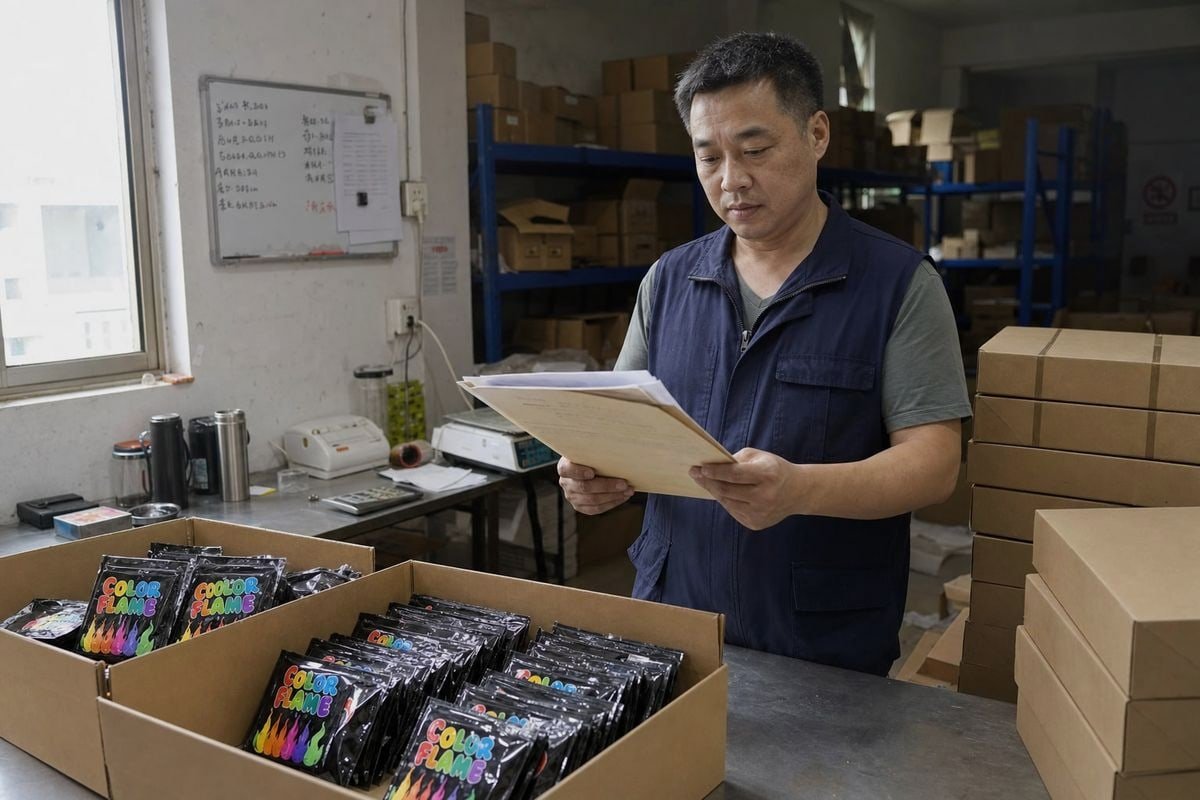
L'importation de poudre magique de feu semble simple jusqu'à ce que la douane retienne votre envoi. J'ai vu des acheteurs perdre des semaines pour un seul papier manquant. Après 17 ans d'expédition de paquets de flammes colorées dans le monde entier, notre équipe sait exactement quels documents évitent cette douleur.
Pour importer de la poudre magique à feu, vous avez généralement besoin d'une facture commerciale, d'une liste de colisage, d'un connaissement ou d'une lettre de transport aérien, d'un certificat d'origine, d'une fiche de données de sécurité (FDS), d'une classification correcte du code SH et, selon votre pays, d'un permis d'importation ou d'une déclaration de marchandises dangereuses.
C'est la réponse courte. L'image complète dépend de votre pays, de votre méthode d'expédition et de la classification du produit par la douane. Laissez-moi vous guider à travers chaque étape, des certifications pré-commande aux documents de marque privée.
Quelles certifications devrais-je demander avant de passer une commande ?
Un acheteur d'Allemagne m'a dit un jour qu'il avait annulé un conteneur entier auprès d'un autre fournisseur parce que le "certificat CE" s'est avéré être un logo auto-imprimé. Cette histoire façonne la façon dont nous traitons la documentation dans notre usine de Liuyang.
Avant de commander la Poudre Magique Feu, demandez le certificat de qualité ISO 9001 du fournisseur, le rapport d'audit social BSCI, la documentation de conformité CE et les rapports de tests par des tiers de laboratoires tels que SGS ou Intertek. Demandez également une Fiche de Données de Sécurité (FDS) actuelle et une fiche de spécifications de composition du produit.
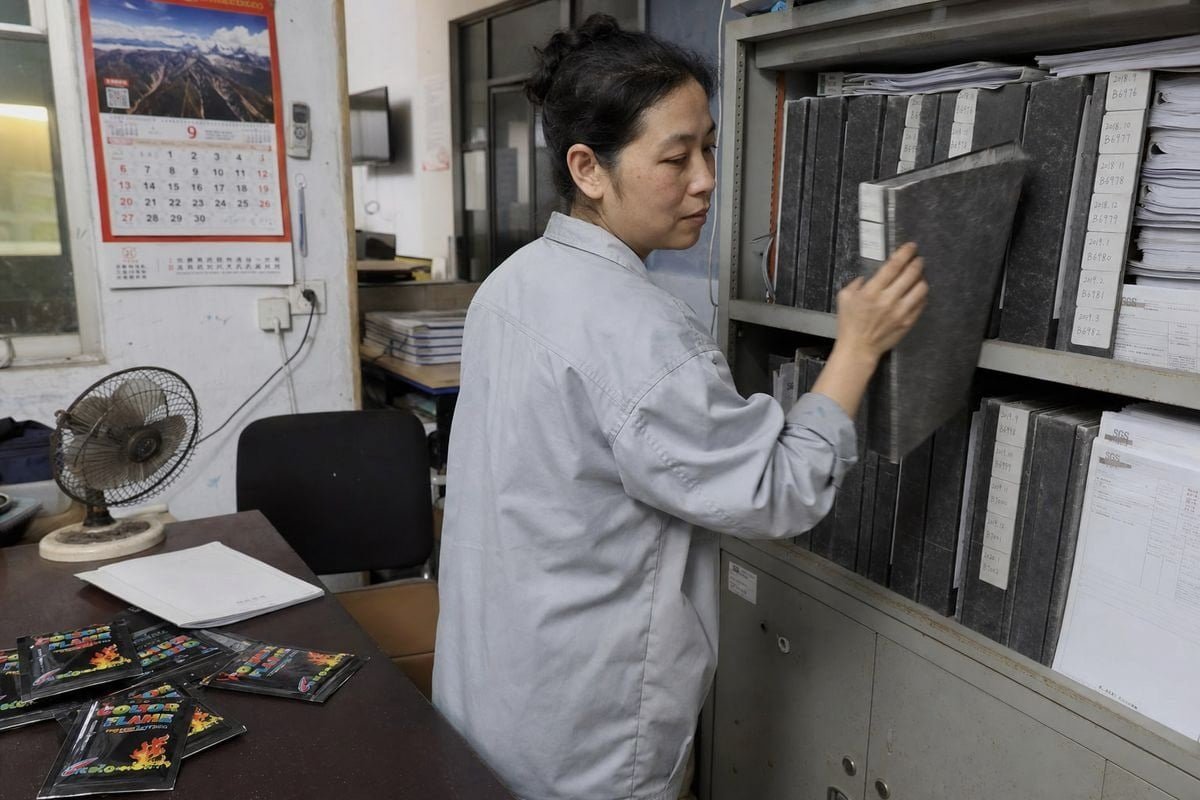
Les certifications sont votre première ligne de défense. Elles prouvent que l'usine peut produire des biens sûrs et cohérents avant que vous ne dépensiez un seul dollar. D'après notre expérience d'exportation vers les États-Unis, l'Allemagne, le Royaume-Uni et plus de 30 autres marchés, les acheteurs qui vérifient les documents à l'avance ne rencontrent presque jamais de surprises douanières par la suite.
Les certificats de base et ce que chacun prouve
| Certificat | Ce qu'elle prouve | Pourquoi vous en avez besoin |
|---|---|---|
| ISO 9001 | L'usine exploite un système de gestion de la qualité documenté | Cohérence lot par lot entre l'échantillon et la production de masse |
| Audit BSCI | Conformité éthique et sociale sur le site de production | Requis par de nombreux grands détaillants et distributeurs de l'UE |
| documentation CE | Conformité du produit pour le marché européen | Nécessaire pour la vente légale dans l'UE/EEE |
| Rapports de test SGS / Intertek | Vérification indépendante par laboratoire de la composition et de la sécurité | Les acheteurs de douane et les acheteurs au détail font confiance aux données de tiers plutôt qu'aux affirmations de l'usine |
| FDS (Fiche de Données de Sécurité) | Composition chimique, dangers, manipulation et premiers secours | Obligatoire pour les produits chimiques dans la plupart des juridictions |
Comment vérifier que les documents sont authentiques
N'acceptez pas seulement un PDF. Demandez le numéro de certificat et vérifiez-le sur le site Web de l'organisme émetteur. SGS et Intertek 1 proposent tous deux une vérification des rapports. Demandez quand a eu lieu le dernier audit. Un certificat datant de six ans vous dit peu sur la chaîne de production actuelle. Nous renouvelons nos audits à temps précisément parce que nos acheteurs vérifient.
Encore un conseil. Demandez la FDS dans la langue requise par votre autorité douanière. Une FDS en anglais fonctionne dans la plupart des endroits, mais certains régulateurs veulent une version dans la langue locale. Régler cela avant la commande vous évite une course à la traduction au port.
Quels rapports de test confirment que mes produits sont sûrs et conformes ?
Il y a un compromis que nous discutons avec presque chaque nouveau client : quels tests sont légalement requis par rapport à quels tests rendent simplement le produit plus facile à vendre. La réponse diffère selon le marché, nous gardons donc une bibliothèque complète de rapports prête.
Les rapports de test clés pour la poudre Magic Fire sont une analyse de composition chimique, un dépistage des métaux lourds, des tests d'inflammabilité et de classification des dangers, et des résultats de classification des transports. Les rapports SGS ou Intertek couvrant ces domaines satisfont la plupart des autorités douanières et des équipes de conformité de détail.
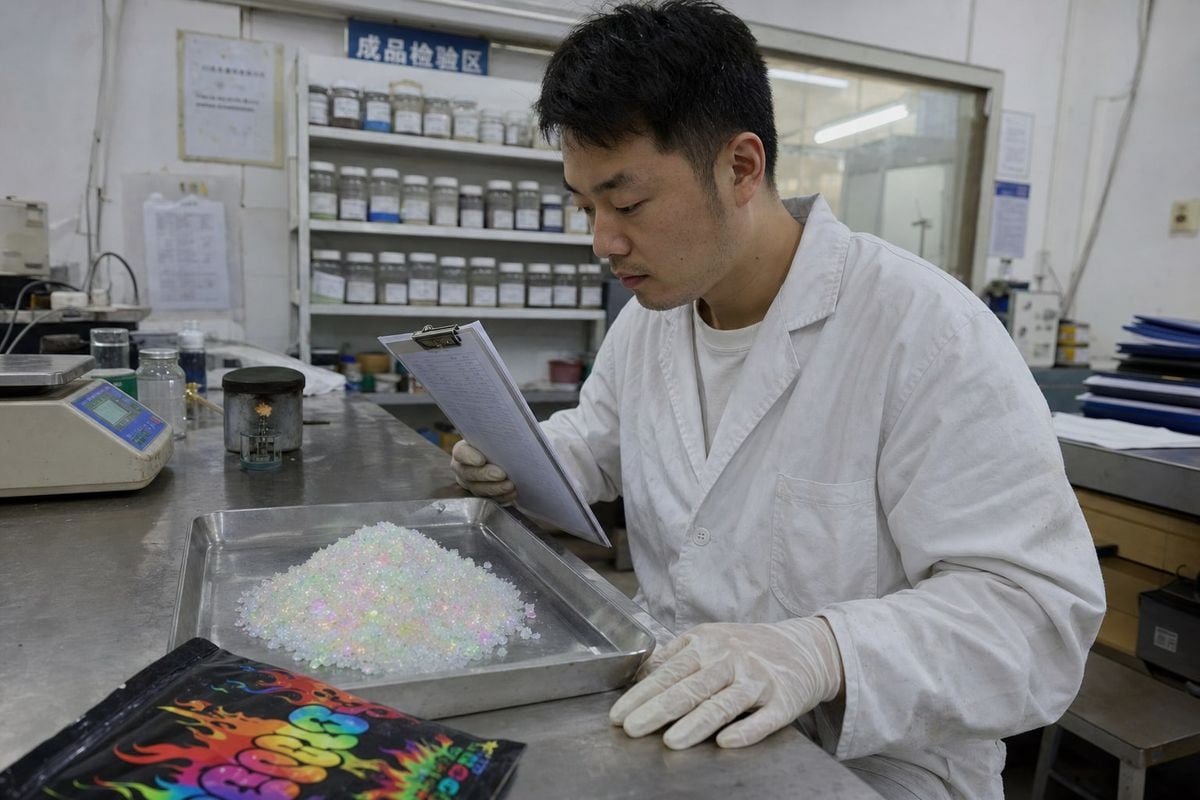
Les rapports de test traduisent le langage marketing en langage réglementaire. La douane ne se soucie pas qu'un paquet soit "magique". Elle se soucie de ce que sont les cristaux et s'ils présentent un danger pendant le transport ou chez un consommateur.
Les quatre catégories de rapports qui comptent
Premièrement, le rapport de composition chimique. Celui-ci liste chaque ingrédient et son pourcentage. Nos paquets de flammes colorées utilisent des sels métalliques écologiques sans produits chimiques nocifs, et le rapport de composition est là où nous le prouvons. La douane utilise ce rapport pour confirmer votre code SH 2.
Deuxièmement, le dépistage des métaux lourds et de la toxicité. Les marchés comme l'UE et les États-Unis vérifient les substances réglementées. dépistage des métaux lourds et de la toxicité 3 Un rapport propre sur les métaux lourds vous évite les problèmes de sécurité des produits de consommation après importation.
Troisièmement, tests d'inflammabilité et de classification des dangers 4. Cela détermine si le produit est considéré comme une marchandise dangereuse pour le transport. Les additifs de flammes colorées ne sont pas des explosifs, ce sont des colorants de flammes, mais un rapport de classification formel est le document qui le prouve. Sans cela, un agent des douanes prudent peut supposer le pire et retenir votre cargaison.
Quatrièmement, les résultats de classification du transport. Si une classe de danger s'applique, vous avez besoin du numéro UN et du groupe d'emballage 5 documenté. Si aucune classe de danger ne s'applique, une déclaration du laboratoire indiquant "non classé comme marchandise dangereuse" est tout aussi précieuse. Nous avons vu cette seule phrase libérer des envois qui sont restés dans les limbes pendant des jours.
Demandez à votre fournisseur des rapports datant d'un à deux ans. Les anciens rapports soulèvent des questions. Les rapports récents les clôturent.
Comment obtenir la bonne documentation pour le dédouanement dans mon pays ?
L'année dernière, un distributeur canadien nous a demandé de vérifier au préalable ses documents de dédouanement avant l'expédition de sa première commande d'essai depuis Ningbo. Cet examen d'une heure a permis de détecter un mauvais code SH suggéré par son courtier. L'envoi a été dédouané en deux jours.
Commencez par confirmer le code SH (généralement une classification de mélange chimique) auprès d'un courtier en douane agréé, puis rassemblez la facture commerciale, la liste de colisage, le connaissement ou la lettre de transport aérien, le certificat d'origine et la FDS. Vérifiez si votre pays exige un permis d'importation avant l'expédition.

Le dédouanement est un processus, pas un seul document. Voici la séquence que je recommande à tout importateur pour la première fois, basée sur ce qui a fonctionné sur nos principaux marchés d'exportation.
Le processus de préparation au dédouanement en cinq étapes
- Classifier le produit d'abord. Tout le reste découle du code SH. Une mauvaise classification entraîne des retenues, des amendes ou des taux de droits incorrects. Fournissez à votre courtier la FDS et le rapport de composition afin qu'il classe à partir des faits, et non du nom du produit.
- Confirmer si un permis est nécessaire. Certains pays traitent les colorants de flammes comme des produits chimiques de consommation ordinaires. D'autres exigent une notification ou un permis d'importation de produits chimiques. Votre courtier ou votre autorité douanière peut confirmer par écrit.
- Rassembler l'ensemble des documents d'expédition. Facture commerciale, liste de colisage et le Connaissement 6 (mer) ou Lettre de transport aérien (air). Assurez-vous que la description du produit correspond mot pour mot sur les trois.
- Ajouter les documents d'origine et de sécurité. Le Certificat d’origine 7 soutient le traitement tarifaire, et la FDS répond aux questions sur les dangers avant qu'elles ne soient posées.
- Pré-déposez si possible. De nombreux systèmes douaniers permettent le dépôt des déclarations avant l'arrivée. Un dépôt anticipé permet un dédouanement plus rapide.
Documentation du fret maritime par rapport au fret aérien
| Article | Fret maritime | Fret aérien |
|---|---|---|
| Document de transport | Connaissement | Lettre de transport aérien |
| Règles relatives aux marchandises dangereuses | Code IMDG (si classé) | IATA DGR (plus strict) |
| Acceptation par le transporteur | Plus flexible pour les cargaisons chimiques | Les compagnies aériennes peuvent refuser sans preuve claire de non-matière dangereuse |
| Idéal pour | Commandes de conteneurs complets ou partiels | Petites commandes d'essai urgentes |
Les transporteurs aériens sont plus stricts. Si vous expédiez des échantillons par avion, la déclaration du laboratoire confirmant le statut de non-matière dangereuse est souvent le document décisif. Nous la joignons par défaut à chaque expédition aérienne car nous avons appris à nos dépens qu'une page manquante peut immobiliser une palette.
Quels documents dois-je attendre pour les commandes sous marque de distributeur ou personnalisées ?
Les projets de marque privée sont là où notre équipe OEM/ODM passe le plus de temps. Sachets personnalisés, sacs en kraft, pots, boîtes d'exposition — chaque format que nous produisons a sa propre documentation, et les acheteurs avisés s'en renseignent avant d'approuver les maquettes.
Pour les commandes de poudre magique Magic Fire à marque privée, attendez-vous à des fichiers d'approbation de conception, des approbations de conformité d'étiquetage couvrant le texte d'avertissement et les codes-barres, un accord OEM ou un contrat de fabrication, des rapports de test mis à jour faisant référence à votre produit de marque, et des spécifications d'emballage documentées pour l'acceptation douanière et au détail.
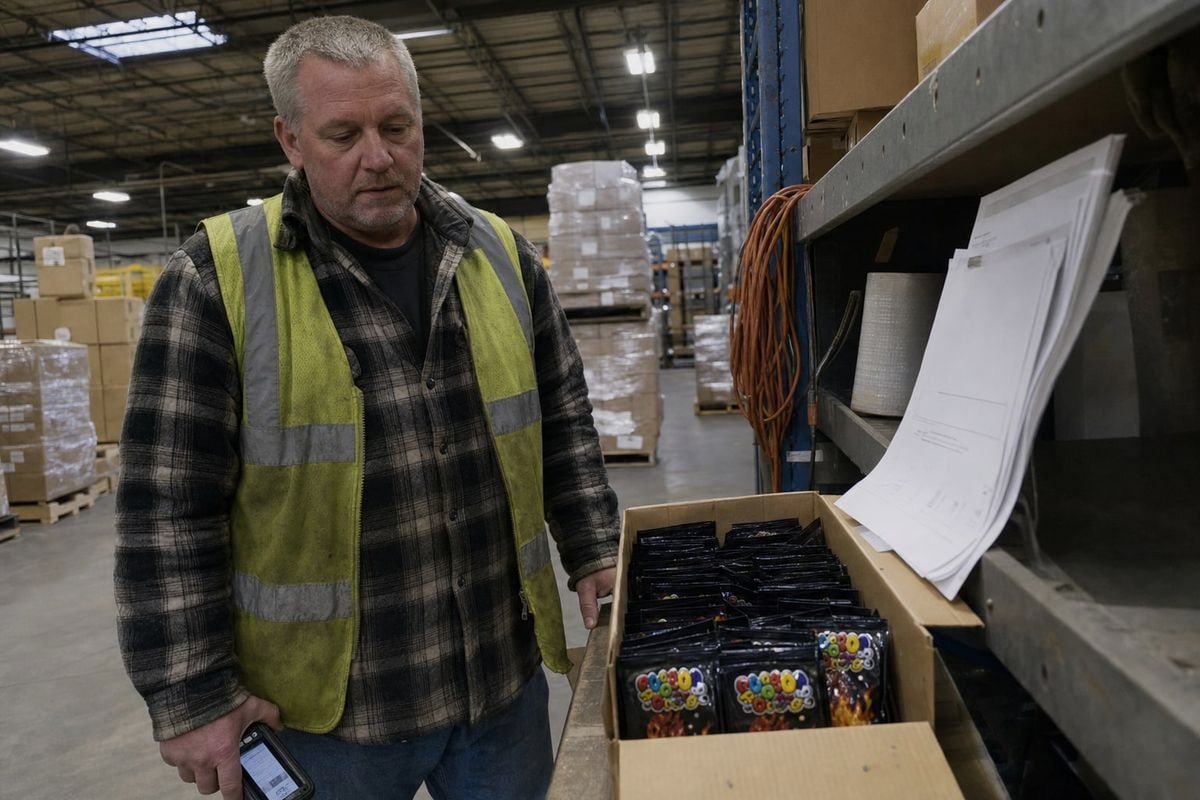
La personnalisation de la marque change plus que l'apparence du paquet. Elle change la documentation, car le produit entrant sur votre marché porte désormais votre nom, votre code-barres et votre responsabilité légale.
Documents spécifiques aux commandes de marque privée
| Document | Objectif | Qui le prépare |
|---|---|---|
| Feuille d'approbation des maquettes | Verrouille le design final, les couleurs et les dimensions | L'acheteur approuve ; l'usine prépare |
| Examen de la conformité de l'étiquette | Confirme que le texte d'avertissement, les instructions d'utilisation et les déclarations légales respectent les règles de la destination | Effort conjoint ; l'usine rédige, l'équipe de conformité de l'acheteur confirme |
| Accord OEM/ODM | Définit les spécifications, la propriété intellectuelle, les tolérances et les normes de contrôle qualité | Les deux parties signent |
| Enregistrement du code-barres | Lie votre GTIN/UPC au produit pour les systèmes de vente au détail | L'acheteur enregistre ; l'usine imprime |
| Rapport de test de marque | Lie les données de sécurité existantes à votre SKU marqué | L'usine s'organise avec le laboratoire |
Pourquoi l'étiquette d'avertissement mérite une attention particulière
La langue d'avertissement est réglementée différemment aux États-Unis, dans l'UE, au Canada et en Australie. Une étiquette qui passe la douane américaine peut échouer à un audit de vente au détail allemand. Lorsque nous préparons des emballages de marque privée— qu'il s'agisse d'un sachet en aluminium, d'une pochette à fermeture éclair en kraft ou d'une boîte d'exposition à rabat — nous rédigeons le texte d'avertissement en fonction du marché de destination et l'envoyons pour votre examen avant l'impression. Cette étape d'examen est un document en soi. Conservez l'approbation signée ; les grands détaillants la demandent souvent lors de l'intégration.
Confirmez également que la fiche de spécifications d'emballage correspond à votre déclaration en douane. Si la facture indique "24 sachets par boîte d'exposition" et que la boîte en contient réellement 25, une inspection peut signaler l'écart. La cohérence entre les maquettes, la facture et la liste de colisage rend le dédouanement ennuyeux — et ennuyeux est exactement ce que vous voulez.
Conclusion
L'importation de poudre magique de feu est simple une fois que la paperasse est correcte : certifications vérifiées, rapports de test récents, un code SH correct et des documents d'expédition complets. Associez-vous à une usine qui fournit ces quatre éléments.
Notes de bas de page
Organismes de test indépendants référencés pour vérifier les certificats fournisseurs et les rapports de conformité. ↩︎
L'autorité commerciale américaine explique la classification du système harmonisé, essentielle à l'exactitude du dédouanement. ↩︎
Contexte sur les contaminants de métaux lourds pertinents pour le test de dépistage discuté. ↩︎
Le texte officiel GHS de la CEE-ONU sous-tend les normes de classification des dangers utilisées pour les tests de transport. ↩︎
Explique le système de classification des marchandises dangereuses référencé pour les exigences de documentation de transport. ↩︎
Référence de fond expliquant ce document d'expédition maritime essentiel mentionné dans le processus de dédouanement. ↩︎
La page officielle de l'OMC sur les règles d'origine explique le rôle de ce document dans le traitement tarifaire. ↩︎

 English
  Spanish
  German
  French
  Arabic
  Portuguese
Rejoignez la conversation