







Marque privée 1 vs neutral-packaged pine cones is a question I hear weekly on our production floor. Buyers want speed and a brand — but choosing wrong burns cash and an entire season.
Neutral-packaged pine cones win on time-to-market, typically shipping 2–4 weeks faster because they skip label design, mockup approvals, and compliance proofing. Private label pine cones win on brand equity, supporting 15–30% higher retail pricing, repeat-purchase loyalty, and review accumulation your brand actually owns.
So the real question is not which model is better GS1 barcodes 2. It is which one fits your business goal right now. Let me walk you through both paths, step by step.
How can I decide between private label and neutral packaging for my first trial order of color-flame pinecones?
Last autumn, a German distributor asked us to ship neutral kraft pouches for October, then rebrand in spring. That two-step plan taught me a lot about smart first orders.
For a first trial order, choose neutral packaging if you are still validating demand, need shelf presence within weeks, or want minimal capital risk. Choose private label if you already own retail placement, have a proven seasonal audience, and can absorb a 6–10 week lead time.
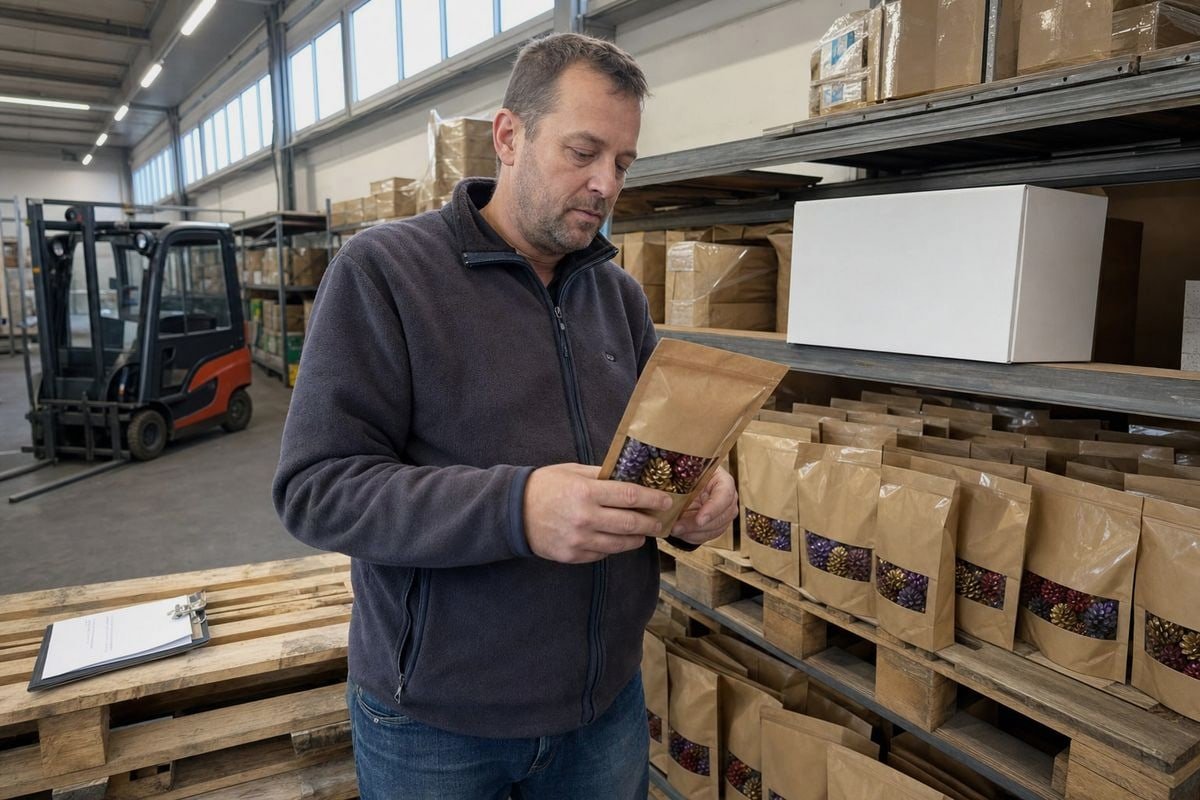
The decision comes down to three questions. First, do you know your market wants color-flame pinecones? Second, do you have the cash to hold branded inventory? Third, does your sales channel reward a brand story?
If any answer is "no," neutral packaging is the safer first move. Our stock kraft pouches and burlap sacks ship with generic artwork. You avoid design fees, tooling, and the higher MOQs that come with custom printing. You get product on shelves fast, watch sell-through, and make your private-label decision with real data instead of guesses.
Some buyers push back here. They worry that a neutral launch "wastes" a season of brand-building. In my experience, the opposite is true. A failed branded launch is far more expensive than a delayed one. Testing with neutral SKUs first protected several of our European partners from over-ordering in categories that turned out to be slow movers.
A simple decision matrix
| Votre situation | Best first move | Pourquoi |
|---|---|---|
| Unproven demand, new category | Neutral packaging | Fast, low risk, low MOQ |
| Confirmed retail listing secured | Marque privée | Retailers expect branded, shelf-ready goods |
| Strong e-commerce audience | Marque privée | Reviews and repeat buyers compound under your brand |
| Seasonal window closing soon | Neutral packaging | 2–4 weeks faster to market |
| Hybrid budget | Gray-label (neutral + QR code) | Near-neutral speed, some brand signal |
Don't ignore the hybrid path
A "gray-label" approach — neutral packaging with a QR code linking to your brand story and sourcing details — gets you most of the speed of neutral packaging while planting early brand-equity seeds. We add QR stickers to stock pouches for several clients at almost no extra lead time.
What MOQ and lead time should I expect when switching from neutral-packaged pinecones to a fully private-label product?
One trade-off we constantly weigh at our Ningbo plant is print-run economics versus buyer flexibility. Custom pouches only become cost-efficient at certain volumes, and that shapes every MOQ quote we give.
Expect neutral-packaged pinecones to ship in 2–4 weeks with MOQs as low as a few hundred units. Fully private-label pinecones typically require 6–10 weeks — covering artwork, mockup approval, printed packaging, and compliance labels — with MOQs usually starting around 1,000–3,000 units per SKU.
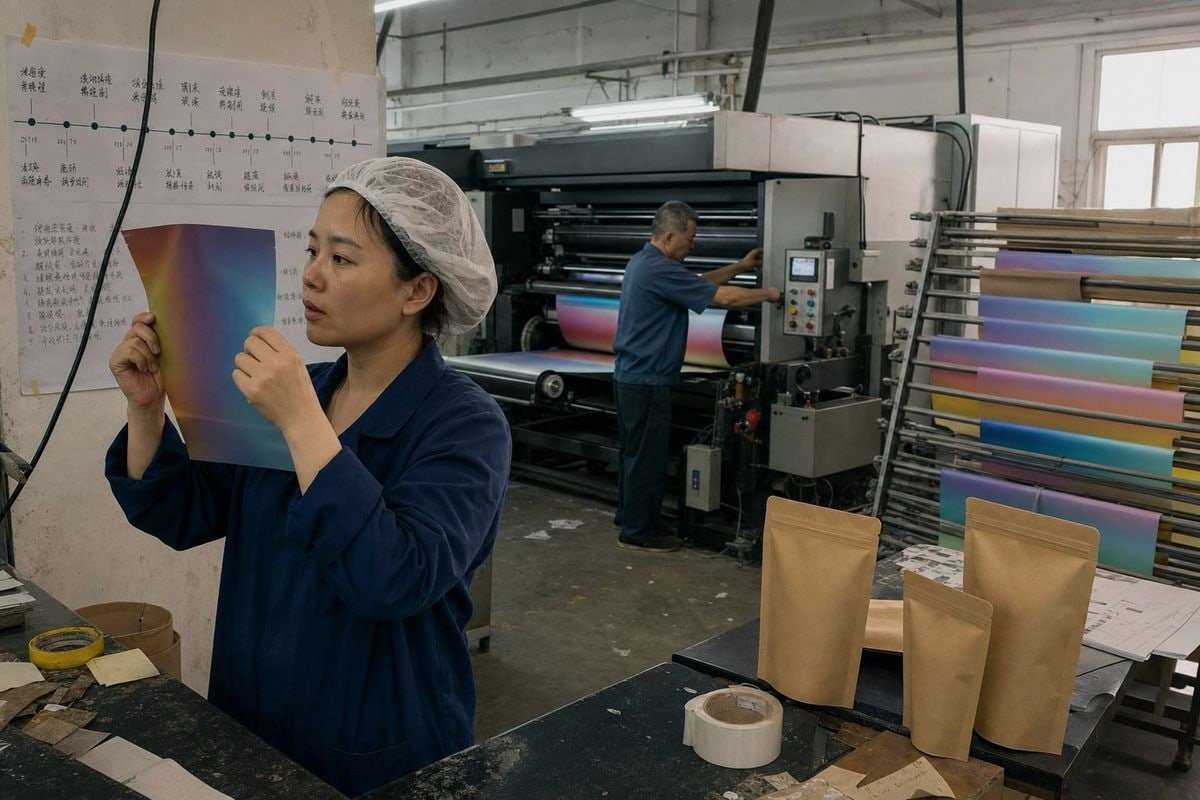
The gap between the two models is driven by fixed steps that neutral packaging simply skips. Custom printing needs plate-making or digital setup. Artwork needs revision rounds. Warning labels and barcodes must be checked against your country's rules before anything goes to press. Each step is small, but they stack up.
Here is the typical timeline breakdown we quote to buyers moving from neutral to private label:
| Étape | Neutral packaging | Marque privée |
|---|---|---|
| Artwork and logo design | Pas nécessaire | 1–2 semaines |
| Mockup and sample approval | 2–3 days (stock sample) | 1–2 semaines |
| Compliance and label review | Pre-done on stock SKUs | 1–2 semaines |
| Packaging printing | Pas nécessaire | 2–3 semaines |
| Production et remplissage | 1–2 semaines | 1–2 semaines |
| Total (before shipping) | 2–4 semaines | 6–10 weeks |
Some advisory sources warn that private-label development cycles can stretch to 12–18 months. In our category, that length usually signals a process problem, not a necessity. The long cycles come from slow artwork feedback, unclear compliance requirements, and suppliers who cannot answer questions quickly. With a prepared factory, a color-flame pinecone private-label program should not take more than one quarter.
How to compress the private-label timeline
- Send print-ready artwork files, not concepts.
- Confirm your market's warning-label wording before design starts.
- Approve one master sample, then lock the spec — mid-run changes destroy schedules.
- Book freight early; ocean lead times often exceed production lead times.
One practical note on MOQs: we deliberately keep trial-order MOQs flexible because a buyer who tests successfully becomes a repeat private-label client. Ask your supplier whether they offer a stepped MOQ — smaller first run, standard runs after reorder. Factories with real production depth can usually accommodate this; trading companies often cannot.
Will private label pinecones really build stronger brand equity than neutral packaging in my market?
A UK fireplace-accessories buyer once told me his neutral-packaged pinecones sold well for two seasons — yet customers could never reorder because they didn't know whose product it was. That conversation changed how I explain brand equity 3.
Yes, in most markets private label builds materially stronger brand equity. Branded pinecones capture repeat-purchase recognition, accumulate reviews under your name, support 15–30% price premiums, and let you own sustainability claims — all advantages an anonymous neutral-packaged product structurally cannot capture.
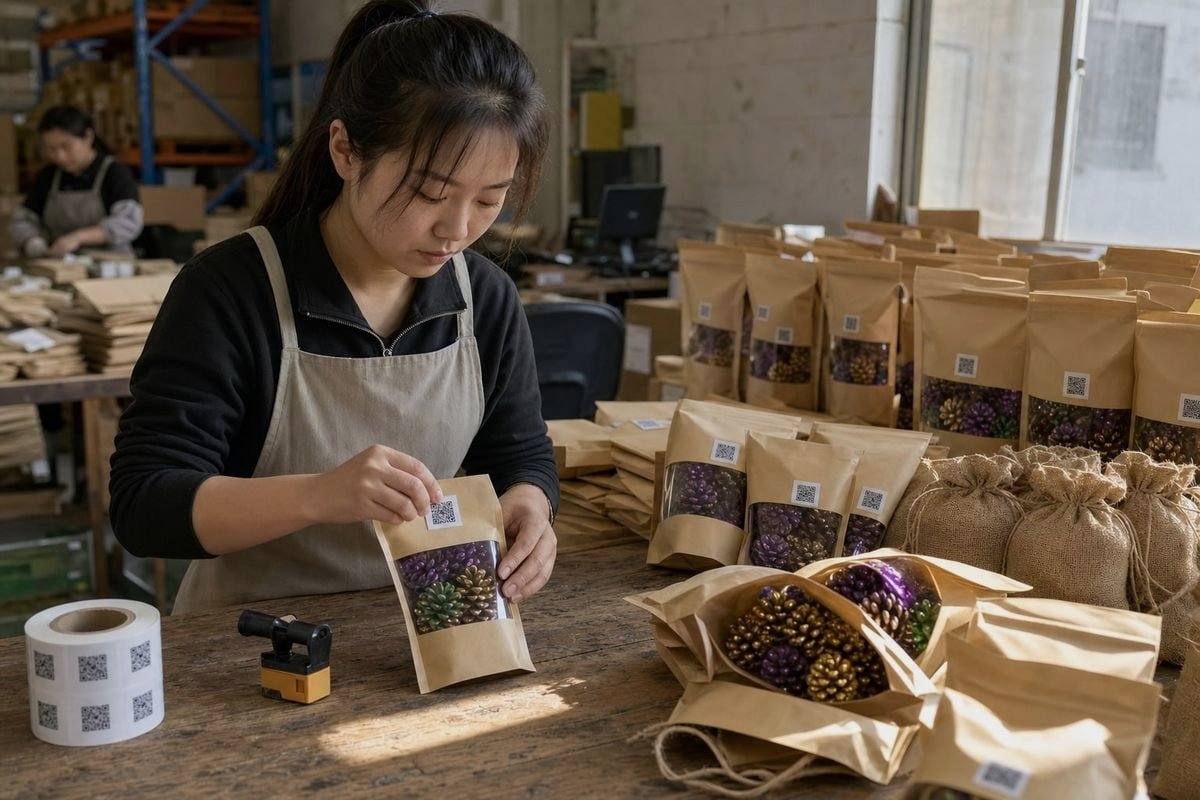
Brand equity in this category comes from four compounding sources, and neutral packaging blocks three of them.
Where the equity actually comes from
| Equity driver | Marque privée | Neutral packaging |
|---|---|---|
| Repeat-purchase recognition | Customers reorder your brand | Customers can't find you again |
| Online reviews and buyer data | Accumulate under your listing | Scattered or attributed to no one |
| Price premium | 15–30% achievable | Priced as a commodity |
| Sustainability credentials | Attributed to your brand | Attributed to nobody |
The last row matters more than most buyers expect. Color-flame pinecones sell heavily on story — natural botanicals, eco-friendly chemistry, cozy seasonal ritual. Sourcing credentials and safety claims generate real equity lift, but only if consumers can attach them to a name. An anonymous kraft pouch cannot carry an ethical-sourcing story anywhere.
There is also a broader trend working in your favor. Private label is no longer seen as a budget substitute. Retail research shows private-label penetration exceeding 35 percent in some distribution segments, and industry analysts describe a "brandification" of private labels built on three steps: consistent quality, strategic differentiation, and full-scale branding. Seasonal home-décor and fire-accessory categories fit this pattern well, because gift-ready packaging and giftable price points reward differentiation.
Now, the honest caveat: private label alone does not create equity. Quality does. If flame colors are weak or batches vary, your brand absorbs the damage that a neutral product would have deflected. This is why we run strict batch-to-batch QC — the first sample a buyer approves must match every carton that follows. Equity is a promise; consistency is what keeps it.
For e-commerce sellers, the case is even stronger. Amazon and Shopify reviews, repeat-buyer data, and retargeting audiences all compound under a brand you own. That data asset alone often justifies the longer lead time.
What compliance and certification steps do I need to cover when private labeling color-flame pinecones for my country?
Early in our export history, we learned the hard way that a missing warning-label phrase can hold a container at customs longer than the entire production run took. Compliance is now the first conversation we have, not the last.
You need verified safety testing from an accredited lab (SGS or Intertek), correct chemical and combustion-product documentation, market-specific warning labels and barcodes, CE marking where applicable in Europe, and a supplier holding ISO 9001 and BSCI audits. Confirm all of this before printing packaging.
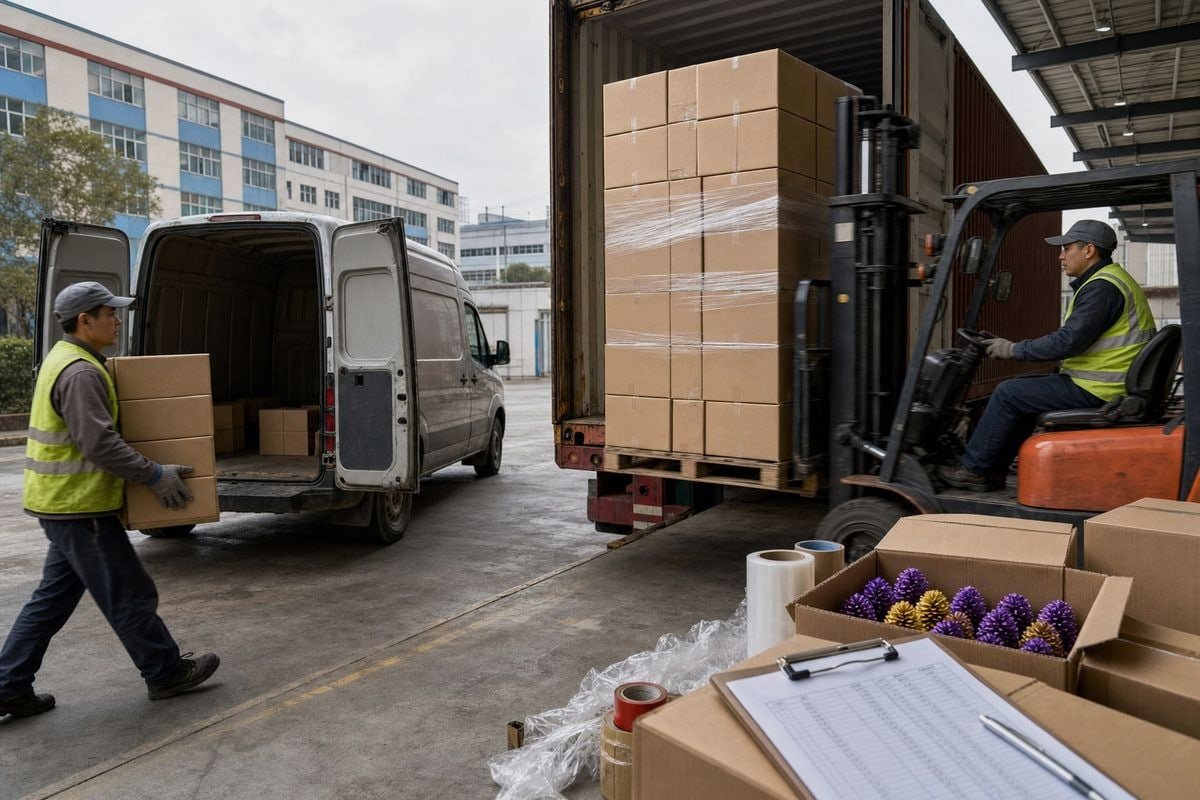
Compliance is where private label and neutral packaging diverge sharply. With a stock neutral SKU, the supplier has usually pre-cleared documentation and generic labeling. With private label, your name goes on the bag — and in most jurisdictions, that makes you the responsible party. The regulatory work shifts to your artwork, your claims, and your labels.
The compliance sequence we walk buyers through
- Verify the formulation. Ask for third-party test reports confirming the color-flame chemistry is free of harmful métaux lourds 4 and produces safe combustion products. We provide SGS and Intertek 5 reports as standard.
- Audit the factory, not just the product. ISO 9001 covers quality systems; BSCI covers social compliance, which large retail chains increasingly require before listing.
- Confirm market-specific marks. CE-related requirements apply to certain fire products in the EU Marquage CE 6. The US, Canada, and Australia each have their own labeling expectations for fire-related consumer goods.
- Lock the warning-label text early. Wording, language requirements, and pictograms vary by country. This text must be final before packaging printing starts, or you lose weeks.
- Add barcodes and traceability. Retail channels require scannable GS1 barcodes 7; batch codes protect you if a recall question ever arises.
- Check transport classification. Fire-starting goods may need specific freight documentation. An experienced exporter handles this; a first-time private-label buyer often doesn't know to ask.
Fire-safety verification deserves special attention because it disproportionately delays private-label launches compared to neutral SKUs. If your supplier is testing the formulation for the first time on your order, budget extra weeks. If they already hold current reports — as we do across our color-flame packet, pinecone, and firestarter lines — the compliance step becomes a document review rather than a laboratory wait.
My practical advice: treat certification as a supplier-selection filter, not a post-order task. A factory that emails complete test reports within a day will not stall your launch. One that promises reports "after the deposit" almost certainly will.
Conclusion
Neutral-packaged pine cones win on speed; private label wins on lasting brand equity. Test fast with neutral, then rebrand with a compliant, certified factory partner once demand is proven.
Notes de bas de page
1. Core background concept explaining the private-label business model discussed throughout. ↩︎
2. GS1 is the authoritative body defining retail barcode standards mentioned for traceability. ↩︎
3. Defines the core marketing concept the article repeatedly references for private-label value. ↩︎
4. EPA reference on regulated heavy metals relevant to combustion product safety testing. ↩︎
5. Official site of the accredited testing lab named for safety verification reports. ↩︎
6. Background reference for the European conformity marking mentioned for fire products. ↩︎
7. Explains the global barcode standard referenced for retail traceability requirements. ↩︎



 English
  Spanish
  German
  French
  Arabic
  Portuguese
Rejoignez la conversation