







Effective POS scripts for staff to sell wood fire starters are something our factory's retail partners ask about constantly wood-burning practices 1. Great products still sit on shelves when cashiers stay silent — and every silent checkout is lost margin.
To write POS scripts for staff selling wood fire starters, use one short line that names the customer's need, states a plain benefit like faster ignition without lighter fluid, and offers a simple next step. Keep scripts under ten seconds, benefit-led, and pressure-free.
Below, I break this down into four parts: the benefits to highlight, safety training, objection handling, and how a supplier's story strengthens your pitch. Let's start with benefits.
What Key Product Benefits Should I Highlight in My Staff's Sales Script?
During a packaging review for a European fireplace distributor, our team burn-tested wax-dipped wood rolls side by side with newspaper. That test shaped every benefit line I now recommend for checkout scripts.
Highlight four benefits: faster and more reliable ignition, no lighter fluid or chemical smell, less frustration on cold or damp days, and convenience compared to messy DIY methods. Lead with the customer outcome, not the wax composition or packaging details.
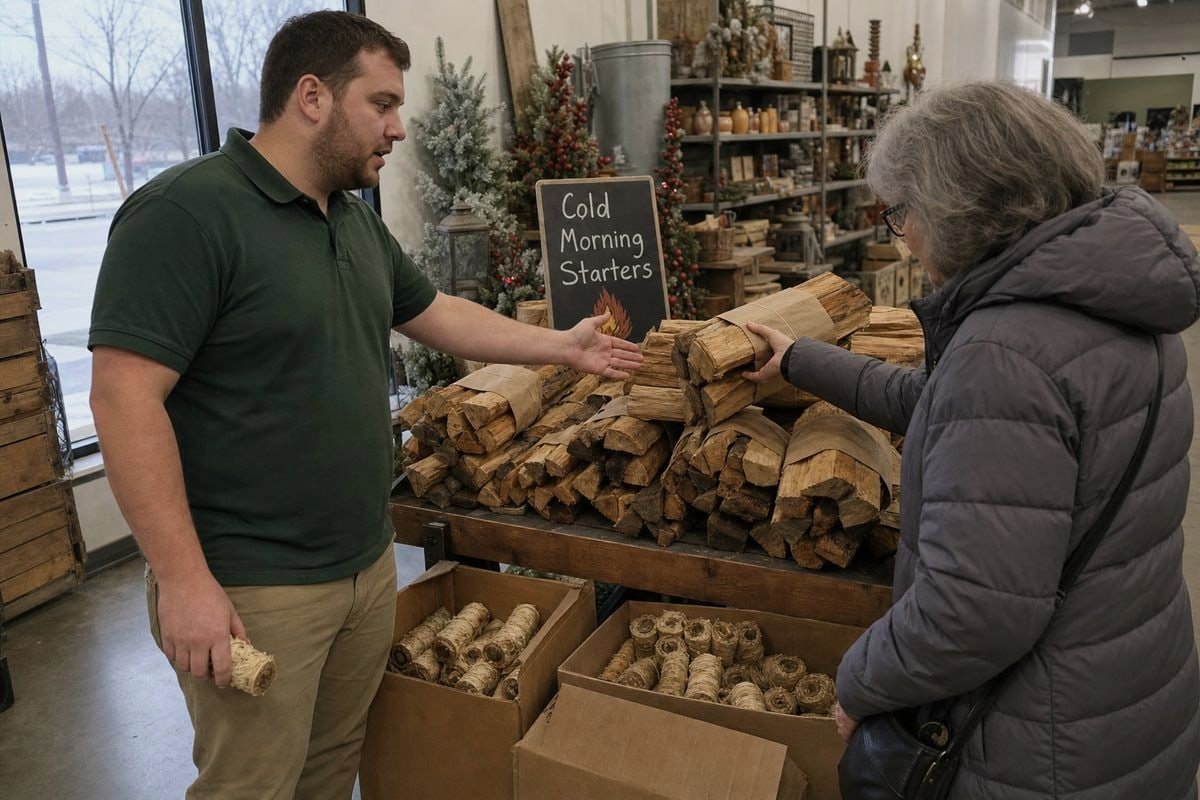
The biggest mistake I see in retail sales training is feature-first language. A cashier who says "these are 50% wood fiber and 50% paraffin" describes the product. A cashier who says "these get your wood burning faster without lighter fluid" solves a problem. Stove and fireplace manuals consistently stress the same outcomes: dry kindling, good airflow, and a quick, reliable start. Your scripts should mirror that language, because it matches what the customer already worries about.
Turn Features Into Benefits
Our wax-dipped wood rolls burn long enough to ignite kindling without babysitting. But the script should never say "long burn time." It should say "you light it once and walk away." That is the difference between describing and selling.
| Fonctionnalité | Benefit-Led Script Line |
|---|---|
| Wax-coated wood wool | "These light with one match, even in damp weather." |
| 8–10 minute burn | "You light it once — no relighting, no babysitting." |
| Natural materials, no chemicals | "No lighter fluid smell in your living room." |
| Compact, individually usable | "One roll per fire. A box lasts most of the season." |
Use Sensory and Situational Language
Words like "crackling fire," "instant warmth," and "effortless start" trigger the cozy feeling the customer is actually buying. Pair them with situational triggers: firewood in the basket, a fire pit purchase, or a cold-weather shopping trip. Suggestive selling works best when the line feels relevant, not rehearsed. A simple prompt like "a lot of customers grab these with firewood for easier cold-morning starts" ties the benefit to the moment. That is what makes natural fire lighters 2 an easy add-on rather than a pushy pitch.
How Do I Train My Team to Answer Customer Questions About Safety and Certifications?
Compliance paperwork crosses my desk before any product does. After 17+ years shipping de produits d'allumage 3 to the US and Europe, I can tell you: safety questions at the register are buying signals, not obstacles.
Train staff to give short, honest safety answers: fire starters are a controlled, cleaner alternative to volatile liquids like gasoline or lighter fluid, made from natural materials, and backed by certified testing. Teach them to reference on-pack warnings rather than improvise claims.
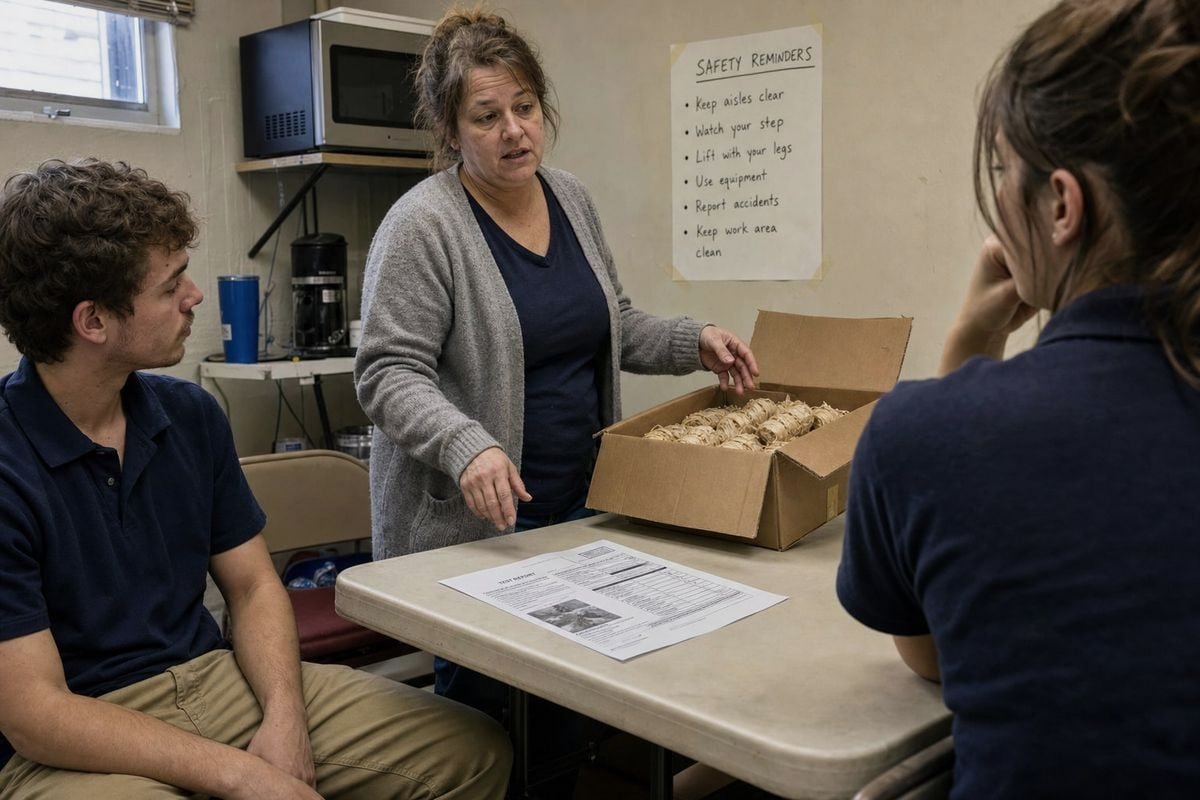
Wood-stove and fireplace manuals repeatedly warn against gasoline, kerosene, and charcoal lighter fluid. That warning is your training foundation. A trained cashier can use it as a soft contrast: "These are the safe way to do what lighter fluid does badly." That single reframe positions your product as the responsible choice — and responsible framing builds trust, which lifts conversion across all your accessoires de cheminée 4.
The Three-Layer Answer Framework
I train distributor teams to answer safety questions in three layers, stopping whenever the customer is satisfied:
- Reassure: "These are designed for controlled ignition — no flare-ups like liquid accelerants."
- Reference: "The materials are natural wood fiber and wax, and the usage instructions are right on the box."
- Certify: "The product is independently tested and certified for our market."
Most customers stop at layer one. The layers exist so staff never feel cornered.
What Staff Should Never Say
Equally important is the "avoid" list. Overselling safety creates liability. Keep this table in your training binder:
| Say This | Never Say This |
|---|---|
| "A cleaner alternative to lighter fluid." | "Completely risk-free." |
| "Follow the instructions on the pack." | "You can use as many as you want." |
| "Tested and certified for retail sale." | "Safe for kids to use." |
| "Works with your stove's normal method." | "Replaces proper fire-building steps." |
Run short role-play sessions monthly. Five minutes per cashier is enough. Have one person play a skeptical parent, another a wood-stove veteran. Staff who have practiced a safety answer once will deliver it naturally the tenth time — and confident delivery is what customers read as trustworthiness.
What Objections Should I Prepare My Staff to Handle When Selling Wood Fire Starters?
A US camping brand once told me their biggest checkout objection wasn't price — it was "I just use newspaper." Objection handling for this category is really about respecting habits while offering a better option.
Prepare staff for four objections: "I use newspaper," "I make my own," "too expensive," and "I don't need them." Train a no-pressure acknowledge-and-reframe response for each, positioning the fire starter as a convenient, reliable backup rather than a replacement.

The DIY culture around fire starters is real. Plenty of customers melt wax into sawdust and egg cartons at home. Your staff should never argue with that. The winning move in objection handling is to validate first, then reframe. "If your method works, great — these are just a mess-free backup for damp mornings" respects the experienced buyer while keeping the sale alive. Some will decline. Many will grab a box "just in case." Both outcomes protect the relationship.
The Four Core Objections and Responses
| Objection | Acknowledge | Reframe Script |
|---|---|---|
| "I just use newspaper." | "That works for a lot of people." | "These help most when the paper's damp or the wood is cold — one lights the whole stack." |
| "I make my own." | "The wax-and-sawdust ones? Those are good." | "These skip the mess and burn the same every time. Handy backup." |
| "Too expensive." | "Fair point." | "It comes to a few cents per fire — cheaper than wasted kindling and a frustrating evening." |
| "I don't need them." | "No problem at all." | "They're outdoor insurance — if the wood's green or the wind picks up, one of these saves the night." |
Timing Matters as Much as Wording
The "outdoor insurance" framing works because it removes the pressure to change habits. Nobody objects to a backup plan. Train staff to deliver these lines at the end of the transaction, after the customer has committed to the main purchase — that is when add-on sales resistance is lowest. And teach them one rule above all: one reframe, then stop. Pushing past a second "no" costs you future visits, and repeat customers are worth more than one box of fire starters.
How Can I Use a Reliable Supplier's Product Story to Strengthen My In-Store Sales Pitch?
Buyers who visit our production lines in Ningbo often tell me the same thing afterward: seeing how wood fire starters are actually made gives their sales teams language no script template can. Provenance sells.
Use your supplier's story — natural materials, certified production, batch-consistent quality — as script content. Lines like "these are made from natural wood fiber and wax by a certified factory" turn a generic add-on into a trusted recommendation and elevate staff into fire consultants.

A cashier who knows nothing about the product can only recite a line. A cashier who knows the product is made from wood wool and food-grade-style paraffin 5, tested by independent labs, and produced with strict batch-to-batch — peut vous montrer où leurs coûts diminuent réellement en volume. Si une usine offre une remise importante sans expliquer la source des économies, considérez cela comme un signe d'avertissement. 6 speaks with genuine confidence. Customers hear the difference immediately. This is why I always advise our B2B partners to pass supplier facts down to the shop floor as part of their retail sales training.
Turn Supply-Chain Facts Into Script Lines
Here is how the story translates. Our own products — wax-dipped wood rolls made from eco-friendly materials with no harmful chemicals — give staff honest, checkable claims. "These are eco-friendly kindling, not chemical blocks" is a one-second line that answers the modern shopper's biggest unspoken question. "The factory behind these holds ISO 9001 7, BSCI, CE, and SGS/Intertek certification" is a longer answer staff can hold in reserve for the customer who asks "who makes these?"
Build the Story Into Displays and Bundles
The supplier story should live beyond the spoken script. Point of purchase displays near firewood and fireplace accessories can carry the same claims — natural materials, certified testing, consistent quality — so the script and the shelf reinforce each other. Private-label packaging with clear warning labels and clean branding makes the recommendation feel like your store's endorsement, not a random SKU. From there, cross-selling strategies get easy: bundle starters with kindling as a "cold-morning kit," or pair them with color-flame products for a "fire night" themed display. These upselling techniques work because the story makes the bundle feel curated, not pushed. When staff ask about the customer's setup first — wood stove, open fireplace, or fire pit — and then recommend from knowledge, the pitch stops being a pitch. It becomes advice. That shift, more than any single line, is what a reliable supplier's story buys you at the register.
Conclusion
Silent checkouts leak margin daily. Short, benefit-led POS scripts, honest safety answers, respectful objection handling, and a certified supplier story turn wood fire starters into effortless, trust-building add-on sales.
Notes de bas de page
1. Official EPA Burn Wise guide for safe and efficient wood burning; replaces 404 link. ↩︎
2. Wikipedia entry providing a technical overview of the product category discussed in the article. ↩︎
3. Official CPSC resource regarding fire safety and the regulation of fire-starting products. ↩︎
4. Wikipedia overview of the broader product category that includes fire starters and related tools. ↩︎
5. Authoritative definition of the wax material used in the production of wood fire starters. ↩︎
6. Reliable Wikipedia overview of quality control standards; replaces 403 link. ↩︎
7. Standard reference for ISO 9001 quality management systems; replaces 403 link. ↩︎



 English
  Spanish
  German
  French
  Arabic
  Portuguese
Rejoignez la conversation