






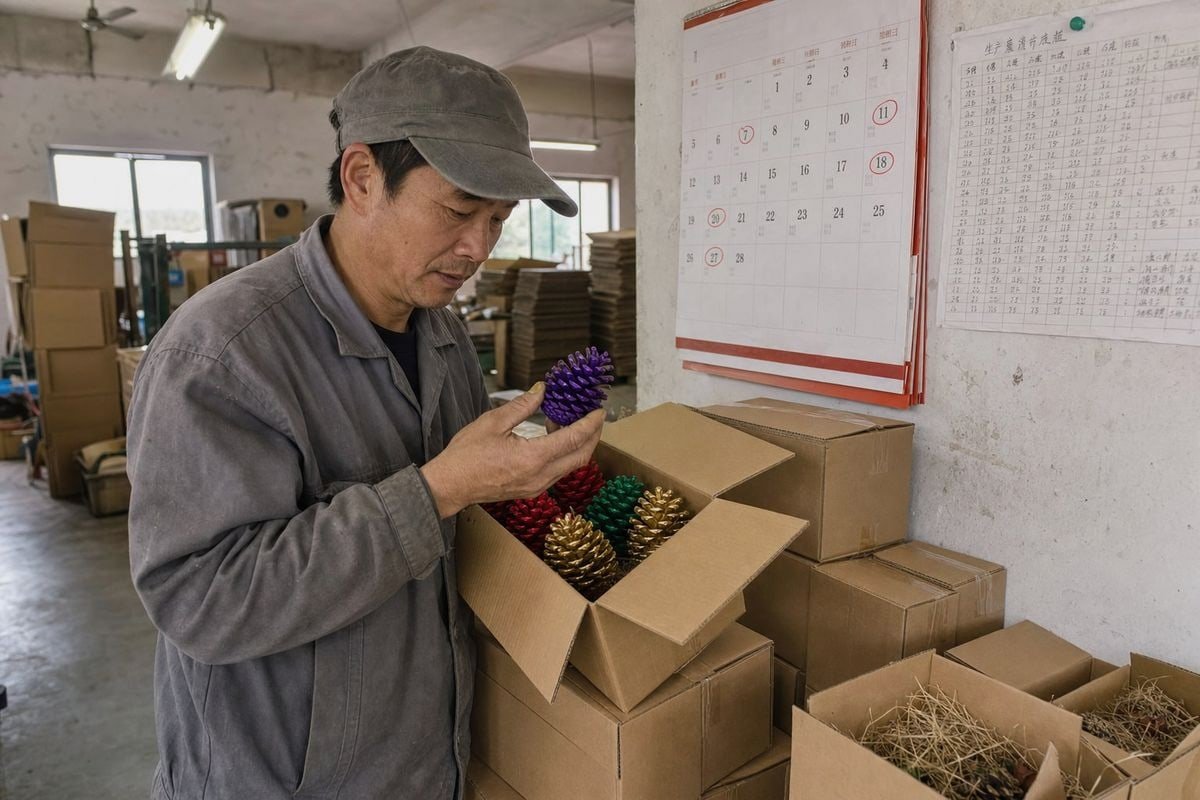
Fireplace colored pine cone imports live or die on timing Labor Day 1. On our production line, I have watched buyers miss an entire summer because one purchase order landed six weeks late.
Time fireplace colored pine cone imports by working backward from late May. Finalize purchase orders by January or February, allow 45–60 days for production, 30–45 days for sea freight, and clear customs by mid-April so inventory reaches shelves before the Memorial Day camping surge.
That is the short answer. Below, I break down each stage of the timeline so you can build your own reverse calendar with confidence.
How far in advance should I place orders to hit US and European camping peak season?
Every December, my inbox fills with urgent requests from US distributors who suddenly realize spring is coming. Our export schedule to 30+ countries has taught me one rule: peak season rewards the early planner.
Place orders for camping peak season by January or February at the latest. North American camping demand begins in late May, peaks in July and August, and the active selling window lasts only 10–12 weeks, so inventory must be shelf-ready before Memorial Day weekend.

Peak demand forecasting for this category starts with one hard fact. The North American camping season traditionally runs from Memorial Day weekend 2 in late May through Labor Day in early September. Consumer demand rises sharply around Memorial Day, June, and July, then softens by late August. That gives you a compressed selling window of roughly 10 to 12 weeks. If your wholesale campfire accessories arrive in July, you have already lost half the season.
Europe follows a similar rhythm, though it shifts slightly. German and UK campers ramp up in May and June, with strong demand through the school holidays in July and August. In our experience exporting to Germany, the Netherlands, and Poland, European buyers often place orders even earlier because they want extra time for EU compliance checks and inland distribution.
The reverse calendar
Voici la backward-planning model I walk buyers through:
| Jalon | Target Date | Pourquoi c'est important |
|---|---|---|
| Purchase order finalized | Janvier-février | Beats the Lunar New Year 3 production hiatus |
| Production terminée | Mars | Allows 45–60 days for manufacturing and QC |
| Vessel departure | Late March | Secures space before spring freight surge |
| Customs clearance done | Mid-April | Avoids the Memorial Day logistics bottleneck |
| Inventory on shelf | Fin mai | Captures the full 10–12 week selling window |
One more factor deserves attention. The rise of shoulder-season camping, driven by remote work and milder climates, has stretched viable sales into April and October. I now advise buyers to carry roughly a 15% inventory buffer beyond the traditional summer peak. A second demand bump also arrives in October for autumn leaf-peeping trips and again in December for the winter fireplace season. Smart planification des stocks saisonniers treats these as two distinct peaks, not one.
What lead times can I expect for certified color-flame pinecones from a Chinese manufacturer?
A German distributor once asked me why our quoted lead time was two weeks longer than a trading company's. My answer: our timeline includes SGS batch testing 4, and theirs did not. That difference matters at customs.
Expect 30–45 days of production lead time for certified color-flame pinecones, plus 7–14 days for third-party testing and documentation. Add 30–45 days of sea freight to the US or Europe, bringing the total from order to port at roughly 70–100 days.

Supply chain lead times for this product are longer than buyers expect, because color-flame pinecones are not a simple pick-and-pack item. Raw cones are collected in late summer through early fall, when they are mature and dry enough to process. They are then treated with mineral-salt colorants — the same family of compounds that includes sulfate de cuivre 5 for blue-green color-changing flames — and dried again. At our factory, we use eco-friendly formulations with no harmful chemicals, and each batch must be fully dry before packing. Sources across the industry agree on this point: treated cones need at least three days of drying, and rushing this stage creates quality failures downstream.
Where the time actually goes
| Étape | Durée typique | Notes |
|---|---|---|
| Approvisionnement en pommes de pin brutes | Seasonal (Aug–Oct collection) | We hold dried stock through winter |
| Color treatment and drying | 10–15 jours | Fully dry cones only; no shortcuts |
| Emballage et étiquetage | 7–10 jours | Longer for private-label or custom pouches |
| Batch QC and SGS/Intertek testing | 7–14 jours | Required for compliant US/EU entry |
| Sea freight to US/EU port | 30–45 jours | Varies by port pairing and season |
Certification is where lead times separate real factories from resellers. Our ISO 9001 and BSCI systems mean QC checkpoints are built into every batch, and test reports are ready before the container ships. A supplier who promises 20-day turnaround on certified goods is usually skipping the testing step — and you find out at customs clearance, not before.
One planning tip from 17+ years of doing this: the Lunar New Year shutdown in late January or February pauses production across China for two to four weeks. Orders confirmed before the holiday get priority slots. Orders placed after it join a restart queue.
How do I avoid stock shortages during peak season without overcommitting to a large MOQ?
The trade-off I discuss most often with first-time buyers is simple: order too little and you stock out in July; order too much and you warehouse dead inventory until December. Neither outcome is acceptable, and neither is necessary.
Avoid shortages by splitting your annual volume into a base order and a replenishment order. Place a moderate initial order in January for late-May arrival, then confirm a second order by March for July delivery, using early-season sell-through data to size it.

The staged-order model works because the camping season itself is staged. Demand builds through June, peaks in mid-July to August, and tapers into September. You do not need your entire season's stock on day one. You need enough to cover the first six weeks, plus a confirmed pipeline behind it.
The two-order strategy in practice
- Base order (January): Cover your forecast for Memorial Day through early July. This is your compliance-tested, shelf-ready launch inventory.
- Checkpoint (early June): Review sell-through after two to three weeks of real sales. Your rate of sale tells you whether the season is running hot or cold.
- Replenishment order (confirmed by March, shipped for July arrival): Because production and freight take 70–100 days combined, this order must be provisionally booked before the season starts. You adjust the final quantity at the last responsible moment.
Flexible MOQs make this model workable. On our side, we support trial-sized first orders precisely because we want buyers to test the market before scaling. A purchasing manager who starts with a modest container share and reorders twice is a better long-term partner than one who overcommits and disappears.
There is one more lever: product mix. Colored pine cones share a customer base with pine cone fire starters, color-flame packets, and wax-dipped firestarters. Splitting an order across two or three SKUs spreads risk. If one product underperforms in the outdoor living retail channel, another often overperforms — and the fireplace season in Q4 gives slow-moving summer stock a second life. Packaging matters here too. Rustic burlap sacks and kraft stand-up pouches sell well in both camping and gifting channels, so unsold summer units can pivot into holiday displays without repackaging.
Which shipping and customs factors could delay my seasonal pinecone import timeline?
Years ago, a shipment of botanical products taught us a lesson we never forgot: paperwork problems cost more time than production ever does. Since then, our export team prepares phytosanitary documentation before a single carton is sealed.
Plant-based products face USDA APHIS oversight, so pinecone shipments typically need a phytosanitary certificate and may require a PPQ 587 permit. Add sea freight variability of 30–45 days, spring port congestion, and the mid-April Memorial Day logistics bottleneck to your buffer.
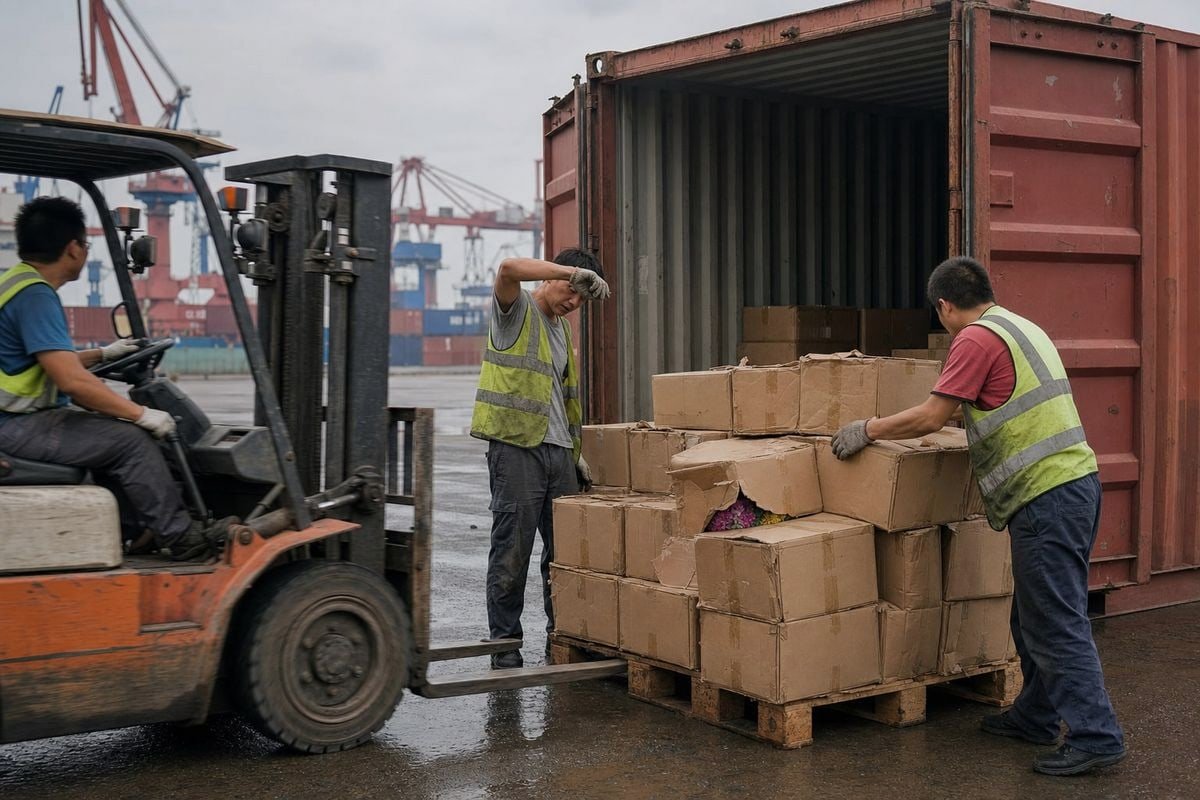
Customs clearance is the least predictable stage of the entire timeline, and pinecones carry extra scrutiny because they are botanical goods. US regulators want assurance that imported plant material carries no invasive pests or pathogens. In practice, that means your supplier must provide a certificat phytosanitaire 6 issued in the country of origin, and your customs broker should confirm whether your specific product form requires a PPQ 587 import permit. Products that are heat-treated or fully processed often face a smoother path — and heat treatment certification is increasingly replacing chemical fumigation 7 as the preferred phytosanitary method. It also doubles as an eco-safe marketing angle for campers who worry about burning treated organic matter.
The main delay risks, ranked
| Facteur de risque | Typical Delay | How to Mitigate |
|---|---|---|
| Missing phytosanitary documents | 2–6 weeks (hold or rejection) | Confirm certificates before vessel departure |
| Spring freight shipping congestion | 1–3 semaines | Book vessel space 4+ weeks ahead |
| The Memorial Day bottleneck | 1–2 semaines | Clear customs no later than mid-April |
| Customs physical inspection | 3–10 jours | Use accurate HS codes and clean labeling |
| Inland trucking shortages | 3–7 jours | Pre-book drayage from the port |
The Memorial Day bottleneck deserves emphasis. From late April onward, US ports absorb a surge of general summer retail goods. Containers arriving in May compete for inspection slots, chassis, and trucking capacity. That is why the mid-April clearance target is not a suggestion — it is the difference between shelves stocked for the holiday weekend and pallets sitting at the port while your selling window shrinks.
On our end, we reduce these risks by shipping from Ningbo with complete document packs: test reports, compliant warning labels, barcodes, and origin certificates. When paperwork is clean, customs clearance usually becomes a formality rather than a gamble.
Conclusion
Missing the camping peak means a lost year, not a lost month. Order by February, certify every batch, clear customs by mid-April, and split orders to stay stocked. We are here to help you plan it.
Notes de bas de page
1. Reference for the traditional end of the US camping season. ↩︎
2. Reference for the start of the peak camping season in North America. ↩︎
3. Major holiday in China that causes significant annual production and shipping shutdowns. ↩︎
4. Professional inspection and testing services to ensure product compliance and quality. ↩︎
5. Chemical compound used to create specific flame colors in treated pine cones. ↩︎
6. Official document required for importing plant-based products to prevent pest spread. ↩︎
7. Process of using gaseous chemicals to disinfect or rid an area of pests. ↩︎



 English
  Spanish
  German
  French
  Arabic
  Portuguese
Rejoignez la conversation