






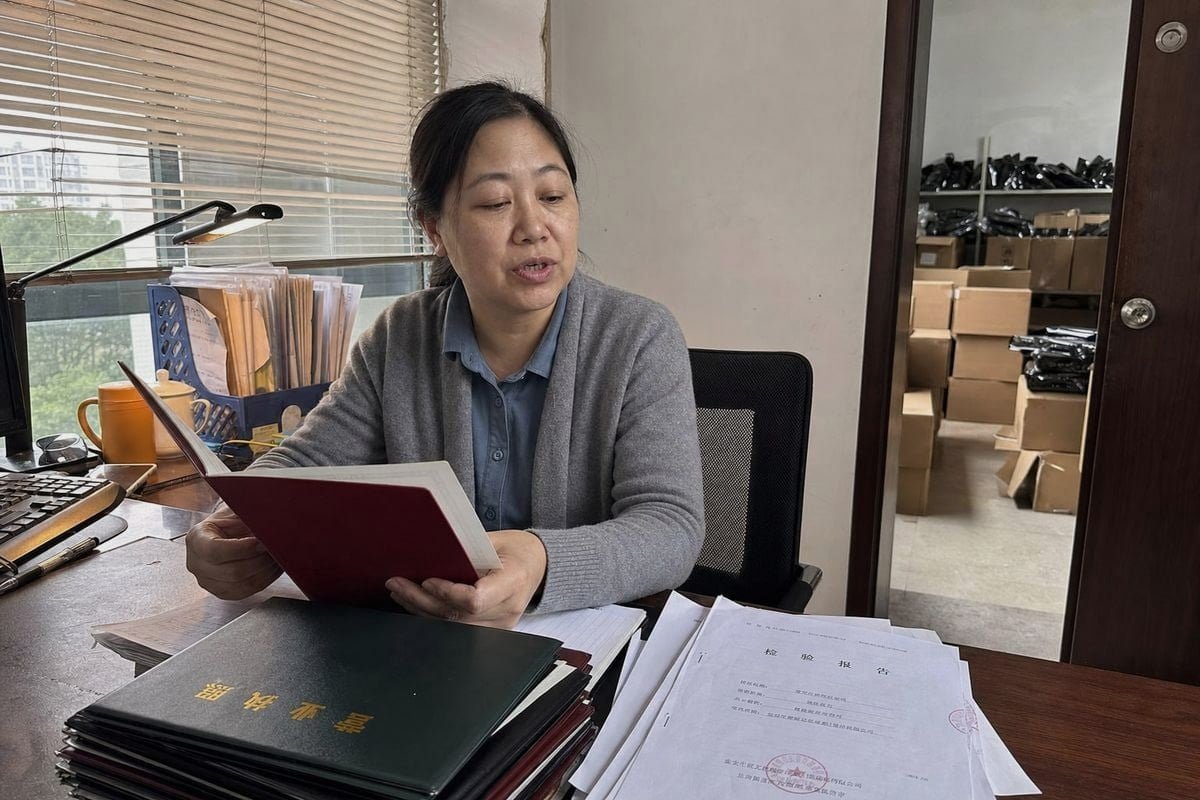
Every week, buyers ask me whether their Chinese Magic Fire powder supplier is a real factory chaîne d'approvisionnement 1. Many discovered too late that their "manufacturer" was a middleman marking up our sachets.
To tell if a Chinese Magic Fire powder supplier is a factory or trading company, check the business license for manufacturing terms in its scope, verify an industrial address, request a live production-line video tour, and test the rep with technical questions about formulation, burn time, and batch QC.
That is the short answer. Below, I break each check into practical steps you can run before paying any deposit. Let's start with paperwork, because that is where the truth lives.
What documents or certificates can I request to verify a supplier's factory status?
A buyer from Germany once sent me a competitor's "business license" for review. The company name on it did not match the invoice name. That single mismatch exposed a société commerciale 2.
Request the Chinese business license and read the business scope: factories list production terms like 生产 (produce) or 制造 (manufacture), while traders list only 销售 (sales) or 贸易 (trade). Also ask for ISO 9001, BSCI, and SGS or Intertek reports issued in the supplier's own legal name.
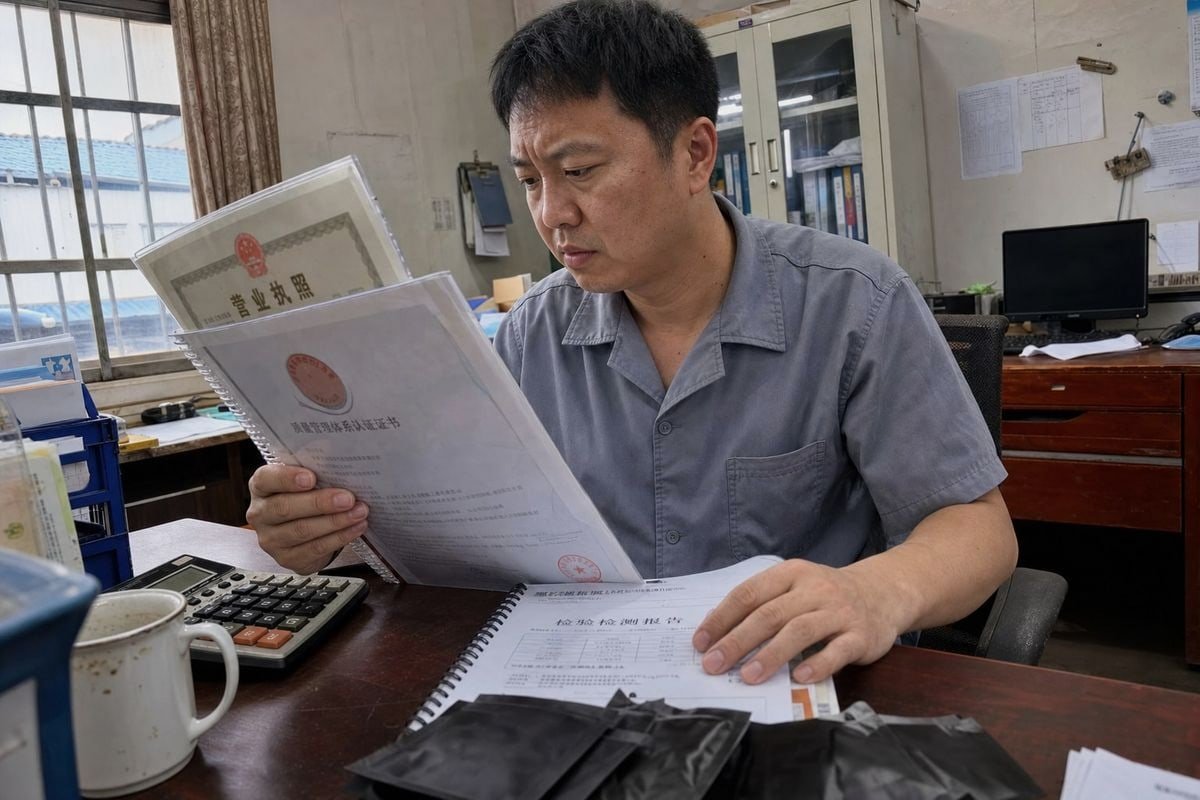
Documents rarely lie, but you must know how to read them. In our seventeen-plus years exporting color-flame products to more than thirty countries, the business license has always been the fastest truth test. Every legal Chinese company holds one, and its business scope is registered with the government. A trading company cannot legally write "manufacturing" into its scope without the facilities to back it.
The document checklist I recommend
Ask for these five items, in this order. Any refusal is a signal in itself.
| Document | What a real factory shows | Trading company red flag |
|---|---|---|
| Business license (营业执照) | Scope includes 生产, 制造, or 加工 | Scope shows only 销售, 批发, 贸易, 进出口 |
| ISO 9001 3 / BSCI certificate | Issued in the same legal name, same address | Certificate borrowed from a partner factory |
| SGS / Intertek / CE test reports | Applicant matches the license name | Reports with a different applicant name |
| Registry printout (Qichacha / Tianyancha) | Industrial address, reasonable registered capital | Shared office address, tiny capital |
| Proforma invoice and bank details | Bank account matches the legal entity | Payment to a personal or unrelated account |
Croisez les détails
Compare the exact Chinese legal name across the license, the certificates, and the bank account. When we issue quotations, all three match — because they should. If a supplier explains a mismatch with "that's our partner factory," you now know you are dealing with an intermediary, whatever their Alibaba profile claims.
How can I use a video call or site visit to confirm I'm dealing with a real manufacturer?
Buyers video-call our Ningbo production floor fairly often, sometimes with under an hour's notice. We walk them past the blending line, the sachet sealing machines, and the QC bench.
Request a live, unscripted video call and ask the supplier to walk from the front gate signage through the production line making your exact product. A real manufacturer can show machinery, raw materials, workers, and QC stations on demand; a trader will delay, reschedule, or show only an office.
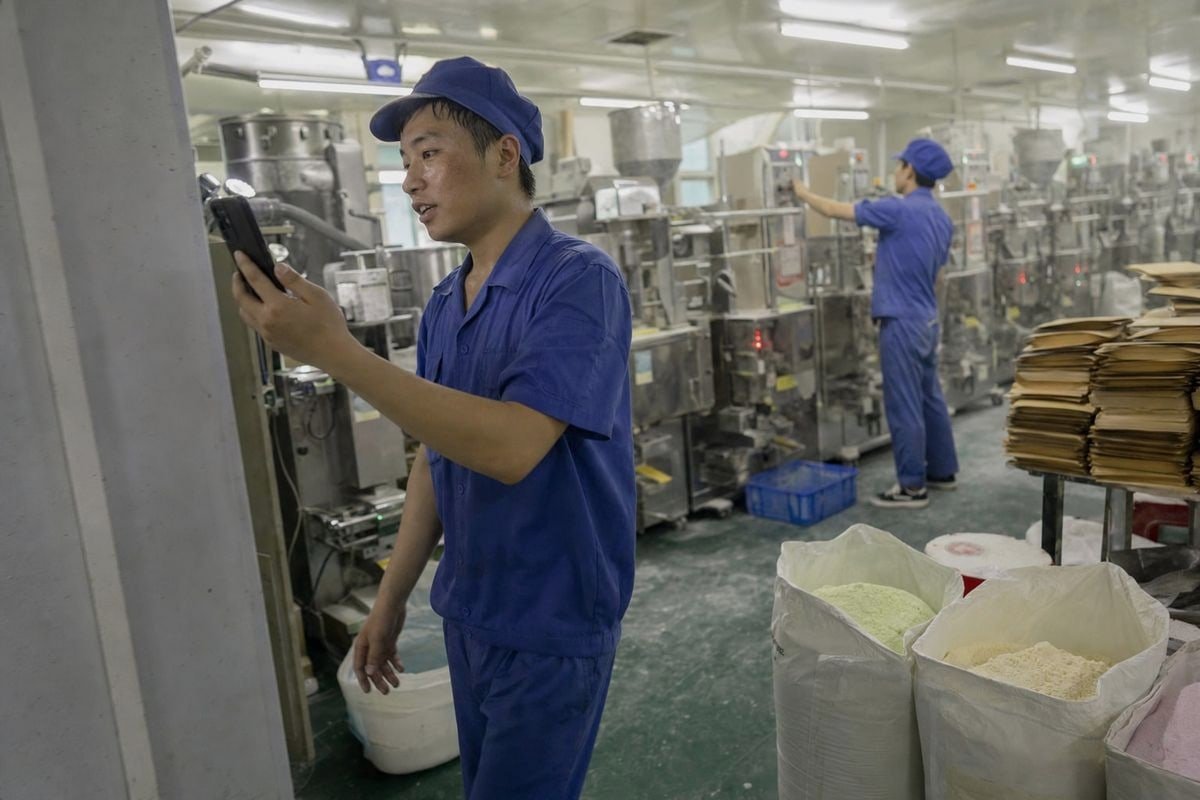
The key word is unscripted. Pre-recorded videos and polished photo galleries prove nothing, because traders routinely borrow them from real factories. A live call is much harder to fake. When buyers tour our lines, I encourage them to direct the camera themselves — "turn left," "zoom in on that machine," "show me the label on that raw material bag." A staged tour falls apart under that kind of steering.
What to ask for on the call
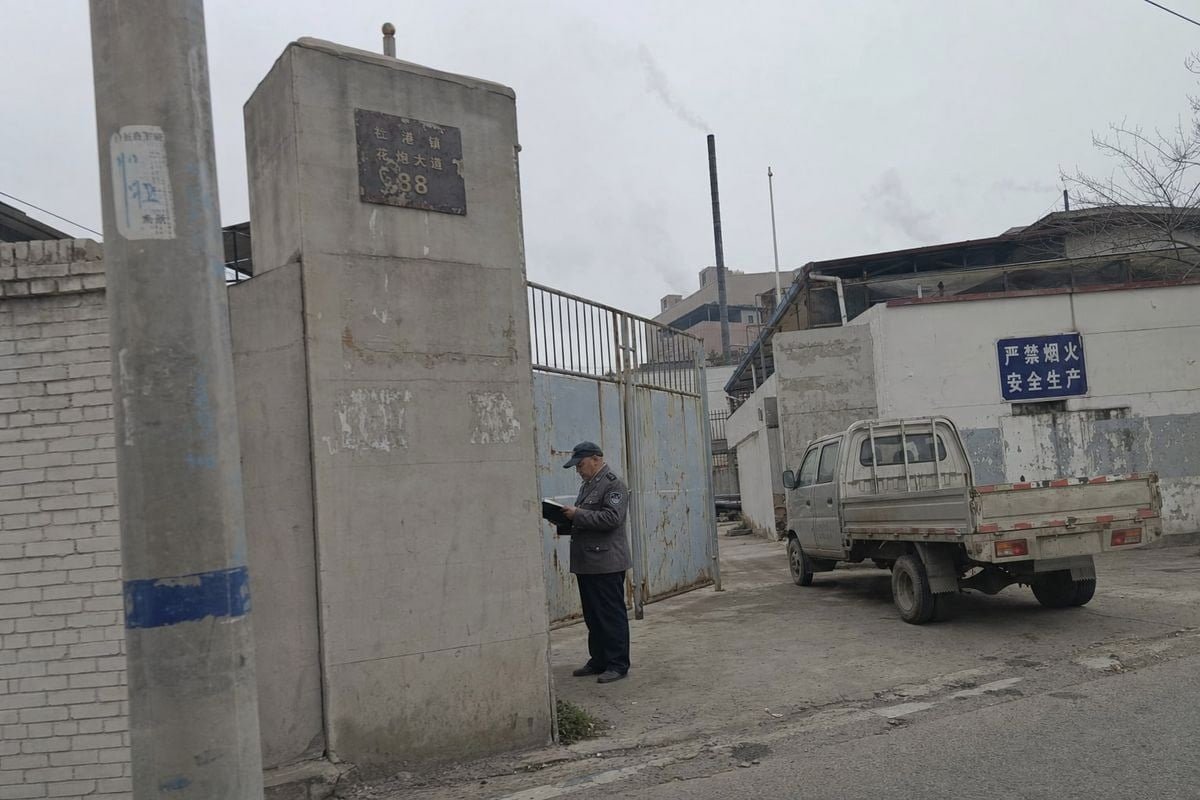
- Start at the front gate. The company name on the signage should match the business license.
- Walk the production line. For color-flame powder, that means blending or mixing equipment, filling machines, and heat-sealing lines for sachets.
- Check raw material storage. Ask to see supplier labels on incoming material.
- Visit the QC area. Ask them to demonstrate a burn test or show batch records 4.
- See the packing line. If you plan des emballages de marque privée, confirm they can print, seal, and box in-house.
Reading the response, not just the picture
How a supplier reacts tells you as much as what they show. In our experience, genuine factories treat tour requests as routine. Traders stall, claim the "factory is busy," or offer a scheduled visit weeks away so they can arrange access to someone else's site. If a site visit is practical for you, arrive a day early or unannounced. The gap between the claimed scale and the real building is often dramatic.
What questions should I ask about production capacity and lead times to spot a trading company?
There is a trade-off I discuss openly with buyers: peak-season capacity versus lead-time honesty. Before Q4, our lines fill up, and I say so. Vague, always-yes answers worry me more.
Ask for exact monthly output, current line utilization, MOQ logic, and lead times for both stock and custom orders. Factory reps answer with specific numbers and process reasons; trading company reps give vague, elastic answers because they must first check with the real producer.
Capacity questions work because a trader cannot answer them from firsthand knowledge. When a buyer asks me why our lead time 5 changes between a 20,000-sachet trial order and a full container with custom kraft pouches, I can explain it line by line: formulation batching, film printing lead time, sealing speed, drying and QC holds. A middleman has to relay that question and often comes back with a rounded guess.
Questions that separate factories from traders
| Question | Factory-style answer | Trader-style answer |
|---|---|---|
| What is your monthly capacity for this sachet size? | A specific figure tied to line speed and shifts | "Very big, no problem, any quantity" |
| Why is your MOQ set at this level? | Explained by batch size or printing plate costs | "We can discuss" with no reasoning |
| What is lead time if I change burn time or color mix? | Extra days quantified for reformulation and testing | Same lead time quoted for everything |
| Is production in your own facility or outsourced? | Names the site and can show it live | Deflects or says "our factory partner" |
| Can you adjust packaging from plastic bag to jar? | Yes, with tooling and timeline details | Long delays while they "confirm internally" |
Technical depth is the tiebreaker
Push beyond logistics into chemistry and process. Ask about ignition behavior, expected burn duration per sachet, batch-to-batch color consistency, and how they test each lot. Our QC team burn-tests samples from every batch so the first sample truly reflects mass production. A factory rep may need to loop in an engineer, but the answer arrives fast and specific. Scripted marketing lines repeated back at you are the classic trader tell.
Why does buying from a real Magic Fire powder factory matter for my quality control and pricing?
A US distributor once came to us after two inconsistent shipments from a "supplier" who, it turned out, sourced from a different factory each time. The flame colors did not match between orders.
Buying direct from a real Magic Fire powder factory gives you control over formulation, batch consistency, compliance documents, and packaging — plus factory-level pricing without an intermediary margin. Traders cannot guarantee the same production source order to order, which risks quality drift and certification gaps.
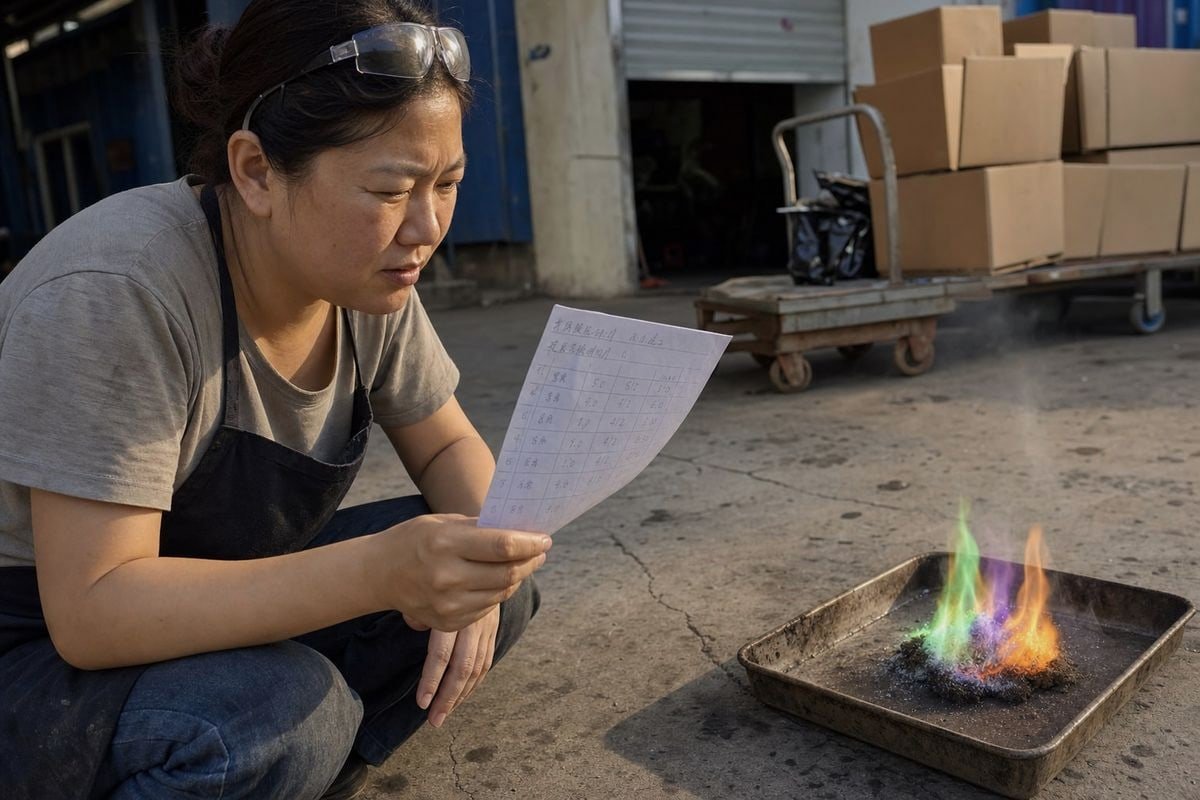
For a fire-related product, this is not an abstract sourcing debate. It affects safety, retail compliance, and your brand's reputation on the shelf. Let me be fair first: trading companies are not inherently bad. Some consolidate categories, handle export paperwork 6, and accept small mixed orders. If you need one carton each of ten unrelated products, a trader can make sense. But you should know what you are paying for, and price it accordingly.
What changes when you buy factory-direct
| Facteur | Real factory | Société commerciale |
|---|---|---|
| Formulation control | One controlled recipe, adjustable on request | Whatever their source factory runs that month |
| Cohérence des lots | Same line, same QC, every order | Source may switch between orders |
| Documents de conformité | Certificates and test reports in their own name | Borrowed or reissued paperwork |
| Prix | Ex-works cost plus factory margin | Factory price plus intermediary markup |
| Custom packaging and OEM | In-house marque de distributeur 7, warning labels, barcodes | Limited, slow, or refused |
| Accountability | One legal entity owns the quality problem | Blame passes between trader and producer |
The hidden cost of the cheapest quote
Here is the uncomfortable math. A trader's quote can look competitive on the first trial order, because they squeeze a factory for a one-off price. The cost appears later: color drift between batches, missing test reports when your retailer audits the file, or a sudden lead-time surprise because the real producer deprioritized a middleman's order. In our OEM work with camping brands and fireplace distributors across the US and Europe, the buyers who stayed longest are the ones who verified the factory first. Consistent product, valid certificates, and a stable lead time are worth more than a few cents per sachet.
Conclusion
Verify the license, watch the line live, probe capacity, and price the difference. Do these four checks before any deposit, and your Magic Fire powder supplier will hold no surprises.
Notes de bas de page
1. Broad background concept relevant to sourcing verification and distribution discussed in the article. ↩︎
2. Background concept explaining the intermediary business model discussed throughout the article. ↩︎
3. Official ISO standard reference for the quality management certification mentioned in document checks. ↩︎
4. FDA reference on batch record and quality documentation practices relevant to manufacturing verification. ↩︎
5. Explains how production lead time varies with order complexity and batch scheduling. ↩︎
6. US government trade resource relevant to export documentation and compliance discussed for suppliers. ↩︎
7. Wikipedia background on private label manufacturing referenced for OEM packaging capability. ↩︎

 English
  Spanish
  German
  French
  Arabic
  Portuguese
Rejoignez la conversation