






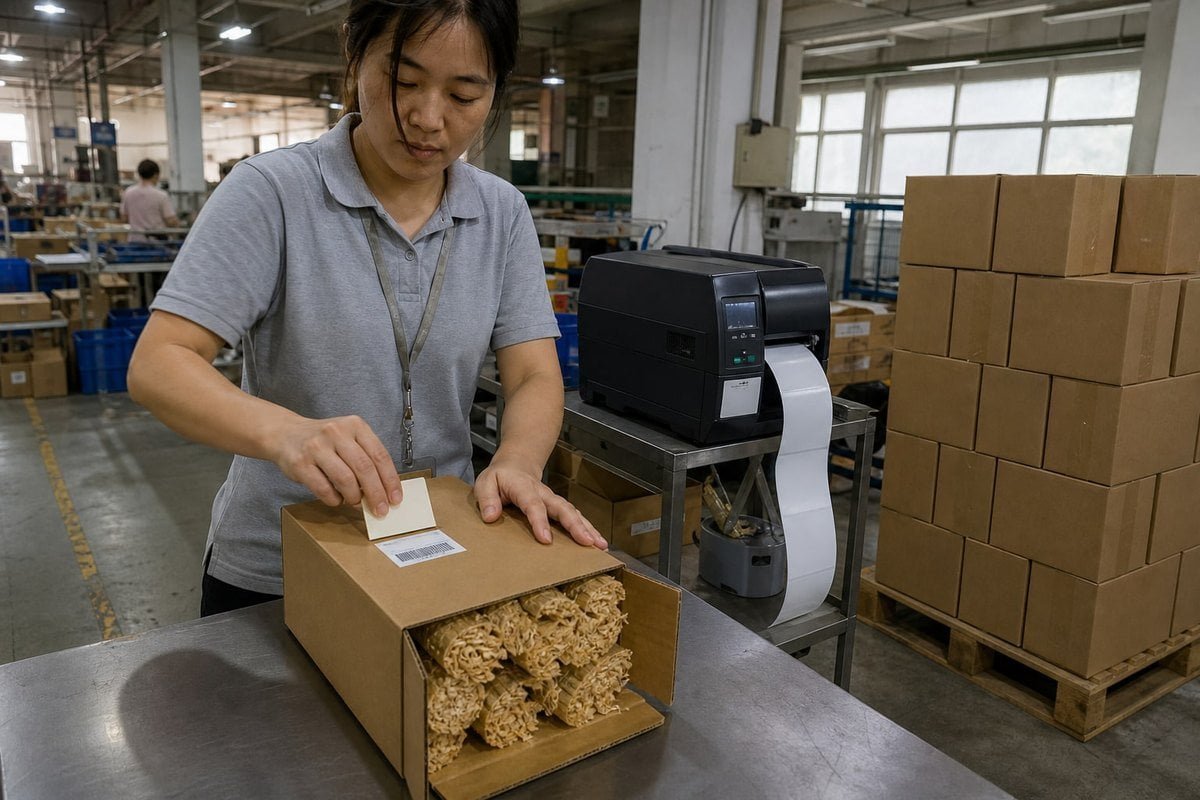
Buyers ask our factory to pre-print FNSKU labels for wood fire starters almost weekly now Rapports de tests SGS ou Intertek 1. One mislabeled carton can strand an entire FBA shipment — and Amazon no longer fixes it for you.
Suppliers pre-print FNSKU labels for wood fire starters by receiving the seller's FNSKU file from Amazon Seller Central, printing compliant barcode labels at 300 DPI and 100% scale, covering any existing UPC, applying labels to flat packaging surfaces, and scan-testing every batch before shipment.
That is the short answer. The longer answer involves file handoffs, print specs, placement rules, and quality checks Commencez par l'ISO 9001. Cela vous indique que le fournisseur gère un 2. Let me walk you through each step the way we run it on our own lines.
How Do I Get FNSKU Labels Pre-Printed Correctly on My Wood Fire Starter Packaging?
A US camping brand once sent us a PDF of labels scaled to fit their office printer. Every barcode came out stretched. We caught it in our pre-production check — but it taught us both a lesson about file handoffs.
Export your FNSKU labels from Amazon Seller Central via Manage Inventory or Print Item Labels, send the supplier the original PDF or a CSV with FNSKU, SKU, title, and quantity, and confirm they print at 300 DPI, 100% scale, on white non-reflective adhesive label material.

The workflow only works if the data handoff is clean. In our experience running private label packaging projects for fire starters across the US and Europe, most labeling failures start at the file stage, not the printing stage. So we ask every buyer to follow the same sequence.
Step-by-Step Handoff Process
- Confirm the FBA listing is live and the FNSKU is assigned in Amazon Seller Central 3. Remember that an ASIN vs FNSKU distinction matters here — the ASIN identifies the product page, but the FNSKU identifies your specific sellable unit, and only the FNSKU goes on the box.
- Download the label file directly from Seller Central, or export a CSV from your inventory management system with FNSKU, SKU, product title, and quantity per variation.
- Send the original file to your supplier. Do not screenshot, re-save, or rescale it.
- Ask the supplier to print one test sheet and scan it with a handheld scanner and a phone app before mass production.
- Approve a photographed sample of the labeled unit before the full run.
Print Specs We Hold On Our Lines
| Exigence | Spécification |
|---|---|
| Minimum label size | 1" x 2.625" (common roll stock: 2" x 1" or 2.25" x 1.25") |
| Print resolution | 300 DPI minimum |
| Échelle | 100% — never "fit to page" |
| Ink and stock | Black ink on white, non-reflective adhesive label material |
| Quiet zone | 0.25" white space on each side of the barcode |
| Printer type | Thermal transfer printing 4 preferred for roll labels; laser acceptable for sheets |
We prefer thermal transfer printing over direct thermal for fire starter shipments. Direct thermal labels can darken with heat during ocean freight, and a darkened label may fail Amazon's scanners. Thermal transfer output stays crisp through a hot container crossing.
One more point. For bulk orders with multiple SKUs — say, 24-pack and 100-pc wood fire starter boxes — a CSV-based bulk label workflow beats manual printing. It maps FNSKU, title, and quantity automatically and removes the risk of a worker grabbing the wrong label roll.
Can My Supplier Handle Barcode and Label Compliance for Amazon FBA Shipments?
There is a real trade-off we discuss with every FBA buyer: labeling at the factory saves money and time, but it makes the supplier responsible for compliance. That responsibility should be earned, not assumed.
Yes — a capable supplier can handle full barcode and label compliance, including covering the GS1 UPC barcode, applying the FNSKU as the only scannable code, scan-testing units, and meeting Amazon FBA labeling requirements before cartons leave the factory. Verify their process before trusting it.
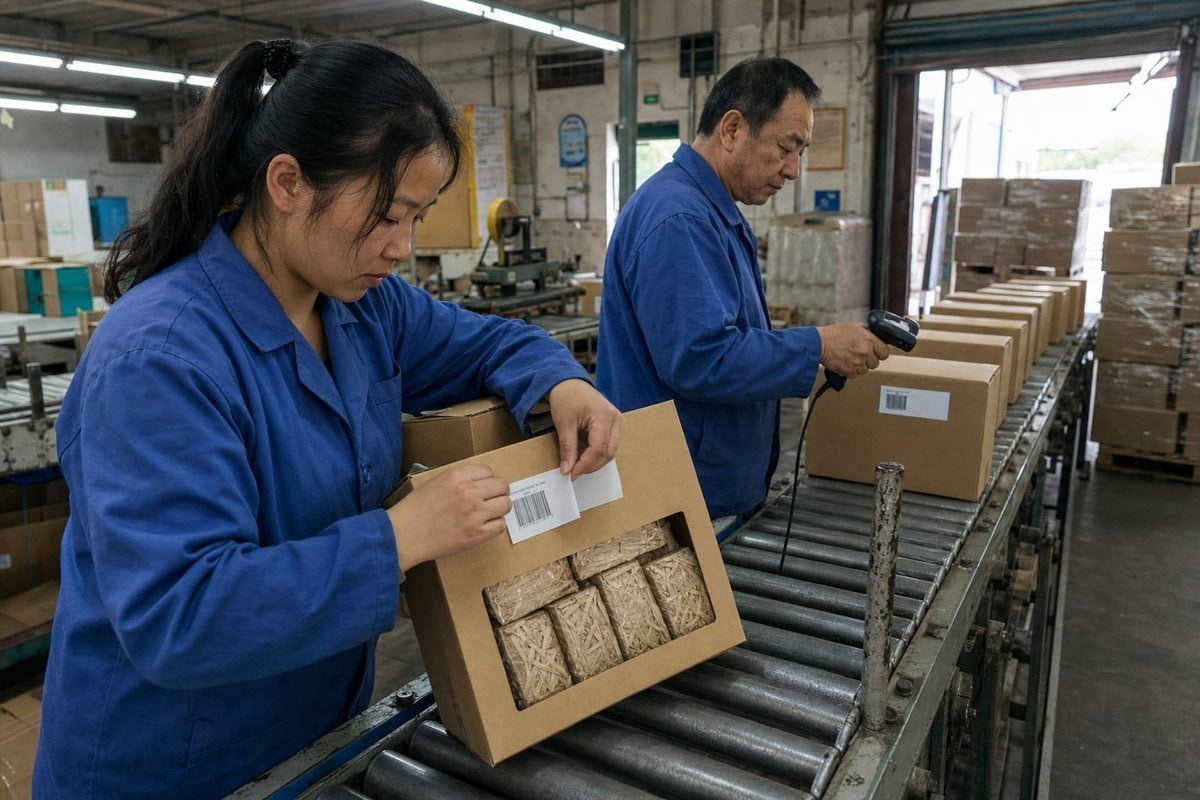
The timing here matters more than ever. Amazon is discontinuing its US FBA prep and labeling services, effective January 2026. After that, inventory must arrive at fulfillment centers already labeled. If your supplier cannot do it, you must do it yourself or pay a third-party prep center. That is why upstream labeling has moved from a convenience to a core supplier capability.
What Compliance Actually Covers
Barcode compliance for wood fire starters has two layers. First, the Amazon layer: the FNSKU must be the only scannable barcode on the exterior. Any GS1 UPC barcode 5 printed on your retail box must be fully covered or rendered unscannable, or Amazon's systems may check in the unit under the wrong identifier. On our lines, we either apply the FNSKU sticker directly over the UPC or design the private label packaging so the FNSKU is printed in the barcode zone from the start.
Second, the regulatory layer. Fire starters made of wood fiber and paraffin often fall under réglementation sur les solides inflammables 6 for transport and retail. The FNSKU must sit on the primary display panel but stay visually distinct from mandatory flammability warnings and "Keep Out of Reach of Children" statements. A label slapped over a required warning is a compliance failure even if the barcode scans perfectly.
Comparing Your Three Labeling Options
| Option | Coût | Control | Risque | Idéal pour |
|---|---|---|---|---|
| Supplier pre-printing | Le plus bas par unité | Medium — depends on supplier QC | Low if supplier scan-tests | Stable SKUs, repeat orders |
| Brand-side in-house | Highest labor cost | Le plus haut | Low, but slow | Frequent packaging changes |
| Third-party prep center | Medium, per-unit fee | Moyen | Extra handoff added | Consolidation multi-fournisseurs |
For most private-label fire starter programs, supplier pre-printing wins on cost and speed — provided the supplier can prove their scan-test process. Ask for photos of the scanner check, not just a verbal promise.
What Certifications Should I Require Before Approving Pre-Printed FNSKU Labels?
A German distributor once told me his previous fire starter supplier printed beautiful labels — on boxes that later failed an SGS audit. The barcode was perfect. The product behind it was not. That conversation shaped how we frame this question for buyers.
Require ISO 9001 for process consistency, BSCI for factory ethics, and SGS or Intertek test reports for the fire starter itself; then verify the label workflow with a scan-tested pre-production sample. Certified processes are what make batch one match batch twenty.
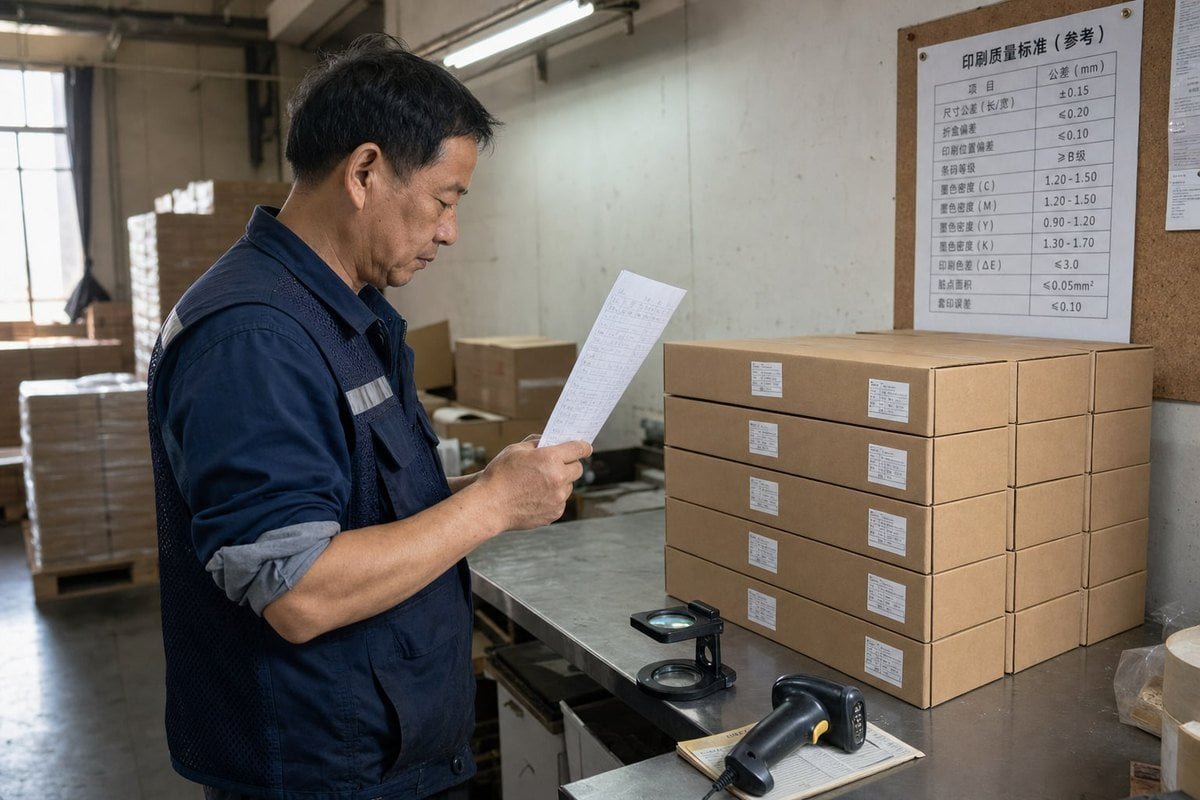
A pre-printed FNSKU label is only as trustworthy as the system behind it. Certifications do not print barcodes, but they tell you whether the factory follows documented procedures — and labeling accuracy is a procedure problem, not a printing problem. In 17+ years exporting fire products to 30+ countries, we have found that the same discipline that keeps burn times consistent also keeps label files version-controlled and applied to the right SKU.
Certification Checklist for FBA-Bound Fire Starters
| Certification / Document | Ce qu'il prouve | Why It Matters for Labeling |
|---|---|---|
| ISO 9001 7 | Système de gestion de la qualité documenté | Label files, versions, and application steps are traceable |
| BSCI 8 | Conditions de travail éthiques et auditées | Required by many US/EU retail sourcing channels |
| Rapports de test SGS / Intertek | Product safety and composition verified | Supports flammable solids compliance and customs clearance |
| CE (le cas échéant) | Conformité au marché de l'UE | Needed if the same packaging serves EU channels |
| Scan-test record | Barcode readability verified per batch | Direct proof the FNSKU will scan at FBA receiving |
Why Process Certification Beats Promises
Here is the practical logic. An uncertified factory can label one sample order perfectly. The question is what happens on order five, when a new worker loads the label printer, or when you update the FNSKU after a listing change. ISO 9001 forces a factory to control document versions and record which label file was used for which batch. That paper trail is what prevents last month's FNSKU from ending up on this month's cartons.
We also recommend requiring a golden sample: one fully labeled, photographed unit that both sides sign off on. Every future batch gets compared against it. It is a simple habit, and it catches drift before drift becomes a rejected shipment.
How Do I Avoid Label Errors and Shipment Delays When Ordering Private-Label Wood Fire Starters?
Wood fire starters are messier to label than most products — I say that as someone who runs the lines. Sawdust, wax, and kraft paper each create failure modes that a generic labeling guide never mentions.
Prevent label errors by scan-testing before mass printing, applying labels only to flat dust-free surfaces away from seams, using oil-resistant adhesives against wax bleed, covering every legacy barcode, and running a final carton-level QC check before the shipment leaves the factory.
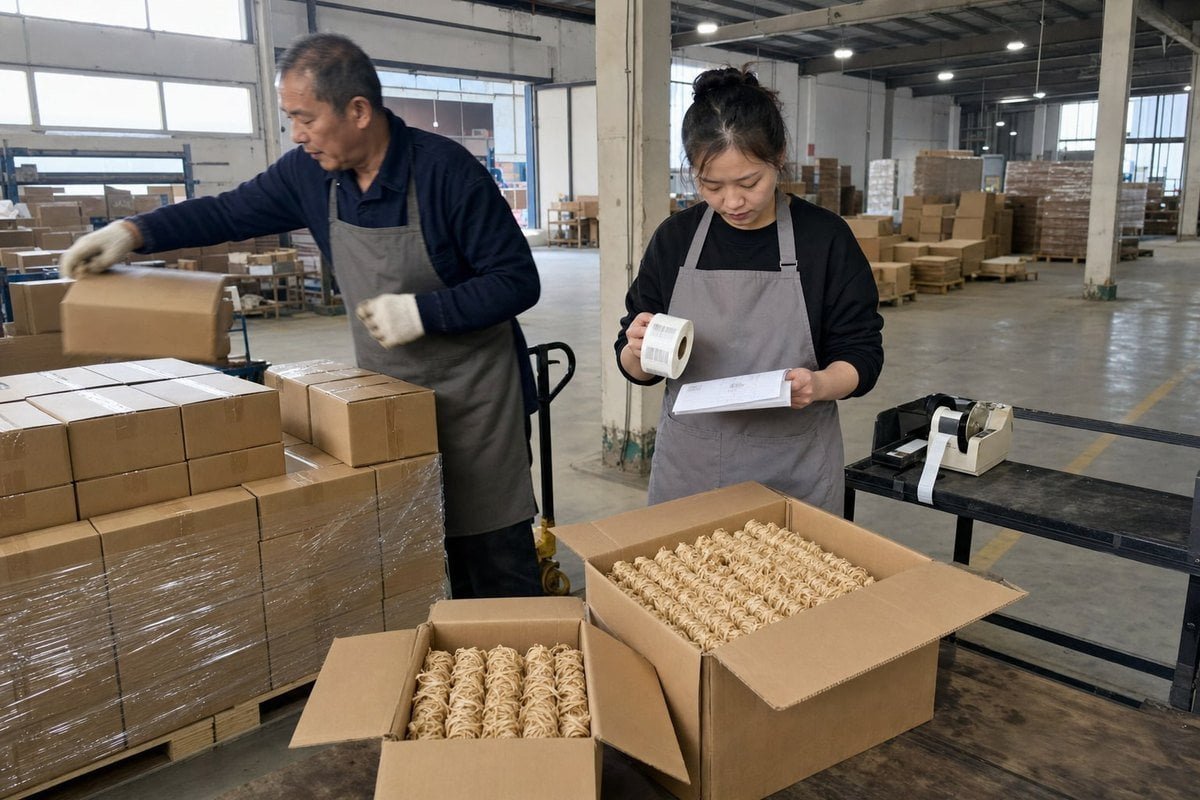
Our wax-dipped wood rolls illustrate the problem well. The excelsior core sheds fine wood shavings during packing. If those shavings settle on a box before the label goes on, the adhesive grips dust instead of cardboard, and the label lifts during transit. So we apply labels in a wipe-down zone, after the boxes are packed and brushed clean — a small step that eliminates most peeling complaints.
Product-Specific Risks and Fixes
Paraffin is the second enemy. Fire starters made of roughly 50% wood fiber and 50% paraffin can leach wax through porous kraft packaging in a hot container. Wax under a barcode creates gray staining that kills contrast. Our fixes:
- Use high-tack, oil-resistant adhesive label material, or blockout labels that hide any bleed-through.
- For kraft sleeves and paper boxes, print the barcode zone on a film-faced or coated area so ink does not feather into the fibers.
- Keep labels off seams, corners, and the curved surfaces of cylindrical bundles. A barcode bent around a shrink-wrapped roll will not scan.
- Position the FNSKU on the primary display panel, but never over flammability warnings or safety text.
Pre-Shipment QC Checklist
- Scan ten random units per SKU with two different scanner types.
- Photograph one labeled unit per SKU and match it to the approved golden sample.
- Confirm every UPC or EAN is covered on every unit — spot-check across cartons, not just the top layer.
- Verify carton labels match the FBA shipment plan created in Seller Central.
- Log the label file version and print date in the batch record and your inventory management system.
- Check adhesive edges for lift after a 24-hour hold, since wax migration shows up over time.
Timing is the last variable. Send FNSKU files before production starts, not during packing. A file that arrives late forces re-handling of packed goods, and re-handling is where most last-minute label errors happen.
Conclusion
One bad barcode can freeze thousands of units at an Amazon dock. With Amazon ending US prep services, that risk now lands on you — unless your supplier can pre-print FNSKU labels for wood fire starters with certified, scan-tested precision. Choose a factory that treats labeling as part of quality control, share your Seller Central files early, approve a golden sample, and your fire starters will arrive at FBA ready to check in, first shipment and every shipment after.
Notes de bas de page
1. Authoritative source on SGS testing services used to verify fire starter product safety. ↩︎
2. Background concept explaining how documented QMS processes support traceable labeling accuracy. ↩︎
3. Primary platform sellers use to export FNSKU label files referenced throughout the article. ↩︎
4. Wikipedia background on the printing technology recommended for durable FNSKU labels. ↩︎
5. Background reference explaining the UPC barcode standard that must be covered per Amazon rules. ↩︎
6. EPA reference on testing standards for flammable solid materials relevant to fire starter compliance. ↩︎
7. Authoritative .gov source from NIST explaining ISO 9001 standards and quality management systems for manufacturers. ↩︎
8. Official amfori BSCI page explaining the ethical audit certification required for factory compliance. ↩︎



 English
  Spanish
  German
  French
  Arabic
  Portuguese
Rejoignez la conversation