






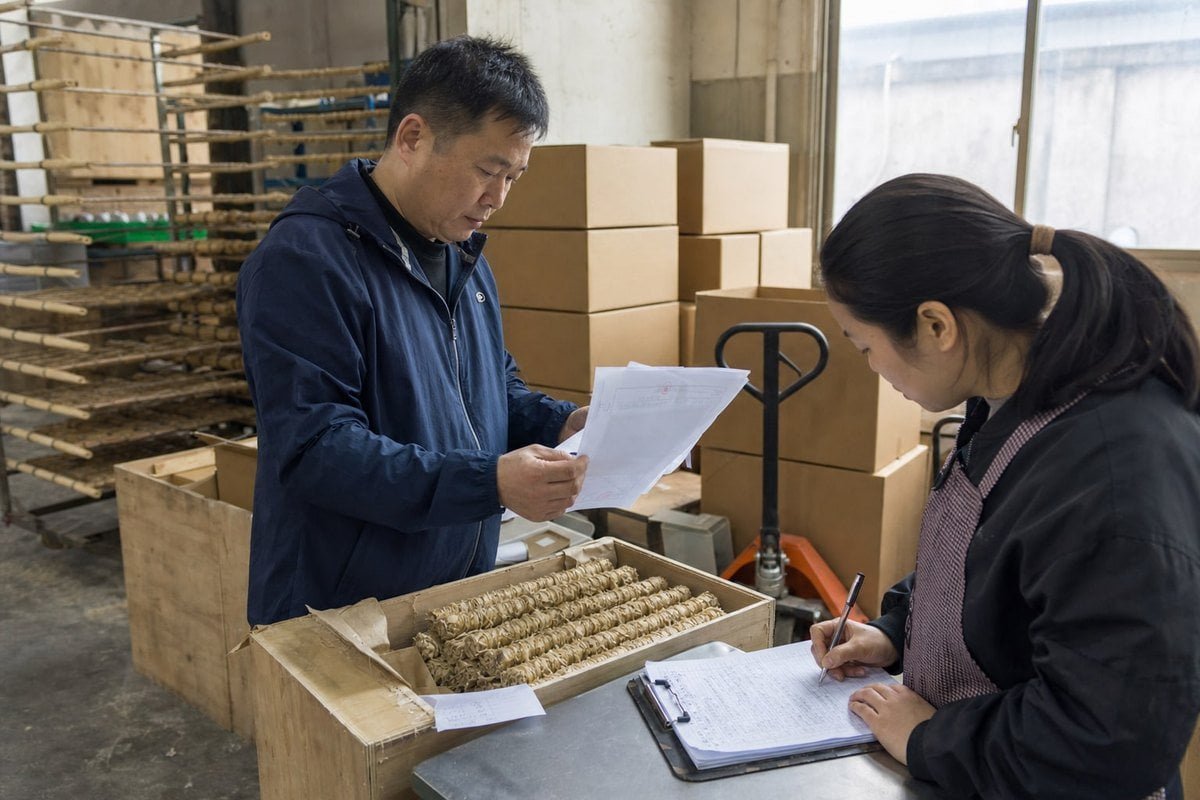
Fraud signals when sourcing wood fire starters rarely look dramatic. On our production line in Ningbo, I've seen how easily buyers get burned — literally and financially — by suppliers who fake what we build for real.
To spot fraud signals when sourcing wood fire starters, verify business licenses, FSC and safety certifications, and third-party test reports; compare samples against production batches; question pricing far below market; and treat vague documentation, payment changes, or evasive communication as serious warning signs.
The problem is that fire starters look like a simple, low-value product. Buyers relax their vetting. That's exactly when a fake vendor, a bait-and-switch, or a certificate scam slips through. In this guide, I'll walk you through the fraud signals we tell our own B2B buyers to check — stage by stage, from first inquiry to final payment.
What certifications and test reports should I verify before trusting a wood fire starter supplier?
A German distributor once forwarded me a competitor's "SGS report" and asked if it looked real. It didn't. The report number belonged to a completely different product category. That five-minute check saved him a container-sized mistake.
Before trusting a wood fire starter supplier, verify their business license, ISO 9001 or BSCI factory audit report, product-specific SGS or Intertek test reports, Safety Data Sheets, FSC certification if claimed, and any phytosanitary certificate required for wood exports — all traceable to official databases.
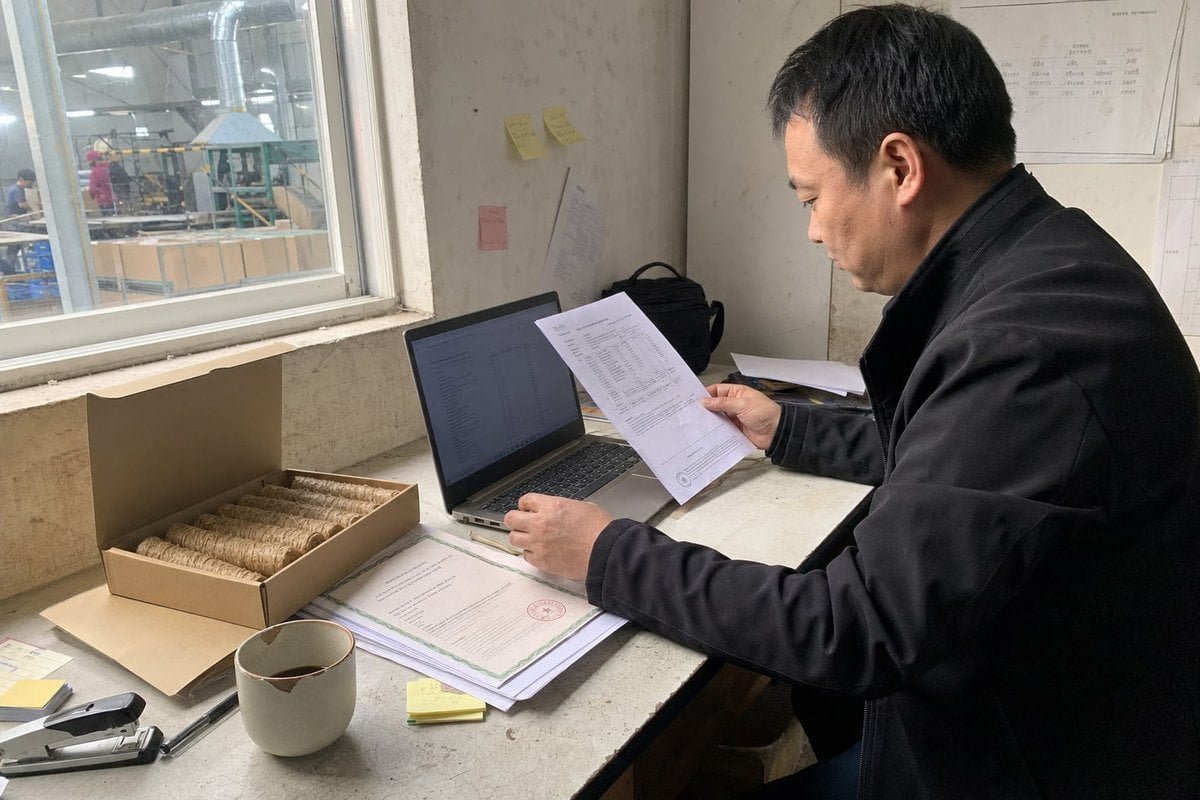
Certificates are where fire starter fraud most often hides. A polished PDF costs nothing to fake. What matters is whether each document can be traced back to an official issuer and matched to the exact product and factory name.
Les documents essentiels à demander
Commencez avec business license verification 1. Ask for the supplier's registered Chinese business license, then cross-check the company name against the name on the proforma invoice and the bank account. Mismatches here are the single most common early warning. In our own exports to the US and Europe over 17+ years, buyers who checked this first almost never ran into shell-company problems later.
Next, look at product-level testing. A real supplier of wax-dipped wood rolls or paraffin fire starter cubes should hand over recent SGS or Intertek test reports, plus Fiches de données de sécurité 2 (SDS) for anything containing wax or paraffin. If the supplier claims eco-friendly or chemical-free status, the test report should reflect that composition, not just generic flammability data.
| Document | Ce qu'elle prouve | Comment le vérifier |
|---|---|---|
| Contactez SGS/Intertek avec le numéro de rapport | Legal entity exists | Official registry lookup; match name to invoice |
| ISO 9001 3 / BSCI factory audit report | Real factory with QC systems | Certificate number check with issuing body |
| Rapport de test SGS / Intertek | Sécurité et composition du produit | Report number verification on the lab's website |
| Certification FSC 4 | Legitimate wood sourcing | FSC public database search by license code |
| Certificat phytosanitaire 5 | Compliant wood export | Issued per shipment by official plant authority |
| Fiches de données de sécurité (FDS) | Wax/paraffin content disclosed | Compare against claimed "natural" marketing |
Watch for certificate misuse
Two frauds dominate here. First, expired or borrowed FSC certification — the code exists, but it belongs to another company. Second, generic test reports recycled across unrelated products. Always check the report date, the tested product description, and the applicant's name. If a supplier stalls, deflects, or sends screenshots instead of full documents, treat that as a signal, not an inconvenience.
How can I tell if a factory sample will actually match their mass-production quality?
Sample consistency is something we obsess over in our own workshop. Every wax-dipped wood roll sample we ship comes from the same line, same wax bath, and same batch process as full production — because we know spec drift is where buyer trust dies.
A sample will match mass production only if it comes from an actual production batch, not a hand-made showpiece. Request batch numbers, moisture content testing data, burn-time records, and pre-shipment inspection with photos; then compare delivered goods against retained sample specs on arrival.
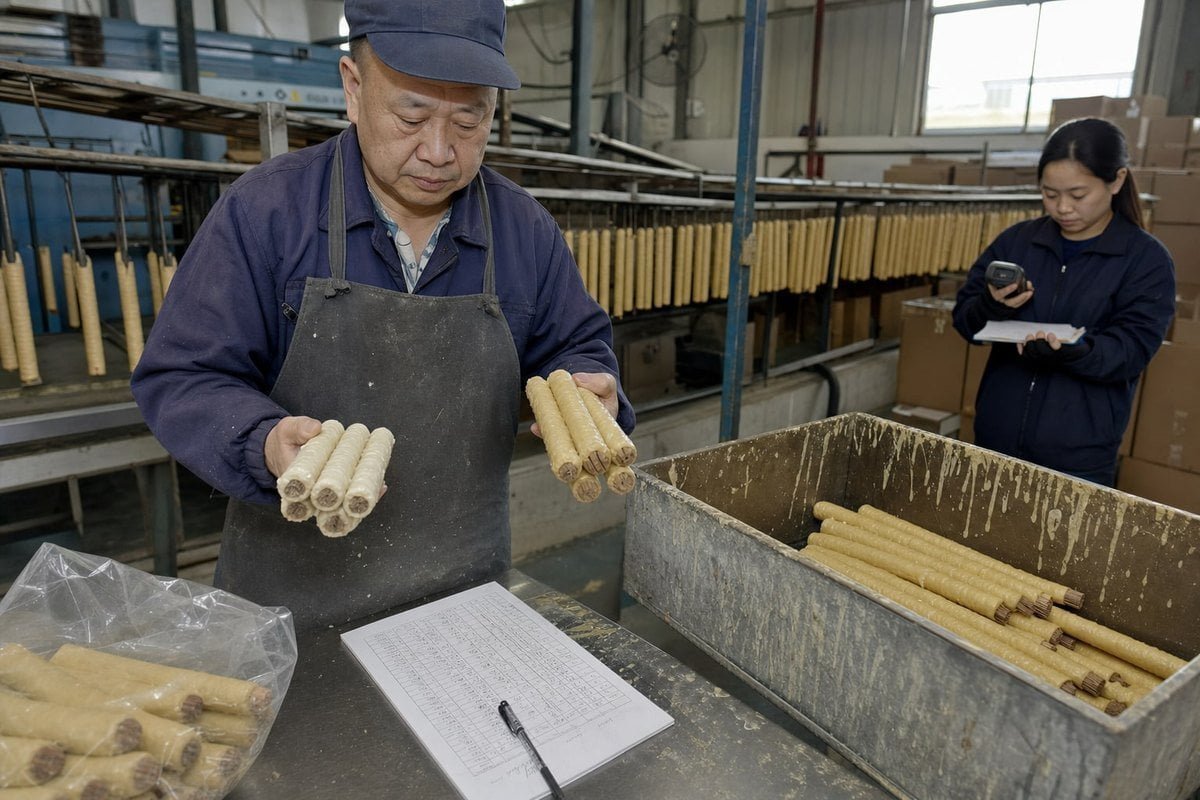
The classic fire starter bait-and-switch works like this. The sample uses dense, resinous wood shavings with a generous wax dip. It ignites fast and burns eight to ten minutes. Then the production run arrives with loose, low-grade softwood fiber, a thin wax coating, and burn times that vary wildly across the carton. Your retail customers complain. Your brand takes the hit — not the supplier's.
Tests you can run on any sample
You don't need a lab for first-pass screening. Here's what we recommend buyers do with every sample and every arrival inspection:
- Weigh individual pieces. Underweight units mean less wood fiber or less wax. Set a tolerance in your purchase order, such as ±5%.
- Chronométrez la combustion. Ignite three units. Record ignition speed and total burn time. Production goods should land within the sample's range.
- Check moisture. A cheap pin-type moisture meter reveals whether "kiln-dried" claims are real. High-moisture wood fiber ignites poorly and can grow mold in transit test de teneur en humidité 6.
- Inspect the wax. Uneven dipping, strong chemical odor, or crumbling coating suggests a different wax grade than the sample.
- Compare packaging. Fraudulent suppliers often keep the outer box identical while degrading what's inside.
Lock the spec into your paperwork
Your purchase order should state dimensions, unit weight, moisture content limits, wax type, burn-time range, and packaging specs — with tolerances. Then require lot or batch numbers on cartons and photos before shipment. In our experience exporting to 30+ countries, buyers who write tolerances into the contract get consistent goods; buyers who order "same as sample" get whatever arrives.
A third-party inspection avant expédition réussie 7 costs a few hundred dollars. Against a container of unsellable fire starters, it is the cheapest insurance in this business.
What red flags in pricing or MOQ offers suggest I might be dealing with a trading company, not a real manufacturer?
Price negotiations reveal more than most buyers realize. When importers visit our Liuyang headquarters and then tour the Ningbo production floor, they often mention how differently the conversation goes compared with vendors who couldn't answer a single question about wax temperature or wood fiber sourcing.
Unrealistic wholesale pricing far below market, MOQs that swing wildly during negotiation, inability to explain cost drivers like wax grade or wood species, refusal of factory audits or video tours, and multiple company names on quotes all suggest a trading company or fake vendor rather than a real manufacturer.
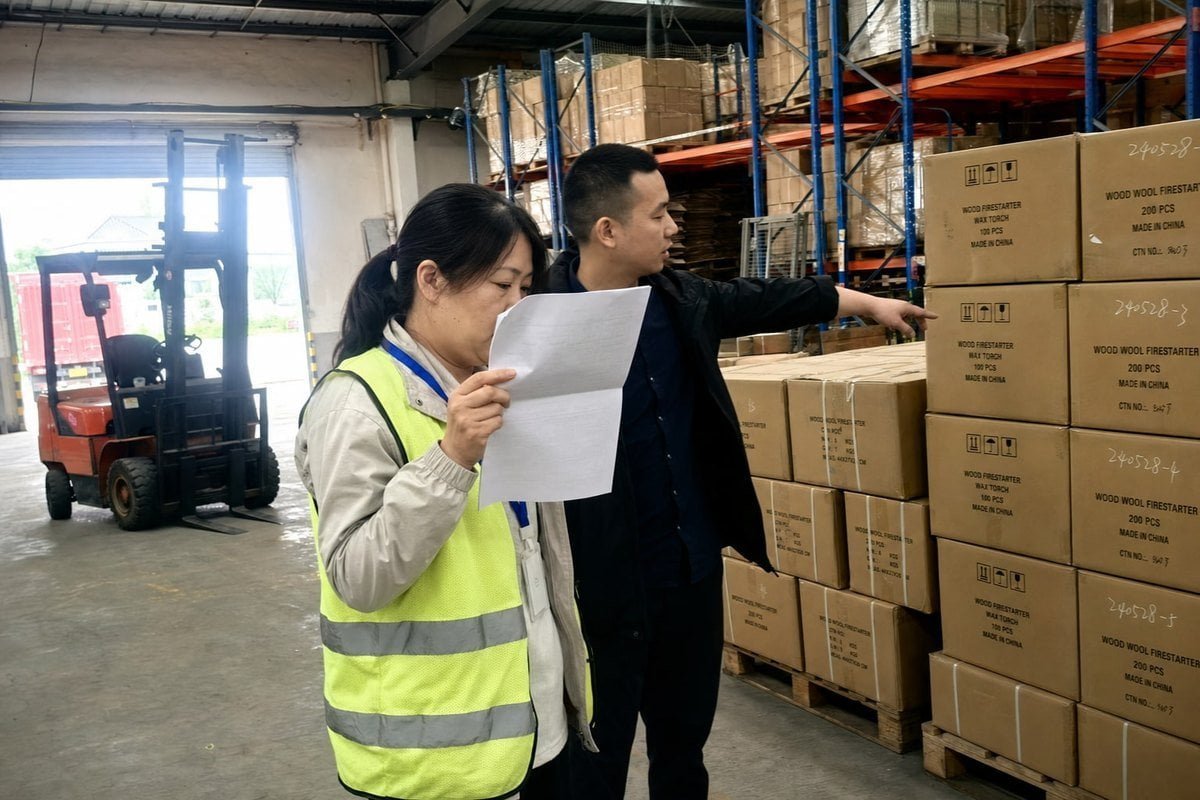
To be fair, trading companies are not fraud by definition. Some add real value. The fraud risk appears when a middleman pretends to be a factory, because that lie usually travels with others — recycled certificates, no quality control, and zero accountability when a batch fails.
Pricing signals worth decoding
Unrealistic wholesale pricing is the loudest signal. Wood fiber, paraffin, labor, and export packaging set a real cost floor. A quote 30–40% under credible factory quotes means something is being cut: wax content, wood grade, unit weight, or the supplier's intention to deliver at all.
| Signal | Likely factory | Likely trading company / risk |
|---|---|---|
| Price vs. market | Within a credible band, explained by specs | Far below market, no cost explanation |
| MOQ behavior | Stable, tied to production runs | Drops from 10,000 to 500 units instantly |
| Questions techniques | Detailed answers on wax, moisture, burn time | Vague, delayed, or copied answers |
| Factory visit / video tour | Welcomed and scheduled | Excuses, stock footage, or refusal |
| Company name consistency | Same name on license, quote, invoice | Different names across documents |
| Personnalisation | Real OEM/ODM options with tooling detail | Only what's in their catalog photos |
Test them with specifics
Ask questions only a producer can answer. What wood species do you use for the excelsior rolls? What is your wax dip temperature? Can you adjust burn time from six to ten minutes? How do you control moisture content between batches? At our factory, these are daily operational facts. A reseller pretending to manufacture will stall, generalize, or forward your question to an unseen third party — and that delay itself is your answer.
Also run a trade reference check. A genuine manufacturer serving established importers can connect you with long-term buyers or show verifiable export history. Silence here speaks loudly.
Which communication and documentation gaps should warn me a supplier isn't reliable for long-term orders?
One lesson from 17+ years in this trade: fraud almost always announces itself in paperwork before it appears in the product. Our export team keeps invoice, packing list, and certificate details rigorously aligned because we know sharp buyers check — and the sloppy vendors count on buyers who don't.
Warning signs include proforma invoice red flags like mismatched company names or missing bank details, sudden requests to change payment accounts, pressure to pay 100% upfront, slow or evasive English communication, missing batch documentation, and inconsistencies between invoices, packing lists, and shipping papers.

Long-term reliability is a pattern, not a promise. You can read that pattern in how a supplier communicates and documents every step — long before you commit to annual volumes.
Documentation gaps that predict trouble
Proforma invoice red flags top the list. Watch for generic templates, missing tax IDs, duplicate invoice numbers, no company chop or signature, and — most critically — a beneficiary bank account that doesn't match the registered company name. Any mid-transaction request to "use our other account this time" should freeze payment immediately. Verify by phone on a number you already trust, never by replying to the email that made the request.
For wood products crossing borders, missing export paperwork is another gap. If a supplier can't explain what a phytosanitary certificate is, or whether your destination requires one, they haven't actually exported wood-based goods at scale.
| Étape | Schéma sain | Schéma d'avertissement |
|---|---|---|
| Inquiry | Prompt, specific, technically fluent replies | Vague answers, pressure tactics, artificial urgency |
| Devis | Detailed specs, tolerances, Incoterms stated | One-line price, "trust us" answers |
| Contrat | Consistent names, terms, signatures | Name changes, missing details, rushed signing |
| Paiement | Stable corporate account, balanced terms, escrow payment services accepted for first orders | 100% upfront demand, personal accounts, bank-detail changes |
| Expédition | Batch numbers, photos, matching documents | Route changes, document delays, mismatched packing lists |
Communication as an early-warning system
Behavioral signals matter as much as paperwork. Defensiveness when you ask for a factory audit report. Pressure to skip inspections due to a "seasonal shortage." Requests to keep your QA team out of the loop. Long silences after payment. None of these alone prove fraud — a small, honest factory can be slow with paperwork too. But when gaps cluster across payment, documentation, and communication, the pattern is the proof. Reliable long-term partners make verification easy, because transparency costs them nothing.
Conclusion
Fraud in wood fire starter sourcing hides in patterns, not single events. Verify certificates, test samples against batches, question outlier prices, and audit documents — before payment, not after.
Skipping these checks feels efficient until a container of underweight, high-moisture product lands with your brand on the box. Then the "cheap" supplier becomes your most expensive decision of the year.
The defense is pattern recognition across identity, pricing, documentation, logistics, and quality. From our side of the production line, I can tell you this: legitimate factories welcome scrutiny. We hand over our ISO 9001, BSCI, and SGS documentation before buyers even ask, because verification is how long-term partnerships start. If a supplier resists that scrutiny, you already have your answer — walk away and source from someone who has nothing to hide.
Notes de bas de page
1. Trade facilitation context supports why verifying business licenses reduces trade fraud risk. ↩︎
2. Defines the standardized safety document buyers must request for wax or paraffin content. ↩︎
3. Official NIST resource explaining ISO 9001 quality management standards. ↩︎
4. Background on the certification body buyers must verify against its public database. ↩︎
5. Explains the export document required for wood-based products crossing borders. ↩︎
6. EPA guidance on moisture-related mold risk supports the moisture testing recommendation. ↩︎
7. Explains the third-party inspection process recommended before container shipment. ↩︎
8. Official FBI IC3 resource for identifying and reporting BEC fraud. ↩︎


 English
  Spanish
  German
  French
  Arabic
  Portuguese
Rejoignez la conversation