






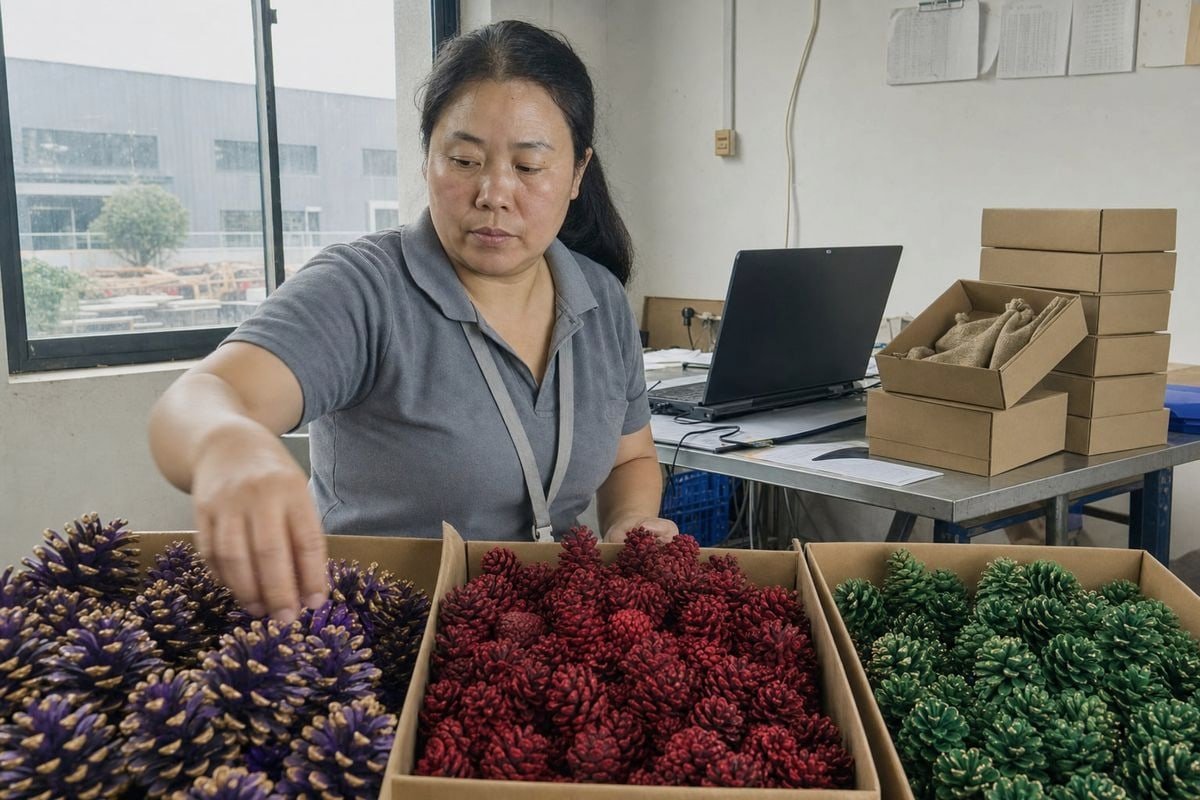
Trouver des fournisseurs fiables de pommes de pin colorées semble facile jusqu'à l'arrivée de votre premier conteneur décoloré, ébréché ou non conforme rapports de test SGS 1. Sur notre chaîne de production, nous voyons pourquoi les acheteurs se font avoir.
La meilleure façon de trouver des fournisseurs de pommes de pin colorées est une approche hybride : utilisez des plateformes B2B en ligne comme Alibaba et Global Sources pour une découverte rapide et une évaluation comparative des prix, puis validez les finalistes par le biais de salons professionnels, d'échantillons et de vérifications de certification avant de vous engager dans des commandes saisonnières en gros.
Aucun des deux canaux ne l'emporte seul. Chacun résout un problème d'approvisionnement différent. Ci-dessous, je détaille comment utiliser les deux, quels documents exiger et comment repérer les vraies usines.
Faut-il faire confiance aux annuaires B2B en ligne ou rencontrer des fournisseurs de pommes de pin colorées en personne lors de salons professionnels ?
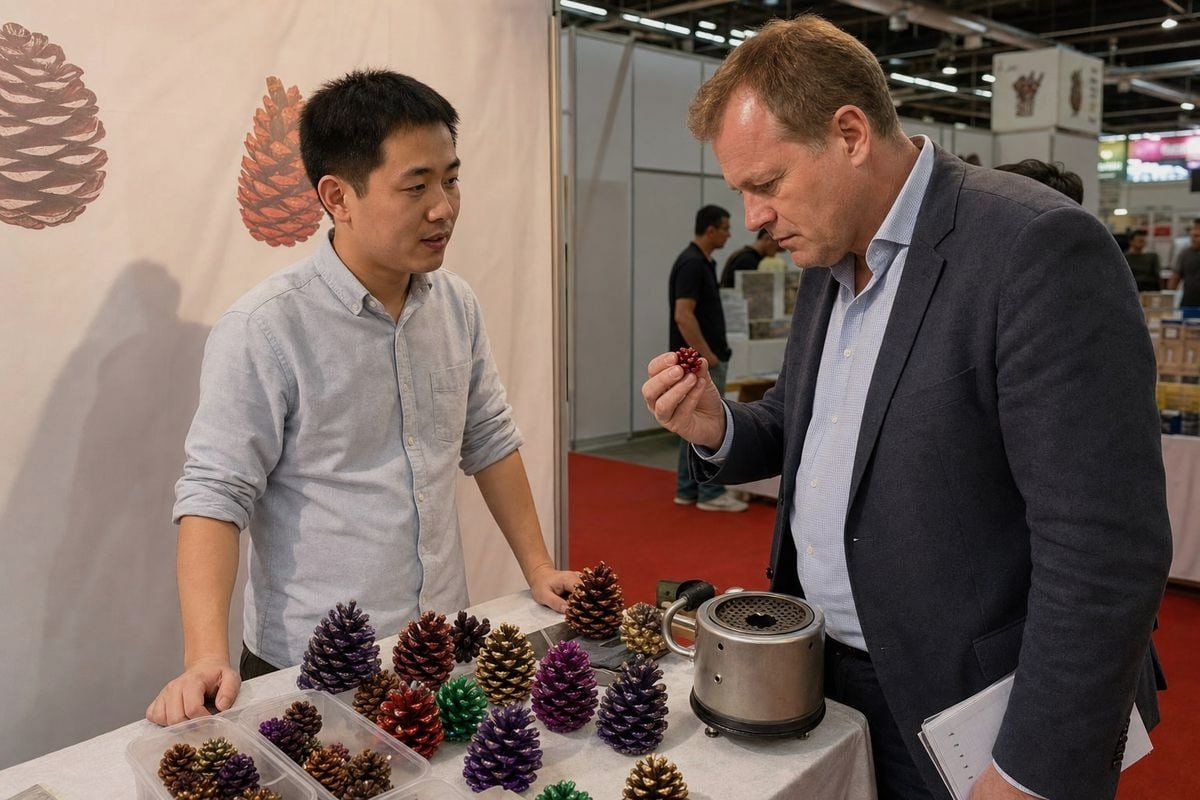
Un acheteur allemand m'a dit un jour qu'il avait présélectionné douze fournisseurs de pommes de pin colorées en ligne en deux jours, mais qu'il n'en avait fait confiance à deux qu'après les avoir rencontrés en personne. Notre usine était l'une d'entre elles.
Ne faites confiance aveuglément à aucun canal. Les annuaires B2B en ligne excellent dans la découverte générale, la comparaison des prix et les commandes d'essai à faible MOQ, tandis que les salons professionnels excellent dans l'inspection de la qualité des colorants, la vérification de l'état de l'usine et la constitution d'un pouvoir de négociation. Les acheteurs avisés sélectionnent en ligne, puis valident en personne ou par le biais d'échantillons.
Voici comment les deux canaux se comparent selon les priorités qui intéressent la plupart des responsables des achats :
| Critères | Plateformes B2B en ligne | Salons professionnels |
|---|---|---|
| Vitesse de découverte | Très rapide ; des centaines d'annonces en quelques heures | Lent ; limité aux exposants présents |
| Inspection de la qualité | Photos uniquement ; la couleur peut être trompeuse | Pratique ; vérification de la saturation de la teinture et du revêtement |
| Flexibilité du MOQ | Souvent plus bas, convient aux commandes d'essai | Généralement plus élevé, axé sur la vente en gros |
| Vérification du fournisseur | Assurance commerciale, avis, audits vidéo | Jugement direct de l'usine par rapport au commerçant |
| Coût d'approvisionnement | Faible ; investissement en temps uniquement | Élevé ; voyages, stands, hôtels |
| Établissement de relations | Plus lent, par e-mail | Rapide ; négociation en face à face |
Pourquoi les photos cachent la vérité avec les produits colorés
Les pommes de pin colorées sont des produits visuellement sensibles. Une pomme de pin violette avec des écailles dorées peut sembler parfaite sur une photo de studio et arriver terne, inégale ou écaillée. Les annonces en ligne sur TradeIndia, ExportersIndia et Fabriqué en Chine 2 montrent une énorme dispersion des prix pour ce qui semble être le même produit. Cet écart reflète généralement la qualité de la teinture, les normes de nettoyage et la durabilité du revêtement – rien de tout cela n'est révélé par une photo d'annonce.
Les salons professionnels comme Foire de Canton 3, Christmasworld et NY NOW vous permettent de tenir le produit. Vous pouvez plier une écaille, gratter la finition et sentir les résidus de solvant. Pour les pommes de pin colorées à flamme, vous pouvez même demander une démonstration de combustion en direct. Nous apportons des échantillons de combustion à chaque salon pour cette raison exacte.
L'honnête contre-argument
Les salons professionnels sont coûteux et tous les exposants ne sont pas des usines. Certaines stands sont occupés par des sociétés commerciales qui louent l'image d'un fabricant. Pendant ce temps, les plateformes en ligne offrent désormais des visites d'usine vidéo et une protection de paiement sous séquestre, ce qui réduit en partie le fossé de confiance. La vraie réponse est donc la séquence : découvrir en ligne, valider en personne ou via des échantillons vérifiés, et ne jamais se fier à un seul canal pour un produit saisonnier avec des délais d'expédition serrés.
Quelles certifications et quels documents de conformité dois-je vérifier avant de choisir un fabricant de pommes de pin colorées à la flamme ?
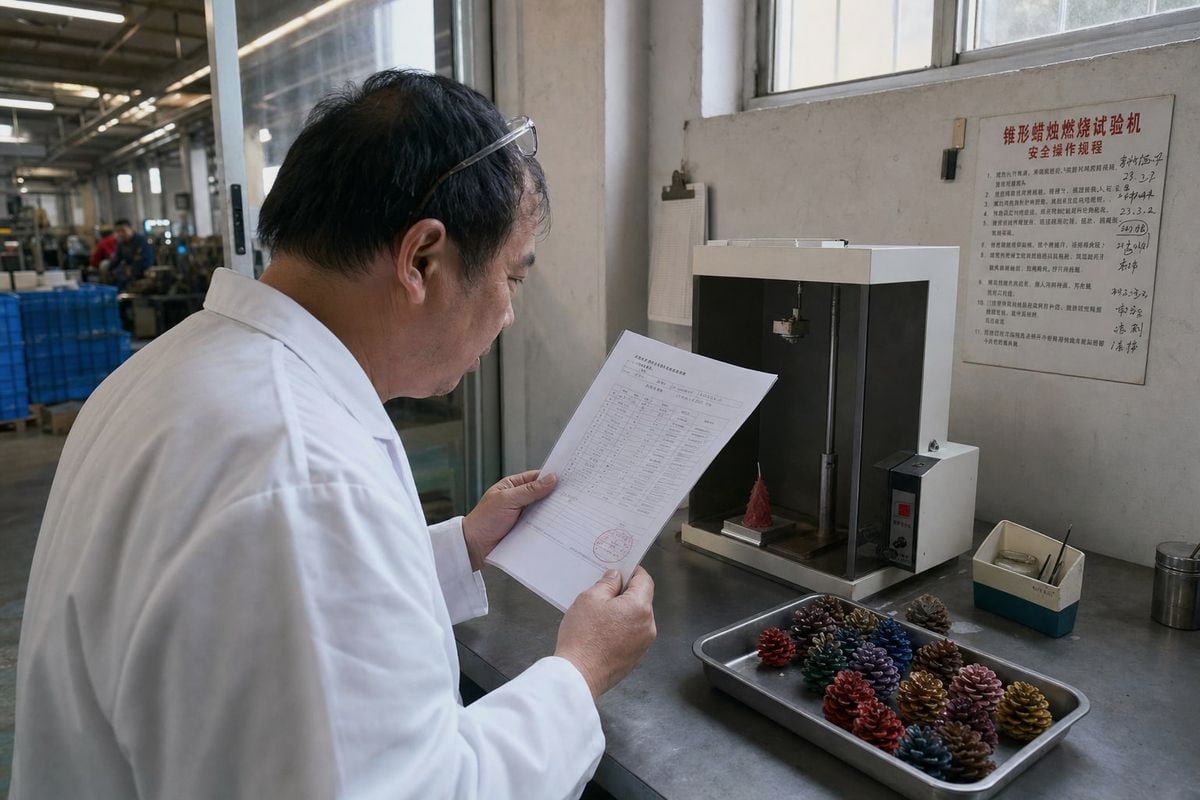
La conformité est là où nous perdons les concurrents les moins expérimentés et gagnons les acheteurs les plus sérieux. Nos ISO 9001 4, BSCI, CE et rapports de test SGS existent parce que nos clients américains et européens les exigent avant toute commande.
Vérifier la norme ISO 9001 pour la gestion de la qualité, la norme BSCI pour la conformité sociale, le marquage CE pour l'accès au marché de l'UE, et les rapports de test SGS ou Intertek couvrant la chimie des colorants et les émissions de combustion. Les acheteurs à destination de l'UE doivent en outre confirmer la conformité REACH pour tous les produits chimiques de coloration utilisés sur les pommes de pin.
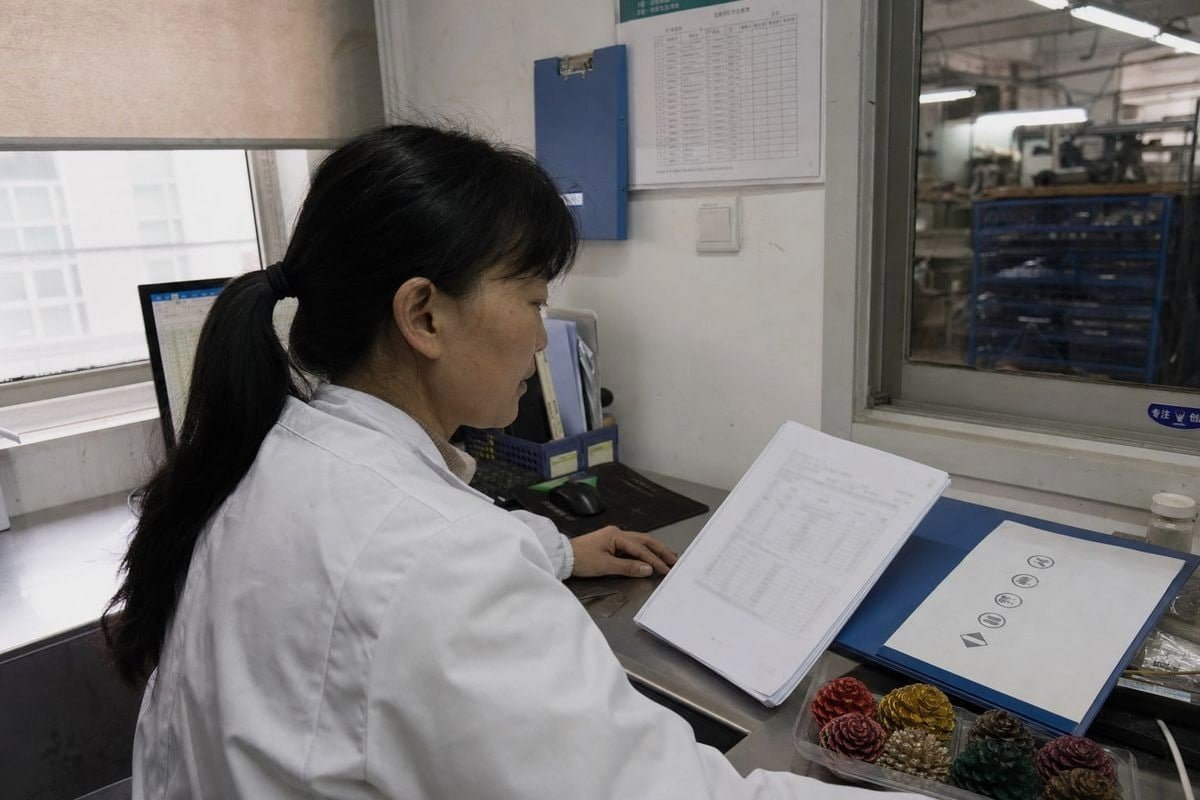
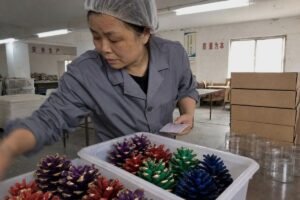
Les pommes de pin colorées à flamme entrent dans une catégorie plus stricte que les pommes de pin décoratives simples. Elles sont brûlées à l'intérieur dans des cheminées et à l'extérieur dans des feux de camp, donc les produits chimiques comptent double : une fois sur l'étagère, une fois dans la flamme. Au cours de nos dix-sept années d'exportation dans plus de trente pays, aucun distributeur sérieux aux États-Unis, en Allemagne ou au Royaume-Uni n'a jamais sauté l'étape de la documentation. Lorsqu'un fournisseur hésite à partager des rapports, considérez cela comme votre réponse.
La liste de contrôle des documents, par ordre d'importance
| Document | Ce qu'il prouve | Signal d'alarme s'il manque |
|---|---|---|
| SGS / Intertek 5 rapport de test | Sécurité des colorants et des émissions du produit réel | Le fournisseur ne peut pas prouver que le produit est sûr à brûler |
| Conformité REACH (UE) | Les produits chimiques de coloration respectent la réglementation chimique de l'UE | Le produit peut être bloqué ou rappelé aux douanes de l'UE |
| Documentation de marquage CE | Le produit est conforme aux directives européennes applicables | Aucune base légale pour vendre sur le marché européen |
| Certificat ISO 9001 | Un système de gestion de la qualité fonctionnel | La cohérence lot par lot est probablement peu fiable |
| BSCI 6 rapport d'audit | Conditions de travail éthiques et conditions d'usine | Les grands détaillants rejetteront la chaîne d'approvisionnement |
Comment vérifier, pas seulement collecter
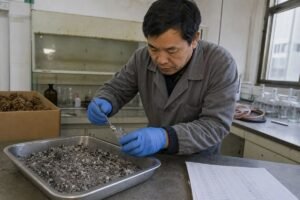
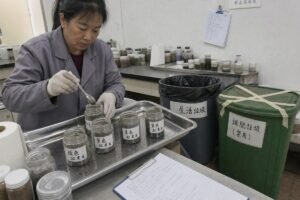
Collecter des PDF ne constitue pas une vérification. Faites trois choses. Premièrement, vérifiez le numéro de certificat directement auprès de l'organisme émetteur – SGS et Intertek permettent tous deux la vérification des rapports. Deuxièmement, confirmez que le nom de l'entreprise sur le certificat correspond à l'entreprise figurant sur votre contrat ; les commerçants présentent souvent le certificat d'une usine qu'ils ne possèdent pas. Troisièmement, assurez-vous que le rapport de test couvre le produit et la couleur spécifiques que vous achetez, et non un SKU différent testé il y a des années. Les méthodes de coloration à base d'eau sont de plus en plus attendues dans l'UE par rapport aux colorants à base de solvants, alors demandez quel système le fournisseur utilise et demandez la divulgation de la composition chimique. Nous fournissons cela en standard car les acheteurs de détail du niveau Home Depot l'auditeront de toute façon.
Comment puis-je savoir si un fournisseur trouvé en ligne a une capacité de production réelle par rapport à une société de négoce ?
Chaque octobre, notre usine de Ningbo fonctionne à pleine capacité saisonnière, et je peux mettre n'importe quel acheteur en communication vidéo à l'intérieur de l'atelier en une journée. Cette seule capacité distingue les usines des intermédiaires plus rapidement que n'importe quel argumentaire de vente.
Demandez une visite virtuelle en direct de l'usine, vérifiez que la licence commerciale indique la fabrication comme son champ d'application, posez des questions techniques sur les processus d'application et de séchage des colorants, vérifiez si les certificats portent le même nom d'entreprise et comparez les délais de livraison indiqués aux calendriers de production réalistes pour les produits saisonniers.

Le marché des pommes de pin colorées est fragmenté. Les annonces couvrent l'Inde, la Chine, l'Europe de l'Est et les États-Unis, et de nombreux vendeurs sont des négociants ou des revendeurs plutôt que des producteurs. Ce n'est pas automatiquement mauvais — les commerçants peuvent consolider les petites commandes — mais vous devez savoir à qui vous avez affaire, car cela change votre tarification, votre contrôle qualité et vos recours en cas de problème.
Un processus de vérification en cinq étapes
- Exigez une visite vidéo en direct et non programmée. Une vraie usine vous montre les postes de teinture, les séchoirs et les lignes d'emballage sur demande. Un commerçant tergiverse, reporte ou envoie des images pré-enregistrées.
- Vérifiez la licence commerciale chinoise. Le champ d'activité enregistré doit inclure la fabrication ou la production, et non seulement le " commerce " ou l"" importation et exportation »."
- Posez des questions techniques au niveau du processus. Demandez comment ils contrôlent la cohérence des couleurs entre les lots de teinture, quel est leur temps de séchage après le revêtement et comment ils classent les tailles de pommes de pin. Les commerçants donnent des réponses vagues. Notre équipe peut expliquer chaque étape car nous la réalisons quotidiennement.
- Vérifiez la propriété du certificat. Si le certificat ISO 9001 ou BSCI porte le nom d'une autre entreprise, vous parlez à un intermédiaire.
- Testez la résistance du délai de livraison. Les pommes de pin sont récoltées saisonnièrement, principalement à l'automne. Un fournisseur promettant d'énormes volumes au quatrième trimestre avec un délai de deux semaines en novembre a soit des stocks pré-teints qu'il peut prouver, soit il fait des suppositions.
Pourquoi cela est important pour les commandes saisonnières répétées
Le véritable risque avec les sociétés commerciales n'est pas la première commande. C'est la deuxième. Un commerçant peut changer d'usine source entre les saisons pour rechercher une marge, et vos pommes de pin vert émeraude arrivent d'une teinte différente l'année suivante. Parce que nous contrôlons nos propres lignes, de la réception de la pomme de pin brute au revêtement final, notre premier échantillon reflète de manière fiable la production de masse, et nos couleurs répétées en saison correspondent. Demandez à n'importe quel fournisseur comment il garantit la répétabilité des lots de teinture sur un intervalle de douze mois. La réponse vous dit tout.
Quel canal d'approvisionnement me donne un meilleur accès aux options d'emballage personnalisé et de marque privée pour les pommes de pin colorées à la flamme ?
Une marque canadienne de plein air nous a récemment demandé des pochettes kraft refermables avec une fenêtre transparente, leur logo, des accents dégradés arc-en-ciel et des étiquettes d'avertissement bilingues. Nous avons livré des unités prêtes à être mises en rayon — ce projet est une bonne lentille pour comparer les canaux.
Les salons professionnels donnent un meilleur accès initial aux discussions sur l'emballage car vous pouvez manipuler des échantillons physiques et négocier directement, mais la véritable profondeur de marque privée dépend du fait que le fournisseur soit une usine OEM/ODM. Les plateformes en ligne vous permettent de filtrer plus rapidement la capacité OEM, puis de confirmer la qualité de l'emballage par des échantillons.
L'emballage est ce qui transforme les pommes de pin colorées en une marque, pas en une marchandise. Nos clients vendent le même produit de base dans des formats très différents : des sacs en toile de jute avec des illustrations de pommes de pin imprimées pour les marchés des cadeaux de cheminée, des pochettes refermables en kraft avec des fenêtres transparentes pour les détaillants de camping, et des cartons prêts à l'emploi pour les grandes surfaces. Le canal d'approvisionnement affecte la rapidité avec laquelle vous pouvez évaluer si un fournisseur peut réellement exécuter ces formats.
Ce que chaque canal offre pour la personnalisation
| Besoin de personnalisation | Plateformes B2B en ligne | Salons professionnels |
|---|---|---|
| Visualisation des échantillons d'emballage | Photos et échantillons envoyés par la poste uniquement | Toucher les matériaux et la qualité d'impression sur place |
| Discussion sur l'étiquetage privé | Fils d'e-mails, itération plus lente | Négociation en direct avec les décideurs |
| Filtrage des fournisseurs OEM/ODM | Rapide ; des filtres de plateforme existent | Lent ; il faut demander stand par stand |
| Étiquettes d'avertissement et codes-barres | Dépend de la documentation du fournisseur | Peut examiner des exemples d'étiquettes conformes en main |
| Petites séries de personnalisation d'essai | Plus facile de négocier des MOQ plus bas | Les exposants poussent souvent les engagements en gros |
Le facteur qui compte plus que le canal
Voici la vérité honnête de notre côté : le canal importe moins que le fait que le fournisseur possède la capacité de personnalisation. Une société commerciale trouvée sur un beau stand de salon doit toujours externaliser l'impression de vos pochettes, le placement de vos codes-barres et vos étiquettes d'avertissement spécifiques au marché — ajoutant coût, délai et erreur à chaque transfert. Un véritable d'OEM/ODM 7 gère la taille, le temps de combustion, le format d'emballage, la marque privée et l'optimisation logistique sous un même toit. Nous avons construit notre modèle tout-en-un précisément parce que les responsables des achats nous ont dit que la coordination de trois fournisseurs pour un produit prêt à être mis en rayon était leur plus grand casse-tête saisonnier. Utilisez donc les plateformes en ligne pour filtrer les capacités OEM documentées, utilisez les salons professionnels pour inspecter la qualité des emballages physiques, et verrouillez vos spécifications d'emballage quatre à six mois avant la saison des fêtes, car les calendriers de teinture et les tirages d'impression s'accumulent tous deux en automne.
Conclusion
L'approvisionnement en fournisseurs de pommes de pin colorées échoue lorsque les acheteurs recherchent l'annonce la moins chère. Présélectionnez en ligne, vérifiez les certifications, confirmez la capacité de production réelle, puis associez-vous à une usine OEM conforme pour une qualité saisonnière répétable.
Notes de bas de page
SGS est un organisme de test nommé ; le lien vers son site officiel soutient les affirmations de vérification. ↩︎
Plateforme B2B nommée utilisée comme exemple de source d'annonces à prix dispersés. ↩︎
Contexte sur ce grand salon professionnel référencé comme lieu de vérification des fournisseurs. ↩︎
Référence de norme ISO officielle pour la certification de management de la qualité que les acheteurs doivent vérifier. ↩︎
Site officiel de l'organisme de test nommé permettant la vérification des certificats pour les acheteurs. ↩︎
Page officielle amfori BSCI expliquant la norme d'audit de conformité sociale mentionnée. ↩︎
Explique le modèle de fabrication OEM/ODM au cœur de la discussion sur la personnalisation des emballages. ↩︎
 English
  Spanish
  German
  French
  Arabic
  Portuguese
Rejoignez la conversation