






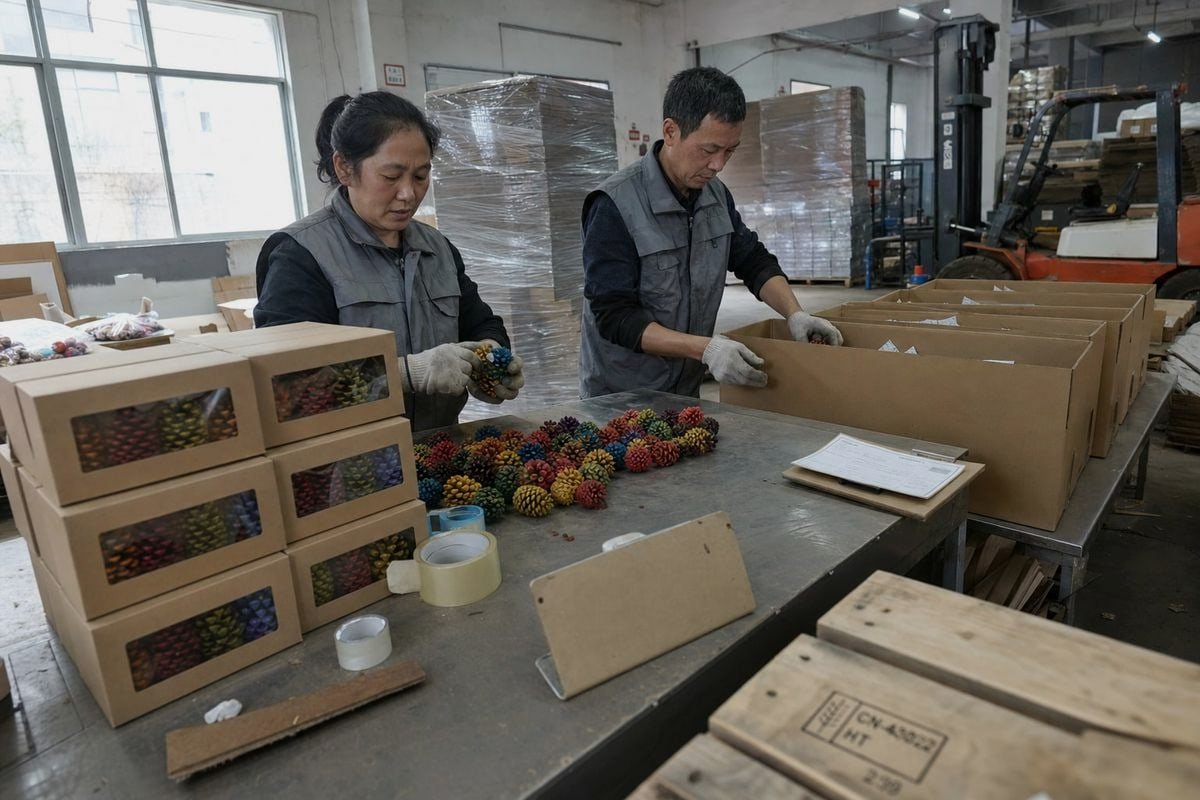
Shipping fire-colored pine cones from China looks simple until the first quote arrives. On our production line, we watch buyers underestimate freight, compliance, and packaging costs every season.
To ship fire-colored pine cones from China, choose factory retail packaging when you have stable demand, simple SKUs, and confirmed labeling requirements. Choose destination repackaging when you need local-language labels, multi-channel flexibility, or are still testing the market. Both require compliance documents and moisture-safe cartons.
That is the short answer. But the details decide whether your season is profitable or painful. Let me walk you through each part of the decision, step by step.
What compliance documents do I need for shipping fire-colored pine cones internationally?
A German distributor once asked me why his previous supplier's shipment sat in customs for three weeks. The answer was simple: the paperwork treated color-flame cones like plain decor. That mistake is common, and I want to help you avoid it.
Fire-colored pine cones need an SDS for the flame-color coating, third-party lab test reports (SGS or Intertek), a phytosanitary certificate for the natural cone material, ISPM-15 compliant pallets, correct HS code classification, and destination-specific labels with usage warnings before international shipment.
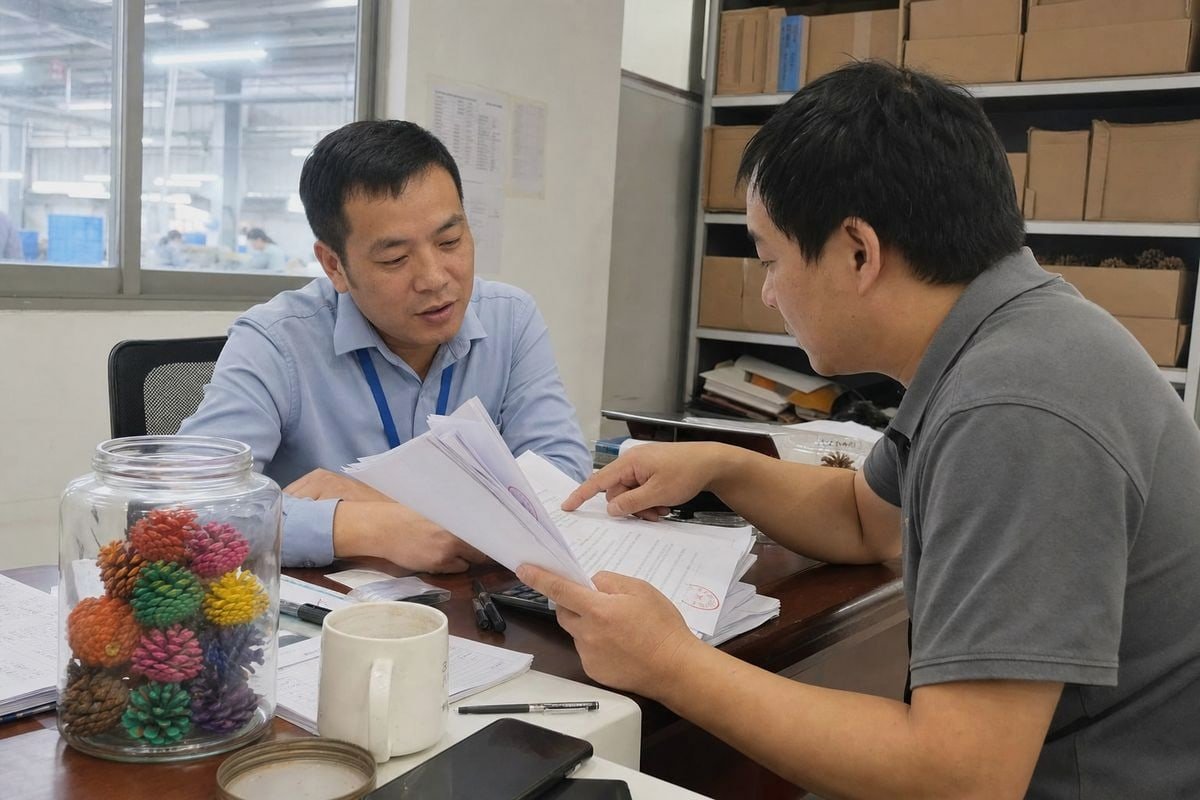
Compliance is the first gate, and it does not care which packaging model you prefer. In our seventeen-plus years exporting fire-themed products to more than thirty countries, paperwork problems have caused more delays than production ever has. So let me break the document stack into pieces.
Voici ce que nous remettons aux acheteurs le premier jour, et ce que vous devriez exiger de tout fournisseur :
Fire-colored pine cones sit in an unusual spot. They are a natural botanical product carrying a functional coating. That means two separate compliance tracks apply at the same time.
| Document | Pourquoi c'est important | Qui le fournit |
|---|---|---|
| Fiche de Données de Sécurité (FDS) | Screens the color-flame additive for hazmat handling | L'usine |
| Rapport de test SGS / Intertek | Proves the product meets destination safety standards | Factory via third-party lab |
| Certificat phytosanitaire | Confirms the natural cones are pest-free | Chinese inspection authority |
| ISPM-15 pallet marks | Required for wood pallets and crates | Factory / freight forwarder |
| Facture commerciale + liste de colisage | Customs valuation and inspection | Usine |
| Correct code SH 1 déclaration | Treated cones may classify differently than plain decor | Factory + customs broker together |
Why the HS code deserves extra attention
Chemically treated fire cones may not share an code SH 2 with plain decorative pine cones. The declared code affects duty rates and how closely customs inspects the shipment. We always confirm the code with the buyer's customs broker before booking freight. A wrong code at origin can trigger reclassification, storage fees, and in the worst case a returned container.
The regulatory angle for consumer fire products
If your cones are positioned for fireplace or campfire use, they are a consumer household product, not a craft supply. That raises the bar. Flame-color additives can attract testing under EU REACH or US CPSC rules. This is exactly why we built our products around eco-friendly formulations and keep CE marking and current SGS et Intertek 3 on file. For our serious B2B buyers, these documents are a hard requirement, not a nice-to-have. Ask for them before you sign a purchase order, not after the goods land.
Should I choose factory retail packaging or destination repackaging for my target market?
Every autumn, our sales team fields the same question from importers in the US and Europe, and the honest answer depends on numbers we have to work through together. There is no universal winner here, only a better fit for your situation.
Choose factory retail packaging if you sell finished consumer products with confirmed labels, stable demand, and one or two SKUs. Choose destination repackaging if you need localized labeling, multiple sales channels, small test runs, or want to inspect goods after ocean transit before final sealing.

Here is the side-by-side comparison we walk buyers through before every packaging quote:
| Decision factor | Factory retail packaging in China | Destination repackaging |
|---|---|---|
| Coût unitaire | Higher origin packing labor | Lower origin labor, higher local labor |
| Efficacité du fret | Worse — retail packs carry void space | Better — bulk packs load tighter |
| Brand control | High, if factory prints bags and boxes | High, repacker controls the final label |
| QA timing | Must happen before sealing | Easy to inspect and sort after arrival |
| Speed to market | Faster — shelf-ready on arrival | Slower — an extra repack step |
| Conformité | Origin labels must be right the first time | Local labels finalized after import |
| Flexibilité | Low once sealed | High for test markets and new SKUs |
When factory packaging wins
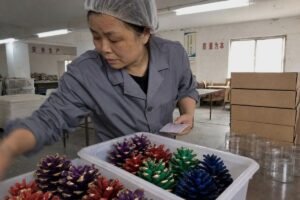
Factory retail packaging shines when the product goes straight to shelf or straight into e-commerce fulfillment. On our lines, we pack color-flame pinecones into printed pouches, kraft bags, or display boxes, apply barcodes and warning labels, and load master cartons that a distributor can cross-dock without touching the product. That saves domestic labor, which is expensive in the US and Western Europe. It also means one accountable party for the whole finished unit: us.
When destination repackaging wins
Bulk shipment makes sense when your market is still uncertain. Loose or bulk-bagged cones maximize container cube, and pine cones are bulky relative to their value, so cube utilization can dominate profitability. Repackaging locally also lets you inspect for moisture or mold after the four-to-six week ocean transit, before you seal consumer bags. And it lets you run Amazon FBA labels 4, Walmart compliance labels, and boutique gift packaging from one bulk inventory without SKU-by-SKU communication back to China.
The honest middle ground
Many of our long-term buyers do both. They order factory-packed retail units for their proven SKU and a smaller bulk lot for testing new bundle sizes. That hybrid keeps risk low while protecting speed to market on the core product.
How do I control quality and consistency when packaging happens overseas versus at the factory?
A batch that looks perfect as a sample can still disappoint after six weeks at sea, and I learned this early in my career when a shipment of natural decor arrived with crushed cartons and dusty product. Since then, our QC process treats packaging as part of the product itself.
Control quality by defining checkable standards for color consistency, scale breakage, odor, and moisture, then matching inspection timing to your model: pre-shipment third-party inspection before factory sealing, or inbound warehouse inspection with sorting before destination repackaging. Batch-to-batch factory QC underpins both.
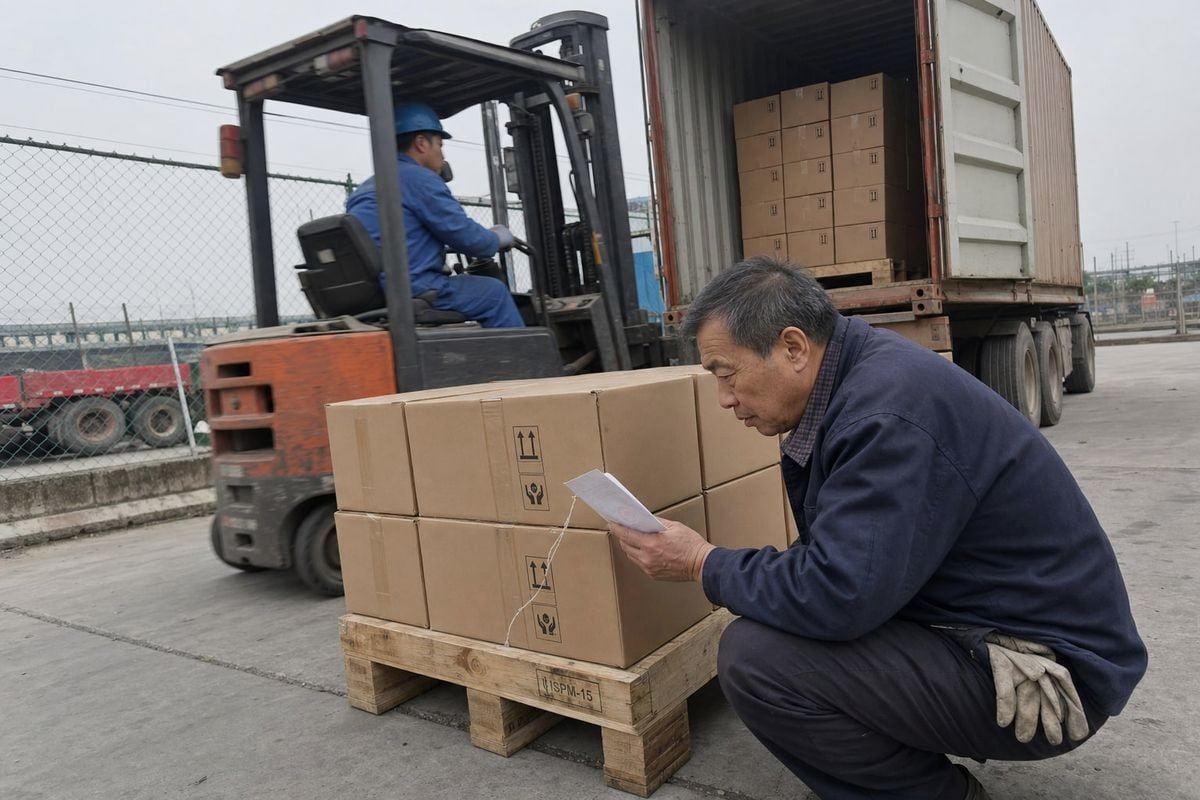
The core issue is timing. Once a retail bag is sealed in China, defects are locked inside it. If you repack locally, you get a second inspection window, but you also inherit the labor and the risk. Let me show you how we manage each path.
Defects specific to fire-colored pine cones
Pine cones are fragile, irregular, and moisture-sensitive. These are the failure points we check on every batch:
| Défaut | Cause | Where to catch it |
|---|---|---|
| Coloration inconsistency | Coating batch variation | Factory line QC, batch records |
| Broken or crumbling scales | Rough handling, weak inner packing | Pre-shipment or inbound inspection |
| Moisture and mold | Humid transit, poor desiccant use | Inbound inspection after ocean freight |
| Chemical odor or residue | Improper curing before packing | Factory QC before packing |
| Carton crush damage | Weak cartons, poor container loading | Loading supervision and arrival check |
QC for the factory-packed model
For sealed retail units, the inspection must move upstream. We run strict batch-to-batch controls so the first sample reliably reflects mass-production quality, and we welcome third-party pre-shipment inspections. Insist on an AQL-based inspection 5 before sealing, photo documentation of inner protection, and desiccant placement in every master carton. Confirm carton burst strength, because a shelf-ready box that arrives crushed is worthless.
QC for the repackaging model
For bulk goods, build an inbound checklist for your warehouse: moisture readings, mold checks, breakage sorting, and a coloration reference sample. Sorting after arrival lets you salvage good product from a partially damaged lot. But shrink becomes your cost, so negotiate an agreed overage allowance with the factory. Either way, quality starts at the production line. Our ISO 9001 and BSCI audited processes 6 exist precisely so that the QC burden downstream stays small.
Which packaging option gives me better private-label branding and cost efficiency for my import business?
One of our Dutch buyers put it bluntly during a packaging review: he did not want the cheapest bag, he wanted the bag that sold the product and survived the container. That framing is exactly right, and it changes how you should compare costs.
Factory retail packaging delivers stronger cost efficiency for private-label brands at scale, because printed pouches, barcodes, and display boxes cost far less to apply in China. Destination repackaging wins for multi-channel flexibility, regulatory adaptability, and low-volume tests where custom print MOQs are not yet justified.
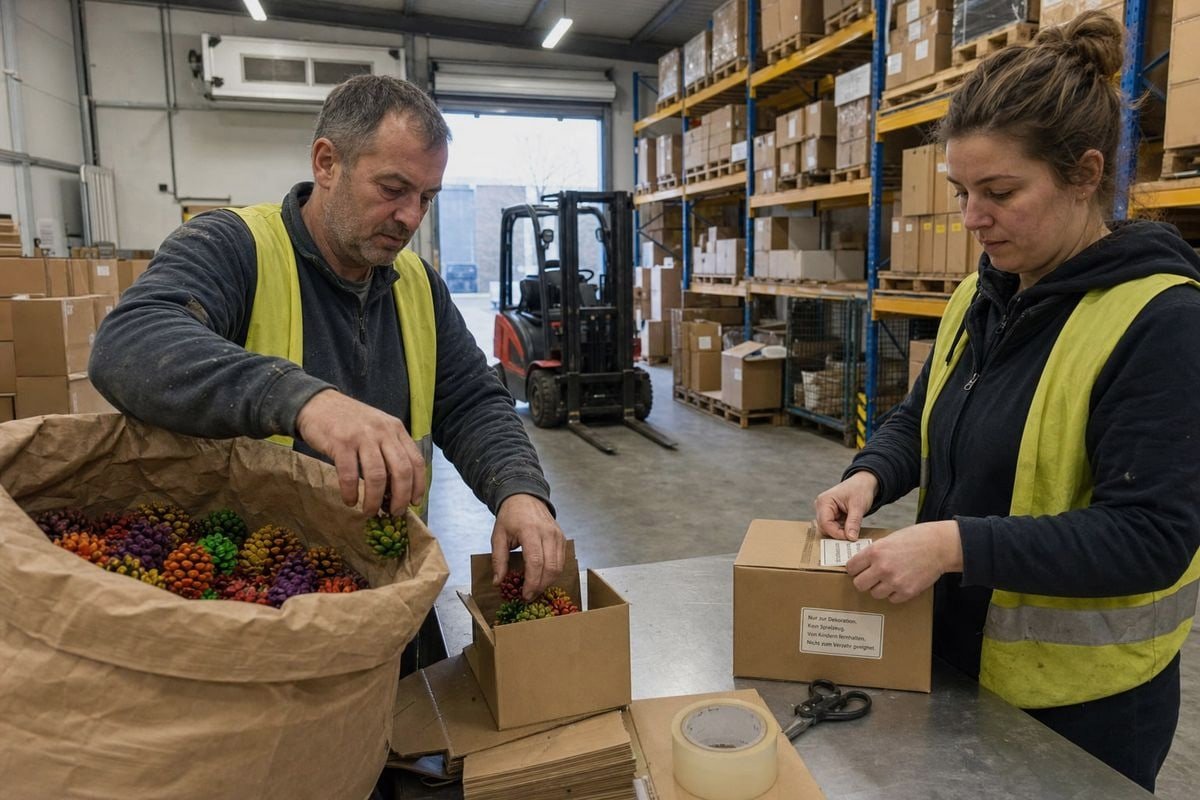
Branding and cost pull in different directions depending on volume, so let us separate the two questions.
The private-label economics
Custom packaging at a Chinese factory is cheap per unit but carries setup thresholds. Printed stand-up pouches, burlap gift sacks, kraft bags, and display-ready cartons all have print MOQs. On our OEM and ODM lines, we handle the full package: custom sizes, burn-time specifications, private-label artwork, warning labels, barcodes, and retail display boxes. At volume, no destination co-packer can match that landed unit cost, because Chinese packing labor is a fraction of US or EU warehouse labor.
Below the MOQ threshold, the math flips. A test run of two thousand units rarely justifies custom print plates. Bulk-shipping and applying local labels to stock pouches is cheaper and faster to change.
Un chemin de décision simple
- Confirmed SKU, one market, volume above print MOQ: factory retail packaging.
- One product, several channels with different label rules: bulk ship, repack locally per channel.
- New market test with uncertain demand: bulk ship, use stock packaging with local labels.
- Regulatory uncertainty on claims or warnings: bulk ship, finalize labels after any required testing.
The hidden regulatory advantage of repackaging
There is one branding risk buyers often miss. If post-import testing forces a label change, pre-printed factory packaging becomes unsellable inventory. Destination repackaging keeps your claims adaptable. That said, this risk shrinks dramatically when your factory ships with current SGS or Intertek reports et documentation CE 7 up front, because your label claims rest on verified data rather than guesswork. This is where a compliance-first factory partner directly protects your brand economics, not just your customs clearance.
Conclusion
Shipping fire-colored pine cones from China is a compliance, freight, and branding decision in one. Match the packaging model to your volume, labels, and channels — then partner with a certified factory.
Notes de bas de page
1. Explains international HS code classification aff


 English
  Spanish
  German
  French
  Arabic
  Portuguese
Rejoignez la conversation