







Post-trade show order consolidation for fireplace colored pine cones trips up more buyers than the show itself ISO 9001 1. Our factory sees it every season after major exhibitions.
Post-trade show order consolidation for fireplace colored pine cones should follow a 10–14 day confirmation window, group orders by ship window and destination zone, verify certifications per market, lock private-label packaging artwork within 7 days, and release consolidated production 90–120 days before peak heating season.
That single sentence hides a lot of moving parts Marquage CE 2. Deposits, MOQs, test reports, and packaging deadlines all interact. Below, I break the schedule into four practical questions and answer each one from the factory floor perspective.
What timeline should I plan for consolidating trade show orders into one production run?
At our Ningbo production site, the two weeks after a big hearth or camping trade show are always the busiest for our sales team Fiches de données de sécurité 3. Everyone wants their order slotted first.
Plan a 10–14 day post-show confirmation window, a 7-day SKU and packaging lock, then a 30–45 day consolidated production run. Add 30–40 days for ocean freight. Working backward from an October retail stocking date, consolidation decisions must close by late May or June.
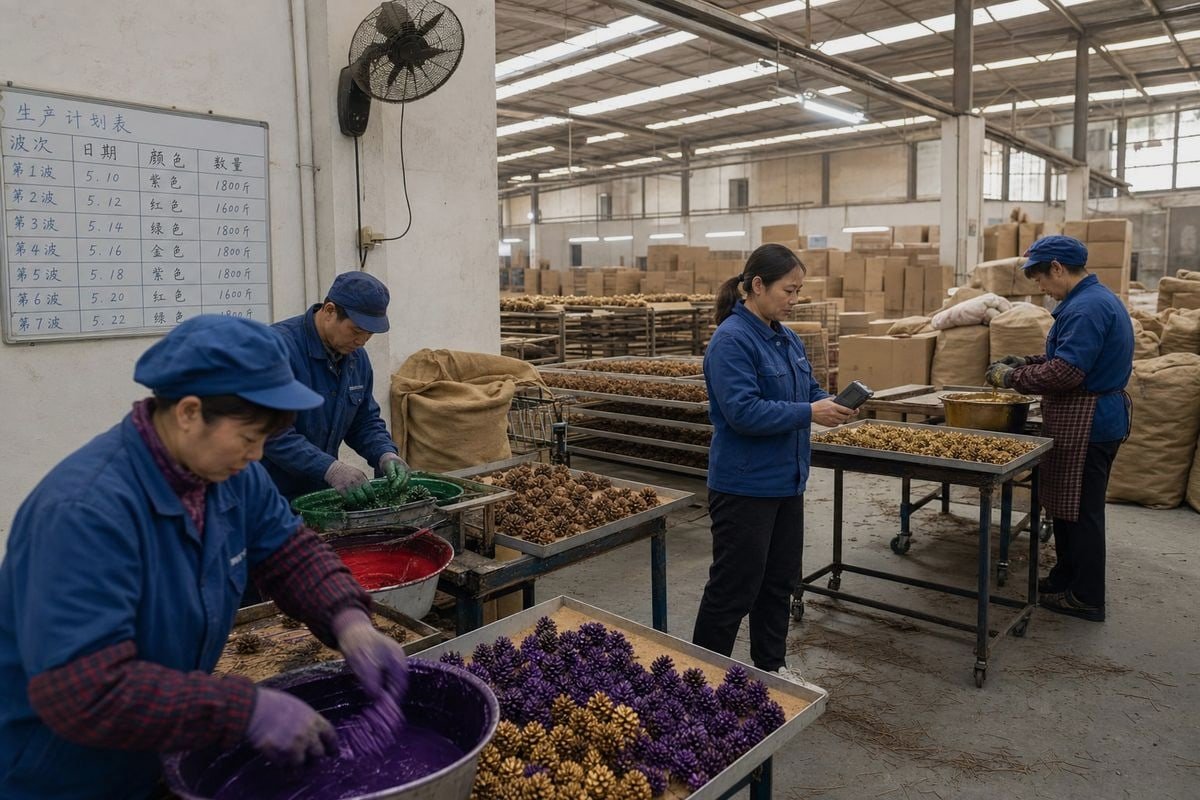
The mistake I see most often is treating trade show orders as individual events instead of one batch order processing exercise le fret maritime 4. Colored pine cones are a seasonal hearth product. Retail shelves in the US and Europe fill up between September and November des audits d'usine BSCI 5. If your consolidation window drifts, you miss the season entirely — and this category does not sell through in spring.
Work backward from the shelf date, not forward from the show
Here is the planning table we share with distributors after every exhibition:
| Phase | Durée | Ce qui se passe |
|---|---|---|
| Order capture and confirmation | Days 1–14 post-show | Convert booth leads into signed POs; hot leads first, warm leads into wave two |
| SKU, packaging, and label lock | Days 15–21 | Final artwork, barcodes, warning labels, case-pack specs frozen |
| Consolidated production run | Days 22–65 | One-color-per-lot production, batch QC, moisture-controlled staging |
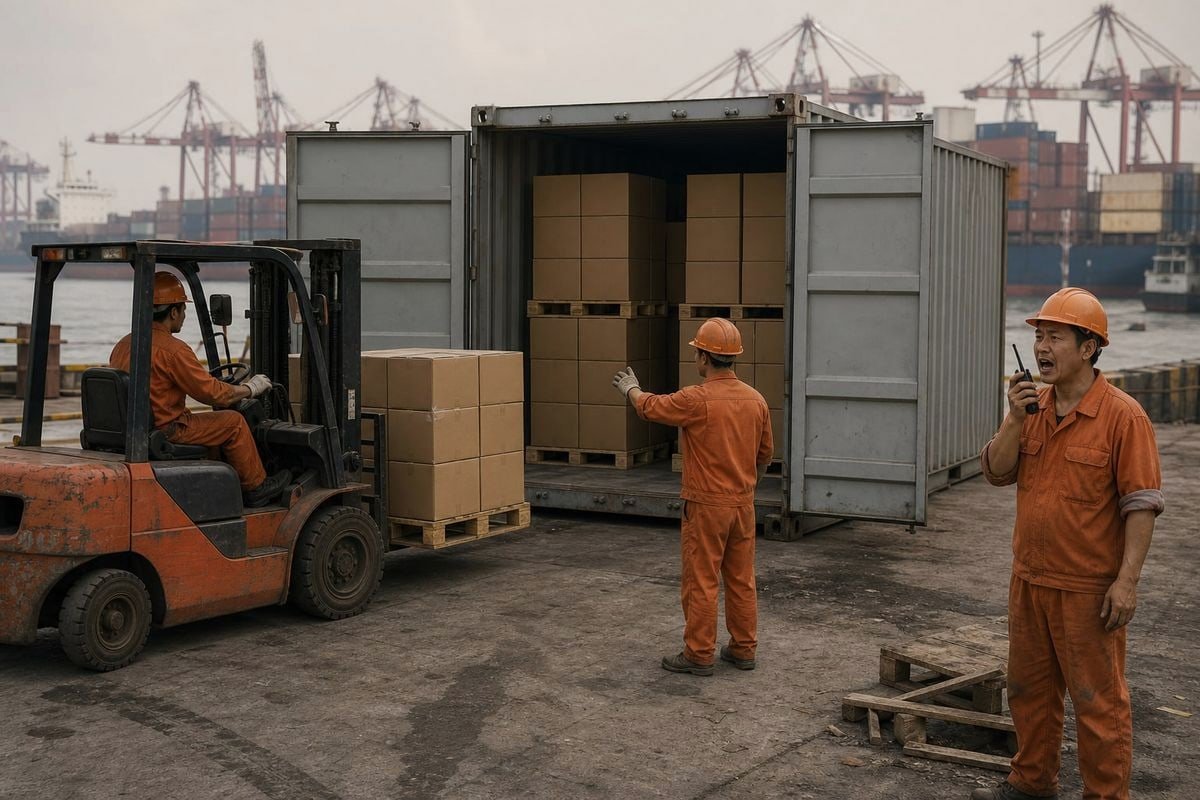
| Freight booking and loading | Days 66–75 | Palletization, container loading, export documents |
| Transport maritime | 30–40 jours | Port-to-port, plus customs clearance and inland delivery |
Two waves work better than one giant run. We recommend an immediate wave for confirmed "hot" orders and a second consolidation wave four to six weeks later for slower decision-makers. This mirrors what good lead management software does anyway: it separates B2B lead conversion into priority tiers so warehouse and production capacity stays balanced.
One more point from experience. Buyers sometimes push for a single massive run to squeeze the price. But over-consolidating delays your fastest customers and risks mixing color lots. Our production line runs one flame-color formula per batch precisely because mixed batches produce duller, inconsistent flame effects. Protect product quality first, then chase freight efficiency.
How do I coordinate MOQs across multiple distributors placing separate trade show orders?
A German fireplace distributor once told me at a show in Cologne that our pinecone MOQ felt high for a trial. Then two of his neighboring exhibit contacts placed orders too — and suddenly the math changed completely.
Pool separate distributor orders into one consolidated production run to meet factory MOQs collectively. Keep each buyer's SKU, color lot, and packaging distinct, but share the production slot, raw material batch purchasing, and container space to unlock bulk shipping rates and lower per-unit costs.
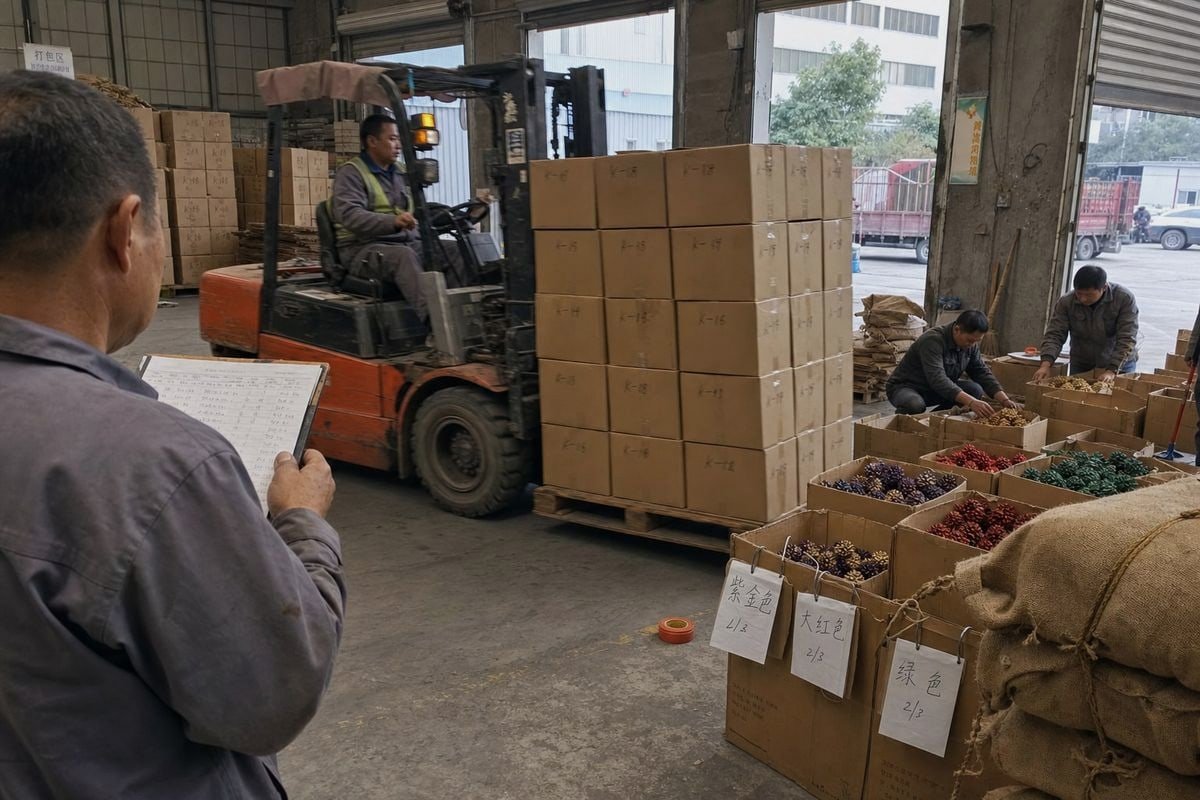
MOQ coordination is where a real factory differs from a trading company. Because we control our own production lines, we can slot several smaller trade show orders into one run as long as the color formulas and treatment processes align. What we cannot do is blend different buyers' color lots to hit a number. One-color-per-lot logic is non-negotiable for flame brightness and consistency.
Three practical pooling models
- Regional pooling. Group orders from the same geographic region — say, three US Midwest distributors — into one container. This leverages bulk freight rates, cuts drayage fees for bulky pinecone cartons, and simplifies freight shipping logistics on the import side.
- Format pooling. Different buyers, same base product, different packaging: one takes kraft resealable pouches for camping channels, another takes burlap gift sacks for hearth retailers. The treated cones come from one production lot; only the final pack-out differs.
- Wave pooling. Buyers who accept a 10-day consolidation window join a shared shipment. Some of our clients even market this to their retailers as a sustainability credit, since fewer LTL shipments means a smaller empreinte carbone 6.
| Pooling model | Idéal pour | Main risk to manage |
|---|---|---|
| Régional | Buyers in one delivery zone | Aligning delivery deadlines across companies |
| Formater | Multi-channel product lines | SKU integrity during repack |
| Wave | Flexible, cost-driven buyers | Slippage if one participant delays artwork |
Standardize SKU data and carton dimensions before the show if you can. When packaging specs are already in your inventory management systems, merging disparate orders into shared pallets becomes a data exercise, not a warehouse scramble. And insist that your supplier confirms which orders share a lot — you want SKU purity on paper, not just verbally.
Which certifications and test reports should I confirm before consolidating orders from different markets?
Compliance paperwork is the first thing serious buyers ask us about — usually before price. In our experience exporting to 30+ countries, one missing test report can hold an entire consolidated container at customs.
Before consolidating, confirm ISO 9001 and BSCI factory audits, CE marking for European orders, current SGS or Intertek test reports for the exact formula shipped, updated Safety Data Sheets, and market-specific warning labels. Verify every report matches the actual production batch, not an old sample.

Consolidation raises the compliance stakes. When one container carries orders for the US, Germany, and Canada, the weakest paperwork in the load can delay everyone. So we treat document verification as a gate before production release, not an afterthought during freight booking.
Match documents to markets before you merge orders
| Marché | Key documents to confirm | Lacune courante que nous constatons |
|---|---|---|
| États-Unis / Canada | SGS or Intertek test reports, SDS, English/French labeling for Canada | SDS version older than the current formula |
| UE (Allemagne, France, NL, Pologne) | CE conformity, SGS test reports, local-language warnings | Warning text not translated for each destination |
| Royaume-Uni | UKCA considerations, English safety labeling | Assuming EU paperwork transfers automatically |
| Australia / Middle East | Import permits, SDS, usage restriction labels | Missing gas-fireplace exclusion wording |
Two compliance points deserve special attention for this product category. First, colored pine cones are intended for wood-burning fireplaces, campfires, and fire pits — not gas fireplaces, where ash and residue can clog pilot and burner orifices, and never cooking fires or BBQ grills. Those usage restrictions must appear on packaging for every channel. Retail listings increasingly foreground these warnings, so clear labeling is now part of competitive positioning, not just legal cover.
Second, insist on batch-linked test reports. A report from last year's sample tells you little about this year's consolidated run. Our QC process ties each SGS or Intertek report to a specific production lot, so a distributor's compliance file matches what is actually inside the cartons. When multiple buyers share a run, everyone receives documentation for the shared lot. That is what makes l'optimisation de la chaîne d'approvisionnement 7 safe rather than just cheap.
How can I align private-label packaging deadlines with a consolidated shipping schedule?
Artwork delays sink more consolidated shipments than production ever does. Our OEM team once held a three-buyer container for eleven days because one brand's barcode file arrived in the wrong format.
Lock all private-label artwork, barcodes, and warning labels within 7 days of order confirmation. Set a hard artwork cutoff 5 days before production starts, sequence pack-out by ship window, and never let one buyer's packaging delay push the shared container past its freight booking.
Private-label work is where colored pine cones stop being a craft material and become a packaged retail good. The same treated cone might ship as a kraft stand-up pouch with a clear window for camping retailers, a burlap drawstring sack for hearth boutiques, or a bulk refill bag for garden centers. Each format has its own print lead time, and in a consolidated schedule, the slowest artwork sets the pace for everyone — unless you manage it deliberately.
A packaging deadline sequence that protects the ship date
- Day 0–3: Buyer submits final artwork, barcode files, and required warning text. We supply dielines and label templates the day the PO is signed.
- Day 4–7: Factory proofing. We check print specs, barcode scannability, and mandatory usage warnings — including the wood-burning-only and no-cooking-fire language.
- Day 8–12: Packaging materials ordered. Pouches, burlap sacks, display boxes, and master cartons go into print production in parallel with cone treatment.
- Production window: Cones are treated, dried, and staged in moisture-controlled areas so coatings cure properly before they touch packaging.
- Pack-out by ship window: Orders are packed in the sequence of their outbound freight bookings, earliest carrier cutoff first — not in the order the POs arrived.
The critical rule: production and packaging run in parallel, but pack-out is gated by ship window. Sorting incoming consolidated inventory into "ready to ship," "needs relabeling," "needs repack," and "held for customer confirmation" keeps one late buyer from freezing the whole container. If a buyer misses the artwork cutoff, their goods move to the second wave — a firm policy that actually protects everyone's retail distribution channels and keeps the wholesale fulfillment strategy on schedule. Crush-resistant cartons matter here too; pinecones are fragile and generate residue, so containment is part of the packaging brief, not a nice extra.
Conclusion
Miss the consolidation window and a whole season slips away. Confirm orders in 14 days, pool MOQs by lot, verify batch-linked certifications, and lock packaging early — then the container sails on time.
Notes de bas de page
1. Authoritative standard reference for the quality management certification named in the article. ↩︎
2. Official EU source explaining CE marking requirements referenced for European market compliance. ↩︎
3. Government reference explaining SDS requirements mentioned as a compliance document for shipments. ↩︎
4. Background concept on container shipping relevant to the freight timelines discussed in the article. ↩︎
5. Official amfori page for the Business Social Compliance Initiative (BSCI) social audit solution. ↩︎
6. EPA resource on emissions relevant to the sustainability claim made about consolidated shipments. ↩︎
7. Wikipedia background on the broader concept referenced when discussing batch-linked compliance documentation. ↩︎



 English
  Spanish
  German
  French
  Arabic
  Portuguese
Rejoignez la conversation