






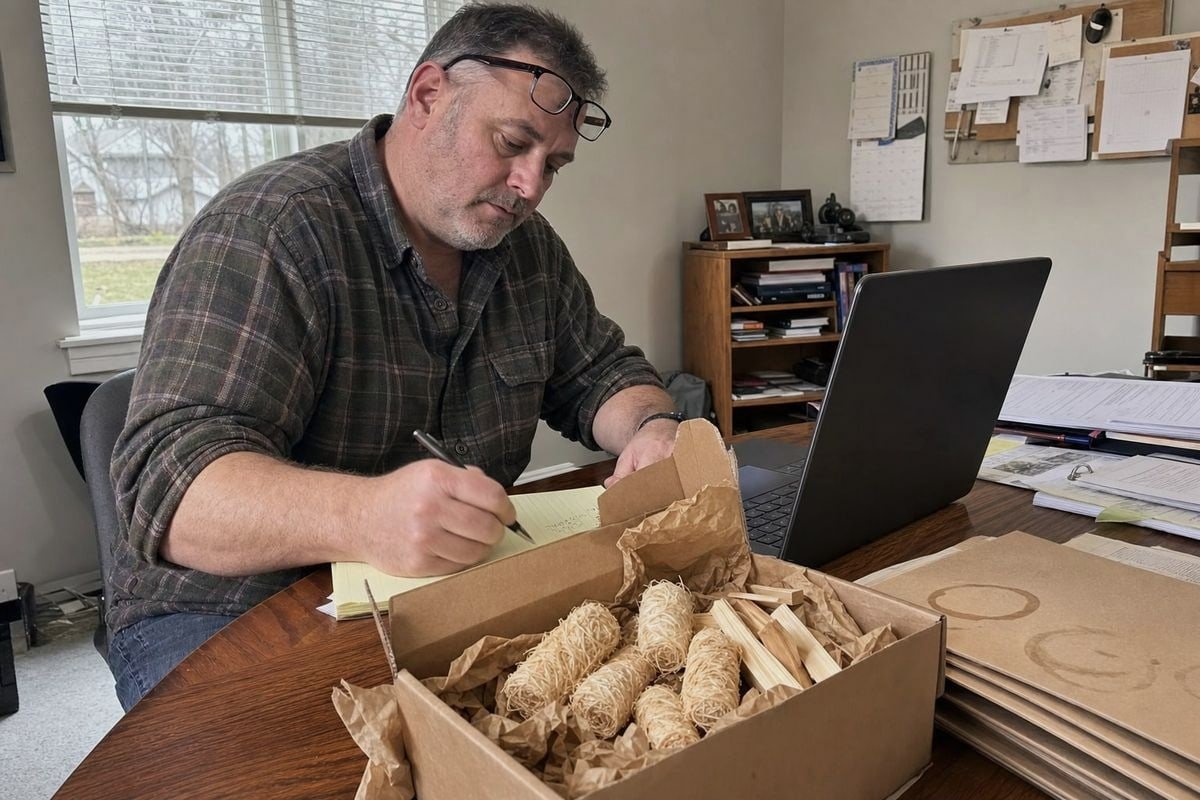
Buyers often ask me for a staff training manual when buying wood fire starters, usually after a new hire mishandled a flammable product and nobody had written guidance ready.
To request a staff training manual when buying wood fire starters, email your supplier and ask for a product-specific onboarding packet: usage instructions, Material Safety Data Sheets, storage guidance, safety warnings, and a staff checklist. Put this requirement in your purchase order before confirming the bulk procurement deal.
That short answer works. But the details matter. Below, I walk through exactly what to ask for, how to verify compliance, and how to get materials customized for your brand.
What should I ask my supplier to include in a staff training manual for wood fire starters?
A German distributor once told me his warehouse team stored our wax-dipped wood rolls next to a heater for a full summer CE declarations 1. That conversation reshaped how we write our onboarding packets.
Ask your supplier to include product composition, ignition steps, recommended and prohibited uses, burn time and performance limits, storage conditions, shelf life, safety warnings, troubleshooting tips, and a one-page staff checklist. Also request Material Safety Data Sheets if the starters contain wax or treated fibers.

Most suppliers do not publish a document literally titled "staff training manual." In our own export files, the equivalent content lives across several documents: product instructions, safety sheets, Standard Operating Procedures 2, and retail-facing FAQ pages. So the smart move is to name the content you need, not the document title.
Name the content, not the label
When buyers ask us vaguely for "a manual," we send a consumer instruction card. When they ask for "an employee onboarding packet 3 covering safe use, storage, and troubleshooting," they get a far more useful bundle. Be specific. Say who will read it: warehouse staff, floor sales staff, or hospitality teams handling commercial hospitality supplies.
The core checklist to send your supplier
| Item to Request | Why Staff Need It |
|---|---|
| Composition (e.g., wood fiber + paraffin ratio) | Explains flammability class and hazard communication duties |
| Ignition method and steps | Prevents misuse demos and customer injuries |
| Burn time and flame height | Sets safe demonstration distances |
| Storage temperature and humidity limits | Protects flammable solids storage 4 areas |
| Shelf life and moisture sensitivity | Avoids selling degraded stock |
| Prohibited uses | Shields you from liability claims |
| Troubleshooting (poor ignition, damp product) | Cuts return rates and complaint handling time |
| Staff-facing FAQ and customer talking points | Speeds up retail floor training |
One more tip from our experience shipping to 30+ countries: ask for sample units alongside the documents. Reading about ignition is one thing. Lighting one of our wood-wool starters in a controlled setting teaches staff in two minutes what a PDF cannot. Good training manuals are short, task-focused, and reviewed regularly — a quarterly review rhythm works well once product specs or fire safety protocols change.
Can my manufacturer provide safety and handling guidelines for retail staff training?
Last year, a UK fireplace retailer asked us for handling guidelines three weeks after their order shipped. We now attach product handling guidelines to every quotation, because retro-fitting safety documentation is always harder than including it upfront.
Yes. A capable manufacturer can supply safety data sheets, storage and transport guidance, ignition warnings, ventilation notes, and handling instructions written for retail staff. Ask for these documents in writing before ordering, and confirm you may redistribute them internally for employee safety training.

Wood fire starters look simple. A compressed wood-fiber puck wrapped in paraffin wax seems harmless on a shelf. But once you stock hundreds of boxes in a stockroom, you are managing flammable solids storage, and your staff need clear rules. Our production team in Ningbo treats this seriously because our buyers in the US and Germany treat it seriously — their insurers and local fire codes demand documented employee safety training.
What a good manufacturer should hand over
Here is what we consider a complete safety and handling package for wholesale firelighter supplies:
- Fiches de données de sécurité des matériaux covering the wax and fiber components, flashpoint data, and any PPE notes.
- Instructions de stockage: keep away from heat sources, direct sunlight, and open flames; note maximum stacking heights and ventilation needs.
- Handling instructions: how to open cartons, how to display product safely, and how to run an ignition demo without risk.
- Transport notes: paraffin-based starters are generally straightforward to ship, but staff receiving goods should know inspection steps for damaged or melted cartons.
- Extinguishing guidance: dry fuel, fine kindling, adequate airflow, and controlled extinguishing translate directly from fireplace manuals into staff briefings.
Match the guidance to the product risk
Not all starters carry the same risk profile. Compare the two common types:
| Facteur | Natural Wood-Wool Starters | Wax-Dipped / Paraffin Starters |
|---|---|---|
| Composition | Untreated wood shavings | Wood fiber plus paraffin (often 50/50) |
| SDS typically needed | Parfois | Yes, recommended |
| Heat sensitivity in storage | Faible | Moderate — wax softens in hot rooms |
| Staff demo risk | Faible | Low, but faster ignition |
| Hazard communication depth | Basique | More detailed |
If your manufacturer cannot explain these distinctions, that itself tells you something about their production depth.
How do I ensure the training manual matches compliance standards like CE and SGS?
Compliance paperwork is where trial orders live or die. Over 17 years of exporting, I have watched more deals stall over missing test reports than over price negotiations.
Ask the supplier to reference their CE declarations and SGS or Intertek test reports directly in the training manual, and cross-check batch numbers against those reports. The manual's warnings, storage limits, and usage instructions must match what the certified test data actually verified.

A training manual is only trustworthy if its claims trace back to real test data. We hold ISO 9001 5, BSCI, CE, and SGS/Intertek certifications, and our buyers in the EU and US treat these as hard requirements, not nice-to-haves. Your training manual should reflect that same rigor. If the manual says "burn time: 8–10 minutes," ask which test report supports that figure. If it lists a storage temperature ceiling, ask whether that comes from lab data or from a copywriter's guess.
A simple verification process
Follow these steps before you sign off on the training content:
- Request the certificates first. Get copies of CE documentation and SGS or Intertek test reports for the exact product SKU you are buying, not a similar one.
- Cross-reference the manual. Every performance claim in the training material — ignition temperature, burn time, composition ratio — should match the test report.
- Check batch traceability. A real factory with strict batch-to-batch quality control can tie your shipment to a production lot. Ask how.
- Verify market-specific rules. US buyers may care about OSHA fire prevention framing fire prevention standards 6; EU buyers need CE-aligned warning labels; large retail sourcing channels often add their own audit layers such as BSCI.
- Put it in the purchase order. Write the documentation requirement into your PO or vendor contract. This turns a courtesy request into a contractual deliverable.
Signaux d'alarme à surveiller
Be cautious if a supplier sends certificates with mismatched product names, refuses to share full test reports, or provides a manual whose safety claims contradict the SDS. In our experience, trading companies sometimes recycle documents from other factories. A genuine manufacturer can walk you through their own production line data without hesitation. That transparency is part of vendor due diligence, and requesting the training manual is one of the fastest ways to test it.
Will my supplier customize training materials for my brand and market?
Private-label requests land on my desk weekly — custom boxes, warning labels, barcodes — but branded training materials remain the most underused customization our OEM clients could ask for.
A supplier with true OEM/ODM capability can customize training materials with your logo, brand voice, market-specific safety language, translated content, and product-specific data matching your custom order. Ask early, ideally when finalizing packaging and private-label details, so documentation ships with your first order.

Customization goes deeper than swapping a logo onto a PDF. When we run a projet de marque privée 7 — say, a Canadian camping brand ordering wax-dipped wood rolls with a custom burn time — the training material must describe that product, not our standard catalog item. If your starters burn 12 minutes instead of 8, your staff briefing needs the correct number. If your packaging carries a QR code, it can link floor staff to just-in-time safety videos rather than a printed sheet nobody reads.
Customization options worth requesting
| Niveau de personnalisation | Ce qu'il comprend | Idéal pour |
|---|---|---|
| Basic branding | Your logo, colors, and brand name on standard docs | Trial orders, small MOQs |
| Market localization | Translated text, region-specific fire safety protocols, local warning-label language | EU multi-country distributors |
| Product-matched content | Data reflecting your custom size, burn time, and composition | Full OEM/ODM projects |
| Digital-ready formats | PDF files for your LMS or employee portal, QR-linked video guides | Multi-location retailers and hospitality chains |
What to do if the supplier says no
Some suppliers will decline to build bespoke manuals for small buyers and offer only a spec sheet. That is not a dead end. Take their consumer instructions and SDS, then convert them into your own internal Standard Operating Procedures. Your internal version should add what only you know: your store layout, your demo policy, your local fire codes, and your customer workflow. The best outcome is usually a hybrid — supplier-verified technical facts wrapped in your own operational rules. Then test the material with real employees before rollout and update it whenever specs change.
Conclusion
Requesting a staff training manual is vendor due diligence, not a courtesy ask. Name the documents you need, verify them against certifications, and adapt them into your own SOP.
Notes de bas de page
1. European Commission's official resource on CE marking, indicating conformity with health, safety, and environmental standards. ↩︎
2. Authoritative FAO guidelines on establishing standard operating procedures to ensure quality and safety in technical operations. ↩︎
3. SHRM's comprehensive guide on the components and importance of effective employee onboarding processes. ↩︎
4. Wikipedia's overview of flammable solids, including their classification and safety requirements for storage and handling. ↩︎
5. Stable, highly authoritative Wikipedia overview of the quality management standard, avoiding 403 errors on the official site. ↩︎
6. Official OSHA landing page for fire safety; updated anchor from 'framing' to 'standards' for better clarity. ↩︎
7. Wikipedia entry explaining the concept of private labeling and its application in manufacturing and retail. ↩︎



 English
  Spanish
  German
  French
  Arabic
  Portuguese
Rejoignez la conversation