






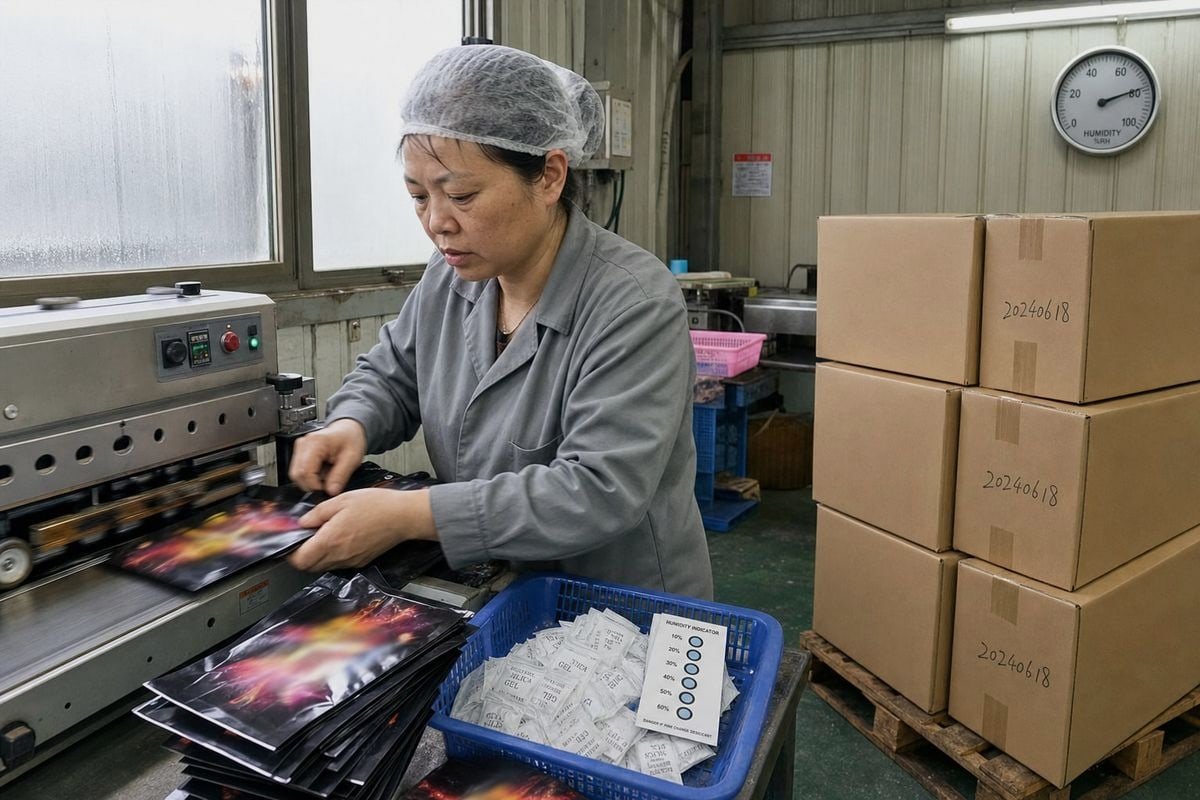
Moisture-proof packaging for Magic Fire powder is a question I hear constantly from buyers in humid markets. [Caked, clumped powder](https://sunrichfire.com/how-salvage-magic-fire-powder-after-gets-damp-clumps/) ruins the flame effect — and your brand's reputation with it. On our production line, we solved this by treating packaging as part of the product spec, not an afterthought.
To request moisture-proof packaging for Magic Fire powder, specify a complete barrier system in writing: an aluminum foil or multilayer inner pouch, heat-sealed airtight closure, silica gel desiccant packs, humidity indicator cards, a robust outer carton, and documented storage conditions below 60% relative humidity.
That is the short answer. Below, I will walk you through the exact packaging options, how to write the request, what test reports to demand, and what your custom packaging spec should include.
What Moisture-Proof Packaging Options Are Available for Magic Fire Powder Shipments?
A distributor in Brazil once returned a container photo to me: standard poly bags, powder fused into solid bricks after eight weeks near the coast. That shipment taught our team to lead every quote with barrier options.
Available moisture-proof options include aluminum-laminated foil sachets, multilayer moisture barrier bags, kraft pouches with foil inner lining, sealed plastic jars with induction liners, and polyethylene drum liners for bulk orders. Foil-based formats offer the lowest moisture vapor transmission rate and suit humid warehouses best.

The powder inside our Magic Fire packets is hygroscopic. That means it pulls water from the air. In a warehouse running at 75–85% humidité relative 1 — common in coastal Brazil, the Gulf region, or Southeast Asia — a standard poly sachet will let vapor creep through within weeks. The fix is choosing a format with a genuinely low moisture vapor transmission rate (MVTR), not just any sealed bag.
The Main Formats We Produce
Here is how the common options compare for humid storage. We manufacture all of these at our Ningbo facility, so buyers can mix formats within one order.
| Format d'emballage | Moisture Barrier Level | Meilleur cas d'utilisation | Resealable? |
|---|---|---|---|
| Aluminum foil sachet 2 (heat-sealed) | Excellent (near-zero MVTR) | Sachets de vente au détail à usage unique | Non |
| Multilayer moisture barrier bags | Très bonne | Multi-packet retail pouches | Optional zip |
| Kraft pouch with foil liner | Bonne | Eco-look retail branding | Yes, zip top |
| Plastic jar with induction seal | Bonne | Multi-use fireplace products | Yes, screw cap |
| Polyethylene drum liners in fiber drums | Très bonne | Bulk repacking orders | Liner reseal |
Notice the trade-off. The glossy black foil sachet you see on our Magic Fire product delivers the strongest barrier, but it cannot be resealed. That is why we pair single-use foil sachets inside a resealable kraft outer pouch — the consumer gets convenience, and each unused sachet stays hermetically protected. For bulk buyers who repack under their own brand, polyethylene drum liners inside fiber drums add a secondary layer that survives long humid storage far better than a bare drum.
One caution: shrink wrap and poly overwraps are temporary measures. They slow moisture, but they are not true moisture barrier bags. Do not accept them as the primary barrier for hygroscopic material handling.
How Do I Specify Humidity Resistance Requirements When Placing My Order?
There is a trade-off we discuss with every buyer before quoting: tighter humidity specs add pennies per unit, while a caked returned shipment costs the entire order. Framing the spec early keeps that math on your side.
Specify humidity resistance by stating your warehouse conditions, the required inner barrier material, seal type, desiccant grade and quantity, target internal relative humidity, and shelf-life expectation — all in the purchase order or packaging specification sheet, confirmed by the supplier in writing before production.

Vague requests get vague packaging. "Please make it moisture-proof" tells our production team almost nothing. A precise spec tells us exactly which film, seal, and desiccant to run. In our experience exporting to 30+ countries, the buyers who send a one-page packaging spec get consistent results across every reorder.
A Sample Request You Can Copy
Use language like this in your RFQ or PO:
"Please quote moisture-proof packaging for this powder product, including a multilayer moisture-barrier inner liner or foil bag, airtight heat sealing 3, silica gel desiccant, and a humidity indicator card. The product will be stored in a humid warehouse (state your average RH and temperature), so please confirm the recommended storage temperature, relative humidity limit, resealing method after opening, and outer carton or drum specification."
The Specification Checklist
Put these items in writing and require written confirmation on each:
- Warehouse conditions — state your real numbers, for example 30°C and 80% RH.
- Inner barrier — foil laminate or multilayer film, with thickness stated.
- Closure — vacuum heat sealing or standard heat seal; specify nitrogen flushing if you need residual humidity purged from the pouch during filling.
- Desiccant — industrial-grade silica gel desiccant 4 packs or molecular sieves, with grams per carton stated.
- Humidity indicator cards 5 — placed inside master cartons for relative humidity monitoring without breaking seals.
- Labeling — "Keep Dry" and "Hygroscopic Material" marks on secondary and tertiary packaging, so warehouse crews prioritize climate-controlled zones.
- Storage guidance — request that recommended conditions (typically below 50–60% RH, 15–25°C) appear on the handling note and align with MSDS storage requirements.
Ask us to confirm each line item, not the list as a whole. Line-by-line confirmation is what makes the spec enforceable if a shipment arrives out of spec.
Can Sunrich Provide Test Reports Proving Packaging Performance in High-Humidity Conditions?
A German fireplace distributor once opened our first video call with a single question: "Show me the paperwork." No small talk. That call reshaped how we present documentation, because for serious importers, compliance is the gate, not a bonus.
Yes. Sunrich holds ISO 9001, BSCI, CE, and SGS/Intertek certifications and provides third-party test reports on request. Buyers can also commission humidity-exposure or seal-integrity testing on their specific packaging configuration before confirming mass production.
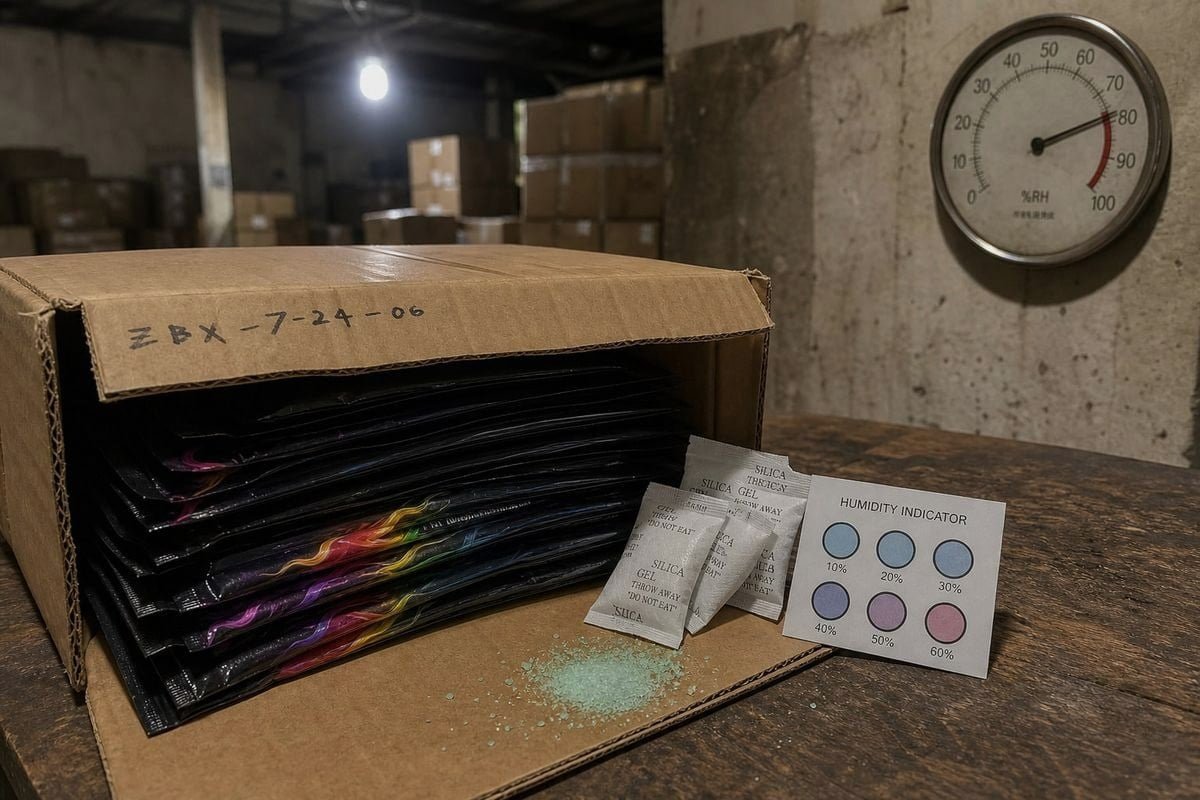
Marketing language is cheap. Plenty of suppliers describe their pouches as "hermetically moisture proof" without a single document behind the claim. My advice — even when evaluating us — is to verify rather than trust. Here is what verification actually looks like.
Documents Worth Requesting
| Document | Ce qu'il prouve | When to Request |
|---|---|---|
| SGS or Intertek product test report | Product composition and safety compliance | Avant la première commande |
| Packaging material spec sheet | Film layers, thickness, barrier properties | At quotation stage |
| Seal integrity check records | Heat seals hold under handling stress | With pre-shipment inspection |
| Humidity exposure test (commissioned) | Powder stays free-flowing at defined RH over time | For humid-market programs |
| Certificat ISO 9001 | Consistent quality management across batches | During supplier audit |
For pharmaceutical-grade assurance, some buyers reference USP <671> moisture permeability testing 6 or ISO 15378 packaging standards. Those frameworks were built for drug packaging, so they exceed what a novelty flame product legally requires. But they are useful benchmarks: if you want laboratory-verified permeability limits, name the standard in your request and we can arrange third-party lab testing 7 against it.
One honest caveat. A test report proves the packaging performs under defined conditions. It does not guarantee performance if the warehouse itself fails — a flooded dock or a pallet left in rain defeats any pouch. Industrial hermetic packaging reduces moisture-related degradation; it is not insurance against every handling failure. That is exactly why we pair reports with written storage instructions.
What Should I Include in My Custom Packaging Request to Ensure Product Stability During Storage?
Early in our OEM program, we learned a hard lesson: a private-label buyer approved a beautiful sample, but never specified that bulk cartons must match it exactly. The bulk run used a thinner liner. We ate that cost — and rewrote our sample-approval process the next week.
Include the inner bag material and thickness, seal method, desiccant type and quantity, humidity indicator placement, outer carton or drum spec, palletization method, target storage temperature and RH, resealing instructions, and a clause stating bulk packaging must match the approved sample exactly.
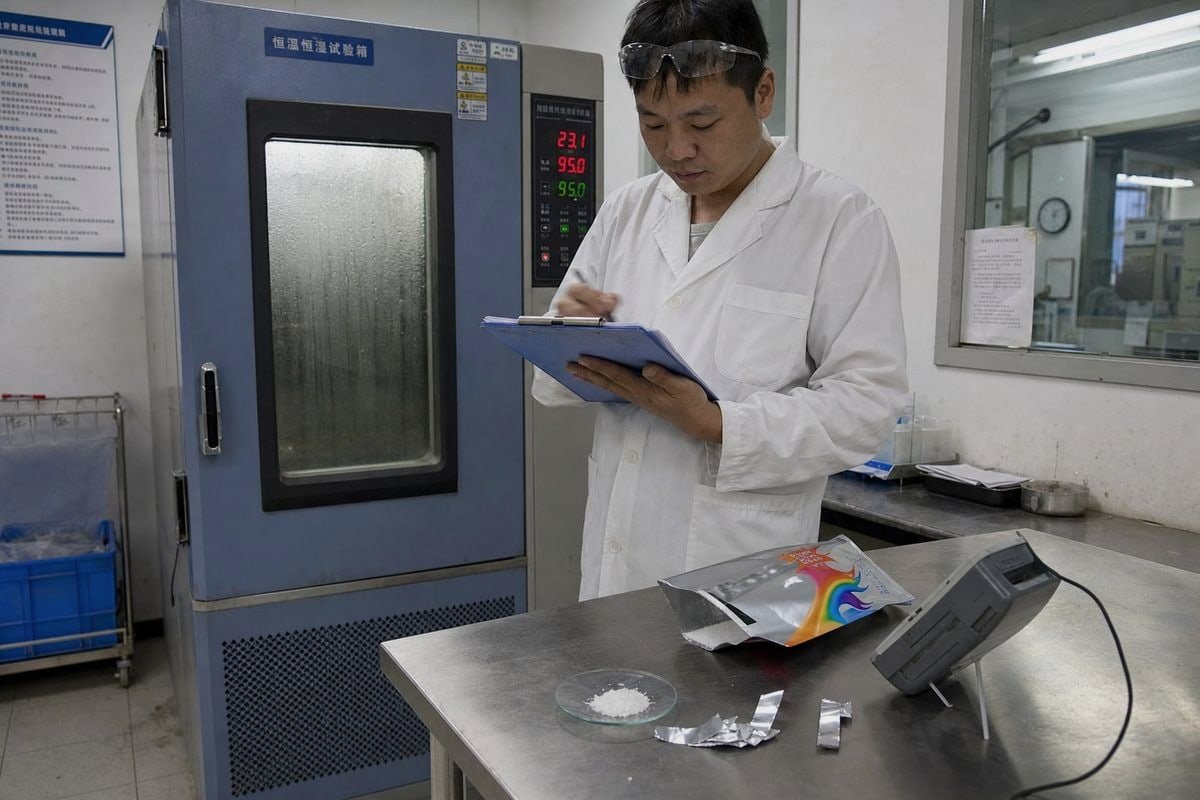
A custom packaging request works best as a system, end to end. Think in five layers: primary barrier, closure, in-pack protection, outer protection, and handling instructions. Miss one layer and the others carry the load — usually badly.
The Full Custom Request, Layer by Layer
| Couche | Ce qu'il faut spécifier | Pourquoi c'est important |
|---|---|---|
| Primary barrier | Foil laminate or multilayer film, thickness in microns | Controls vapor transmission over months |
| Closure | Vacuum heat sealing, nitrogen flush, resealable zip on outer pouch | Eliminates trapped humidity; prevents caking |
| In-pack protection | Silica gel desiccant grams per carton, humidity indicator cards | Absorbs residual moisture; enables inspection without opening |
| Outer protection | Carton grade, drum type, pallet wrap, slip sheets | Survives humid transit and stacking |
| Instructions | Storage RH and temperature, FIFO note, reseal steps | Extends protection into your warehouse SOPs |
Because we run true one-stop OEM/ODM production, your request can also cover private-label branding, warning labels, barcodes, and display boxes in the same spec. Consolidating everything into one document is what keeps batch-to-batch quality consistent — our QC team checks bulk output against your approved sample, line by line.
Pair the Packaging With Warehouse Discipline
Product clumping prevention is a shared job. On your side, aim for climate-controlled warehousing below 60% RH, keep pallets off concrete floors and away from walls and dock doors, minimize opening frequency, reseal immediately after use, and run FIFO rotation with routine checks for clumps or damaged seals. The humidity indicator cards we place in master cartons let your staff verify exposure at a glance. Good packaging plus good SOPs is the complete system; either one alone is a half-measure.
Conclusion
Humid warehouses quietly destroy powder products — and refund requests follow. Specify the full system: foil barrier, airtight seal, desiccants, indicators, verified test reports, and matching bulk production. Send us your warehouse conditions, and we will quote the complete moisture-proof packaging spec in writing.
Notes de bas de page
1. Authoritative scientific definition of relative humidity. ↩︎
2. Explains the properties of aluminum foil used as a high-barrier material in industrial packaging. ↩︎
3. Comprehensive overview of heat sealing technology for packaging. ↩︎
4. Describes the chemical properties and moisture-absorption capabilities of silica gel in packaging applications. ↩︎
5. Explains the function of moisture-sensitive cards used to monitor internal storage conditions. ↩︎
6. Technical explanation of moisture vapor transmission rate testing. ↩︎
7. Authoritative source for independent product testing and certification services mentioned in the article. ↩︎



 English
  Spanish
  German
  French
  Arabic
  Portuguese
Rejoignez la conversation