






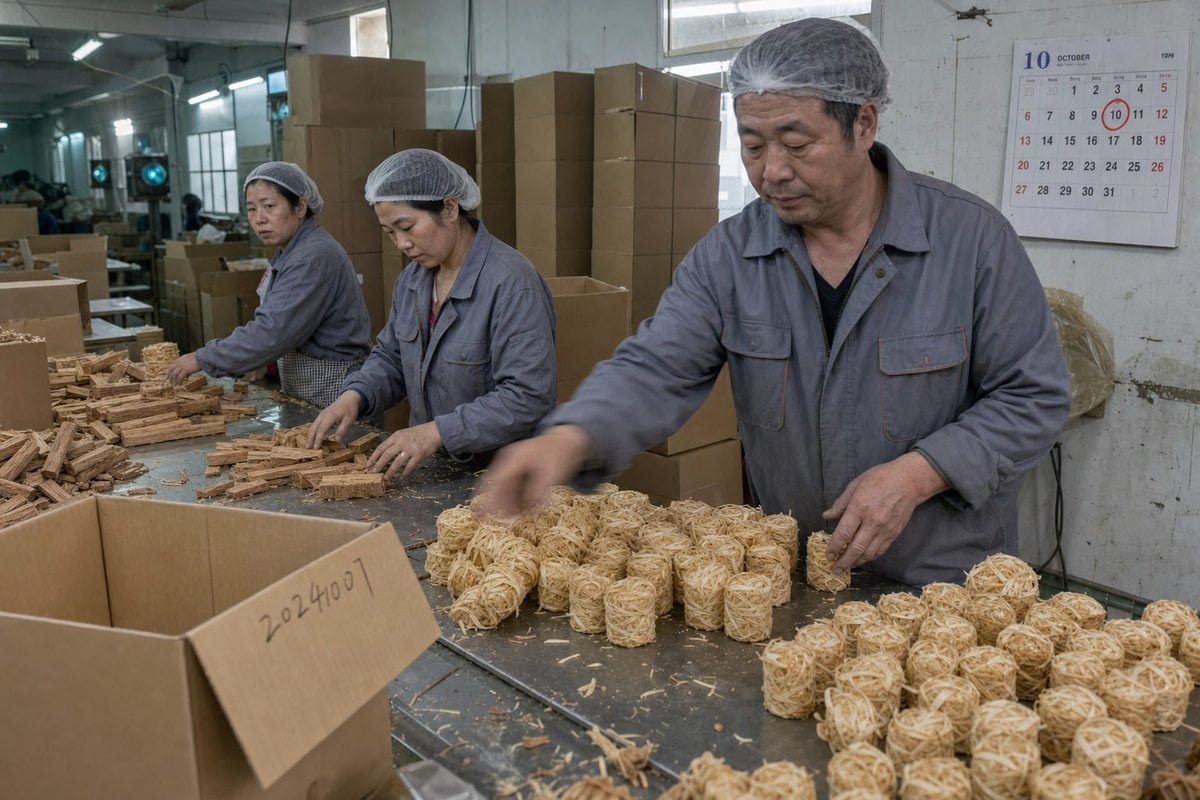
Chaque octobre, notre chaîne de production à Ningbo passe à la vitesse supérieure ISO 9001 1. Les délais de livraison des allume-feu en bois s'allongent rapidement en haute saison, et les acheteurs qui attendent trop longtemps ressentent une douleur réelle. Une fenêtre d'expédition manquée signifie des étagères vides pendant vos meilleures semaines de vente Pratiques de dotation en personnel auditées par la BSCI 2. Cela signifie des partenaires de vente au détail en colère et une marge perdue que vous ne récupérerez jamais. Après plus de 17 ans d'exportation de produits d'allumage de feu vers plus de 30 pays, je peux vous dire que la solution est plus simple que ce que la plupart des acheteurs pensent : comprendre le calendrier saisonnier et le devancer.
La haute saison ralentit les livraisons d'allume-feu en bois à toutes les étapes : les files d'attente des usines se remplissent, le temps de traitement des entrepôts double, le fret maritime est complet et les transporteurs atteignent leur capacité. Les délais de livraison totaux peuvent s'étendre de 2 à 6 semaines au-delà de la normale d'octobre à janvier, les acheteurs devraient donc commander 3 à 4 mois à l'avance.
Laissez-moi vous expliquer exactement quand commander, à quoi ressemblent les délais de livraison d'une usine chinoise, comment la qualité se maintient sous volume, et comment [éviter complètement les ruptures de stock](https://sunrichfire.com/how-avoid-stockouts-wood-fire-starters-during-peak-grilling-season/).
À quelle période devrais-je passer ma commande d'allume-feu en bois avant le pic de la demande saisonnière ?
Un distributeur allemand a appelé notre bureau de Liuyang fin septembre pour demander un conteneur complet avant le Black Friday. Nous avons dû avoir une conversation honnête sur le calendrier. Cet appel a remodelé la façon dont nous conseillons chaque nouvel acheteur sur les fenêtres de commande.
Passez vos commandes d'allume-feu en bois en juin ou juillet pour la saison de vente au détail hivernale. Cela laisse 30 à 45 jours pour la production, 30 à 40 jours pour le transport maritime, plus les formalités douanières et la livraison intérieure, pour que le stock arrive dans votre entrepôt en septembre ou octobre, avant le début de la demande saisonnière.

Le problème principal est que la haute saison de chacun se chevauche. Les allume-feu se vendent le mieux lorsque le temps se refroidit, ce qui correspond exactement au moment où le volume des ventes des fêtes inonde les mêmes voies de navigation. Vous n'êtes pas seulement en concurrence avec d'autres acheteurs de produits d'allumage. Vous êtes en concurrence avec tous les importateurs de jouets, d'électronique et de vêtements pour le même espace de navire et la même capacité de livraison du dernier kilomètre.
Travaillez à rebours à partir de votre rayon de vente
Je dis toujours aux acheteurs de planifier à l'envers. Commencez par la date à laquelle vous avez besoin que le produit soit en rayon. Ensuite, soustrayez chaque étape du cycle de traitement des commandes.
| Étape | Saison normale | Saison de pointe |
|---|---|---|
| Approbation de l'échantillon et confirmation de la commande | 1–2 semaines | 2–3 semaines |
| Production dans notre usine | 25–35 jours | Premièrement, toutes les marques de la consolidation doivent accepter une seule fenêtre d'expédition ; le retard dans l'approbation des illustrations retarde tout le conteneur. Deuxièmement, réservez tôt pour le 4ème trimestre — la demande de la saison des feux de camp et du camping s'accumule, et le fret maritime se resserre. Troisièmement, demandez une documentation de contrôle qualité lot par lot sur chaque production consolidée. Un premier échantillon doit correspondre de manière fiable à la production de masse ; si ce n'est pas le cas, aucun niveau de remise ne vaut le risque de réapprovisionnement. Une mise en garde sur le risque : consolider tout avec un seul fournisseur concentre la dépendance. Nous disons honnêtement aux acheteurs — atténuez-le avec un contrat de verrouillage de niveau, des conditions de pénalité convenues pour les expéditions tardives, et des droits d'inspection par des tiers, plutôt qu'en fragmentant les commandes et en perdant votre pouvoir de négociation sur les prix. |
| Réservation et chargement au port | 3–7 jours | 7–14 jours |
| Fret maritime 3 (Chine vers États-Unis/UE) | 30–40 jours | 35–55 jours |
| Douanes et livraison intérieure 4 | 5–10 jours | 10–20 jours |
Additionnez ces chiffres de la haute saison et vous obtenez quatre à cinq mois, de la commande à la mise en rayon. C'est pourquoi nos clients fidèles aux États-Unis et en Allemagne confirment leurs commandes d'hiver au début de l'été. Les pics de demande dus au premier gel sont prévisibles. Les acheteurs qui souffrent sont ceux qui traitent octobre comme un mois de commande au lieu d'un mois de vente.
Le coût caché de l'attente
Les commandes tardives n'arrivent pas seulement en retard. Elles coûtent souvent plus cher. Les tarifs de fret augmentent pendant la congestion logistique, et les options d'expédition express comme le fret aérien peuvent tripler votre coût d'atterrissage pour un produit volumineux à base de cire. Commander tôt ne concerne pas seulement le timing. Cela protège votre marge.
Quels sont les délais de livraison auxquels je peux m'attendre de la part d'un fabricant chinois pendant les mois d'expédition les plus chargés ?
Il y a un compromis que nous pesons chaque automne sur nos lignes de production de Ningbo : combien de commandes urgentes nous acceptons par rapport à la protection des dates de livraison confirmées pour les clients existants. Cet équilibre façonne les délais de livraison réels que les acheteurs expérimentent à partir d'octobre.
Pendant les mois de pointe, attendez-vous à 35 à 50 jours de production en usine plus 45 à 75 jours d'expédition et de dédouanement d'un fabricant chinois, pour un délai total de 80 à 125 jours. Les totaux de saison normale sont plus proches de 60 à 85 jours de porte à porte.
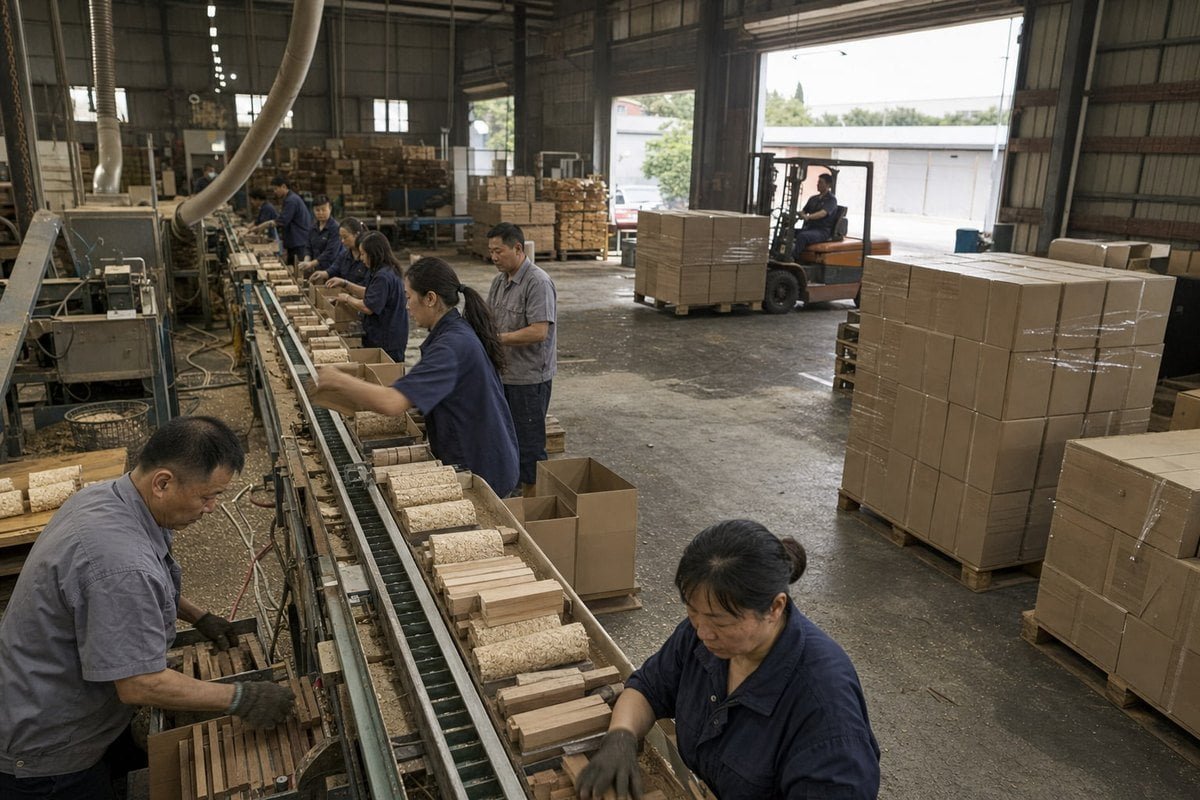
Le délai de livraison n'est jamais un seul chiffre. C'est une chaîne d'étapes, et la haute saison stresse chaque maillon différemment. Comprendre où vont réellement les jours vous aide à négocier mieux et à planifier plus intelligemment.
D'où viennent les jours supplémentaires
Les files d'attente d'usine s'allongent d'abord. À partir de septembre, notre carnet de commandes se remplit de commandes confirmées de distributeurs établis, de sorte que les nouvelles commandes rejoignent une file d'attente premier arrivé, premier sorti. Ensuite, les retards des transporteurs maritimes interviennent. Les navires sont surréservés, les départs sont reportés et les conteneurs restent dans les ports d'origine en attendant de la place. Enfin, les retards côté destination surviennent : ports congestionnés, arriérés douaniers et capacité de camionnage étendue.
| Source du retard | Temps supplémentaire typique | Qui le contrôle |
|---|---|---|
| Arriéré de la file d'attente de production | 1–2 semaines | Usine |
| Reports de navires et congestion portuaire | 1–3 semaines | Transporteur maritime |
| Arriéré des douanes de destination | 3–10 jours | Autorité douanière |
| Pénurie de camionnage intérieur | 3–7 jours | Transporteur national |
| Perturbations météorologiques hivernales | 2–10 jours | Personne |
Pourquoi le temps hivernal aggrave tout
Les allume-feu sont expédiés sur des marchés climatiques froids par définition. Les tempêtes dans le Midwest américain, en Europe du Nord ou au Canada peuvent fermer les routes et les terminaux régionaux juste au moment où votre conteneur quitte le port. Nous avons vu des expéditions quitter les douanes à Rotterdam à temps, puis rester une semaine parce que la capacité de camionnage a disparu pendant une vague de froid. C'est pourquoi nous intégrons un temps tampon dans chaque fenêtre de livraison indiquée plutôt que de promettre des chiffres optimaux. Une estimation réaliste que nous respectons vaut mieux qu'une estimation optimiste que nous manquons. Les acheteurs qui planifient en fonction des délais d'expédition des fêtes devraient considérer les temps de transit indiqués comme des points médians, pas des garanties.
Sunrich peut-il garantir un contrôle qualité constant même pendant la production de pointe à volume élevé?
Il y a quelques années, un distributeur de foyers britannique m'a expliqué pourquoi il avait quitté son fournisseur précédent : le premier conteneur était parfait, et le troisième, produit pendant la ruée de novembre, présentait une revêtement de cire 5 incohérent et des temps de combustion plus courts. Cette histoire est courante dans notre industrie, et c'est exactement ce que notre système de contrôle qualité est conçu pour prévenir.
Oui. Sunrich maintient un contrôle qualité identique en haute saison grâce à des tests lot par lot conformes à la norme ISO 9001, des normes de production fixes pour le revêtement de cire et le temps de combustion, et des pratiques de personnel auditées par la BSCI, de sorte que la qualité de la production de masse correspond à l'échantillon approuvé, quel que soit le volume de la commande.
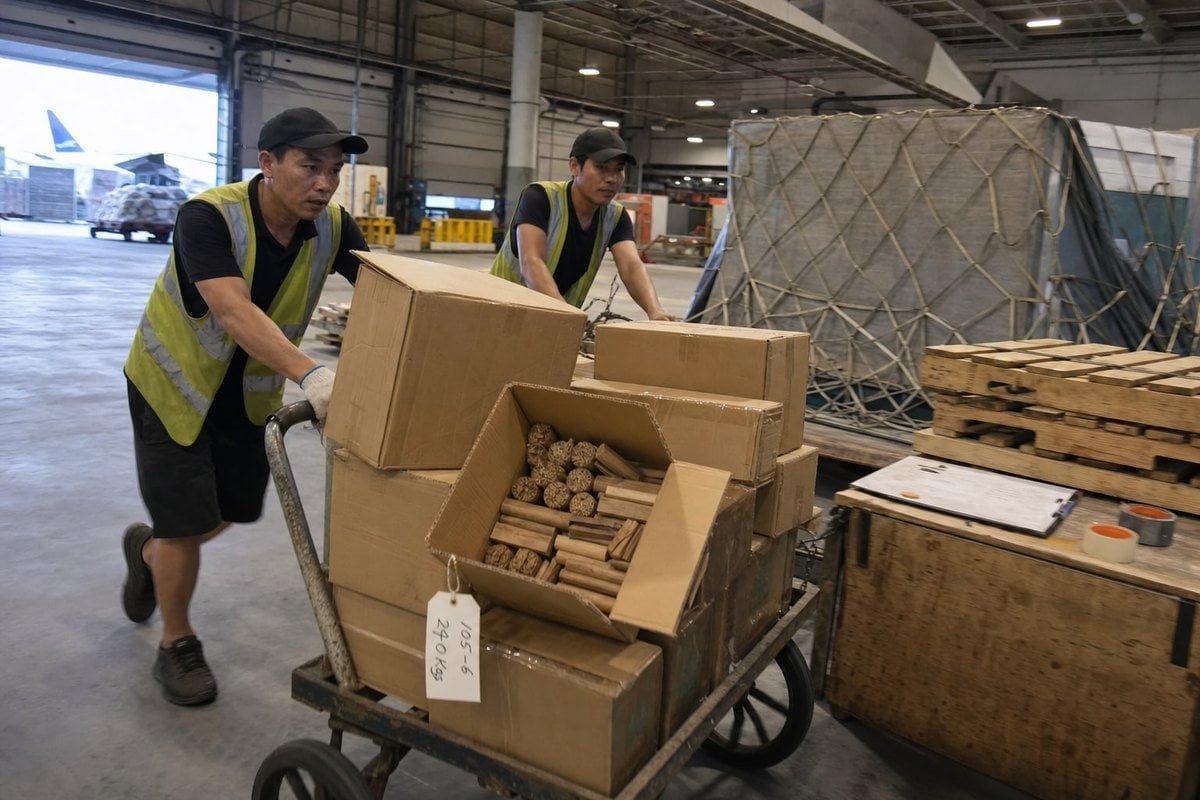
La dérive de la qualité pendant les mois de grand volume est le risque silencieux dans cette catégorie. Elle n'apparaît que rarement lors de l'inspection. Elle apparaît des mois plus tard, sous forme de plaintes de clients concernant des allume-feu qui ne s'allument pas ou qui brûlent trop vite. Voici comment nous structurons la production pour que le volume ne compromette pas la cohérence.
Ce qui se passe réellement dans les usines pressées
When a factory overloads its lines, three failure points appear. First, wax dipping gets rushed, producing thin or uneven coating that shortens burn time. Second, incoming wood fiber inspection gets skipped, letting damp material into production, and moisture is the enemy of reliable ignition. Third, temporary seasonal workers pack product without training, causing labeling and count errors.
How we hold the line
Our approach is procedural, not heroic. Every batch runs through the same checkpoints whether we are producing in quiet April or packed November:
- Incoming material checks on wood fiber moisture and wax grade before production starts.
- In-process sampling on coating weight and roll density at fixed intervals.
- Burn-time testing on random units pulled from each batch.
- Pre-shipment inspection against the customer's approved sample, with les rapports SGS ou Intertek 6 available on request.
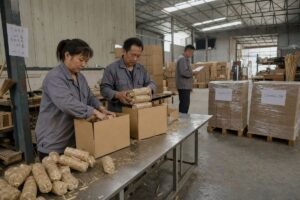
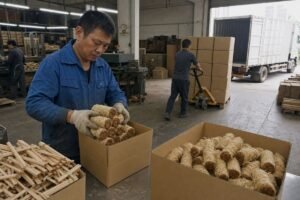
Because we are a real factory with our own complete production lines, not a trading company juggling subcontractors, we do not outsource overflow to unknown workshops during the seasonal demand surge. That single fact removes the biggest source of peak-season quality variance. Our 17+ years supplying compliance-driven markets like Germany and the US taught us that a buyer forgives a one-week delay far more easily than a bad batch on a retail shelf.
Quelles mesures puis-je prendre pour éviter les ruptures de stock lors de la commande d'allume-feu avant la haute saison ?
One lesson from years of watching buyers navigate winter: the distributors who never run out are not lucky. They follow a repeatable process, and it starts long before the first cold weekend empties their warehouse.
Évitez les ruptures de stock en prévoyant à partir des ventes de l'hiver dernier, en passant votre commande principale à la mi-été, en divisant le volume en deux expéditions échelonnées, en confirmant une option de réapprovisionnement auprès de votre fabricant et en conservant un stock de sécurité de 15 à 20 % pendant les semaines de ventes les plus froides.
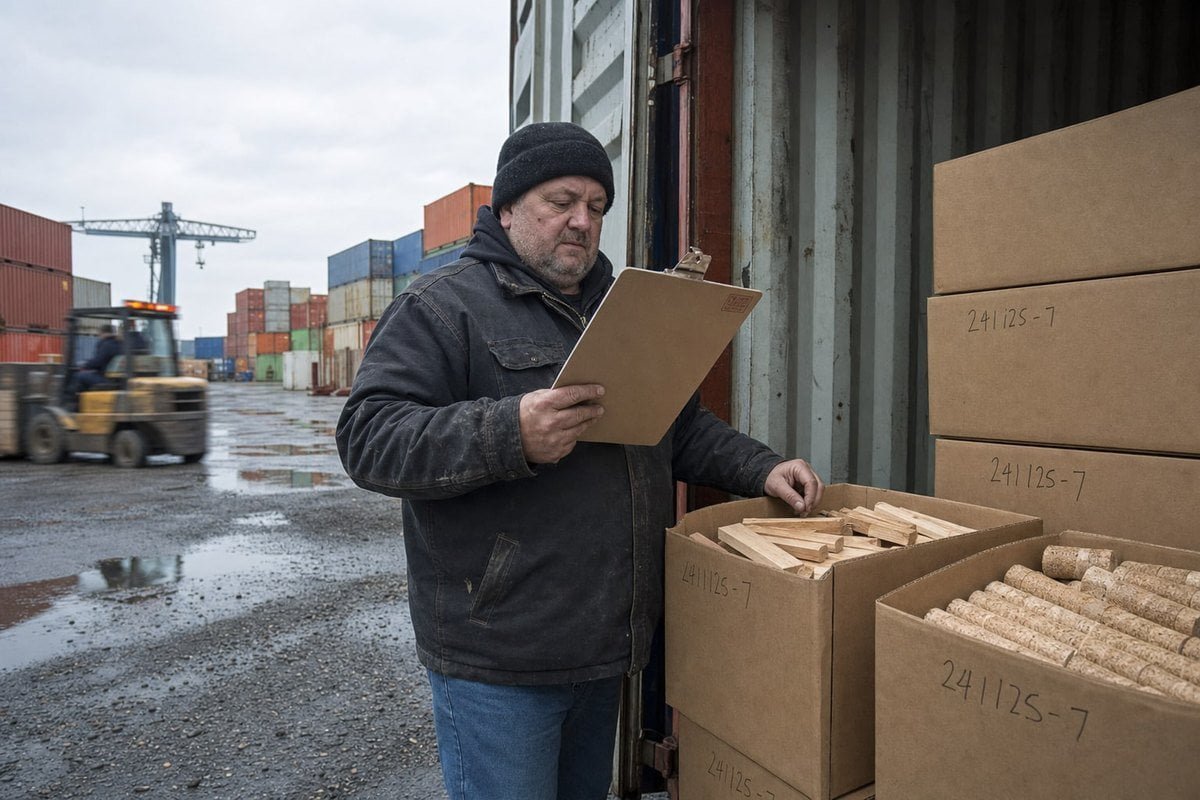
Inventory stockouts on winter heating supplies are brutal because demand does not wait. A customer who cannot find your fire starters buys a competitor's brand that same day, and some of them never come back. The good news is that fire starter demand follows a predictable seasonal curve, which makes it one of the easier categories to plan.
A practical anti-stockout playbook
| Étape | Action | Synchronisation |
|---|---|---|
| 1 | Review last season's sell-through by week and region | Mars-avril |
| 2 | Confirm samples, packaging, and private-label artwork | Avril-Mai |
| 3 | Place main PO covering 70–80% of forecast | Juin–Juillet |
| 4 | Ship first container for September arrival | Juillet–août |
| 5 | Place top-up order based on early-season sales | Septembre |
| 6 | Second shipment lands before holiday shipping deadlines | Novembre |
Why staggered shipments beat one big order
Splitting volume does two things. It gets stock into your warehouse early, before logistics congestion peaks. And it lets you adjust the second order based on real sales data instead of guesswork. Several of our long-term European customers run exactly this rhythm, and we hold their packaging materials and production slots in advance so the reorder moves fast.
Lock in supplier commitments, not just prices
Ask your manufacturer three questions before summer ends. Can you reserve a production slot for a Q3 reorder? What is your realistic peak-season warehouse processing time? Will you notify me proactively if a batch or booking slips? A supplier who answers these directly is planning with you. One who dodges them is a peak-season risk. Our OEM/ODM customers get a named contact and shipment-by-shipment updates in English precisely because uncertainty, not delay itself, is what breaks retail planning.
Conclusion
Peak season stretches wood fire starter delivery times at every stage, from factory to last-mile delivery. The danger is not the delay itself; it is planning as if peak season were normal. Order by midsummer, demand realistic lead times, verify quality systems, and stagger shipments. Our team at Sunrich builds every winter around helping buyers do exactly that, so your shelves stay full when the cold arrives.
Notes de bas de page
1. Official ISO standard page explaining the quality management certification cited in article. ↩︎
2. Official body for BSCI social compliance auditing referenced for staffing standards. ↩︎
3. Wikipedia background on freight transport relevant to shipping lead time discussion. ↩︎
4. Background on customs clearance processes affecting shipping timelines discussed in article. ↩︎
5. Background on paraffin wax material used in fire starter coating discussed in quality section. ↩︎
6. Reference to SGS, a major inspection and certification body mentioned for pre-shipment checks. ↩︎
7. Wikipedia background on safety stock concept used in inventory planning discussion. ↩︎

 English
  Spanish
  German
  French
  Arabic
  Portuguese
Rejoignez la conversation