







Lancer Magic Fire Powder au Canada et aux États-Unis semble simple jusqu'à l'arrivée des factures de conformité. Sur notre chaîne de production à Ningbo, nous voyons les acheteurs sous-estimer cela constamment.
Lancement de Magic Fire Powder au Canada et aux États-Unis nécessite généralement $8,000–$35,000 d'investissement supplémentaire au-delà du coût du produit, couvrant les tests de conformité sur les deux marchés, l'emballage bilingue, le fret conscient des matières dangereuses, le courtage en douane, l'assurance responsabilité civile et la double exécution. Les revendeurs Lean atterrissent près de l'extrémité inférieure ; les marques de marque privée complètes atterrissent plus haut.
La poudre elle-même est bon marché. Le lancement transfrontalier ne l'est pas. Ci-dessous, je détaille chaque poste de dépense afin que vous puissiez établir un budget réel, pas une estimation.
Comment les exigences de certification diffèrent-elles entre le Canada et les États-Unis, et quel sera le coût des tests de conformité ?
L'année dernière, un distributeur canadien m'a envoyé un Santé Canada 1 avis sur les sachets de colorant de flamme avant de passer une seule commande. Cet e-mail a façonné la manière dont nous préparons désormais chaque dossier de conformité pour les deux marchés dans notre usine.
Le Canada exige la conformité des produits chimiques de consommation de Santé Canada, un étiquetage bilingue des dangers et un alignement provincial sur la sécurité incendie, tandis que les États-Unis exigent un examen de la sécurité des consommateurs par la CPSC et une classification des transports par le DOT. Attendez-vous à un total de $2 000 à $8 000 pour les tests SGS ou Intertek, la documentation SDS et les examens d'étiquetage couvrant les deux marchés.

Les deux systèmes réglementaires ne se chevauchent pas autant que les acheteurs l'espèrent. D'après notre expérience d'exportation dans plus de 30 pays, les États-Unis et le Canada traitent les colorants de flamme comme des produits de consommation pertinents pour la sécurité, mais ils posent des questions différentes et exigent des documents différents.
Ce que chaque pays vérifie réellement
La voie américaine passe par la CPSC 2 pour la sécurité des consommateurs et le DOT pour la classification des transports. Si votre poudre est classée comme un solide inflammable 3, vos documents d'expédition, les marquages d'emballage et les choix de transporteurs changent tous. Le Canada passe par Santé Canada en vertu de ses règles sur les produits chimiques de consommation et les contenants. Santé Canada a publiquement mis en garde contre les sachets de colorant de flamme, de sorte que cette catégorie fait l'objet d'un examen minutieux, et non d'un simple tampon. De plus, plusieurs provinces canadiennes appliquent leurs propres règles en matière de sécurité incendie et de produits de consommation, de sorte que l'approbation fédérale seule n'est pas la ligne d'arrivée.
Lignes budgétaires de tests réalistes
| Article de conformité | Marché américain | Marché canadien | Fourchette de coûts typique |
|---|---|---|---|
| Tests en laboratoire tiers (SGS/Intertek) | Requis | Requis | $1 500–$4 000 |
| Préparation et révision de la FDS | Requis | Requis (bilingue) | 300–800 $ |
| Examen de la conformité de l'étiquette | Anglais | Anglais + Français | 500–1 500 $ |
| Vérification de la classification des transports | DOT 4 | TDG (Canada) | 500–1 500 $ |
| Ajouts provinciaux/étatiques | Minimal | Varie selon la province | $0–$1 000 |
Voici la bonne nouvelle que je partage avec chaque acheteur : si votre fournisseur dispose déjà de rapports de test valides, vous héritez de la plupart de ce travail. Nos sachets Magic Fire sont expédiés avec des rapports SGS et Intertek ainsi que de la documentation CE, car nos acheteurs ISO 9001 5 et audités par la BSCI traitent la conformité comme une exigence stricte. Ce dossier existant peut réduire vos coûts de test directs de moitié ou plus. Demandez à tout fournisseur ses rapports avant d'établir votre budget. S'ils ne peuvent pas les produire, ajoutez le coût total des tests à votre plan — et ajoutez également le délai, car les cycles de laboratoire prennent de quatre à huit semaines.
Quel MOQ devrais-je prévoir si je veux essayer Magic Fire Powder sur les deux marchés avant de m'engager dans une commande plus importante ?
Un compromis que j'aborde avec presque chaque nouvel acheteur est le taille d'essai par rapport au coût par unité. Commandez trop peu de sachets et le fret tue votre marge. Commandez trop et vous immobilisez des liquidités avant que la demande ne soit prouvée.
Planifiez un MOQ d'essai de 3 000 à 5 000 paquets par marché, ou 6 000 à 10 000 au total pour un test sur deux marchés. Ce volume maintient des coûts unitaires raisonnables, remplit efficacement un petit envoi de fret et donne suffisamment de stock pour tester deux ou trois canaux de vente dans chaque pays sans sur-engager de capital.

Une commande d'essai devrait répondre à trois questions : le produit se vend-il, quel canal fonctionne, et votre calcul du coût rendu est-il valable. Tout ce qui est inférieur à quelques milliers d'unités ne peut pas répondre de manière fiable à ces questions.
Comment structurer un essai sur deux marchés
Dans notre usine, nous maintenons délibérément des MOQ d'essai flexibles car nous savons que les importateurs établis veulent valider avant de passer à l'échelle. Voici la structure que je recommande habituellement.
- Commencez avec un format d'emballage par marché. Les sachets en aluminium dans une boîte d'exposition conviennent bien aux tests en magasin ; les formats de sac en kraft ou de pot peuvent attendre le deuxième tour.
- Répartissez l'essai sur deux ou trois canaux — par exemple, une boutique en ligne, un distributeur régional et un détaillant de camping.
- Expédiez la quantité totale de l'essai dans un seul entrepôt d'abord, puis transférez la part canadienne. Diviser l'expédition d'usine en deux minuscules envois double vos frais de transport et de courtage.
- Suivez les ventes pendant 60 à 90 jours avant de vous engager dans une nouvelle commande à l'échelle d'un conteneur.
Instantané du budget d'essai
| Échelle d'essai | Unités | Dépense approximative pour le produit | Idéal pour |
|---|---|---|---|
| Test minimum viable | 3,000–5,000 | Bas chiffres à quatre chiffres | Validation sur un seul marché |
| Essai sur deux marchés | 6,000–10,000 | Chiffres moyens à quatre chiffres | Tests de canaux États-Unis + Canada |
| Projet pilote de vente au détail | 15,000–20,000 | Cinq chiffres | Vente en chaîne avec présentoirs |
Une leçon tirée de plus de 17 ans de production : une commande d'essai n'est utile que si elle correspond à la qualité de la production de masse. Nous exécutons des lots d'essai sur les mêmes lignes avec le même contrôle qualité lot par lot que les commandes complètes, donc ce que vous testez est ce que vous mettez à l'échelle. Si un fournisseur fabrique des échantillons dans un laboratoire et la production de masse dans un autre atelier, vos données d'essai sont sans valeur. Posez cette question avant de demander le MOQ.
Quel montant supplémentaire dois-je prévoir pour l'emballage sous marque de distributeur et le branding personnalisé afin de répondre aux normes des détaillants américains et canadiens ?
Un acheteur américain a une fois approuvé une œuvre d'art un vendredi, puis a découvert le lundi que son partenaire de vente au détail canadien exigeait une traduction française complète sur chaque panneau. Nous avons reconstruit la ligne de découpe ensemble. Cela lui a coûté trois semaines, pas seulement de l'argent.
Budget 3 000–10 000 € supplémentaires pour l'emballage de marque privée sur deux marchés : illustrations bilingues anglais/français et examen de conformité, étiquettes séparées ou combinées, avertissements, codes-barres pour chaque marché et frais de mise en route de l'impression. Une seule conception bilingue couvrant les deux pays est généralement moins chère que deux séries d'emballages distinctes.

L'emballage est là où la différence Canada-États-Unis devient visible sur l'étagère. Le Canada impose un étiquetage bilingue pour les produits de consommation au détail, et les avertissements de danger doivent suivre le format et la proéminence requis par Santé Canada. Les États-Unis ont leurs propres attentes en matière de langue d'avertissement sous la direction de la CPSC, ainsi que des exigences spécifiques aux détaillants si vous ciblez les grands magasins.
Le coup intelligent : un SKU bilingue
Dans notre travail d'OEM, nous poussons la plupart des acheteurs sur les deux marchés vers un seul emballage bilingue qui satisfait les deux pays. Cela encombre légèrement l'œuvre d'art, mais élimine les plaques en double, les stocks en double et le risque d'expédier la mauvaise version à travers la frontière. Vous détenez un SKU, et vous pouvez déplacer librement les stocks entre vos entrepôts américains et canadiens.
Où va réellement l'argent
| Poste de coût d'emballage | Marché unique | Double marché (bilingue) |
|---|---|---|
| Conception de l'œuvre d'art et de la ligne de découpe | 500–1 500 $ | 800 $ – 2 500 $ |
| Traduction française + vérification de conformité | Pas nécessaire | 500–1 500 $ |
| Plaques d'impression et configuration | 500–1 500 $ | 500 $ – 2 000 $ |
| Étiquettes d'avertissement et enregistrement du code-barres | 200 $ – 600 $ | 400 $ – 1 200 $ |
| Outillage de boîte d'exposition ou d'unité de comptoir | 500 $ – 2 000 $ | 500 $ – 2 500 $ |
Notre équipe gère en interne les boîtes personnalisées, les emballages d'exposition, les étiquettes d'avertissement et les codes-barres, c'est pourquoi je peux vous dire que le coût caché le plus important n'est pas l'impression, mais les cycles de révision. Chaque aller-retour d'œuvre d'art entre votre concepteur, votre réviseur de conformité et l'usine ajoute une à deux semaines. Verrouillez d'abord votre texte de conformité, puis concevez autour de lui. Les acheteurs qui font l'inverse paient presque toujours deux ou trois cycles de preuve supplémentaires.
L'expédition et les droits de douane au Canada par rapport aux États-Unis modifieront-ils considérablement mon coût total rendu?
Les devis de fret sont là où je vois le plus souvent les budgets double marché échouer. Un acheteur à Toronto et un acheteur à Chicago peuvent commander des marchandises identiques chez nous et les recevoir à des coûts unitaires sensiblement différents.
Oui, de manière significative. Les droits sur les produits colorants ignifuges sont similaires dans les deux pays, mais le Canada ajoute la TPS/TVH à l'importation, des volumes d'expédition plus faibles et des coûts de courtage par unité plus élevés. Attendez-vous à ce que les coûts débarqués canadiens soient supérieurs de 10 à 25 % aux coûts débarqués équivalents aux États-Unis, plus des fluctuations annuelles du taux de change CAD/USD de 3 à 8 %.
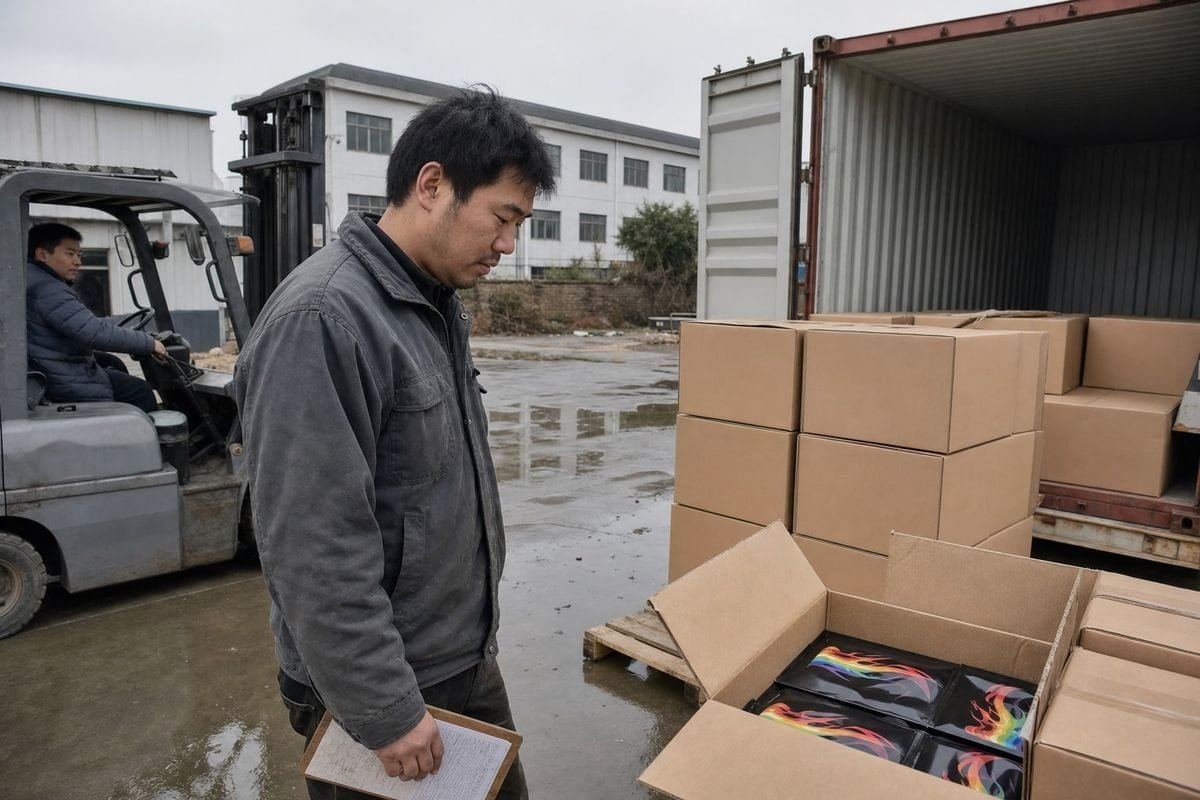
Le coût débarqué est le chiffre qui décide de votre marge, alors divisez-le en ses parties plutôt que de traiter le fret comme un seul poste.
Les éléments du coût débarqué
Premièrement, la classification. Les douanes américaines ont publié des décisions officielles sur les sachets de colorant inflammable, donc votre code SH 6 n'est pas une devinette – mais vous ou votre courtier devez appliquer le bon, et le calendrier tarifaire du Canada classe séparément. Deuxièmement, la manutention du transport. Si votre produit porte une classification de transport pour solides inflammables, vous avez besoin de transporteurs qui l'acceptent, ce qui réduit vos options et augmente les tarifs. Si vos rapports de test confirment une classification non dangereuse, le fret maritime reste proche des tarifs standard. C'est un autre endroit où la documentation du fournisseur vous fait économiser directement de l'argent – nous structurons nos dossiers SGS et Intertek afin que les transitaires puissent classer les expéditions proprement.
Troisièmement, les taxes à la frontière. Les États-Unis perçoivent généralement uniquement des droits de douane. Le Canada perçoit des droits de douane plus la TPS/TVH 7 à l'importation. Vous récupérez la TPS/TVH plus tard en tant qu'entreprise enregistrée, mais cela immobilise des liquidités pendant un trimestre.
Quatrièmement, l'échelle. Un lancement double marché signifie généralement deux expéditions plus petites au lieu d'une seule grande. Les frais de courtage, les frais de documentation et les frais de fret minimum sont majoritairement fixes, donc les envois plus petits supportent plus de frais généraux par unité. Consolider l'expédition de l'usine vers un point d'entrée nord-américain, puis transporter une partie par camion à travers la frontière, bat souvent deux étapes maritimes séparées – mais cela déclenche un deuxième événement douanier, alors exécutez les deux scénarios avec votre courtier.
Enfin, la devise. Si vous vendez en CAD mais payez les fournisseurs en USD, les fluctuations de change peuvent éroder silencieusement 3 à 8 % de la marge en un an. Intégrez une marge tampon dans votre tarification canadienne dès le premier jour.
Conclusion
La poudre est bon marché ; le lancement ne l'est pas. Budgétisez la conformité, l'emballage bilingue, l'assurance et la logistique dupliquée – puis associez-vous à une usine certifiée qui raccourcit chacune de ces lignes.
Notes de bas de page
Autorité officielle de Santé Canada référencée pour les exigences de conformité chimique des consommateurs. ↩︎
La Consumer Product Safety Commission des États-Unis est l'organisme de réglementation qui régit cette catégorie de produits. ↩︎
Concept de base expliquant la classification des marchandises dangereuses affectant les décisions d'expédition. ↩︎
L'autorité du Department of Transportation des États-Unis en matière de matières dangereuses est pertinente pour la discussion sur la classification du transport. ↩︎
L'ISO 9001 est la norme de gestion de la qualité référencée pour la certification des usines. ↩︎
Les douanes et la protection des frontières des États-Unis définissent la classification HTS utilisée pour les droits d'importation. ↩︎
L'Agence du revenu du Canada explique la taxation à l'importation de la TPS/TVH mentionnée dans la section sur le coût débarqué. ↩︎



 English
  Spanish
  German
  French
  Arabic
  Portuguese
Rejoignez la conversation