






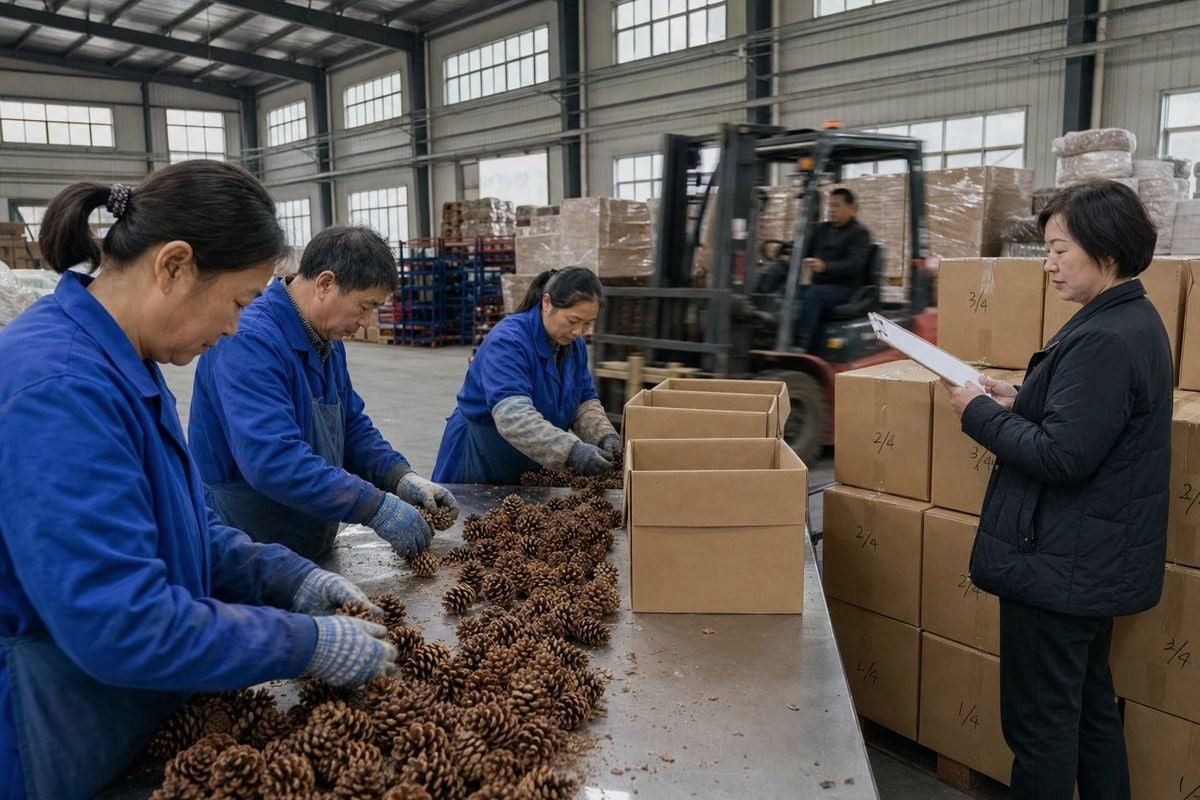
Le [traitement antiparasitaire](https://sunrichfire.com/how-get-fumigation-certification-wood-based-pine-cones-china/) du Canada et les exigences phytosanitaires 1 pour les pommes de pin surprennent de nombreux importateurs. Sur notre chaîne de production, nous avons appris très tôt qu'un document manquant peut bloquer une expédition entière à la frontière.
Pour satisfaire aux exigences canadiennes en matière de traitement des ravageurs et de phytosanitaires, classer les pommes de pin comme séchées et exemptes de graines, obtenir un certificat phytosanitaire du USDA APHIS, appliquer un séchage au four à 56°C pendant 30 minutes (humidité inférieure à 20%) ou une fumigation au bromure de méthyle, obtenir tout permis d'importation de l'ACIA requis, et expédier un produit exempt de ravageurs et de débris.
C'est la version courte. Les détails sont importants, cependant. Ci-dessous, j'examine les documents, les traitements, les questions aux fournisseurs et les pièges à la frontière, étape par étape.
Quel certificat phytosanitaire et quels documents de traitement antiparasitaire dois-je fournir pour importer des pommes de pin des États-Unis au Canada?
Il y a quelques années, un distributeur canadien nous a demandé de vérifier sa paperasse après ACFC 2 avoir signalé un envoi de cônes décoratifs fumigation au bromure de méthyle 3. Le problème ne venait pas du produit. Il s'agissait d'une ligne vague sur le certificat.
**Vous avez besoin d'un certificat phytosanitaire de l'USDA APHIS indiquant la méthode de traitement, la date, l'installation, la description du produit et la quantité, ainsi qu'un permis d'importation de l'ACIA lorsque la directive l'exige. Les cônes décoratifs séchés et sans graines suivent la directive D-95-14 de l'ACIA ;
Notes de bas de page
Liens vers la page officielle de l'ACIA sur la santé des plantes pour des conseils phytosanitaires faisant autorité. ↩︎
Dirige les lecteurs vers le site officiel de l'Agence des services frontaliers du Canada pour les détails sur l'application des importations. ↩︎
Référence expliquant le produit chimique de fumigation mentionné comme méthode de traitement. ↩︎
 English
  Spanish
  German
  French
  Arabic
  Portuguese
Rejoignez la conversation