






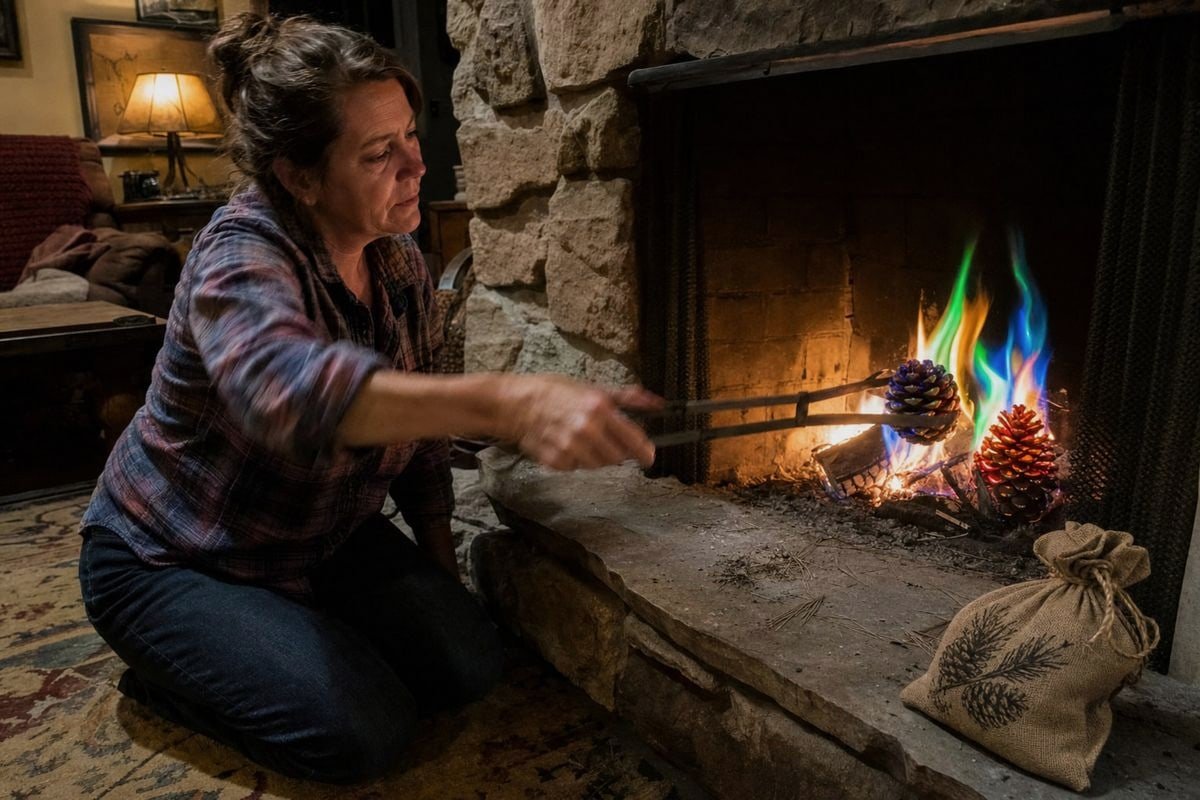
Les pommes de pin colorées peuvent rendre un feu ordinaire magique — ou désordonné chlorure de strontium 1. Sur notre chaîne de production, nous avons vu des acheteurs avoir des difficultés lorsque les utilisateurs finaux en jettent un sac entier et obtiennent de la fumée, pas de la couleur.
Ajoutez 2 à 3 pommes de pin colorées à la fois dans une cheminée domestique typique. Utilisez 4 à 5 pour un affichage de couleur plus intense dans un foyer plus grand, et ne dépassez jamais 8 à 10 pommes de pin ou la limite indiquée par le fabricant. Ajoutez-les toujours à un feu de bois établi, un lot de couleur à la fois.
C'est la réponse courte. Mais le bon nombre varie en fonction de la taille du feu, de la taille des pommes de pin et de la taille du produit. Laissez-moi vous expliquer chaque facteur, en me basant sur ce que nous testons dans notre propre usine.
Quel est le bon rapport entre les pommes de pin colorées et la taille du feu pour des flammes vives et sûres ?
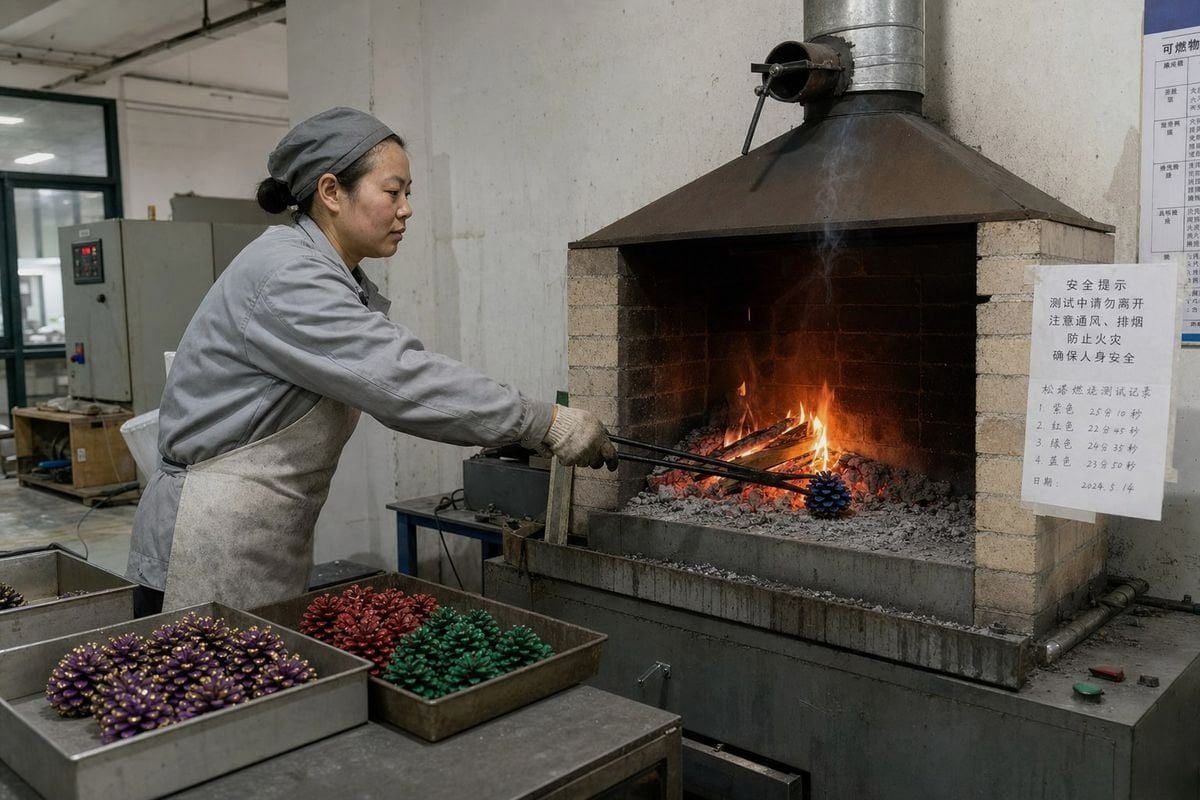
Lors des tests de combustion dans notre usine de Ningbo, nous allumons des centaines de pommes de pin à flammes colorées chaque trimestre. Une chose est devenue évidente très tôt : plus de pommes de pin signifient rarement une meilleure couleur.
Faites correspondre le nombre de cônes à la taille du feu : 1 à 2 cônes pour un petit feu, 2 à 3 pour une cheminée domestique standard, 4 à 5 pour une grande cheminée à bois ou un brasero. Les sels métalliques des colorants de flamme nécessitent une chaleur constante et concentrée, de sorte qu'un feu contrôlé produit une couleur plus vive qu'un feu encombré.

L'effet de couleur provient de colorants minéraux pour flammes — des composés comme sulfate de cuivre 2 pour les tons bleu-vert et du chlorure de strontium pour les rouges. Ces sels métalliques ne brillent vivement que lorsqu'ils se trouvent dans une flamme chaude et stable. Si vous en jetez trop à la fois, elles entrent en compétition pour la chaleur, se consument au lieu de brûler, et produisent des scintillements ternes ainsi que de la fumée supplémentaire. C'est pourquoi nos fiches d'utilisation disent toujours de commencer petit.
Un guide de dimensionnement simple
Voici le tableau des proportions que nous incluons dans les notices d'instructions que nous imprimons pour nos acheteurs en marque blanche :
| Configuration du feu | Taille du feu | Pommes de pin recommandées | Effet attendu |
|---|---|---|---|
| Petit foyer intérieur | Flamme basse et régulière | 1–2 | Accents de couleur subtils |
| 25 g | Moyen, établi | 2–3 | Flammes multicolores claires |
| Grand foyer / poêle à bois | Fort, établi | 4–5 | Affichage complet et vif |
| Foyer extérieur / feu de camp | Grande flamme nue | 4–6 | Couleur spectaculaire et haute |
Pourquoi la proportion est plus importante que le nombre
Considérez cela comme une proportion, pas un nombre fixe. Deux pommes de pin dans une petite grille peuvent surpasser six pommes de pin dans la même grille. Un foyer encombré abaisse la température de la flamme, et des flammes plus froides signifient une couleur plus faible des sels métalliques. Cela pousse également plus de particules dans le conduit, ce qui sollicite la ventilation de la cheminée 3. Lorsque nous calibrons le temps de combustion d'un nouveau lot — généralement 10 à 15 minutes par pomme de pin — nous testons selon ces proportions exactes afin que le premier échantillon qu'un acheteur reçoit corresponde à ce que la production de masse livre.
Comment puis-je éviter de surcharger une cheminée lors de l'utilisation de pommes de pin à flamme colorée ?
Un distributeur allemand nous a un jour envoyé par e-mail des photos d'une réclamation client : des flammes grises et boueuses. La cause était simple. L'utilisateur final avait vidé la moitié d'un sac dans un foyer froid.
Empêcher la surcharge en ajoutant des cônes uniquement à un feu établi, en les espaçant sur le lit de braises extérieur, en attendant que chaque lot brûle complètement avant d'en ajouter d'autres, et en gardant le total sous 8 à 10. N'utilisez jamais de pommes de pin colorées comme allume-feu ou dans les foyers à gaz.
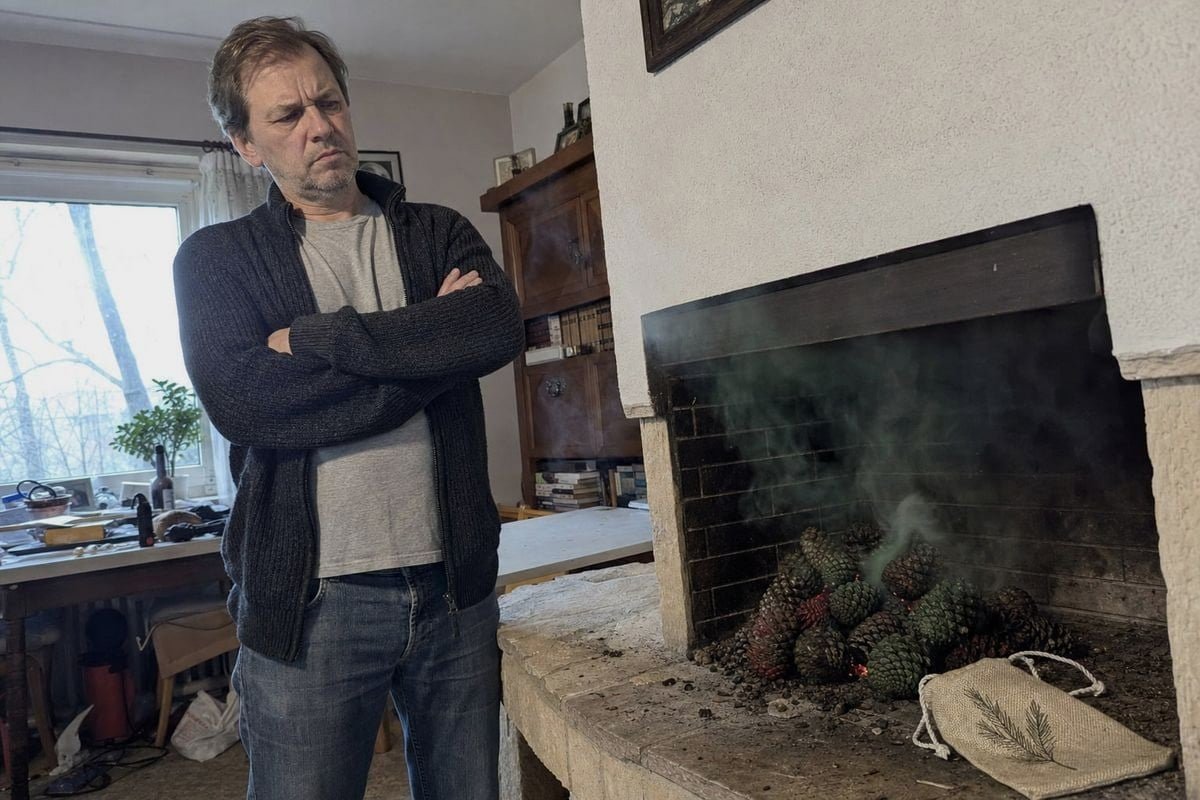
La surcharge crée trois problèmes distincts, et chacun est évitable. Premièrement, la sécurité : trop de pommes de pin traitées à la fois peuvent provoquer une flambée soudaine, en particulier avec les produits trempés dans la cire. Jeter des pommes de pin enrobées de cire dans un foyer froid est pire — la flambée rapide peut choquer thermiquement les vieilles briques réfractaires. Deuxièmement, la performance : mélanger plusieurs lots de couleurs en même temps provoque un "ternissement des couleurs", où différentes réactions chimiques s'annulent pour donner un gris terne. Troisièmement, la qualité de l'air : un tas en combustion lente libère plus de fumée dans la pièce et peut dégrader la qualité de l'air intérieur, en particulier dans les maisons avec une faible tirage.
Une routine de chargement étape par étape
- Faites un feu de bois normal et laissez-le atteindre une combustion régulière et établie.
- Ouvrez complètement le registre afin que la ventilation de la cheminée soit forte avant d'introduire les pommes de pin.
- Placez 2 à 3 pommes de pin sur les bords extérieurs plus froids du lit de braises, pas au centre de la flamme. Cela ralentit la libération chimique et prolonge le spectacle de couleurs de plusieurs minutes.
- Regardez la combustion complète de 10 à 15 minutes. Ne remuez pas et ne piquez pas les pommes de pin.
- Attendez que la couleur disparaisse complètement avant d'ajouter le prochain petit lot.
- Laissez le registre légèrement ouvert un peu plus longtemps après la fin du spectacle, afin que les particules résiduelles soient complètement évacuées de la maison.
Ce qui n'appartient jamais au mélange
Notre travail de conformité à l'exportation — Marquage CE 4, tests SGS et Intertek — nous oblige à être stricts ici. Les pommes de pin colorées ne conviennent qu'aux foyers à bois, poêles à bois, chiminées et feux de camp. Elles sont interdites dans les appareils à gaz, propane ou électriques. Et personne ne devrait y rôtir de guimauves ; les résidus de sels métalliques ne sont pas sans danger pour les aliments, même dans les formulations écologiques comme les nôtres qui évitent les fumées toxiques en utilisation normale.
Les instructions d'utilisation et les étiquettes d'avertissement peuvent-elles aider mes clients à utiliser les pommes de pin en toute sécurité ?
Dix-sept ans d'exportation de produits pour le feu vers plus de 30 pays nous ont appris une dure leçon : l'étiquette fait plus pour la sécurité que la formule. Un produit parfait avec une étiquette vague génère toujours des plaintes.
Oui. Des instructions d'utilisation claires et des étiquettes d'avertissement conformes sont l'outil le plus efficace pour une utilisation sûre. Elles doivent indiquer la quantité exacte de pommes de pin, les types de feux approuvés, les avertissements "ne pas cuisiner" et "une couleur à la fois", ainsi que des directives pour l'élimination des cendres — réduisant ainsi les mésusages, les plaintes et la responsabilité.
Pour les responsables des achats et les propriétaires de marques avec lesquels nous travaillons, cette section est importante sur le plan commercial, pas seulement sur le plan éthique. Aux États-Unis et dans l'UE, les détaillants refusent de plus en plus les SKUs liés au feu sans proper labeling, and our ISO 9001 5 and BSCI audits treat label accuracy as a controlled quality point. When we run private-label OEM projects, the warning label is designed alongside the packaging — not stapled on afterward.
What a Good Label Must Cover
| Élément d'étiquette | Ce qu'il devrait dire | Pourquoi c'est important |
|---|---|---|
| Quantity guidance | "Add 2–3 cones to an established fire" | Prevents overloading and flare-ups |
| Approved fire types | Wood fireplace, stove, fire pit, campfire only | Blocks dangerous gas-fireplace misuse |
| Cooking warning | "Never cook food over colored flames" | Metal salt residues are not food-safe |
| Mixing warning | "Burn one color batch at a time" | Avoids muddy flames and mixed reactions |
| Note sur la ventilation | "Use with damper fully open" | Protège la qualité de l'air intérieur |
| Élimination des cendres | "Seal ash in a container; do not use in gardens" | Salts like copper sulfate are phytotoxic to plants |
| Chimney care | "Use in a clean, maintained chimney" | Heavy creosote buildup plus flare-ups is a fire risk |
Localization Is Part of Safety
A warning label that works in Ohio may fail a compliance check in France. We routinely produce multi-language inserts, region-specific pictograms, and barcode-ready packaging for buyers in the US, Germany, the UK, and the Netherlands. Backed by our rapports de test SGS et Intertek 6, this documentation gives distributors something concrete to hand to retail compliance teams. In our experience, buyers who invest in clear instructions see fewer returns — and end users who follow them get better color, which drives repeat purchases.
La quantité recommandée change-t-elle en fonction de la taille du pin ou de la cohérence du lot ?
There is a trade-off we weigh on every new order: bigger cones look impressive on a shelf, but they change the math inside the firebox. Size and consistency both move the recommended count.
Oui. Les cônes plus grands, plus denses ou fortement enduits de cire transportent plus de colorant, donc moins sont nécessaires — souvent juste 1 à 2 grands cônes contre 3 à 4 petits. Des lots incohérents obligent à donner des conseils de dosage vagues, c'est pourquoi un contrôle qualité strict d'un lot à l'autre soutient directement les recommandations de quantité sûres.

Cones are natural botanicals, so raw material varies in size, wood density, and moisture. On top of that sits the treatment: the chemical loading of flame colorants, and for coated products, the wax dipping process that controls ignition speed and burn time. Each variable changes how much colorant one cone delivers per minute. A dense, fist-sized cone with a full wax coat might burn 15 minutes and color a medium fire alone. A small, lightly treated cone might need two or three companions to achieve the same effect.
How Cone Specs Shift the Count
| Type de cône | Meilleure application | Colorant Load | Quantité suggérée |
|---|---|---|---|
| Small, light treatment | 8–10 minutes | Faible | 3–4 |
| Medium, standard treatment | 10–12 minutes | Moyen | 2–3 |
| Large, wax-dipped | 12–15+ minutes | Élevé | 1–2 |
| DIY home-treated | Imprévisible | Incohérent | Start with 1 |
Why Batch Consistency Is a Safety Feature
Here is the point most buyers underestimate. A quantity recommendation is only as trustworthy as the batch behind it. If cone weight or chemical loading drifts between production runs, "add 2–3 cones" becomes meaningless — one batch underperforms, the next flares. In our factory, we control cone grading, salt dosing, and wax pickup weight per batch, so the sample a buyer approves behaves like every carton that follows. DIY cones deserve extra caution too: homemade treatments with borax or acide borique 7 vary wildly, and cones must be pre-baked at low temperature to drive out moisture and insects, or they can spit and pop in the flames. Consistency is not a marketing line; it is what makes a printed number on a label actually safe.
Conclusion
Start with 2–3 colored pine cones, scale to 4–5 for bigger displays, and never exceed product guidance. Clear labels and consistent batches keep every fire safe and vivid.
Notes de bas de page
1. Explains the metal salt compound used to create red flame coloration. ↩︎
2. Provides background on the chemical compound responsible for blue-green flame color effects. ↩︎
3. EPA guidance on safe wood-burning practices and proper chimney ventilation for fireplaces. ↩︎
4. Background on the European conformity marking referenced in export compliance work. ↩︎
5. Official ISO standard reference for the quality management system mentioned in manufacturing audits. ↩︎
6. Official site of SGS, a leading third-party testing and certification body cited for compliance. ↩︎
7. EPA safety information on boric acid, a compound used in DIY pinecone treatments. ↩︎



 English
  Spanish
  German
  French
  Arabic
  Portuguese
Rejoignez la conversation