






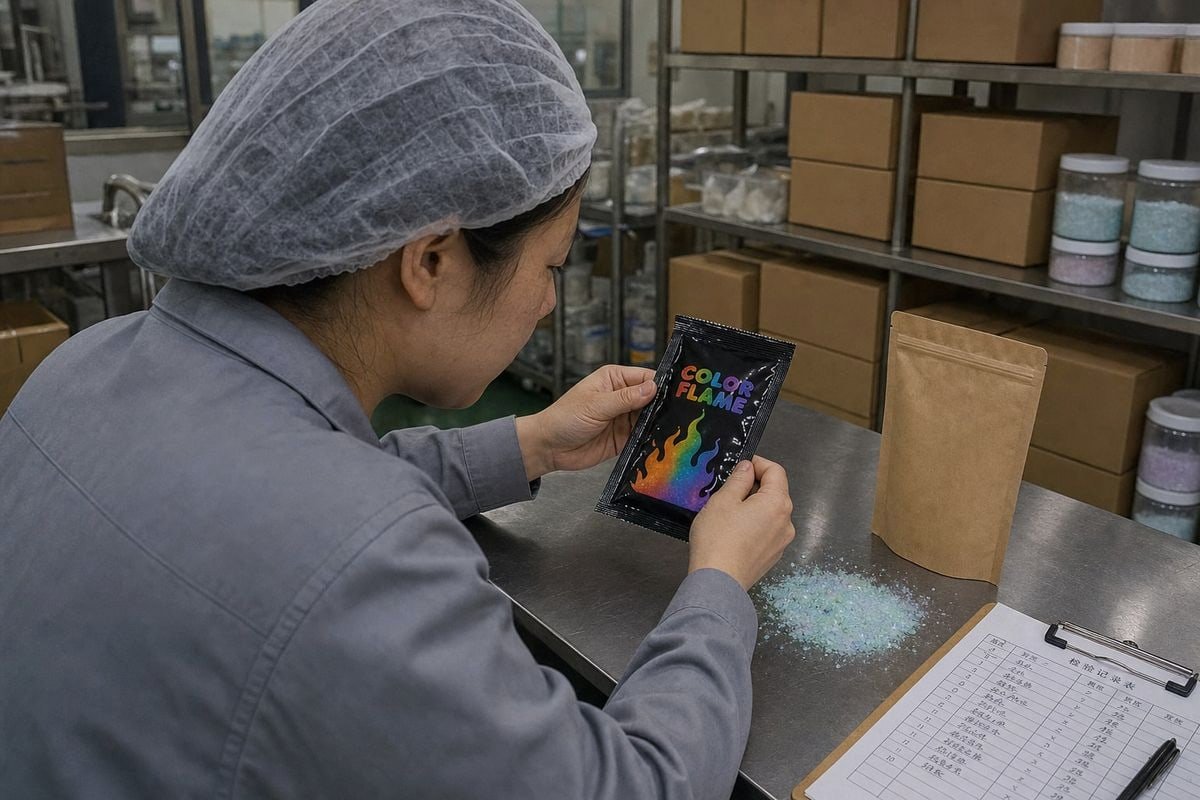
Judging magic fire powder quality 1 before a bulk order worries every buyer I meet. On our production line, we've seen how bad packaging quietly destroys good flame colorants.
To judge magic fire powder quality, inspect the packaging for airtight moisture-proof sealing, complete labeling with batch numbers and certifications, and check that the powder is uniform, dry, free-flowing, and free of clumps, discoloration, or foreign particles before committing to any bulk purchase.
Packaging and appearance are your first screening tools. They will not prove burn performance, but they will expose careless suppliers fast. Let me walk you through exactly what to look for.
What certifications should I check on the packaging to confirm compliance?
Pendant un audit d'usine 2 last spring, a German buyer spent his first hour on our documentation, not our powder. That taught me how much compliance drives real purchasing decisions in Europe and the US.
Check the packaging for CE marking, references to an available Safety Data Sheet (SDS), ISO 9001 quality system claims, and third-party test reports from labs like SGS or Intertek. Missing certifications, vague compliance language, or unverifiable claims are immediate disqualifiers for serious importers.

Certifications are the fastest way to separate a real factory from a reseller pushing unknown chemicals. In our 17+ years exporting sachets de flammes colorées 3 to 30+ countries, we have never shipped a container to the EU or the US without the paperwork lined up first. Customs, retailers, and liability insurers all demand it.
The core documents to verify
Here is what a compliant magic fire powder supplier should be able to show, and what each item actually proves:
| Certification / Document | Ce qu'elle prouve | Signal d'alarme en cas d'absence |
|---|---|---|
| Marquage CE | Le produit répond aux exigences de sécurité de l'UE | Cannot legally sell in the EU |
| Fiche de Données de Sécurité (FDS) | Metal salts composition and handling risks are disclosed | Supplier may be hiding hazardous fillers |
| ISO 9001 | A real quality management system exists | Batch-to-batch consistency is unlikely |
| Rapports de test SGS / Intertek | Independent lab verified the claims | Compliance claims are just marketing |
| Audit BSCI | L'usine respecte les normes de conformité sociale | Retail chains may reject the supplier |
| Non-toxic certification support | Formulation avoids harmful chemicals | Liability risk for your brand |
Do not stop at logos printed on the pouch. Logos are cheap to print. Ask for the actual report numbers and verify them with the issuing lab. When buyers request our SGS 4, we send the full documents, not screenshots. A supplier who hesitates here is telling you something important.
Also check that the SDS matches the product in hand. The listed flame colorants, such as sulfate de cuivre 5 for green and blue effects, should align with the label's ingredient disclosure. If the SDS describes a different formulation, the supplier may be swapping chemistries between batches.
How can I tell if the powder's color and texture indicate consistent quality?
One trade-off we weigh constantly in Ningbo is granule size versus dissolve rate in the flame. Get particle size consistency wrong, and the color intensity flickers instead of holding steady.
Quality magic fire powder shows a uniform, crystalline texture with consistent color throughout, no visible clumps, damp spots, foreign specks, or discoloration. It should flow freely inside the sachet when tilted. Caked, rough, or unevenly colored powder signals moisture damage or poor blending.
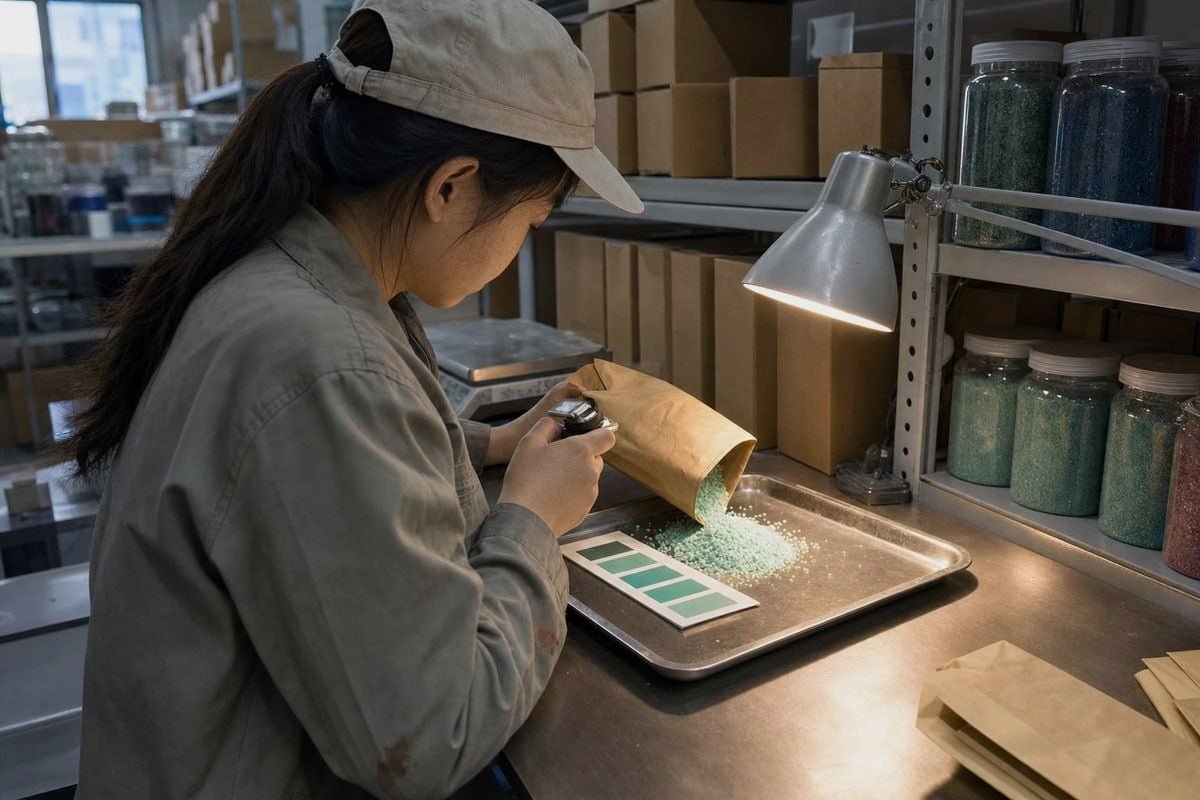
Appearance tells you a surprising amount about how a powder was made and stored. When we run batch QC on our color-flame packets, visual inspection is the first gate every lot must pass before it goes anywhere near a burn test.
What good powder looks like
Good magic fire powder has an even, sand-like granular texture. The crystals should look dry and slightly glossy, not dull or matte from absorbed humidity. Color should be consistent from one edge of the sample to the other. Our mint-green and teal granules, for example, must show the same shade across the full batch, because uneven color usually means uneven blending of the metal salts, and that means uneven pyrotechnic effects in the fire.
The tilt test
Here is a simple check anyone can do with a sealed sachet. Tilt the pouch slowly. Quality powder shifts smoothly, like fine sand. If you feel a solid brick, or hear one heavy lump sliding around, moisture got in at some point. Good formulations include anti-caking behavior by design, which supports even distribution in the flame and a steadier durée de combustion.
Common visual defects and what they mean
- Clumping or bricking — moisture ingress before or after sealing
- Rough, coarse, uneven granules — poor milling or blending control
- Dark or wet-looking patches — humidity exposure during storage
- Foreign specks or debris — contamination on the production line
- Faded or washed-out color — possible photo-degradation of copper-based flame colorants from UV exposure
Any one of these defects in a sample should make you question the whole shipment. Powder problems are rarely isolated to a single pouch.
What packaging details reveal whether a supplier follows strict quality control?
A US camping brand once sent us a competitor's sample for comparison. The pouch seal peeled open with light finger pressure. That single detail told us everything about the factory behind it.
Strict quality control shows in strong heat-sealed crimps, multi-layer laminate foil with moisture-proof sealing, sharp high-resolution printing, complete labels with batch numbers and manufacturer contact details, clear multi-language warnings, and puncture-resistant material that survives shipping without leaks or swelling.
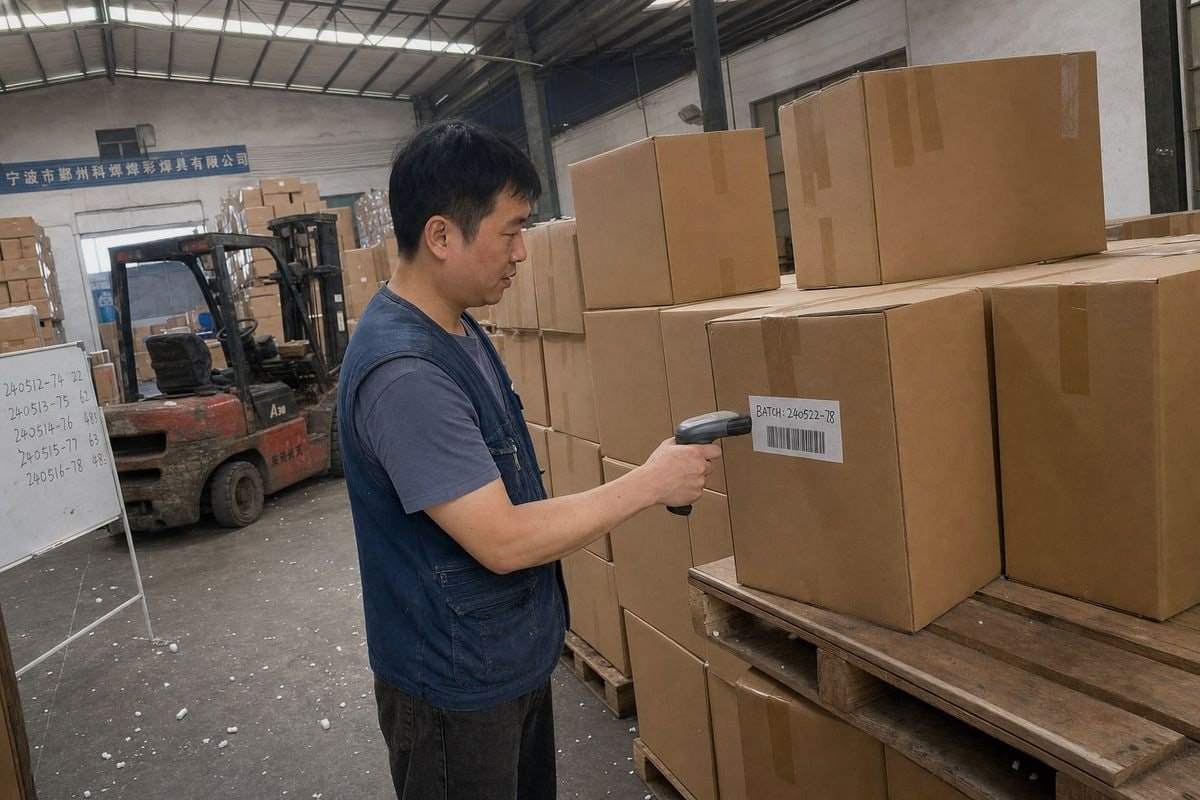
Packaging is where a factory's discipline becomes visible. Sloppy sealing, blurry print, and missing batch codes never come from a plant with a real QC system. When we develop private-label pouches for our OEM clients, the packaging spec sheet is as long as the powder spec sheet, and for good reason.
Seal and material quality
The seal is the single most important physical feature. Magic fire powder is moisture-sensitive, so the pouch must be hermetically sealed. Look for these details:
| Élément d'emballage | Quality standard | What poor QC looks like |
|---|---|---|
| Heat-seal crimps | Even, firm, full-width seals on both ends | Wrinkled, partial, or peelable seals |
| Matériau de la pochette | Multi-layer laminate foil, puncture-resistant | Thin single-layer plastic that tears easily |
| Light protection | Opaque or UV-blocking film | Clear film exposing colorants to sunlight |
| Qualité d'impression | Sharp graphics, legible small print | Blurry text, misaligned colors |
| Étiquetage | Batch number, date, net weight, manufacturer contact | Missing traceability information |
| Avertissements | Clear cautions: do not open before use, no cooking over treated flames | No safety language at all |
Traceability is non-negotiable
Every sachet we produce carries batch traceability. If a distributor in Poland reports an issue, we can trace that lot back to a specific production day and raw material delivery. A supplier who prints no batch codes cannot do a recall, cannot investigate a complaint, and probably is not tracking quality at all.
Test the pouch, not just the powder
Squeeze the sealed sachet gently. It should hold internal pressure 6 without hissing or leaking at the crimps. Drop a sample pouch from waist height onto a hard floor. Quality laminate takes this without splitting. Your shipping containers will treat cartons far worse than that.
How do I spot warning signs of poor manufacturing before placing a bulk order?
The most expensive lesson I've watched buyers learn is trusting a beautiful first sample from a trading company, then receiving a container of something else entirely. Genuine manufacturing depth prevents that gap.
Warning signs include samples that differ from listing photos, missing SDS or test reports, no batch numbers, evasive answers about the factory location, unusually low prices, inconsistent granule color between sachets, damaged or dented sample packaging, and refusal to allow audits or video factory tours.
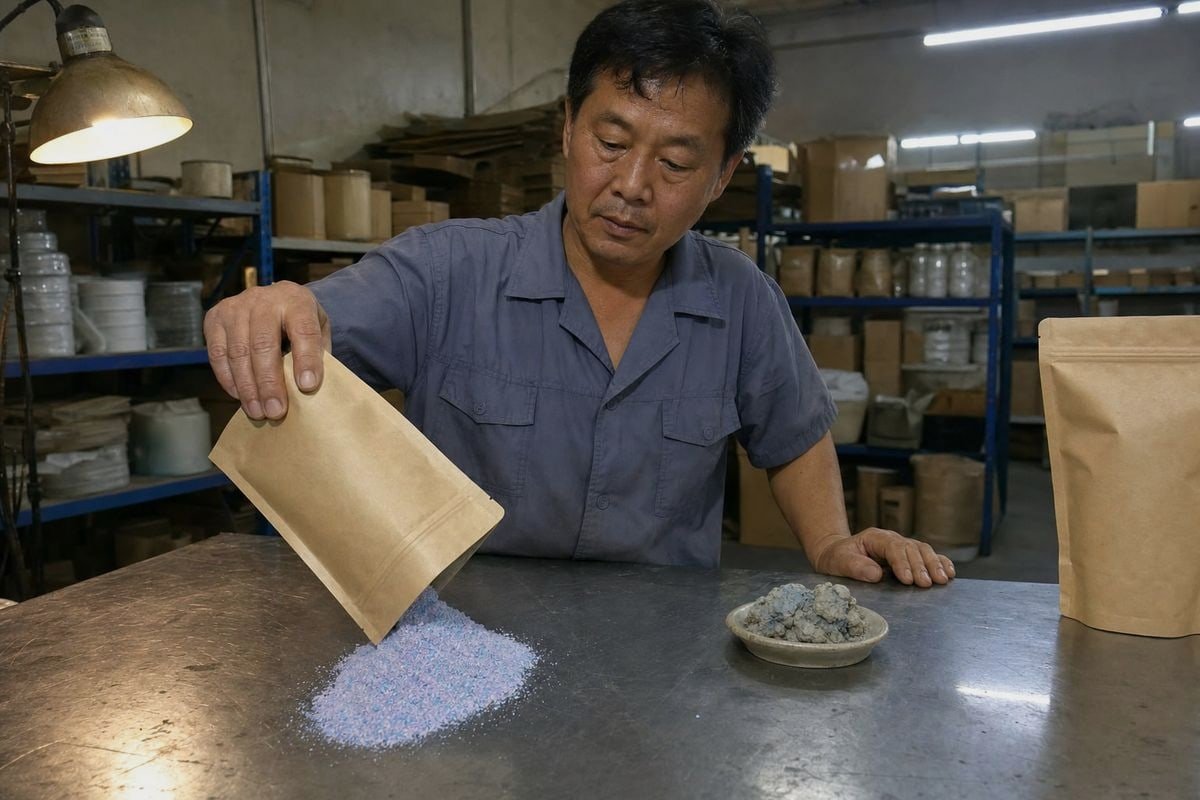
Spotting a weak manufacturer early saves you months of headaches. After 17+ years supplying outdoor and Distributeurs de barbecues 7 across the US, Germany, the UK, and beyond, we can usually predict which suppliers will fail a buyer within one sample exchange. The signals are consistent.
A pre-order inspection checklist
Run every candidate supplier through this sequence before wiring a deposit:
- Request three sachets from different production batches. Compare granule color, texture, and net weight. Variation between batches exposes weak process control.
- Ask for the SDS and lab reports up front. Slow, partial, or reluctant responses mean the documents probably do not exist.
- Burn-test the samples yourself. Check color intensity, burn duration, and smoke level in a real fireplace or outdoor fire pit. Low-smoke, residue-free performance points to purer salts and fewer fillers.
- Inspect the shelf life claim. Quality moisture-proof sealing supports a long stated shelf life. A vague or missing expiry date suggests the supplier has never tested storage stability.
- Verify the factory. Ask for a live video tour of the production line. A trading company posing as a factory will stall or show stock footage.
- Check labeling completeness. Manufacturer name, batch code, quantity, warnings, and usage instructions should all be present and printed cleanly.
- Compare price against the market. A quote far below everyone else usually means cheaper metal salts, thinner foil, or skipped testing.
Why the sample-to-container gap matters most
A first sample should reliably predict mass-production quality. That only happens when a factory runs the same line, the same raw material specs, and the same batch QC for samples and bulk orders alike. This is exactly why we invite buyers to audit our facilities: the sample you approve is the product your container carries. Any supplier who cannot make that promise, and back it with traceable batches, is a risk you carry into your own brand.
Conclusion
Poor magic fire powder quality ruins brands quietly. Inspect seals, labels, certifications, and powder uniformity first, then verify performance and factory depth before any bulk commitment.
Notes de bas de page
1. Provides technical context on the chemical colorants used in pyrotechnic products like magic fire powder. ↩︎
2. Defines the standard quality audit process used to evaluate manufacturing compliance and documentation. ↩︎
3. General information on the science and history of creating colored flames for entertainment. ↩︎
4. Links to the official verification service provider for independent product testing and certification reports. ↩︎
5. Authoritative chemical data for one of the primary metal salts used for colored flame effects. ↩︎
6. Scientific definition of pressure, relevant to testing the integrity of airtight product packaging. ↩︎
7. Official site for the industry association representing barbecue and hearth product professionals. ↩︎


 English
  Spanish
  German
  French
  Arabic
  Portuguese
Rejoignez la conversation