







Abnormally low quotes for Magic Fire Powder from China cross my desk weekly, forwarded by worried buyers asking our production team one question: is this deal real or a trap?
To identify suspicious suppliers offering abnormally low quotes for Magic Fire Powder, compare 3–5 like-for-like quotes, flag anything 30%+ below the cluster, verify the business license and Unified Social Credit Code, demand SGS or Intertek test reports, confirm the factory by video, and refuse untraceable upfront payments.
The cheapest quote is rarely a bargain. It is a test of the supplier's transparency. Below, I break down exactly what to check, in the order that protects your money best.
What certification red flags should I watch for when a supplier's quote seems too good to be true?
Last spring, a German distributor showed me a quote 45% below ours. The seller claimed "full Conformité CE 1" but could not produce a single dated test report. That gap told the whole story.
Major certification red flags include missing or expired SGS, Intertek, or CE test reports, refusal to provide Safety Data Sheets in your market's required language, vague claims like "certified" without document numbers, and no MSDS matching the actual chemical composition of the flame colorants.

Certification is where cheap suppliers cut first, because paperwork costs money and takes time. In our seventeen-plus years exporting color-flame products to the US, Germany, the UK, and beyond, we have never seen a compliant factory sustain prices far below the market. Testing, documentation, and audited processes all carry real costs. A quote that ignores those costs is telling you the supplier skipped them.
Documents a legitimate supplier can show you within 24 hours
A real factory keeps these files ready. Hesitation, excuses, or blurry screenshots are all warnings.
| Document | Ce qu'elle prouve | Signal d'alarme en cas d'absence |
|---|---|---|
| SGS ou Intertek 2 rapport de test | Actual chemical composition and safety | Formula may contain undeclared or harmful compounds |
| MSDS / SDS in your market's format | Export compliance experience | Supplier may plan to bypass customs scrutiny |
| CE documentation (for EU) | Le produit répond aux exigences du marché de l'UE. | Goods may be seized or rejected at the border |
| Certificat ISO 9001 | Audited quality management system | No consistent production control |
| rapport d'audit BSCI | Ethical, audited factory operations | Likely a trader or unaudited workshop |
Watch how they answer, not just what they send
Ask for the certificate number and issuing body, then verify it directly with SGS or Intertek. Fake reports are common. Real ones can be confirmed online or by email in minutes. Also ask which specific colorant compounds 3 are used. A supplier who cannot name them either does not make the product or does not want you to know what is inside. For a product that goes into campfires and fireplaces near families, that is not a risk worth a few cents of savings.
How can I verify if a low-cost Magic Fire Powder supplier is a real manufacturer or just a trading company?
Buyers who visit our Ningbo production lines often tell me the same thing: three previous "factories" they contacted turned out to be trading desks with rented showrooms. The price looked great until the third reorder failed.
Verify manufacturer status by checking the business license and Unified Social Credit Code on China's National Enterprise Credit Information Publicity System, confirming the registered scope includes manufacturing, requesting a live video walkthrough of the production floor, and matching the bank account name to the registered company.
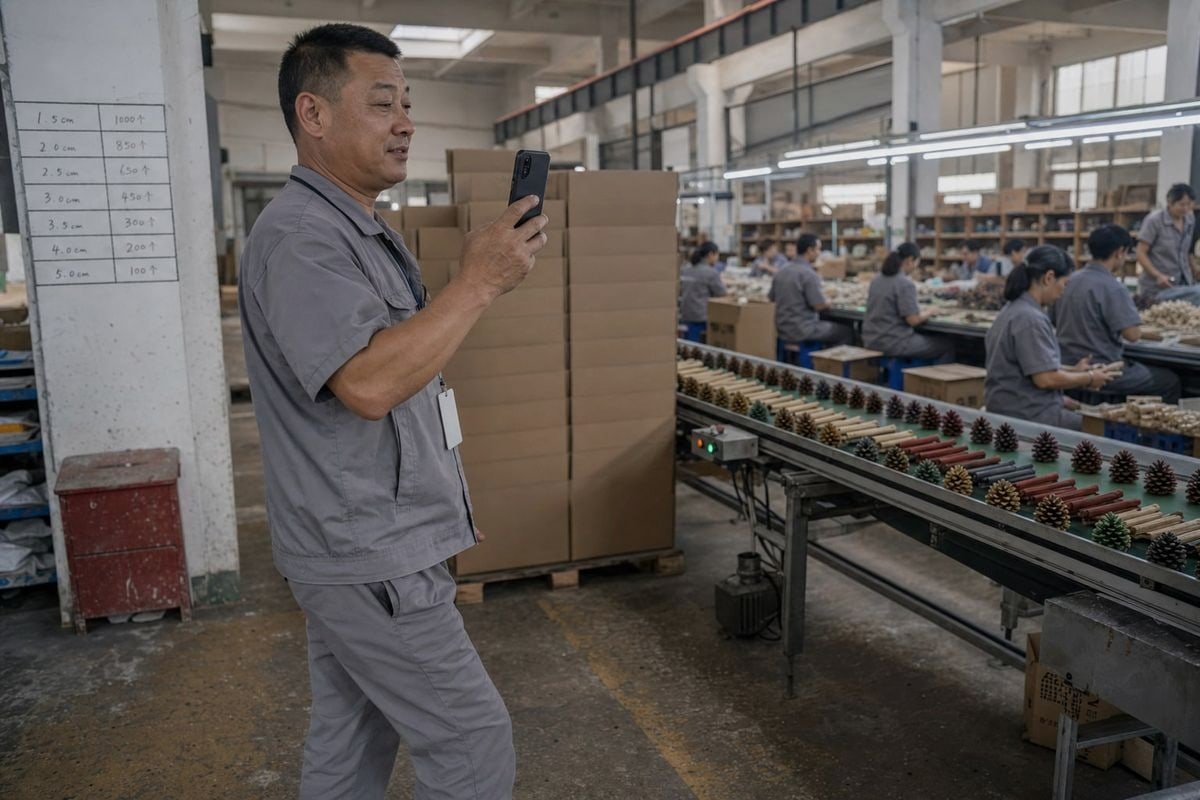
A trading company is not automatically a scam. But when the quote is abnormally low, an unverified middleman adds two layers of risk: you cannot audit the real production, and you cannot trace quality problems back to their source. Our headquarters sits in Liuyang, Hunan 4, inside China's fireworks and flame-products cluster, with production in Ningbo. That footprint is easy to verify, and verification is exactly what a shell operation cannot survive.
A five-step verification process you can run in 24 hours
- Extrayez la licence commerciale. Ask for it directly. A refusal ends the conversation. Check the Code unifié de crédit social 5 against official Chinese enterprise records and confirm the registered business scope includes production, not just trade.
- Check company age. A firm registered less than a year ago, quoting far below veterans, carries elevated fraud risk. Long-established suppliers have export histories you can probe.
- Request a live video call on the production floor. Not photos. Not a pre-recorded clip. Ask them to walk to the mixing area, the sealing line, and the warehouse in real time. Excuses like "the manager is traveling" or "the camera is broken" are classic stalls.
- Cross-check names across platforms. If the same phone number or address appears under three different company names on different B2B sites, you are likely looking at a reselling shell.
- Match the bank account. Payment must go to a company account whose name matches the license exactly. A personal account request is a hard stop.
A audit d'usine par un tiers 6 typically costs a few hundred dollars. Against a container order, that is the cheapest insurance you will ever buy.
What quality and safety risks am I exposing my business to if I choose the cheapest quote without proper vetting?
There is a trade-off we refuse to make on our lines: swapping eco-friendly colorant granules for cheaper industrial-grade chemicals would cut cost meaningfully. It would also put unknown compounds into someone's family fire pit.
Choosing the cheapest unvetted quote exposes you to undeclared or harmful chemicals, weak flame effects that trigger retail returns, non-compliant packaging seized at customs, product liability claims if users are harmed, deposit theft, and brand damage that far exceeds any per-unit savings.
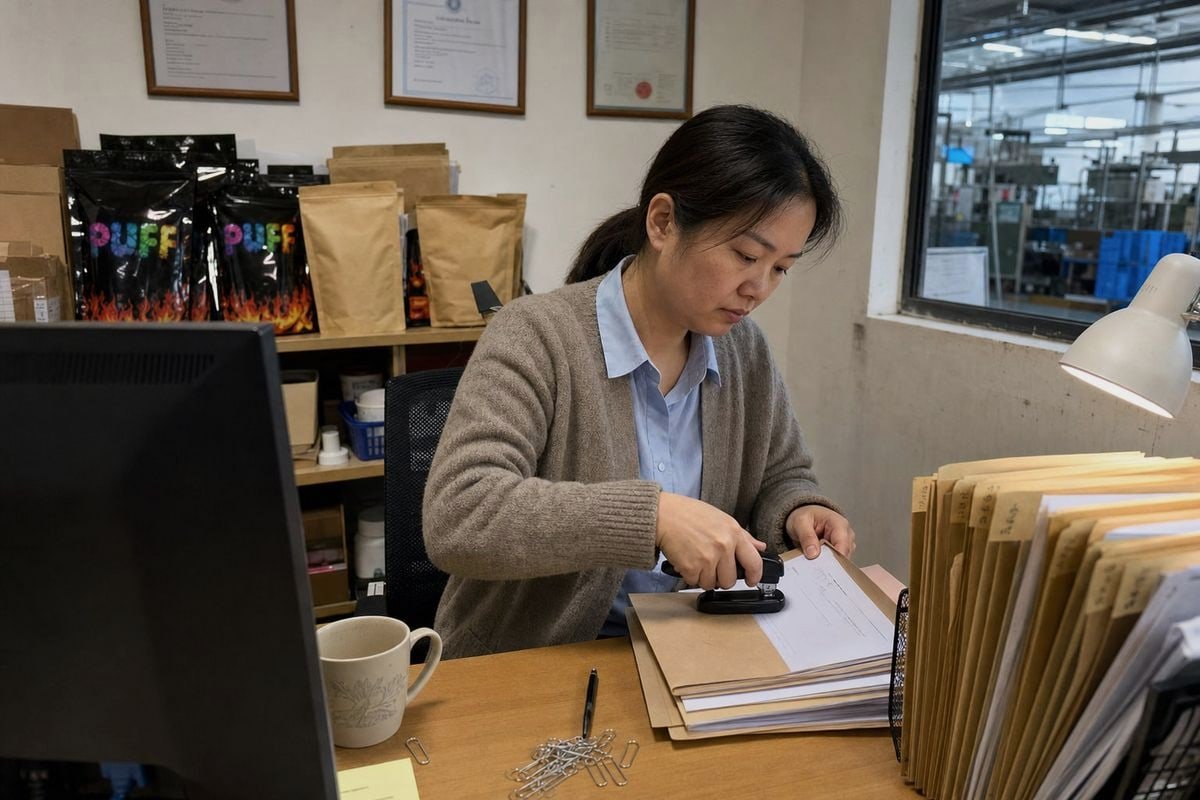
Magic Fire Powder sits in a sensitive category. It is a consumer novelty, but it is also a chemical product used around open flames, children, and cooking areas. That combination means cut corners do not just disappoint customers. They create legal exposure. When we developed our formulations, the hard requirement from our US and EU buyers was always the same: no harmful chemicals 7, documented composition, and test reports for every claim on the label. Cheap suppliers invert that logic. They start from a target price and work backward, and the formula is where the money comes out.
What "cheap" actually costs downstream
| Risk area | What goes wrong | Real cost to your business |
|---|---|---|
| Chemical substitution | Diluted or swapped colorants, possible toxic fumes | Liability claims, recalls, injury lawsuits |
| Weak or no color effect | Product fails to perform as advertised | Retail returns, chargebacks, lost shelf space |
| Non-compliant labels and SDS | Missing warnings, wrong language, no hazard data | Customs seizure, fines, destroyed inventory |
| Packaging failure | Poor heat-sealing, moisture ingress, caking | Whole shipments unsellable on arrival |
| Deposit scam | Seller vanishes after payment | Total loss of deposit plus program delays |
Run a raw-material sanity check
Here is a simple test I recommend to every purchasing manager. Look up rough global prices for the key colorant compounds a color-flame product needs. Add packaging, sealing, labor, testing, and margin. If a quote lands below that raw-material floor, the math only works through dilution, substitution, or mislabeling. There is no fourth option. Price is a risk signal. When it drops below physical reality, believe the chemistry, not the sales pitch.
How do I evaluate whether a supplier's sample quality will actually match their mass-production output?
A UK buyer once told me his previous supplier's samples burned brilliant blue and green, while the bulk shipment barely flickered orange. That gap between sample and production is one of the oldest tricks in sourcing.
Evaluate sample-to-production consistency by asking how samples are made, requesting samples pulled from a current production batch, reviewing the supplier's batch QC records and ISO 9001 process controls, ordering a small trial run first, and booking a third-party pre-shipment inspection with burn testing.
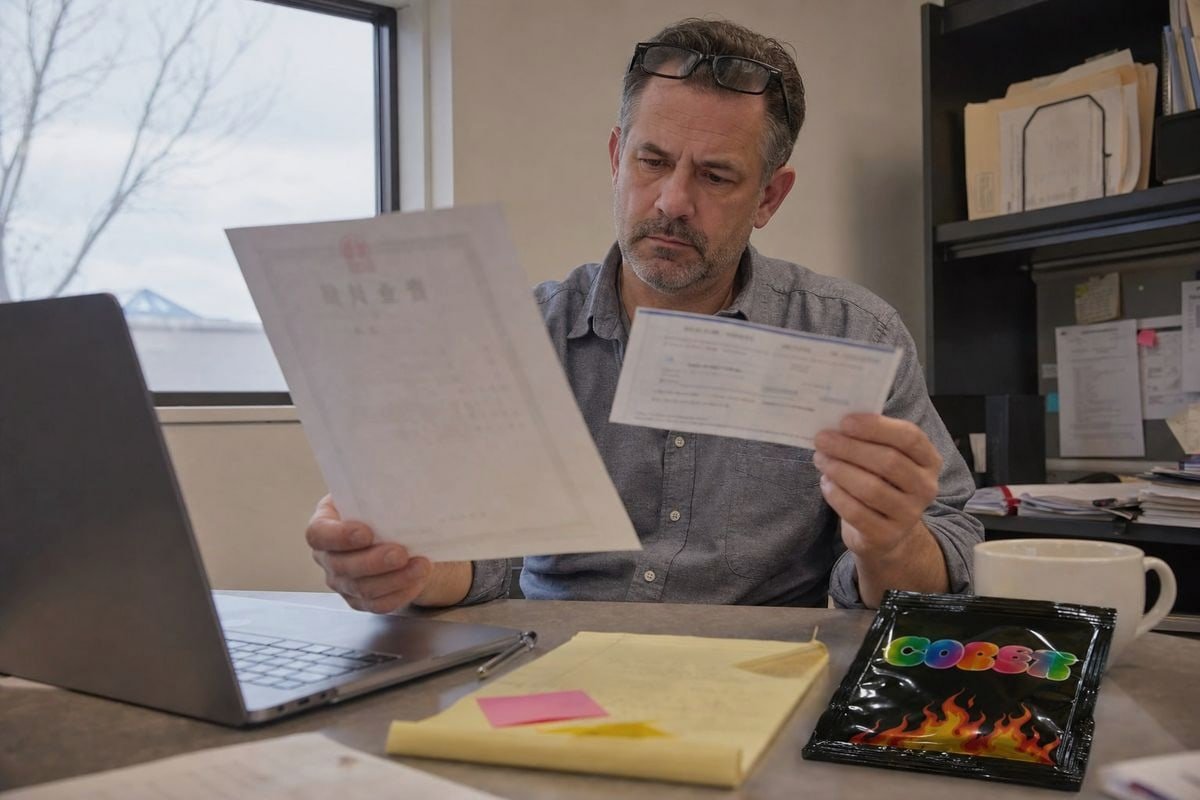
Samples are necessary but never sufficient. Any supplier can hand-mix a perfect sachet in a lab. The real question is whether their production system can repeat that result across ten thousand sachets, month after month. On our lines, batch-to-batch quality control is the discipline that makes the first sample a genuine preview of mass production. That discipline is expensive. It requires calibrated dosing, incoming raw-material checks, and burn tests on every batch. A supplier quoting far below market almost certainly skipped building it.
Questions that expose the sample-to-bulk gap
- Was this sample pulled from a real production batch, or made by hand for me?
- Can you show batch records, burn-test logs, or QC checklists from recent orders?
- What tolerances do you hold on granule size, moisture, and colorant dosing?
- Will you accept a third-party pre-shipment inspection with random sampling and live burn tests?
- Can I place a small trial order before committing to full MOQ?
A confident factory welcomes every one of these questions. An evasive one is telling you the sample is theater.
Structure your order to test consistency
| Étape | What you do | Ce qu'elle prouve |
|---|---|---|
| Approbation de l'échantillon | Burn-test and document the agreed effect | Baseline specification in writing |
| Commande d'essai | Small paid run through real production lines | Whether the process, not the lab, delivers |
| Inspection avant expédition | Third party pulls random cartons, burn-tests units | Bulk matches the approved sample |
| Reorder audit | Compare batches across orders over time | Long-term consistency, not one-time luck |
Put the approved sample specification in writing, attach it to your purchase order, and tie final payment to inspection results. Suppliers who resist that structure are pricing in the assumption that you will never check.
Conclusion
An abnormally low Magic Fire Powder quote is a transparency test, not a bargain. Verify the license, certificates, factory, payments, and batch consistency before you trust any price.
Notes de bas de page
1. Explains the EU conformity marking the supplier falsely claimed without documentation. ↩︎
2. Leading third-party testing bodies buyers use to verify supplier test report authenticity. ↩︎
3. Chemical database useful for checking composition and pricing of flame colorant compounds. ↩︎
4. Background on China's fireworks manufacturing cluster referenced as the company's headquarters. ↩︎
5. Background on the Chinese business identifier used to verify supplier legitimacy. ↩︎
6. ISO oversees the auditing standards behind independent factory verification processes. ↩︎
7. EPA resource on regulated hazardous chemical categories relevant to consumer flame products. ↩︎
 English
  Spanish
  German
  French
  Arabic
  Portuguese
Rejoignez la conversation