






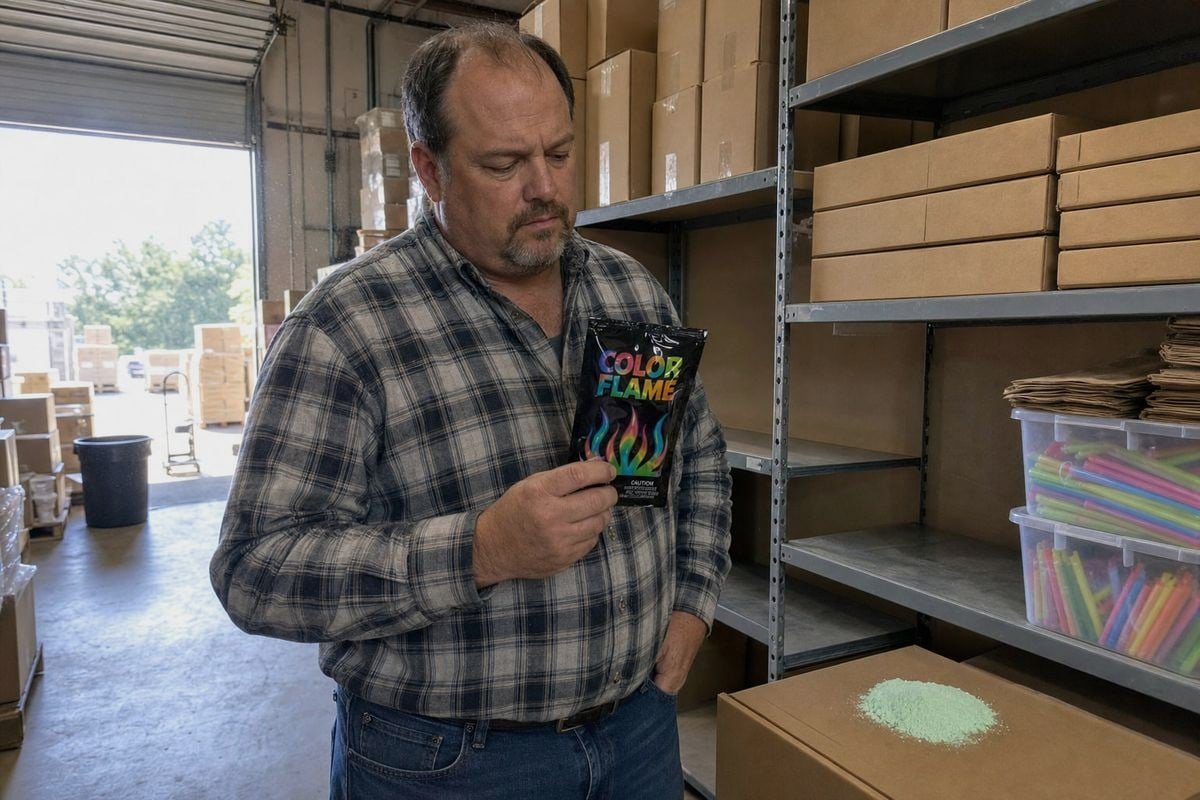
J'entends la même inquiétude de la part des acheteurs qui examinent nos échantillons de poudre magique pour le feu : leur ligne de nouveautés pour fêtes semble encombrée, pourtant les ventes stagnent. Les étagères restent pleines tandis que les clients passent devant. La solution est une véritable analyse des lacunes du produit 1 — et les sachets de flammes colorées comblent souvent le manque exact qu'ils avaient manqué.
La poudre Magic Fire comble le fossé entre les décorations statiques et les feux d'artifice réglementés dans une gamme de nouveautés pour fêtes. Elle offre un effet de flamme arc-en-ciel à lancer dans les feux de camp et les foyers, offrant aux détaillants un produit peu coûteux, intersaisonnier et adapté aux médias sociaux que les étincelles et les articles en papier ne peuvent égaler.
Laissez-moi vous expliquer comment confirmer cette lacune dans votre propre catalogue. Nous examinerons les segments de clientèle, les comparaisons directes de produits, les exigences de certification et les commandes d'essai à faible risque. Chaque étape utilise les mêmes questions que nous posons aux acheteurs avant que leur premier conteneur ne soit expédié.
Quels segments de clientèle dans ma ligne d'articles fantaisie sont mal desservis sans un produit de flamme colorée comme celui-ci ?
Lors d'un salon professionnel à Cologne il y a quelques années, un distributeur allemand m'a dit que son catalogue comptait quarante articles de fête et rien pour la clientèle des foyers. Cette seule conversation a remodelé la façon dont nous présentons nos sachets Magic Fire aux acheteurs européens.
Les segments mal desservis comprennent généralement les familles de feux de camp, les propriétaires de foyers extérieurs, les acheteurs d'hébergement de glamping et de plein air, les commerçants de cadeaux de festivals et les jeunes consommateurs axés sur les médias sociaux. Si votre gamme d'articles fantaisie ne couvre que les articles de fête d'intérieur et les cadeaux de jour, ces cinq publics centrés sur la flamme en soirée restent non ciblés.
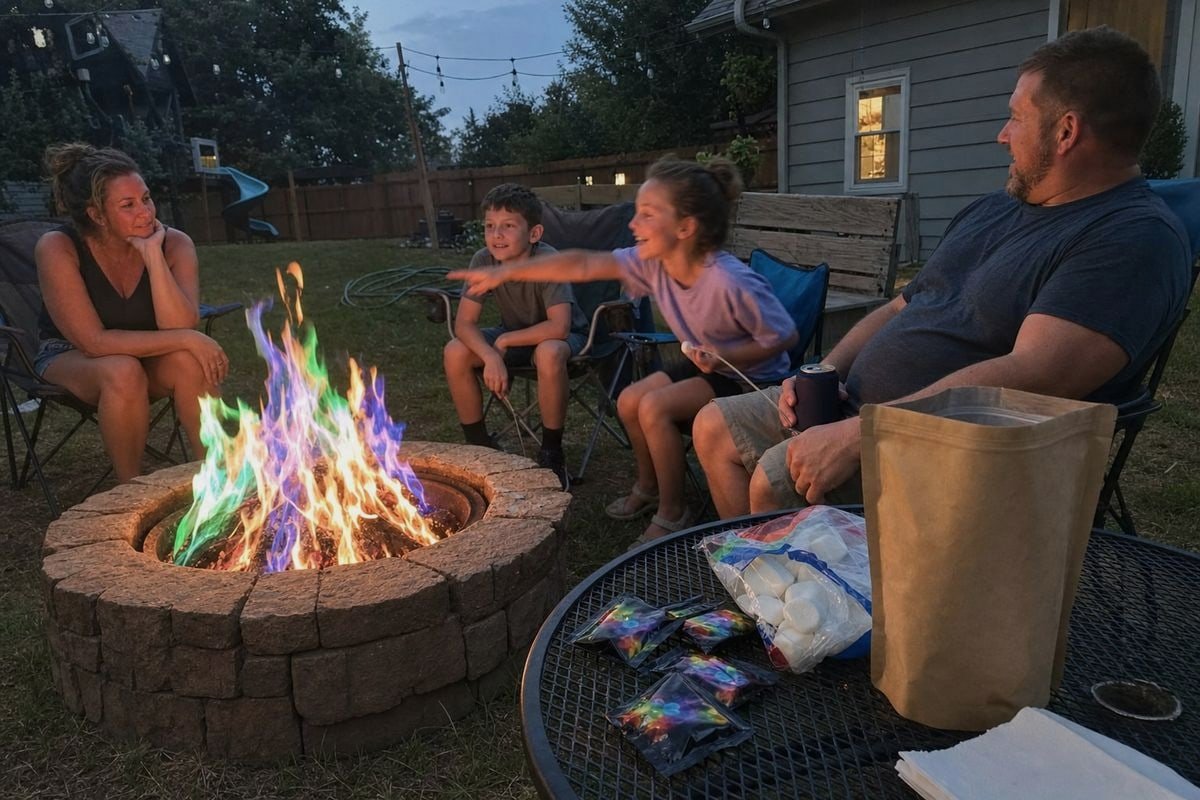
La plupart des lignes de nouveautés pour fêtes sont construites autour d'occasions intérieures : anniversaires, mariages et fêtes saisonnières. Cela laisse un angle mort évident. L'occasion en plein air en soirée — un feu de camp, un rassemblement autour d'un foyer, un voyage en camping — n'a généralement aucun produit de nouveauté dédié. D'après notre expérience d'exportation aux États-Unis, en Allemagne, au Royaume-Uni et en Australie, c'est là que les colorants pour feux de camp 2 se vendent le plus rapidement, car l'acheteur possède déjà le feu. Le sachet l'améliore simplement.
Cartographier les segments par rapport à la lacune
Effectuez une simple analyse des lacunes du produit. Listez vos occasions, puis vérifiez celles qui ont un produit phare. Voici comment nous le présentons aux distributeurs :
| Segment de clientèle | Couverture actuelle dans une ligne de nouveautés typique | Ce qu'ajoute la poudre magique pour le feu |
|---|---|---|
| Familles de campeurs | Bâtons de guimauve, bâtons lumineux | Un moment de "wow" partagé avec des effets de flammes arc-en-ciel |
| Propriétaires de foyers | Presque aucun | Un accessoire de foyer acheté sur un coup de tête |
| Animateurs de glamping et de locations | Bougies, guirlandes lumineuses | Une sur-vente d'ambiance extérieure haut de gamme |
| Commerçants de festivals et d'événements | Feux d'artifice, confettis | Une nouveauté de feu sûre et non explosive |
| Créateurs de contenu Gen Z | Ballons, accessoires photo | Un visuel qui arrête le défilement pour les vidéos courtes |
Pourquoi ce segment est commercialement important
Ces audiences achètent de manière répétée. Un propriétaire de foyer allume des feux toute la saison. Un opérateur de glamping se réapprovisionne chaque mois. L'un de nos clients néerlandais a commencé avec des sachets en papier kraft pour les magasins de camping, puis a ajouté un format en pot pour les jardineries en moins d'un an. Même produit, deux segments mal desservis, une seule série simple de diversification des stocks.
Comment comparer la Poudre Magique de Feu aux étincelles et aux articles de fête que j'ai déjà en stock ?
Un compromis se présente dans presque tous les appels d'acheteurs que je reçois : les feux d'artifice se vendent rapidement mais entraînent des maux de tête d'expédition et des restrictions d'âge, tandis que les faveurs en papier s'expédient facilement mais ennuient les clients. Comparer les deux aux sachets de flammes colorées rend la décision concrète.
Comparez les trois sur la réglementation, la saisonnalité, la marge et la partageabilité. Magic Fire Powder n'est pas explosif et plus facile à expédier que les feux d'artifice, fonctionne toute l'année contrairement aux faveurs d'été, prend en charge des marges de niveau nouveauté et produit un effet de flamme arc-en-ciel filmable que ni les feux d'artifice ni les faveurs en papier ne peuvent offrir.

Commencez par une vue côte à côte. C'est le tableau de comparaison exact que nous partageons lorsqu'un grossiste demande où se situent les sachets de flammes colorées dans son assortiment :
| Critères | Feux d'artifice | Faveurs de fête standard | Sachets de poudre magique pour le feu |
|---|---|---|---|
| Classe réglementaire | Souvent pyrotechnique ; réglementé | Non réglementé | Colorants chimiques pour flammes de nouveauté ; non explosifs |
| Expédition | Complications fréquentes liées aux matières dangereuses | Simple | Simple avec la documentation appropriée |
| Saison | Pics du Nouvel An, de l'été | Lié à l'événement | Toute l'année : camping en été, cheminées en hiver |
| Durée de l'effet | Pourquoi la surface détermine l'inflammation | Statique | Affichage prolongé de flammes colorées dans le feu |
| Valeur sur les réseaux sociaux | Modéré | Faible | Élevé ; le changement de couleur se fait bien en quelques secondes |
| Achat répété | Occasionnel | Faible | Élevé chez les propriétaires de foyers et de braseros |
L'angle opérationnel
Les cierges magiques se comportent comme des feux d'artifice sur de nombreux marchés. Ils déclenchent des règles de stockage, des documents de transport et parfois des périodes de vente saisonnières. Notre usine est située à Liuyang, au cœur du pôle des feux d'artifice 3, de la Chine, nous connaissons donc intimement ces obstacles - et nous avons délibérément conçu le Magic Fire Powder comme une nouveauté à ajouter, pas comme un produit pyrotechnique. L'utilisateur jette le paquet non ouvert dans un feu de bois existant et observe les couleurs se développer en quelques secondes. Aucun produit d'allumage n'est vendu, de sorte que le fardeau réglementaire diminue considérablement.
L'angle de l'expérience client
Les cadeaux de fête sont statiques. Les cierges magiques sont brefs. Un paquet de flammes colorées transforme tout le feu en verts, bleus et violets pour un spectacle prolongé, et les utilisateurs peuvent adapter le spectacle en ajoutant plus de paquets à un feu de camp plus grand. Ce moment évolutif et partageable est ce qui positionne ces articles parmi les cadeaux fantaisie de gros les plus solides que nous produisons. Une mise en garde que nous ajoutons toujours : les flammes colorées sont pour être vues, jamais pour cuisiner - un point que votre étiquetage de sécurité des consommateurs doit répéter clairement.
Quelles certifications dois-je confirmer avant d'ajouter un article de nouveauté à base de feu à mon catalogue ?
Une leçon que nous avons apprise tôt dans nos 17 années d'exportation : un beau paquet avec des documents manquants est sans valeur à la douane. Nous avons vu une fois l'expédition d'un concurrent rester bloquée à Rotterdam pendant des semaines à cause d'un rapport de test absent, et cette histoire guide encore aujourd'hui notre liste de contrôle de conformité.
Confirmer la certification d'usine ISO 9001, le marquage CE pour l'UE et les rapports de test de tiers de SGS ou Intertek couvrant la composition et le comportement au feu. Vérifier également la conformité sociale BSCI, l'étiquetage de sécurité consommateur correct avec avertissements, et la documentation de transport spécifique au marché avant de lister tout article de nouveauté à base de feu.

La certification n'est pas un plus pour les biens adjacents au feu. C'est la porte qui décide si les grands canaux d'approvisionnement au détail ouvriront même votre catalogue. D'après notre expérience de fourniture aux canaux de type Home Depot, les acheteurs demandent des documents avant de demander les prix.
L'ensemble documentaire de base
| Exigence | Ce qu'elle prouve | Qui l'exige |
|---|---|---|
| ISO 9001 | Gestion de la qualité constante à l'usine | Presque tous les acheteurs B2B sérieux |
| Conformité CE | Conformité pour le marché européen | Importateurs et distributeurs de l'UE |
| Rapports de test SGS / Intertek | Vérification indépendante des colorants de flammes chimiques et du comportement de combustion | Chaînes de vente au détail, assureurs, douanes |
| Audit BSCI | Normes de production éthiques et sociales | Groupes de vente au détail européens en particulier |
| Documents de classification de transport | Catégorie d'expédition et manipulation correctes | Transitaires et douanes |
Étiquetage et vérifications spécifiques au marché
Au-delà des certificats, l'emballage lui-même doit porter des avertissements conformes : surveillance d'un adulte, ne pas ouvrir le paquet, ne pas cuisiner sur des flammes colorées, tenir à l'écart des enfants, uniquement pour les feux de bois en extérieur. Nous imprimons ceux-ci directement sur des pochettes en aluminium, des sacs en papier kraft et des boîtes d'exposition, et nous localisons la langue d'avertissement pour chaque marché de destination. Pour les acheteurs américains, vérifiez les règles de nouveauté au niveau de l'État 4. Pour l'UE, confirmez vos arrangements de personne responsable en vertu des réglementations sur la sécurité des produits. Demandez à votre fournisseur des rapports de test liés par lot 5, pas un seul vieux certificat - la qualité du colorant de flamme doit être vérifiée lot par lot, c'est exactement pourquoi notre équipe de contrôle qualité échantillonne chaque série de production avant de sceller. Si un fournisseur hésite à partager les rapports actuels, considérez cela comme un signal d'alarme et retirez-vous.
Puis-je essayer la poudre Magic Fire avec une petite commande en marque blanche avant de m'engager sur une gamme de produits complète ?
Les premières commandes flexibles sont quelque chose que nous avons lutté pour protéger sur notre ligne de production. Notre équipe de vente a une fois poussé pour des minimums plus élevés, mais notre expérience avec un importateur britannique prudent - qui a commencé petit et commande maintenant des conteneurs - a réglé le débat de manière permanente.
Oui. Les usines réputées proposent des MOQ adaptés aux essais avec un support complet de marque privée, y compris votre marque sur des sachets en aluminium, des sacs en papier kraft ou des bocaux, ainsi que des boîtes personnalisées, des codes-barres et des étiquettes d'avertissement. Une petite commande d'essai vous permet de valider la vente dans un canal avant de passer à une gamme complète.
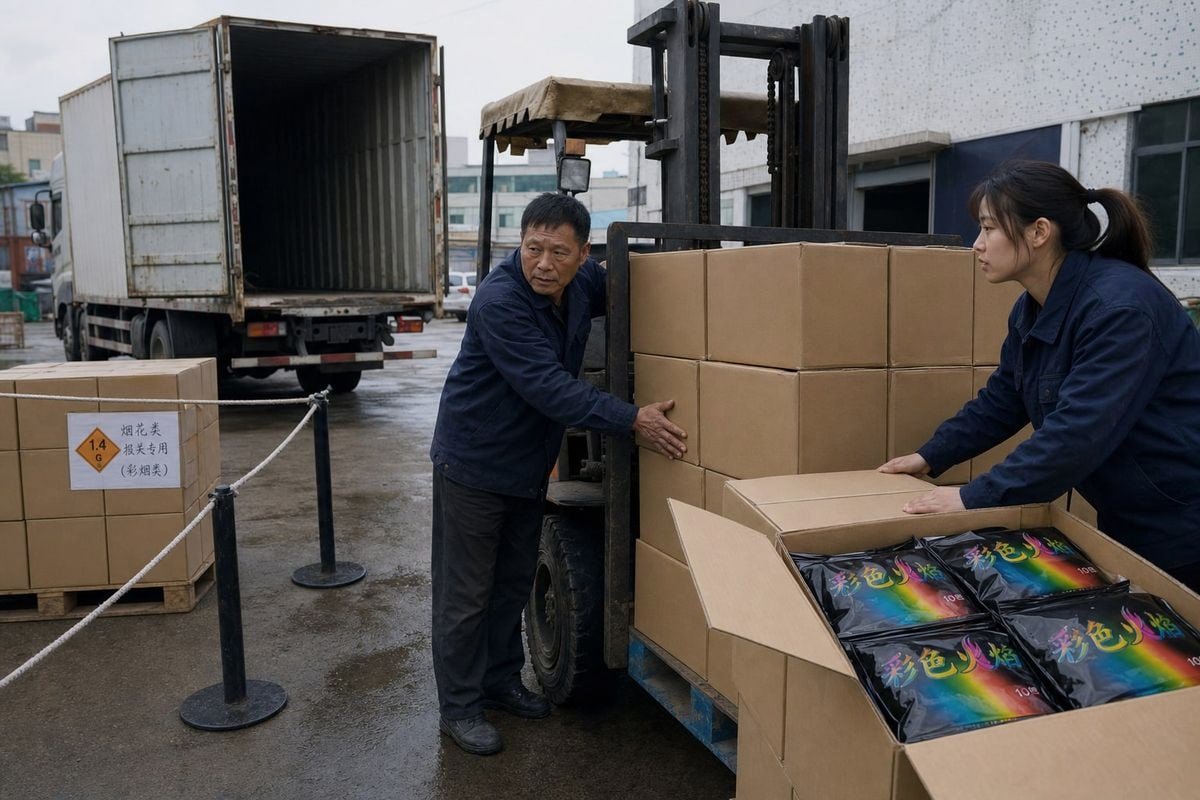
Une commande d'essai répond à trois questions à moindre coût : le produit se vend-il dans votre canal ? Votre marque fonctionne-t-elle sur l'étagère ? Et votre fournisseur livre-t-il la même qualité à grande échelle que celle montrée dans l'échantillon ? Sur ce dernier point, la profondeur de fabrication est importante. Parce que nous gérons des lignes de production complètes avec des contrôles stricts lot par lot 6, l'échantillon qu'un acheteur approuve est le produit que le conteneur transporte. Cette cohérence est exactement ce qu'une commande d'essai devrait tester.
Un processus d'essai pratique
- Demandez des échantillons de chaque format d'emballage - pochette brillante en aluminium, sac à fermeture éclair en papier kraft, et pot - et testez-les vous-même dans un feu de bois.
- Choisissez un format et un canal. Un paquet d'assortiment d'une seule couleur ou arc-en-ciel dans une boîte d'exposition sur comptoir fonctionne bien pour les positions d'impulsion près des fournitures d'événements saisonniers.
- Approuvez les illustrations de marque privée, y compris l'étiquetage de sécurité du consommateur localisé et les codes-barres pour votre système.
- Passez une petite série de production et suivez les ventes pendant une saison.
- Développez des extensions de ligne : pommes de pin à flammes colorées pour les cadeaux d'hiver, torches en cire pour les événements, couleurs uniques thématiques pour le tailgating ou les fêtes.
Ce qu'il faut négocier d'emblée
Demandez des rapports de test de lot avec chaque envoi d'essai, des délais de livraison confirmés par écrit et des paliers de prix pour les volumes de réapprovisionnement. Discutez également de l'évolution de l'emballage dès le début — plusieurs de nos clients européens se tournent vers le kraft et des formats à faible teneur en plastique 7 pour s'aligner sur les tendances de vente au détail soucieuses de l'environnement, et il est moins cher de planifier cette voie avant que votre première illustration ne soit finalisée. Un bon partenaire OEM traite votre essai comme le début d'une gamme de produits, et non comme une transaction unique.
Conclusion
Un catalogue de nouveautés surchargé sans produit d'ambiance laisse de vrais revenus sur la table. Magic Fire Powder comble cette lacune — validez le segment, vérifiez la conformité, puis testez en petite quantité avec un support de marque privée.
Notes de bas de page
Explique la méthode commerciale générale que l'article recommande pour repérer les lacunes du catalogue. ↩︎
Explique la chimie de la coloration des flammes par sels métalliques sous-jacente à ces produits de nouveauté. ↩︎
Contexte sur Liuyang, la ville citée comme centre de fabrication de feux d'artifice en Chine. ↩︎
Aperçu faisant autorité de la réglementation fédérale et étatique sur les feux d'artifice et les nouveautés aux États-Unis. ↩︎
Norme internationale pour les laboratoires d'essai garantissant des rapports précis et cohérents liés aux lots. ↩︎
Norme mondiale pour les systèmes de gestion de la qualité garantissant une fabrication cohérente et des contrôles lot par lot. ↩︎
Le programme de gestion durable des matériaux de l'EPA est lié à la tendance des emballages éco-responsables décrite. ↩︎



 English
  Spanish
  German
  French
  Arabic
  Portuguese
Rejoignez la conversation