







Wondering how to stop suppliers from reselling custom packaging? Having printed thousands of private-label Magic Fire pouches for overseas brands, I have sat on the other side of these contracts.
To stop suppliers from reselling custom packaging, sign a manufacturing agreement with a no-resale clause, an NNN agreement covering artwork and specifications, IP ownership and tooling clauses, an exclusivity clause, plus audit rights, liquidated damages, and injunctive relief for enforcement.
One clause alone will not save you. What works is a layered system. Below, I will walk through each layer the way I explain it to our own private-label buyers.
What contract clauses actually prevent my supplier from reselling my custom packaging design?
A German distributor once asked me to sign a two-page annex before approving our first foil pouch proof. That annex taught me exactly which clauses serious buyers rely on.
Five clauses do the real work: a no-resale clause banning sale of your packaging to third parties, a use-restriction clause limiting your specs to your orders only, an anti-diversion clause blocking unauthorized channels, a non-circumvention clause, and an IP ownership clause covering artwork and dielines.

First, understand that "reselling custom packaging" means two different problems. Your supplier could sell your physical pouches, boxes, or labels to another seller. Or your supplier could reuse your design files, dielines, and branding to make lookalike packaging for a competitor. Your contract must block both. In our own OEM work, buyers who only ban the first problem often leave the second wide open.
The core clause set
| Clause | What it blocks | Pourquoi c'est important |
|---|---|---|
| No-resale clause | Selling your packaging or finished goods to any third party | Stops overruns and rejects from reaching marketplaces |
| Use-restriction clause | Using your specs, artwork, or brand elements for anyone else | Blocks lookalike packaging made from your files |
| Anti-diversion clause | Sales outside approved channels or territories | Protects your distribution and pricing strategy |
| Non-circumvention clause | The supplier dealing directly with your customers or agents | Prevents being cut out of your own channel |
| IP ownership clause | Claims over custom artwork, dielines, and derivative versions | Confirms your proprietary design rights on paper |
Drafting details that make clauses bite
Vague clauses fail. Strong clauses define three things precisely. Define the restricted items: pouches, cartons, inserts, labels, sleeves, artwork, dielines, molds, and any derivative versions. Define the restricted conduct: manufacture, sell, resell, quote, market, copy, disclose, or subcontract. Define the restricted recipients: competitors, marketplaces, distributors, affiliates, and sub-suppliers. Then add a time period that survives termination, plus a geography or channel limit if the supplier serves specific markets. One caution I always raise: an unlimited, worldwide, permanent ban can be attacked as a restraint of trade. A narrower clause that a court will actually enforce beats a sweeping one that collapses under challenge.
How can I legally protect my private-label packaging before I place a bulk order?
Timing is the trade-off I see buyers get wrong most often. Protection signed after we open the printing plates costs you all your negotiating leverage; before sampling, it costs you nothing.
Before any bulk order, sign an NNN agreement, register your trademark and design patent in the supplier's country, document IP ownership of all artwork, and put tooling and mold ownership in writing. Contract rights are far stronger when backed by registered intellectual property protection.

Follow a sequence, not a scramble. Here is the order I recommend to every brand that approaches our factory for private-label color-flame packets.
- Sign the NNN before sharing artwork. Send your dielines and brand files only after the accord de non-divulgation 1 is executed. Once the files are out, no paper can pull them back.
- Register IP where the factory operates. File your trademark and, where the packaging shape or graphics qualify, a design patent 2 in China — ideally covering the supplier's specific province. Local registration enables fast administrative enforcement and lets customs seize unauthorized shipments at the border. Registering your "trade dress" strengthens this further.
- Document ownership of deliverables. State in writing that all custom artwork, plates, and derivative files are your property, licensed to the supplier only to fulfill your purchase orders.
- Lock down tooling and mold ownership. If you paid for printing plates or molds, the manufacturing agreement 3 should say you own them, with return or destruction obligations on termination.
- Control subcontracting. Require written approval before the supplier uses alternate factories. Leakage often happens two tiers down, not at the factory you audited.
One honest limitation: if your design carries no patent, trademark, or copyright, your contract binds that supplier but cannot stop an independent third party from copying the concept. That is exactly why registration comes before the bulk order, not after the first knockoff appears.
What should I include in an NDA or exclusivity agreement with a Chinese manufacturer?
Buyers from the US and Europe regularly send us US-style NDAs to sign. I sign them, but I also tell them the truth: a standard NDA is the weakest tool for a China supply relationship.
Use a China-enforceable NNN agreement — non-disclosure, non-use, and non-circumvention — written in Chinese, governed by Chinese law, with liquidated damages per breach. Add a narrow exclusivity clause naming the product line, territory, and duration, plus tooling return and destruction obligations.

A Western NDA only bans disclosure. Your real risk is use: the supplier keeping your secret but quietly producing your pouch design for another seller. That is why the NNN structure exists.
NDA versus NNN at a glance
| Fonctionnalité | Standard NDA | China-focused NNN |
|---|---|---|
| Bans disclosure | Oui | Oui |
| Bans use of your specs for others | Rarement | Oui |
| Bans circumventing you to reach your customers | Non | Oui |
| Loi applicable | Usually buyer's home country | Chinese law, Chinese courts |
| Damages | Proven actual damages | Pre-agreed les dommages-intérêts liquidés 4 |
| Practical enforceability in China | Faible | Materially higher |
The exclusivity clause, drafted to survive
An "exclusivity of supply" provision can prohibit the manufacturer from producing your design — or confusingly similar designs — for any third party. But scope it. From our side of the table, a factory can realistically accept exclusivity limited by product line, territory, and duration, often tied to a minimum annual volume. A demand for permanent, worldwide exclusivity on a small trial order usually gets rejected, or worse, signed and ignored. Narrow terms get honored.
Enforcement teeth
Include liquidated damages with a specific figure per breach, since proving actual losses across borders is slow and expensive. Add immediate injunctive relief 5, because money alone cannot recall leaked stock. Finally, require certified destruction or documented return of all rejected, defective, or overproduced units — overruns are the single most common source of unauthorized distribution.
How do I verify my supplier is honoring exclusivity terms after production begins?
During one of our Audits BSCI 6, an inspector traced individual batch codes from our packing line back to raw material lots. That traceability discipline is exactly what buyers should demand for exclusivity monitoring.
Verify compliance through contractual audit rights, batch serialization on every packaging unit, reconciliation of printed versus shipped quantities, witnessed destruction of overruns, and routine marketplace monitoring. Preserve screenshots and purchase evidence immediately whenever suspicious listings appear.
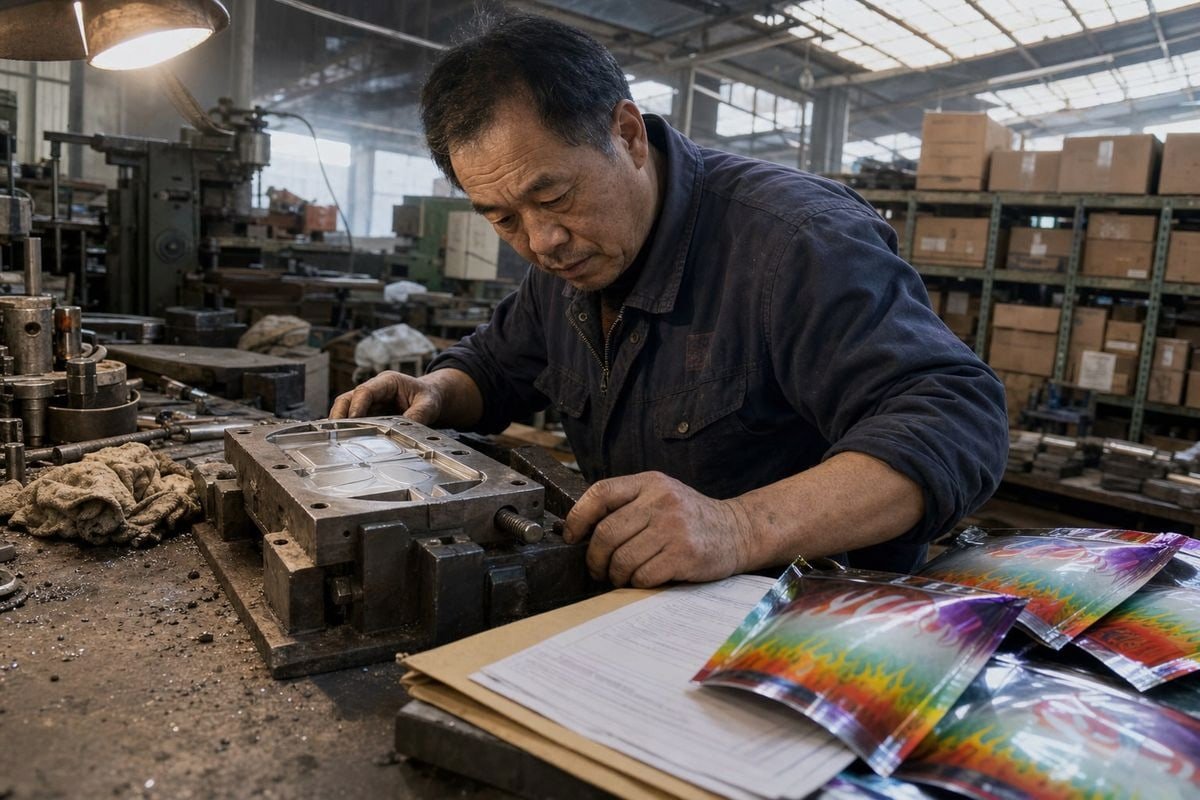
A clause you never check is a clause the supplier never fears. Verification runs on two tracks: controls inside the factory, and monitoring outside it.
Inside the factory
Your manufacturing agreement should grant audit rights over production records, material purchasing, and shipment documents tied to your packaging. Then use them. Reconcile the numbers each order: plates printed, units produced, units shipped, units scrapped. Gaps are where grey stock is born. Require witnessed or video-documented destruction of rejects and overruns, with a signed destruction certificate. Supply chain transparency of this kind is uncomfortable for weak suppliers and routine for good ones — at our facility, we treat these requests as a sign the buyer is serious.
Outside the factory
| Control | Comment ça marche | Ce qu'elle prouve |
|---|---|---|
| Serialization or batch codes | Unique identifiers printed on each pouch or carton | Which order leaked stock came from |
| Forensic markers | UV-fluorescent or chemical tracers in the ink | Whether a suspect unit came off your supplier's line |
| Marketplace sweeps | Monthly searches on Amazon, eBay, and regional platforms | Early detection of unauthorized listings |
| Test purchases | Buy suspect units and inspect codes | Court-ready physical evidence |
| Evidence file | Screenshots, product pages, price history, seller claims | Proof of breach before formal notice |
When you find a leak, move fast. Send notice under the contract's cure provisions, invoke liquidated damages, and file marketplace takedowns backed by your registered trademark or design patent. Speed matters more than volume of paperwork; the first enforced breach usually ends the behavior.
Conclusion
Custom packaging leaks destroy pricing and brand trust fast. Layer NNN terms, IP registration, tooling ownership, exclusivity, and audit-backed verification — then choose a supplier who welcomes that scrutiny.
Notes de bas de page
1. Detailed explanation of legal contracts that protect confidential information from being shared with third parties. ↩︎
2. Official USPTO resource explaining the protection of unique visual characteristics of a product or its packaging. ↩︎
3. Authoritative Wikipedia page explaining the legal and business framework of contract manufacturing. ↩︎
4. Legal definition of pre-set compensation amounts specified in a contract for potential breaches of terms. ↩︎
5. Legal encyclopedia entry explaining court orders that require a party to stop specific harmful actions. ↩︎
6. Official information on the social compliance standards used to audit global supply chains and factories. ↩︎



 English
  Spanish
  German
  French
  Arabic
  Portuguese
Rejoignez la conversation