






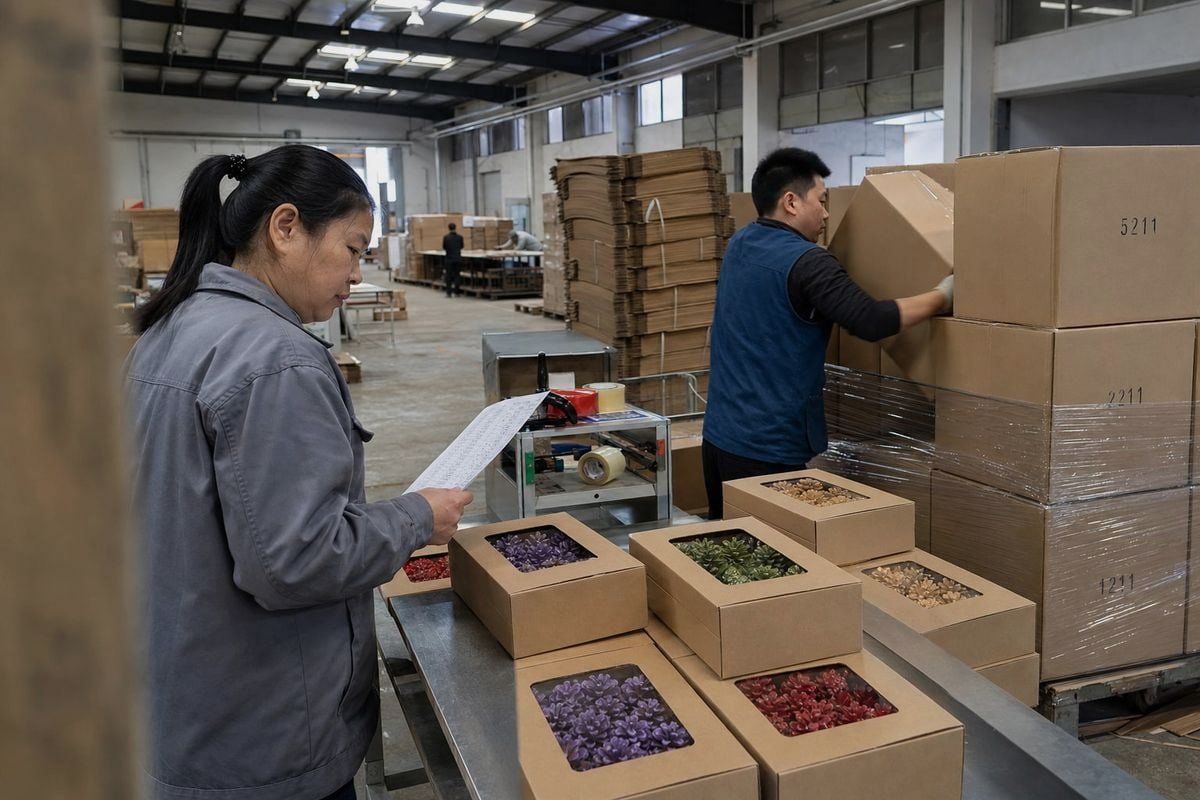
Itemized Lacey Act declarations 1 trip up more pine cone gift box importers than pricing ever does. I have watched shipments from our Ningbo lines sit at U.S. ports over one missing species name.
To complete itemized Lacey Act declarations for pine cone gift box imports, list each plant component separately with its genus and species scientific name, country of harvest, quantity in metric units, and entered value, then file electronically through ACE or LAWGS at or before entry.
That is the short answer. The longer answer involves supplier data, HTS classification, common filing errors, and documentation checks. Let me walk you through each piece, step by step.
What Information Do I Need From My Supplier to Complete a Lacey Act Declaration Correctly?
A few years back, one of our U.S. distributor clients asked us for "the pine cone paperwork" two days before vessel arrival. That scramble taught both of us to gather data at the purchase-order stage, not at the port.
You need the full scientific name (genus and species) of every plant component, the country of harvest for each, the metric quantity of plant material, the HTS code, entered value, and shipment details such as bill of lading and container number, all supplied before the goods ship.
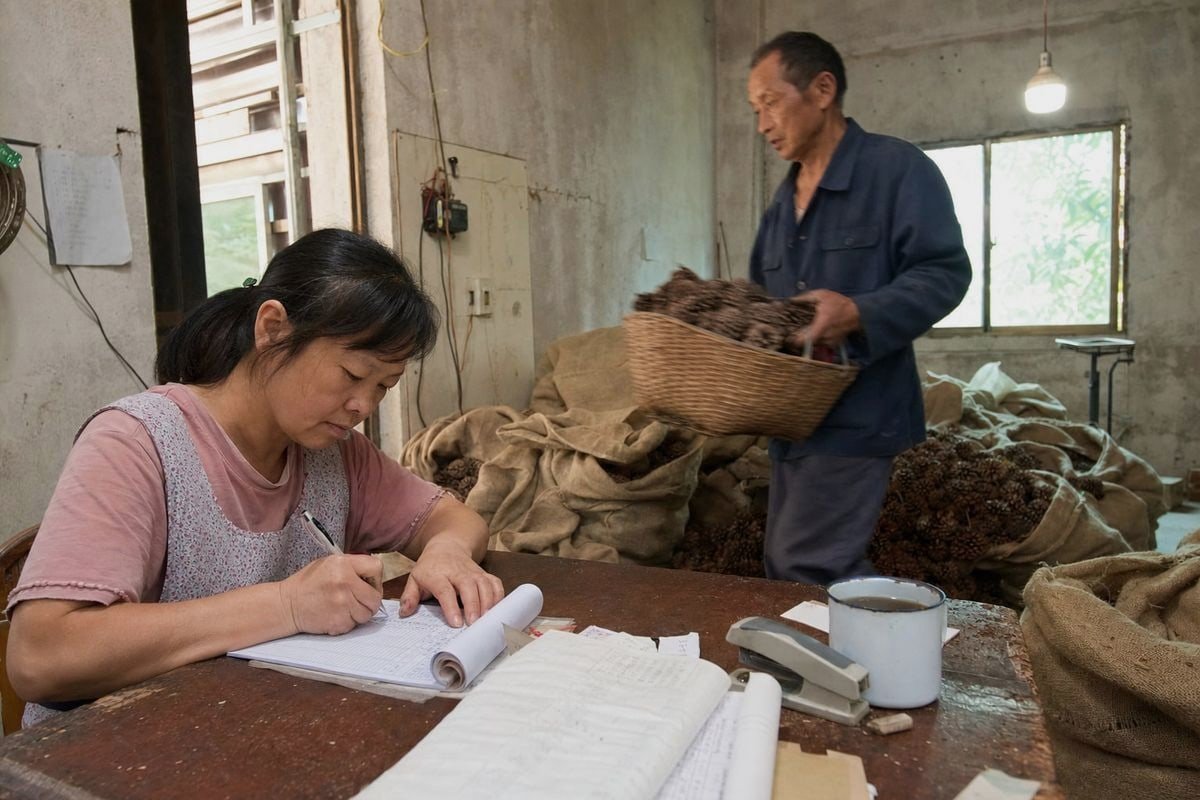
Le plant and plant product declaration is only as good as the data behind it. Your supplier is the only party who actually knows where the cones were collected and what wood went into the box. So the burden of collection starts overseas, and the burden of accuracy lands on you as the importer of record.
The Core Data Fields, in Plain English
APHIS asks for a defined minimum dataset. Here is what each field means for a pine cone gift box:
| Champ de données | What It Means for a Pine Cone Gift Box |
|---|---|
| Nom scientifique | Genus and species of the pine cones, wooden box, moss, or filler (e.g., Pinus massoniana) |
| Pays de récolte | Where the plant was grown or collected, not where the box was assembled |
| Quantité | Metric weight (kg) of the plant material itself, not the count of finished boxes |
| Valeur déclarée | The import value for that line item |
| code SH 2 | The tariff code that determines whether the declaration is required |
| Recycled content | Average percentage, required for paper or paperboard components |
One point deserves emphasis. If your supplier genuinely cannot pin down a single species, APHIS allows a list of possible species 3 or possible countries of harvest. That flexibility is real, but it is not an excuse for skipping the question. In our experience exporting color-flame pinecones to the US, Germany, and Canada, buyers who request species documentation in the purchase contract get it. Buyers who ask afterward get delays.
Demandez également les harvest documentation itself, not just a stated answer. For wild-collected cones, a collection record with region and date supports the due care 4 standard far better than a one-line email. We provide our B2B clients a species and origin data sheet with every export batch for exactly this reason, and it has become part of our standard SGS-supported documentation pack.
How Do I Classify Pine Cone Gift Box Components Under the Correct HTS and Plant Codes?
When we developed our first retail-ready pinecone gift set — painted cones in a kraft box with a burlap sack — our compliance team spent a full week mapping each component to Harmonized Tariff Schedule HTS codes before the first container left Ningbo.
Classify each component by its own nature: natural or decorated pine cones typically fall under HTS 0604 as ornamental plant material, wooden boxes under Chapter 44, and paperboard under Chapter 48; a Lacey declaration is triggered when the entry's HTS code appears on the APHIS-covered list.
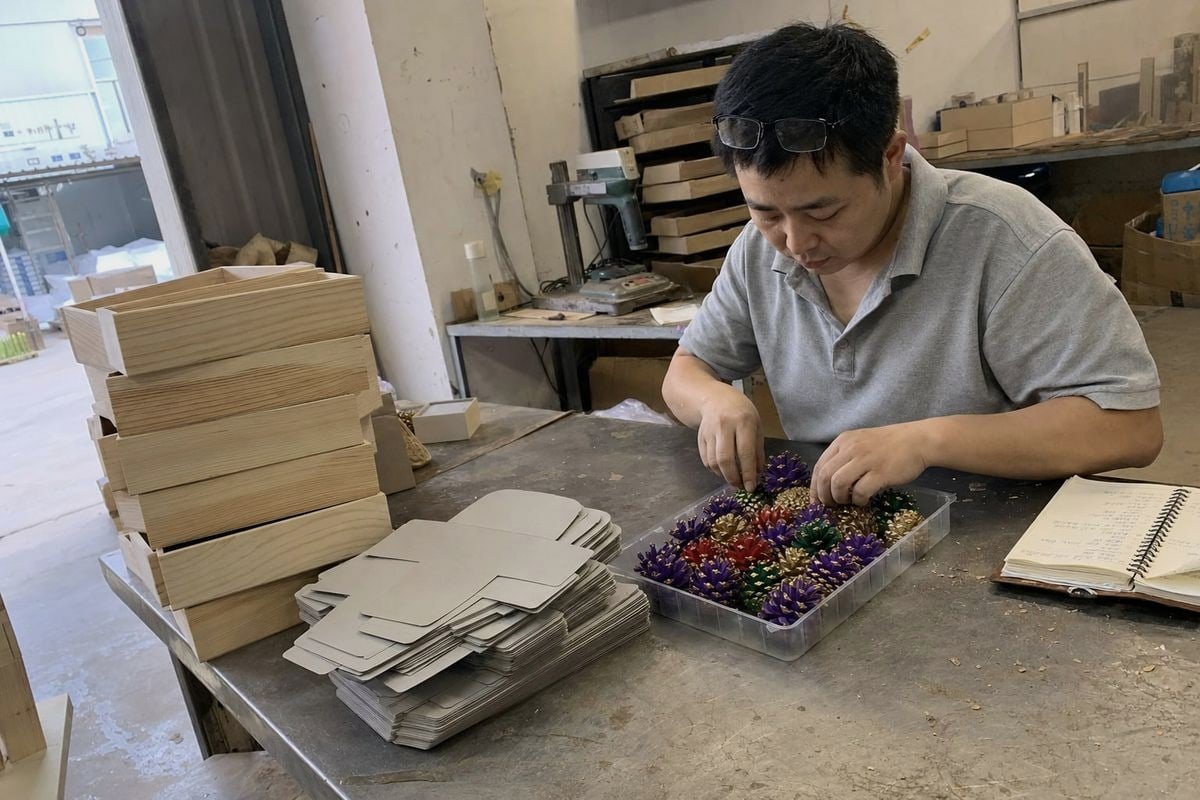
Classification drives everything. Lacey Act applicability is tied to the HTS code used at entry, so a wrong code can mean either a missing declaration or an unnecessary one. Both outcomes cost you time.
A Component-by-Component View
Think of your gift box as a bill of materials 5, not one product. Each plant-derived component may carry its own classification logic:
| Composant | Likely HTS Chapter | Lacey Filing Consequence |
|---|---|---|
| Dried or painted pine cones | 0604 (ornamental foliage) | Usually covered; species and harvest country required |
| Decorative wooden box | Chapter 44 (wood articles) | Covered if the box is part of the product sold |
| Paperboard gift box | Chapter 48 | May be covered; recycled content percentage required |
| Moss, straw, dried botanicals | Chapter 06/14 | Each plant type may need its own declaration line |
| Plastic ribbon, metal ornaments | Divers | No plant material, no Lacey line needed |
| Composite wood materials (MDF inserts) | Chapter 44 | Covered; species of input wood or possible species list |
Packaging Versus Product: The Critical Distinction
Here is the trap most gift-box importers fall into. APHIS exempts packaging material used exclusively to support, protect, or carry another item. But a decorative gift box is an article of commerce — the customer keeps it, and it is part of what they bought. It does not qualify for the packaging exemption. Our burlap drawstring sacks and printed kraft pouches fall on the product side of that line, and we classify them accordingly on every export document we prepare for clients.
Also remember that "itemized" means your filing should mirror the shipment's individual plant-containing lines. A box with pine cones, moss, and a wooden lid may need three distinct plant entries, each with its own scientific name and country of harvest. Lumping them into one vague line is one of the fastest ways to draw an APHIS query.
What Common Mistakes Cause Lacey Act Declaration Delays or Customs Holds for My Shipments?
The trade-off I weigh constantly is speed versus verification. A client once pushed us to ship a seasonal pinecone order early, before harvest-country records were finalized. We held the container three days instead — and it cleared U.S. customs without a single question.
The most common causes of delays are declaring only a common name instead of genus and species, listing the country of export instead of country of harvest, treating the gift box as exempt packaging, filing after arrival, and reporting finished-unit counts instead of metric plant quantities.
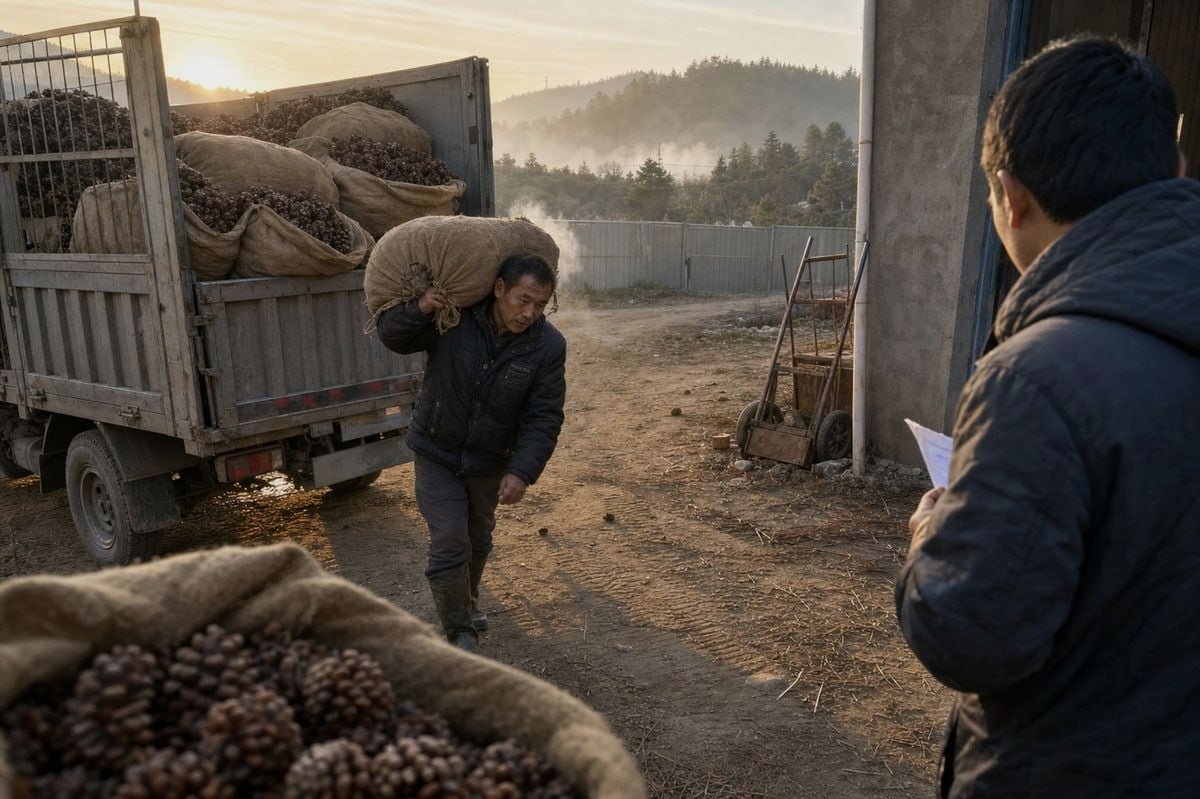
Most holds are self-inflicted. They come from small data errors, not from bad-faith sourcing. Below are the failure patterns we see most often, and how to prevent each one.
The Five Errors That Trigger Holds
- Common names instead of scientific names. "Pine cone" fails. Pinus species names pass. Cross-reference names against the USDA GRIN-Global taxonomy database, because outdated synonyms can trigger automated non-compliance flags in ACE.
- Country of export used as country of harvest. A gift box assembled in China from cones collected in China is straightforward. But if the moss came from a third country, the harvest country for that line is different. The form asks where the plant grew, full stop.
- Assuming the box is exempt packaging. As covered above, a decorative box is a product. Declare its wood or paperboard, including recycled content percentage where applicable.
- Late filing. The declaration must be filed at or before the shipment enters U.S. jurisdiction. Since January 1, 2026, APHIS no longer accepts paper APHIS PPQ Form 505 or 505B filings, so mailing a form is no longer a fallback. Everything goes through the ACE automated commercial environment message set or the LAWGS filing system.
- Wrong quantity basis. Report the metric weight of the plant material itself — kilograms of cones, not "500 gift boxes."
When You May Not Need to File at All
Do not over-file either. No declaration is needed for informal entries, products free of plant material, or goods not classified under an APHIS-covered HTS code. There is also a narrow de minimis exception 6: broadly, plant material under 5% of the individual product by weight, capped at a small total entry weight per HTS code. For a pinecone-centered gift box, the cones are the product, so this exception rarely applies — but it may cover incidental botanical trim on an otherwise non-plant item.
How Can I Verify My Manufacturer Provides Accurate Species and Sourcing Documentation for Compliance?
A German fireplace distributor once audited our Ningbo facility before placing their first color-flame pinecone order. They asked for harvest records, batch traceability, and third-party test reports. That audit shaped how we document sourcing to this day.
Verify your manufacturer by requesting species identification records, harvest-region documentation with dates, third-party certifications such as ISO 9001 and BSCI, batch-level traceability, and independent lab test reports; then cross-check declared species against botanical databases before you file.
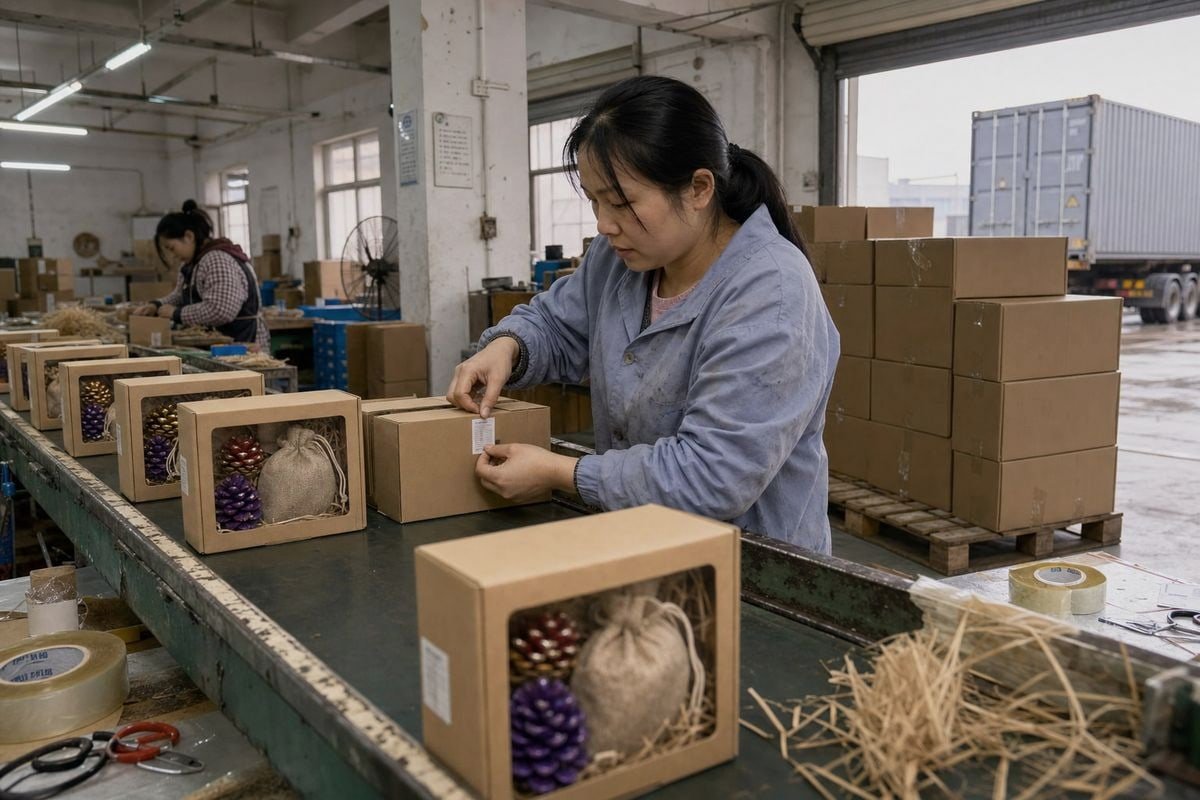
Verification is where supply chain due care becomes real rather than theoretical. Under the Lacey Act, "due care" means the degree of care a reasonably prudent importer would exercise. You cannot delegate legal responsibility to your supplier, but you can build a documentation trail that demonstrates diligence.
A Practical Verification Framework
| Étape de vérification | Ce qu'il faut demander | Signal d'alarme |
|---|---|---|
| Species confirmation | Written genus and species per component, checked against GRIN-Global | Supplier only offers common names |
| Harvest origin | Collection region, country, and timeframe; geo-tagged records for wild-collected cones | "Made in [country]" offered as harvest proof |
| Factory legitimacy | Audit reports (BSCI), quality certification (ISO 9001), site visit or video tour | Trading company reselling with no factory visibility |
| Tests de produits | SGS or Intertek reports on materials and coatings | No third-party reports available |
| Traçabilité des lots | Lot numbers linking cones to specific collection batches | Documentation only exists after you ask |
Wild-collected pine cones deserve special attention. Unlike commercial timber 7, cones lack a mill-based audit trail, so harvest-level records are the only evidence chain that exists. At our factory, cone batches are logged by collection region and date before they enter painting or wax-treatment lines, and that record travels with the export file. Over 17 years of exporting fire products to 30-plus countries, we have learned that buyers who receive this file up front file their itemized Lacey Act declarations in hours, not weeks.
One more check: confirm your supplier understands that a certificat phytosanitaire 8 for raw botanical items under HTS 0604 is a separate requirement. The Lacey declaration does not replace pest-free certification. A capable manufacturer will hand you both documents without being reminded.
Conclusion
Itemized Lacey Act declarations reward preparation. Collect species and harvest data at order time, classify each component correctly, file electronically before arrival, and verify your manufacturer's documentation rigorously.
Miss one step and a seasonal shipment can sit in a customs hold while your selling window closes. That risk is entirely avoidable. Our team builds species data sheets, harvest records, and third-party test reports into every pinecone export we produce, because compliant paperwork is as much a part of the product as the cone itself. If you are sourcing decorative or color-flame pinecones for the U.S. or European
Notes de bas de page
1. Official USDA APHIS page for the Lacey Act, providing legal context and filing requirements for plant declarations. ↩︎
2. Official U.S. International Trade Commission tool for looking up Harmonized Tariff Schedule codes for import classification. ↩︎
3. Official APHIS guidance on declaring a list of possible species when the exact botanical origin is unknown. ↩︎
4. Official APHIS guidance on the 'due care' standard for importers to ensure legal sourcing of plant products. ↩︎
5. General definition of a bill of materials, used to categorize individual components of a complex gift set. ↩︎
6. Official APHIS documentation regarding the de minimis exception for products containing minimal amounts of plant material. ↩︎
7. Definition and context for commercial timber, contrasting its audit trail with that of wild-collected botanical items. ↩︎
8. Official USDA APHIS information on phytosanitary certificates required for botanical imports to prevent pest introduction. ↩︎

 English
  Spanish
  German
  French
  Arabic
  Portuguese
Rejoignez la conversation