






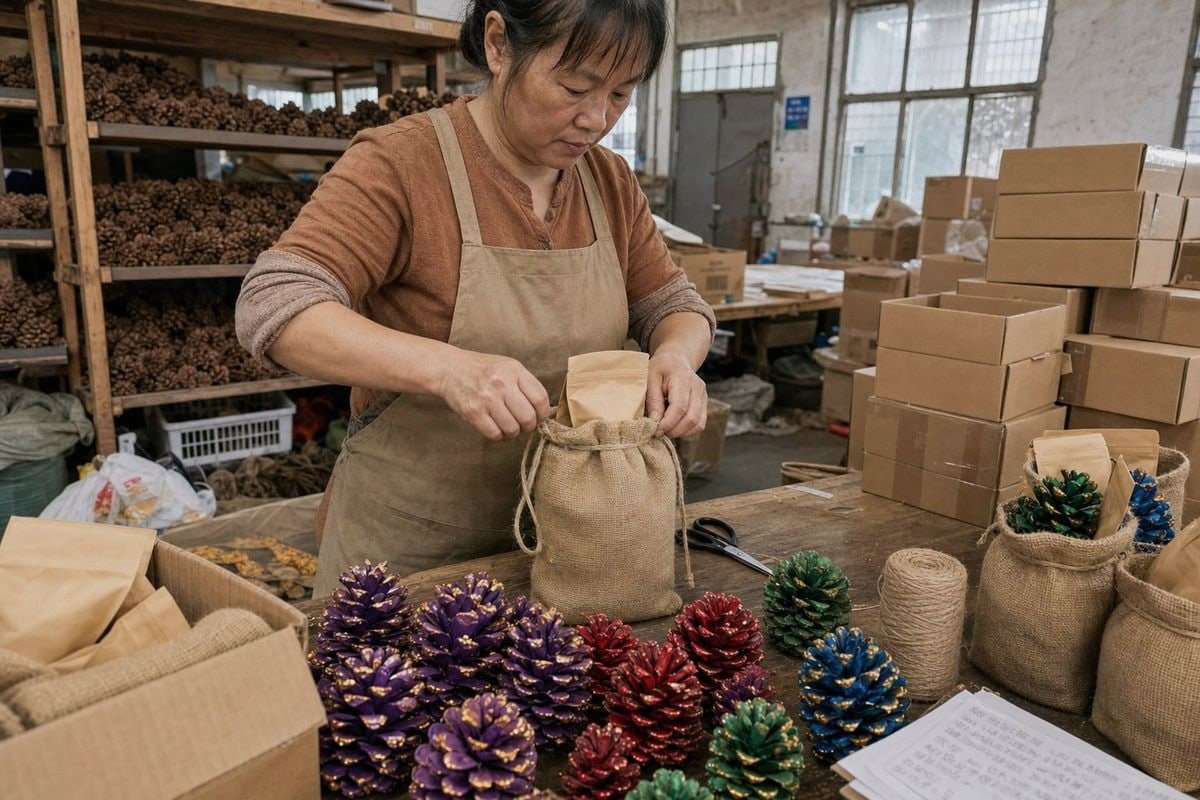
Buyers keep asking our factory the same thing: combining gift set and restock packaging for fireplace pine cones feels impossible without doubling tooling costs, splitting MOQs, and delaying shipments.
Combine gift set and restock packaging for fireplace pine cones by using one dual-purpose container: a decorative, resealable outer vessel with an inner refill pouch. The exterior sells as a gift; the interior functions as bulk restock, so one SKU and one tooling setup serve both channels.
That is the short answer. The details matter, though. Below, I break down design, compliance, inserts, labeling, and MOQ planning so your first mixed order actually works.
How can I design one container that works for both gift sets and bulk restock without adding cost?
Last winter, a German distributor sent us two separate packaging briefs — one gift box, one refill bag. Our engineers merged them into a single container and cut his tooling cost roughly in half.
Design one container with two layers: a rigid or fabric outer shell that looks gift-ready, plus a resealable kraft refill pouch inside. Keep dimensions identical across gift and restock SKUs, so the same die-cut, liner, and carton serve both formats without extra tooling.

The core idea is separating the display layer from the storage layer. The outer container does the selling. The inner pouch does the preserving. When both layers share one footprint, you avoid duplicate tooling, duplicate artwork plates, and duplicate carton specs.
Pick a format that already does both jobs
In our 17+ years producing color-flame pinecones and wood firestarters, three formats consistently work for dual-purpose packaging:
| Formater | Attrait du cadeau | Refermeture | Restock Fit | Coût relatif |
|---|---|---|---|---|
| Sac à cordon en toile de jute | High (rustic, seasonal) | Good (drawstring) | Bon avec doublure intérieure | Faible–Moyen |
| Pochette en kraft refermable avec fenêtre | Moyen | Excellent (zip seal) | Excellente | Faible |
| Wooden crate with liner bag | Very high (premium) | Fair (lid) | Bonne | Élevé |
We produce our Magic Fire packets in plastic bags, kraft bags, and jars, so we have run all three formats at scale. For most buyers, the sac en toile de jute 1 with a kraft refill pouch inside hits the sweet spot. The sack becomes permanent hearthside storage. The pouch becomes your repeat-purchase refill SKU later.
Protect the product, protect the container
Wax-dipped pine cones and color-treated cones can transfer wax or pigment. Always specify an inner protective liner. This keeps the decorative shell clean and reusable, which is the whole value proposition of a "gift set that becomes storage." Add crinkle paper or cedar shavings 2 as filler. They prevent wax chipping in transit and add a rustic fragrance that reads as premium.
One more cost lever: standardize dimensions. If your 6-cone gift unit and your 20-cone restock unit share the same base footprint, your master cartons, corrugated box inserts 3, and pallet plans stay identical. That alone saves more than most buyers expect.
What packaging specs should I request to keep gift and refill units compliant across the US and EU markets?
A UK buyer once nearly lost a Christmas season because his previous supplier printed warning labels in English only. His shipment sat in Rotterdam while stickers were reprinted. We now build compliance into artwork from day one.
Request CE-aligned warning labels, multilingual safety text for EU markets, SGS or Intertek test reports, clear "vented fireplace use" instructions, moisture-resistant packaging with sealed liners, and recyclable material declarations. Both gift and refill units need identical compliance panels, even if the decorative artwork differs.
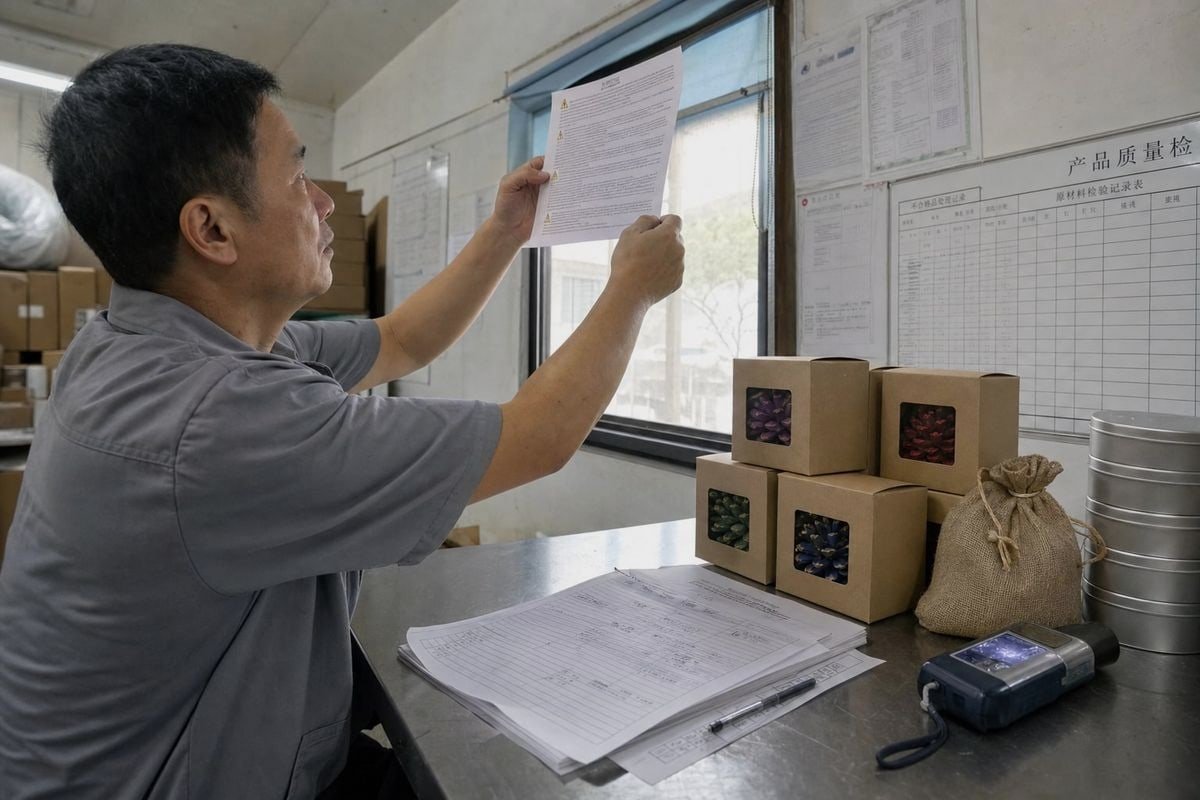
Compliance is the part buyers cannot see on a mockup, yet it decides whether your goods clear customs and stay on shelves. Our factory holds ISO 9001 4, BSCI, and CE certification, with SGS and Intertek test reports available for every color-flame product line. For our US and EU buyers, this is a hard requirement, not a nice-to-have — and your packaging spec sheet should reflect that.
The spec checklist we recommend
Here is the baseline we hand to buyers before artwork approval:
| Élément de spécification | Marché américain | Marché européen |
|---|---|---|
| Avertissements de sécurité | English, prominent placement | Multilingual (DE, FR, NL, PL as needed) |
| Instructions d'utilisation | Required for fire starters | Required, with pictograms preferred |
| Documentation de test | SGS/Intertek reports on file | CE alignment plus test reports |
| Déclarations de matériaux | Recyclability claims substantiated | Packaging waste directive awareness |
| Not-a-toy disclaimer | Recommandé | Fortement recommandé |
Why both units need the same compliance panel
A gift unit and a refill pouch carry the same product, so they carry the same risk profile. Retail inspectors do not care that one looks festive. If your color-changing cones are for vented fireplaces only, both packages must say so. If the cones are burnable fire starters, both need lighting instructions and storage guidance. We print these on a belly band or hang tag for gift units and directly on the pouch for refills, keeping the legal text identical.
Also specify moisture-resistant packaging 5 for the inner liner. Waxed cones survive humidity well, but color-treated cones can degrade if the seal fails during ocean freight. A zip-seal pouch inside a fabric or wooden shell solves this cleanly and doubles as the customer's long-term storage barrier.
Can I get custom box inserts and labeling that support both retail display and warehouse restocking?
Yes — and this is where a real factory earns its keep. Our one-stop OEM/ODM line handles custom boxes, display packaging, warning labels, and barcodes in a single production run, which trading companies simply cannot coordinate as tightly.
Yes. Request corrugated box inserts sized for both loose gift cones and sealed refill pouches, dual barcodes (retail EAN/UPC plus warehouse ITF-14 on cartons), a removable gift sleeve for retail display, and shelf-ready master cartons that convert into restock trays.

The trick is designing the insert once and letting the labeling do the switching. A corrugated insert with molded wells holds five or six painted cones for gift presentation. Remove the insert, and the same box holds a full refill pouch flat. One box, one insert die, two use cases.
A labeling system that works in both directions
We set up labeling in three layers:
- Product barcode on the pouch or hang tag for point-of-sale scanning.
- Gift sleeve or belly band carrying seasonal artwork, brand story, and instructions — removable, so the container underneath stays clean and reusable.
- Master carton labeling with ITF-14 codes, handling marks, and country-of-origin text for warehouse restocking and cross-dock flows.
Some of our buyers add a scan-to-restock QR code printed directly on the permanent container. The end customer scans it to reorder a refill pouch, which turns your gift SKU into a repeat-purchase engine. We print these codes in-house during the same run, so there is no added lead time.
Retail-ready packaging without a second production line
For shelf display, we recommend shelf-ready master cartons 6 with a perforated tear-away front. The carton ships as protective packaging, then tears down into a display tray on the shelf. This is standard retail-ready packaging practice for hearth and home accessories, and it means your warehouse and your retail buyer handle the exact same carton. Our production lines run these formats for fire starter gift sets and bulk fire starters alike, so mixing both in one order is routine for us, not an exception.
How do I confirm mixed-packaging orders will meet MOQ and lead time requirements for my first shipment?
The trade-off I weigh most often with first-time buyers is this: lower trial quantities versus packaging complexity. Mixed-packaging orders sit right at that intersection, so we plan them differently than single-SKU runs.
Confirm MOQ by treating the shared container as one production run with two finishing variants, which lets factories pool quantities. Request a written pre-production sample timeline, a packaging artwork approval date, and a combined lead time quote — typically sample first, then 30–45 days for production.
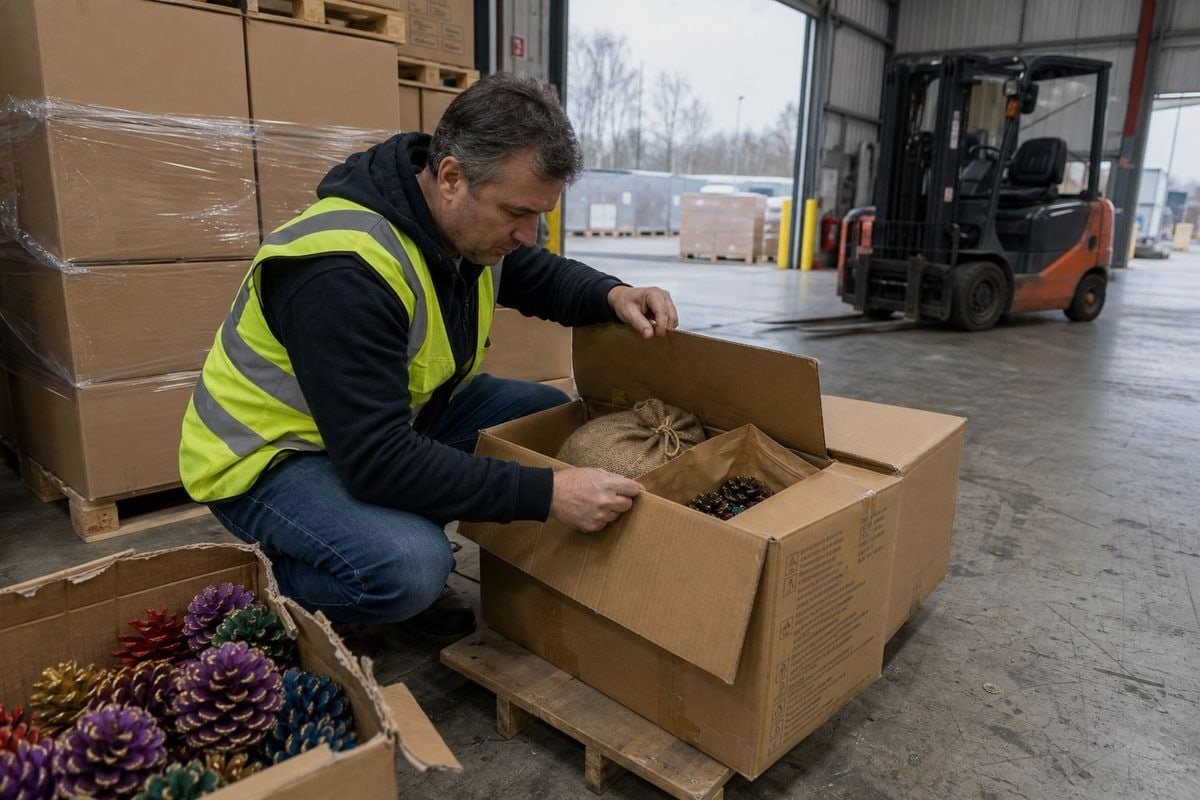
Here is why the dual-purpose design helps you at the commercial stage, not just the design stage. When your gift unit and your refill unit share the same cones, the same liner, and the same footprint, a factory can count both toward one MOQ. You are not ordering two products. You are ordering one product with two finishing paths. At our Ningbo facility, that distinction routinely lets buyers hit trial quantities that would be impossible with two unrelated packaging formats.
The confirmation sequence we walk buyers through
| Étape | What You Confirm | Calendrier typique |
|---|---|---|
| 1. Spec sheet sign-off | Dimensions, materials, compliance text | Week 1 |
| Échantillon de pré-production | Finish quality, insert fit, seal integrity | Weeks 2–3 |
| 3. Artwork approval | Barcodes, warnings, sleeve design | Week 3 |
| 4. Production and QC | Batch consistency checks | Weeks 4–8 |
| 5. Logistics booking | Carton dims, pallet plan, freight mode | Week 6 onward |
Questions to ask before you commit
Ask whether the gift and refill variants pool toward one MOQ — get it in writing. Ask whether the pre-production sample comes off the actual line, because a sample that reflects mass-production quality is the only sample worth approving. Our batch-to-batch quality control exists precisely so the first sample matches container number ten thousand.
Finally, ask about dimensional weight optimization. Fabric sacks and stand-up pouches ship nearly flat before filling, and standardized cartons made from eco-friendly shipping boxes 7 pack tighter on pallets. On ocean freight, that efficiency often offsets the cost of the nicer gift shell. We run these calculations for buyers across the US, Germany, and the UK as part of quoting, using sustainable packaging materials wherever the spec allows, because seasonal fire products live or die on landed cost per unit.
Conclusion
One dual-purpose container solves both jobs: a gift-ready shell outside, a resealable refill inside. Shared dimensions cut cost, unified labeling keeps you compliant, and pooled MOQs make first shipments practical.
Notes de bas de page
1. Provides historical and material context for the traditional fabric used in rustic gift presentation. ↩︎
2. Explains the use of natural wood byproducts as protective and aromatic filler in packaging. ↩︎
3. References a global leader in the production of corrugated materials for protective packaging solutions. ↩︎
4. Authoritative Wikipedia entry providing a comprehensive overview of the quality management standard. ↩︎
5. Peer-reviewed academic study on moisture barrier performance and transmission rates in packaging. ↩︎
6. References the industry standard for packaging that facilitates efficient retail st



 English
  Spanish
  German
  French
  Arabic
  Portuguese
Rejoignez la conversation