






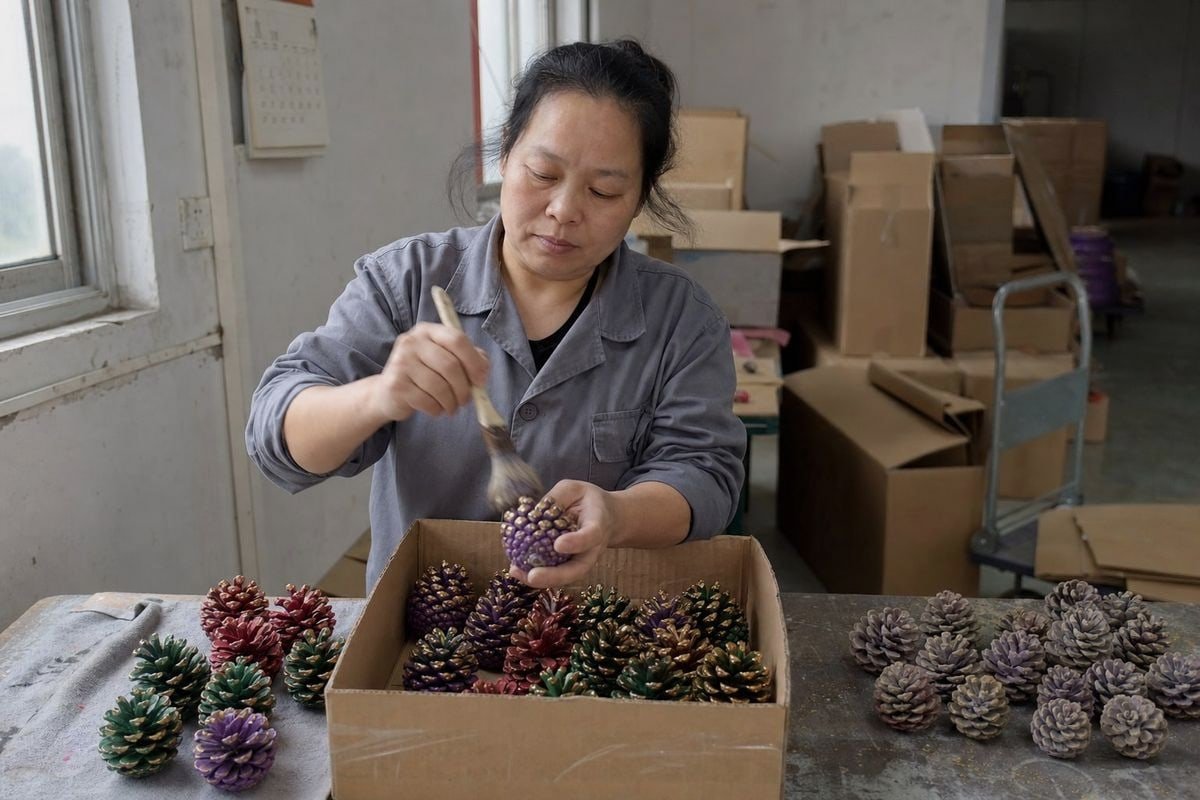
Des cônes de pin décoratifs poussiéreux s'accumulent dans des boîtes de rangement chaque année Sapin de Sibérie 1. Sur notre chaîne de production de pommes de pin colorées, je vois à quelle vitesse la poussière ruine la présentation — et comment elle peut être facilement réparée.
Oui, les pommes de pin décoratives poussiéreuses peuvent généralement être nettoyées et réutilisées. Brossez la poussière lâche, faites-les tremper dans une solution de vinaigre blanc, rincez et séchez-les complètement — idéalement dans un four à basse température. Ne jetez que les pommes de pin qui sont moisies, molles, friables ou en décomposition.
La différence entre " poussiéreux " et " endommagé " décide de tout. Ci-dessous, j'explique les méthodes de nettoyage, la récupération de stockage pour les pommes de pin colorées, la préparation avant la revente, et si le nettoyage affecte les performances de combustion.
Comment nettoyer des pommes de pin décoratives poussiéreuses sans abîmer leur finition ?
Un lot de cônes peints à la main est resté dans notre salle d'exposition pendant huit mois. Ils semblaient ruinés. Vingt minutes de nettoyage minutieux les ont ramenés à l'état de présentation.
Nettoyez d'abord les pommes de pin décoratives poussiéreuses avec des méthodes sèches : un pinceau doux, une vieille brosse à dents ou de l'air comprimé. Pour les pommes de pin peintes ou vernies, évitez de les tremper. Seules les pommes de pin naturelles non finies doivent être trempées dans du vinaigre, puis complètement séchées au four.
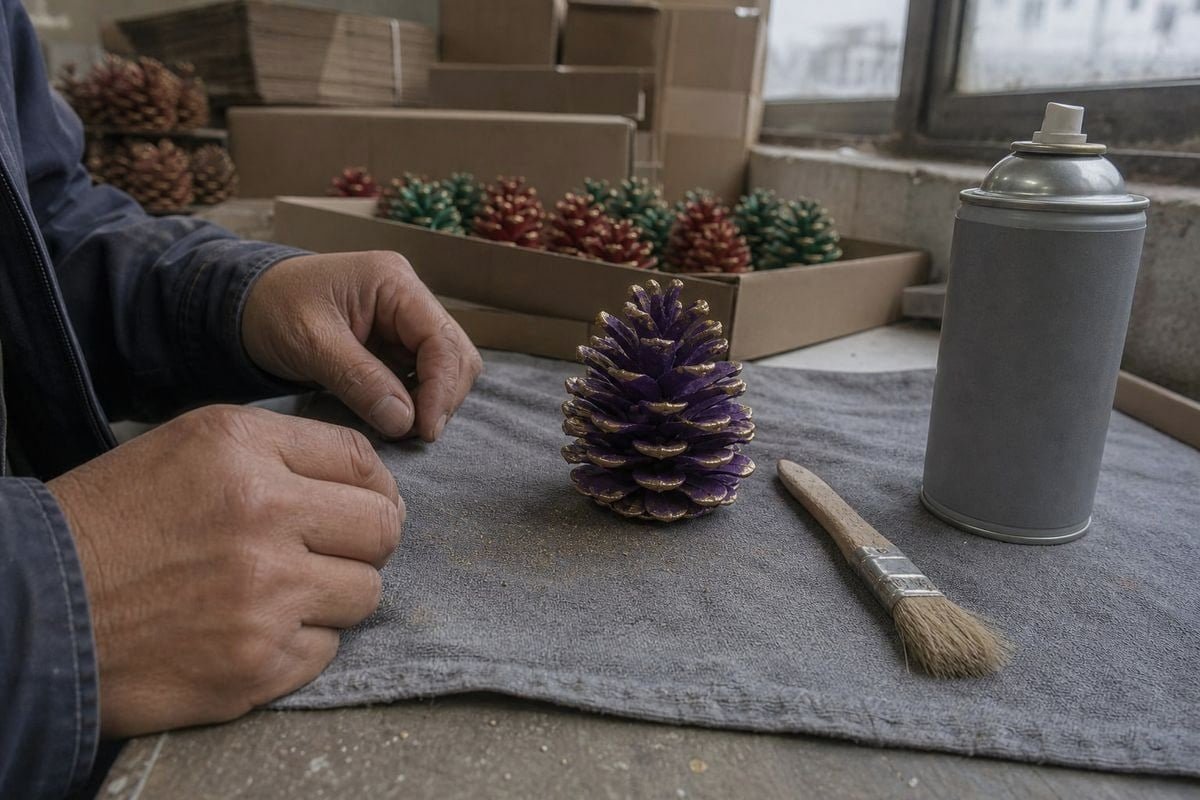
La finition détermine la méthode. C'est la règle la plus importante que je puisse vous donner. Nos cônes décoratifs sont peints à la main avec des pointes dorées métalliques et un fini laqué brillant. Les submerger dans l'eau risque de soulever la peinture, d'atténuer la brillance et de faire gonfler les écailles de bois en dessous. Nous séparons donc toujours les cônes en deux groupes avant le nettoyage : finis et non finis.
Nettoyage à sec pour les cônes peints et finis
Commencez à l'extérieur. Tapotez doucement chaque cône contre votre paume pour faire tomber la poussière. Ensuite, passez une brosse douce ou un pinceau de maquillage entre les écailles, en suivant le motif en spirale de la pointe à la base. Pour les crevasses serrées près du noyau, une bombe d' air comprimé 2 — celle utilisée pour l'électronique — projette la poussière sans ajouter d'humidité. C'est important car l'humidité fait se refermer les écailles des cônes, et sur un cône peint, vous ne voulez aucun mouvement.
Nettoyage humide pour les cônes naturels non peints
Les cônes non finis tolèrent bien l'eau. Voici le flux de travail que nous recommandons aux acheteurs qui reconditionnent des stocks naturels :
| Étape | Méthode | Temps | Objectif |
|---|---|---|---|
| 1 | Brossez à sec à l'extérieur | 2-3 min par cône | Enlevez la poussière et les débris |
| 2 | Trempage dans une solution de vinaigre blanc (1:2 vinaigre à eau) | 20-30 min | Tuez les insectes cachés, enlevez la saleté |
| 3 | Rincez à l'eau claire | 1-2 min | Enlevez les résidus de vinaigre et l'odeur |
| 4 | Séchez à la serviette, puis au four à 93°C (200°F) | 30-90 min | Séchage complet, réouverture des écailles, lutte antiparasitaire |
Quelques gouttes de liquide vaisselle dégraissant dans le bain de trempage aident à décomposer les films collants de l'environnement. Rincez toujours soigneusement après. Tapissez votre plaque de cuisson de papier d'aluminium pour recueillir la résine qui coule — le nettoyage de la résine de pin est beaucoup plus facile sur du papier d'aluminium que sur des ustensiles de cuisine nus.
Après le nettoyage, une légère brume d' scellant acrylique transparent 3 crée une barrière anti-poussière et empêche les écailles de devenir cassantes. Nous appliquons un revêtement protecteur similaire sur nos gammes décoratives pour cette raison exacte.
Puis-je réutiliser des pommes de pin colorées après qu'elles aient été stockées ?
Les clients nous posent cette question chaque automne. Un distributeur en Allemagne nous a une fois envoyé par e-mail des photos de stocks sur palettes stockés pendant deux saisons, craignant que toute la livraison ne soit une perte totale. Ce n'était pas le cas.
Oui, les pommes de pin colorées conservées dans un endroit sec restent entièrement utilisables pendant des années. Le traitement minéral n'expire pas. Il suffit de les dépoussiérer avec une brosse sèche et de les brûler normalement. Ne jamais les laver ou les tremper — l'eau dissout les composés colorants.
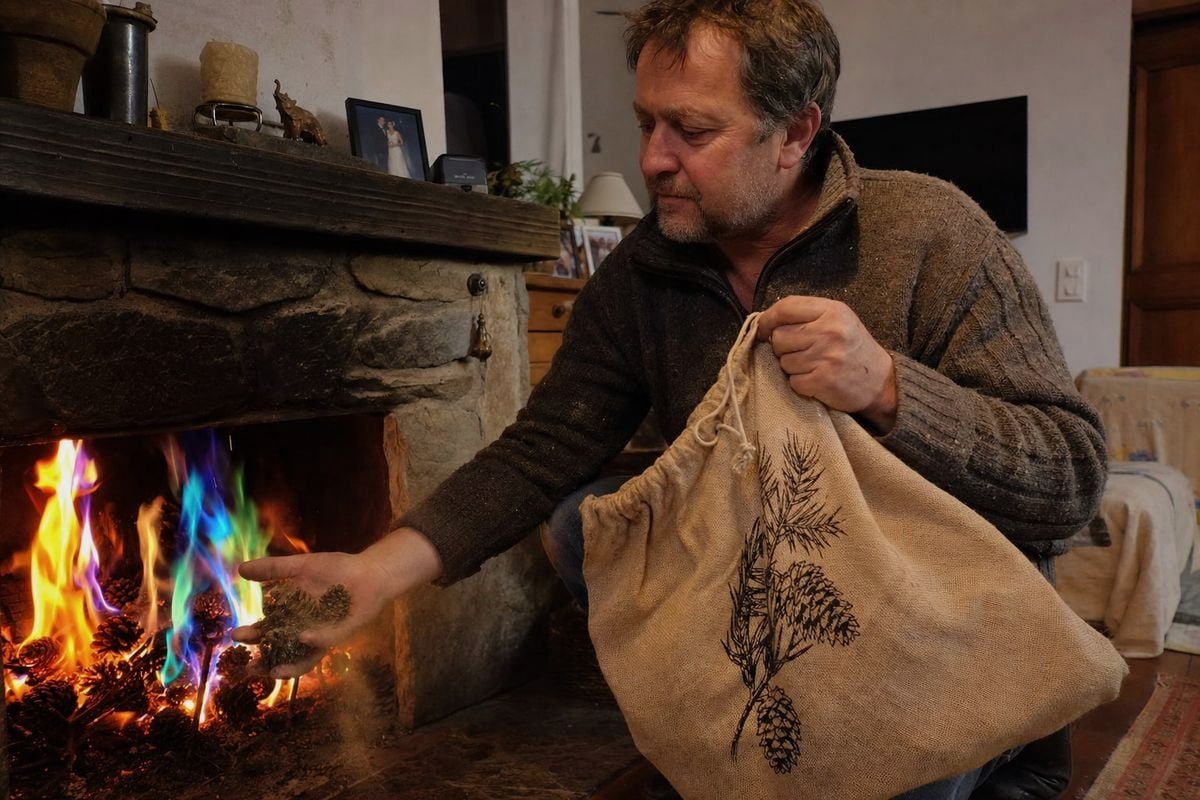
Les pommes de pin colorées sont un produit différent des cônes décoratifs, et les règles de réutilisation sont complètement inversées. Nos pommes de pin Magic Fire sont des cônes naturels traités avec des sels minéraux écologiques qui produisent des flammes rouges, vertes, bleues et violettes dans une cheminée ou un brasero. Ces composés sont solubles dans l'eau. C'est le but — et le risque.
Pourquoi l'eau est l'ennemi ici
Si vous trempez une pomme de pin colorée, le traitement se dissout et se lave. Le cône brûlera toujours, mais l'effet arc-en-ciel sera faible ou absent. Donc, les conseils de trempage au vinaigre que vous lisez pour les cônes artisanaux ne s'appliquent pas. La poussière sur une pomme de pin colorée n'est que cosmétique. Elle brûle dans les premières secondes d'allumage et n'a aucun effet sur la couleur de la flamme.
La véritable liste de contrôle de stockage
Ce qui dégrade réellement les pommes de pin colorées stockées, c'est l'humidité, pas le temps. Voici comment nous évaluons les stocks retournés ou vieillis dans notre usine de Ningbo :
| État après stockage | Réutilisable ? | Action |
|---|---|---|
| Poussiéreux mais sec et ferme | Oui | Brossez à sec, brûlez normalement |
| Légèrement humide, pas de moisissure | Oui | Séchez à l'air libre dans une pièce chaude pendant 48 heures d'abord |
| Fleur de sel blanche sur les écailles | Oui | Normal — c'est le traitement, pas la moisissure |
| Moisissure floue ou odeur de moisi | Non | Jetez ; ne brûlez pas de matière moisie à l'intérieur |
| Structure friable et molle | Non | Jeter |
Une astuce utile : résidu cristallin blanc sur les écailles alarme souvent les clients. Il s'agit généralement du traitement minéral 4 migrant à la surface — un signe que le cône est chargé de colorant, pas un signe de détérioration. La moisissure a un aspect flou et une odeur de moisi ; la fleur de sel a un aspect cristallin et ne sent rien.
Conservez les cônes dans un récipient scellé et résistant à l'humidité. Notre emballage de vente au détail utilise des pochettes refermables à fermeture éclair pour cette raison exacte — un sac correctement refermé permet au produit de conserver ses performances saison après saison.
Quelle est la meilleure façon d'enlever la poussière et les débris avant de revendre des produits de pommes de pin ?
Il y a un compromis que j'évalue constamment lorsque je conseille les distributeurs : vitesse de remise à neuf par rapport à la qualité de la finition. Couper l'étape de séchage permet d'économiser une journée mais risque des plaintes de moisissure — un problème beaucoup plus coûteux.
Pour la revente, nettoyez à sec chaque cône avec une brosse et de l'air comprimé, séchez au four les cônes naturels à 200°F pendant 45 à 90 minutes pour éliminer les infestations de parasites, puis scellez les cônes décoratifs avec un spray acrylique transparent. Remballez dans des sacs de vente au détail frais et scellés avant de les mettre en rayon.
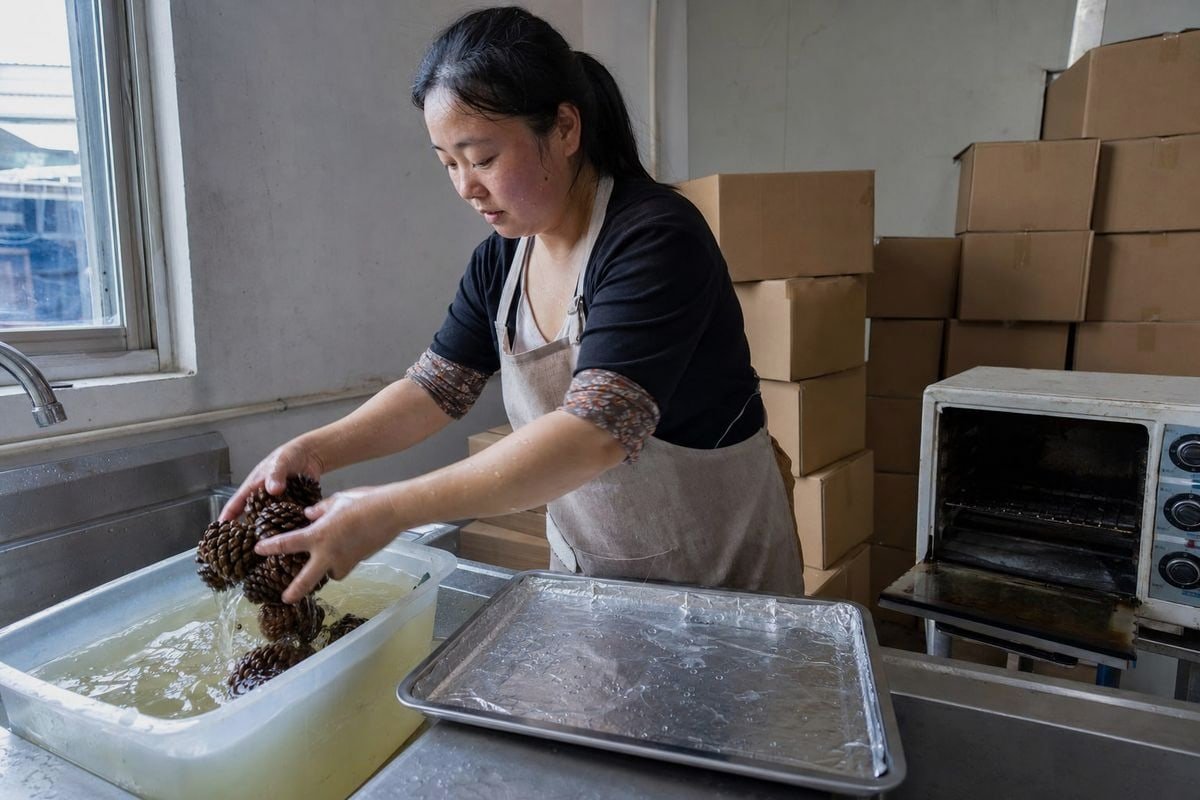
La revente relève la barre. Un amateur peut tolérer un cône légèrement sale ; un acheteur au détail ne le peut pas. Au cours de nos 17 années d'exportation de produits pour le feu vers plus de 30 pays, les plaintes qui font le plus mal ne concernent jamais la poussière — elles concernent ce que la poussière cache : insectes, larves et moisissure. La désinfection des décorations naturelles avant la revente est un processus d'hygiène, pas un processus cosmétique.
Un processus de remise à neuf de qualité revente
- Triez impitoyablement. Retirez tout ce qui est mou, moisi, fissuré ou dont les écailles sont manquantes. Les sources s'accordent sur ce point : les cônes en décomposition ne peuvent pas être sauvés, et un mauvais cône dans un sac de vente au détail contamine la confiance de l'acheteur dans tout le lot.
- Nettoyez à sec. Brossez chaque cône, puis utilisez de l'air comprimé sur les crevasses près du noyau.
- Neutralisez les parasites. Vous avez deux options, et la bonne dépend du type de produit :
| Méthode | Comment | Idéal pour | Éviter pour |
|---|---|---|---|
| Méthode de séchage au four 5 | 200°F (93°C), 45–90 min, plateau doublé de papier d'aluminium | Cônes naturels et artisanaux ; fait également fondre la sève en un glaçage brillant | Cônes peints (la peinture peut ramollir), cônes à flamme colorée en vrac |
| Méthode de congélation | Sac de congélation scellé, 48 heures | Cônes à flamme colorée, cônes peints, tout ce qui est sensible à la chaleur | Aucun — c'est l'option la plus douce, juste plus lente |
- Scellez et protégez. Une légère couche de scellant acrylique transparent sur les cônes décoratifs repousse la poussière future et stabilise les écailles fragiles. Sautez cela sur les produits à flamme colorée — rien ne doit recouvrir la surface traitée.
- Reconditionnez. Un emballage frais et scellé signale un produit frais. Nous fournissons aux acheteurs des pochettes sous marque privée, des boîtes personnalisées, des étiquettes d'avertissement et des codes-barres afin que le stock remis à neuf ou neuf arrive prêt à être mis en rayon. Pour les marchés comme les États-Unis et l'UE, un étiquetage conforme n'est pas une option — nos propres produits sont livrés avec le marquage CE et les rapports de test SGS/Intertek car les canaux d'approvisionnement de détail exigent de la documentation, pas des promesses.
Un autre angle qui mérite d'être mentionné : certains vendeurs trempent délibérément des cônes naturels dans de l'eau de Javel diluée pendant 24 heures pour créer cônes de pin blanchis 6 avec un aspect vieilli et décoloré par le soleil pour les lignes de décoration modernes. C'est un choix de style, pas une nécessité de nettoyage — et cela ne devrait jamais toucher le stock de flamme colorée.
Le nettoyage affecte-t-il la qualité de combustion ou la performance de la flamme colorée de mes pommes de pin ?
Au début du développement de notre gamme Magic Fire, nous avons effectué des tests de combustion sur des cônes nettoyés de cinq manières différentes. Les résultats ont remodelé les instructions d'entretien que nous imprimons maintenant sur chaque pochette.
Le nettoyage à sec n'a aucun effet sur la qualité de la combustion ou sur les performances des flammes colorées. Le nettoyage humide, si : l'eau dissout le traitement minéral et affaiblit les flammes colorées, et un cône humide brûle mal avec un excès de fumée. Nettoyez les pommes de pin à flammes colorées à sec, et ne les brûlez que lorsqu'elles sont complètement sèches.
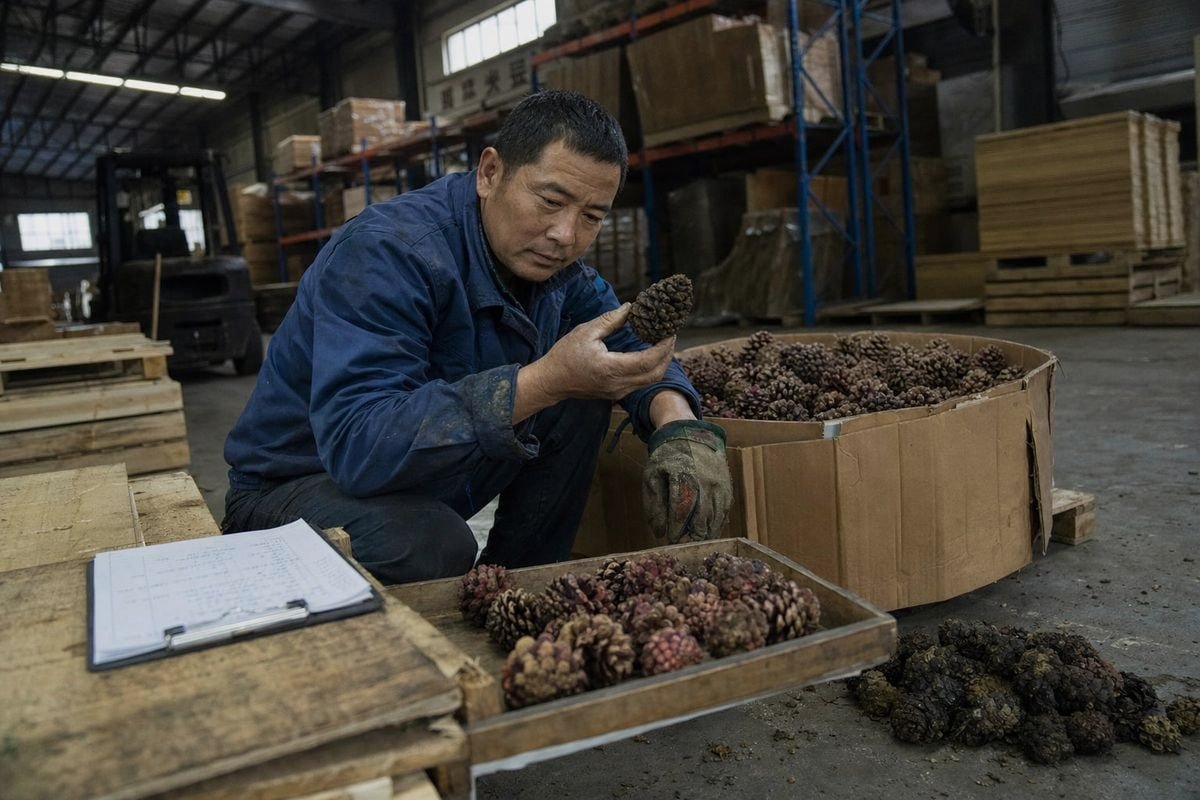
Le comportement à la combustion dépend de deux variables : la teneur en humidité et l'intégrité du traitement. Je vais détailler les deux, car ils expliquent tous les e-mails "mes cônes ont arrêté de fonctionner" que nous avons jamais reçus.
Teneur en humidité
Une pomme de pin sèche s'enflamme rapidement, ouvre sa flamme rapidement et brûle proprement. Une humide fume, couve et peut siffler dans le feu. Si vous avez lavé des cônes naturels pour les utiliser comme allume-feu, la méthode de séchage au four résout ce problème — 200°F jusqu'à ce que les écailles s'ouvrent complètement. Les écailles ouvertes sont votre confirmation visuelle que l'humidité interne a disparu. Fait intéressant, la même chaleur douce fait fondre la sève résiduelle en un glaçage naturel brillant, ce qui améliore légèrement l'allumage car la résine de pin est elle-même inflammable.
Intégrité du traitement
Pour les pommes de pin à flamme colorée, les sels minéraux doivent rester sur et dans le cône. Nos mesures de contrôle qualité lot par lot mesurent précisément la charge de traitement, car l'intensité de la couleur et la durée de combustion en dépendent. Tout processus qui élimine les sels — trempage, rinçage, frottage avec un chiffon humide, même une humidité élevée prolongée — réduit l'effet. Le brossage à sec et la méthode de congélation laissent le traitement entièrement intact.
Qu'en est-il des cônes parfumés ou enduits ?
Certains artisans transforment des cônes nettoyés en diffuseurs d'ambiance passifs avec une infusion d'huiles essentielles 7 — 5 à 10 gouttes d'huile de sapin de Sibérie ou de cannelle sur les écailles poreuses. Idéal pour un remplissage de bol ou des ornements de Noël à faire soi-même. Mais ne mélangez jamais les usages : les cônes huilés, scellés, pailletés ou enduits d'acrylique doivent rester décoratifs et ne jamais aller au feu, car les revêtements peuvent produire une fumée imprévisible. Séparez strictement les stocks décoratifs et les stocks combustibles. Sur nos lignes de production, ils ne partagent même pas de salle d'emballage.
Conclusion
Les pommes de pin décoratives poussiéreuses nécessitent rarement d'être remplacées. Brossez, trempez les cônes naturels, séchez complètement, et gardez les pommes de pin à flamme colorée strictement au sec — puis réutilisez-les en toute confiance, saison après saison.
Notes de bas de page
Entrée faisant autorité de Wikipédia fournissant des informations botaniques détaillées sur l'espèce du Sapin de Sibérie (Abies sibirica). ↩︎
Entrée encyclopédique pour les dépoussiéreurs à gaz, communément appelés air comprimé, utilisés pour nettoyer l'équipement délicat. ↩︎
Page Wikipédia décrivant les mastics, y compris les types acryliques utilisés pour créer des barrières protectrices sur les matériaux poreux. ↩︎
Entrée Wikipédia expliquant la définition chimique et les propriétés des sels, y compris ceux utilisés dans les traitements industriels. ↩︎
Document de recherche du Service des forêts du USDA discutant de l'importance de la teneur en humidité et des méthodes de séchage pour les produits du bois. ↩︎
Article faisant autorité de Wikipédia expliquant le processus de blanchiment chimique utilisé pour le bois et les objets décoratifs. ↩︎
Ressource gouvernementale de santé fournissant des informations scientifiques sur l'extraction et les propriétés des huiles essentielles. ↩︎

 English
  Spanish
  German
  French
  Arabic
  Portuguese
Rejoignez la conversation