







Choosing between DDP or FOB for your first Magic Fire Powder import can feel paralyzing. On our factory floor in Ningbo, I've watched promising first orders stall over this exact question. One wrong Incoterm choice means seized cargo, surprise fees, or weeks of clearance delays — and your launch window disappears.
For first-time Magic Fire Powder importers without customs resources, DDP is usually the better choice because the supplier handles freight, import clearance, duties, and final delivery. Choose FOB only when you already have a reliable freight forwarder and customs broker ready to take over at origin.
That is the short answer. But the real decision depends on cost, control, liability, and how you plan to grow. Let me walk you through each factor, drawing on shipments we manage every month.
Last quarter, a first-time buyer in Poland asked us to quote the same Magic Fire order both ways. The two numbers told a story worth sharing here, because the gap surprised him.
FOB usually costs less on paper — one documented example showed FOB landing roughly $1,470, or about 6%, cheaper than DDP for identical goods. But FOB's price excludes freight, duties, brokerage, and destination fees, which inexperienced importers routinely underestimate, often erasing the apparent savings entirely.

The honest way to compare DDP and FOB is not quote versus quote. It is coût débarqué 1 versus landed cost. A DDP quote is one all-in number. An FOB quote is only the beginning of your spending.
What each quote actually includes
| Poste de coût | DDP quote | prix départ usine |
|---|---|---|
| Product + export packing | Included | Included |
| Origin port handling and loading | Included | Included |
| Fret maritime ou aérien | Included | You pay |
| Cargo insurance | Usually included | You arrange |
| Import customs clearance | Included | You pay a broker |
| Duties, tariffs, VAT/GST | Included | You pay |
| Destination port fees | Included | You pay |
| Final delivery to your door | Included | You pay |
FOB looks cheaper because you see the itemized costs and can shop each one. That transparency is real. With a good forwarder, an experienced importer can beat a DDP price consistently. But if you have no broker, you will pay retail rates for clearance, get hit with demurrage when paperwork stalls, and absorb destination charges you never budgeted.
There is also a hidden risk on the DDP side. Some suppliers bundle a quiet markup into the all-in price, and you lose visibility into your true landed cost. In our experience exporting color-flame packets to 30+ countries, the fix is simple: ask your supplier to break down the DDP quote into product, freight, and duty components. A factory with nothing to hide will show you. We do this on every quotation, because buyers who understand their landed cost become repeat buyers.
So the real cost difference is small in dollars and large in predictability. DDP buys certainty. FOB buys optimization potential — if you have the resources to capture it.
Which shipping term gives me better control over lead times when I have no customs broker of my own?
A trade-off we weigh on every shipment is speed versus ownership of the process. Our logistics team in Ningbo books containers weekly, and the pattern with new buyers is remarkably consistent.
DDP gives first-time importers more reliable lead times because the supplier's established clearance network handles every handoff, eliminating the customs bottleneck where new importers lose the most days. FOB offers control over carriers and routing, but only benefits buyers with an experienced forwarder already in place.
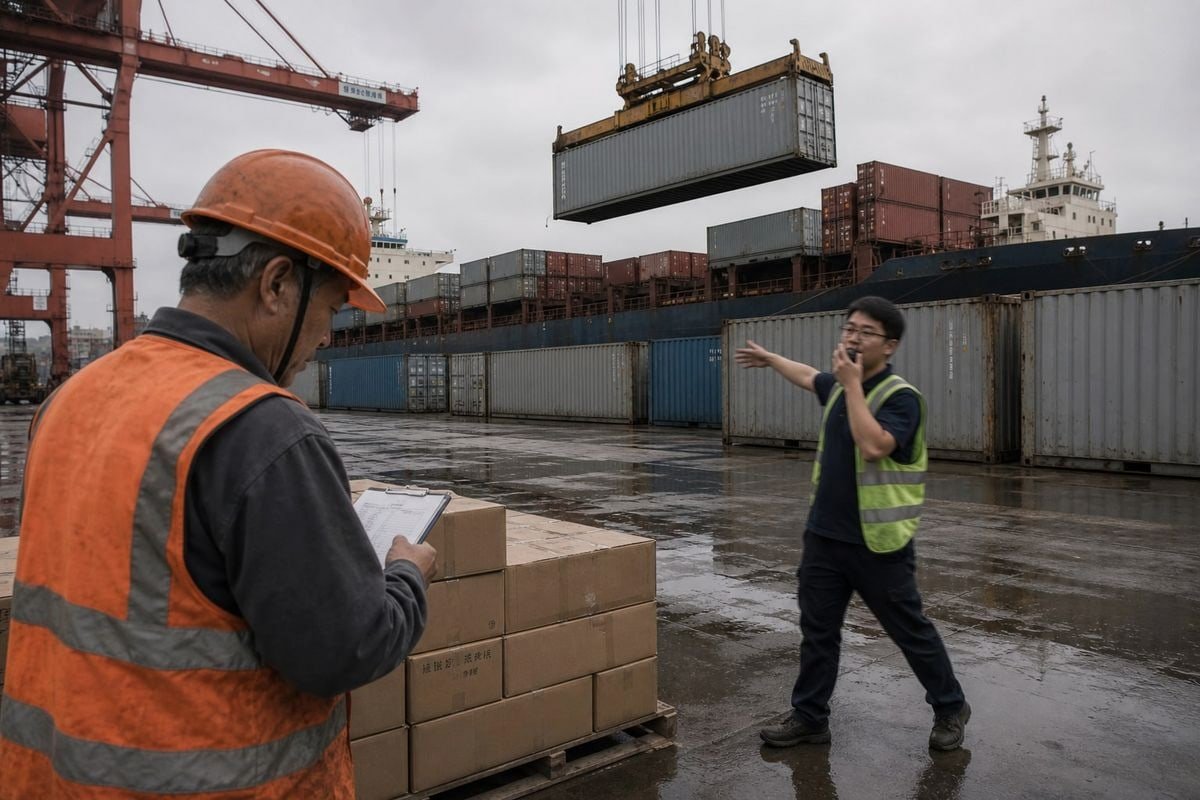
Control and reliability are not the same thing. This distinction matters more than any other point in this section.
Under FOB, you technically control everything after origin loading. You pick the carrier. You choose the routing. You decide between a faster vessel and a cheaper one. That sounds like power. But control without capability is just exposure. If you have no customs broker, your container arrives at the destination port and sits. Every day it sits, you pay demurrage and detention 2. I have seen a two-day document error turn into a two-week delay for a buyer who tried to self-clear a first shipment.
Under DDP, you give up routing control but gain a single accountable party. When we ship Magic Fire packets DDP to the US or Germany, our forwarding partners have pre-agreed clearance procedures, correct HS classifications 3, and complete document sets prepared before the vessel departs. The clearance step that terrifies new importers becomes routine.
Where lead-time delays actually happen
- Booking and origin handling — similar under both terms; the seller manages this either way.
- Transport maritime — largely fixed by the route; neither term changes sailing time.
- Import clearance — the danger zone. Under FOB with no broker, this is where shipments stall for days or weeks.
- Final delivery — coordinated by the seller under DDP; your job under FOB.
The practical conclusion: if you cannot name your customs broker today, DDP will get your first Magic Fire Powder order to your warehouse faster and with fewer surprises, even though FOB nominally gives you the steering wheel.
How does choosing DDP or FOB affect my liability if Magic Fire Powder faces import compliance checks?
Compliance is the topic I get asked about most on trade-show floors, and for good reason. Color-flame products draw extra scrutiny at borders, and our certification files exist precisely because customs officers ask hard questions.
Under DDP, the seller typically acts as importer of record and bears responsibility for clearance, duties, and compliance documentation. Under FOB, you are the importer of record, fully liable for misclassification, missing permits, and any penalties — a serious exposure for buyers without customs expertise.

Let me be direct about the product category. Flame-coloring powders often get flagged for review because officers want to confirm they are not pyrotechnic or hazardous goods. Our Magic Fire color-flame packets are made from matériaux écologiques sans produits chimiques nocifs, and we back that up with SGS et Intertek 4 test reports plus CE documentation. That paperwork is what turns a compliance check from a seizure risk into a routine inspection. Whichever Incoterm you choose, verify your supplier can hand you this evidence before the goods ship.
Liability split at a glance
| Compliance scenario | DDP | FOB |
|---|---|---|
| Importer of record 5 | Seller (or seller's agent) | You, the buyer |
| Wrong HS classification | Seller's problem | Your penalty |
| Missing test reports or certificates | Seller must resolve | You must resolve |
| Customs inspection delays | Seller absorbs costs | You absorb costs |
| Import license requirements | Seller's broker navigates | Your responsibility |
One warning I give every new buyer: DDP only protects you if the supplier can genuinely execute import clearance in your market. A supplier who cannot legally act as importer of record in your country — or who cuts under-the-table compliance corners — leaves you holding the liability anyway. Ask for proof of prior DDP shipments to your specific market. Ask which broker they use. Ask to see the test reports tied to your exact batch.
If a supplier offers door delivery but cannot properly clear customs in your name or theirs, DAP is the safer middle ground: they deliver to your address, but you clear customs and pay duties with your own broker. That only works, of course, once you have one.
Can I switch from DDP to FOB later as my order volumes grow and I build customs experience?
Watching buyers grow is one of the best parts of this business. A UK fireplace distributor we onboarded years ago started with a small DDP trial order. Today they run FOB containers with their own forwarder — and their landed cost per unit has dropped meaningfully.
Yes, switching from DDP to FOB is a normal and recommended progression. Most importers start with DDP for one or two shipments, learn the duty rates and documentation requirements, then move to FOB once they have a freight forwarder, customs broker, and a working landed-cost process.

Think of DDP as training wheels, not a trap. Nothing about your first Incoterm locks you in. Terms are negotiated per order, and any credible factory will requote FOB the moment you ask. We restructure terms for growing buyers all the time, and honestly, we encourage it — a buyer who understands their own supply chain negotiates better and stays longer.
A realistic transition roadmap
| Étape | Order profile | Recommended term | What you should be building |
|---|---|---|---|
| 1. Trial | First 1–2 small orders | DDP | Learn duty rates, HS codes, and document flow from the seller's paperwork |
| 2. Repeat | Steady quarterly orders | DDP or DAP | Interview forwarders; get comparative freight quotes |
| 3. Scaling | Regular container volume | FOB | Appoint your broker; run your own landed-cost model |
| 4. Mature | Multi-supplier program | FOB standard | Negotiate annual freight contracts; consolidate shipments |
The smart move during your DDP phase is to treat every shipment as a free education. Ask your supplier for copies of the commercial invoice, packing list, bill of lading, and clearance documents. Note the HS code used and the duty rate applied. Within two or three shipments, you will know exactly what FOB will require of you — and what it should cost.
One caution before you switch: make sure your compliance documentation 6 transfers with you. When we move a buyer from DDP to FOB, we hand over the complete certification package — ISO 9001 7, BSCI, CE, and third-party test reports — so their new broker can clear the same goods without re-inventing the file. A supplier who resists that handover is telling you something about how clean their DDP clearances really were.
Conclusion
Start with DDP if you lack customs resources; it turns a risky first import into a managed one. Graduate to FOB as volumes grow. Either way, partner with a certified factory whose documentation survives any border check.
Notes de bas de page
1. Authoritative finance definition clarifying the total landed cost comparison discussed in the article. ↩︎
2. Defines the shipping charges importers face when containers stall at destination ports. ↩︎
3. Explains the Harmonized System coding used for customs classification referenced in the article. ↩︎
4. Links to a recognized third-party testing authority mentioned for compliance verification. ↩︎
5. Clarifies the legal customs concept determining liability under FOB versus DDP shipping terms. ↩︎
6. Official EU source explaining CE marking requirements referenced for import compliance evidence. ↩︎
7. Official ISO source explaining the quality management standard cited in certification handover. ↩︎



 English
  Spanish
  German
  French
  Arabic
  Portuguese
Rejoignez la conversation