






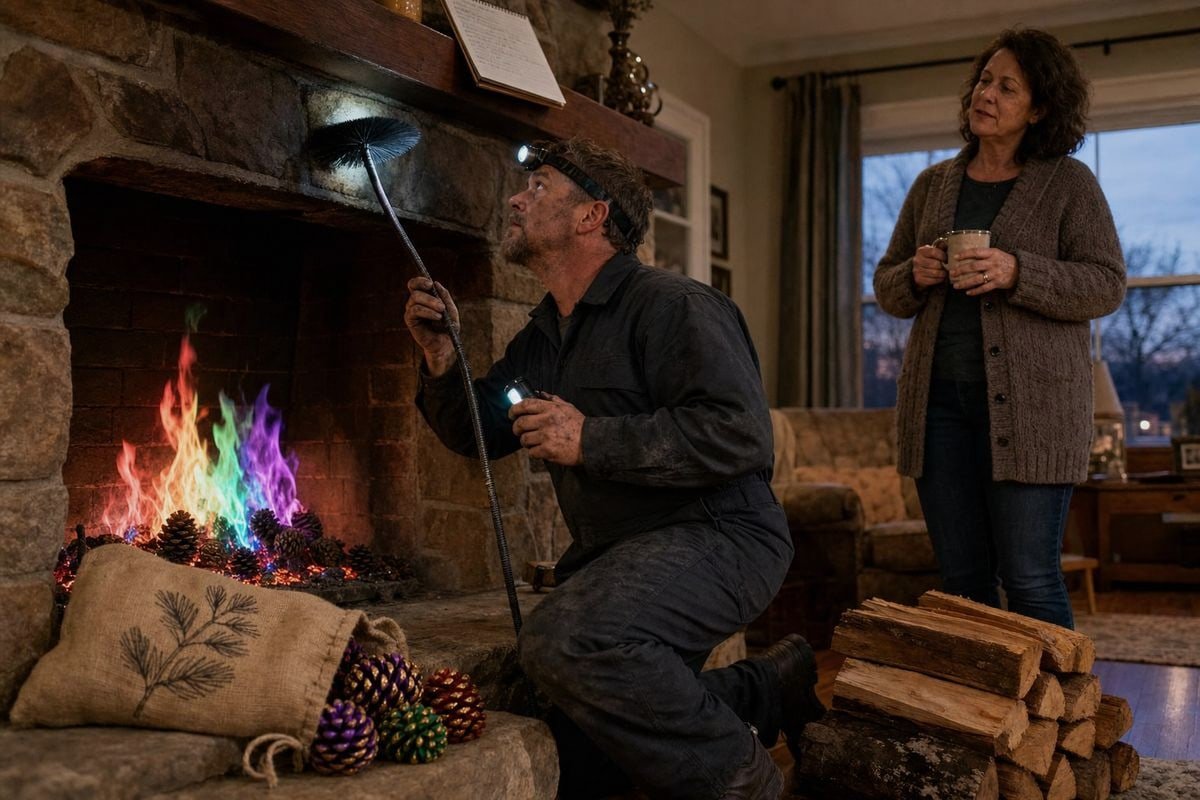
Buyers keep asking me one question about colored pine cones and chimney creosote buildup: will these products get my customers' chimneys dirty faster? On our production line, we take that question seriously.
Colored pine cones do not significantly increase chimney creosote buildup when they are dry, use safe mineral colorants, and are burned as occasional fire starters. Creosote comes mainly from wet wood and smoldering fires. Chimneys should be inspected annually and cleaned at 1/8 inch of buildup.
That is the short answer. But if you import or distribute these products, you need more detail. Let me walk you through the chemistry, the compliance side, and the cleaning guidance your customers will ask about.
What Causes Colored Flame Pinecones to Affect Creosote Buildup in a Chimney?
During product development in our Ningbo facility, we burned hundreds of test batches to study residue. What we learned surprised even our own engineers: the cone matters less than the fire itself.
Creosote forms from incomplete combustion, not from pine cones themselves. Colored flame pinecones are resinous softwood, so smoldering many at once produces more smoke and condensable combustion byproducts. Metal salts like copper sulfate add colored flames but contribute minimal creosote when cones burn hot and fast.
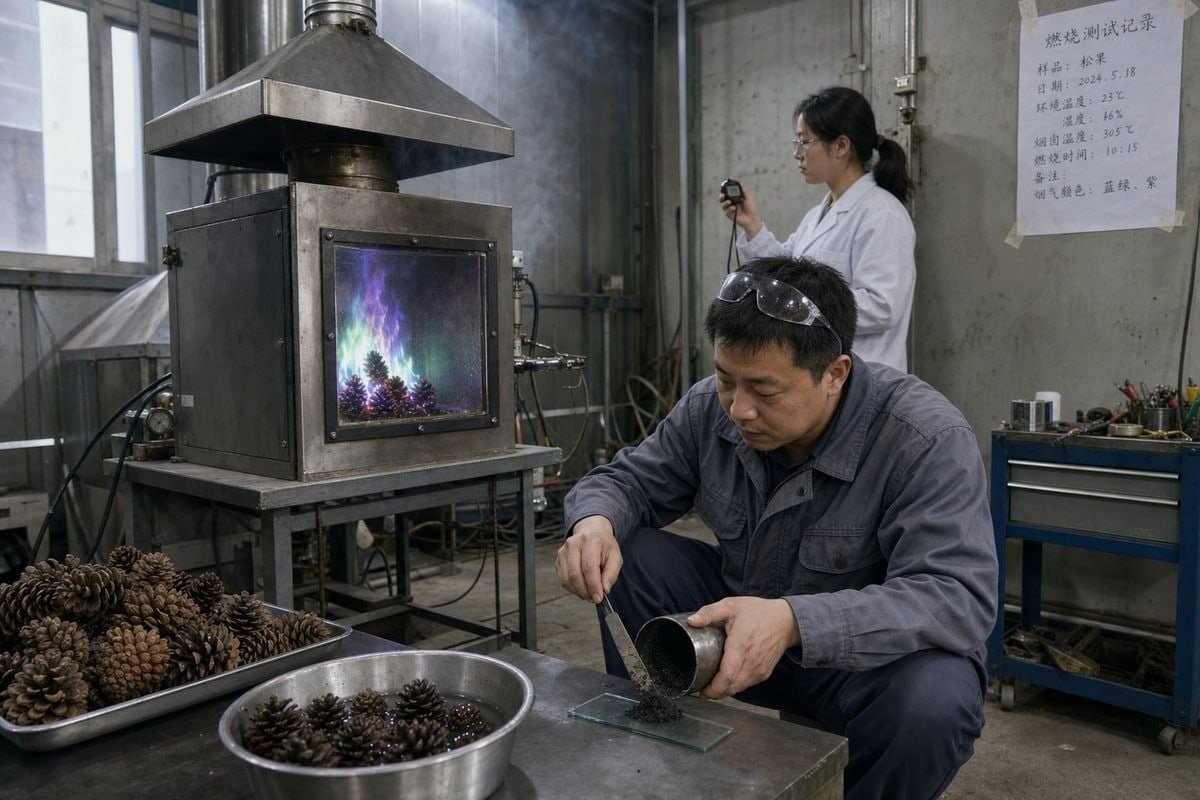
Creosote is a tar-like deposit 1. It forms when smoke cools and condenses inside a flue. The main drivers are wet fuel, low fire temperatures, and restricted airflow. Wood species and fuel type matter less than most people think.
Pine cones are resin-rich softwood. Resin burns hot and fast when the cone is dry. That is actually good for creosote control, because a hot flame consumes more of the volatile gases before they reach the flue. The problem starts when cones are damp, or when someone dumps a whole bag into a smoldering fire. Then you get heavy smoke, and smoke becomes creosote.
What About the Colorants?
The coloring agents deserve a fair look. Quality color-flame pinecones use mineral metal salts. Copper compounds create blue and green. Other salts create red, purple, and orange. These salts change flame color through light emission, not through combustion chemistry. They add very little organic material, so they add very little creosote. Interestingly, sodium borate, a common ingredient, is itself used in some creosote-modifier products.
There are two honest caveats. First, some chemical residues are hygroscopic, meaning they attract moisture. Heavy, constant use could theoretically stress a stainless steel liner over time, which is why flue liner maintenance still matters. Second, cheap uncertified cones with unknown coatings are a genuine wildcard. That is a sourcing problem, not a pine cone problem.
The Real Creosote Hierarchy
| Facteur | Creosote Impact | Pourquoi |
|---|---|---|
| Wet or unseasoned wood | Élevé | Moisture cools the fire and creates heavy smoke |
| Smoldering, low-oxygen fires | Élevé | Unburned gases condense in the flue |
| Restricted airflow / poor draft | Élevé | Incomplete combustion increases deposits |
| Softwood resin (pine, cones) | Modéré | More smoke than seasoned hardwood if burned poorly |
| Mineral colorants in quality cones | Faible | Metal salts emit color, not tar |
How Do I Verify Creosote Safety Data Before Importing Colored Pine Cone Fire Starters?
A German distributor once told me he lost a retail listing because his previous supplier could not produce a single test report. That conversation shaped how we document everything at our factory today.
Verify creosote safety by requesting SGS or Intertek test reports, a full ingredient disclosure sheet, moisture content specs, and burn-residue data. Confirm the supplier holds ISO 9001 and BSCI certification, and check that colorants are copper sulfate or similar salts, not chlorinated compounds.

Importing fire products without documentation is a gamble. Retailers will ask for proof. Insurers may ask too. So your verification process should be systematic, not casual.
Un processus de vérification en cinq étapes
- Demander des rapports de test tiers. SGS and Intertek are the labs most Western retailers recognize. Reports should cover heavy metals, combustion emissions, and residue composition. In our 17+ years of exporting to the US, Germany, and the UK, we have never closed a serious retail deal without them.
- Obtenez la liste complète des ingrédients. A trustworthy supplier will disclose exact colorants. Sulfate de cuivre 2 for green-blue, and other mineral salts for the rest. If a supplier refuses to name the chemicals, walk away. Unknown coatings are the real chimney fire risk in this category.
- Check moisture specifications. Dry cones burn hot and clean. Ask for the moisture content standard and how it is controlled batch to batch. Damp cones smolder, and smoldering makes creosote.
- Confirm factory certifications. ISO 9001 3 shows a real quality system. BSCI shows social compliance, which large sourcing channels increasingly require. Marquage CE 4 matters for European shelves.
- Ask about stove compatibility statements. Metal salts can degrade the combusteurs catalytiques 5 in some Les poêles certifiés EPA 6. A responsible supplier states this on the label and recommends the product for open fireplaces, fire pits, and campfires. Warning labels are part of sécurité des poêles à bois, and we print them as standard on private-label packaging.
One more practical tip. Order a trial batch and burn it yourself in a controlled setting. Compare the sample against later mass-production shipments. Genuine factories, not trading companies, keep first samples and bulk orders consistent because they control the production line directly.
What Cleaning Frequency Should I Recommend to Customers Using Color-Flame Pinecones?
Our export clients often ask us to help draft the care instructions that go on their private-label packaging. The cleaning guidance below is what we recommend they print, based on established fire-safety standards.
Recommend an annual chimney inspection per NFPA 211 standards, with cleaning whenever creosote reaches 1/8 inch. Heavy users burning fires several times weekly should schedule chimney sweep services twice yearly. Color-flame pinecones used occasionally as fire starters do not require extra cleanings.
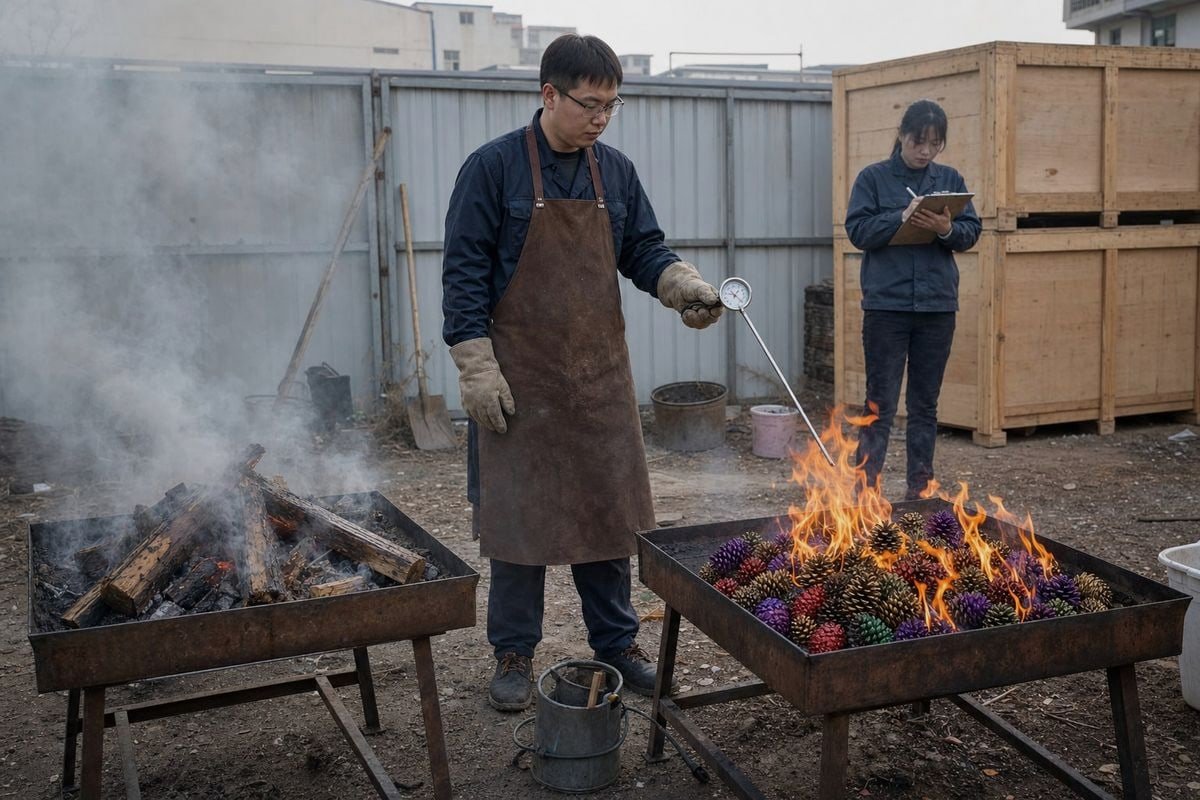
The honest news for your customers is simple. If they use color-flame pinecones the intended way, one or two cones to start or brighten a fire, their cleaning schedule does not change. The schedule is driven by how often they burn and what their main fuel is.
Recommended Cleaning Schedule by Usage
| Usage Pattern | Inspection | Sweeping Frequency |
|---|---|---|
| Occasional fires (holidays, weekends) | Once per year | Annually, if buildup is present |
| Regular winter use (2–4 fires per week) | Once per year | Once or twice per year |
| Daily heating use | Annual, plus monthly self-checks | Twice per year, or every third cord of wood |
| Any use with visible glaze or poor draft | Immédiatement | Book professional chimney sweep services now |
Normes NFPA 211 7 call for chimneys, fireplaces, and vents to be inspected at least once a year, with cleaning done as needed. That annual chimney inspection is the non-negotiable baseline your packaging should state clearly.
Signs That Cleaning Is Overdue
Tell customers to act sooner if they notice any of these:
- Visible soot or creosote of 1/8 inch or more inside the flue
- Shiny, glazed black deposits, which indicate Stage 3 creosote and demand professional removal
- Smoke spilling back into the room
- A strong tar smell after fires
- Weak draft even with dry seasoned hardwood
One buyer objection I hear often: does the intense heat from many cones burning at once damage flues? Rapid heat release can theoretically stress clay flue liners in old masonry chimneys. That is exactly why our instructions say to add cones to an established fire, one or two at a time, never a whole bag. Good usage guidance protects the customer and protects your brand.
Can I Get Test Reports Proving My Color-Flame Pinecones Won't Increase Chimney Risks?
The trade-off we weigh on every OEM project is documentation cost versus market access. Testing adds expense per SKU, but skipping it locks you out of serious retail channels. We always choose testing.
Yes. Reputable factories provide SGS or Intertek test reports covering colorant composition, heavy metal limits, combustion emissions, and residue analysis, plus CE documentation for Europe. These reports demonstrate that quality color-flame pinecones burn cleanly and do not elevate chimney fire risk under normal use.

Let me be precise about what test reports can and cannot prove, because overclaiming will hurt you with sophisticated buyers.
What Standard Reports Actually Cover
| Document | Ce qu'il prouve | Qui le demande |
|---|---|---|
| SGS / Intertek chemical analysis | Colorant identity, heavy metal limits, no chlorinated compounds | US and EU importers, large retailers |
| Combustion emissions report | Burn behavior and airborne combustion byproducts | Environmental-conscious brands, EU markets |
| Certificat ISO 9001 | Consistent quality management, batch-to-batch control | Tous les acheteurs B2B sérieux |
| rapport d'audit BSCI | Normes de production éthiques | Grands canaux d'approvisionnement de détail |
| documentation CE | Conformité au marché de l'UE | Distributeurs européens |
No lab issues a certificate literally titled "will not cause creosote," because creosote depends on how the end user burns. What reports do show is that the product contains no tar-heavy organic coatings, no chlorinated chemicals, and only recognized mineral salts. Combined with clear usage instructions, that documentation package answers the chimney question convincingly.
How We Handle It on OEM Orders
When we run a private-label project from our Liuyang headquarters, the documentation is part of the deliverable, not an add-on. We supply the test reports under your product name where required, print compliant warning labels, add barcodes, and include usage guidance recommending seasoned hardwood as the main fuel with cones as starters only. We also state clearly that catalytic wood stoves are not the intended appliance, since metal salts can shorten catalyst life. That transparency has kept our buyers in the US, Germany, France, and Australia on shelves for years. A supplier who hides limitations is a bigger risk to your brand than any pine cone.
Conclusion
Colored pine cones are not the creosote villain. Wet wood and smoldering fires are. Verify test reports, recommend annual inspections, and partner with a certified factory that documents everything.
Notes de bas de page
1. Provides a technical definition of creosote and its formation in chimneys. ↩︎
2. Authoritative chemical data on copper sulfate, used as a flame colorant. ↩︎
3. Official standard for quality management systems mentioned for factory verification. ↩︎
4. Official EU site explaining the conformity marking required for European market access. ↩︎
5. Explains the technology in wood stoves that can be affected by metal salts. ↩︎
6. Government guidance on wood-burning appliances and certification. ↩︎
7. Official NFPA landing page for the standard governing chimneys, fireplaces, and vents. ↩︎



 English
  Spanish
  German
  French
  Arabic
  Portuguese
Rejoignez la conversation