






NIMP 15 1 traitement et vérification de la marque IPPC pour les palettes de pommes de pin confondent de nombreux acheteurs pour lesquels nous expédions. Un tampon manquant peut retenir un conteneur complet de nos pommes de pin colorées au port Organisation Nationale de Protection des Végétaux 2. Ce risque est évitable, et je vais vous montrer comment nous le gérons à chaque exportation.
Oui, l'approvisionnement en Chine nécessite un traitement ISPM 15 et une vérification de la marque IPPC pour les palettes de pommes de pin lorsque les palettes sont en bois massif de plus de 6 mm d'épaisseur. Le traitement thermique ou la fumigation au bromure de méthyle, ainsi qu'un tampon IPPC lisible, sont obligatoires. Seules les palettes en bois transformé, comme le contreplaqué ou le panneau pressé, sont exemptées.
La réponse dépend du matériau de la palette, pas du produit qu'elle contient Administration générale des douanes 3. Laissez-moi vous expliquer comment vérifier la conformité avant que vos marchandises ne quittent la Chine.
Comment puis-je confirmer que les palettes de mon fournisseur sont réellement conformes à la norme ISPM 15 avant l'expédition ?
Il y a quelques années, une inspection de contrôle dans notre usine de Ningbo a permis de détecter un lot de palettes avec un tampon de traitement maculé. Nous avons rejeté tout le lot avant le chargement. Cette habitude a évité à nos acheteurs des blocages coûteux au port plus d'une fois.
Confirmez la conformité en inspectant physiquement la marque NIMP15 sur deux côtés opposés de chaque palette, en vérifiant le code du pays, le numéro d'installation enregistré et le code de traitement HT ou MB, puis en vérifiant le numéro d'installation par rapport à la liste d'enregistrement de l'ONPF de la Chine avant que le conteneur ne soit scellé.
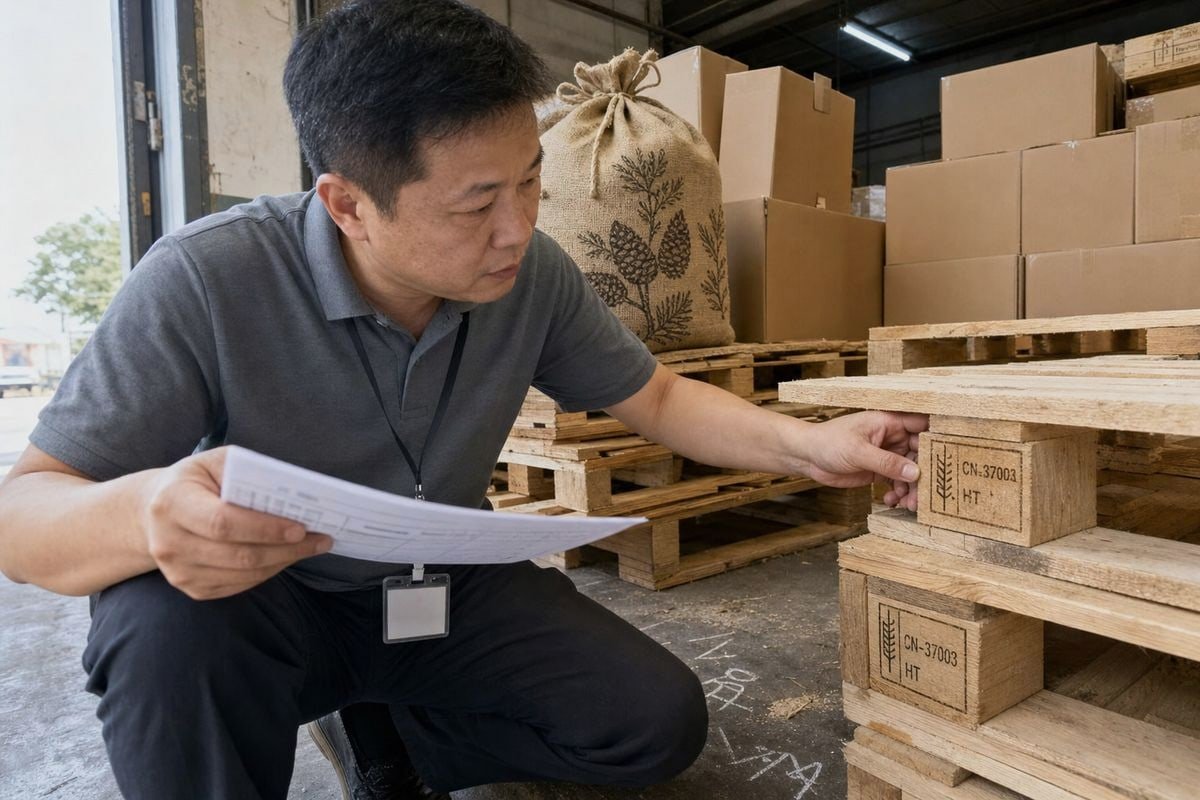
La vérification n'est pas compliquée, mais elle doit avoir lieu avant le chargement, pas après l'arrivée. D'après notre expérience d'exportation de produits d'allumage vers plus de 30 pays, la palette est le seul composant que les acheteurs oublient d'auditer. Ils inspectent le produit, l'emballage et les étiquettes. Ensuite, ils supposent que le Matériaux d'emballage en bois (MEB) en dessous est correct. C'est cette supposition qui bloque les expéditions.
Lisez le tampon comme un agent des douanes
La marque IPPC suit un format fixe. Chaque élément doit être présent et lisible. Voici ce que signifie chaque partie :
| Élément de marquage | Ce qu'il indique | Ce qu'il faut vérifier |
|---|---|---|
| Symbole de blé IPPC | La marque est un tampon phytosanitaire officiel | Doit être imprimé, pas manuscrit |
| Code du pays (CN) | Pays où le traitement a eu lieu | Devrait indiquer CN pour les palettes traitées en Chine |
| Code installation | Le fournisseur de traitement agréé | Doit correspondre au registre NPPO de la Chine |
| Code de traitement (HT/MB) | Traitement thermique ou fumigation au bromure de méthyle | HT est préféré par la plupart des marchés de destination |
Vérifiez l'installation, pas seulement l'encre
Un tampon seul ne prouve rien si le code de l'installation est expiré ou faux. La Chine exige que tous les fabricants nationaux d'emballages en bois s'enregistrent auprès de la Organisation Nationale de Protection des Végétaux 4. L'Administration générale des douanes (GACC) effectue désormais une vérification électronique, de sorte que les agents peuvent recouper les codes d'installation en temps réel. S'ils peuvent le faire, votre fournisseur le peut aussi. Nous demandons à notre fournisseur de palettes le dossier d'enregistrement pour chaque commande, et nous photographions les tampons des deux côtés de chaque pile de palettes avant la fermeture des portes du conteneur. Demandez à votre fournisseur de faire de même. S'il hésite, cela vous en dit long.
Vérifiez également le bois lui-même. La norme ISPM 15 exige que les normes de bois écorcé soient respectées, de sorte que les bandes d'écorce résiduelles dépassant la tolérance autorisée peuvent entraîner un échec d'inspection même lorsque le tampon est parfait.
Que se passe-t-il à la douane si mes palettes de pommes de pin n'ont pas de marque valide de la NIMP15 ?
Un de nos distributeurs allemands m'a un jour demandé pourquoi nous insistions pour photographier chaque tampon de palette. Je lui ai parlé d'une expédition d'un concurrent dont nous avons entendu parler, qui est restée bloquée à Hambourg pendant trois semaines à cause d'une marque estompée. Il n'a plus jamais posé la question.
Les marques OMIBA manquantes ou invalides entraînent la rétention des expéditions au port. Les douanes peuvent ordonner la destruction des emballages en bois, leur fumigation à vos frais, ou la réexportation de l'ensemble de la cargaison. Vos marchandises peuvent être retardées pendant des semaines, et les frais de surestaries, de stockage et de retraitement incombent à l'importateur.
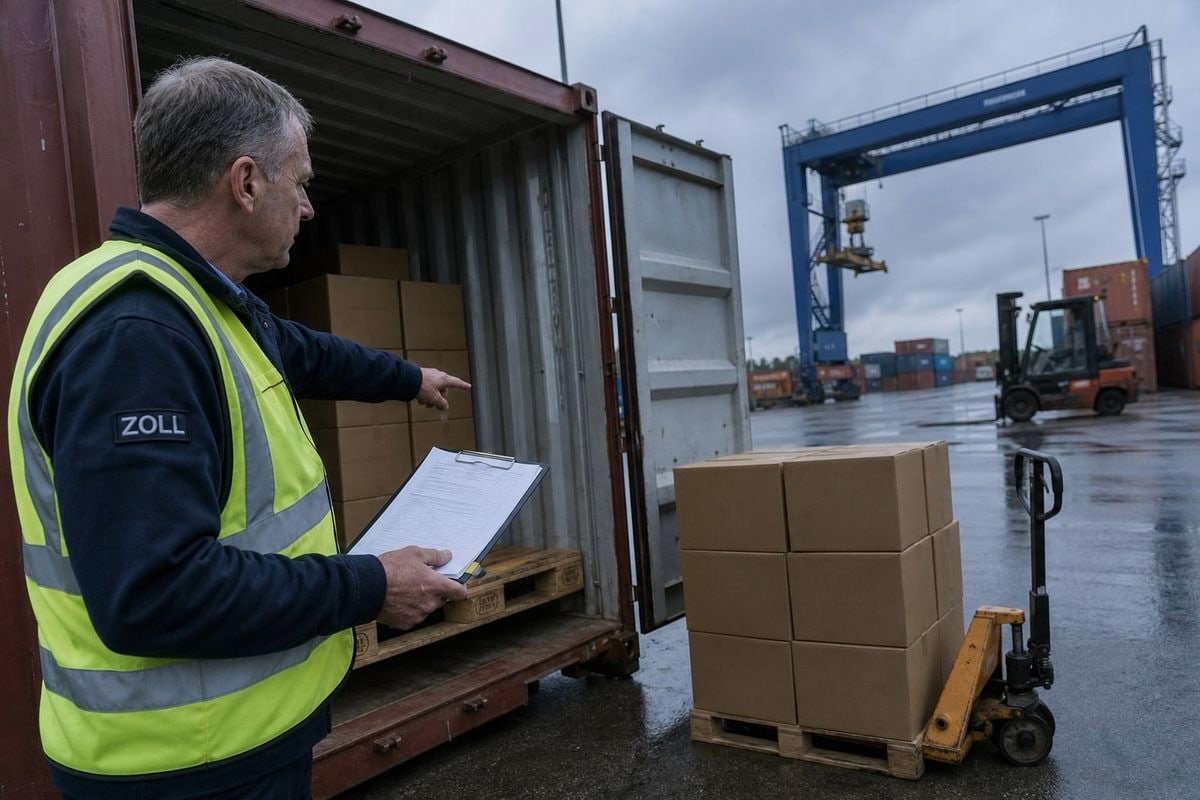
Réglementations douanières traitent les MEB non conformes comme une menace pour la biosécurité, pas comme une erreur administrative. Le but de la norme ISPM 15 est d'empêcher les insectes xylophages, tels que le nématode du pin 5, de traverser les frontières à l'intérieur de palettes en bois brut, de caisses et de calages de conteneurs d'expédition. Les inspecteurs ne se soucient pas que votre cargaison soit des pommes de pin décoratives ou des produits colorés. Ils se soucient du bois brut qui les transporte.
Les résultats réalistes, classés par coût
L'application varie selon le port et le pays, mais les résultats entrent dans une gamme prévisible :
| Résultat | Déclencheur typique | Qui paie |
|---|---|---|
| Dédouanement complet | Marque IPPC valide et lisible sur MEB conforme | Personne |
| Blocage pour réinspection | Tampon partiellement lisible ou résidu d'écorce | Importateur (frais de stockage) |
| Fumigation sur site ou destruction des palettes | Marque manquante ou invalide, parasites absents | Importateur ou expéditeur |
| Réexportation de l'ensemble de l'expédition | Présence de parasites vivants, ou politique de tolérance zéro du port | Shipper, plus freight both ways |
Port-level enforcement is not uniform
Here is the nuance most articles skip. Major hubs enforce harder. Shenzhen and Shanghai on the export side, and strict destination ports like those in Australia, apply near zero-tolerance policies where even minor legibility issues trigger a full hold. Some buyers argue ISPM 15 is "not mandatory" because the standard itself is not a law. Technically true, and practically useless. The standard is enforced through each destination country's import compliance requirements, and nearly every major trading partner has adopted it in writing. For any real shipping lane you use, treat it as mandatory. We do, on every single container.
Quels documents sur les emballages en bois dois-je demander à un fabricant chinois pour éviter les retards d'importation ?
There is a trade-off I weigh on every order: asking vendors for extra paperwork adds a day or two up front, but it removes weeks of risk at destination. After 17+ years of exporting, I always choose the paperwork.
Demandez l'enregistrement de l'installation NPPO du fournisseur de palettes, le dossier de traitement thermique indiquant 56°C au cœur du bois pendant 30 minutes, des photos datées des timbres NIMP, une déclaration d'emballage indiquant le type de MPE, et un certificat phytosanitaire lorsque le pays de destination en exige un.

Documents matter because the stamp is only first-line proof. When our team prepares export files for color-flame pinecone shipments, we build a small compliance package around the pallets themselves. It takes minutes per order. It has kept our customs record clean across the US, Germany, the UK, Australia, and every other market we serve.
The document checklist we use
| Document | Ce qu'il prouve | Quand vous en avez besoin |
|---|---|---|
| NPPO facility registration | The treatment provider is legally authorized | Every order with solid wood pallets |
| HT treatment record | Wood core reached 56°C for 30 minutes | Every order; keep for batch traceability |
| Stamp photos (both sides) | Marks are legible before sealing | Every container, before departure |
| Packing declaration | States solid wood, processed wood, or no WPM | Required by countries like Australia |
| Certificat phytosanitaire 6 | Official government attestation of treatment | Destination-specific; increasingly layered on top of the stamp |
Watch for certificate layering
An emerging trend is worth flagging. Some customs authorities now request a formal paper Phytosanitary Certificate in addition to the IPPC stamp for shipments from regions with known nématode du pin 7 outbreaks. This is exactly the "layering" issue: the stamp used to be enough, and sometimes it no longer is. Ask your freight forwarder which documents your specific destination port has requested recently, not just what the regulation says on paper.
Confirm the material category in writing
Also get the pallet's material category in writing. Manufactured wood products like plywood, OSB, and MDF are exempt because their production process kills pest risk. But a pallet sold as "processed wood" that turns out to be solid pine is one of the most common causes of disputes. A one-line written confirmation prevents that argument entirely.
Pourquoi choisir une usine certifiée et prête à se conformer réduit-il mon risque d'approvisionnement à long terme ?
A purchasing manager from a US camping brand once told me she chose us over a cheaper quote because our audit file answered her questions before she asked them. That conversation shaped how I think about compliance ever since.
Une usine certifiée intègre la conformité dans son processus, de sorte que chaque expédition quitte avec des palettes traitées, des marques vérifiées et des dossiers complets. Cette cohérence élimine le risque de blocage portuaire, protège vos dates de lancement en magasin et garantit que la qualité du premier échantillon se répète de manière fiable pour chaque commande de production de masse.

Compliance is a system, not a stamp. At our factory, ISO 9001, BSCI, CE, and SGS/Intertek certification is a hard requirement from our B2B buyers, not a marketing line. The same discipline that governs our color-flame formulas and burn-time tolerances extends to the timber pallets under the cargo. A supplier who treats pallet compliance as an afterthought will treat other things as afterthoughts too. Batch records. Warning labels. Barcode accuracy. It all correlates.
Here is why this matters over a multi-year sourcing relationship. Regulations move. Ports tighten enforcement. Certificate layering spreads. Even "smart pallet" tracking, with QR codes near the IPPC mark linking to specific Heat Treatment cycle data, is starting to appear. A trading company reselling from unknown workshops cannot adapt to any of that, because it does not control the process. A real factory can. When rules shift in one of the 30+ countries we export to, we adjust the export file once, and every subsequent buyer benefits.
There is also a quieter benefit: predictability. Our buyers plan seasonal retail programs around firm delivery windows. Fall fireplace displays and holiday campfire promotions do not forgive a three-week customs hold. When compliance is built into the production line, from raw material sourcing through private-label packaging through pallet loading, lead times hold. That reliability, more than any single certificate, is what reduces long-term sourcing risk. It is also why we position ourselves as a long-term manufacturing partner rather than a low-price supplier. Cheap pallets and missing paperwork are the most expensive things you can buy.
Conclusion
Solid pine pallets from China need ISPM 15 treatment and verified IPPC marks. Verify stamps, collect documents, and partner with a certified factory that makes compliance routine, not optional.
Notes de bas de page
1. Provides background on the international phytosanitary standard governing wood packaging treatment. ↩︎
2. Links to the international body overseeing NPPO registration and ISPM 15 enforcement standards. ↩︎
3. Official Chinese customs authority site referenced for electronic facility code verification. ↩︎
4. Official IPPC body overseeing NPPO registration referenced for facility verification. ↩︎
5. Explains the pest ISPM 15 treatment is designed to prevent from spreading. ↩︎
6. Defines the official document some customs authorities require alongside the IPPC stamp. ↩︎
7. Background reference explaining the pest ISPM 15 treatment is designed to prevent spreading. ↩︎


 English
  Spanish
  German
  French
  Arabic
  Portuguese
Rejoignez la conversation