






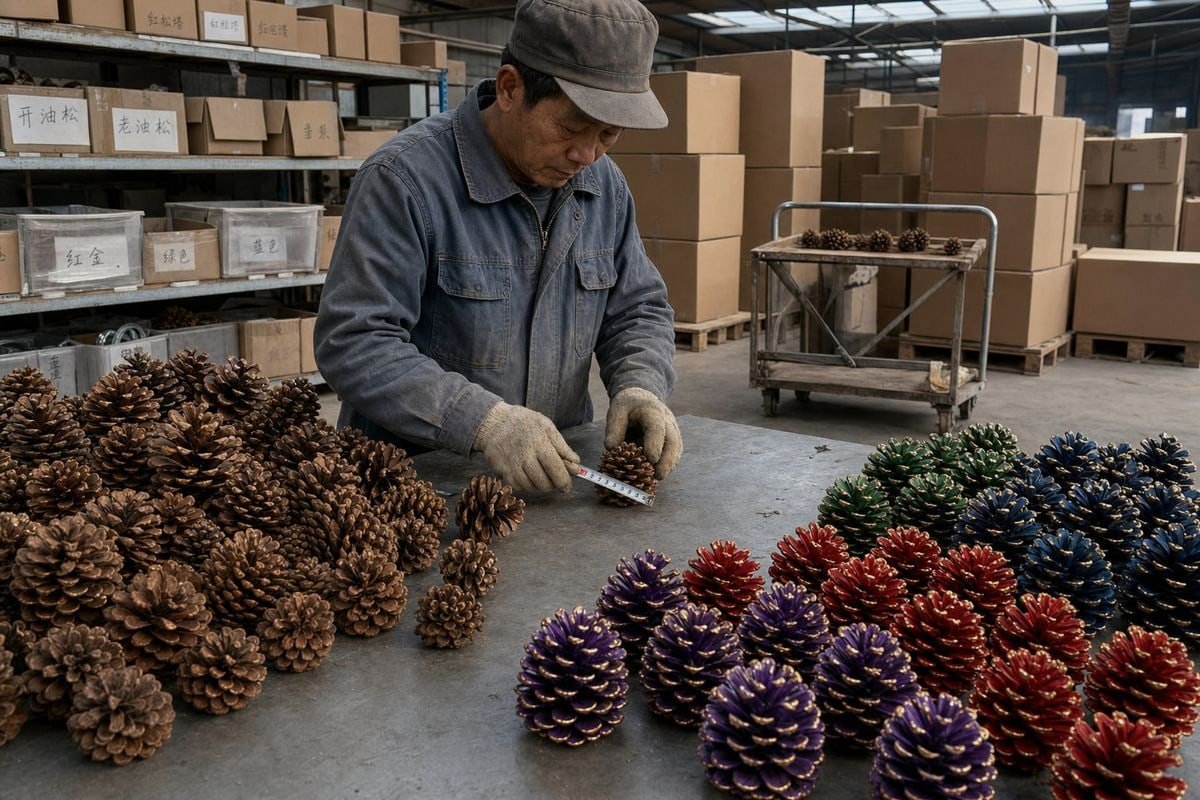
Sourcing the wrong cones for fireplace-colored pine cones nearly derailed one of our first bulk contracts. On our production line, we learned species and size decide everything downstream.
The best pine cone species for fireplace-colored pine cones are dense, fully opened cones in the 3–6 inch range, such as Ponderosa, Jeffrey, and mature white pine. This size absorbs color-producing solution well, burns 8–15 minutes, and fits standard retail packaging without breakage.
Species choice, size grading, sample testing, and batch quality control are the four decisions that make or break a colored pine cone program. Let me walk through each one, using what our factory has learned across 17 years of exports.
Which pine cone species do I need to source for consistent color-flame performance?
A German distributor once asked me why two shipments from another supplier burned differently. The answer was simple: mixed species. Our team grades cones by species before treatment for exactly this reason.
Dense, woody-scaled species like Ponderosa pine, Jeffrey pine, and mature white pine deliver the most consistent color-flame performance. Their thick scales hold more mineral solution and sustain colored flames longer, while thin-scaled or resin-heavy green cones burn too fast or resist absorption.
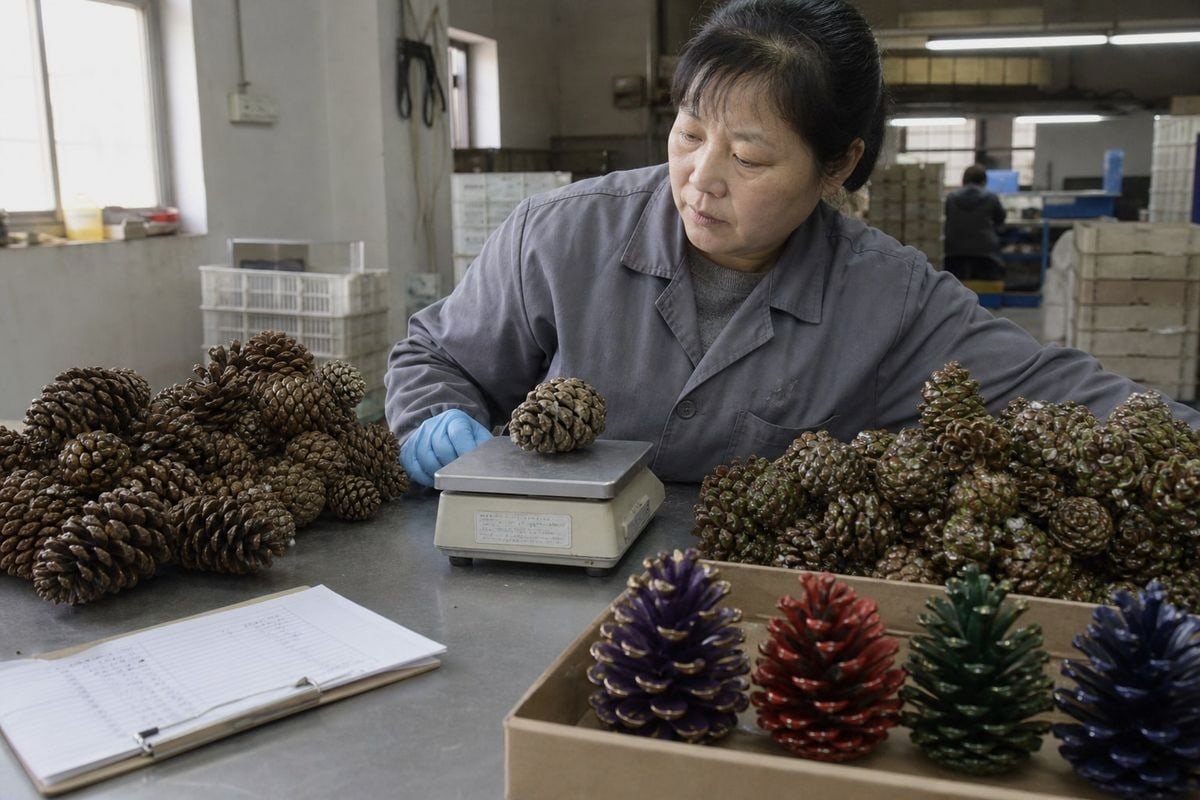
Species selection is the single biggest variable in color-flame performance. The reason comes down to two things: scale thickness and absorption. A colored flame is produced by sales minerales 1 held inside the cone. Thick, woody scales soak up more solution during treatment. They also burn slower, so the color effect lasts longer.
Here is how the common candidate species compare for a color-flame application:
| Especie | Typical Cone Length | Scale Density | Color-Flame Suitability |
|---|---|---|---|
| Ponderosa pine | 3–6 in | Alto | Excellent — long, steady color |
| Jeffrey pine | 5–9 in | Alto | Excellent, but large for packaging |
| Eastern white pine 2 | 3–6 in | Medio | Very good all-rounder |
| Red pine | 5–2.5 pulgadas | Medio | Good for smaller SKUs |
| Douglas fir / spruce | 2–4 in | Bajo-medio | Acceptable, faster burn |
| Sugar pine | 10–25 in | Alto | Display only — oversized |
| Hemlock | 0.5–1 in | Bajo | Filler only |
Why "best burner" is not always "best for color"
Some buyers arrive quoting fire-starter comparisons where resin-rich white pine wins. That test measures ignition, not color duration. Fresh, resin-heavy cones actually resist chemical absorption because sap seals the scales. For colored flames, we need fully mature, dry, naturally opened cones. Then the resin argument and the density argument stop contradicting each other: white pine works well for us precisely because we source it mature and open, not green and sticky.
The density factor
Cone density matters more than raw size. Denser cones from slow-growing species hold heat and release color longer. That is why a compact 4-inch Ponderosa cone outperforms a lighter 6-inch cone from a fast-growing species. When we audit raw material lots, we weigh sample cones per unit volume before approving them for treatment.
How do I choose the right pine cone size for burn time and packaging requirements?
Trade-offs drive this decision. Every time we develop a private-label SKU, we balance three constraints: burn time on the hearth, carton dimensions, and breakage rate in transit. Bigger is rarely better.
Choose 3–6 inch cones for standard fireplace use: they burn 8–15 minutes with visible color and fit resealable pouches and retail boxes. Use 2–3 inch cones for campfire multipacks, and reserve cones above 6 inches for oversized decorative display pieces only.
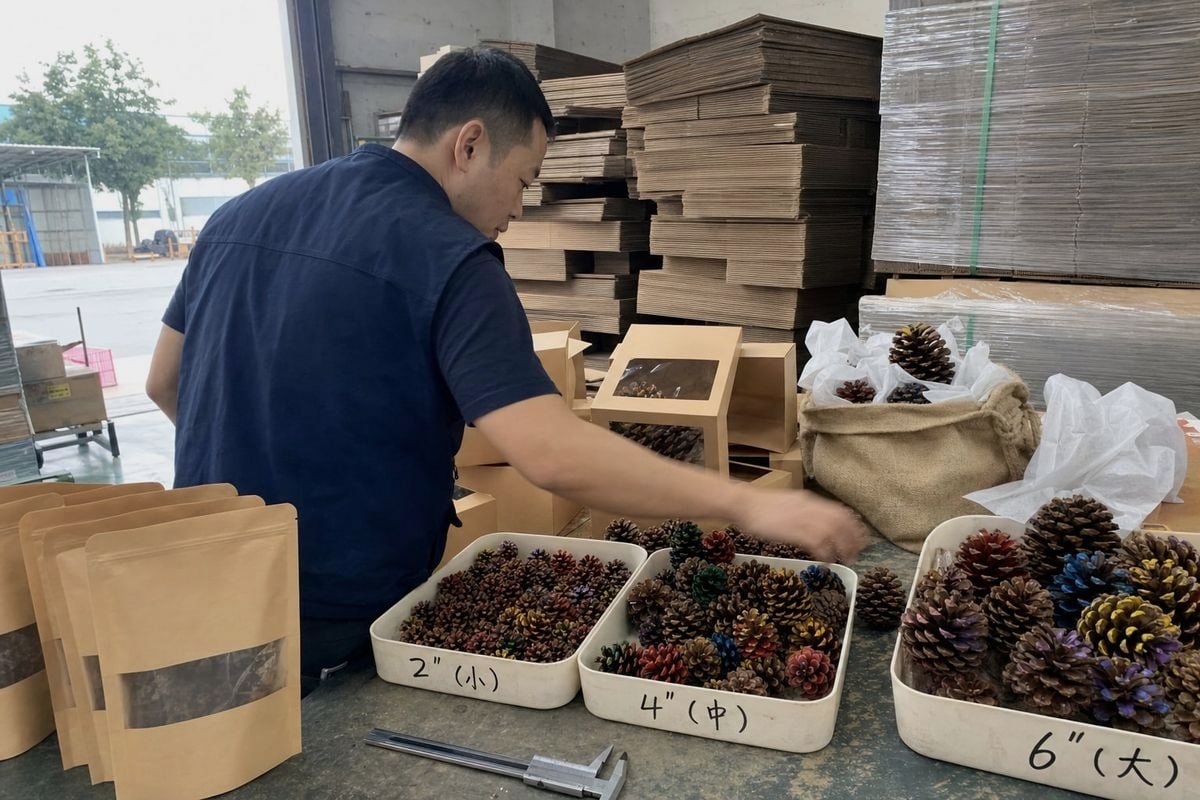
Size affects four commercial factors at once: burn time, shelf presentation, freight cost, and damage rate. I will break each down, because buyers often optimize one and forget the others.
Burn time by size band
Burn duration scales with cone mass and density, not length alone. As a working guide from our own burn tests:
| Size Band | Tiempo de combustión típico | Mejor Aplicación | Packaging Fit |
|---|---|---|---|
| 5–2.5 pulgadas | 4–8 min | Campfire multipacks, filler | Stand-up pouches, jars |
| 3–4 pulgadas | 8–12 min | Fireplace singles and 3-packs | Kraft pouches, window boxes |
| 4–6 in | 12–15+ minutos | Premium fireplace gift sets | Rigid boxes, burlap sacks |
| 6 in and up | Varía ampliamente | Décor, mantel display | Individual wrap only |
Packaging and logistics realities
Cones are bulky relative to weight, so you pay for air in every container. A 4-inch cone lets us pack tighter counts per carton than a 6-inch cone, which cuts landed cost per unit meaningfully. Scales also snap in transit. Larger cones have longer, more exposed scale tips, so breakage climbs with size unless you add individual wrapping, which adds labor cost.
Match size to the end-use scene
Our campfire-focused clients, mostly outdoor brands in the US and Canada, prefer smaller cones in resealable kraft pouches because campers toss in several at once for a layered rainbow effect. Fireplace and gift buyers in Germany and the UK lean toward 4–6 inch cones in burlap sacks or display boxes, where a single cone is the visual event. We advise mixing two size bands in gift sets: large cones anchor the look, small cones extend the color show.
Can I get pine cone samples tested for compliance before placing a bulk order?
A UK importer once told me his previous supplier's "certified" cones failed a heavy-metals screen 3 at the port. That conversation shaped how we now front-load compliance into the sampling stage.
Yes. A credible manufacturer should provide pre-production samples along with SGS or Intertek test reports covering emissions and heavy metals, plus CE documentation where applicable. Insist on written confirmation that mass-production batches use the identical formulation as the tested sample.
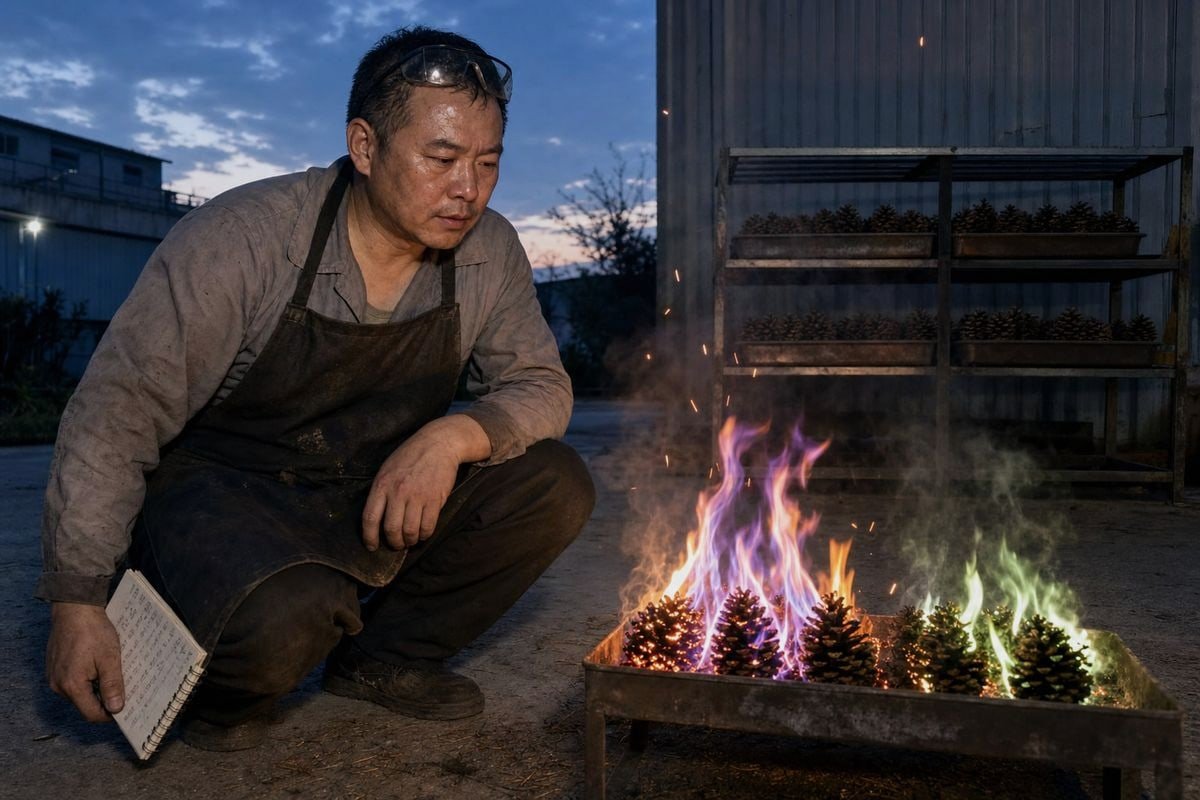
Sample testing is not a courtesy in this category. It is the gate that decides whether your product clears customs and survives a retailer audit. Color-flame products sit in a sensitive space: they involve combustion, mineral additives, and often children-adjacent holiday marketing. Regulators and big-box buyers know this.
Cómo es un proceso de muestreo adecuado
- Request production-line samples, not hand-picked "golden samples." At our Ningbo facility, sample cones come off the same treatment tanks and drying racks used for bulk runs.
- Ask for current informes de pruebas de terceros. We hold informes SGS e Intertek 4 on our color-flame formulations, and we share them before any deposit changes hands.
- Verify the factory's system certifications. ISO 9001 tells you the process is documented and repeatable. BSCI 5 tells you the facility passes social-compliance audits, which many European retailers now require.
- Burn-test the samples yourself. Check ignition time, color intensity, color duration, smoke behavior, and residue. Record it on video for your internal sign-off.
- Lock the specification in writing. Species, size band, treatment formula, moisture content, and packaging should all appear on the confirmed sample sheet.
Why formulation lock matters most
Test reports only protect you if production matches the tested recipe. Some suppliers pass a lab test, then quietly switch to cheaper sales minerales 6 in bulk runs. That is why our buyers receive a signed confirmation that the mass-production formulation is identical to the sampled and tested one, and why we welcome buyer-arranged third-party inspection before shipment. For trial orders, we keep MOQs flexible so you can validate market response before committing to full container volumes.
What quality control standards should I require for pine cone batch consistency across large orders?
Years back, we scrapped an entire drying run because moisture readings drifted past our tolerance. It was expensive. It also taught us that batch consistency is built from checkpoints, not promises.
Require documented QC at four stages: raw cone grading by species, size, and density; solution concentration checks during treatment; moisture verification after 24–48 hours of controlled drying; and per-batch burn tests with recorded color duration. Ask for batch-level QC records with every shipment.
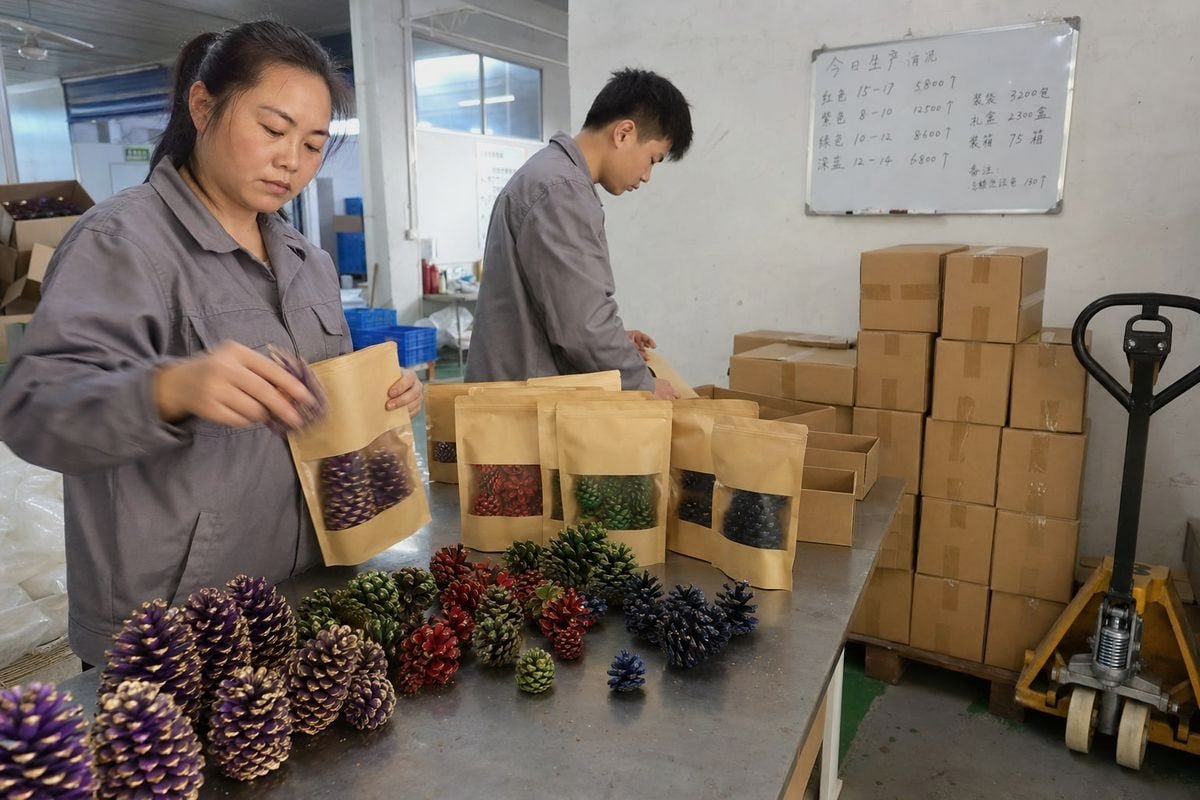
Consistency is the real product in B2B. Your retail customer does not compare your cone to a competitor's. They compare this purchase to their last one. If flame color, burn time, or cone appearance drifts between orders, you get complaints and lost repeat sales. So your supplier agreement should define measurable checkpoints, not vague quality language.
The four-stage QC framework we run
| Qué se revisa | What Is Checked | Estándar aceptable | Documentación |
|---|---|---|---|
| Incoming material | Species purity, size band, scale openness, density | Single species per batch; size within stated band; fully opened | Grading log per lot |
| Tratamiento | Solution concentration, soak time, coverage | Fixed formula and soak window per SKU | Batch treatment record |
| Secado | Moisture content after 24–48 hr controlled drying | Low, uniform moisture; no sputter or heavy smoke on test burn | Moisture readings per rack |
| Productos terminados | Color intensity, burn duration, breakage rate, packaging seal | Burn test sample per batch; visual AQL inspection | Burn-test report with batch code |
Why drying deserves special attention
Under-dried cones smoke, sputter, and mute the flame color. Over-dried cones become brittle and shed scales in transit. The 24–48 hour controlled drying window after treatment is where most consistency failures happen at less disciplined factories. We log moisture at rack level so a single wet corner of a drying room cannot contaminate a batch's average.
What to write into your purchase agreement
Ask for batch codes printed on cartons, retained samples from each batch held at the factory, and the right to third-party pre-shipment inspection. Also specify packaging tests: drop tests 7 for retail boxes and seal checks for resealable pouches. Our first sample reflecting mass-production quality is a standing commitment, and these records are how we prove it order after order.
Conclusión
Choose dense, mature, 3–6 inch cones from species like Ponderosa or white pine, verify compliance at the sample stage, and demand four-stage batch QC. Get those right, and fireplace-colored pine cones become a repeatable, shelf-ready product line.
Notas al pie
1. Explains how mineral salts produce colored flames, supporting the color-flame chemistry claim. ↩︎
2. Background on Eastern white pine species referenced for its scale structure and burn qualities. ↩︎
3. WHO fact sheet on heavy metal exposure relevant to safety screening of consumer products. ↩︎
4. Official site of SGS, the third-party testing firm named for compliance verification. ↩︎
5. Official amfori BSCI page verifies the social-compliance audit standard referenced. ↩︎
6. Explains how metal salts produce distinctive flame colors, the science behind the product. ↩︎
7. ISTA sets recognized packaging drop test standards referenced for shipment quality checks. ↩︎



 English
  Spanish
  German
  French
  Arabic
  Portuguese
Únete a la conversación