






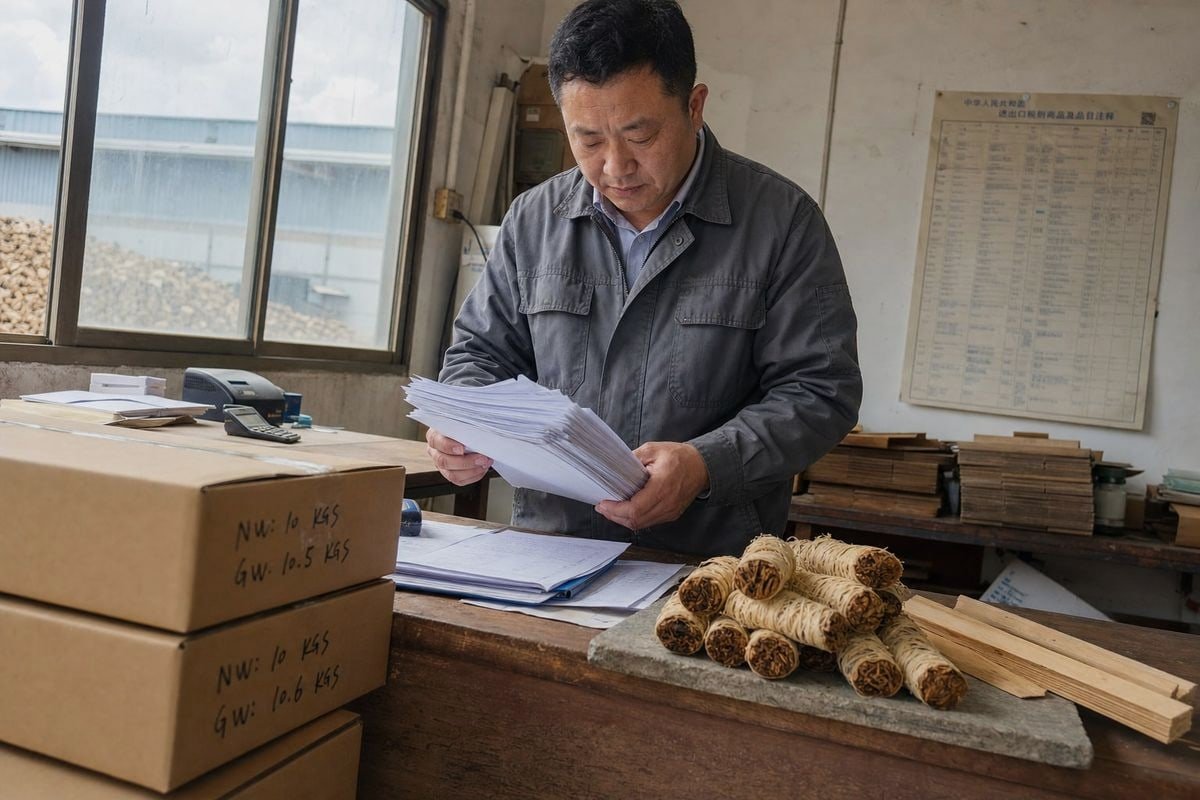
Buyers keep asking me one thing lately: which wood fire starter specs trigger import licenses under China's 2026 regulations? On our production line in Ningbo, this question now shapes every export file we prepare. Get the spec sheet wrong, and your shipment can sit at a port for weeks while paperwork catches up. That delay costs you shelf dates, retailer trust, and real money. The good news is that the rules follow a logic you can learn — and design around.
Under China's 2026 rules, wood fire starter licensing depends on exact specs, not the product name: wax or accelerant content, base material treatment, HS code classification, and packaging format determine whether the item needs an import license, hazardous-goods permits, phytosanitary documents, or no special license at all.
Let me walk you through each spec factor, one by one, so you can check your own product against the 2026 framework before you ship.
Which wood firestarter dimensions and burn-time specs trigger extra import documentation under China's 2026 rules?
A German distributor once sent us a spec sheet asking for oversized starter blocks with a 25-minute burn time. Our compliance team flagged it before production even started — and for good reason.
Dimensions and burn time do not directly trigger licensing, but they influence classification: larger units and longer burn times usually mean higher wax or accelerant loading, which can push a wood fire starter from a Chapter 44 wood article into HS 3606 combustible preparations under the 2026 catalogue logic.
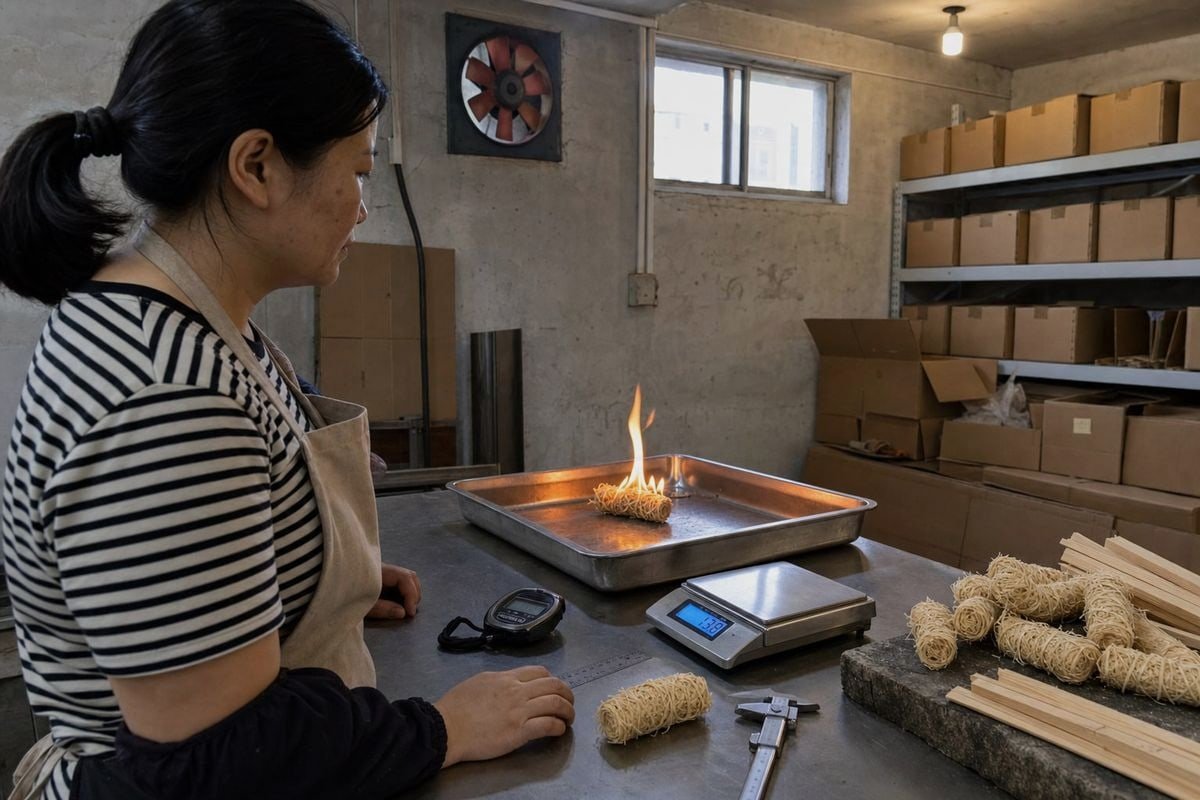
The 2026 Import License Management Catalogue 1 took effect on January 1, 2026, replacing the 2025 version. It works on a catalogue basis. That means customs authorities do not care what your marketing team calls the product. They care about the commodity code 2 your specs map to. Dimensions and burn time matter because they are proxies for composition. A small wood-wool roll that burns for 8 minutes typically carries a modest wax coating. A large block that burns for 25 minutes almost always carries a heavy paraffin load. That heavier load changes the classification conversation.
How size and burn time connect to classification
In our 17 years of exporting fire-starting goods to more than 30 countries, we have seen a clear pattern. When specs cross certain practical thresholds, extra scrutiny follows.
| Factor de especificación | Typical low-risk range | Higher-scrutiny range | Por qué importa |
|---|---|---|---|
| Peso unitario | Under 15 g | Over 40 g | Heavier units imply more accelerant per piece |
| Tiempo de combustión | Sello completo de cera contra la humedad | 20+ minutes | Long burns suggest dense wax or fuel cores |
| Bundle size | Retail packs (24–100 pcs) | Bulk cartons, loose fill | Bulk format can shift goods to industrial import rules |
| Formato del paquete | Boxed consumer retail | Unlabeled bulk sacks | Retail goods and bulk goods follow different documentation paths |
Packaging format also decides whether customs treats the goods as retail consumer products or bulk industrial imports. Each path has its own documentation checklist. When we quote a custom OEM burn time for a buyer, we always model the wax percentage first, then confirm the HS code, and only then confirm the price. Doing it in reverse order is how importers end up with surprise permit requests at the port.
How do wax content and material composition affect my customs classification and license requirements?
Composition is where most classification disputes actually start. Our factory prints "50% wood fiber, 50% paraffin" on retail boxes for a reason — that ratio is the single most examined line on the whole spec sheet.
Wax content is the main classification switch: untreated wood wool or kindling generally sits in Chapter 44 as a wood article, while starters with significant paraffin, petroleum, or chemical accelerants shift toward HS 3606 combustible preparations, which follows a different licensing and documentation pathway.
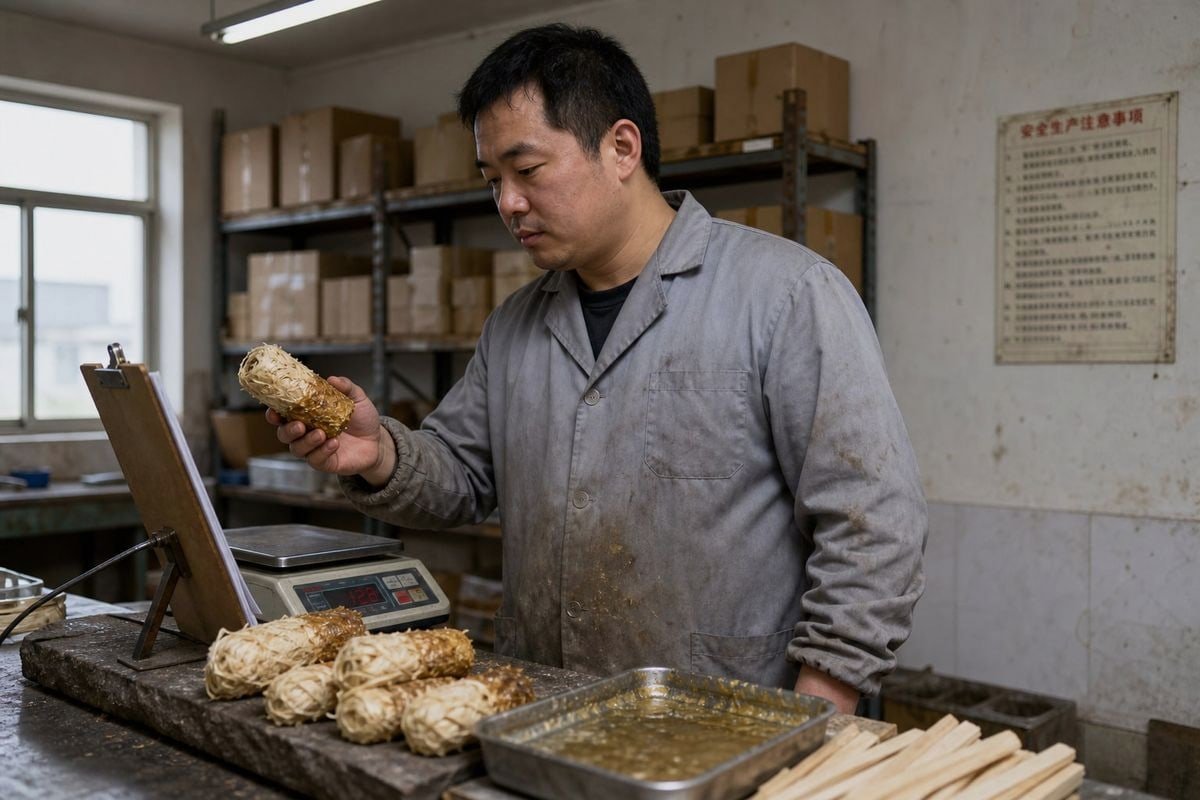
Think of your product as sitting on a spectrum. At one end is plain, untreated wood kindling. At the other end is a chemical fuel tablet that merely contains some wood fiber as a carrier. Your exact position on that spectrum decides your commodity code, and your commodity code decides whether the 2026 catalogue touches you at all.
The composition spectrum in practice
| Composition profile | Likely classification direction | Key documentation risk |
|---|---|---|
| Untreated wood kindling sticks | Wood articles, Chapter 44 | Phytosanitary certificate, ISPM 15 treatment marks |
| Lightly waxed wood-wool rolls | Case-by-case; often combustible preparation | Wax percentage must match declared HS code |
| 50/50 wood fiber and paraffin pucks | Combustible preparations, HS 3606 | Consistent composition data across all documents |
| Starters with solvents or oxidizers | Potential dangerous goods regime | Hazardous materials permits, flash point test reports |
| Composite units with metal or plastic parts | Multi-material goods | Separate documentation per material category |
Three composition details deserve special attention. First, flash point. Starters treated with kerosene or petroleum accelerants that exceed flash point thresholds 3 can be reclassified as dangerous goods, which requires a hazardous materials permit — a completely different regime from the general import catalogue. Second, moisture content. Specifications below roughly 12% moisture can move the goods into the "processed wood products" bucket, which avoids raw timber restrictions but brings 2026 VOC emission limits into play. Third, composites. If your starter combines wood with a wax core, metal wire, or plastic wrap, the non-wood component can be the licensing trigger even when the wood itself is unregulated.
We deliberately formulate our wax-dipped wood rolls with eco-friendly materials and no harmful chemical accelerants. That keeps our products out of the dangerous-goods regime and keeps classification simple for our buyers.
What certification and test reports do I need to prove compliance before shipping wood firestarters from China?
Years ago, a first-time buyer from the Netherlands asked us why we insisted on sending Los transportistas miden las dimensiones exteriores del cartón, incluidos los abultamientos, al calcular el peso volumétrico before he had even signed a purchase order. Six months later, his customs broker thanked us — the file cleared review on the first pass.
Before shipping, you typically need matching HS classification records, composition and flash point test reports from a recognized lab such as SGS or Intertek, phytosanitary or ISPM 15 evidence for untreated wood, GACC facility registration under Decree 248 where applicable, and any catalogue-required import license from MOFCOM.
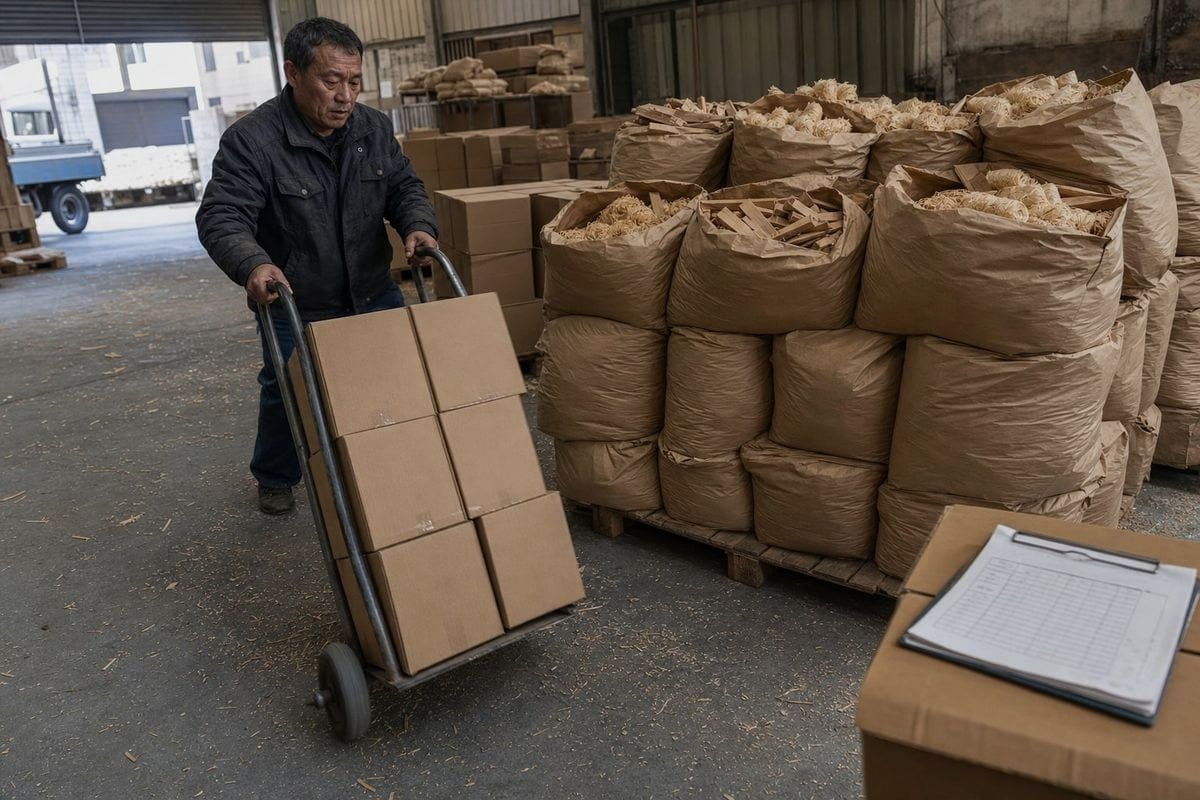
The 2026 framework rewards pre-clearance preparation. Licenses, where required, are issued by MOFCOM or authorized provincial commerce departments and must be presented to customs during declaration. There is also an automatic import licensing track for certain listed goods; it is lighter than a restrictive license, but it is still mandatory before declaration when it applies. The 2026 automatic licensing catalogue was itself updated — with a delayed implementation date for whey — which shows how these rules can shift commodity by commodity and date by date. You cannot assume last year's file still works.
A practical documentation workflow
Here is the sequence we follow with our own export files:
- Classify first. Lock the HS code based on verified composition data, not the sales description.
- Cross-check the catalogue. Confirm whether the code appears in the 2026 import license catalogue, the automatic licensing catalogue, or any special regime.
- Test and document. Obtain composition analysis and flash point reports from a recognized third-party lab. Our own informes SGS e Intertek 4 serve exactly this purpose.
- Cover the wood. For any untreated wood component, secure phytosanitary certificates 5 and confirm ISPM 15 heat-treatment or fumigation marking.
- Register the facility. Confirm GACC registration 6 under Decree 248 for the manufacturing site where it applies to the product category.
- Align every document. Make sure the product description, HS code, composition percentages, and packaging declarations match across the invoice, packing list, test reports, and license.
The most common failure point we see is inconsistency: a spec sheet that says 40% paraffin, a box that says 50%, and an invoice HS code that assumes plain wood. Any one document may be fine alone. Together, they invite a hold. Our ISO 9001 and BSCI systems 7 exist partly to keep those numbers identical from batch to batch, so the paperwork always describes the product in the container.
Can Sunrich help me adjust product specs to simplify my import license process for 2026?
Trade-offs are our daily work. Every week, our engineers balance burn time against wax percentage, packaging claims against certification scope, and MOQ flexibility against documentation cost — because a spec that clears customs smoothly is worth more than a spec that looks impressive on paper.
Yes. Sunrich engineers wood fire starter specs — wax ratio, unit size, burn time, materials, and packaging — to target the simplest viable classification, then backs each spec with SGS or Intertek test reports, CE documentation, and ISO 9001 batch consistency, giving importers a clean, verifiable compliance file for 2026.
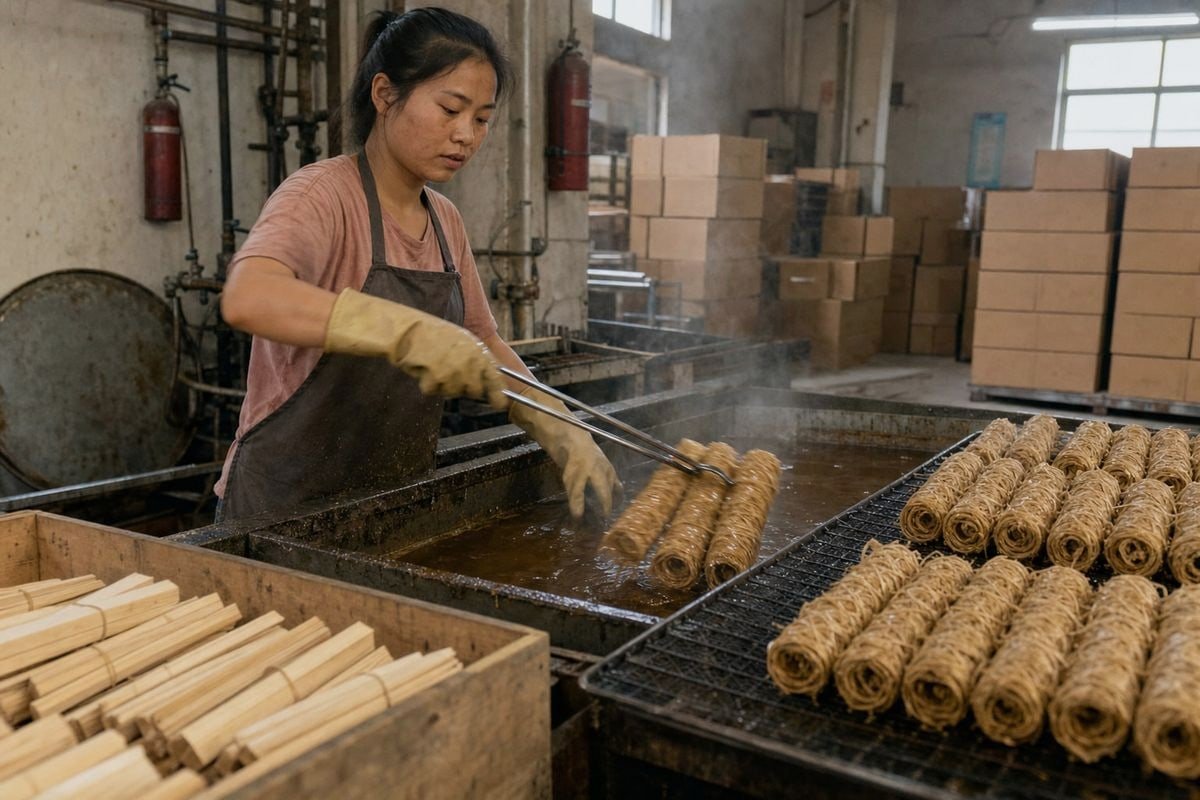
Because we are a real factory — headquartered in Liuyang, Hunan, with production in Ningbo, Zhejiang — we control the variables that decide your classification outcome. A trading company can only forward your questions. We can actually change the answer.
How spec engineering reduces licensing friction
| Spec lever we adjust | Compliance benefit for the importer |
|---|---|
| Wax ratio tuning | Keeps composition clearly within one HS classification instead of straddling two |
| No harmful chemical accelerants | Avoids dangerous-goods flash point thresholds and hazardous permits |
| Heat-treated, processed wood fiber | Sidesteps raw timber restrictions and simplifies phytosanitary requirements |
| Custom unit weight and pack count | Positions goods firmly as retail consumer products with a clear documentation path |
| Private-label packaging with accurate composition labels | Ensures box claims match test reports and customs declarations exactly |
| Warning labels and barcodes done at the factory | Delivers shelf-ready goods with no relabeling risk at destination |
Our one-stop OEM/ODM process starts with your target market, not with our standard product. If a buyer needs a 15-minute burn time for a fireplace line in Poland, we model the wax loading, confirm the classification stays clean, and only then finalize the sample. And because we run strict batch-to-batch quality control on complete production lines we have refined over 17+ years, the first sample genuinely reflects mass-production quality. That matters for compliance more than most buyers realize: a test report is only useful if every subsequent container matches the tested composition.
There is one more advantage worth mentioning. Entry through free trade zones 8 such as Hainan or Shanghai can offer expedited procedures for shipments with simplified additive profiles. Clean, simple compositions — the kind we design on purpose — are exactly the shipments that benefit most from those channels. We are not the cheapest supplier, and we do not try to be. We aim to be the partner whose paperwork never becomes your problem.
Conclusión
Wood fire starter specs — not product names — decide 2026 licensing outcomes. Classify by composition, verify the catalogue, align every document, and partner with a factory that engineers compliance in from the start.
Notas al pie
1. References WTO import licensing framework underlying China's catalogue-based system. ↩︎
<span id="footnote-2


 English
  Spanish
  German
  French
  Arabic
  Portuguese
Únete a la conversación