






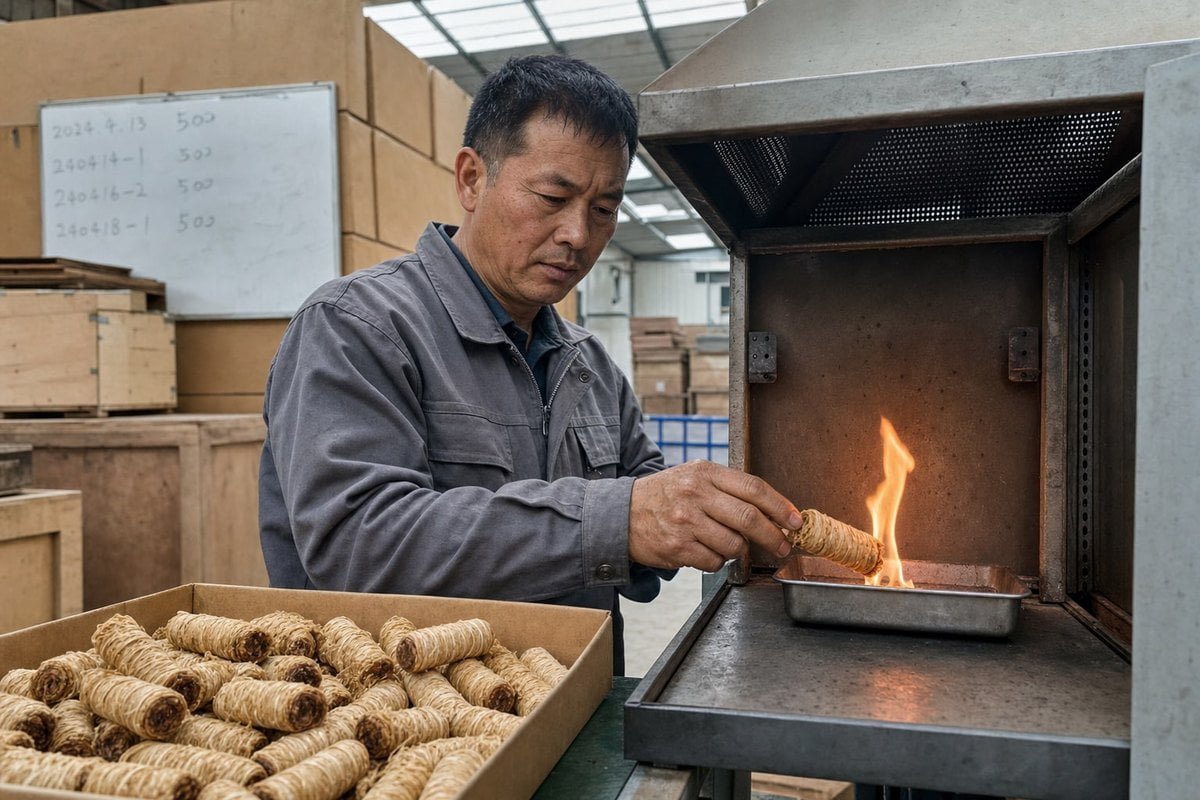
Los encendedores de fuego de gran altitud fallan más a menudo de lo que los compradores esperan. Aprendí esto al principio en nuestra línea de producción, cuando un distribuidor de Colorado devolvió muestras que ardían en lugar de arder por encima de los 9,000 pies.
La eficiencia de combustión en iniciadores de fuego de gran altitud depende de la composición de la cera, la densidad del material, el área de superficie, el contenido de humedad, el tiempo de combustión y la velocidad de ignición. El aire enrarecido reduce la presión parcial del oxígeno, por lo que los iniciadores necesitan mezclas de combustible volátil, geometría fibrosa de alta superficie y especificaciones de ignición verificadas para mantener la combustión en llama de manera confiable.
Esa única frase oculta muchos detalles de ingeniería. A continuación, desgloso cada parámetro de la forma en que lo haría en una conversación real de abastecimiento, para que pueda escribir un resumen del producto que realmente funcione en el aire enrarecido.
¿Cómo afectan la composición y la densidad de la cera al rendimiento de la combustión cuando obtengo iniciadores de fuego para mercados de gran altitud?
Un lote me enseñó esta lección de la manera difícil. Hace años, nuestro equipo en Ningbo probó una fórmula de rollo de madera más densa, y se encendió maravillosamente a nivel del mar, pero tuvo problemas en las pruebas de cámara fría.
La composición de la cera establece la energía del combustible y la velocidad de vaporización, mientras que la densidad controla el acceso al oxígeno. Relaciones más altas de parafina aumentan la velocidad de combustión y la altura de la llama; los núcleos de fibra de madera más sueltos exponen más área de superficie. Para mercados de gran altitud, los compradores deben especificar una relación equilibrada de cera a fibra y una baja densidad de compresión.

La altitud cambia la física de la quema antes de que su producto salga de la caja. A 10,000 pies, la presión atmosférica 1 cae aproximadamente un tercio en comparación con el nivel del mar. Menos presión significa menos moléculas de oxígeno por bocanada de aire que alimentan su llama. Por lo tanto, el combustible en sí mismo tiene que compensar.
Por qué la relación cera-fibra importa
Nuestros encendedores de fuego de madera estándar utilizan un diseño de rollo de madera sumergido en cera. La parafina es el combustible principal; la lana de madera es tanto una mecha como un combustible estructural. Si aumenta demasiado la proporción de cera, obtendrá una llama más alta y rápida, pero una combustión total más corta. Si la reduce demasiado, la ignición se vuelve lenta, especialmente donde la presión parcial de oxígeno 2 ya está reducida. En nuestra experiencia exportando a mercados como las Montañas Rocosas de EE. UU. y la región alpina de Alemania y Francia, una división casi equitativa ofrece el mejor equilibrio entre velocidad de ignición y calor sostenido.
Densidad: la variable oculta
La densidad a menudo se pasa por alto en las especificaciones de abastecimiento. Una pastilla densamente comprimida resiste la ignición porque el oxígeno no puede alcanzar las fibras interiores. Un rollo de madera enrollado sueltamente se enciende rápidamente porque cada hebra toca el aire. El contenido de humedad agrava esto: el material denso atrapa la humedad, y la evaporación de esa agua roba calor a la llama joven.
| Parámetro | Efecto a nivel del mar | Efecto de gran altitud | Recomendación de abastecimiento |
|---|---|---|---|
| Alta proporción de parafina (60 %+) | Llama alta, combustión rápida | Vaporización más fácil, menor duración | Bueno para SKUs de ignición rápida |
| Proporción equilibrada (~50/50) | Llama estable | Ignición + duración confiables | Mejor especificación general |
| Alta densidad de compresión | Ignición más lenta | Riesgo de combustión lenta | Evitar para mercados de altitud |
| Enrollado fibroso suelto | Ignición rápida | Maximiza el contacto con el oxígeno | Especificar explícitamente |
| Humedad superior al ~10 % | Ignición retrasada | Fallo de ignición frecuente | Requerir pruebas de humedad |
Cuando desarrollamos fórmulas OEM para marcas de camping centradas en la altitud, ajustamos la profundidad de penetración de la cera, no solo el porcentaje de cera. Una penetración de cera más profunda protege contra la humedad; la cera superficial acelera el crecimiento inicial de la llama. Ambos importan, y una buena fábrica debe controlar cada uno de forma independiente mediante controles de calidad de lote a lote.
¿Qué especificaciones de tiempo de combustión y velocidad de ignición debo solicitar para garantizar un rendimiento fiable en condiciones de bajo oxígeno?
Un distribuidor alemán de chimeneas me hizo una pregunta aguda durante una auditoría de fábrica: "Su hoja de especificaciones dice ocho minutos, pero ¿a qué altitud?" Esa pregunta remodeló cómo escribimos las especificaciones de combustión.
Solicite un tiempo de combustión a nivel del mar de 8 a 10 minutos con ignición documentada en cámara fría inferior a 5 segundos utilizando una cerilla estándar o una varilla de ferrocerio. Luego, requiera una estimación de la reducción por altitud, ya que la menor presión atmosférica generalmente ralentiza la velocidad de combustión y extiende el retraso de ignición notablemente por encima de los 8.000 pies.
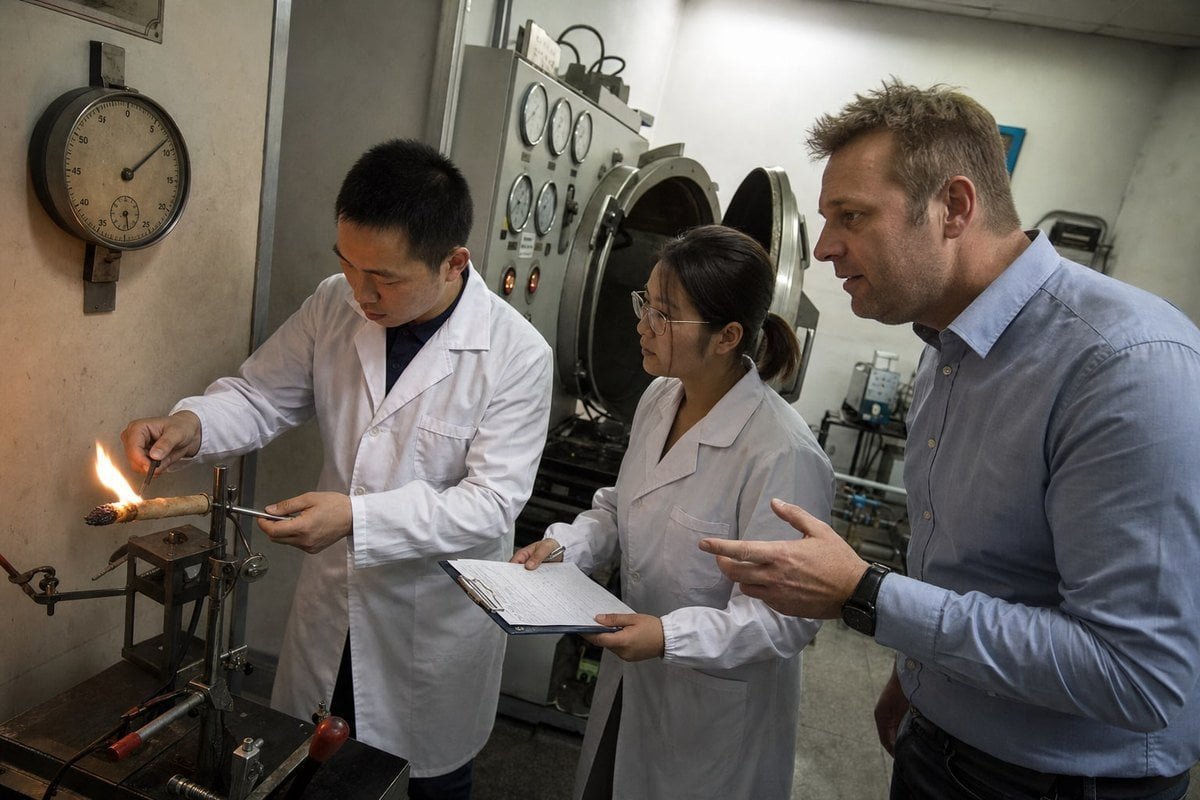
La mayoría de las hojas de especificaciones en esta industria están escritas para condiciones de laboratorio ideales. Eso está bien para los mercados de barbacoa a nivel del mar. No está bien si sus clientes acampan en elevaciones, donde la cinética de reacción de fase gaseosa más lenta aumenta el retraso de la ignición y el aire enrarecido aleja el calor de una llama que lucha a través de pérdida convectiva 3.
Los dos números que más importan
Primero, la velocidad de ignición. Este es el tiempo desde el contacto con la llama hasta la combustión autosostenida. En altitud, el combustible tarda más en alcanzar su temperatura de ignición 4 porque la vaporización se ralentiza y el aire frío circundante apaga el calor. Un encendedor que se enciende en dos segundos a nivel del mar puede necesitar ocho o más en elevación. Por lo tanto, siempre aconsejo a los compradores que soliciten datos de velocidad de ignición a temperatura reducida, lo que simula parte de la penalización por altitud.
Segundo, tiempo de combustión. La duración total de la combustión determina si el iniciador puede secar y encender yesca marginal. En altitud, la madera húmeda o fría necesita un mayor contacto con la llama. Un iniciador que arde de siete a diez minutos a nivel del mar le da un margen de seguridad manejable.
Una lista de verificación de especificaciones prácticas
Aquí está la lista de solicitudes que comparto con los gerentes de compras que nos compran:
- Velocidad de ignición con una cerilla, encendedor y varilla de ferrocio 5, cada uno documentado por separado.
- Tiempo de combustión a nivel del mar, promedio y mínimo, en al menos tres lotes de producción.
- Resultados de la prueba de ignición en condiciones de frío (cámara de congelación o prueba al aire libre en invierno).
- Límite de contenido de humedad indicado como porcentaje máximo, verificado por lote.
- Rango de altura de la llama, ya que las llamas iniciales más altas compensan la pérdida de calor en el aire enrarecido.
| Elemento de especificación | Punto de referencia a nivel del mar | Objetivo ajustado para altitud elevada |
|---|---|---|
| Velocidad de ignición (cerilla) | Menos de 3 segundos | Menos de 5 segundos a 0 °C |
| Velocidad de ignición (barra de ferrocerio) | Menos de 10 segundos | Fiabilidad documentada de la captura de chispas |
| Tiempo de combustión | 8–10 minutos | Se espera una tasa de combustión un 10-20% más lenta |
| Altura de la llama (inicial) | 15-25 cm | Se prefiere el extremo superior |
| Contenido de humedad | Menos del 10% | Se recomienda menos del 8% |
Un matiz que vale la pena señalar: la tasa de combustión y el tiempo de combustión se mueven en direcciones opuestas. El aire enrarecido ralentiza la tasa de combustión, lo que en realidad puede extender ligeramente el tiempo total de combustión, pero la llama es más débil y menos estable. Lo que quieres no es una combustión más larga y débil. Quieres una ignición rápida más una salida de calor sostenida suficiente. Pide ambos números y pregunta cómo se midieron.
¿Qué certificaciones e informes de prueba confirman que mis iniciadores de fuego funcionarán de forma segura en altitudes elevadas?
Las preguntas de cumplimiento surgen en casi todas las primeras llamadas con un nuevo importador. En nuestros más de 17 años enviando a más de 30 países, nunca he visto a un comprador serio de EE. UU. o la UE tratar la certificación como opcional.
Ninguna certificación pone a prueba la altitud directamente, pero los informes ISO 9001, BSCI, marcado CE y SGS o Intertek verifican la composición consistente, el comportamiento de combustión y la seguridad química. Combinados con la documentación de pruebas de tiempo de combustión, ignición y contenido de humedad, estos confirman que el producto funciona de manera predecible en condiciones exigentes.

Permítanme ser directo sobre lo que cubren y no cubren las certificaciones, porque he visto a proveedores exagerar esto. No existe un "certificado de altitud elevada" para iniciadores de fuego. Lo que existe es una pila de documentos que, en conjunto, demuestran que su producto es lo que afirma la hoja de especificaciones, lote tras lote. Y la consistencia es exactamente de lo que depende el rendimiento en altitud, porque un iniciador con contenido de humedad o proporciones de cera variables fallará de manera impredecible en el aire enrarecido.
Lo que demuestra cada documento
ISO 9001 6 cubre el sistema de gestión de calidad. Para usted, significa que la fábrica tiene controles de proceso documentados, por lo que la muestra que aprobó refleja la producción en masa. BSCI cubre el cumplimiento social, que los grandes canales de abastecimiento minorista requieren cada vez más. Marcado CE 7 aborda los requisitos de seguridad del producto de la UE. Los informes de terceros de SGS e Intertek verifican las afirmaciones de composición, por ejemplo, que un iniciador es realmente 50% fibra de madera y 50% parafina sin acelerantes químicos dañinos ocultos en la fórmula.
Ese último punto importa más de lo que los compradores se dan cuenta. Algunos proveedores de bajo costo aumentan la velocidad de ignición con aditivos volátiles no declarados. Esos aditivos pueden generar problemas aduaneros, problemas de clasificación de envío y exposición a responsabilidad. Nuestros iniciadores utilizan materiales ecológicos sin productos químicos nocivos, y respaldamos eso con informes de pruebas en lugar de promesas.
Informes de pruebas a solicitar además de los certificados
- Datos de prueba de tiempo de combustión y altura de llama en múltiples lotes.
- Verificación del contenido de humedad por lote de producción.
- Análisis de composición que confirma el comportamiento de la relación combustible-aire declarada (sin oxidantes o acelerantes ocultos).
- Cumplimiento del embalaje y las etiquetas de advertencia para su mercado de destino.
- Resúmenes de pruebas de ignición en condiciones de frío o a baja temperatura, si la altitud es un caso de uso declarado.
Cuando incorporamos un nuevo distribuidor, normalmente compartimos este paquete de documentos antes de que se envíe el primer pedido de prueba. Si un proveedor duda en proporcionar alguno de estos, trate esa duda como un dato.
¿Puedo personalizar el tamaño y el material del núcleo para mejorar la eficiencia de la combustión para el clima de mi mercado objetivo?
Las solicitudes de desarrollo personalizado son mi parte favorita de este negocio. El año pasado, una marca canadiense de exteriores nos pidió adaptar nuestra línea de antorchas de cera para uso en frío, con viento y en altitud elevada, y cada parámetro se puso sobre la mesa.
Sí. El tamaño, el material del núcleo, la formulación de la cera y la geometría se pueden personalizar. Diámetros más grandes extienden el tiempo de combustión; los núcleos de algodón, madera o bambú cambian la velocidad de absorción y el carácter de la llama; las estructuras de fibra más sueltas aumentan el área de superficie. Una fábrica OEM capaz ajusta estos elementos para su clima.
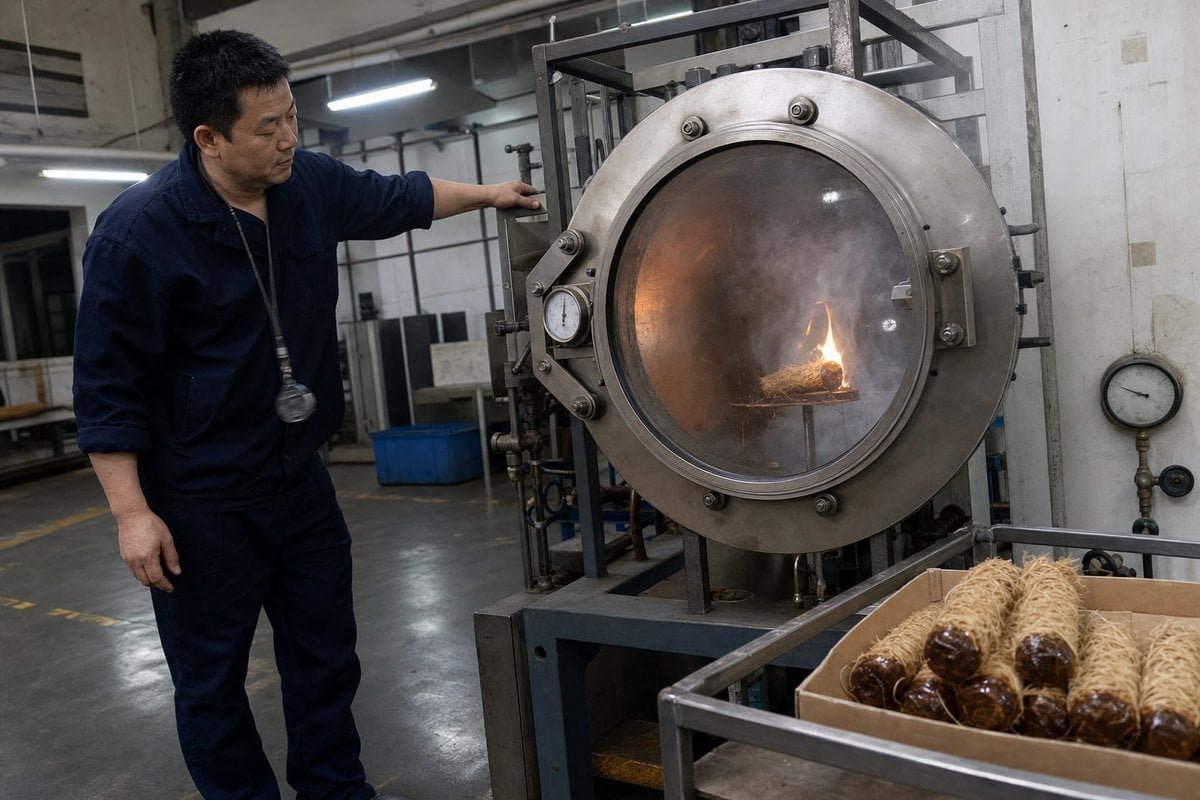
La personalización es donde la teoría de la combustión se convierte en estrategia de producto. Debido a que la altitud y el clima cambian el comportamiento del fuego, un producto único rara vez triunfa en todos los mercados. Así es como lo analizo con los compradores, parámetro por parámetro.
Selección del material principal
Nuestras antorchas de cera vienen con núcleos de algodón, madera o bambú, y cada uno se comporta de manera diferente. El algodón absorbe la cera líquida rápidamente, lo que permite un rápido crecimiento de la llama, útil cuando el aire frío castiga a los iniciadores lentos. Los núcleos de madera añaden combustible estructural y una llama más estable y prolongada. El bambú se sitúa entre los dos, con buena rigidez y absorción moderada. Para los iniciadores de fuego, el núcleo de lana de madera es difícil de superar en altitud porque sus hebras en forma de hilo crean una enorme área de superficie, lo que compensa parcialmente la reducida densidad de oxígeno. El objetivo es mantener la combustión local cerca de la combustión estequiométrica 8 condiciones incluso cuando el aire circundante es enrarecido.
Compensaciones de tamaño y geometría
| Palanca de personalización | Efecto en la combustión | Mejor para |
|---|---|---|
| Rollo de mayor diámetro | Mayor tiempo de combustión, inicio más lento | Climas fríos y húmedos que necesitan calor sostenido |
| Rollo más pequeño y suelto | Ignición más rápida, combustión más corta | Uso de arranque rápido en altitudes elevadas |
| Mayor penetración de cera | Mejor resistencia a la humedad | Mercados húmedos o nevados |
| Recubrimiento de cera superficial | Llama inicial más rápida | Condiciones de arranque en frío y con viento |
| Mecha de antorcha de algodón | Mecha rápida, llama viva | Aplicaciones de eventos y antorchas |
| Mecha de antorcha de bambú/madera | Combustión estable y duradera | Sesiones largas al aire libre |
Cómo es realmente un OEM integral
Por nuestra parte, la personalización va más allá del combustible en sí. Ajustamos los objetivos de tiempo de combustión, producimos embalajes de marca blanca, añadimos etiquetas de advertencia y códigos de barras específicos del mercado, y construimos cajas listas para exhibir en los estantes minoristas. Para un posicionamiento en altitud, también podemos ayudarle a redactar afirmaciones honestas en el envase, por ejemplo, indicando el tiempo de combustión probado en condiciones estándar en lugar de implicar un rendimiento idéntico en cada elevación. Durante el desarrollo, realizamos lotes de prueba y compartimos vídeos y datos de combustión antes de que se comprometa con el volumen. Ese proceso suele requerir varias rondas de muestras, y en mi experiencia, los compradores que invierten en esa iteración terminan con un SKU genuinamente diferenciado en lugar de una mercancía reetiquetada.
Conclusión
Los iniciadores de fuego para altitud tienen éxito gracias a parámetros de ingeniería, no a la suerte: composición equilibrada de la cera, baja densidad, alta área de superficie, humedad controlada, especificaciones verificadas y consistencia certificada. Abastecerse con esos criterios, y el aire delgado deja de ser un riesgo para el producto.
Notas al pie
Explica la física de la reducción de presión en elevación referenciada en el texto. ↩︎
Concepto de fondo que explica los cambios en la disponibilidad de oxígeno que afectan la combustión en altitud. ↩︎
Explica el mecanismo de transferencia de calor que causa inestabilidad de la llama en aire frío y delgado. ↩︎
NIST es una fuente autorizada sobre ciencia de materiales y estándares de medición de combustión. ↩︎
Información de fondo sobre la herramienta de inicio de fuego referenciada en las especificaciones de velocidad de ignición. ↩︎
Entrada autorizada de Wikipedia que proporciona una visión general estable y accesible del estándar de gestión de calidad. ↩︎
Página de destino oficial de la Comisión Europea para los requisitos y el cumplimiento del marcado CE. ↩︎
Explica el concepto de relación de combustión química referenciado para el equilibrio combustible-aire. ↩︎


 English
  Spanish
  German
  French
  Arabic
  Portuguese
Únete a la conversación