






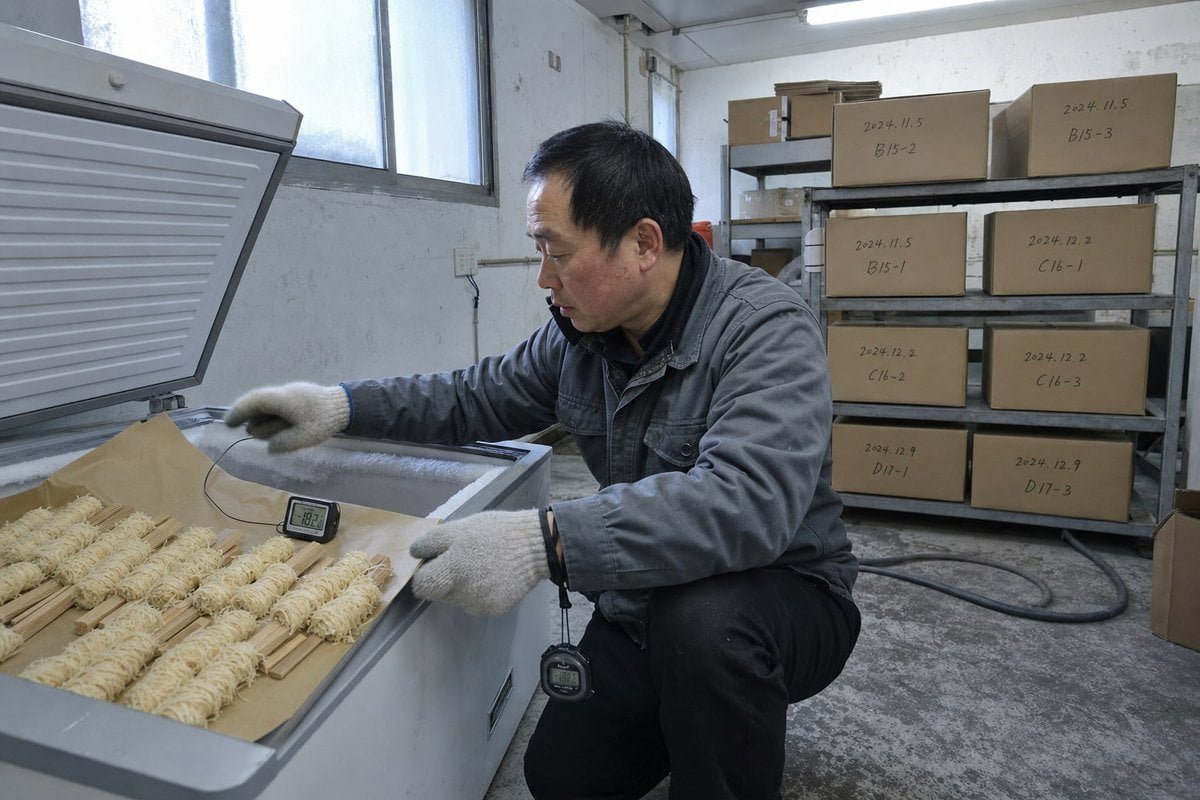
Abastecer iniciadores de fuego de madera para temperaturas extremas es arriesgado cuando los proveedores solo envían afirmaciones de marketing. En nuestra línea de producción, he visto por qué un producto que se enciende fácilmente a 20 °C puede fallar estrepitosamente a -20 °C, y un contenedor de stock fallido puede arruinar una temporada de ventas. La solución es simple: [exija los datos de prueba correctos](https://sunrichfire.com/how-ask-suppliers-burn-test-reports-kamado-grill-fire-starters/) antes de realizar el pedido.
Al obtener iniciadores de fuego de madera para temperaturas extremas, solicite cinco conjuntos de datos: tiempo de ignición en condiciones bajo cero, curvas de duración de la combustión y producción de calor, resultados de resistencia ambiental (húmedo, viento, empapado en frío), tiempos de transferencia de yesca y registros de consistencia lote a lote, todo respaldado por informes de prueba de SGS o Intertek y una metodología clara.
A continuación, detallo exactamente qué certificaciones, métricas y documentos solicitar. Utilice esto como su lista de verificación de abastecimiento antes de comprometerse con cualquier orden de compra.
¿Qué certificaciones debo verificar antes de confiar en los informes de pruebas de clima frío?
Un distribuidor alemán me dijo una vez que había rechazado a tres proveedores seguidos porque sus "informes de prueba" eran PDF emitidos por ellos mismos sin nombre de laboratorio. Esa conversación dio forma a cómo nuestra fábrica documenta todo hoy.
Verificar ISO 9001 para gestión de calidad, BSCI para auditoría de fábrica, CE para acceso al mercado e informes de prueba de terceros de SGS o Intertek. Rechazar informes autoemitidos. Confirmar que el titular del certificado coincide con el nombre real de la fábrica y verificar que los informes estén actualizados, no caducados.

Las certificaciones importan porque le dicen quién verificó los datos, no solo lo que dicen los datos. Una afirmación de ignición en clima frío no significa nada si el "laboratorio" es la sala de descanso del proveedor con un termómetro. En nuestros más de 17 años exportando a EE. UU., Alemania, Reino Unido y otros 27 mercados, hemos aprendido que los compradores serios verifican tres capas de prueba.
Las Tres Capas de Verificación
Primero, verifique las certificaciones del sistema. ISO 9001 confirma que la fábrica opera un proceso de calidad documentado. BSCI confirma que la fábrica en sí fue auditada, lo que también demuestra que está tratando con un sitio de producción real, no con una empresa comercial que revende productos desconocidos.
Segundo, verifique los documentos a nivel de producto. La marca CE es importante para los compradores europeos. Una Hoja de Datos de Seguridad de Materiales debe acompañar a cualquier producto a base de parafina 1, y debe indicar el punto de inflamación y temperatura de autoignición 2 del componente de cera. Si un proveedor no puede producir una MSDS, retírese.
Tercero, verifique los informes de prueba en sí. Los informes de SGS e Intertek tienen números de informe que puede verificar directamente con el laboratorio.
| Documento | Lo Que Demuestra | Señal de alerta |
|---|---|---|
| ISO 9001 | El sistema de gestión de calidad existe | Certificado emitido a nombre de otra empresa |
| Auditoría BSCI | Fábrica real y auditada | El proveedor se niega a una videollamada de fábrica |
| Documentación CE | Cumplimiento del mercado de la UE | "CE" reclamado sin expediente técnico |
| Informe SGS/Intertek | Datos de prueba independientes | Informe emitido por uno mismo, sin número de laboratorio |
| Hoja de datos de seguridad del material | Análisis de composición química, datos de punto de inflamación | MSDS faltante o plantilla genérica |
También solicite impacto ambiental 3 e informes de toxicidad si su mercado requiere etiquetado ecológico. Nuestros compradores en los Países Bajos y Alemania solicitan estos en casi todos los pedidos ahora, y la tendencia se está extendiendo.
¿Qué tiempo de combustión y datos de ignición son más importantes en condiciones bajo cero?
Existe una compensación que sopesamos constantemente al formular nuestros rollos de madera encerados: una mayor duración duración de combustión 4 generalmente significa una rampa térmica más lenta, pero la yesca congelada necesita primero un calor rápido e intenso. Conseguir ambos bien requiere ajuste.
Priorizar el tiempo de ignición en condiciones bajo cero después de un remojo en frío de 24 horas, tiempo hasta la temperatura máxima, temperatura mantenida a los 5, 10 y 15 minutos, umbrales de extinción por viento e ignición exitosa después de la exposición al agua. El tiempo de combustión por sí solo es engañoso sin datos de producción de calor.
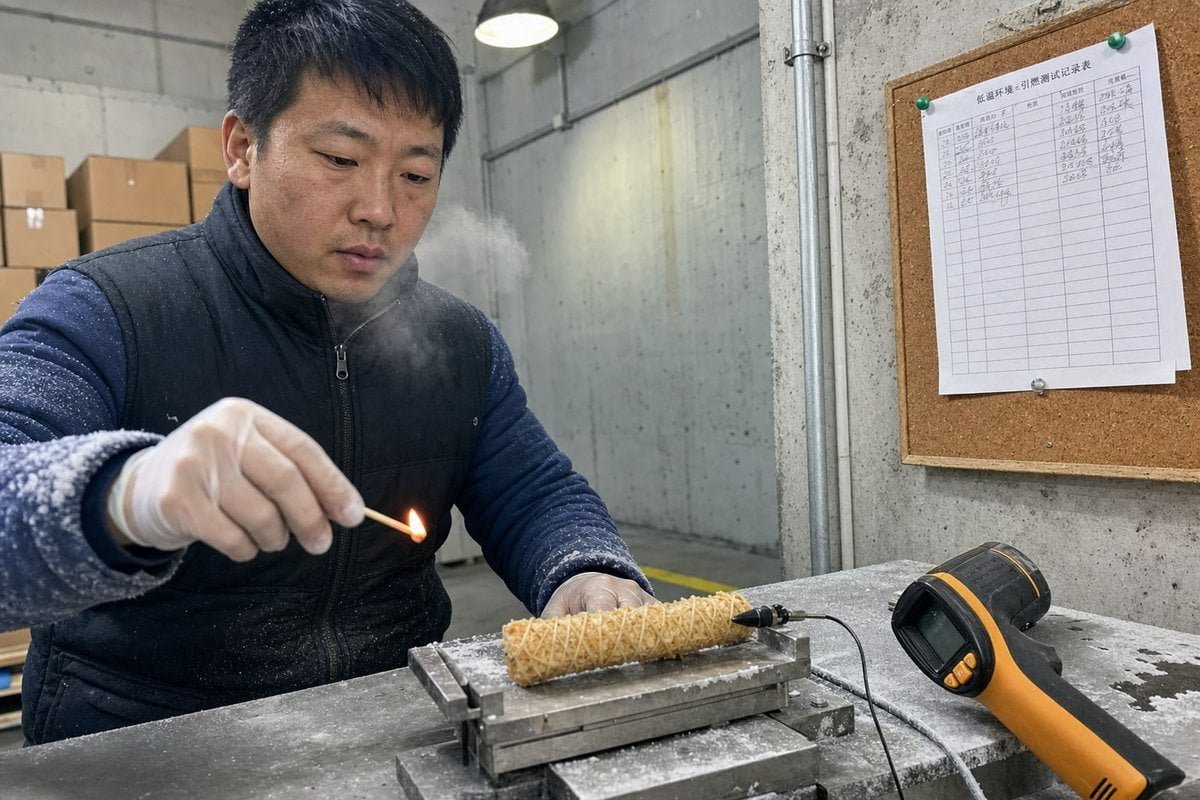
El frío cambia todo sobre la ignición. La cera se endurece. La presión de vapor disminuye. Las fibras de madera absorben la humedad ambiental y la escarcha. Por lo tanto, un "tiempo de combustión de 10 minutos" medido a temperatura ambiente no le dice casi nada sobre el rendimiento a -25 °C en un patio trasero canadiense o un campamento polaco.
Las métricas que realmente predicen el éxito en el campo
Aquí está la jerarquía de datos que recomiendo a los gerentes de compras, en orden de importancia:
- Tiempo de ignición en condiciones bajo cero. ¿Cuántos segundos desde el contacto con la llama hasta la combustión autosostenida, después de que la muestra se mantuvo a -20 °C o menos durante 24 horas?
- Tiempo hasta la temperatura máxima. La ignición de madera dura generalmente necesita temperaturas sostenidas de alrededor de 500 °C. Un iniciador que aumenta lentamente desperdicia su ventana de combustión.
- Curva de temperatura a lo largo del tiempo. Solicite lecturas a los 5, 10, 15 y 20 minutos. Un iniciador que mantiene un alto calor al final de su combustión puede secar e encender combustible húmedo; uno que aumenta y se desvanece no puede.
- Duración de la combustión y salida de calor juntas. Solicite la medición de BTU por unidad para que pueda comparar la densidad de energía entre productos de diferentes tamaños.
- Prueba de resistencia al viento. ¿A qué velocidad del viento 5, en metros por segundo, se extingue la llama? Los fallos en campo en mercados de montaña y costeros casi siempre se remontan a este número.
- Ignición en condiciones húmedas. Tasa de éxito después de la exposición a la humedad y después del contacto directo con el agua, ya que las tasas de absorción de humedad en productos de fibra de madera varían ampliamente según la calidad del recubrimiento de cera.
| Métrica | Prueba a Temperatura Ambiente | Prueba de Frío Extremo a Solicitar |
|---|---|---|
| Tiempo de ignición | 2–5 segundos típicos | Después de 24 h de inmersión en frío a -20 °C |
| Duración de la combustión | Minutos totales de llama | Minutos utilizables por encima del calor de ignición de la yesca |
| Temperatura máxima | Lectura máxima solamente | Curva completa a 5/10/15/20 min |
| Rendimiento del viento | A menudo sin probar | Umbral de extinción en m/s |
| Humedad | Muestra seca | Ensayos post-humedad y post-inmersión |
Un punto más de nuestro propio banco de control de calidad: la literatura sobre ciencias del fuego muestra que la madera puede encenderse por debajo de la cifra comúnmente citada de 482 °F cuando la exposición al calor es prolongada. El tiempo a temperatura importa tanto como la temperatura máxima. Pregunte por ambos.
¿Cómo puedo confirmar que los resultados de las pruebas coinciden con la calidad real de la producción en masa?
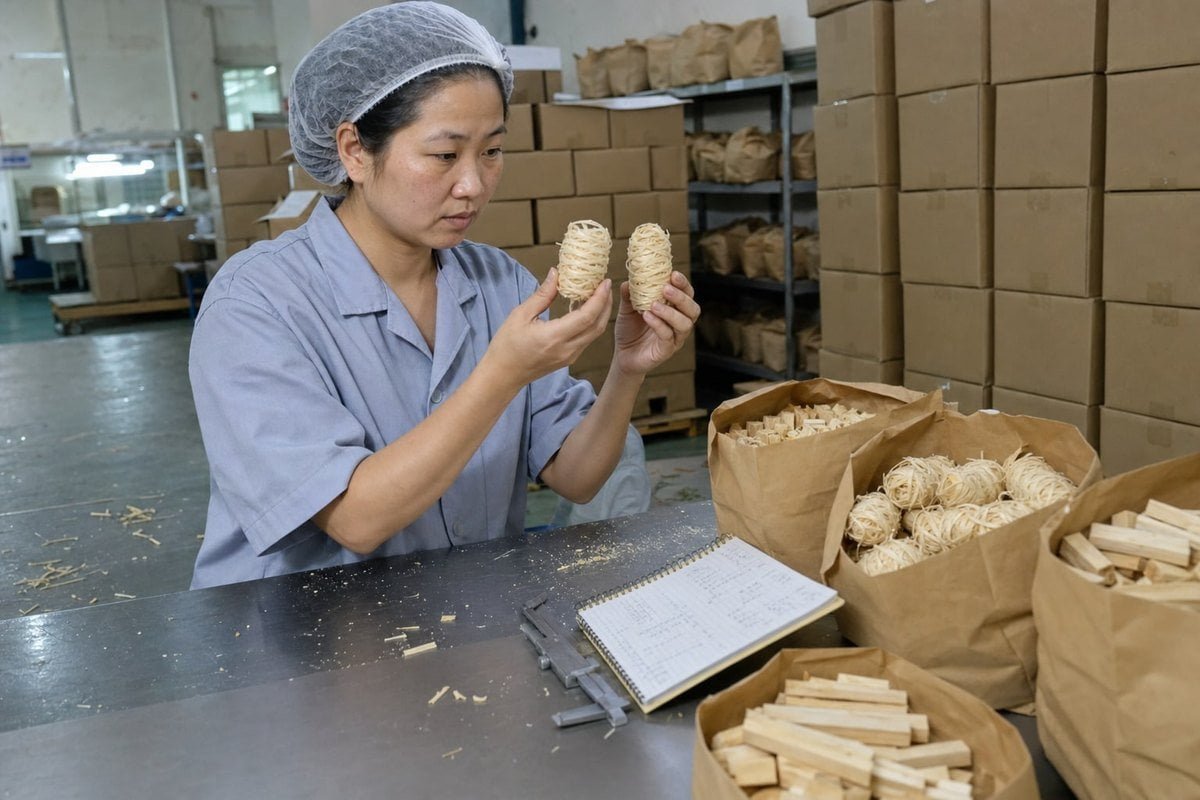
Al principio de mi carrera en nuestra planta de Ningbo, detectamos un baño de cera que funcionaba cinco grados demasiado frío en un turno de noche. Los rollos parecían idénticos. Su duración de combustión se redujo casi un 20%. Esa lección construyó nuestro protocolo de pruebas por lotes.
Solicitar datos de consistencia lote a lote en al menos tres lotes de producción, preguntar cuántas muestras se analizaron por lote, comparar las especificaciones de la muestra de referencia con las inspecciones de envío y exigir pruebas de quemado previas al envío. Las primeras muestras deben extraerse de líneas de producción reales, no de prototipos hechos a mano.

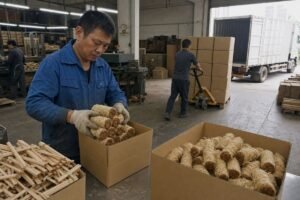
El fallo de abastecimiento más común que veo no es un producto malo. Es una buena muestra seguida de una producción en masa inconsistente. La muestra fue seleccionada a mano, sumergida a mano o fabricada en una corrida de prueba lenta. El contenedor que llega tres meses después se comporta de manera diferente.
Preguntas que exponen problemas de consistencia
Pregunte directamente a su proveedor:
- ¿Cuántas muestras por lote pasan por pruebas de combustión?
- ¿Qué tolerancia permite en la carga de cera por pieza?
- ¿Registra la temperatura del baño de cera y el tiempo de inmersión por turno?
- ¿Puede compartir los datos de tasa de fallos de los últimos tres lotes?
- ¿Probará unidades de mi corrida de producción real en video antes del envío?
Una fábrica con verdadera profundidad de fabricación responde a estas preguntas rápidamente. Una empresa comercial se queda en silencio. En nuestras instalaciones, pesamos piezas de muestra de cada lote porque la carga de cera controla directamente tanto la duración de la combustión como la producción de calor; una pieza con un peso inferior, incluso en un pequeño margen, arde más corta y más fría.
Los datos de envejecimiento y almacenamiento también son importantes
La consistencia no es solo de lote a lote. También es mes a mes en el estante. Solicite datos de vida útil y estabilidad de almacenamiento, idealmente con resultados de envejecimiento acelerado. Los iniciadores a base de parafina almacenados en almacenes calientes o interiores de vehículos pueden perder componentes volátiles con el tiempo, así que pregunte sobre Retención de VOC 6 bajo almacenamiento prolongado a 50 °C. La integridad del sellado del embalaje después de ciclos térmicos de -40 °C a +60 °C es importante para los envíos al mercado ártico, donde los productos quebradizos también pueden fracturarse durante el transporte brusco. Solicite observaciones de resistencia al impacto a baja temperatura si su ruta cruza regiones frías.
¿Qué documentación debo solicitar para validar las afirmaciones de rendimiento para mi mercado?
Un comprador estadounidense nos envió recientemente una lista de verificación de una página antes de su pedido de prueba: certificaciones, datos de prueba, prueba de etiquetado y documentos de logística. La completamos en dos días. Esa lista de verificación vale la pena copiarla, así que la he reconstruido aquí.
Solicite un paquete de documentación que cubra informes de pruebas de terceros, MSDS, análisis de composición química, prueba de cumplimiento específico del mercado, archivos de etiquetas de advertencia y embalaje, datos de vida útil e informes de inspección previa al envío. Haga coincidir cada documento con las regulaciones de su mercado y su caso de uso específico.
Diferentes mercados y diferentes casos de uso necesitan diferentes evidencias. Un producto para chimenea vendido en interiores en Francia se enfrenta a un escrutinio diferente que un producto de kit de emergencia vendido en Canadá o un producto de camping vendido en altitud en las Montañas Rocosas de EE. UU., donde la densidad de oxígeno reducida afecta la fiabilidad de la ignición por encima de los 3.000 metros.
El paquete de documentación completo
| Categoría de documento | Qué solicitar | Por qué importa |
|---|---|---|
| Rendimiento | Metodología de prueba completa, tamaño de muestra, condiciones ambientales, tasas de fallo | Le permite juzgar si las pruebas reflejan sus condiciones de campo |
| Químico | FDS, análisis de composición química, punto de inflamación y temperatura de autoignición | Requerido para envíos, aduanas y incorporación de minoristas |
| Cumplimiento | Archivos CE, informes SGS/Intertek, impacto ambiental y de toxicidad | Requisito indispensable para minoristas de la UE y América del Norte |
| Empaquetado | Etiquetas de advertencia, códigos de barras, versiones de idioma, clasificación de inflamabilidad del embalaje | Cumplimiento listo para el estante; los minoristas rechazan etiquetas no conformes |
| Logística | Declaración de vida útil, límites de temperatura de almacenamiento, clasificación DG si la hay | Evita la degradación en tránsito y los retrasos en aduanas |
| Calidad | Confirma que los productos enviados coinciden con las muestras aprobadas | Haga coincidir la documentación con el caso de uso |
Para compradores de kits de camping y emergencia, insista en datos de ignición en frío y en condiciones húmedas
. Para distribuidores de chimeneas y estufas de leña, priorice la documentación sobre la producción de humo, el comportamiento de los residuos y la toxicidad relacionada con el aire interior. Para programas de marca privada — que constituyen gran parte de nuestro trabajo OEM/ODM — también solicite pruebas de arte, texto legal de etiquetas de advertencia para cada país de destino y verificación de códigos de barras. Preparamos todo esto internamente para compradores en más de 30 países, porque un envío retenido en aduanas por un documento faltante cuesta más que los productos en sí. Una FDS que indique el punto de inflamación y la composición es necesaria para el despacho de aduanas sin problemas de los iniciadores de fuego a base de parafina en la mayoría de los mercados. Las compañías navieras, las autoridades aduaneras y los minoristas requieren rutinariamente.
Conclusión
Las afirmaciones de marketing fallan en el frío; los datos documentados no. Si las promesas de un proveedor para el clima frío colapsan en su mercado, usted asume las devoluciones y el daño a la reputación. Protéjase: exija datos de ignición bajo cero, curvas de producción de calor, resultados de estrés ambiental, registros de consistencia de lotes y un archivo de cumplimiento completo. En nuestra experiencia suministrando iniciadores de fuego de madera encerados en todo el mundo, el mejor producto para temperaturas extremas es el que tiene un rendimiento verificado en sus condiciones de operación reales: solicite la prueba, no la afirmación.
Notas al pie
Entrada de la base de datos PubChem para parafina, que proporciona propiedades químicas para productos iniciadores de fuego a base de cera. ↩︎
Entrada de Wikipedia sobre temperatura de autoignición, una métrica de seguridad clave para los componentes del iniciador de fuego. ↩︎
Resumen de Wikipedia sobre evaluaciones de impacto ambiental, relevante para el etiquetado ecológico y el cumplimiento del mercado. ↩︎
Página de Wikipedia sobre combustión, que explica el proceso que determina la duración de la combustión y la liberación de calor. ↩︎
Explicación de la NOAA sobre las mediciones de la velocidad del viento, relevante para probar la resistencia al viento de los iniciadores de fuego. ↩︎
Recurso de la EPA que explica los compuestos orgánicos volátiles y su comportamiento en el almacenamiento y la calidad del aire. ↩︎
Página oficial de Comunicación de Peligros de la OSHA; la subpágina original específica de SDS se movió o se integró aquí. ↩︎

 English
  Spanish
  German
  French
  Arabic
  Portuguese
Únete a la conversación