






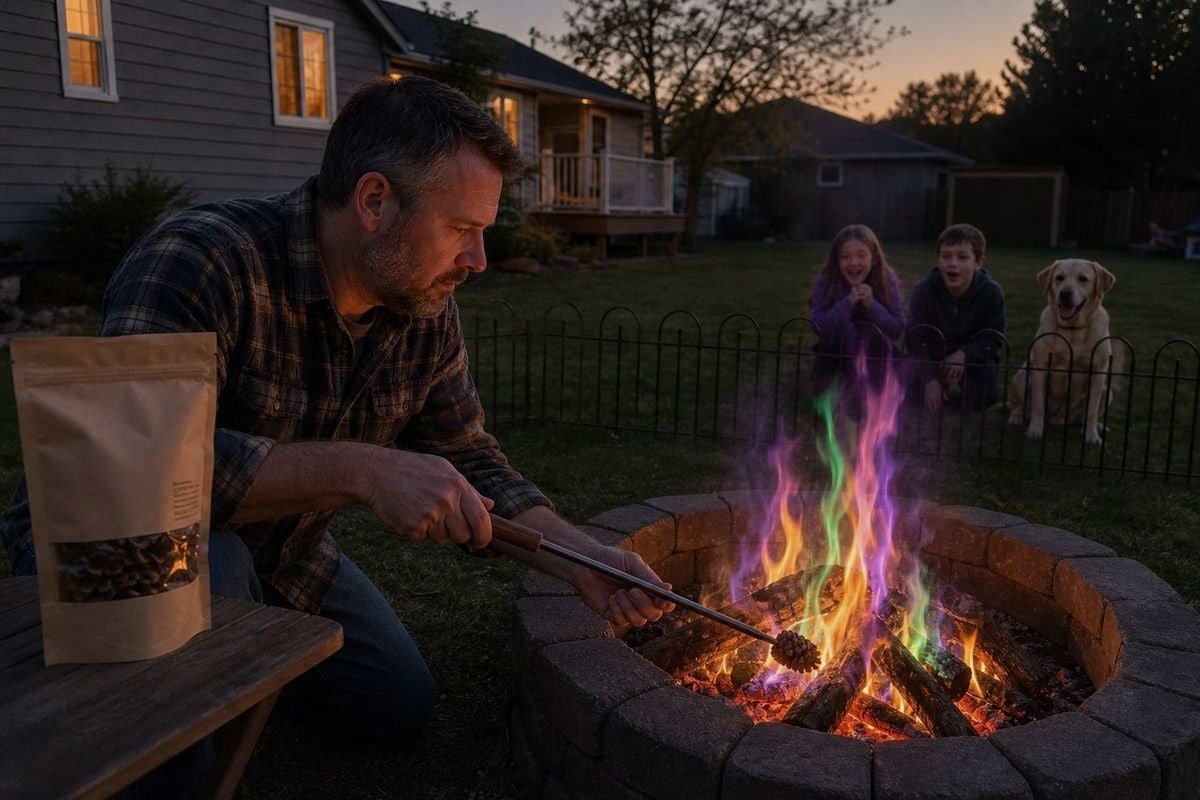
Las piñas de pino de colores en las fogatas y los pozos de fuego parecen mágicas, pero he visto formulaciones descuidadas causar problemas reales. Marcado CE 1. En nuestra línea de producción, tratamos cada lote como un producto químico de consumo.
Piñas de colores para fogatas y pozos de fuego son seguras cuando se usan según las indicaciones: quémelas al aire libre o en chimeneas ventiladas, nunca cocine alimentos sobre ellas, manténgalas alejadas de niños y mascotas, evite aparatos de gas y compre solo productos certificados y probados con etiquetas de advertencia claras.
Esa respuesta corta oculta muchos detalles. A continuación, desgloso los pasos de seguridad, la química, las certificaciones y las reglas de etiquetado que necesita antes de comprar, importar o usar estos productos.
¿Qué precauciones de seguridad debo seguir antes de añadir piñas de pino de colores a mi hoguera?
Un distribuidor alemán preguntó una vez a nuestro equipo por qué insistimos en las reglas de uso impresas para cada bolsa minorista. La respuesta provino de años de observar cómo los usuarios finales tratan estos productos.
Antes de añadir piñas de colores a una hoguera, confirma que la hoguera está al aire libre o bien ventilada, detén toda la cocción, mantén alejados a los niños y a las mascotas, quema un color a la vez, colócate a favor del viento del humo y nunca las uses en chimeneas de gas o hogueras alimentadas por gas.
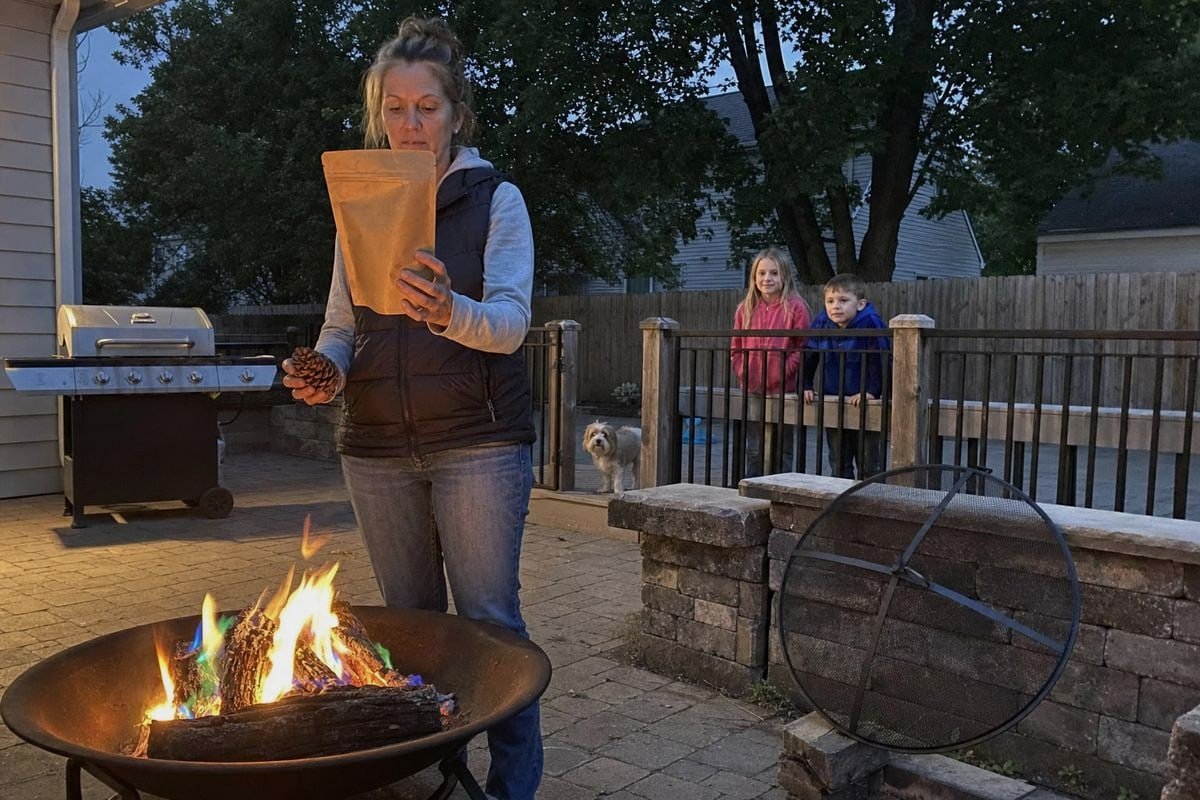
La regla más importante es la separación de los alimentos. Las llamas de arcoíris provienen de sales metálicas, y esas sales no son seguras para los alimentos. Una vez que una piña tratada entra en el fuego, ese fuego es un fuego decorativo. No tueste malvaviscos sobre él, y no lo ase después, porque el residuo químico permanece en las brasas y las cenizas..
La ventilación también importa. Incluso los productos de llama de color bien hechos producen humo que no debe inhalarse directamente. Al aire libre, mantenga a las personas a favor del viento. En interiores, use solo una chimenea abierta y con corriente, nunca una estufa mal ventilada o una habitación hermética.
Riesgos de hardware y comportamiento del fuego.
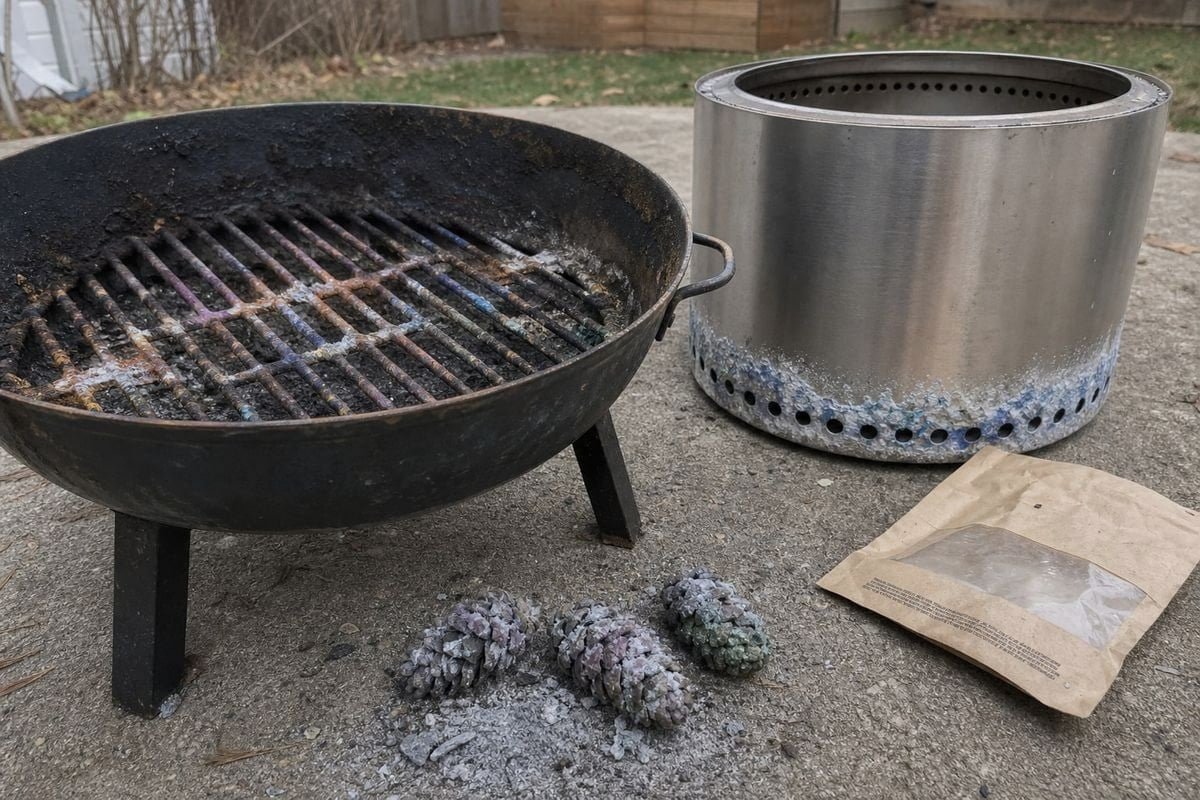
Las piñas de pino son resinosas por naturaleza. La resina las hace inflamables, pero también las hace explotar y lanzar brasas, especialmente si las piñas están pegajosas o no están completamente secas. Mantenga una pantalla en las chimeneas interiores y una zona de seguridad al aire libre. Dos problemas de hardware merecen una mención especial. Primero, los agentes colorantes a base de cloruro pueden acelerar la oxidación en las rejillas metálicas de las fogatas. Segundo, el residuo químico puede obstruir los orificios de flujo de aire de precisión en las fogatas modernas sin humo, y las sales derretidas pueden fusionarse permanentemente con las rocas de lava o el vidrio de fuego. Es por eso que les decimos a los compradores que coloquen estas piñas para fuegos de leña clásicos, no para aparatos de gas o medios de fuego premium.
Una lista de verificación previa al encendido.
- Lea la etiqueta y sígala exactamente, incluido si la piña se introduce entera.
- Confirme que el fuego es alimentado por leña, no por gas.
- Termine toda la cocción antes de agregar cualquier piña tratada.
- Use un color por fuego a menos que el fabricante permita explícitamente la mezcla.
- Mantenga una pantalla, agua o extintor cerca para las brasas que saltan.
- Deseche las cenizas lejos de jardines y fuentes de agua, ya que el vertido repetido en un solo lugar puede crear una zona muerta de suelo con alto contenido mineral.
¿Cómo puedo verificar que los ingredientes químicos utilizados en las piñas de llama de colores no son tóxicos y cumplen con la normativa?
Una compensación que sopesamos constantemente en nuestras instalaciones de Ningbo es la intensidad del color frente a la seguridad química. Las fórmulas más brillantes no siempre son las más limpias, y los compradores merecen conocer la diferencia.
Verificar ingredientes solicitando una Hoja de Datos de Seguridad completa, informes de pruebas de terceros de laboratorios como SGS o Intertek, y resultados de detección de metales pesados. Confirmar que la fórmula excluye compuestos peligrosos y se basa en colorantes más seguros, y verificar el cumplimiento de las regulaciones químicas de su mercado.

Los colorantes de llama funcionan porque las sales metálicas emiten longitudes de onda de luz específicas cuando se calientan. Compuestos de cobre como sulfato de cobre 2 producen azules y verdes. Compuestos de boro como el ácido bórico o el bórax dan verde. Cloruro de estroncio 3 produce rojo, y las sales de Epsom pueden agregar tonos blancos. La química en sí está bien entendida. El riesgo radica en la dosis, la calidad del recubrimiento y lo que más hay en una fórmula barata.
Las agencias de control de intoxicaciones han advertido que los productos de llama que contienen cobre pueden dañar el sistema digestivo si se ingieren. Health Canada registró más de 70 informes de centros de intoxicaciones relacionados con paquetes de colorantes de llama durante dos años, y 67% involucró a niños menores de 12 años. Esos datos cambiaron la forma en que formulamos y empaquetamos. La ingestión, no la quema, es el mayor peligro documentado, por eso la verificación de ingredientes y el pensamiento a prueba de niños deben ir juntos.
Qué documentos exigir.
| Documento | Lo que prueba | Señal de alerta si falta |
|---|---|---|
| Hoja de datos de seguridad 4 (SDS) | Divulgación completa de ingredientes, pasos de primeros auxilios, reglas de manipulación. | El proveedor no puede nombrar sus propios productos químicos. |
| Informe de prueba SGS o Intertek | Laboratorio independiente verificó la fórmula y las emisiones. | Solo afirmaciones "no tóxicas" autodeclaradas. |
| protocolos de inflamabilidad de la serie ASTM F400 | Sin plomo, cadmio, mercurio o cromo hexavalente. 5 | Riesgo de inhalación de metales pesados del humo. |
| Registros de control de calidad del lote | Consistencia de la fórmula en todas las series de producción. | La calidad de la muestra puede no coincidir con la producción en masa. |
Conos caseros frente a fabricados.
Algunos compradores preguntan si los conos caseros empapados en sales domésticas son más seguros. En mi experiencia, a menudo ocurre lo contrario. Las recetas caseras carecen de control de dosificación, y las piñas cosechadas en estado salvaje transportan humedad, savia y plagas a menos que se horneen a baja temperatura primero. Un proceso de fábrica controlado fija la carga de sal, sella el recubrimiento y prueba la salida de humo. Las recetas no controladas pueden liberar humos tóxicos si se usan las sales incorrectas o cantidades excesivas. Los productos fabricados y probados con un rastro de papel son la opción defendible para la venta minorista.
¿Qué certificaciones debería exigir a mi proveedor antes de importar piñas de pino de colores para la venta al por menor?
Un importador del Reino Unido me dijo una vez que su envío anterior estuvo en aduanas durante seis semanas porque el proveedor no pudo presentar un solo informe de prueba válido. Esa conversación todavía da forma a cómo preparamos la documentación de exportación.
Requerir ISO 9001 para gestión de calidad, BSCI para producción ética, marcado CE para mercados europeos e informes de prueba SGS o Intertek actuales que cubran toxicidad y metales pesados. Verificar que los certificados sean válidos, emitidos a la fábrica real y que coincidan con el producto exacto.
La certificación no es un teatro de papeleo. Es la diferencia entre un envío que pasa la aduana y uno que es incautado, o peor aún, una retirada después de que un niño ingiere colorante suelto. En nuestros más de 17 años exportando productos para chimeneas a más de 30 países, nunca hemos visto a un comprador serio de EE. UU. o Europa tratar el cumplimiento como opcional. Es un requisito difícil, y también debería ser el suyo.
La pila central de certificaciones
| Por qué es importante para las piñas perfumadas | Confirma que el proceso de dosificación de fragancias está controlado y es repetible | Por qué es importante para las piñas de pino de colores |
|---|---|---|
| ISO 9001 6 | Sistema de gestión de calidad | Garantiza la consistencia lote a lote, por lo que la muestra coincide con la producción en masa. |
| BSCI | ¿Se realizó la prueba de combustión en la piña recubierta terminada? | Requerido por la mayoría de los grandes canales de abastecimiento minorista en los EE. UU. y la UE. |
| CE | Conformidad europea de seguridad del producto | Legalmente necesario para la venta en el mercado de la UE. |
| Informes SGS / Intertek | Pruebas químicas y de seguridad independientes | Demuestra la afirmación de no toxicidad con datos de laboratorio, no con texto de marketing |
Cómo verificar, no solo recopilar
Solicite los números de certificado y compruébelos con el organismo emisor. Confirme que los certificados nombran a la fábrica real, no a una empresa comercial que toma prestados documentos. Haga coincidir la descripción del producto probado con el SKU exacto que está importando: un informe para iniciadores de fuego químicos en paquetes no cubre automáticamente las piñas enceradas. Pregunte también cuándo ocurrió la última auditoría. Renovamos nuestras auditorías y actualizamos los informes de prueba en un ciclo regular porque los compradores solicitan cada vez más documentos con fecha de menos de un año.
Finalmente, pregunte sobre la profundidad de producción. Una fábrica real puede guiarlo a través del abastecimiento de materias primas, las líneas de recubrimiento, las tolerancias de secado y las tasas de muestreo de control de calidad. Una empresa comercial generalmente no puede. Esa transparencia, más que un solo certificado, le dice si el quinto contenedor coincidirá con la primera muestra.
¿Qué etiquetas de advertencia e instrucciones de uso debo incluir en el empaque de mis piñas de pino de marca privada?
El diseño de una bolsa de papel kraft de marca privada para una marca canadiense de actividades al aire libre le enseñó a nuestro equipo de empaque una dura lección: un empaque atractivo puede parecer un empaque de alimentos, y ese es exactamente el riesgo que preocupa a los reguladores.
Incluir advertencias contra la ingestión, la cocción sobre fuegos tratados y el uso en aparatos de gas. Añadir avisos de seguridad para niños y mascotas, orientación sobre ventilación, instrucciones de un solo color por fuego, indicaciones para la eliminación de cenizas, pasos de primeros auxilios y un contacto de control de intoxicaciones. Mantener el texto legible y conforme a las normas del mercado de destino.

El etiquetado es donde reside la responsabilidad. Si un usuario final usa mal su producto y la etiqueta nunca advirtió contra ese mal uso, su marca asume la exposición. Los datos del centro de intoxicaciones de Health Canada muestran por qué: los paquetes coloridos y las piñas recubiertas se confunden con caramelos. Su empaque debe luchar activamente contra esa confusión, no fomentarla accidentalmente.
Los elementos esenciales de la etiqueta
| Elemento de la etiqueta | Enfoque de redacción recomendado |
|---|---|
| Advertencia de ingestión | Nocivo si se ingiere. No es un alimento. Mantener alejado de niños y mascotas. |
| Aviso de no cocinar | No cocine ni tueste alimentos sobre este fuego durante o después de su uso. |
| Restricción del electrodoméstico | Solo para fuegos de leña. Nunca usar en chimeneas de gas o fogatas alimentadas por gas. |
| Guía de ventilación | Usar al aire libre o en una chimenea bien ventilada. Evitar respirar el humo. |
| Instrucciones de uso | Colocar sin abrir o entero en un fuego establecido. Quemar un color por fuego. |
| Eliminación de cenizas | Enfriar completamente. Desechar lejos de jardines, fuentes de agua y sitios de vertido repetidos. |
| Primeros auxilios | Si se ingiere, contactar información de contacto de control de intoxicaciones 7 inmediatamente. Incluir el número local. |
| Trazabilidad | Código de lote, código de barras y datos de contacto del fabricante o importador. |
Ajustes específicos del mercado
Los requisitos difieren según el destino. Los compradores de la UE necesitan frases de peligro alineadas con la CE y, a menudo, texto bilingüe o trilingüe. El comercio minorista canadiense suele exigir inglés y francés. Los minoristas masivos de EE. UU. con frecuencia agregan sus propias auditorías de etiquetas antes de confirmar una orden de compra. Nuestro equipo de OEM incorpora estas variaciones en la etapa de diseño gráfico, junto con cajas personalizadas, empaques de exhibición y códigos de barras, para que el producto llegue listo para exhibirse en lugar de necesitar un costoso reetiquetado en el puerto.
Un consejo práctico más: evite las ventanas transparentes que muestren contenido suelto y de colores brillantes a la altura de los ojos de los niños, o combine cualquier ventana con un símbolo audaz de "no es comida". Pequeñas decisiones de diseño como esta reducen mediblemente el riesgo de confusión con caramelos que impulsa la mayoría de los informes del centro de intoxicaciones.
Conclusión
Las piñas de colores ofrecen impresionantes llamas de arcoíris, pero solo fórmulas certificadas, reglas de uso estrictas y etiquetado conforme las hacen seguras. Asóciese con una fábrica probada y exija los documentos.
Notas al pie
Fuente oficial de la UE que explica el requisito de conformidad CE para productos ↩︎
Información de fondo sobre el compuesto químico utilizado como colorante de llama ↩︎
Referencia del compuesto químico que produce color de llama roja ↩︎
Explica el formato de documento estándar que los compradores deben solicitar para la verificación química ↩︎
Referencia de la EPA sobre el contaminante de metal pesado regulado mencionado en la tabla de pruebas ↩︎
Página de estándar oficial para la certificación de gestión de calidad mencionada en el artículo ↩︎
Recurso de los CDC sobre control de intoxicaciones relevante para advertencias de ingestión y primeros auxilios ↩︎
 English
  Spanish
  German
  French
  Arabic
  Portuguese
Únete a la conversación