







Entry barriers and compliance costs for wood fire starters confuse many importers EUDR due diligence 1. On our production line, we see buyers lose months and thousands of dollars over avoidable paperwork gaps.
The US generally has lower entry barriers for wood fire starters, with compliance centered on SDS documentation, labeling, and retailer requirements. The EU imposes higher fixed costs through REACH/CLP classification, multilingual labeling, packaging EPR fees, and wood-sourcing due diligence, though its harmonized rules become predictable once mastered.
That is the short answer. But the real cost depends on your product formula, your sales channel, and your factory's documentation. Let me break down each piece so you can budget accurately.
What Certifications Do I Need Before Importing Wood Fire Starters Into the US or EU?
A German distributor once emailed me at midnight, panicked. His previous supplier shipped without SGS reports, and customs held the container. That call shaped how we prepare every export file today.
For the US, you need an SDS under OSHA HazCom 2012, flammability test reports, and ISPM 15 treatment for wood packaging. For the EU, you need REACH/CLP compliance documentation, CE-relevant safety files where applicable, multilingual SDS, and EUDR wood-sourcing due diligence records.

Certifications for wood fire starters split into three layers: product safety, chemical compliance, and supply chain proof. Most buyers only plan for the first layer. That is where the trouble starts.
The Three Certification Layers
The first layer is product safety. In the US, a simple wax-and-wood-wool starter usually avoids premarket approval. But you still need a valid Safety Data Sheet. A clean SDS showing no hazardous classification under OSHA HazCom 2012 2 keeps you out of dangerous-goods shipping. Our standard 50% wood fiber, 50% paraffin formula was designed to stay in that safe lane. If your starter contains liquid accelerants, everything changes. Child-resistant packaging under the PPPA may apply, and DOT hazmat rules can add thousands per year.
The second layer is chemical compliance. The EU is stricter here. CLP classification determines whether your product needs hazard pictograms. REACH covers the substances used in production. As the factory, we hold the substance data, but you as the importer carry legal responsibility inside the EU. Ask for the full chemical dossier before you sign a purchase order.
The third layer is wood and supply chain proof. The EU's deforestation rules (EUDR) require due diligence on wood origin. In the US, wood packaging must carry the Sello de tratamiento térmico ISPM 15 3. We learned early in our 17+ years of exporting that a missing stamp on a pallet can hold an entire container.
| Certificación / Documento | Requisito de EE. UU. | Requisito de la UE |
|---|---|---|
| Hoja de Datos de Seguridad (SDS) | Yes, OSHA HazCom 2012 4 format | Yes, CLP-aligned, multilingual |
| Flammability / burn testing | Retailer-driven, lab reports | Expected in technical file |
| Chemical registration | Rarely triggered for simple formulas | REACH obligations for substances |
| Wood sourcing due diligence | Minimal for finished starters | EUDR documentation required |
| Wood packaging treatment | ISPM 15 stamp mandatory | ISPM 15 stamp mandatory |
| Factory audits (BSCI, ISO 9001) | Requisito del minorista | Requisito del minorista |
How Do Compliance Costs Compare Between US and EU Fire Starter Regulations?
When we quote a new client, I always weigh one trade-off: the US costs less upfront, but state-level rules fragment later. The EU costs more upfront, then stabilizes.
US compliance costs are lower initially, roughly covering SDS preparation, lab testing, and retailer onboarding. EU costs run higher because of multilingual labeling, packaging EPR registration fees per member state, potential REACH obligations, and EUDR due diligence, which together can add 15–20% overhead for wood-based products.

The most useful way to compare costs is to separate one-off costs from recurring costs. Buyers often budget for the first and forget the second. That mistake shows up in year two, not year one.
One-Off vs Recurring Costs
One-off costs include lab testing, SDS authoring, label design, and initial customs classification. Recurring costs include EPR packaging fees, annual retailer audits, insurance premiums, and translation updates. In our experience exporting to 30+ countries, the recurring column is where the EU pulls ahead in expense — and where the US surprises people with liability insurance. US general liability premiums for fire products can run 30–40% higher than EU equivalents because of the litigious tort environment.
| Categoría de Costo | EE. UU. | UE |
|---|---|---|
| SDS and hazard classification | One SDS, English | CLP-aligned SDS, up to 27 languages |
| Lab and flammability testing | Retailer-driven, moderate | Expected for technical files |
| Import duty (compressed wood starters) | Roughly 0–2% under HTS 4401.39 | Up to ~4% plus 19–25% VAT |
| Packaging / EPR fees | Limited, state-dependent | Recurring, per member state |
| Wood due diligence | Minimal for finished goods | EUDR overhead, ~15–20% for untreated wood |
| Seguro de responsabilidad del producto | 30–40% higher premiums | Lower, less litigious |
| State/country variation | declaración 5, state fire codes | Harmonized rules, local labeling |
Where Each Market Bites
The US bites through channels. Direct-to-consumer sales are cheap to start. Big-box retail adds barcode systems, shelf-ready packaging, audit reports, and testing. California's Prop 65 can force a separate SKU with a warning label. The EU bites through structure. Every member state where you sell packaging may require producer registration and recycling fees. Voluntary marks like the EU Ecolabel have become near-mandatory for premium DIY chains, costing several thousand euros and months of lead time.
Here is the nuance I share with every purchasing manager: for a small brand, the EU feels expensive because fixed costs hit before revenue. For an established distributor with compliance staff, the gap narrows fast.
What Documentation Should I Request From My Wood Fire Starter Manufacturer for Customs Clearance?
Years ago, a Canadian buyer taught me a lesson: he requested our complete document pack before ordering, not after. His container cleared in two days. Now we recommend that sequence to everyone.
Request the commercial invoice, packing list, SDS, HS/HTS classification confirmation, flammability test reports from SGS or Intertek, ISPM 15 packaging certificate, wood-origin declaration, and for the EU, CLP-compliant labels plus EUDR due diligence data. Get these before production, not at shipment.
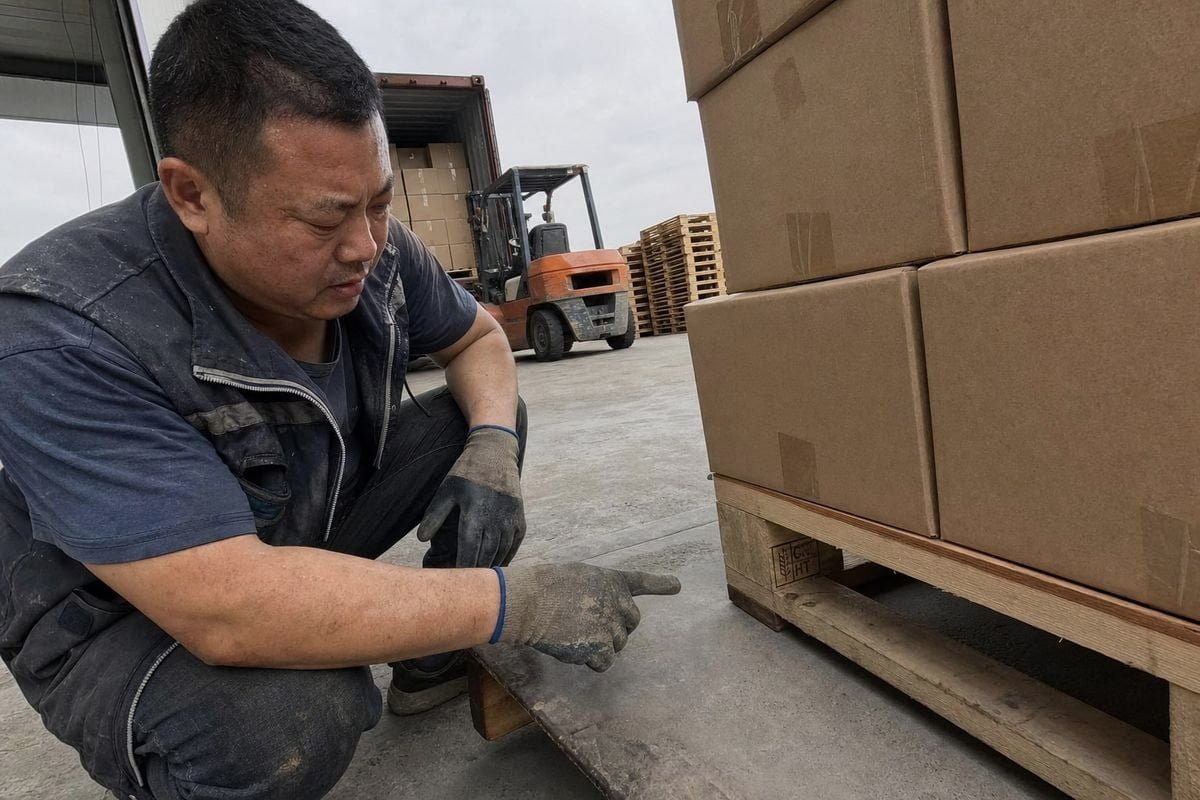
Customs clearance for wood fire starters fails for boring reasons: a wrong Código HS 6, a missing treatment stamp, or an SDS that contradicts the label. Each is preventable if you demand the right pack from your factory upfront.
The Document Checklist, In Order of Priority
First, confirm the HS code with your factory and your broker together. Compressed wood fire starters often fall under 4401.39, which carries near-zero duty into the US. A wrong code can push you into a wood-product lane that triggers phytosanitary scrutiny you did not need.
Second, get the SDS and verify it matches your final label. Customs and retailers cross-check these. When our QC team releases a batch in Ningbo, the SDS, composition statement, and carton label are checked as one set. That habit came from 17+ years of shipments, and it is why our buyers rarely see holds.
Third, secure the ISPM 15 certificate for pallets and any wood packaging. US ports inspect wood materials, and untreated pallets are a classic seizure trigger — even when the product itself is fine.
Fourth, for the EU, request the wood-origin declaration and supplier chain-of-custody data. EUDR-style due diligence 7 needs species, origin country, and legality evidence. A real factory can produce this. A trading company often cannot, because they do not control the raw material intake.
Fifth, ask for third-party test reports. We provide SGS or Intertek reports as standard, because our US and German buyers treat them as a hard requirement, not a bonus.
| Documento | Propósito | Quién lo proporciona |
|---|---|---|
| Factura comercial y lista de empaque | Valuation and duty calculation | Fábrica |
| HS/HTS classification confirmation | Correct duty lane | Factory + customs broker |
| SDS (region-specific format) | Hazard verification | Fábrica |
| Flammability / quality test report | Retailer and customs evidence | Third-party lab via factory |
| Certificado ISPM 15 | Wood packaging pest compliance | Factory / packaging supplier |
| Wood-origin declaration | EUDR / sourcing due diligence | Fábrica |
| CLP-compliant label proofs (EU) | Market-entry labeling | Factory + importer review |
Can Working With a Certified Factory Help Me Lower My Overall Market Entry Costs?
A US camping brand once compared our quote against a cheaper trading company. Then they priced the missing documents separately. Our offer won, because the paperwork gap cost more than the price gap.
Yes. A certified factory with ISO 9001, BSCI, and SGS/Intertek reports eliminates duplicate testing, speeds retailer onboarding, prevents customs holds, and supplies compliant labels and packaging from day one. These savings typically outweigh any per-unit discount from an uncertified supplier.

Think of a certified factory as pre-paid compliance. Every audit, test report, and documented process the factory already holds is a cost you do not have to fund yourself.
De dónde provienen realmente los ahorros
The first saving is testing. If your factory already holds current SGS or Intertek reports for the exact formulation you buy, many retailers accept them directly. You skip weeks of lab time and the fees for redundant tests. At our facility, we keep reports current for our wax-dipped wood rolls precisely so buyers can attach them to retailer onboarding packets.
The second saving is audit reuse. Big-box sourcing teams in the US and Europe increasingly ask for the same core package: SDS, lab tests, barcodes, factory audit reports, and packaging controls. A BSCI audit already on file means your buyer's compliance team ticks that box in a day instead of scheduling a fresh audit.
The third saving is shelf-ready compliance. One-stop OEM/ODM matters here. When we build embalaje de marca blanca, we print the warning language, recycling marks, barcodes, and multilingual text correctly the first time. Reprinting non-compliant packaging after goods land in Rotterdam or Los Angeles is one of the most painful costs in this business. I have watched importers strip and re-sticker entire containers by hand.
The fourth saving is consistency. Batch-to-batch quality control means your first sample matches mass production. Compliance documents only protect you if the product in carton 5,000 matches the product that was tested. That is a manufacturing discipline issue, and it is why we position ourselves as a long-term partner rather than a low-price supplier.
Design choices help too. Keep the formula simple — fibra de madera y parafina 8, no liquid accelerants — and you avoid hazmat shipping, child-resistant packaging rules, and CLP pictograms in most cases. Design the packaging for the strictest market first, usually the EU, then adapt downward for the US.
Conclusión
Entry barriers and compliance costs for wood fire starters are manageable when you plan them. Choose the US for a faster start, prepare for EU fixed costs, and partner with a certified factory.
Notas al pie
1. EU official page explains deforestation due diligence rules cited for wood-origin compliance. ↩︎
2. Official OSHA page defines the hazard classification standard referenced for SDS compliance in the US market. ↩︎
3. Background reference explaining the international wood packaging treatment standard mentioned for customs clearance. ↩︎
4. Official OSHA hazard communication standard clarifies SDS classification requirements referenced in text. ↩︎
5. California OEHHA is the official regulator for Proposition 65 warning label requirements mentioned in the article. ↩︎
6. Background reference on the Harmonized System underlying the HS code classification discussed for customs duty. ↩︎
7. European Commission's official page on the EU Deforestation Regulation cited for wood-sourcing compliance. ↩︎
8. Background reference on paraffin wax, a core material in the simple fire starter formula described. ↩︎


 English
  Spanish
  German
  French
  Arabic
  Portuguese
Únete a la conversación