






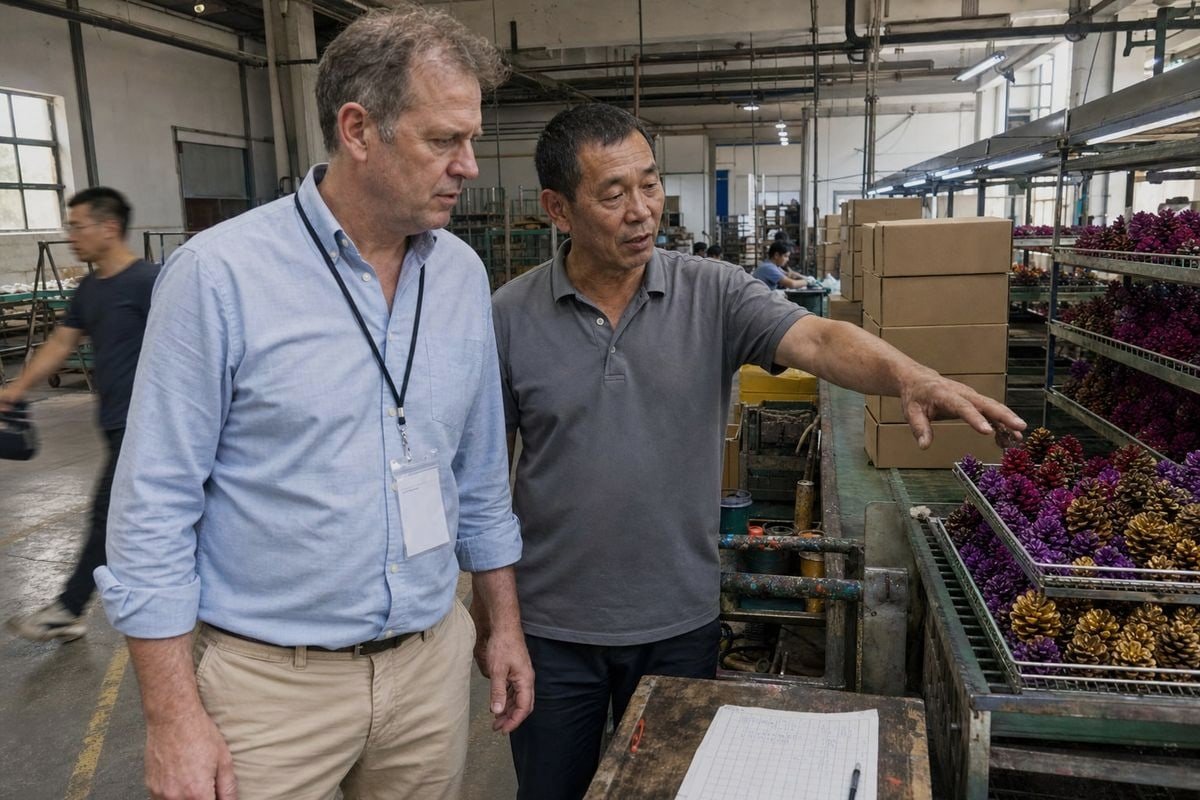
Factory vs trading company sourcing looks simple on paper — until a buyer walks our production line in Ningbo and realizes the cheapest quote hides costs nobody mentioned upfront.
Factory vs trading company sourcing comes down to three trade-offs: factories typically offer 15–30% lower unit prices but higher MOQs, while trading companies offer lower MOQs and faster replies at a markup. Weigh total landed cost, order size, and communication needs — not just the quote.
The choice is not binary. It depends on your order size, your product complexity, and how much sourcing work your team can absorb. Let me break down each variable, one at a time.
What price differences should I expect when sourcing directly from a factory versus a trading company?
Last spring, a German distributor showed me two quotes for our color-flame pinecones — one from us, one from a trading company reselling a similar product. The gap surprised even him.
Expect factory-direct unit prices to run 15–30% lower than trading company quotes, because there is no intermediary markup. Trading companies typically add 8–30% depending on product category. However, on smaller orders under roughly $20K, the real savings often narrow to 5–12% after hidden costs.
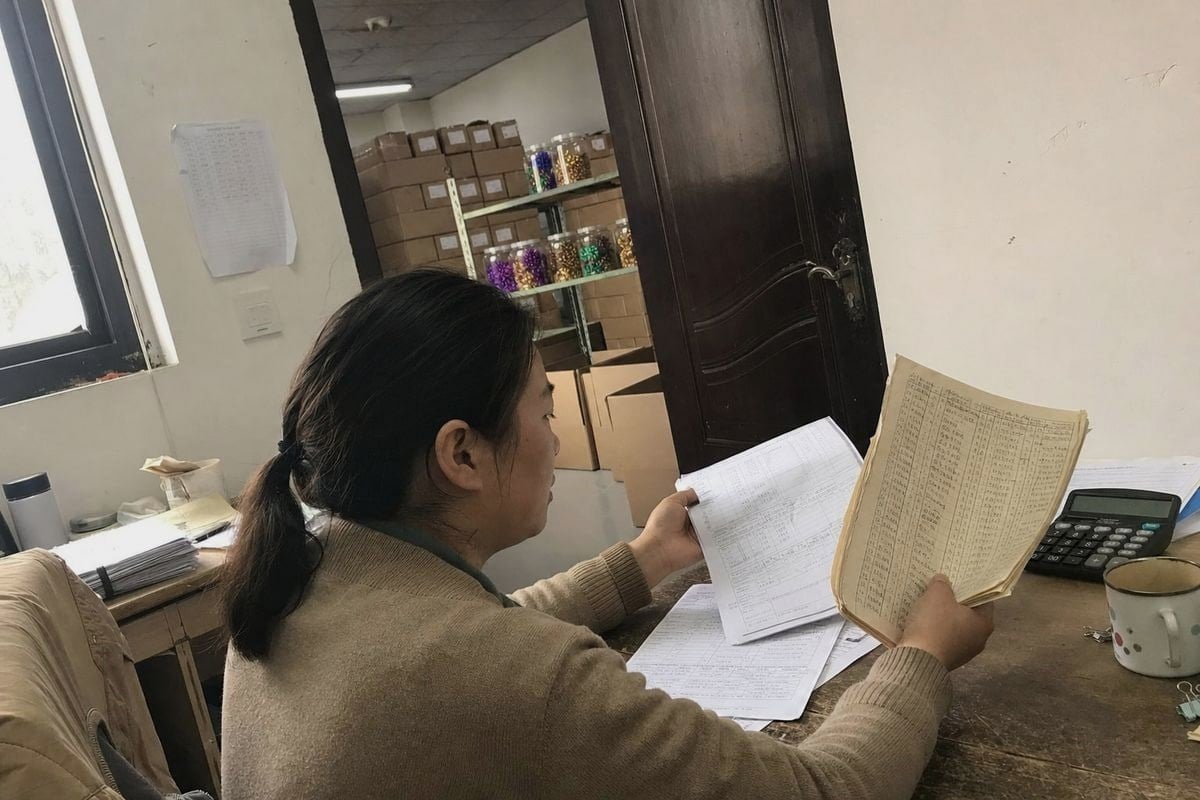
The unit price is only the visible tip of the cost equation. When our team quotes a buyer, the ex-factory price reflects our actual production cost plus our margin. A trading company buys from a factory like ours, then adds its own layer. That layer pays for their sales team, their coordination work, and their profit.
But here is the nuance most buyers miss. The trading company markup does not always mean a higher total cost. Some trading companies negotiate better factory pricing through consolidated volume. Others bundle shipping across multiple products in ways a small buyer simply cannot.
The total sourcing equation
I encourage every purchasing manager to compare coste puesto en destino 1, not quote price gestión de la cadena de suministro 2. Here is how the numbers typically shift:
| Componente de costo | Factory Direct | Consistencia de color lote a lote |
|---|---|---|
| Precio unitario ex-fábrica | Lowest baseline | +8–30% markup |
| Sample and inspection logistics | Buyer manages and pays | Often bundled into service |
| Shipping consolidation | Single-factory shipments only | Multi-factory consolidation possible |
| Internal sourcing labor | Higher (your team does the work) | Lower (they orchestrate) |
| Savings on orders under ~$20K | Often narrows to 5–12% | Gap shrinks significantly |
A practical heuristic I share with new buyers: below roughly $50K annual spend per category, a trading company's markup may cost less than building your own factory-direct pipeline. Above that threshold, direct sourcing starts winning clearly. For our BSCI- and ISO 9001 3-certified lines, buyers who commit to volume see margin improvement compound year after year — something a reseller's price structure rarely allows.
Where price comparisons mislead buyers
Do not assume the factory quote is automatically the cheaper path. If your team spends forty hours managing communication, arranging third-party inspection, and chasing documentation, that time has a cost too. Price it in honestly.
How flexible is MOQ if I choose a factory partner instead of a trading company for my first trial order?
MOQ flexibility is the trade-off I discuss most often with first-time importers. Our production economics set real floors — but those floors are more negotiable than many buyers assume.
Factories typically set MOQs of 500–1,000+ units for custom products because minimums tie to production-line economics and material thresholds. Trading companies offer 50–100 units, sometimes 10–50 for standard items. However, factories with standard product lines can often match trading-company MOQs for trial orders.
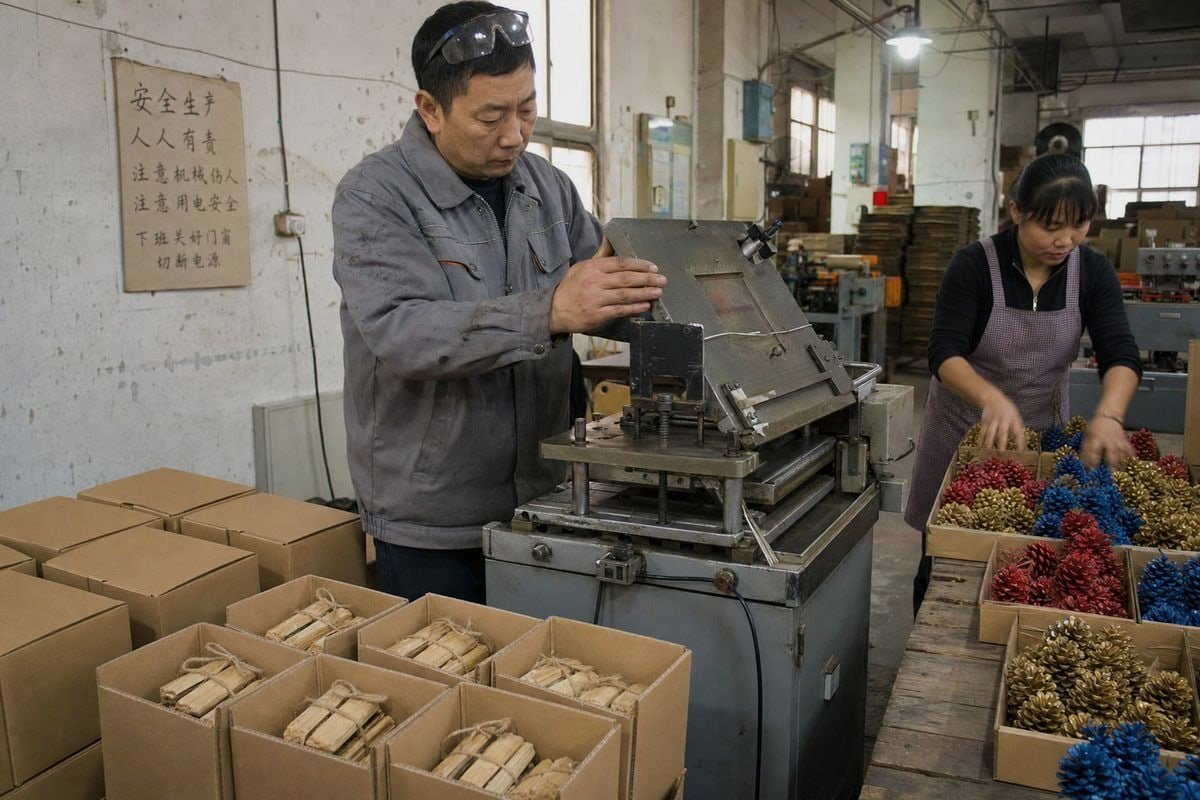
MOQ is often the hidden variable that decides whether factory-direct sourcing is even practical cantidad mínima de pedido 4 for you. Let me explain why factory minimums exist, because understanding the mechanics helps you negotiate.
Our MOQs are not arbitrary. They reflect three real constraints. First, production-line setup: switching a line to a new run costs time whether you order 200 units or 2,000. Second, material purchasing: our suppliers of kraft pouches, jute sacks, and eco-friendly colorants have their own minimums. Third, custom tooling: private-label 5 packaging requires printing plates and design setup that must amortize across the run.
Trading companies sidestep these constraints by aggregating orders from multiple customers or holding stock. That is a genuine advantage when you are testing demand on a new SKU.
How to lower factory MOQs on a trial order
But here is what the standard comparison misses. A factory with existing standard products can flex too. Over 17 years, we have developed workable paths for trial buyers:
- Order a standard product first. Our stock color-flame packets and pinecones in existing packaging carry much lower minimums than fully custom runs.
- Piggyback on a scheduled production run. If your trial order slots into an existing batch, setup costs disappear.
- Accept semi-custom packaging. A custom label on a standard pouch avoids new tooling entirely.
- Split the MOQ across SKUs. We often let buyers mix colors or formats to reach one combined minimum.
The cash-flow angle
A lower MOQ is not just about risk reduction. It is about cash. A 1,000-unit minimum ties up inventory capital before you have validated demand. If your first trial order fails to sell through, that capital is stuck on a warehouse shelf. Weigh MOQ against your cash cycle, not just your storage space.
Can I really get faster response times by working directly with a manufacturer like Sunrich?
A Dutch buyer once told me he chose a trading company purely because the factory he first contacted took four days to answer a packaging question. That story stuck with me — and shaped how we built our export team.
Yes, but only if the factory has a dedicated export department. Factories without one often take 24–72 hours to respond because inquiries route through production staff. Trading companies reply faster on commercial questions, yet factories with foreign trade teams match that speed — and answer technical questions more accurately.
The conventional wisdom says trading companies win on response speed. That is often true — and it is worth understanding why before you decide it matters for you.
Trading companies exist to communicate. Their staff are hired for sales, sourcing coordination, and buyer relations. Many factories, by contrast, are organized around production. A commercial email may sit while an engineer finishes a shift. Limited English-speaking staff makes this worse at smaller workshops.
The vetting criterion most buyers overlook
Here is the critical distinction: response speed correlates with whether the factory has a dedicated export or foreign trade department — not with whether it is a factory at all. This is one of the most overlooked vetting criteria in supplier selection. When we started exporting, we learned quickly that buyers in the US and Germany expect same-day acknowledgment. Today our export team handles inquiries across 30+ countries el comercio internacional 6, and English communication is a hiring requirement, not an afterthought.
| Communication Scenario | Consistencia de color lote a lote | Factory Without Export Dept | Factory With Export Dept |
|---|---|---|---|
| Initial commercial inquiry | Same day | 24–72 hours | Same day |
| Technical spec question | Relayed to factory, adds a step | Slow but accurate | Fast and accurate |
| Mid-production change request | Two-hop delay | Direct but slow | Direct and fast |
| Compliance document request | Depends on factory cooperation | Variable | Immediate (we hold our own CE, SGS, Intertek reports) |
Notice the third row. Once your spec is approved and production starts, direct factory communication actually shortens the loop. A trading company must relay every change request to the real producer and relay the answer back. When you speak to the source, one conversation replaces four emails.
So ask any factory candidate two questions: Do you have a dedicated foreign trade team? What is your standard response window? The answers predict your daily experience better than any price sheet.
Which sourcing option gives me better long-term reliability: a trading company or a certified factory partner?
Reliability, in my experience, is proven batch by batch. A US camping brand once switched to us after their previous supplier — a reseller — quietly changed factories mid-contract, and the flame colors drifted between shipments.
A certified factory partner offers stronger long-term reliability because you get direct quality control, batch-to-batch consistency, verified certifications, and stable pricing. Trading companies can switch factories without notice, breaking consistency. A hybrid strategy — trading company for trials, certified factory for scale — balances both.
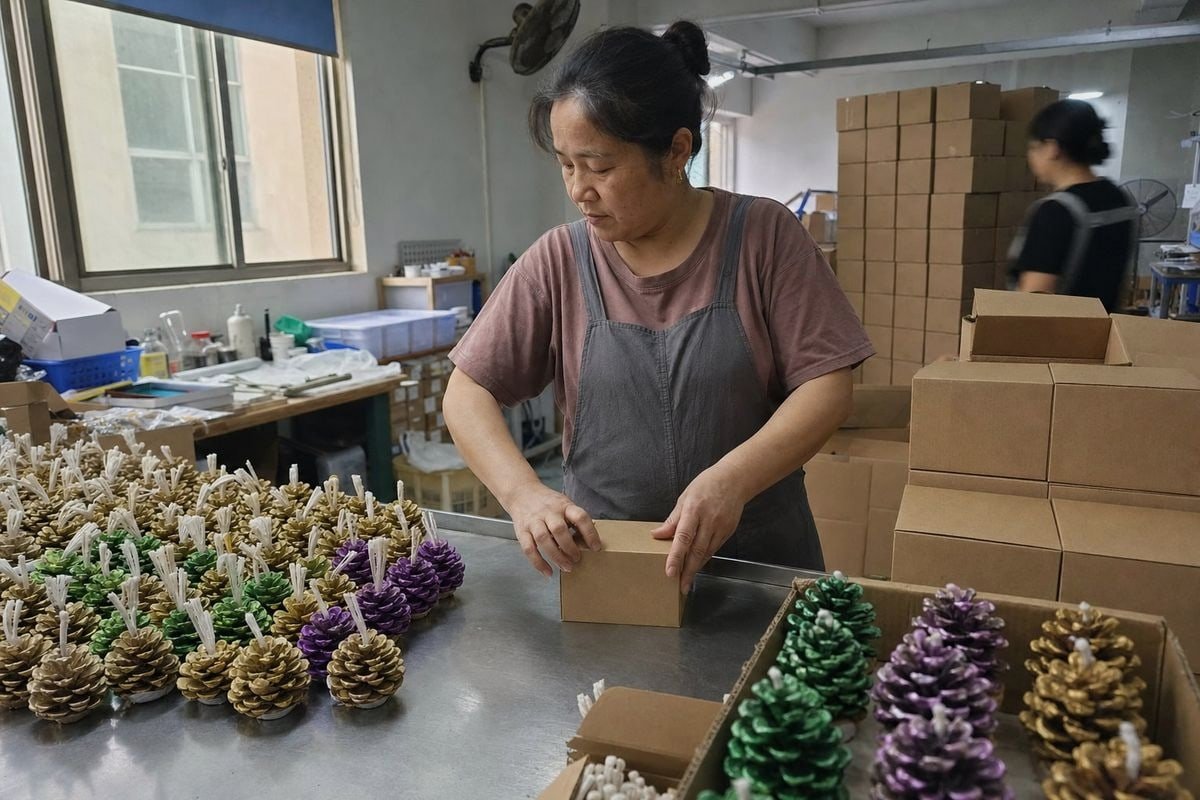
Long-term reliability rests on four pillars: quality consistency, compliance traceability, pricing stability, and relationship depth. Let me address each — and also give trading companies their fair due, because they earn it in specific scenarios.
Quality consistency and traceability
With a factory partner, the sample you approve comes from the same lines that will run your mass production control de calidad 7. At our facility, strict batch-to-batch QC means the first sample reliably reflects what arrives in your container six months later. With a trading company, you often do not know which factory made which batch. If they switch suppliers to protect their margin, your product can change without your knowledge.
Compliance follows the same logic. Our buyers in the US and EU treat ISO 9001, BSCI, CE, and SGS/Intertek documentation as a hard requirement. When you work factory-direct, those certificates belong to the actual producer — you can verify them, audit against them, and trace any issue to its source. Through an intermediary, that chain gets murky.
Where trading companies still earn their place
To be fair, trading companies deliver real reliability value in certain cases: multi-category procurement, buyers with no in-house sourcing staff, and markets where holding a backup supplier reduces risk. Treating them as mere middlemen is unfair — the good ones function as sourcing operators.
Un marco de decisión práctico
Score each option honestly against your situation:
| Su situación | Mejor ajuste | Por qué |
|---|---|---|
| Clear specs, volume above ~$50K/year per category | Certified factory | Margin improvement and QC control compound over time |
| Testing a new SKU, uncertain demand | Empresa comercial | Low MOQ limits cash at risk |
| Multiple product categories, one shipment | Empresa comercial | Consolidation across factories |
| Private-label, custom packaging, compliance-critical market | Certified factory | Direct customization and verifiable certificates |
| Small team, no sourcing or QC staff | Trading company or hybrid | They absorb the coordination burden |
| Long-term brand building | Certified factory | Consistency and relationship depth |
The hybrid path deserves emphasis. Many of our strongest long-term buyers started small elsewhere, validated their market, then moved to us for scale — some keeping a secondary supplier as a hedge. That is not disloyalty. That is good procurement.
Conclusión
Chasing the lowest quote often costs more in delays, MOQs, and quality drift. Match the supplier model to your order size and stage — then score price, MOQ fit, response speed, and total landed cost before committing.
Notas al pie
1. Government trade resource clarifying the total landed cost concept discussed repeatedly. ↩︎
2. Background concept underpinning factory versus trading company sourcing decisions. ↩︎
3. ISO 9001 is referenced as a key certification standard for manufacturing quality. ↩︎
4. Defines the MOQ concept central to the article's sourcing comparison. ↩︎
5. Background definition of private-label manufacturing referenced in the decision framework. ↩︎
6. WTO resource on trade practices relevant to cross-border factory sourcing decisions. ↩︎
7. Explains the quality assurance process factories use for batch consistency. ↩︎



 English
  Spanish
  German
  French
  Arabic
  Portuguese
Únete a la conversación