







Verificación de que los iniciadores de fuego de madera cumplen BS EN 1860-3 1 las pruebas de seguridad son más difíciles de lo que parecen. En nuestra línea de producción, he visto cómo los documentos falsos pasan fácilmente desapercibidos para los compradores ocupados.
Para verificar que los iniciadores de fuego de leña cumplen con las pruebas de seguridad BS EN 1860-3, solicite un informe de prueba actual de un laboratorio acreditado como SGS o Intertek, confirme que hace referencia a la edición de 2023, compare el producto probado con su muestra real y verifique la documentación de trazabilidad del lote.
Esa es la respuesta corta. Los detalles importan más. A continuación, detallo cada paso de verificación en el orden en que un gerente de compras real lo seguiría.
¿Cómo confirmo que los informes de prueba BS EN 1860-3 de un proveedor son genuinos y actuales?
Hace unos años, un distribuidor alemán nos remitió un "informe de prueba" de un competidor para su revisión. Nuestro equipo de control de calidad detectó el problema en minutos: el informe hacía referencia a una edición del estándar que ya había sido reemplazada. Ese momento marcó cómo ahora capacitamos a los compradores para leer la documentación de cumplimiento.
Confirme la autenticidad contactando directamente al laboratorio emisor utilizando los datos de contacto del sitio web oficial del laboratorio, verificando el número de informe, comprobando que las referencias del informe BS EN 1860-3:2023 y confirmando que la descripción del producto probado coincide con el artículo exacto que pretende comprar.

Informes falsos o desactualizados son el mayor riesgo en esta categoría. Permítanme explicarles cómo detectarlos.
Verifique con el laboratorio, no con el proveedor
Nunca valide un informe utilizando la información de contacto impresa en el informe mismo. Un documento falsificado llevará números de teléfono falsificados. En su lugar, visite el sitio web oficial de SGS, Intertek, TÜV o el laboratorio que lo emitió. La mayoría de los laboratorios importantes ofrecen portales de verificación de informes en línea. Ingrese el número de informe. Si el laboratorio no puede encontrarlo, desista.
Verifique la edición y la fecha
BS EN 1860-3 se actualizó en 2023. La revisión cambió la terminología, las referencias normativas y los requisitos, y eliminó el antiguo requisito de rendimiento de tiempo de ignición. Un informe vinculado a la edición de la era de 2003 no es prueba de cumplimiento actual. Verifique también la fecha de emisión. Muchos esquemas de certificación consideran que los certificados son válidos durante aproximadamente dos años. Un informe de cinco años no le dice nada sobre la producción actual.
Haga coincidir el informe con el producto real
El estándar cubre encendedores sólidos, líquidos, líquidos espesados y en gel. Los rollos de madera recubiertos de cera son encendedores sólidos. Si el informe describe un producto en gel, o un tamaño, peso o composición diferente al de su muestra, el informe no cubre su producto. Según nuestra experiencia exportando al Reino Unido y Alemania, los auditores de aduanas y minoristas verifican esta coincidencia de cerca.
| Señal de alerta | Lo que generalmente significa | Su Acción |
|---|---|---|
| El informe hace referencia a una edición anterior a 2023 | Declaración de cumplimiento desactualizada | Solicite un nuevo análisis según BS EN 1860-3:2023 |
| La descripción del producto no coincide con la muestra | Informe prestado de otro producto | Rechace y exija pruebas específicas del producto |
| El laboratorio no puede verificar el número de informe | Documento probablemente falsificado | Finalice la negociación |
| Informe de más de 2 años | Estado de cumplimiento desconocido | Solicite un informe actual o una renovación |
| Autodeclaración solamente, sin nombre de laboratorio | Sin evidencia de terceros | Requerir pruebas de laboratorio acreditado |
¿Qué estándares de tiempo de combustión y rendimiento de ignición deben cumplir mis iniciadores de fuego de leña?
Existe una compensación que sopesamos cada vez que desarrollamos un nuevo rollo de madera recubierto de cera: más parafina proporciona una combustión más larga, pero demasiada cera corre el riesgo de gotear material fundido durante la prueba de combustión. Lograr el equilibrio adecuado es de lo que realmente trata el estándar.
Bajo BS EN 1860-3:2023, los iniciadores de fuego de madera deben encenderse fácilmente y arder de manera constante sin llamaradas, deflagraciones, chispas, salpicaduras, estallidos, goteo de material fundido o explosión hasta la extinción. La edición de 2023 eliminó el requisito de tiempo de ignición fijo, por lo que el comportamiento de combustión seguro y predecible es el punto de referencia principal.
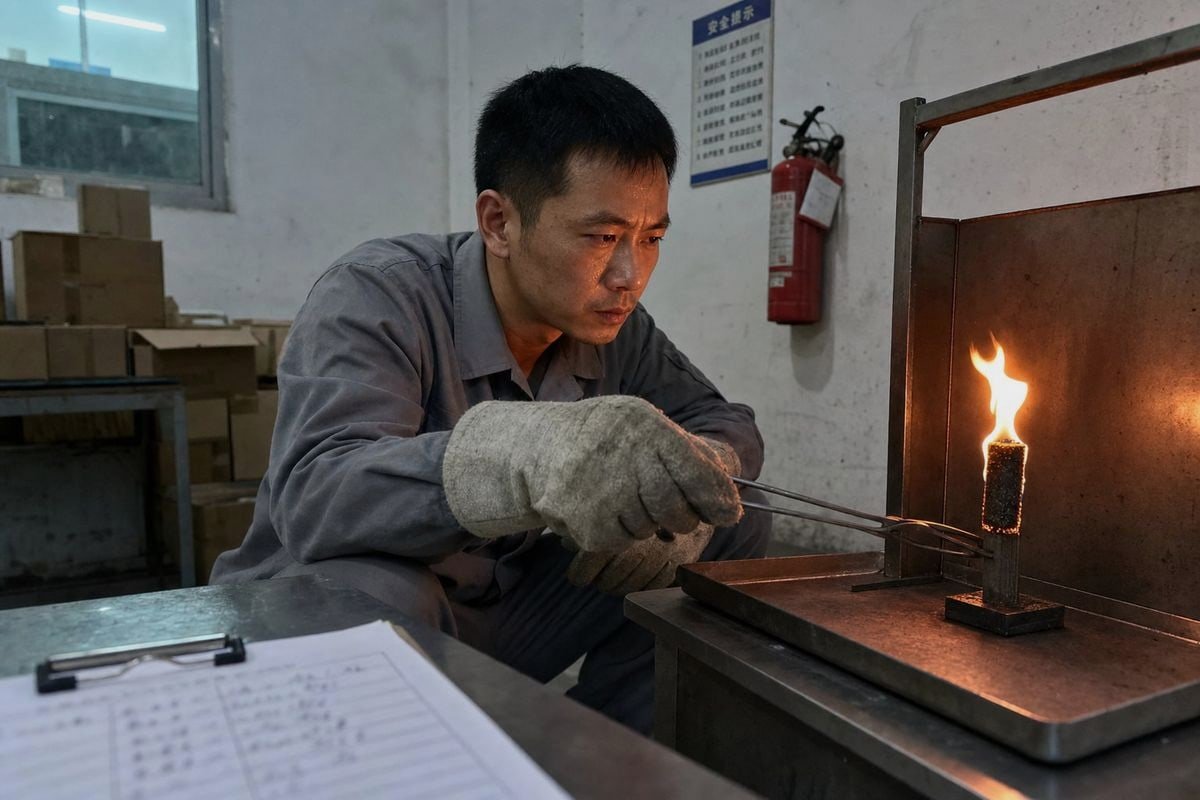
Muchos compradores asumen que el estándar establece una única prueba de combustión de aprobación/rechazo. No lo hace. Define un programa de pruebas que cubre el comportamiento de la combustión, la química y el embalaje. Aquí se muestra lo que verifica un programa de prueba conforme.
Requisitos de comportamiento de la combustión
La prueba central de seguridad en el uso observa cómo se comporta el producto desde la ignición hasta la extinción. El encendedor debe encenderse fácilmente con una cerilla o un encendedor. Luego debe arder de manera tranquila y constante. Cualquier fuego repentino, llamarada súbita, chisporroteo de material en combustión o goteo de cera fundida es un fallo. Esto es especialmente importante para los productos de virutas de madera. Las fibras de madera sueltas pueden chispear si la densidad del enrollado es incorrecta. Controlamos la tensión del enrollado y la penetración de la cera en nuestras líneas por esta misma razón.
Límites de composición química
El estándar también restringe lo que se incluye en el producto. Estos límites protegen a los usuarios del humo tóxico y protegen los alimentos cocinados al fuego.
| Requisito | Límite según BS EN 1860-3:2023 |
|---|---|
| Contenido de HAP (hidrocarburos aromáticos policíclicos 2) | ≤ 1.0% en peso |
| Contenido de azufre | ≤ 0.5% en peso |
| Sustancias PBT (persistentes, bioacumulativas, tóxicas) | No permitido |
| Sustancias vPvB (muy persistentes, muy bioacumulativas) | No permitido |
| Líquidos altamente inflamables | Excluido a menos que esté estabilizado |
¿Qué pasa con el tiempo de combustión en sí?
El estándar ya no dicta una cifra fija de tiempo de ignición. Sin embargo, su mercado todavía lo hace. Para uso en barbacoas, la mayoría de nuestros compradores europeos especifican de 8 a 10 minutos de llama constante, porque eso enciende el carbón de manera confiable. Para encender leña, algunos prefieren más tiempo. Como parte de nuestro trabajo OEM, ajustamos la proporción de cera y el tamaño del rollo para alcanzar un tiempo de combustión objetivo. El punto clave: el tiempo de combustión es una especificación comercial que usted define; el comportamiento seguro de combustión es el requisito regulatorio que no puede comprometer.
¿Qué documentación debo solicitar antes de realizar un pedido a granel con un fabricante?
Una lección que aprendí al principio de nuestros más de 17 años de exportación: los compradores que solicitan documentos por adelantado casi nunca tienen problemas en la aduana. Los compradores que los solicitan después del envío a menudo sí los tienen. El papeleo es más barato antes de que el contenedor salga del puerto.
Antes de un pedido a granel, solicite un informe de prueba actual BS EN 1860-3:2023 de un laboratorio acreditado, una Declaración de Conformidad, los certificados ISO 9001 y BSCI del fabricante, las hojas MSDS, las aprobaciones de arte de embalaje y etiquetas de advertencia, y los procedimientos escritos de trazabilidad de lotes.
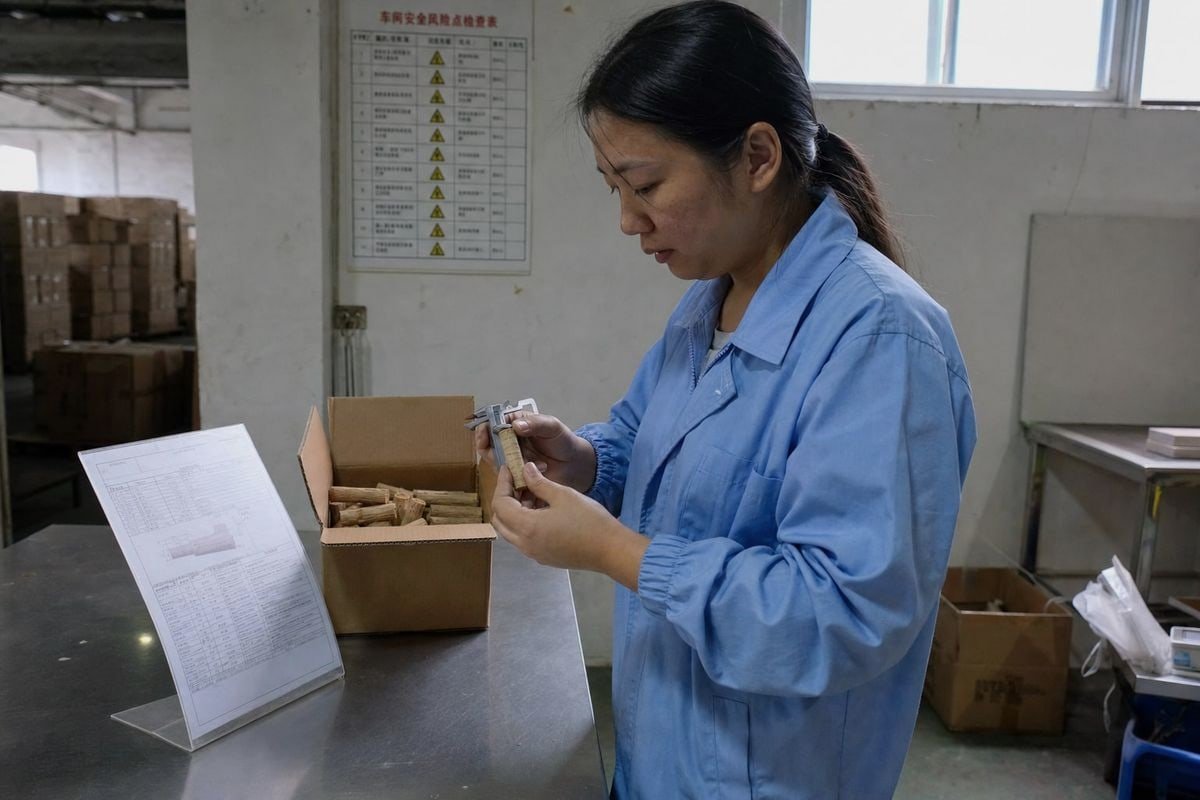
Piense en el paquete de documentos en tres capas: cumplimiento del producto, credibilidad de la fábrica y protección comercial. Un vacío en cualquier capa crea un riesgo para usted como el importador de registro.
La lista de verificación completa de documentos
| Documento | Lo Que Demuestra | Quién lo emite |
|---|---|---|
| El producto pasó las pruebas de seguridad y rendimiento | Laboratorio acreditado por terceros (SGS, Intertek, TÜV) | Declaración de Conformidad (DoC) |
| El fabricante declara formalmente el cumplimiento | Las advertencias y marcas requeridas están presentes | Fabricante |
| ISO 9001 3 certificado | Existe un sistema de gestión de calidad | Organismo de certificación |
| Informe de auditoría BSCI | Cumplimiento ético y social de la fábrica | Organismo de auditoría |
| FDS / hoja de datos de seguridad 4 | Composición química y datos de manipulación | Fabricante o laboratorio |
| Arte de etiquetas y embalajes | Fabricante, aprobado por usted | Procedimiento de trazabilidad de lotes |
| Cada lote se puede rastrear hasta las materias primas | Por qué importan los documentos a nivel de fábrica | Fabricante |
Un informe de prueba cubre una muestra en un día. ISO 9001 y BSCI le dicen si la fábrica puede repetir esa calidad todos los días. Cuando los compradores visitan nuestras instalaciones, los guiamos a través de toda la cadena: materia prima
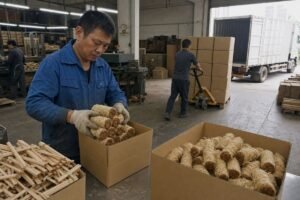
recepción, controles de calidad de la parafina, enrollado, inmersión, secado y control de calidad final. El papeleo debe reflejar esa realidad. Si un proveedor no puede explicar cómo sus documentos se conectan con su proceso, los documentos pueden ser prestados. lana de madera 5 Protección comercial.
Dos elementos más pertenecen a su contrato, no solo a su carpeta de documentos. Primero, una cláusula de indemnización vinculada explícitamente al cumplimiento de BS EN 1860-3, de modo que la responsabilidad recaiga en el fabricante si un lote falla posteriormente. Segundo, un acuerdo por escrito de que la muestra certificada es la referencia de calidad vinculante para la producción en masa. Firmamos ambos rutinariamente para nuestros clientes de marca privada. Un proveedor que se resista a cualquiera de las cláusulas le está diciendo algo importante.
Un comprador del Reino Unido me dijo una vez por qué cambió de proveedor a nosotros: el primer envío de su proveedor anterior fue excelente, pero el tercer envío utilizó virutas de madera más finas y menos cera, y los tiempos de combustión cayeron drásticamente. La certificación no significó nada porque la producción se había desviado de la muestra certificada.
¿Cómo puedo asegurar que cada lote de producción se mantenga consistente con la muestra certificada?
El cumplimiento no es un certificado. Es un proceso que debe repetirse miles de veces. Aquí hay un sistema de control práctico, en el orden en que debe operar.
Asegurar la consistencia del lote exigiendo controles de calidad documentados en proceso en la fábrica, números de lote impresos en cada caja, muestras de referencia retenidas de cada lote, reanálisis periódicos por terceros y pruebas de quemado independientes por muestreo de los envíos entrantes que repliquen el protocolo EN 1860-3.
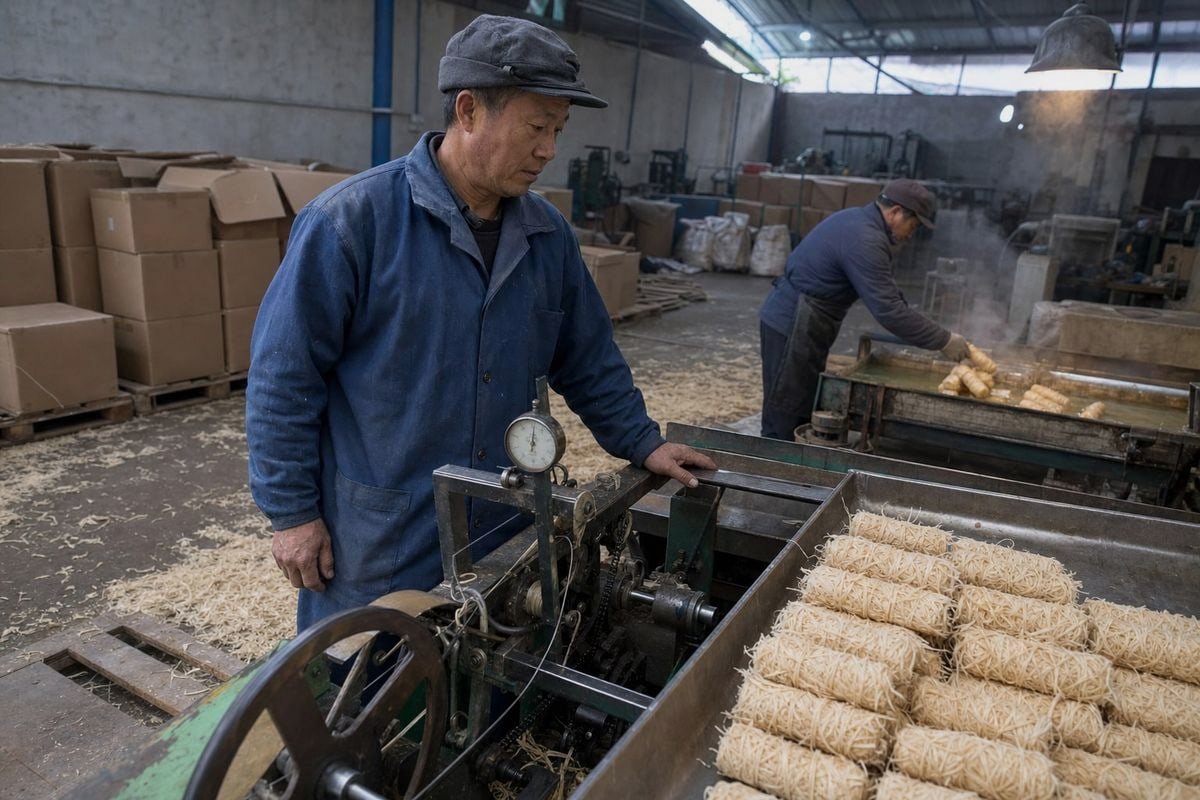
Un proceso de control de lotes de cinco pasos.
Conserve la muestra exacta que pasó las pruebas, sellada y firmada por ambas partes. Cada lote se juzga contra ella, no contra la memoria o las fotos.
- Bloquear la muestra de oro. Controlar las entradas.
- El grado de lana de madera, el tipo de parafina y la proporción de cera deben especificarse por escrito. Sustituir parafina más barata es la causa más común de deriva. En nuestras líneas, la parafina entrante se verifica antes de que llegue a los tanques de inmersión. Realizar controles en proceso.
- El peso por pieza, la absorción de cera, la densidad del enrollado y la humedad deben medirse a intervalos establecidos durante la producción, no solo al final. Pequeñas tolerancias aquí deciden si el producto terminado llama o gotea. Rastrear cada lote.
- Cada cartón debe llevar un número de lote que enlace con la fecha de producción, los lotes de materias primas y los registros de control de calidad. Si alguna vez surge un problema en el comercio minorista, puede aislar un lote en lugar de retirar todo. Para programas de alto volumen, encargue un.
- Verifique de forma independiente. y una prueba de combustión periódica según el protocolo EN 1860-3. También verifique las bases de datos de retiros de OPSS o nacionales inspección previa al envío 6 y las bases de datos de retiros de Trading Standards ocasionalmente, porque el historial de cumplimiento puede variar entre lotes de producción incluso bajo la misma lista. Por qué la profundidad de la fábrica importa aquí 7 Aquí es donde una fábrica genuina difiere de una empresa comercial. Un comerciante obtiene cada pedido de quien sea más barato ese mes, por lo que la consistencia lote a lote es estructuralmente imposible. Una fábrica con líneas de producción completas y un estricto control de calidad de lotes, como la nuestra en Ningbo, controla cada variable, desde la materia prima hasta el cartón sellado. Es por eso que nuestra primera muestra refleja de manera confiable la calidad de la producción en masa, y por qué alentamos a los compradores a auditarnos en función de esa afirmación.
El cumplimiento puede variar entre lotes de producción incluso cuando la lista de productos y el empaque permanecen idénticos
Las sustituciones de materiales y la deriva del proceso pueden hacer que los lotes posteriores queden fuera de especificación, por lo que la trazabilidad de lotes y las pruebas periódicas son esenciales.
Conclusión
Proporciona información de fondo sobre los compuestos tóxicos cuyo contenido está limitado según el estándar de seguridad.
Notas al pie
Página oficial de ISO que explica el estándar de gestión de calidad al que se hace referencia para la confiabilidad de la fábrica. ↩︎
OSHA explica la información requerida sobre peligros químicos contenida en las hojas de datos de seguridad de los productos. ↩︎
Página oficial de la ISO que explica la norma de gestión de calidad referenciada para la fiabilidad de la fábrica. ↩︎
OSHA explica la información requerida sobre peligros químicos contenida en las hojas de datos de seguridad de los productos. ↩︎
Antecedentes sobre la lana de madera, la materia prima principal utilizada en la fabricación de encendedores sólidos. ↩︎
Explica la práctica de verificación de exportación recomendada para confirmar el cumplimiento antes del envío. ↩︎
Agencia gubernamental del Reino Unido que mantiene los registros de retirada de productos y cumplimiento mencionados en el artículo. ↩︎

 English
  Spanish
  German
  French
  Arabic
  Portuguese
Únete a la conversación