






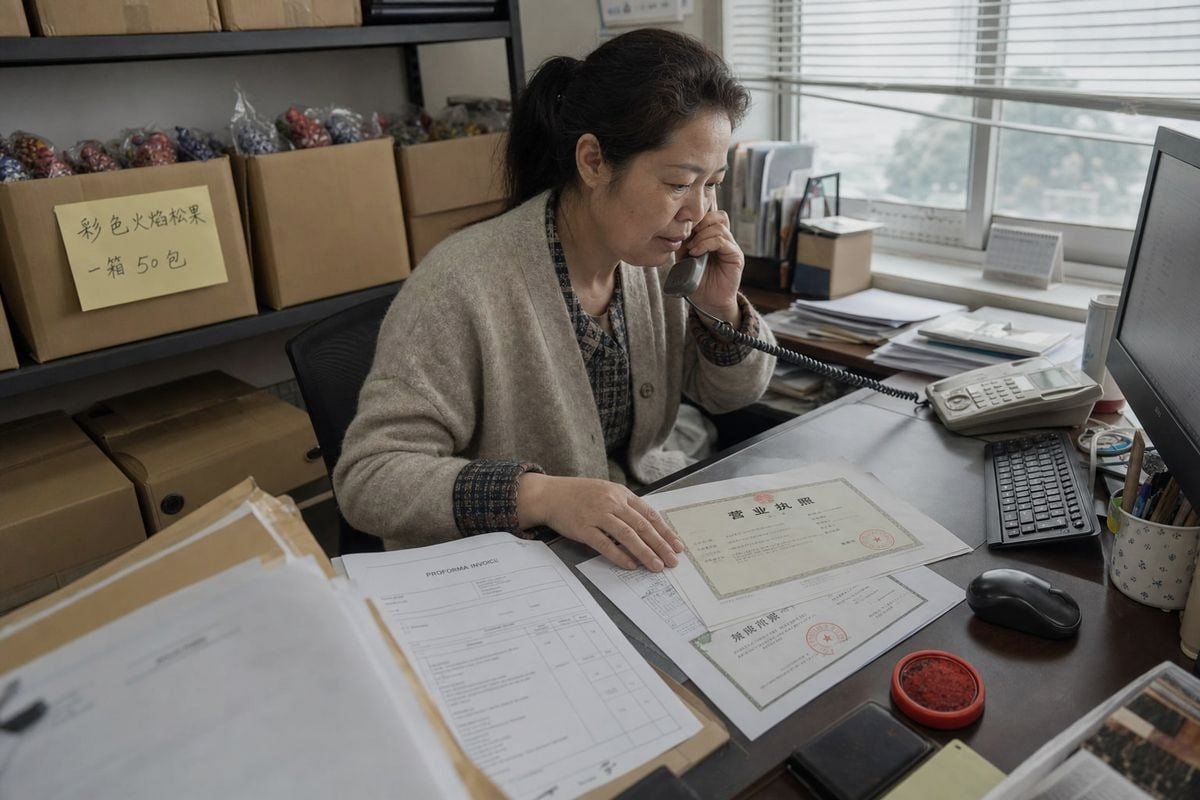
Knowing how to verify a supplier's payment account for fireplace pine cones matters more than most buyers think. Our export team sees impersonation attempts targeting our own customers every single season.
To verify a supplier's payment account for fireplace pine cones, request official bank documents on company letterhead, match the account name to the business license, confirm details by phone using a trusted number, and use escrow or trade assurance for first payments instead of direct wire transfer.
That is the short answer. Below, I will walk through each step in detail, based on what we have learned protecting buyers across 30+ countries.
What Documents Should I Request to Confirm a Supplier's Bank Account Is Legitimate?
A buyer from Poland once emailed us in a panic. He had received "updated" bank details from someone posing as our sales team. The documents he then requested from us saved his payment.
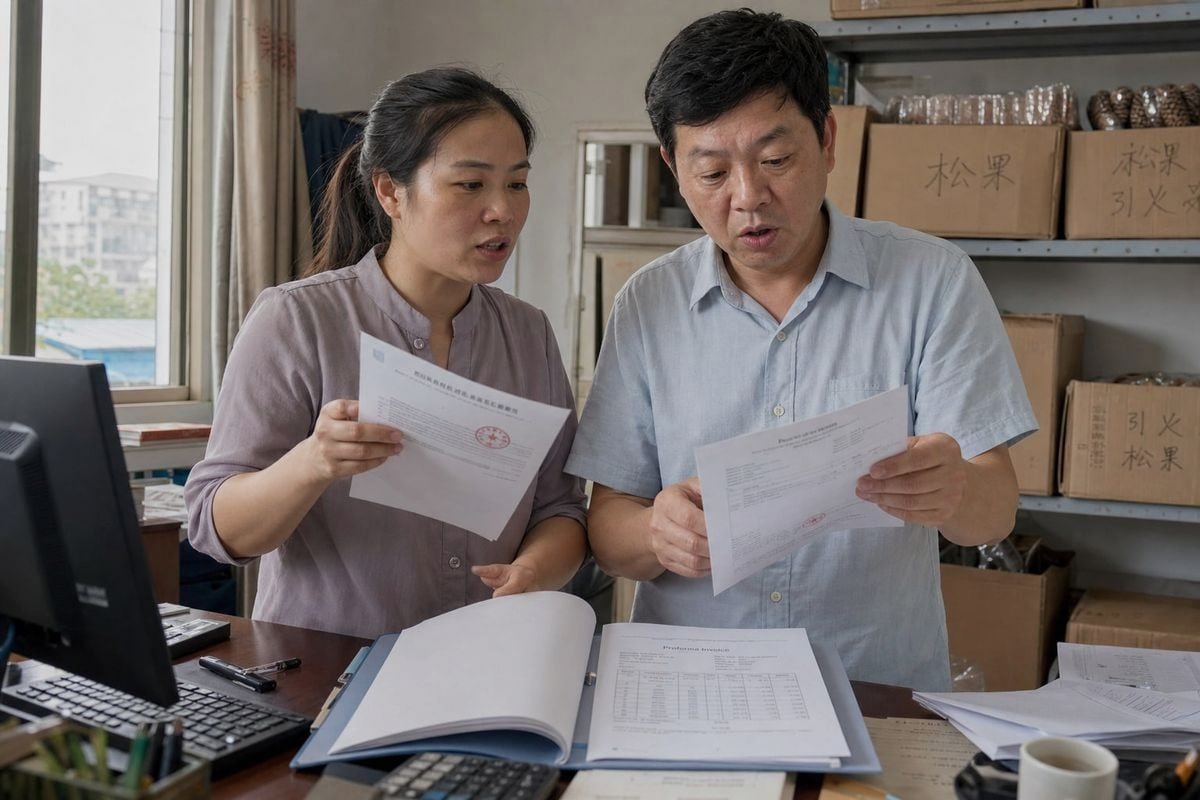
Request a bank account certificate issued by the supplier's bank, a proforma invoice on company letterhead, the business license showing the registered legal name, and a signed bank information letter. The beneficiary name on all documents must exactly match the registered company name.
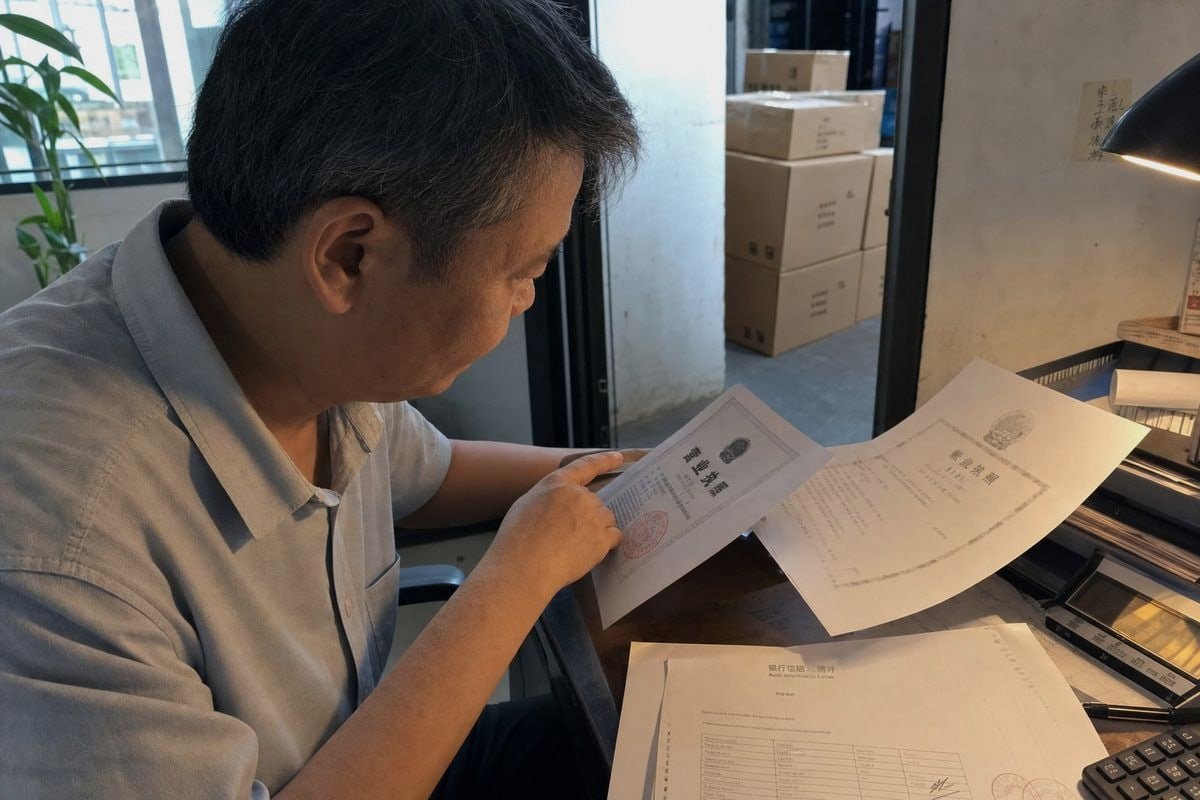
Documents are your first layer of business due diligence 1. But you must know which papers actually prove something, and which ones are easy to fake. In our experience exporting color-flame pinecones to the US and Europe, serious factories can produce every item on this list within one or two working days. A fraudster usually cannot.
El conjunto de documentos central
Here is what I recommend every purchasing manager collect before the first payment:
| Documento | Lo Que Demuestra | Fraud Resistance |
|---|---|---|
| Bank account certificate (bank-issued) | The account exists and belongs to the named company | Alto |
| Business license copy | The legal entity is registered and active | Medium (verify online) |
| Proforma invoice on letterhead | Payment terms tie to the legal entity | Low alone, high when cross-checked |
| Signed and stamped bank letter | The supplier formally confirms its own details | Medio |
| Export license or customs registration | The company actually ships goods abroad | Alto |
Why Cross-Checking Beats Collecting
A single PDF proves very little. Screenshots, voided checks, and informal WeChat messages can all be forged in minutes. What matters is consistency. The company name on the bank certificate must match the business license. The license must match the name on the proforma invoice. The invoice must match the contract. Proforma invoice fraud almost always breaks this chain somewhere — a slightly different spelling, a missing "Co., Ltd.", or a personal name where a company name should be.
When we onboard new distributors for our wholesale fire starters and color-flame pinecones, we send this full document set proactively. Any supplier who resists doing the same, or who offers excuses, is telling you something important.
How Can I Cross-Check a Factory's Business License Against Its Payment Details?
When we prepare compliance packs for new buyers, our license copy always goes out alongside our SGS and ISO 9001 2 documents. There is a reason: the license is the anchor every other detail must match.
Cross-check by pulling the supplier's official registration from a government company registration lookup, then comparing the registered legal name, address, and status against the beneficiary name on the bank account. Any mismatch between the license name and the payment account name should stop the payment.
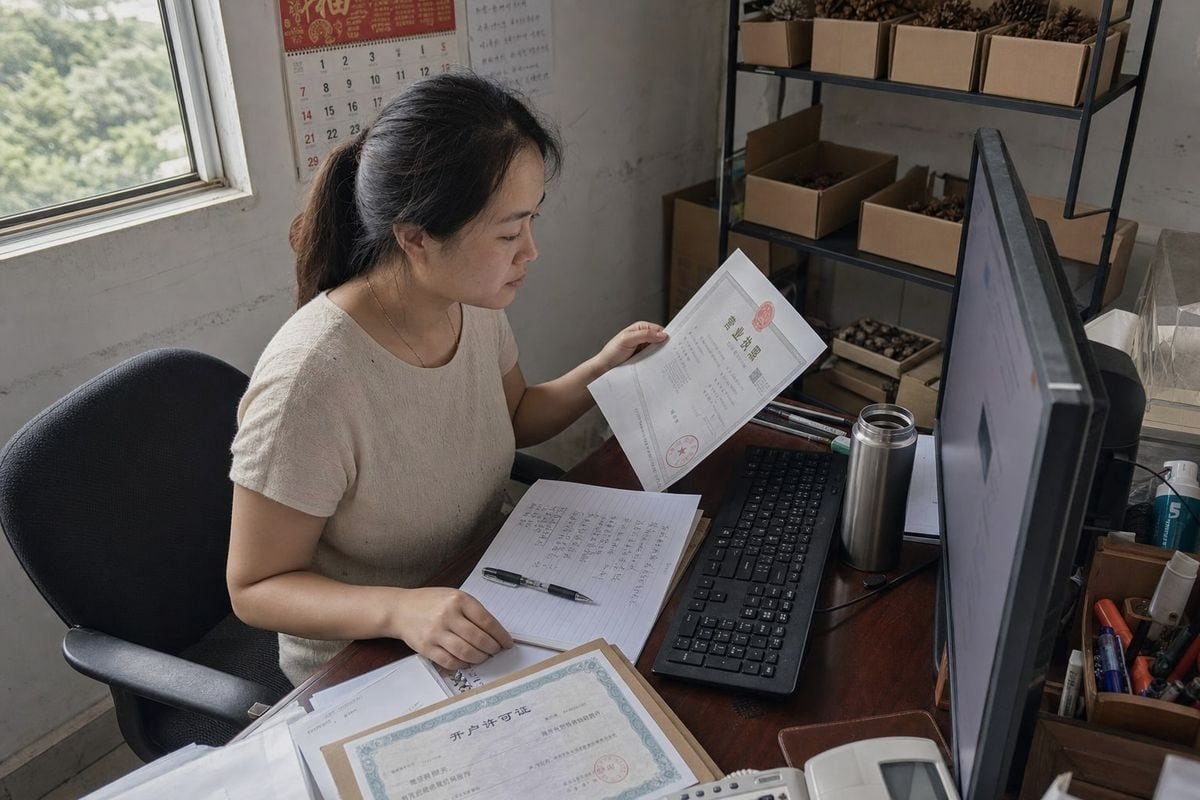
This step turns paperwork into proof. A license PDF can be edited; a government registry record cannot. For Chinese factories like ours, the National Enterprise Credit Information Publicity System 3 lists the registered name, unified social credit code, legal representative, registered capital, and operating status. Free tools such as Qichacha or Tianyancha 4 make the same supplier background check easier for foreign buyers.
A Simple Four-Step Cross-Check Process
- Look up the registration. Search the registry using the Chinese legal name or the código de crédito social unificado 5 from the license copy. Confirm the company status shows "active" and the business scope covers manufacturing or exporting, not just consulting.
- Match the beneficiary name. The bank account name on the proforma invoice must match the registered legal name character for character. A payment account under a director's personal name, or under a different trading company, is a serious warning sign.
- Verify the address physically exists. Check the registered address on satellite imagery. A real factory producing pallets of pinecones needs warehouse space. A residential apartment does not process seasonal container volumes.
- Request supporting evidence of production. Solicite una factory audit report 6 — a BSCI or ISO audit names the audited entity and site address. It should match everything above. You can also request a live video walkthrough of the production floor and inventory; we do these regularly for buyers who cannot visit Ningbo in person.
What a Mismatch Actually Means
Not every mismatch is fraud. Some legitimate factories bill through a related export entity for tax reasons. But the burden of explanation sits with the supplier. Ask for a written explanation on letterhead, plus the registration record of the second entity, and verify that too. If the story keeps shifting, walk away. Genuine B2B transaction security depends on refusing to pay any account you cannot tie to a verified legal entity.
Which Red Flags Suggest a Fireplace Pine Cone Supplier's Payment Information Might Be Fraudulent?
A German distributor once forwarded us an email he had received "from Sunrich" asking him to pay a new account in a third country. The sender's domain was one letter off from ours. That single letter would have cost him a full container payment.
Major red flags include a sudden bank-change request just before payment, a beneficiary account in a personal name or different country, email domains that differ slightly from prior correspondence, pressure to skip verification, and a supplier unreachable at previously verified phone numbers.
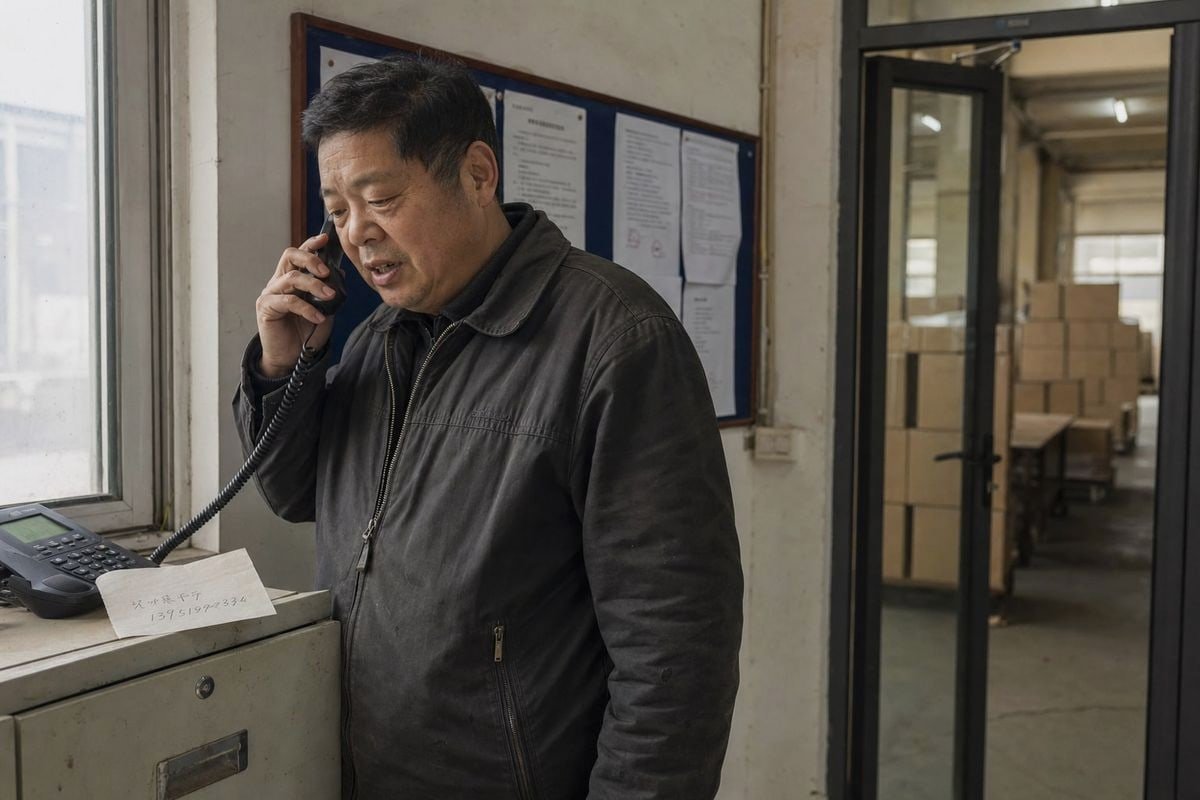
Fraud around niche seasonal goods is common precisely because buyers assume small orders are not worth attacking. In reality, criminals target the payment workflow, not the product. A pallet of decorative pinecones and a container of machinery move money through the same wire channels. So the same controls apply.
Señales de alerta clasificadas por gravedad
| Señal de alerta | Nivel de riesgo | Correct Response |
|---|---|---|
| Bank details changed days before payment is due | Crítico | Freeze payment; call a trusted number |
| Account name differs from registered legal name | Crítico | Demand written explanation and registry proof |
| New account in an unrelated country | Alto | Require bank certificate and callback verification |
| Slightly altered email domain or new sender | Alto | Compare headers against the original contract emails |
| Pressure to pay "urgently" or "just this once" | Alto | Slow down; urgency is the fraudster's main tool |
| Only PDFs or screenshots offered as proof | Medio | Insist on bank-issued documents |
| Refusal of a video call or live inventory walkthrough | Medio | Treat as unverified until proven otherwise |
The Callback Rule Is Non-Negotiable
Never confirm banking details using contact information contained in the change request itself. If the email is compromised, the phone number inside it is compromised too. Pull the number from your vendor master file, the original signed contract, or the company's verified website. Then call and speak with a person you already know. Every fraudulent bank-change attempt we have seen against our buyers would have failed at this single step. Attackers can spoof an inbox; they cannot answer our factory's landline in Liuyang.
Watch the Tone, Not Just the Details
Fraudulent messages often shift in small ways. The English gets suddenly more formal or less fluent. Your usual contact "is on leave" and a new person takes over. Payment terms that were negotiated over months suddenly become flexible. Trust the pattern break. In seventeen-plus years of exporting, our banking details have changed exactly once — and we announced it by phone, on letterhead, and through a re-verification cycle with every active buyer.
Should I Use Escrow or Trade Assurance Instead of Direct Wire Transfer to a New Supplier?
The trade-off we weigh with every first-time buyer is simple: protected payment methods cost a little more and move slower, but they remove almost all first-order risk. We actively encourage new customers to use them with us.
Yes. For a first order with a new supplier, use trade assurance or a B2B escrow service rather than direct wire transfer. These methods hold funds until delivery is confirmed, protecting you from fake suppliers, intercepted invoices, and substituted bank accounts.
International transferencia bancaria 7 safety is the weakest link in most supplier fraud cases. A wire is fast, final, and nearly impossible to recall once the receiving bank credits the account. That is exactly why criminals love it. Escrow and garantía comercial 8 flip the leverage: the supplier ships first, or at least ships against secured funds.
Payment Method Comparison for First Orders
| Método de pago | Protección del comprador | Velocidad | Mejor usado cuando |
|---|---|---|---|
| Trade assurance (platform-based) | High — refund path if goods fail | Moderado | First orders via B2B platforms |
| B2B escrow service | Alto: fondos liberados tras la entrega confirmada | Más lento | High-value first orders, new relationships |
| Carta de crédito | High — bank-enforced document terms | Slow, fees | Large container orders |
| Small test payment + balance | Medium — limits initial exposure | Rápido | Verified suppliers, trial orders |
| Transferencia bancaria directa (T/T) | Bajo — casi irreversible | Rápido | Established, fully verified partners only |
Addressing the Common Objections
Some buyers tell me escrow feels like an insult to the supplier. It is not. A legitimate factory with real inventory and a factory audit report has nothing to fear from funds held until delivery. When a new distributor asks us to run their trial order of color-flame pinecones through trade assurance, we agree without hesitation. Only suppliers who never intend to ship resist neutral payment terms.
Others worry about speed. Yes, escrow adds days, and a small test payment before the balance slows the first transaction. But that friction applies once. After the first successful order, most of our long-term partners move to standard T/T terms — because by then, identity, bank ownership, and product quality have all been verified through experience. A risk-based approach beats one rigid rule: heavy protection for new relationships, streamlined terms for proven ones.
There is also a newer option worth watching. Some platforms now offer inspection-triggered releases, where payment moves only after a third-party inspector confirms the goods. For seasonal products with hard retail deadlines, that combination of quality control and payment protection is genuinely useful.
Conclusión
Verify identity first, then bank ownership, then pay through a protected channel. One skipped step can cost an entire order. Layered checks make supplier payments boring — exactly as they should be.
Notas al pie
1. Explains the general due diligence concept underlying supplier document verification. ↩︎
2. Authoritative Wikipedia page for ISO 9001, providing a stable alternative to the official site. ↩︎
3. Official Chinese government registry referenced for verifying business registration records. ↩︎
4. Official site of a named tool buyers use for supplier background checks in China. ↩︎
5. Background on the identifier used to verify Chinese company registrations. ↩︎
6. Amfori BSCI is the authoritative body issuing the factory audits referenced for verification. ↩︎
7. Background on wire transfer mechanics explaining why it is nearly irreversible once sent. ↩︎
8. Corrected official Alibaba Trade Assurance landing page URL. ↩︎



 English
  Spanish
  German
  French
  Arabic
  Portuguese
Únete a la conversación