







Las piñas de colores para chimenea lucen mágicas en las fotos de empaque, pero en nuestra línea de producción en Ningbo, he visto cuán fácilmente un lote mal tratado produce un simple fuego naranja.
Para verificar que las piñas de pino coloreadas para chimenea coincidan con los colores de llama anunciados, solicite informes de prueba de SGS o Intertek, videos de pruebas de combustión previos al envío, registros de control de calidad por lotes y Hojas de datos de seguridad de materiales que confirmen los recubrimientos de sales metálicas. Luego, queme conos de muestra a fuego lento o sobre brasas calientes y compare los resultados con la afirmación.
Esa es la respuesta corta. A continuación, te guiaré a través de cada paso de verificación en detalle, desde las certificaciones hasta los videos de muestra y los informes de laboratorio de terceros.
¿Qué certificaciones debo solicitar para confirmar que los resultados de la prueba de color de llama son precisos?
Un comprador de Alemania me dijo una vez que había rechazado a dos proveedores antes de encontrarnos, simplemente porque ninguno podía producir un solo certificado válido para sus colorantes químicos para llamas.
Solicitar ISO 9001 para gestión de calidad, informes de prueba de combustión SGS o Intertek que verifiquen la salida de color de la llama, marcado CE para el mercado europeo, BSCI para auditorías de fábrica y una Hoja de Datos de Seguridad de Materiales que enumere las sales metálicas exactas utilizadas, como sulfato de cobre o cloruro de estroncio.

En mis más de diecisiete años exportando productos con temática de fuego a más de treinta países, he aprendido que el papeleo separa a las fábricas reales de los revendedores. Una empresa comercial puede enviarte una hermosa foto de llamas púrpuras. Solo una fábrica certificada puede enviarte un informe de prueba que demuestre que esas llamas provienen de aditivos de fuego seguros y no tóxicos en lugar de productos químicos industriales aleatorios.
Los documentos centrales y lo que cada uno demuestra
Diferentes certificados responden a diferentes preguntas. No aceptes un documento como prueba de todo. Así es como se lo explico a los gerentes de compras:
| Documento | Lo que realmente verifica | Quién lo emite |
|---|---|---|
| ISO 9001 | La fábrica tiene un sistema de gestión de calidad repetible | Organismo de certificación acreditado |
| Informe de prueba SGS / Intertek | Rendimiento real del color de la llama y composición química | Laboratorio de terceros |
| Documentación de marcado CE | Cumplimiento para la venta en la UE | Fabricante, respaldado por pruebas |
| Auditoría BSCI | Condiciones de fábrica éticas y auditadas | Auditores aprobados por Amfori |
| Hoja de Datos de Seguridad del Material 1 | Sales colorantes exactas, riesgos de manipulación, datos de toxicidad | Fabricante o laboratorio |
Señales de alerta a tener en cuenta
Verifique las fechas y los nombres de las empresas en cada documento. He visto a proveedores circular informes caducados o certificados emitidos a una entidad legal diferente. Verifique también que la MSDS enumere colorantes químicos reconocibles para llamas — sulfato de cobre 2 para azul verdoso, cloruro de estroncio para rojo, ácido bórico 3 para verde. Si la lista de ingredientes es vaga o dice "mezcla patentada" sin datos de laboratorio que la respalden, aléjate. Un proveedor legítimo no tiene nada que ocultar sobre la seguridad de la quema de madera, porque el cumplimiento es un requisito indispensable en los EE. UU. y la UE, no una conveniencia.
¿Cómo puedo solicitar videos de muestras antes del envío para verificar los colores reales de la llama antes de la producción en masa?
El invierno pasado, un distribuidor canadiense nos pidió filmar la misma piña de muestra dos veces — una a la luz del día, otra al anochecer — porque sabía que la iluminación de la cámara puede distorsionar mucho el color de la llama.
Pida a la fábrica que filme pruebas de combustión sin editar de sus muestras de producción reales, mostrando un cono a la vez a fuego lento o brasas calientes, con números de lote visibles, balance de blancos neutro y una tarjeta de color de referencia en el encuadre. Solicite videos antes de aprobar la producción en masa.
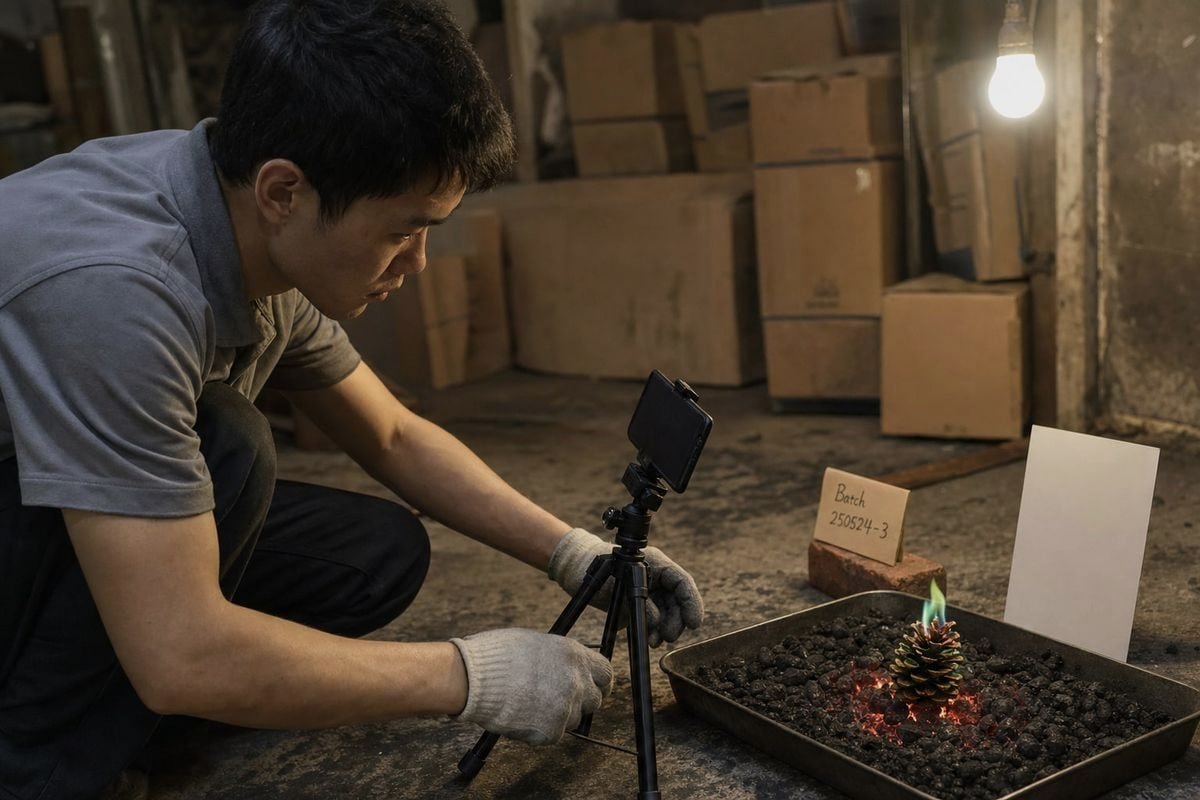
Aquí hay una compensación honesta que considero cada vez que filmamos para un cliente: un fuego rugiente se ve impresionante, pero su brillante luminosidad amarillo-naranja enmascara el color agregado. Así que deliberadamente filmamos sobre una cama de brasas calientes o una etapa de llama baja, donde el azul verdoso del sulfato de cobre o el verde del ácido bórico se aprecian claramente. Si un proveedor solo te envía metraje filmado contra un gran fuego llameante, sé sospechoso. O no entienden la química de las llamas, o están ocultando una débil producción de color.
Qué especificar en tu solicitud de video
- Una piña por toma. Múltiples piñas mezclan colores y ocultan a los de bajo rendimiento.
- Condiciones de llama baja o cama de brasas. Aquí es donde el tono anunciado es honestamente visible.
- Metraje en tiempo real, sin editar. Sin filtros, sin corrección de color, sin cortes.
- Número de lote mostrado en cámara. El video debe rastrearse hasta tu corrida de producción.
- Duración completa de la llama. Quieres ver Vividez del color, no una llamarada de tres segundos.
- Un objeto de referencia en el encuadre. Una tarjeta de color o una superficie blanca lisa te ayuda a juzgar el balance de blancos.
Cómo leer el metraje críticamente
Busca contaminación por sodio 4. El sodio arde de color amarillo intenso y puede dominar los tonos más sutiles, por lo que una piña "púrpura" que destella principalmente amarillo probablemente fue tratada con sales impuras. Pregunta si el recubrimiento utiliza productos químicos de grado técnico, porque las sales de baja pureza producen colores sucios e inconsistentes. También cuenta los segundos de color visible. Un recubrimiento genuino de sal metálica densa mantiene el color durante minutos; un spray fino produce un breve parpadeo. Finalmente, solicita videos de al menos tres piñas del mismo lote. La consistencia entre las piñas te dice más de lo que jamás dirá una sola toma perfecta.
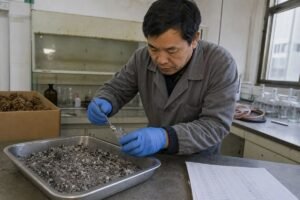
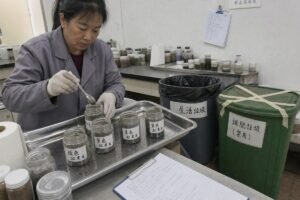
¿Qué controles de calidad realiza la fábrica para garantizar la consistencia del color de la llama lote a lote?
La lección más difícil de nuestros primeros años en Liuyang fue esta: la consistencia del color de la llama se gana o se pierde durante el remojo y el secado, mucho antes de que la piña se encuentre con el fuego.
Una fábrica rigurosa controla la concentración de la solución colorante, el tiempo de remojo, el secado completo, la densidad del recubrimiento y los niveles de humedad, y luego realiza pruebas de quemado aleatorias en cada lote. Los registros vinculan cada lote a su lote químico, por lo que la primera muestra refleja de manera confiable la calidad de la producción en masa.
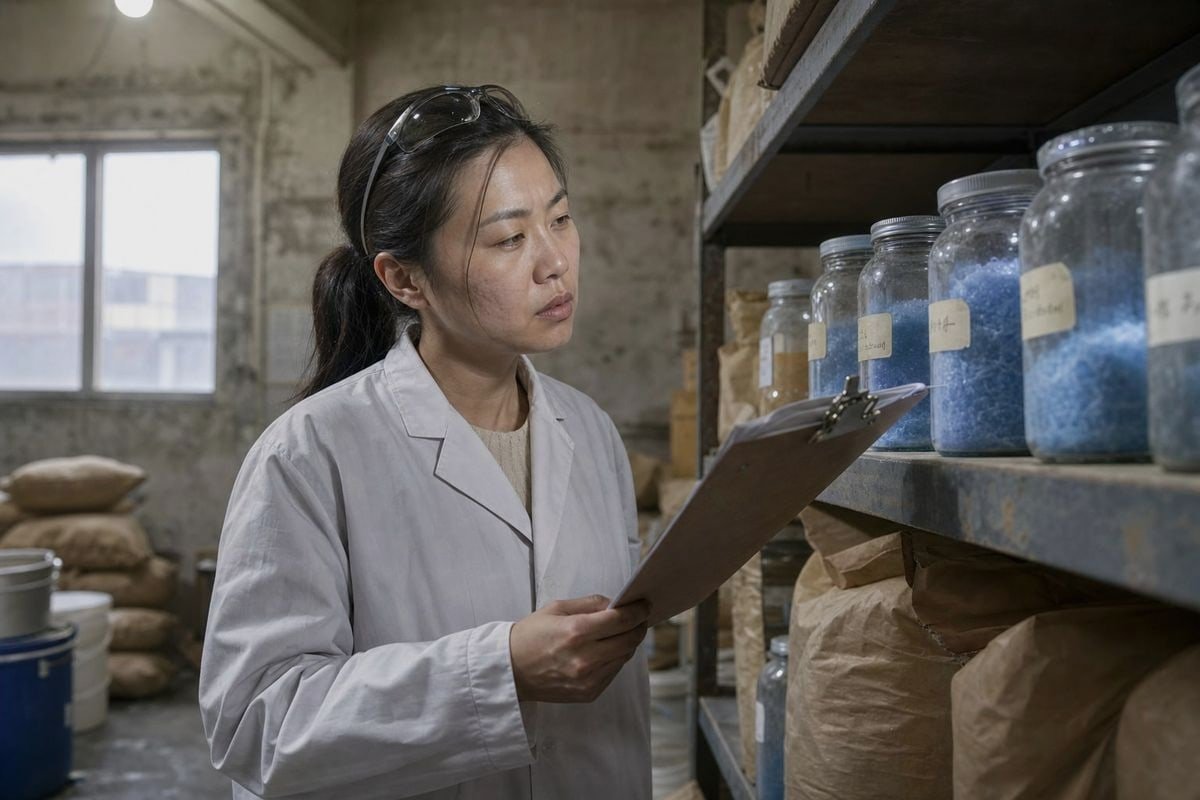
Pídele a tu proveedor que describa su proceso de control de calidad paso a paso. Si no pueden, probablemente no tengan uno. En nuestras instalaciones de Ningbo, el proceso está documentado desde la recepción de la piña cruda hasta el empaque final, y animo a los compradores a auditarlo. Aquí hay una cadena de inspección seria:
| Etapa de control de calidad | Verificación realizada | Por qué es importante para el color de la llama |
|---|---|---|
| Prueba de contenido de humedad de la fibra de madera, pureza de la cera | Verificar la pureza de la sal y los números de lote de los productos químicos | Las sales impuras causan tonos sucios e inconsistentes |
| Selección de piñas | Escamas completamente abiertas, especie y tamaño correctos | Humedad y escamas cerradas inhiben la reacción |
| Tratamiento | Concentración de la solución y tiempo de remojo estandarizados | La saturación del recubrimiento impulsa la intensidad del color |
| Secado | El medidor de humedad comprueba antes de que el recubrimiento cure | Los conos húmedos queman naranja liso |
| Inspección del recubrimiento | Densidad de cristal visible y adhesión del aglutinante de cera | Los recubrimientos gruesos mantienen el color vibrante por más tiempo |
| Prueba de combustión por lotes | Conos aleatorios quemados sobre brasas, color registrado | Confirma que el lote coincide con la muestra maestra |
Los enemigos ocultos de la consistencia
Dos modos de falla merecen especial atención. Primero, sangrado higroscópico 5: las sales colorantes absorben la humedad atmosférica durante el almacenamiento, dejando los conos pegajosos o húmedos y matando la potencia del color. Una buena fábrica utiliza embalajes sellados y resellables y controles de desecante, e inspecciona el sangrado antes del envío. Segundo, la densidad de la especie. Los conos más densos retienen el tratamiento por más tiempo y ofrecen una exhibición más estable, mientras que los conos de pino más ligeros arden rápidamente y se desvanecen. Si su producto promete un espectáculo multicolor sostenido, la fábrica debe controlar la selección de especies, no solo la química.
Pregunte también cómo la fábrica gestiona las preocupaciones sobre los residuos de chimenea. Los recubrimientos formulados correctamente arden limpiamente, pero las formulaciones descuidadas dejan depósitos excesivos, una señal de calidad que sus clientes finales notarán.
¿Puedo obtener informes de pruebas de laboratorio de terceros que demuestren que los aditivos de color coinciden con el rendimiento de llama anunciado?
Cuando desarrollamos nuestra línea de piñas de llama de color para el mercado estadounidense, el primer elemento del presupuesto fue la prueba de laboratorio independiente, no las herramientas, ni el embalaje. El cumplimiento fue lo primero.
Sí. Los fabricantes de renombre proporcionan informes de SGS o Intertek que identifican los productos químicos colorantes, confirman los límites de metales pesados y toxicidad, y documentan los colores de llama observados bajo quemas controladas. Compare los compuestos enumerados en el informe con un gráfico estándar de colores de llama antes de realizar el pedido.
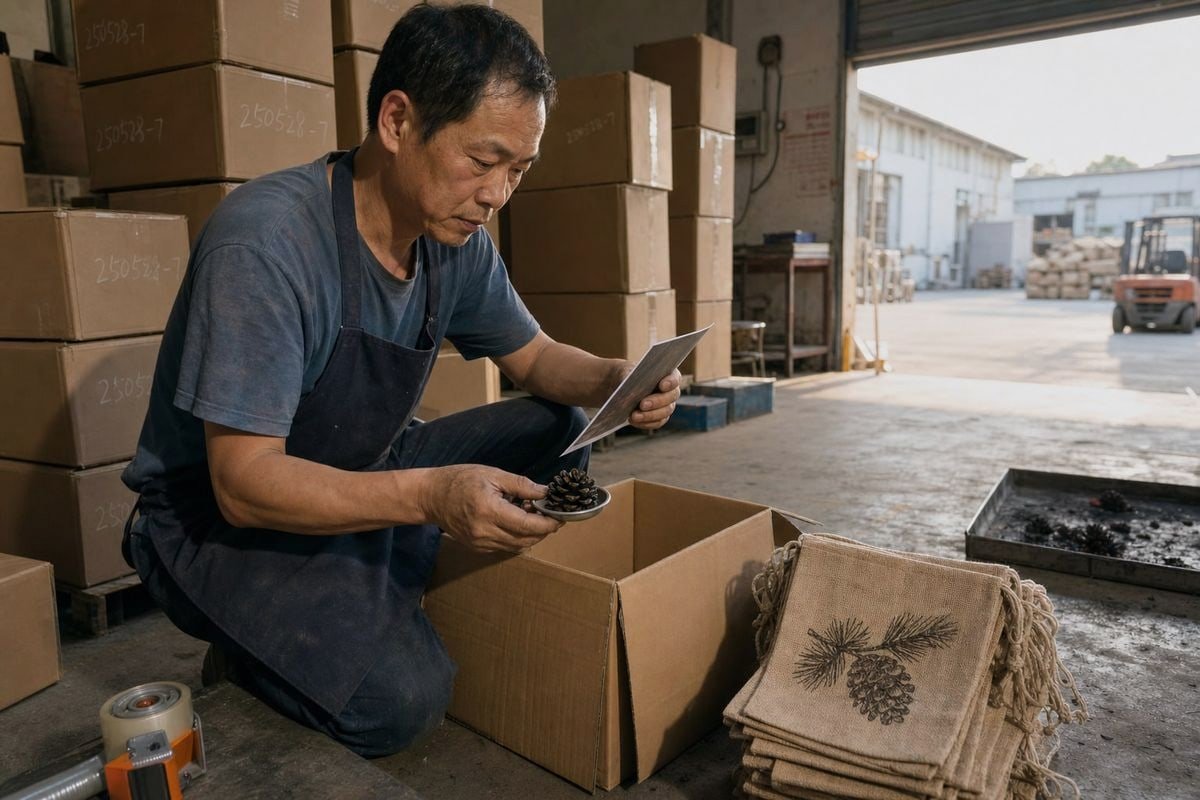
Un informe de laboratorio le permite hacer algo poderoso: cotejar los ingredientes declarados con la química de llama conocida. Los colores de emisión son física, no marketing. Si el informe enumera compuestos de cobre pero el embalaje promete llamas rojas, alguien está mintiendo. Utilice esta tabla de referencia al revisar cualquier informe:
| Color anunciado | Colorante esperado en el informe | Fiabilidad de la afirmación |
|---|---|---|
| Verde | Ácido bórico o compuestos de boro | Alto: una de las afirmaciones más plausibles |
| Azul-verde | Sulfato de cobre o cloruro de cobre | Alto: emisión bien documentada |
| Rojo | Cloruro de estroncio 6 o sales de litio | Moderado a alto |
| Morado | Compuestos de potasio | Moderado: fácilmente enmascarado por el amarillo |
| Amarillo/naranja | Sodio o calcio | Señal débil: el fuego ya tiene este color |
Preguntas para hacer sobre cualquier informe de laboratorio
Verifique el número de informe directamente con el laboratorio; SGS e Intertek 7 ambos permiten la autenticación. Verifique que el producto probado coincida con su SKU, no con un producto similar. Confirme que el informe cubre tanto la composición como el rendimiento, ya que una pantalla de toxicidad por sí sola no prueba la producción de color. Luego solicite la Hoja de Datos de Seguridad del Material correspondiente para que su documentación de importación, etiquetas de advertencia y archivo de cumplimiento minorista estén completos.
Una advertencia que siempre comparto con los compradores: incluso un informe de laboratorio perfecto describe condiciones controladas. La percepción del mundo real varía según el tipo de madera, el flujo de aire y la iluminación de la habitación. "Coincide con lo anunciado" debe significar que el cono produce visiblemente el color reclamado bajo uso recomendado , un cono a la vez, con llamas bajas, no una medición de color de grado de laboratorio en cada sala de estar. Establezca esa expectativa honestamente en sus propias listas de productos, y su tasa de devoluciones se lo agradecerá.
Conclusión
Los colores débiles y la documentación vaga le cuestan a los distribuidores devoluciones y reputación. Exija certificaciones, videos de muestra sin editar, control de calidad de lotes documentado e informes de laboratorio verificados, y luego asóciese con una fábrica que acepte los cuatro.
Notas al pie
La guía oficial de comunicación de peligros de OSHA define lo que debe divulgar una Hoja de Datos de Seguridad del Material adecuada. ↩︎
La entrada de NIH PubChem confirma las propiedades químicas del sulfato de cobre relacionadas con la emisión de llama azul-verde. ↩︎
La fuente de NIH PubChem verifica la química del ácido bórico detrás de las afirmaciones de coloración de llama verde. ↩︎
Los antecedentes de la química de las pruebas de llama explican por qué el sodio abruma otras emisiones de colorantes. ↩︎
Explica el fenómeno de absorción de humedad detrás de la degradación de las sales colorantes durante el almacenamiento. ↩︎
La base de datos autorizada de los NIH confirma la asociación del cloruro de estroncio con las emisiones de llama roja. ↩︎
Enlaces al laboratorio de pruebas oficial al que se hace referencia para autenticar los informes de prueba de combustión y cumplimiento. ↩︎
 English
  Spanish
  German
  French
  Arabic
  Portuguese
Únete a la conversación