






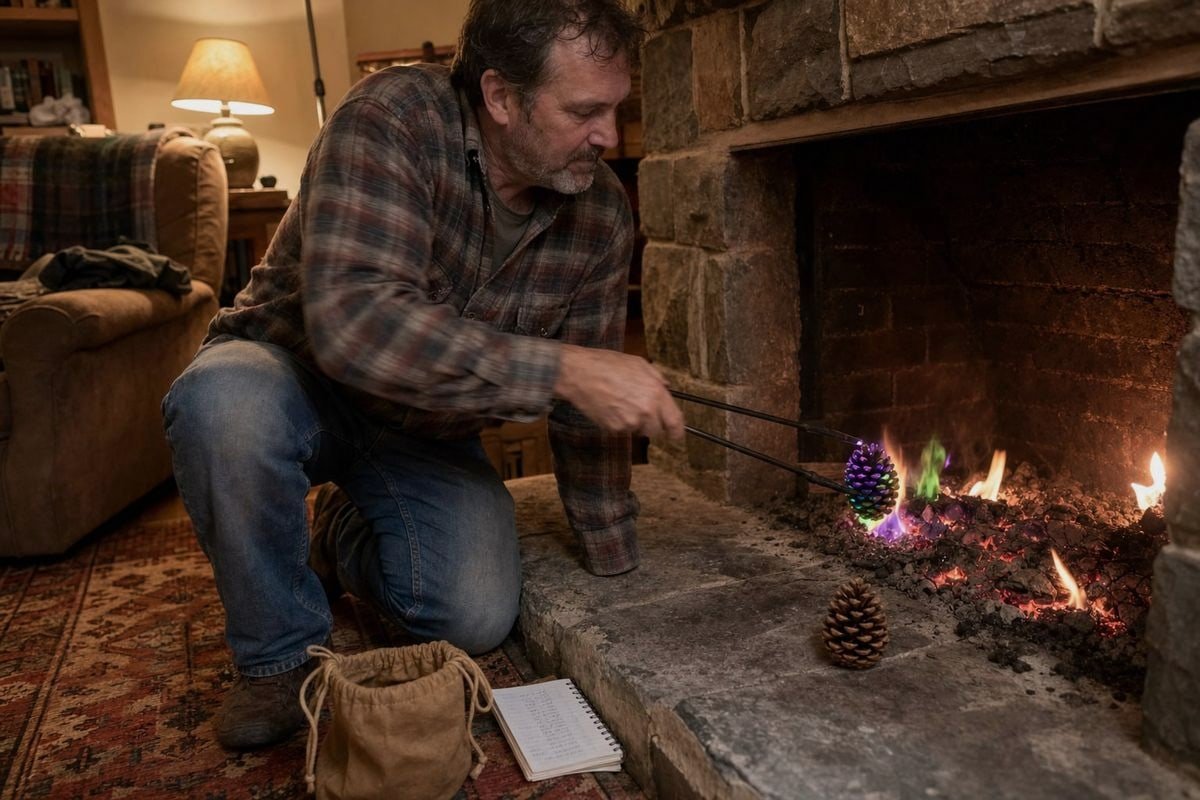
Testing fireplace colored pine cones before a bulk order has saved our buyers from costly mistakes more than once Marcado CE 1. I have seen shipments fail retail inspections over one skipped burn test.
To test fireplace colored pine cones for flame coloring performance, burn samples one at a time in a low-flame fire, then score color intensity, color duration, burn time, smoke output, and batch consistency. Repeat across multiple cones and compare results against an untreated control cone.
That is the short answer. Below, I will walk you through the exact testing methods, the certifications to request, the safety checks, and how to judge a pre-production sample.
What Testing Methods Confirm Consistent Flame Colors Across Batches?
On our production line in Ningbo, we burn-test random cones from every batch before packing metales pesados 2. Seventeen years of exports taught us that consistency, not peak color, is what buyers actually pay for.
To confirm batch consistency, burn 5–10 cones randomly pulled from each batch in identical fire conditions. Record color onset time, hue, saturation, and duration for each cone. Consistent batches show matching color within a few seconds of ignition and similar burn duration across all samples.
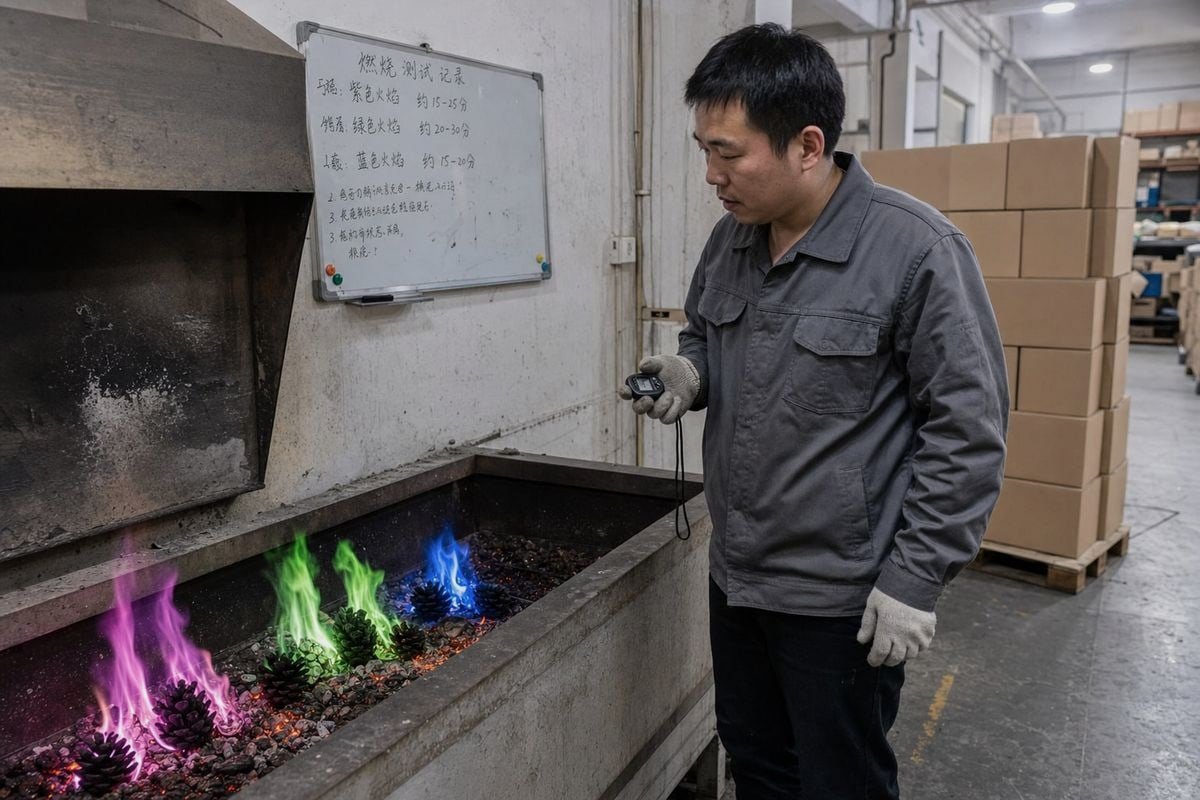
The biggest mistake I see importers make is judging a whole shipment from a single cone. One cone tells you almost nothing. Flame colorant intensity varies with chemical saturation levels, cone size, and drying completeness. So your testing method needs to control those variables and use a real sample size.
Start with a Control Cone
Always burn one untreated pine cone first. This gives you a baseline for normal flame color, smoke, and burn behavior. Without a control, you cannot tell how much of the effect comes from the metal salt solutions and how much is just the cone burning normally.
Test in the Right Fire Conditions
Colored flames are easiest to see against a low fire. Wait until your fireplace has burned down to coals or a low flame. A tall orange flame will wash out the green from ácido bórico 3 or the blue from sulfato de cobre 4 crystals. Place one cone at the edge of the fire, then observe from normal viewing distance — across the room, not crouched at the hearth.
Use a Simple Scoring Rubric
We recommend our distributors record results in a table like this for every batch:
| Test Criterion | Qué medir | Punto de referencia de aprobación |
|---|---|---|
| Color onset | Seconds from ignition to visible color | Within 30–60 seconds |
| Intensidad del color | Visible from 3–4 meters away | Clearly distinct from orange |
| Duración del color | Minutes of sustained color | Covers most of the burn |
| Cone-to-cone variance | Difference between best and worst cone | Minor, not dramatic |
| Humo y residuos | Excess smoke, popping, sticky ash | None beyond normal wood |
Repeat the test across at least two separate fires. Some sources suggest a saturation gradient test — comparing cones treated at different chemical concentrations — which is useful if you are comparing suppliers. If one supplier's cones show strong color on some cones and none on others, their soaking or drying process is not controlled. That inconsistency will show up in customer reviews later.
Which Certifications and Test Reports Should I Request from My Supplier?
A German buyer once told me his previous supplier's shipment was held at customs for three weeks over missing documentation. That conversation is why compliance is the first thing we discuss with every new client.
Request ISO 9001 for quality management, BSCI for social compliance, CE marking for European markets, and third-party test reports from labs like SGS or Intertek covering chemical composition, heavy metals, and emissions. Verify certificate numbers directly with the issuing body, not just the PDF.

Paperwork is not a formality in this category. Color-flame products contain metal salts, so your market's regulators will care what those salts are and what they emit. In our experience exporting to 30+ countries, the buyers who ask for documents upfront avoid nearly all downstream problems. The buyers who skip this step often discover issues only after goods land.
El conjunto de documentos central
Here is the checklist we prepare for our own B2B clients, and what each document actually proves:
| Documento | Lo Que Demuestra | Por qué le importa |
|---|---|---|
| ISO 9001 5 certificado | La fábrica opera un sistema de calidad controlado | Batch-to-batch consistency is process-driven, not luck |
| Informe de auditoría BSCI | Condiciones laborales y de trabajo éticas | Requerido por muchas cadenas minoristas de EE. UU. y la UE |
| Documentación CE | El producto cumple con los requisitos de seguridad de la UE | Non-negotiable for European distribution |
| Informe de prueba SGS / Intertek | Independent chemical and emissions testing | Confirms no harmful chemicals in the formulation |
| FDS / SDS | Full chemical disclosure of colorants Hoja de Datos de Seguridad del Material 6 | Needed for shipping, retail, and liability review |
Cómo verificar, no solo recopilar
Ask three follow-up questions. First, is the test report for this exact product, or a similar one? Reports get recycled. Second, is the report recent? Formulations change. Third, does the certificate number check out with the issuing lab? SGS and Intertek both allow verification. When we send reports, we expect buyers to verify them — serious factories welcome that scrutiny, because it filters out trading companies passing off borrowed documents as their own.
Also confirm the report covers combustion emissions, not just the raw powder. A cone can pass a composition test and still smoke badly. You want both angles covered.
How Can I Verify Burn Time and Safety Before Placing a Bulk Order?
Weighing burn duration against color intensity is a trade-off we handle daily in R&D. A cone can burn long with weak color, or blaze bright and die fast. Your customers want both balanced.
Verify burn time by timing at least five sample cones from ignition to burnout in a real fireplace, recording both total burn duration and colored-flame duration separately. For safety, check for excessive smoke, sparking, flare-ups, residue, and confirm the product carries independent emissions test results.
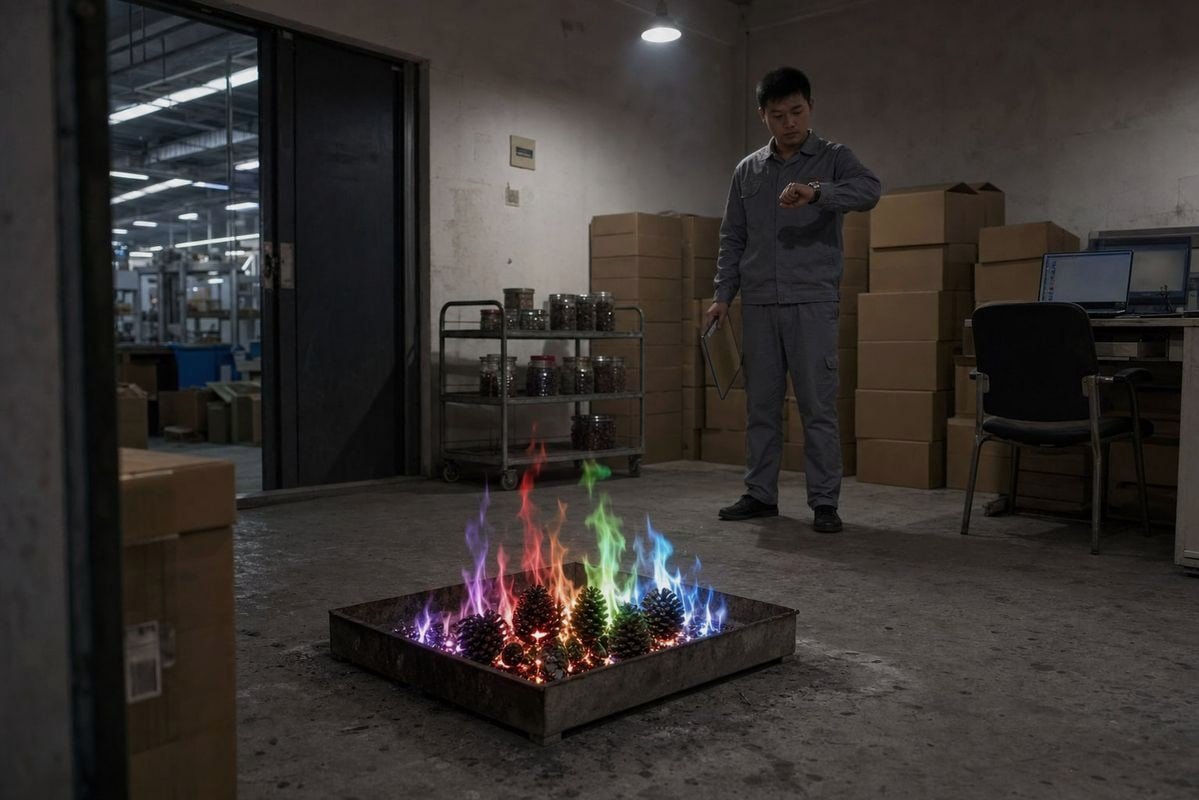
Burn time claims on packaging are only as good as the test behind them. When we calibrate burn duration for our own color-flame pinecones, we run timed burns under standardized conditions, because fire stage and airflow change results dramatically. You should replicate something similar before committing to a container order.
A Practical Burn-Time Protocol
Follow these steps and you will get data you can trust:
- Build a fire and let it burn down to a low flame or coals.
- Place one sample cone at the edge of the fire.
- Start a timer at ignition. Note when color first appears.
- Record when the color fades, and when the cone fully burns out.
- Repeat with at least four more cones across two fires.
- Average the results and note the spread between fastest and slowest.
Track "color persistence duration" as its own number. A cone that burns for fifteen minutes but shows color for only ninety seconds is a weak product, even if the burn time looks good on paper.
Safety Checks That Go Beyond the Datasheet
Watch each burn for warning signs. Excessive smoke suggests incomplete drying or a poor binder. Popping and sparking are a hearth safety hazard, especially on open fireplaces without a screen. Sticky or crusty residue can foul a firebox. Also confirm wood stove compatibility if your customers use enclosed stoves — some colorants are fine in open fire pits but not recommended in catalytic stoves. Check hygroscopic behavior too: leave a few cones in a humid room for a week, then burn them. If atmospheric moisture kills the color, the packaging needs a moisture barrier. Finally, do a simple adhesion test. Shake and drop a dried cone. If colorant dusts off in your hand, it will dust off in the retail box, and the flame performance will suffer.
What Should I Look for When Evaluating a Pre-Production Sample?
A lesson we learned early: buyers do not just evaluate the cone — they evaluate whether the sample predicts the mass-production run. That is why our first sample comes off the same line as the bulk order.
Evaluate a pre-production sample on five points: flame color matches the agreed specification, burn time meets the datasheet, cones are uniform in size and coating, packaging includes correct warning labels and barcodes, and the supplier confirms the sample was made on the actual production line.

A pre-production sample answers one question: will the container that arrives match what you approved? Treat the evaluation as a structured audit, not a quick look. Here is the framework we suggest to purchasing managers who visit our factory or receive samples by courier.
Physical and Performance Inspection
Check the cones themselves first. Sizes should be uniform, scales open and intact, coating even with no clumping or sticky patches. Then run the burn tests from the earlier sections — color onset, flame colorant intensity, burn duration, smoke behavior. If the sample includes different color variants, test each one; a supplier may nail the green from boric acid but struggle with the red from cloruro de estroncio 7, since different metal salt solutions absorb and burn differently.
Packaging and Compliance Review
The retail-facing details matter as much as the fire performance. Verify this against your purchase agreement:
| Sample Element | What to Confirm |
|---|---|
| Etiquetas de advertencia | Correct language, correct hazard wording for your market |
| Códigos de barras | Scannable, matching your SKU system |
| Marca de etiqueta privada | Logo placement, colors, print quality as approved |
| Integridad del embalaje | Resealable pouch or jar seals properly, survives a drop test |
| Protección contra la humedad | Inner barrier prevents hygroscopic dampening in storage |
Ask the Line Question
Finally, ask directly: was this sample made on the mass-production line, or hand-made in a sample room? Hand-made samples from trading companies often look perfect and predict nothing. On our lines, the pre-production sample is pulled from a pilot run using production tooling, so what you approve is what ships. Any supplier who cannot explain how their sample connects to their production process is asking you to gamble. Compare the sample against retained photos and specs when the bulk shipment arrives — that closes the loop and gives you leverage if anything drifts.
Conclusión
Untested fireplace colored pine cones risk weak color, safety complaints, and failed inspections. Structured burn tests, verified certifications, and line-produced samples turn that risk into a reliable, shelf-ready product.
Notas al pie
1. Official EU page defining CE marking requirements mentioned for European market compliance. ↩︎
2. WHO fact sheet on health risks from heavy metal exposure relevant to emissions testing. ↩︎
3. Background on the chemical compound cited for producing green flame colors. ↩︎
4. Background reference on the chemical compound used to produce blue flame coloring. ↩︎
5. Official ISO source explaining the quality management standard referenced for supplier certification. ↩︎
6. OSHA reference explaining SDS/MSDS documentation required for chemical disclosure compliance. ↩︎
7. Wikipedia reference explaining the metal salt used for red flame coloration in pine cones. ↩︎



 English
  Spanish
  German
  French
  Arabic
  Portuguese
Únete a la conversación