






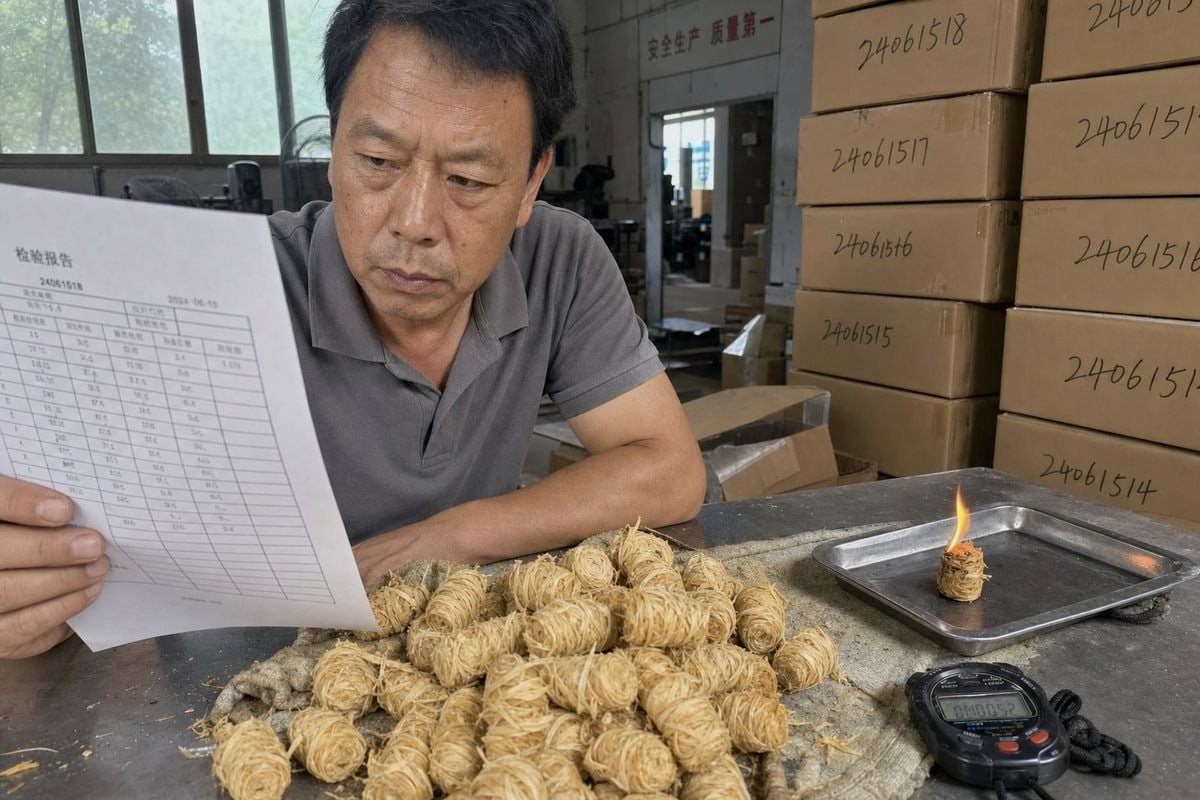
Los informes de prueba de los proveedores pueden predecir sus tasas de devolución antes de que realice un orden de compra 1 — Aprendí esto de la manera difícil en nuestra propia línea de producción. Al principio de nuestra carrera de 17 años fabricando iniciadores de fuego de madera encerada, vimos a un competidor de un comprador perder una lista completa de grandes almacenes porque el papeleo de su proveedor parecía estar bien, pero el producto falló una verificación aleatoria de ignición en el muelle de recepción. Un palé rechazado se convirtió en contracargos, pérdida de espacio en los estantes y una marca privada dañada. La solución no es la suerte. Es aprender a leer un informe de prueba de la misma manera que leemos nuestros propios datos de control de calidad en Ningbo: como un pronóstico del rendimiento en campo, no como una formalidad de cumplimiento.
Los informes de prueba de los proveedores predicen las tasas de devolución porque miden los mismos modos de falla que impulsan las quejas de los clientes: velocidad de ignición, rendimiento del tiempo de combustión, olor, residuo de ceniza, contenido de humedad y peso del paquete. Los informes recientes, específicos del lote y con resultados consistentes señalan un bajo riesgo de devolución; los informes vagos o desactualizados señalan defectos ocultos.
Permítame guiarlo a través de exactamente qué verificar, qué métricas son más importantes y cómo convertir el papeleo de fábrica en un pronóstico real del riesgo de devolución para su línea de marca privada.
¿Qué debo buscar en el informe de pruebas de un proveedor antes de realizar un pedido de marca blanca?
Un distribuidor alemán me envió una vez el informe de prueba de un competidor y me hizo una pregunta: "¿Enviarías contra esto?" Dije que no en menos de dos minutos. Aquí está el porqué.
Antes de realizar el pedido, verifique que el informe sea reciente, específico del lote y emitido por un laboratorio externo. Verifique el tiempo de ignición (menos de 3 segundos), la duración de la combustión (8+ minutos), el contenido de humedad (menos del 15%), el residuo de ceniza (menos del 5%), la tolerancia del peso del paquete y los resultados del olor. La falta de métodos de prueba o fechas es motivo de descalificación.
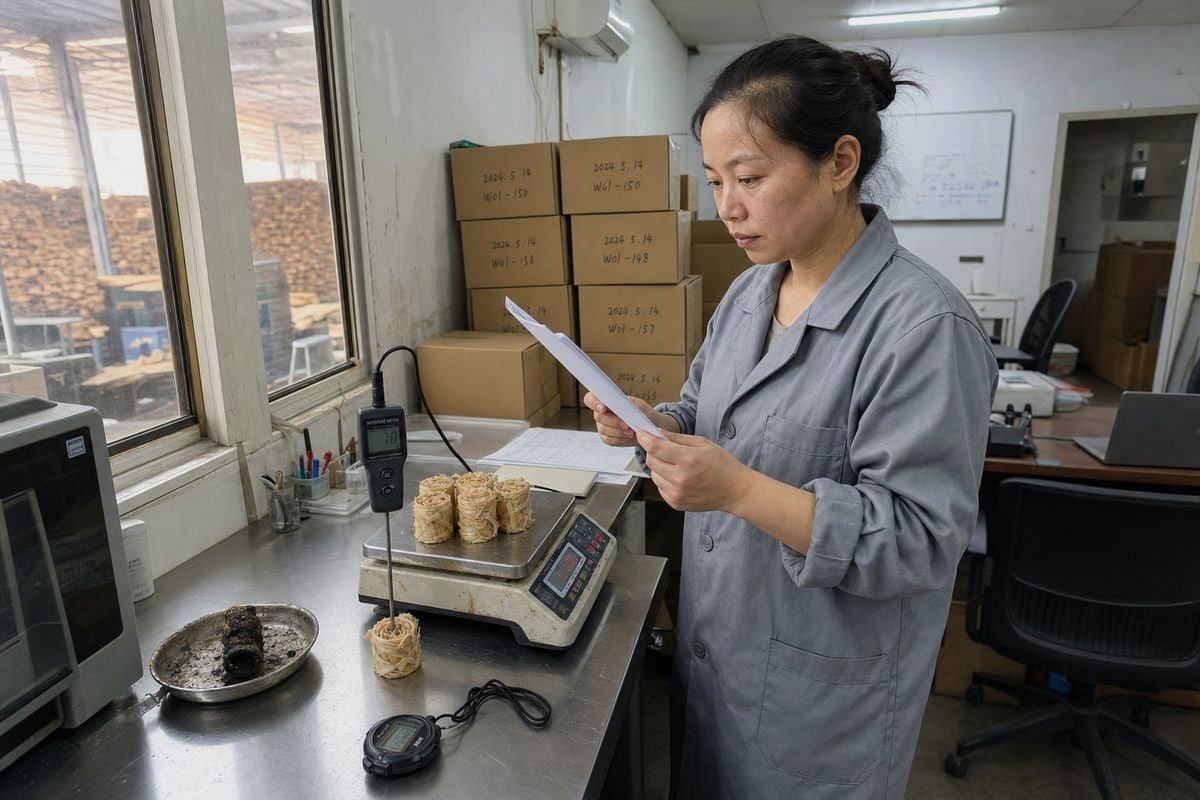
Un informe de prueba solo es predictivo si describe el producto que realmente recibirá. Eso suena obvio. Sin embargo, muchos compradores aceptan PDF genéricos y sin fecha que se generaron en muestras de oro elegidas a dedo hace años. En nuestras líneas, cada lote de rollos de madera encerada se registra contra un número de lote, por lo que el papeleo se remonta a la producción real. Esa trazabilidad es lo primero que debe exigir a cualquier proveedor.
Las métricas principales y lo que predicen
Cada elemento de línea en un informe se corresponde con una queja específica del cliente. La ignición lenta se corresponde con las reseñas de "no se enciende". La corta duración de la combustión se corresponde con los reembolsos de "mi carbón nunca se encendió". El olor químico se corresponde con los paquetes abiertos y devueltos, que son los más caros.
| Métrica del informe | Punto de referencia saludable | Riesgo de devolución si falla |
|---|---|---|
| Tiempo de ignición (TTI) | Se enciende en 3 segundos de contacto con la llama | "Quejas de "fallo de encendido", devoluciones de primer uso |
| Duración de la combustión | Mínimo 8 minutos de llama sostenida | El fuego nunca se establece; solicitudes de reembolso |
| Análisis de contenido de humedad 2 | Por debajo del 15% | Ignición débil, humo, producto con sensación de humedad |
| Residuo de ceniza | Menos del 5% en peso | "Reseñas "desordenadas", calificaciones bajas, rechazo del minorista |
| Olor durante la combustión | Sin olor químico | Devoluciones abiertas, reseñas negativas |
| Peso del paquete | Dentro de la tolerancia declarada | Quejas de llenado insuficiente, aplicación de cumplimiento |
La lista de verificación de documentos más allá de las métricas
Los números por sí solos no son suficientes. También desea detalles del método, tamaños de muestra y firmas. Solicite la SDS/MSDS junto con el informe de rendimiento. Si el producto afirma una formulación natural, pregunte cómo concentración de cera de parafina 3 se verifica lote a lote; en nuestro caso, la relación fibra de madera y cera es una especificación controlada, no una estimación. Pregunte también si el abastecimiento de madera conlleva Certificación FSC 4 si su canal minorista requiere documentación de cadena de custodia. Un proveedor que responde estas preguntas rápidamente suele dirigir una fábrica real. Uno que se detiene a menudo es una empresa comercial que reenvía el papeleo de otra persona.
¿Cómo se correlacionan las normas de certificación como CE y SGS con menos devoluciones de productos?
Cuando primero buscamos pruebas de SGS e Intertek junto con nuestras ISO 9001 5 y auditorías BSCI, lo vi como un costo de entrada al mercado. Quince años de datos de exportación cambiaron mi punto de vista por completo.
Las certificaciones CE, SGS e Intertek se correlacionan con menos devoluciones porque fuerzan estándares de control de calidad documentados y repetibles. Los proveedores certificados ejecutan procesos controlados, pruebas de laboratorio de terceros y lotes rastreables, por lo que el producto que recibe un cliente coincide con el producto que pasó las pruebas.
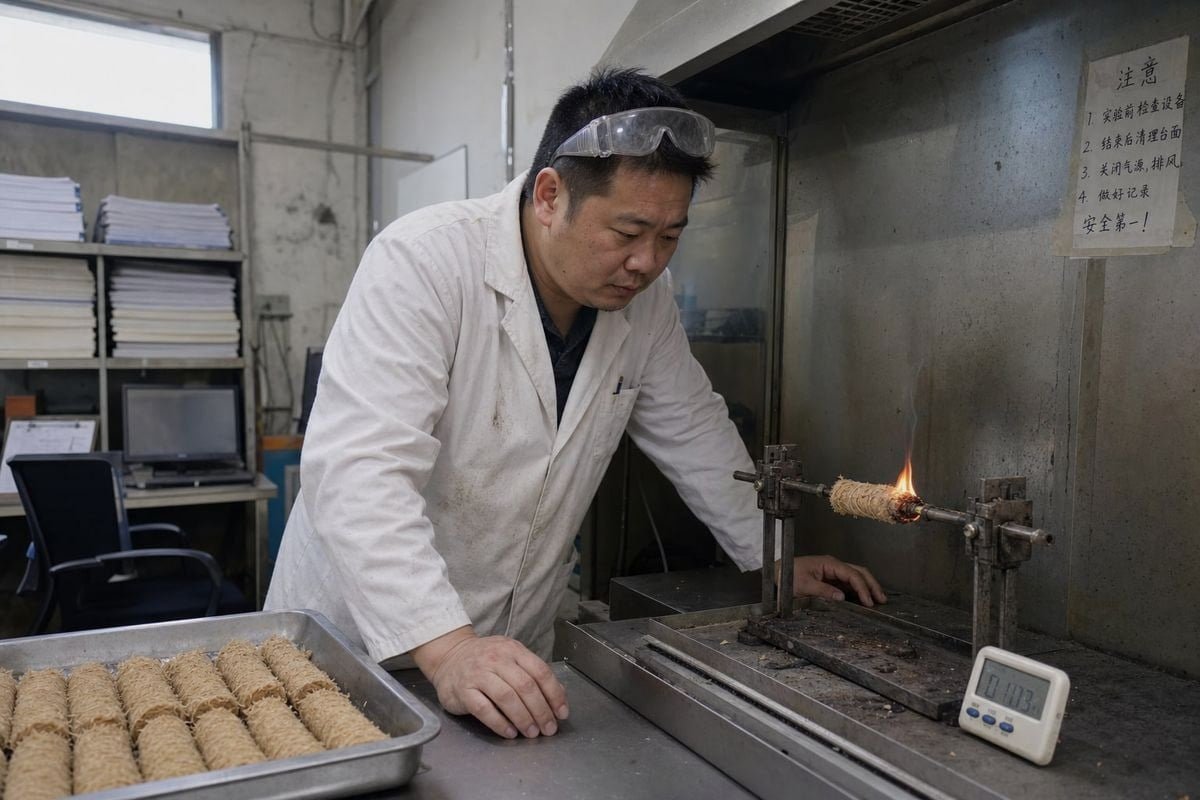
La certificación no hace que un iniciador de fuego arda mejor. Lo que hace es eliminar la aleatoriedad de cómo se fabrica el producto. Esa distinción es importante, porque la mayoría de las devoluciones en esta categoría no son causadas por formulaciones deficientes. Son causadas por una ejecución inconsistente: un lote húmedo, una caja con poco llenado, un lote donde el recubrimiento de cera 6 era demasiado delgado. Los procesos certificados detectan esas desviaciones antes del envío.
Por qué la verificación por terceros cambia el comportamiento del proveedor
Un proveedor que se somete a pruebas de laboratorio de terceros acepta la rendición de cuentas externa. En nuestra experiencia exportando a EE. UU., Alemania y el Reino Unido, esto se manifiesta de tres maneras. Primero, se revisan las materias primas entrantes, incluido el análisis de contenido de humedad de la fibra de madera antes de que entre en producción. Segundo, las comprobaciones en proceso detectan desviaciones, como la temperatura del baño de cera que afecta el peso del recubrimiento. Tercero, los productos terminados se muestrean según criterios de aprobación documentados en lugar de una inspección visual.
La conexión con la aceptación minorista
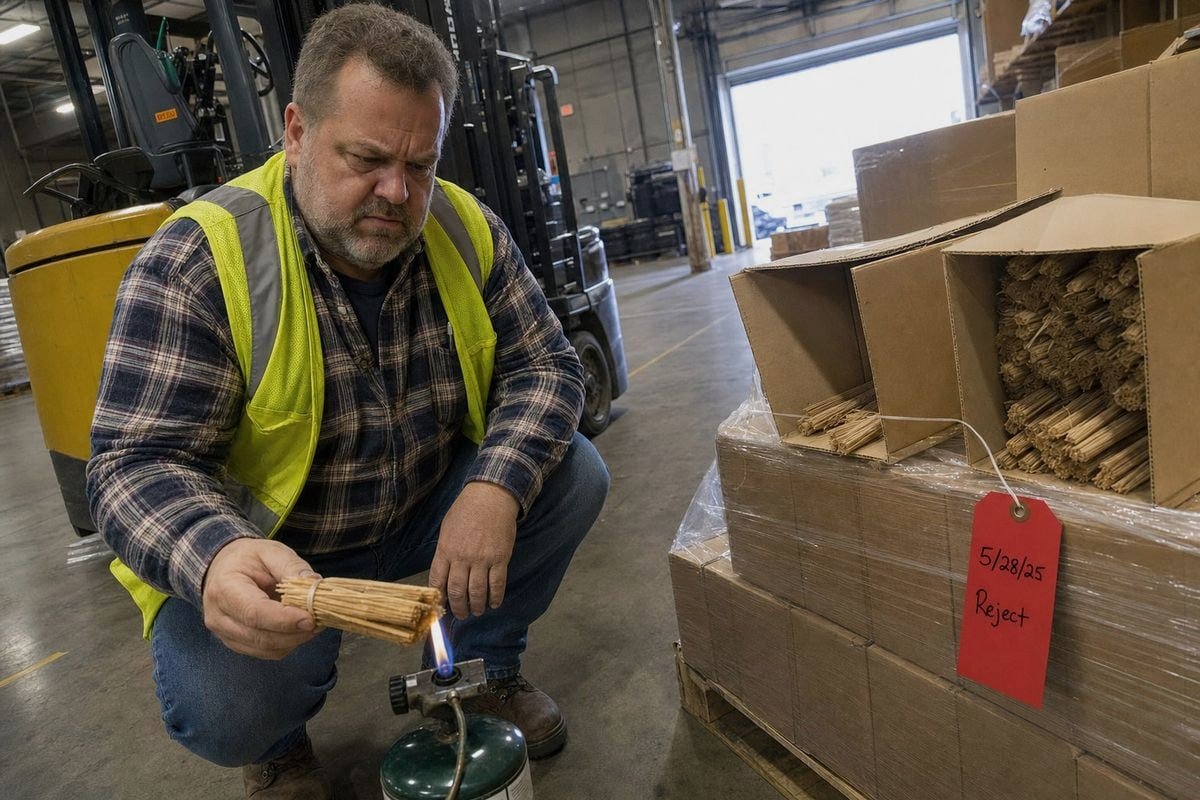
Los grandes canales de abastecimiento minorista se niegan cada vez más a incorporar proveedores sin Marcado CE 7, documentación SDS e informes de laboratorio reconocidos. Esto crea un efecto de filtrado. Los proveedores certificados ya han sobrevivido a auditorías que los proveedores no certificados evitan. Los grandes almacenes pueden tomar muestras aleatorias de un envío y rechazar todo el palé si una unidad falla una verificación de ignición o peso. Un palé rechazado es funcionalmente una tasa de devolución del 100% en ese envío. Por lo tanto, la certificación lo protege dos veces: reduce las devoluciones de los consumidores al estabilizar la calidad y reduce las "devoluciones" B2B en forma de envíos rechazados y contracargos. Para un comprador de marca privada, la brecha de costos entre un proveedor certificado y uno no certificado suele ser mucho menor que el costo de una inspección minorista fallida.
¿Pueden los datos de control de calidad de lote a lote ayudarme a predecir las tasas de devolución a largo plazo?
Uno de nuestros compradores holandeses a largo plazo solicita lo mismo en cada nuevo pedido: no solo el último informe de prueba, sino los registros de control de calidad de las tres producciones anteriores. Está midiendo algo que un solo informe no puede mostrar.
Sí. Los datos de control de calidad de lote a lote revelan varianza, y la varianza predice devoluciones mejor que una única puntuación de aprobación. Un proveedor cuyos tiempos de ignición, duraciones de combustión y pesos de paquete se mantengan estrechamente agrupados entre lotes entregará una tasa de devolución estable; las oscilaciones amplias predicen quejas impredecibles.
Un solo informe de prueba es una instantánea. Sin embargo, las tasas de devolución se configuran a lo largo de meses de producción. Es por eso que consistencia del lote es el mejor predictor a largo plazo disponible para un comprador de marca privada. Piénselo de esta manera: un proveedor que promedia 9 minutos de combustión con una tolerancia estrecha no decepcionará a casi nadie. Un proveedor que promedia 10 minutos pero oscila entre 5 y 15 generará constantes reclamaciones de "defectuoso" de cada lote de gama baja, aunque su promedio parezca mejor sobre el papel.
Cómo son los datos de control de calidad consistentes
En nuestra línea de producción, la primera muestra que un comprador aprueba debe reflejar de manera confiable la calidad de la producción en masa. Para que eso sea cierto, rastreamos el mismo puñado de variables en cada ejecución. Al evaluar a un proveedor, solicite exactamente este tipo de datos de ejecución a ejecución.
| Variable de CC | Lote 1 | Lote 2 | Lote 3 | Qué significa la varianza |
|---|---|---|---|---|
| Tiempo de ignición promedio | 2,1 s | 2,3 s | 2,2 s | Estable: bajo riesgo de fallo en el primer uso |
| Duración de combustión promedio | 9,4 min | 9,1 min | 9,5 min | Estable: rendimiento fiable del tiempo de combustión |
| Contenido de humedad | 8% | 9% | 8% | Estable: tasa de éxito de ignición constante |
| Desviación del peso del paquete | ±1,5% | ±1,8% | ±1,6% | Estable: bajo riesgo de quejas por llenado insuficiente |
Traducir la varianza en una previsión de devoluciones
Aquí hay una regla simple que comparto con los nuevos compradores. Su tasa de defectos del producto esperada sigue aproximadamente la proporción de unidades que caen por debajo del umbral de tolerancia de su cliente, no el promedio del lote. Así que haga tres preguntas: ¿Cuál es el peor lote de los últimos seis meses? ¿Qué lo causó? ¿Se envió o se reacondicionó? Un proveedor que pueda responder con datos tiene un sistema de CC. Un proveedor que dice "todos los lotes pasan" sin números está adivinando, y usted también.
¿Por qué los informes de prueba inconsistentes señalan un mayor riesgo para mis iniciadores de fuego de marca privada?
La compensación que más a menudo considero al asesorar a los compradores es esta: un informe ligeramente más débil pero honesto frente a uno perfecto pero inconsistente. Siempre elegiré el informe honesto, y esta es la razón.
Los informes de pruebas inconsistentes señalan un mayor riesgo porque revelan una producción inestable o informes selectivos. Fechas contradictorias, métodos de prueba cambiantes, números de lote faltantes o resultados que nunca varían en absoluto sugieren que la documentación no refleja la producción real, lo que hace que las devoluciones sean impredecibles.
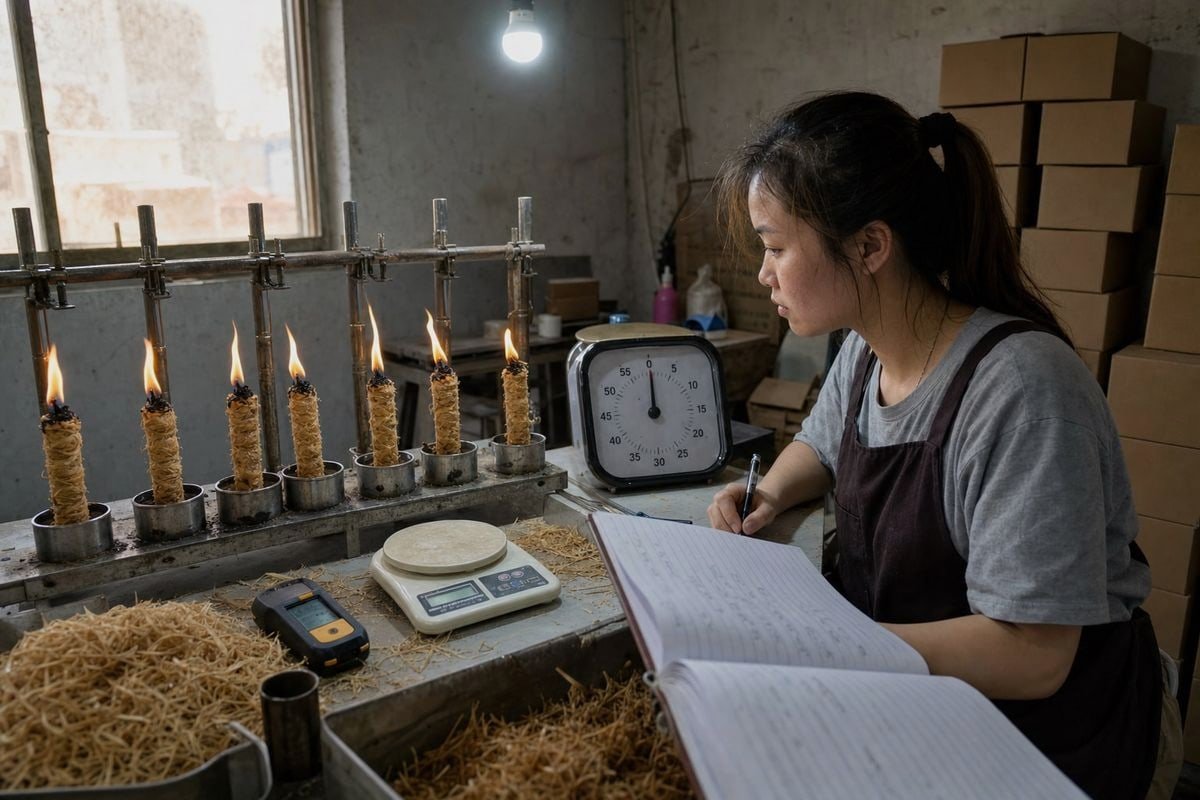
La inconsistencia en la documentación casi siempre refleja la inconsistencia en la fábrica. En 17 años de producción de iniciadores de fuego y llamas de colores, nunca he visto a un proveedor con papeleo caótico y producto estable. Los dos van juntos, porque la misma disciplina que produce registros limpios también produce procesos controlados.
Señales de alerta que predicen riesgos ocultos de devolución
- Informes sin fecha o antiguos. Un informe de dos años no dice nada sobre el abastecimiento actual de materias primas o la estabilidad de la vida útil. Los proveedores de fibra de madera cambian, las calidades de cera cambian y los resultados varían.
- Sin método de prueba o tamaño de muestra. "Tiempo de combustión: aprobado" no son datos. Sin metodología, no puede comparar proveedores ni verificar nada de forma independiente.
- Resultados demasiado perfectos. La producción real tiene una dispersión natural. Los informes que muestran números idénticos en cada lote sugieren papeleo copiado, no pruebas repetidas.
- Pruebas solo en condiciones ideales. Las muestras secas en laboratorio ignoran factores del mundo real como los almacenes minoristas húmedos. La fibra de madera porosa puede reabsorber la humedad durante el almacenamiento, por lo que un informe "seco" no es válido sin barreras de embalaje adecuadas.
- Métricas que cambian silenciosamente. Si un informe cita la concentración de cera de parafina y el siguiente la omite, pregunte por qué. Las métricas eliminadas a menudo ocultan un cambio de formulación.
Por qué el "aprobado en laboratorio" no equivale al éxito en el mundo real
Incluso los informes honestos tienen límites. Los clientes utilizan iniciadores de fuego con yesca húmeda, viento y manos frías. Un producto que apenas supera el umbral de combustión de 8 minutos en un laboratorio puede fallar al aire libre. Es por eso que siempre decimos a los compradores: combine el papeleo con sus propias pruebas de muestra en las condiciones esperadas, y compare proveedores por costo por minuto de combustión en lugar de solo por precio unitario.
| Tipo de señal | Bandera verde | Señal de alerta |
|---|---|---|
| Fecha del informe | Dentro del ciclo de producción actual | Más de 12 meses de antigüedad o sin fecha |
| Trazabilidad | El número de lote coincide con el lote de producción | Sin referencia de lote en absoluto |
| Metodología | Método de prueba, tamaño de muestra, nombre del laboratorio listados | "Aprobado" sin detalles |
| Patrón de resultados | Variación natural en lotes pequeños | Cifras idénticas en cada informe |
| Datos de almacenamiento | Estabilidad de vida útil y empaque probados | Ignición probada solo en muestras frescas |
Conclusión
Las devoluciones destruyen silenciosamente los márgenes de marca propia, un lote húmedo a la vez. Pero son en gran medida predecibles. Lea los informes de prueba como pronósticos, solicite datos de lotes, verifique las certificaciones y pruebe las muestras usted mismo antes de comprometerse.
Notas al pie
Entrada autorizada de Wikipedia que define la naturaleza legal y comercial de las órdenes de compra. ↩︎
Resumen técnico de los métodos utilizados para determinar el contenido de agua en diversos materiales. ↩︎
Datos químicos completos sobre cera de parafina de la Biblioteca Nacional de Medicina. ↩︎
Explica los estándares para la gestión forestal responsable y la documentación de la cadena de custodia para productos de madera. ↩︎
Resumen confiable de Wikipedia sobre el estándar de gestión de calidad ISO 9001 y sus requisitos. ↩︎
Descripción técnica de la aplicación de la cera y su papel en el rendimiento y la protección del producto. ↩︎
Página oficial de la Comisión Europea que explica los estándares de protección de la salud, la seguridad y el medio ambiente para los productos. ↩︎



 English
  Spanish
  German
  French
  Arabic
  Portuguese
Únete a la conversación