







Almacenamiento y reglas de lotes FIFO para Magic Fire Powder se convirtieron en mi obsesión después de un pico de devoluciones de un comprador. Sobres apelmazados, llamas descoloridas, reseñas enfadadas... todo prevenible. Aquí está el sistema que construyó nuestra fábrica.
Para reducir las devoluciones, almacene el Polvo Mágico de Fuego en un área fresca y seca a 15-25 °C y bajo el 50 % de humedad relativa, mantenga los sobres de papel de aluminio sellados, etiquete cada caja con un número de lote y la fecha de recepción, luego envíe el lote elegible más antiguo primero utilizando la rotación FIFO o FEFO.
Esa es la respuesta corta. Los detalles importan más. A continuación, divido el sistema en cuatro partes: condiciones de almacenamiento, configuración FIFO, codificación de lotes y prevención de devoluciones por humedad. Cada parte es práctica y lista para copiar en su almacén.
¿Qué condiciones de almacenamiento mantienen el Polvo de Fuego Mágico estable y libre de devoluciones?
Durante una auditoría de control de calidad en nuestro sitio de producción de Ningbo, una vez rastreamos la queja de un distribuidor hasta un solo palé almacenado junto a la puerta de un muelle de carga. La luz solar y la humedad hicieron el daño, no el producto.
El Polvo Mágico de Fuego permanece estable cuando se almacena a una temperatura constante de 15-25 °C, por debajo del 50% de humedad relativa, lejos de la luz solar directa, calentadores y llamas abiertas. Mantenga las bolsas en el embalaje original sellado de papel de aluminio, fuera del suelo, separadas de disolventes y otros combustibles, con desecantes en las cajas principales.

Los productos en polvo fallan silenciosamente. Nada parece mal en el estante, pero el cliente abre un sobre y encuentra un ladrillo apelmazado y descolorido. En nuestros más de 17 años fabricando productos de llama de colores, hemos aprendido que el almacenamiento que preserva la calidad y el almacenamiento seguro son dos objetivos diferentes. Necesitas ambos.
Los cuatro enemigos de la integridad del polvo
La humedad es el enemigo número uno. Los compuestos cristalinos del polvo de llama de colores son higroscópicas 1. Absorben agua del aire, se apelmazan y arden de manera irregular. El calor es el enemigo número dos. Los cambios de temperatura estresan las costuras selladas con calor de las láminas y pueden causar separación química dentro del sobre. La luz solar es la tercera: degrada el embalaje impreso y calienta el producto de manera desigual. La contaminación es la cuarta. Los productos de limpieza, los disolventes y el polvo aumentan el riesgo de degradación del producto y de contaminación cruzada.
Condiciones objetivo de un vistazo
| Factor | Objetivo | Por qué importa |
|---|---|---|
| Temperatura | 15–25 °C (59–77 °F), estable | Previene fallos en el sellado y separación química |
| Humedad relativa 2 | Por debajo del 50 % de HR (40 % es mejor) | Detiene el apelmazamiento higroscópico, la principal causa de devoluciones |
| Claro | Sin luz solar directa; cajas opacas | Protege el embalaje y la consistencia del producto |
| Posición | Sobre estantes, fuera del suelo | Evita la entrada de agua, derrames y daños por plagas |
| Segregación | Lejos de disolventes, gases, alimentos | Previene la contaminación y los incidentes de seguridad |
Un matiz que vale la pena abordar: algunos compradores nos dicen que la temperatura apenas importa siempre que el espacio esté seco. Hay algo de verdad en eso: la humedad es el mayor riesgo. Pero los cambios de temperatura son lo que crea condensación y estrés en el embalaje en primer lugar. Un garaje que oscila entre 5 °C por la noche y 35 °C al mediodía introducirá aire húmedo en sus cajas a diario. Así que controle ambos y registre ambos. Un simple registrador de datos de humedad por zona de almacenamiento cuesta poco y resuelve las discusiones rápidamente cuando surge una disputa por devolución.
¿Cómo configuro el seguimiento de lotes FIFO para evitar el stock caducado en mi almacén?
Una compensación que sopesamos constantemente en nuestra fábrica: la rotación estricta agrega pasos de manipulación, pero omitirla significa que el stock antiguo se envía primero solo por suerte. Para un producto con vida útil, la suerte es una mala estrategia de inventario.
Configurar FIFO asignando un número de lote a cada caja al recibirlas, fechando cada cartón, almacenando el stock nuevo detrás del stock viejo y exigiendo a los recolectores que tomen primero el lote más antiguo y más al frente. Actualizar a FEFO recogiendo según la fecha de caducidad, no la fecha de llegada.

FIFO significa primero en entrar, primero en salir 3. El stock recibido más antiguo sale del almacén antes que el stock más nuevo. Suena obvio, sin embargo, la mayoría de los problemas de devolución relacionados con el polvo que investigamos para los compradores se reducen a una rotación rota: un palé olvidado en un rincón trasero que se envía dieciocho meses después de su recepción.
FIFO frente a FEFO: ¿qué regla se adapta a Magic Fire Powder?
Para productos con una vida útil definida, FEFO (primero en expirar, primero en salir) supera al FIFO simple. Dos envíos pueden llegar en orden incorrecto en relación con sus fechas de producción. FEFO ordena por la fecha que realmente importa.
| Regla | Clave de ordenación | Lo mejor para | Debilidad |
|---|---|---|---|
| PEPS | Fecha de recepción | Almacenes simples, proveedor único | Ignora las brechas de fecha de producción entre envíos |
| FEFO | Fecha de caducidad / consumo preferente | Productos con vida útil como el polvo de llama | Requiere datos de caducidad en cada caja |
| UEPS | Lo más nuevo primero | Casi nunca para consumibles | Garantiza el envejecimiento del stock — evítelo |
Una configuración de rotación de cinco pasos
- Recibir y etiquetar. Cada caja entrante recibe un número de lote, fecha de recepción y fecha de caducidad en una cara visible. Nuestras cajas de exportación ya llevan códigos de lote, lo que da a su equipo una ventaja.
- Colocar lo nuevo detrás de lo viejo. Utilice estanterías dinámicas o un diseño simple de estanterías de recogida frontal y carga trasera para que la rotación de existencias ocurra físicamente, no solo en papel.
- Haga cumplir la regla de recogida. No se puede recoger inventario sin etiquetar para su cumplimiento. Nunca. Esta única regla detecta la mayoría de los errores.
- Marque los estuches abiertos. Si se abre un cartón maestro para recogidas parciales, márquelo ABIERTO con la fecha y agótelo antes de abrir el siguiente.
- Audite mensualmente. Camine por las estanterías. Señale lotes caducados, sellos dañados y cualquier sobre que muestre aglomeración o decoloración. Ponga en cuarentena e inspeccione antes de decidir si enviar o destruir.
No necesita un costoso Pregunte sobre la experiencia con productos voluminosos, ligeros y estacionales. 4 para empezar. Una hoja de cálculo vinculada a los números de lote funciona para volúmenes de pedidos de prueba. A medida que aumenta la rotación de inventario, la mayoría de nuestros distribuidores pasan al escaneo de códigos de barras, lo que elimina el juicio humano de la secuencia de recogida por completo.
¿Qué prácticas de codificación y etiquetado de lotes me ayudan a rastrear defectos hasta la producción?
Uno de nuestros distribuidores alemanes de chimeneas nos envió una vez una foto de un solo sobre defectuoso. Debido a que el código de lote estaba impreso en el papel de aluminio, identificamos la semana de producción, el turno del operador y el lote de materia prima en un día.
Imprimir un código de lote en cada sobre, caja y paleta que codifique la fecha de producción, la línea y el lote de material. Mantener un registro de lotes que vincule los códigos con los registros de control de calidad. Cuando aparece un defecto, el código aísla el lote afectado para que pueda retirar un lote, no todo su inventario.
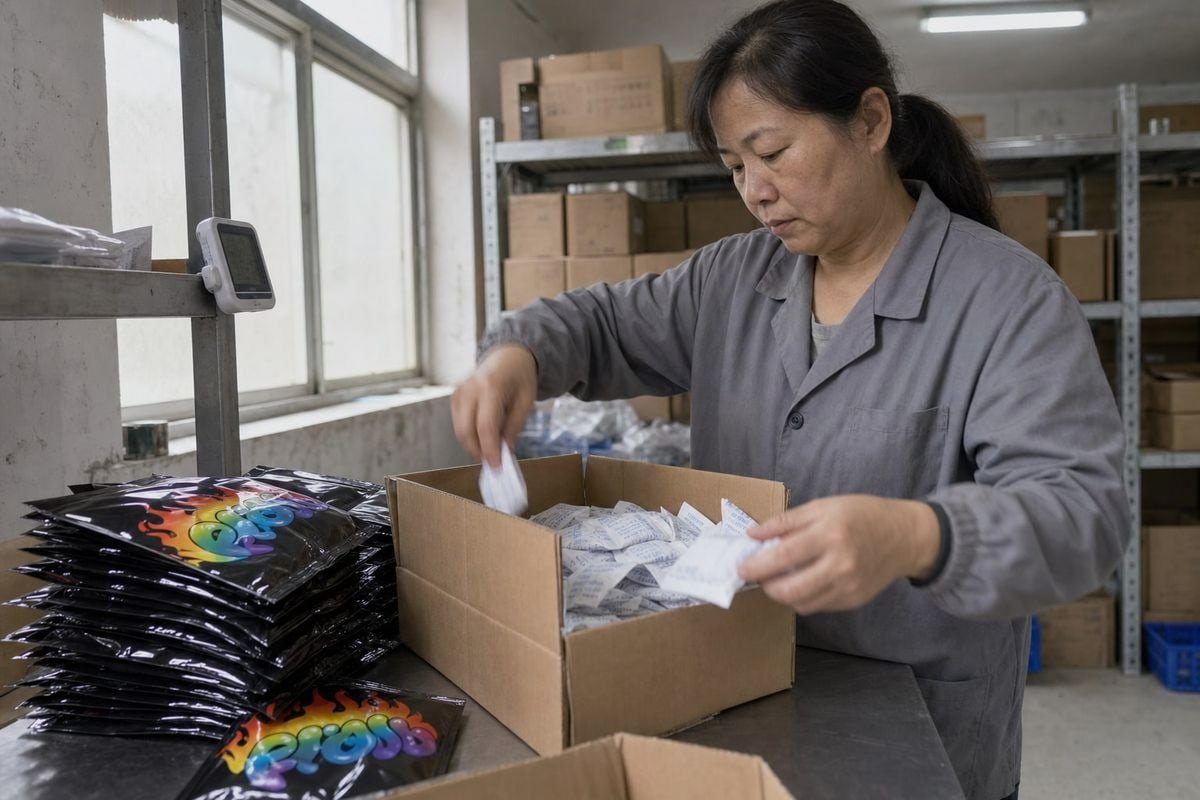
El seguimiento de lotes es la diferencia entre una solución específica y un pánico ciego. Sin él, una queja te obliga a cuestionar cada unidad en tus estantes. Con él, revisas una corrida de producción, pones en cuarentena un lote y sigues vendiendo todo lo demás.
Cree un sistema de numeración de lotes que cualquiera pueda leer
Un buen código es corto, único y decodificable sin una tabla de consulta. Utilizamos un formato en nuestras líneas Magic Fire que codifica el año, la semana de producción, el número de línea y la versión de formulación. Cualquiera que sea la estructura que elija, aplíquela en tres niveles: el sobre individual, la caja minorista y el cartón maestro. Si solo el cartón lleva el código, la trazabilidad muere en el momento en que un sobre sale de la caja.
| Elemento de la etiqueta | Dónde va | Propósito |
|---|---|---|
| Número de lote/lote | Sobre, caja, cartón, paleta | Vincula la unidad a los registros de producción |
| Fecha de producción | Cartón y caja | Alimenta la rotación FEFO |
| Fecha de caducidad / consumo preferente | Caja y cartón | Establece la prioridad de recogida |
| Fecha de recepción | Cartón (aplicado por su almacén) | Rastrea el tiempo en su custodia |
| Código QR (opcional) | Sobre o caja | Vincula a la guía de uso — reduce las devoluciones por "error del usuario" |
Cierre el ciclo con códigos de motivo de devolución
La codificación es solo la mitad del sistema. La otra mitad es su registro de lotes. Cuando llega una devolución, registre el número de lote y un código de motivo: humedad, color débil, sello dañado, error del usuario. A lo largo de un trimestre, surgen patrones. Si las fallas se agrupan en un lote, la causa es la producción o un envío específico. Si se extienden por lotes pero se agrupan en una región, mire la humedad del centro de distribución local. Así es como los protocolos de garantía de calidad se convierten en una herramienta de reducción de devoluciones en lugar de papeleo. También es por eso que entregamos a cada comprador nuestro Informes de pruebas de SGS e Intertek 5 vinculado al lote: la cadena de trazabilidad debe ir desde la materia prima hasta el fogón del cliente.
¿Cómo puedo reducir las devoluciones de clientes causadas por problemas de humedad o vida útil?
Una lección que aprendimos temprano al exportar a mercados húmedos como Brasil y el sudeste asiático: el sobre que sale de nuestra fábrica perfecto aún puede fallar si la última milla lo trata mal. La prevención de devoluciones debe cubrir toda la cadena de suministro.
Reduzca la humedad y las devoluciones por vida útil combinando envases sellados de papel de aluminio con desecantes, almacenamiento con registro de humedad por debajo del 50% HR, rotación FEFO para limitar la edad del producto, amortiguación estacional en regiones húmedas y orientación de almacenamiento de cara al cliente para que los compradores no arruinen las bolsitas en garajes húmedos después de la compra.

Piense en la defensa contra la humedad en capas, porque ninguna barrera es perfecta. Gestión de la vida útil funciona de la misma manera: cada capa le da más tiempo al producto.
Capa uno: integridad del embalaje
El sobre de papel de aluminio es su barrera principal. Nuestras bolsas de papel de aluminio termoselladas están diseñadas para bloquear el vapor, pero una barrera solo funciona mientras está intacta. Nunca vuelva a empaquetar sobres en bolsas de plástico finas o frascos sin sellar. Inspeccione los envíos entrantes de unidades aplastadas o perforadas y póngalas en cuarentena de inmediato. Para inventario de almacenamiento a largo plazo, agregue paquetes desecantes 6 de grado industrial dentro de los cartones maestros. Para programas de marca privada, podemos especificar laminados de papel de aluminio más gruesos o bolsas secundarias de kraft con revestimiento resellables cuando el mercado de un comprador exija protección adicional; esta es una decisión de embalaje, no solo una de almacenamiento.
Capa dos: disciplina de almacén
Everything from the first section applies here: stable temperature, sub-50% humidity, racks off the floor, and moisture control logging. Add one habit — check the logger data weekly, not just when problems appear. Logística de la cadena de suministro 7 también importan. En temporadas húmedas, minimice el tiempo de permanencia en centros de distribución no climatizados, y programe el reabastecimiento para que el stock no permanezca durante los meses más húmedos en una instalación deficiente.
Capa tres: el hogar del cliente
Una parte sorprendente de las devoluciones de "producto defectuoso" son en realidad fallas de almacenamiento posteriores a la compra. Los clientes guardan los sobres en garajes húmedos, contenedores de camping o gabinetes debajo del fregadero durante una temporada, y luego culpan al producto. Dos soluciones de bajo costo funcionan bien. Primero, imprima instrucciones claras de almacenamiento en la caja: manténgalo seco, manténgalo sellado, úselo dentro del período indicado. Segundo, si vende directamente al consumidor, active un correo electrónico automatizado posterior a la compra con consejos de almacenamiento y una guía visual enlazada por QR que muestre que los sobres van al fuego sin abrir. Esa única instrucción —no abrir el paquete— elimina por sí sola una de las razones de devolución más comunes.
Conclusión
Las devoluciones de Magic Fire Powder son en su mayoría prevenibles. Controle la humedad y la temperatura, rote el stock con FEFO, codifique cada lote y eduque a los clientes. Construya el sistema una vez; se amortiza cada temporada.
Notas al pie
Explica la propiedad química que causa la aglomeración impulsada por la humedad descrita en el artículo. ↩︎
Define la métrica de humedad central para los objetivos de las condiciones de almacenamiento. ↩︎
Concepto de fondo sobre el método de rotación de inventario FIFO al que se hace referencia en el artículo. ↩︎
Entrada autorizada de Wikipedia que define los sistemas de gestión de almacenes y su papel en la logística y el control de inventario. ↩︎
Hace referencia a organizaciones de pruebas de terceros mencionadas para la verificación de la trazabilidad de lotes. ↩︎
Explica el material absorbente de humedad utilizado para proteger los productos en polvo envasados. ↩︎
Proporciona antecedentes sobre conceptos de la cadena de suministro que afectan el tiempo de permanencia del producto. ↩︎



 English
  Spanish
  German
  French
  Arabic
  Portuguese
Únete a la conversación